

By Guest Poster Joseph Antley
I am a skeptical Mormon. My skeptical nature isn’t something that I think that I can overcome, and it’s not something I’m sure I want to overcome. I’ve been asked more than once by active believing Mormons if I’m going to apostatize from the LDS Church. That’s sort of a depressing thing to be asked. And the implications are that intellectualism, critical thinking, and skepticism lead members out of the Church.
Before delving into this I should clarify, lest I be misunderstood, that there are some things that I choose not to be skeptical about: Mormonism and all of its major facets, such as the Restoration, the existence of God, the divinity of Jesus Christ, the Book of Mormon (as a whole), the Priesthood, that prophets and apostles are inspired, etc. I don’t have to be skeptical about those things because I have solid evidence that they are true, in the form of the witness from God through the Holy Ghost.
But there are many things in the Church that I am skeptical about: most faith-promoting rumors, the actuality of the global flood, the literalness of Jonah and the whale, and the infallibility of general authorities.
Mormons, like virtually everyone else in the traditional Judeo-Christian tradition, often demonize skepticism. Skepticism is seen as synonymous with cynicism — arrogant, presumptuous, and contemptuous. A skeptic, they say, lacks humility — he assumes that he is capable of understanding things that he cannot understand and he assumes that God’s ways must make sense to him. They also say that skepticism equates to having doubt, which is naturally the opposite of having faith. This mistaken equation of “faith” with “belief” is another entire problem in and of itself — “faith” and “belief” are not the same thing.
The problem with demonizing the skeptic is that the skeptic is, usually, motivated by a desire to be honest with himself. A skeptic doesn’t doubt something because he doesn’t want it to be true, he doubts it because he honestly thinks that it is likely not true, despite how much he may want it to be true. Meanwhile others fly along on what we sometimes call “blind faith” (a misuse of the word faith again), believing things simply because they are told to or because it feels good that it’s true, without ever looking into it.
I worry that anti-intellectualism among common members of the Church sometimes pushes critical thinkers out of the Church or suppresses them into cultural Mormonism (where they still attend meetings for social and cultural reasons but privately do not believe in the truthfulness of the LDS Church). Let me add a quick explanation on what I mean by “intellectual.” An intellectual is not necessarily someone who is overly intelligent. An “intellectual,” in this context, is simply someone who is very rational and who places high value on intellectual matters.
And let me quickly address one of my premises which some people reading this will no doubt take issue with. Does the Church actually stifle intellectualism? This is actually a hot-button topic. Does the Church itself stifle intellectualism? No, I don’t think so — many Latter-day Saint apostles could be categorized as intellectuals, I think, including James E. Talmage, B.H. Roberts, and Neal A. Maxwell. But there are people in the Church that have stifled critical thought and intellectual expression, and I think that in a lot of places that has trickled down among the common members.
But if the Church is true (which I know it is), then there should be no danger in examining it critically. In fact we should expect only positive outcomes from such an examination. As a wannabe-historian who has examined the history of the LDS Church along with its doctrines and teachings pretty intensely, I can assure anyone that, in my experience, a critical examination of the Church and the Gospel is, on the whole, a positive and faith-promoting experience. And there are hundreds of Mormon scholars that I’m sure would agree with me–people who are trained academics and critical thinkers and who also know much, much more about the Gospel and its many facets than I do and have vibrant testimonies of its truthfulness. And this kind of faith requires no sappy stories about how someone’s roommate’s brother-in-law’s mission president healed and baptized an entire African leper colony.
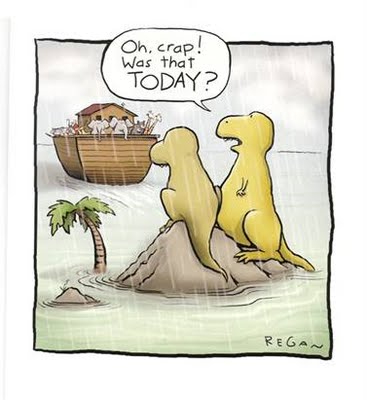 Intellectuals, or people with intellectual tendencies, sometimes leave the Church or refuse to convert to the Church because they cannot accept some teachings that they apparently think are on par with others. A classic example is Noah and the flood. As far as I know there is no reputable geologist on the earth, Mormon or non-Mormon, who believes that the entire world was submerged in water a few thousand years ago. I don’t believe that it was, and I certainly don’t believe that Noah ran a floating zoo for forty days. And I think that’s okay. (For the record, I like to think that the Genesis account of Noah’s flood derives from an ancient myth where the Levant or some small area in the Levant was flooded, and that the historical prophet Noah lived during that time and preached repentance. But this isn’t an issue I have a testimony of and it’s not something that I’ve actively sought a testimony of.)
Noah’s flood is a good example because it’s a near-universal one, I think, that intellectuals have problems with. There are other examples, some more individual than universal, and as you’re reading this you may be thinking about your own minor historical matters that you have issue with. And that’s okay! Not being sure about things like this needn’t make someone question the Gospel as a whole — and as a Church, it’s my opinion that we should not be so adamant about insisting on a literal approach to the scriptures in our Sunday school classes.
If the Gospel is true–and it is very, very true–then there should be more danger in stifling these issues than in being open about our doubts. We should not discourage critical thinking and skepticism. Members of the Church should feel comfortable being honest with themselves and selective others about their beliefs and doubts. I’ve always liked the motto of the Nauvoo Times & Seasons: “Truth will prevail.” And, as Joseph Smith succinctly observed, Mormonism is truth.
Is there room for the skeptic in the Church? Can mainstream members accept those who don’t believe most of the faith-promoting rumors that are circulated, who don’t accept every sensationalist story, or who don’t think every word a general authority utters is the infallible word of God? Is there a place for those who don’t believe that the entire world was flooded or that Noah gathered every terrestrial animal onto a boat for over a month or that Jonah actually hung out in the intestines of the a whale for three days?
Or should the skeptic just be less prideful and try to believe those things no matter how much the rational side of his brain tells him that they aren’t true?


The ironic thing about skeptics being accused of inhumility, is that “Shut up and get with the program” isn’t exactly a humble attitude, either.
I don’t think there can or will be room for intellectuals in the church. The reason I think this is so is that I think the church understands that the vast majority of people who analyze the church on an intellectual level are eventually going to leave the church. Obviously that’s not true of every intellectual, as evidenced by the OP. There are also many intelligent and intellectual active members who frequent this site. I do believe, though, that MOST people that choose to analyze the church from a rational standpoint as opposed to a faith-based one will ultimately reject it.
I would also disagree with the contention that it’s the members and not the church that stifles intellectualism. As intelligent and intellectual as Neal Maxwell may personally have been, I don’t recall him advocating members of the church to delve into the sticky issues or take on all skeptics, the way general authorities in the early 20th century regularly did. That’s simply not the church’s party line anymore. I think to suggest that the church is innocent in the widespread suppression of critical thought among its members, completely ignores the modern era of correlation and faithful history in the church. Packer era policies aptly demonstrate the narrow concept of appropriate education and investigation as defined by the modern church. I couldn’t possibly count the number of times in my life I was cautioned by church leaders, general and local, to be careful not to read or listen to anything that might cause me to question my testimony. Where exactly does the church’s culpability begin and end? I just don’t see how you can give the church a pass on this issue.
There’s always a problem when we try to define a hard Church viewpoint and when we begin to distinguish the Church from the members of the Church. When you have a lay clergy, all Church leaders also function as simple members, with the exception of the First Presidency and Twelve, and maybe to some extent the Seventy. But even General Authorities are individuals and I’m sure that differing GA’s have and have had different opinions on the topic.
So what use is there in blaming “the Church”? The Church is defined by its members.
There is certainly room in the church for skeptics. For the 14M membership right now, I can’t believe there are no skeptics in that bunch (OK, we know there are skeptics in that bunch).
The question is how do skeptics thrive in the church?
In my opinion, that comes down to accepting there are different tools in the toolbox for finding truth, and an intellectual approach is one tool, not the only tool. If some intellectuals try to use that hammer all the time, they will get frustrated.
But many intellectuals find wisdom in being comfortable letting go of the intellectual approach at times, but coming back to it at other times. Temperance in all things.
There is a more fundamental issue than purely intellectualism. In my opinion, these issues all stem from the “follow the prophet” mentality that has become increasingly prevalent. We hear talks like the 14 points. We teach our kids to sing, “Follow the Prophet” or songs listing the names of the prophets.
If we held up a mirror: Could you imagine Catholic children singing “Follow the Pope, follow the Pope, he knows the way?” Could you imagine if we heard that someone in Scientology was taught to follow their leaders exactly, and even if it was wrong, that they would still be bless for it? We might think it a bit strange.
So, as you mention above, the way this is treated creates skepticism. As a simple example, it would be one thing if President Hinckley got up and said he didn’t like two sets of earrings. Great, that’s his opinion. But that has been elevated beyond reason. People can’t go to BYU if they have 2 sets of earrings. And we have heard subsequent conference talks about people who have broken off engagements to someone they supposedly loved because that person had a different opinion about the correct number of earrings.
If something as non-consequential as earrings is elevated to that level merely because of someone saying it, it becomes orders of magnitude higher for issues like Noah’s flood, for example. When general authorities conflate Noah’s flood with necessary ordinances, it becomes an issue. When someone teaches that the earth has a spirit, and that baptism is absolutely essential, and that Noah’s flood was therefore essential as the earth’s baptism – on essentially a doctrinal level – it becomes harder to discount it.
So what do we do when there is absolutely NO evidence of Noah’s flood on a worldwide, baptismal level? People rationalize things away, saying we didn’t understand past leaders, or that they were just plain wrong, or that it isn’t really “doctrine” if someone just says it in conference, or whatever.
The core of the problem is therefore the Church’s current absolute insistence on accepting everything that the leaders teach, opinion, or muse about out loud (such as earrings), yet their equal insistence on discarding things other leaders have said whenever they want.
If it was one person, such as Paul Dunn, it is easy to accept as one person. But when it affects essentially the entire body of prior leaders (which essentially comprises the “doctrine” of the LDS Church) it gets harder to justify.
Those that can manage “suspension of disbelief” stay engaged. Those that want to see how the film was made, how the lighting was done, how the audio was recorded, etc., have a harder time…
#3 – I don’t necessarily disagree with you, but I think there’s a difference between noting things that are truly exclusively cultural in the church, such as simple wedding receptions held in a church cultural hall, for example, and things that are actively perpetuated by the church, if not exclusively spelled out as doctrine or policy. With respect to the issue at hand I think it’s an important distinction, because I think the suppression or discouragement of critical thought and the mistreatment or demonization of critical thinkers within the church is a significant issue, and the type of issue for which the church has a vested interest in not taking responsibility. Education, free agency, informed choice, responsibility for one’s actions, etc. are all fundamental issues in the church, and issues that, frankly, have a lot of PR value. I think it’s one of the most distasteful behaviors of the Church (big C) that it perpetuates certain beliefs and behaviors behind the scenes, while simultaneously denouncing such behaviors publicly. I think the treatment of critical thought in the church is one of the areas in which the church is most guilty of this type of behavior.
“But if the Church is true (which I know it is), then there should be no danger in examining it critically. In fact we should expect only positive outcomes from such an examination.”
Yes.
#7 Paul:
I agree with the sentiment. But to be taken seriously, the Church needs to let people study things that are true but perhaps NOT faith-promoting. They need to do this with the assumption that, eventually, truth will prevail and the benefits of being open and honest will outweigh any temporary bumps in the road.
Otherwise, it’s much like out attitude towards drug companies, for example (or anything else in the medical industry). We only hear the results of positive studies. Studies that are negative are generally suppressed. This makes the general public much more skeptical of things published by the drug companies themselves.
One notes that this particular Fundamental was quietly dropped from the two references to Elder Benson’s address last Conference.
I’ve softened a bit — a small bit — on this. I do think there’s a place for a Church, whose culture and life and ritual are so tied into history as this one, to present “faithful history,” as a kind of liturgical enterprise. It’s like reciting the Creed in a a traditional liturgical church: There is a power to the mythical narrative, that tends to get lost as you include more and more detail (warty and otherwise) in the presentation.
On the other hand, there is a time and place for this. What might be appropriate in a Sunday School lesson — which is part of a worship service, the main point of which is to create an opportunity for spiritual experience — may not be appropriate for a more purely instructional setting, like seminary or Institute or a Church university class. Those are the contexts where I do think the Church ought to think long and hard about “faithful history” — which in one sense, isn’t really history at all.
Also, there needs to be room for people to explore true history on their own, without getting socially or ecclesiastically clobbered. FAIR really, really needs to get the memo on this in particular.
What a great post! I think there is a place in the Church for all kinds of thinkers– the gospel net catches fishes of every variety. The problems arise when we judge others for their honest feelings or positions, when we lose patience, when we are divisive and condemnatory, when we exclude those that are different than we are in various ways, and when we allow our differences trump our common identity as children of a loving God. I think the Church needs deep thinkers AND “worker bees” that approach the Gospel in a more simple way. Skeptics can learn from those whose faith comes from a different place, and skeptics can help others achieve a more holistic, complete, and evolving faith. I say: let us all come down and sit together at the supper of the Lord.
“I do think there’s a place for a Church, whose culture and life and ritual are so tied into history as this one, to present “faithful history,” as a kind of liturgical enterprise. It’s like reciting the Creed in a a traditional liturgical church: There is a power to the mythical narrative, that tends to get lost as you include more and more detail (warty and otherwise) in the presentation.”
I have no problem with this, Thomas, and I actually didn’t intend to suggest that this is independently a problem (that’s a separate argument). If the church is true and the leaders are inspired and god told them to implement correlation and faithful history and all that, then there’s no problem. I was really just saying that IF you think the suppression or demonization of intellectuals in the church is a problem, I don’t see how you can say it’s a member problem and not an institutional problem. If it’s a problem, it has to be at least partially the church’s problem.
This is a wonderful post. For me a key has been finding other (only 2 in my ward) who can help me explore this without making me feel like a future apostate.
“‘Could you imagine if we heard that someone in Scientology was taught to follow their leaders exactly, and even if it was wrong, that they would still be bless for it?’
“One notes that this particular Fundamental was quietly dropped from the two references to Elder Benson’s address last Conference.”
Actually that never was one of the fundamentals listed by President Benson. The fundamental was that the president would never lead the Church astray (which was repeated in both talks last conference). The concept of being blessed for obeying even if wrong was in a quotation, not a listed fundamental.
Mike S., thank you for illustrating so well my discomfort with our primary song Follow the Prophet. At least among non-Catholics (and probably among Catholics) a children’s song “Follow the Pope, follow the Pope” would cause discomfort.
I think many people would be troubled by a Muslim song “Follow the Imam, follow the Imam” or Jewish song “Follow the Rabbi, follow the Rabbi”. Or even a secular song, “Follow the leader, follow the leader.”
Actually, as I think of it, there was a children’s song long ago, “We’re following the leader, the leader, the leader, we’re following the leader, wherever he may go.” http://www.youtube.com/watch?v=QxBeOdLHSPU Maybe that is why we didn’t have to have a primary song on the subject when I was growing up!
The Church doesn’t have to be true, for there to be no problem with it presenting a simplified and sanitized version of its history as part of worship. We don’t expect Catholics, during the part of the service where the Creed is recited, to provide equal time for a recital of the case against the Church and its magisterium. As I said, though, there’s a difference between a church presenting a mythic history as part of worship, and a church actively suppressing discussion of a fuller picture of history outside the context of worship.
True, in the sense that if the Church really wanted to do something about many Mormons’ cultural discomfort with intellectualism, it could say something — borrow one of the countless hours it spends warning against pornography, for instance.
Mike S.
“Could you imagine Catholic children singing “Follow the Pope, follow the Pope, he knows the way?””
Actually, it goes well beyond this. For an equivalent, True believing Catholic, the Pope is infallible. Whatever he says, goes, even when it completely contradicts a previous Pope. and not following the Pope is a grievous sin. So no, they don’t sing a song like that, they don’t need to.
As for Scientology, someone who gets up in the ranks of their faith and becomes critical of it risks becoming completely shunned, and physically harmed and financially and emotional ruined. they have a take no prisoners attitude toward dissent of any kind.
This always reminds me of the reasons “why” we believe some things and discard others. For example- We tend to believe in the resurrection and eternal life because our ver well being is at stake! Now of course, from a skepticle side, there really is no evidence, and none scientifically, showing that resurrection and living forever without ageing is a reality. All the evidence points to us always just dying off.
Now of course the scriptures speak of the flood as an actual global event but then, the same individual who believes in the resurrection, despite scientific evidence saying otherwise, will disbelieve the flood based entirely off of the scientific evidence!
This follows to other things also. Take Christ’s miracles for example- We know through scientific study that it is not possible for a person to walk on the top of water. And yet, Christ himself walked on the top of water. We tend to believe this miracle because after alll- it is Jesus we are speaking of. He is the one who effects our being resurrected!
So, why the disconnect? Why do we believe in miraculous events like resurrection and eternal life on the one hand and on the other we disbelieve that the world was flooded? Evidence? Where is the evidence for resurrection?
BTW, for those who believe in the flood, there are literal mountains of evidence.
Rob – I think you answered your question in your first paragraph. Perhaps a belief in a literal flood does not provide meaning for someone, give direction and strength to their lives when the alternative is ephemera and/or nothingness, and provide hope.
On top of that, I don’t agree that there is “evidence” that we all just die off, never to live again. There is no “evidence” for it either. With the flood, otoh, there seems to be evidence against it, according to many.
Jeff, do you live in Utah?
Your impression of “true-believing” Catholics suggests to me that you haven’t met many.
The average Catholic has nothing on Mormons when it comes to idolizing their leaders.
#15 That’s really a distortion on the doctrine of infallibility.
1) The pope only asserts that he speaks infallibly on matters of fundamental belief that are consistent with previous infallible doctrines. In that respect, it’s more timeless and consistent than GAs who are known to revise and completely controvert the clear statements of previous GAs. 2) It’s a rare occurrence for a pope to declare infallibility for his statements and proclamations. If you check wikipedia on papal infallibility there only seem to be a handful of such cases. 3) Finally, in practice, most Catholics don’t seem to have much difficulty navigating their own consciences and various controversial pronouncements from Rome. I have close relatives who refer to themselves as “cafeteria Catholics” but still very much consider themselves practicing Catholics and are welcomed as such into their parishes.
Scientology, OTOH, does seem to be as dictatorial and ruthless with its own followers and those who wish to break away as you indicate.
Jeff,
I’m not aware of a single Catholic doctrine that has been declared to have been promulgated under the mantle of papal infallibility, that contradicts a previous accepted Catholic teaching.
There is actually a Catholic teaching, dating at least as far back as Aquinas, that if your conscience and the commands of Church leaders come into conflict, the moral thing is to obey your conscience. However, you are responsible for the proper formation of your conscience — you disobey at your own risk.
A far, far more moral approach than “just obey, and even if it’s wrong, you’ll be blessed for it.”
Val,
“Jeff, do you live in Utah?
Don’t be ridiculous. And even if I did, what is that supposed to mean?
Your impression of “true-believing” Catholics suggests to me that you haven’t met many.
I suppose you’re right. Only my wife entire family, who are mass-going, TBCs.
The average Catholic has nothing on Mormons when it comes to idolizing their leaders.
I doubt that. They worship more people than we do! Starting with Mary, the Mother of Jesus
On the other hand, the people they worship are all safely dead, so there’s less danger of them changing their minds or telling you to do something new and dangerous.
AdamF,
Maybe you could inform me then because I believe there is ample evidence that once a body dies it does not come back to life. We dig up graves of people who lived thousands of years ago and they are still dead. Seems like a pretty good case for once something dies- it stays dead. So, when someone claims that they will be resurrected or live again we have to take it completely on faith because the scientific evidence we have gathered so far say otherwise.
“On the other hand, the people they worship are all safely dead, so there’s less danger of them changing their minds or telling you to do something new and dangerous.”
Not exactly. They appear on tortillas and in spaghetti and on walls to deliver important messages.
Inform you of what? There is no evidence for life after death, just as there is no evidence against it. I can’t inform anyone of a lack of evidence. The fact that people die doesn’t have any bearing at all on what happens to one’s “spirit” or whatever one wants to believe or call it. I don’t see how the fact that someone is still in their graves has anything to do with where this “spirit” might be, nor if that spirit may inhabit a “resurrected” body at some undefined point in the future.
Rob Osborn:
The fact we find bodies that represent atoms of someone when they died is beside the point of resurrection. Resurrection is beyond this earth/frame of reference. We teach that even people who died in an atomic bomb can be resurrected, despite there being no “body” to resurrect into.
In any events, the atoms that make up our bodies are only temporary anyway. They are essentially turned over every 7 years, with some parts of our body being more frequent than that. So your body now is literally NOT your body of 7 years ago. You are a completely different person.
Jeff:
Whatever he says, goes, even when it completely contradicts a previous Pope. and not following the Pope is a grievous sin.
I’d say we’re pretty close to this in the LDS Church. If someone breaks off a marriage because of 2 pairs of earrings, this is praised in General Conference. There are many people in the Church who could consider 2 pairs of earrings a sign of someone on their way to apostasy. So “not following the Prophet” is considered by many to also be a grievous sin.
Rob:
So, why the disconnect? Why do we believe in miraculous events like resurrection and eternal life on the one hand and on the other we disbelieve that the world was flooded? Evidence? Where is the evidence for resurrection?
This is completely different. The only real evidence for resurrection that I know of is witnesses. We have the New Testament. We have people like Joseph Smith. We can’t “prove” it, however.
Regarding the flood, however, there is A LOT of evidence that there was never a GLOBAL flood. There are ice cores in Greenland that go back annually (like tree rings) for 50,000 years with no evidence of a flood in them. There are many other things which I’m actually going to cover in a post coming up soon.
So, claiming that resurrection is true when there is no evidence for or against it is very different than claiming that a global flood took place with A LOT of evidence against it.
(BTW: There is actually much better scientific evidence for REINCARNATION than resurrection.)
Mike S.
“If someone breaks off a marriage because of 2 pairs of earrings, this is praised in General Conference.”
I don’t remember this, can you provide a reference?
Mike S (#28)
My point is that there is virtually no known scientific evidence to support the resurrection and tons of evidence to support that it doesn’t happen. As this applies, some scientists find no evidence to support a global flood and plenty of evidence against it. They are no different at all.
Rob,
The difference is that the nature of global flood is such that we should expect to see evidence of it. We know that local floods tend to leave evidence in the geologic record; therefore it’s reasonable to conclude that a global flood (being different only in scale) would, too.
There’s no such evidence. Absence of evidence is evidence of absence, when the circumstances are such that evidence should be expected to exist.
When the thesis is that at some future date, the bodies of the dead will be resurrected, there is no reason to expect evidence of this to exist now. Even in the case of Christ’s resurrection, the event was obscure enough — the death and burial of a nobody in a no-account part of the world — that there are ample reasons not to expect evidence of this event to have been left.
So in this case, absence of evidence is not evidence of absence.
#21
You need to have a serious conversation with your Catholic family or be more careful how you represent their beliefs!
They would be careful to say that they don’t worship Mary or any of the saints recognized by the Catholic church. However, they recognize a special spirituality that has gained individuals salvation and a special place in heaven. They pray asking those saints to plead their prayers before the throne of their God (who includes Heavenly Father, Jesus and the Holy Spirit as different expressions of the same God). It God alone whom they worship.
#29 Jeff:
Reference: Elder Bednar’s talk He does state that the issue was NOT earrings, but the person NOT being willing to follow prophetic counsel quickly. This is actually a perfect example of what is expected of a “good” LDS member – to follow quickly unquestionally.
“promptly and quietly obey the counsel of the prophet in all things and at all times”
I realize that I have a different perspective, but honestly I don’t know how this statement can’t make any member of the church cringe. I think the word “quietly” has as much meaning as any word in that sentence.
Mike S,
Thanks, I recall that now reading through it. Sorry, but that is too extreme for me.
Sorry, Alice,
“They would be careful to say that they don’t worship Mary or any of the saints recognized by the Catholic church. However, they recognize a special spirituality that has gained individuals salvation and a special place in heaven. They pray asking those saints to plead their prayers before the throne of their God (who includes Heavenly Father, Jesus and the Holy Spirit as different expressions of the same God). It God alone whom they worship.”
You can call it as you wish, The Lord has instructed us how to pray and I believe it begins “Our Father, who art in Heaven,” and our intercessor is the Savior and no one else.
It is not I who has statutes of various people around the house or an altar to a specific person who is not God or Jesus.
I second comment #18. It seems to me it’s easier to stay out of hell being a Catholic than it is being a Mormon (doctrinally…?) thus hanging on to every word of your leaders. (facial hair, soda pop etc etc.) Also what’s up with you guys not believing in miracles?
Just to add some evidence against resurrection, we have uncovered bones that belong to people that lived long before the time of Jesus. Shouldn’t they have been resurrected with Jesus or do ALL those bones simply belong to unrepentant sinners…even the ones that predate Adam and don’t know how to sin?
#36
Be fair. There are people in all kinds of disciplines who don’t understand where the line is between devotion and superstition.
Catholic doctrine may not be ours but to represent it by the people who misuse it just isn’t accurate or helpful.
“Catholic doctrine may not be ours but to represent it by the people who misuse it just isn’t accurate or helpful.”
I am very happy to allow people to worship in any way they wish. I have no problem with that. But I am also allowed to have an opinion about it. Just as you are.
It means, Jeff, that you haven’t met many Catholics because there aren’t many Catholics in Utah. And you do live in Utah, obviously.
And no, knowing your wife’s family, however large, does not constitute knowing many Catholics. In fact, I’d argue that as a family unit, you are only working with one data point here, not many.
#41 – I love satire, Val. Thanks for lightening the discussion.
Few people focus on the craziest of mormon beliefs- that being the flood, Jonah and oh yeah immaculate conception. When you take into account we believe a man parted the red sea and walked across it on dry ground- our funny underwear comes across as not that big of a deal.
Let me comment upon one of your statements” A classic example is Noah and the flood. As far as I know there is no reputable geologist on the earth, Mormon or non-Mormon, who believes that the entire world was submerged in water a few thousand years ago. I don’t believe that it was, and I certainly don’t believe that Noah ran a floating zoo for forty days. And I think that’s okay. (For the record, I like to think that the Genesis account of Noah’s flood derives from an ancient myth …”.
Have you ever read any books by Dr. Henry Morris? Morris graduated from Rice University bachelors’ degree in civil engineering. He taught civil engineering from 1942 until 1946. He studied at the University of Minnesota where he was awarded a master’s degree in hydraulics (1948) and a Ph.D. in hydraulic engineering (1950). In 1951 he became a professor and chair of civil engineering at the University of Louisiana at Lafayette. He and John Whitcomb wrote the definitive book on Noah’s global flood “The Genesis Flood – The Biblical Record and It’s Scientific Implications”.
There a numerous geologists that believe there was a global flood. Here is a partial list from an organization called Answers in Genesis:
Dr. Steve Austin, Geologist, B.S. (Geology), University of Washington, Seattle, WA, 1970,M.S. (Geology), San Jose State University, San Jose, CA, 1971,Ph.D. (Geology), Pennsylvania State University, University Park, PA, 1979;
Dr. Collin Mitchell, a former international consultant in the development of arid lands based in the United Kingdom. He holds credits from Harvard University, an M.A. with honors in geography from Oxford University, an M.C.D. (master of civic design) from the University of Liverpool and a Ph.D. in desert terrain geography from Cambridge University.
Andrew A. Snelling is a geologist, research scientist and technical editor. He completed a Bachelor of Science degree in Applied Geology at the University of New South Wales in Sydney, Australia, graduating with First Class Honors in 1975. His Doctor of Philosophy (in geology) was awarded by The University of Sydney, Australia in 1982.
Dr. John Whitmore received a B.S. in geology from Kent State University, a M.S. in geology from the Institute for Creation Research and a Ph.D. in Biology, Paleontology emphasis from Loma Linda University. Currently an Associate Professor of Geology, he is active in teaching and research at Cedarville University.
Please take some time to look at the information available at Answers in Genesis. This is “Real Science” that is in FULL AGREEMENT with the Bible. A careful study of the biblical data reveals the fact that the Flood lasted for 371 days not 40 days – that was the time period of the rain. That the Flood continued for more than a year is entirely in keeping with its universality but cannot properly be reconciled with the local-flood theory.
I hope that reading the Answers in Genesis information will help you accept the literal understanding from the Bible. One final point – Google “Whale Shark” which is classified as a fish and look for images where a diver is swimming alongside. Fitting in there whole is no problem.
I pray blessings on you.
There is a doctrine of the gospel, which, I suppose, might be called the “doctrine of being left without excuse.” You can find this doctrine mentioned in D&C 88:82; D&C 101:93; D&C 124:7; and in D&C 123:6. It consists of taking away all the evidences to the contrary of the word of God, so that a wicked man must deny the word of God, based soley on his disbelief, without being able to rely on some bit of evidence that contradicts the truth, because none exists at that point, like the man who chooses to walk “in darkness at noon-day” (D&C 95:6.)
Now, all the things which are true, which have been revealed by God, but which contain no tangible evidences for their veracity, including the fact of a global flood, shall be verified at some point, prior to the Second Advent of the Lord, so that the wicked men of that time shall be “left without excuse.” This will be so that a righteous judgment will be pronounced upon them, for they shall be burned up as stubble because of their unbelief, despite all things witnessing that the word of God is true in every particular.
A non-Mormon who disbelieves the corrupted biblical account, assigning a symbolic or metaphorical meaning to it, has “an excuse” and may point to current scientific thought, etc., as their reason for disbelieiving. The Mormon, however, has “less excuse” than the non-Mormon, because we have been given additional scripture, in an uncorrupted form, which affirms the global nature of the Flood. But, because there is still evidence to the contrary, we are not, yet, “left without excuse.”
The Lord gives us these things now, in an environment of contrary evidences, so that we might develop faith in His word. It is important that all these truths be accepted now, while we can have faith in them, because if we disbelieve them because of the evidences against, allowing these seeds of doubt into our hearts, when the future day comes in which the Lord removes all contrary evidences, so that only things exist which support His word, which is akin to living during the shining of the noon-day sun, without a shadow of doubt being cast anywhere, we will have no reason to believe the word, or, in other words, the word will no longer generate and develop faith in us, for there will be no reason to believe what we already know to be true, which will set us up for the state of those who will walk in darkness in that day, being faithless and overcome by the devil.
You may think that disbelieving the global nature of the flood is a small thing, but because it represents a seed of disbelief in the word of God, it has the potential of developing fully into the man walking in darkness at noon-day, and the devil will exploit this doubt in just such a way. A better and safer strategy than disbelief is either belief with diligence in prayer to obtain a confirmation from the Spirit, or setting the matter aside as inconclusive one way or another, to be clarified at a later date. I recommend the former because the latter can also be exploited by the devil and turned into full-blown doubt, which will cut you off from God.