
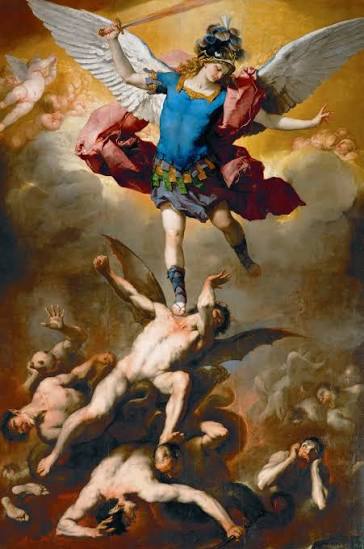
Last week I was in Salem, Massachussetts, the site of the infamous witch trials of 1692. I have direct ancestors who were Puritans, including some on the Mayflower, and a number of them who lived in the Massachussetts Bay Colony. One of these ancestors even signed a covenant in the town of Dedham, a requirement to live in that community, even though he hadn’t been part of their group originally (which I blogged about here). As on some previous trips there, we did a walking tour with a local historian (who also hosts a really great podcast here). Anyone who contemplates the tragedy of the lives lost during the hysteria in which young girls and even some adults used “spectral evidence” to convict their neighbors of being in league with the devil which led to 25 people being executed, tortured to death or dying from horrible prison conditions should have pause when they hear contemporary Christian Nationalists throwing around terms like “spiritual warfare” or calling other people “demonic.” If you had told me in 2010 that this type of talk would be common enough that I’d see people I went to high school with using these terms on Facebook, I would have had a really hard time believing it could happen, but here we are.
Both spectral evidence and spiritual warfare involve the belief that unseen, supernatural forces actively interfere in the physical world. The Salem court specifically permitted accusers to claim that the plaintiff’s specter (spirit) was attacking them or harming them, even when the person was demonstrably doing nothing at all. This type of testimony was impossible to refute because you can’t have an alibi if the unseen world is given equal creedence. During the trials, the afflicted girls would scream, fall down or convulse when the accused did anything innocuous like looking at them, standing near them, or in the case of Martha Corey, biting her lip or moving her hands. One of the accused was knitting quietly while the girls hysterically writhed in pain, claiming her specter was harming them. This type of evidence could also claim that someone could harm another while they were sleeping, even if a witness saw their physically body sleeping. The reason this type of evidence was permitted in the first place is that the most educated and learned scholars of the day were convinced that witchcraft and demons were active threats in the physical world, and those who lived in Salem and the surround towns were in an increasingly hostile, dangerous frontier that they continued to expand further into. Any hardship was often understood as originating in demonic opposition to them as God’s chosen people.
This should sound familiar to those of us familiar with the religious groups claiming that they are doing spiritual warfare, that the Bible should be taught in public schools, that their flavor of Christianity should run secular life, including the government (the Seven Mountains Mandate [1]). They are right that the nation was founded by people who think like them, but they are also wrong. The Massachussetts Bay Colony was not the US; it preceded the US, and the constitution was specifically written after these events to counteract the problems created by a religious supremacy. The colonists were so appalled by what happened during the Salem witch trials that restitution and apology were offered within mere decades, something that we still haven’t managed to do for slavery.
So why do these things keep happening? It’s basic psychology, although these are not traits that everyone shares equally. Conservative religions do tend toward these distinct psychological markers. When we observe these in ourselves or others, we are at risk of repeating some pretty awful history.
Right-Wing Authoritarianism. This is a personality characterized by a high degree of submission to established authorities, aggressive behavior toward out-groups (usually led by those leaders), and strict adherence to societal norms. There is an almost linear relationship between Christian nationalism and right-wing authoritarianism; 84% of Christian nationalism adherents score exceptionally high on the RWA scale. A belief in literal demons serves as the ultimate justification for this rigid thinking. Political, cultural or social preferences are not just opinions, but an extension of divine authority. Anyone who criticizes their preferences are therefore tools of evil, led by Satan or demons. This eliminates the need for compromise and shuts down any discussion.
Low Tolerance for Ambiguity. Those with a high need for closure or clearcut rules find gray areas to be stressful or threatening. They may rely heavily on rule-based mental shortcuts (e.g. Biblical literacy or authority-based precedent) when dealing with new, unfamiliar concepts or situations. By considering these contradictory ideas as being engineered by Satan, they can immediately shut down any questions that threaten their worldview.
Collective Narcissism. Christian Nationalists view the United States as a shining city on the hill, a “New Jerusalem,” a place where God’s chosen people will create a society just as he wanted it. These ideas are in the Book of Mormon where Columbus is described (though not named) as being led by God to pave the way for white settlers to come in and subdue and redeem the “filthy & loathesome” natives, lifting them up from their low status. If your group is led by God, that means that anyone opposing it is led by, you guessed it, Satan. Any failures of that in-group are therefore entirely the fault of this external demonic opposition, not a result of human errors or motivations. This protects the narcissism of the group from any need for self-examination.
The Empathy Gap. When an individual’s pschological profile prioritizes dogmatic “truth” over interpersonal empathy, it is much easier to advocate for aggressive policies against outsiders. If you characterize the outsiders as being under a demonic influence, showing them empathy can be re-cast as compromising with evil or at minimum, spiritually weak.
The throughline here is that the supernatural frameworks have been elevated to the same level (or even higher) than the physical reality we all share. While this may help an individual avoid the distress of uncertainty, understand setbacks in a way that don’t require personal growth, or feel justified in unjust acts, it tears apart a pluralistic society when enacted at scale. When the unseen world is more important than what’s in front of your face, whatever you imagine the enemy to be is so, and you can rationalize almost anything to fight that enemy you’ve imagined into being.
From an LDS perspective, the percentage who hold Christian nationalist views is probably only increasing given the demographic of those who are leaving. LDS people have continued to become more like white evangelical protestants in terms of personality traits and political views, which at least to me feels like a substantial downgrade, and something that will backfire because those other groups consider them to be a cult, part of the demons who have to be defeated. A 2022 study showed that 49% of LDS people hold Christian nationalist views. I always thought when people were talking about literal Satan or evil spirits that they were mostly just speaking figuratively, but that is not really the case.
In fact, a 2023 Pew poll shows that roughly 70% of Americans believe in spirits or unseen supernatural forces. Only 33% of Americans qualify as Christian Nationalists (making the 49% of Mormons who do seem particularly out there). Now, obviously that might not translate into a belief in spiritual warfare. It could also be people who believe in ghosts or intuition. 58% of white evangelical protestants report having personally experienced a direct spiritual attack. Which puts Joseph Smith’s pre-first vision attack in comfortable grounds with the Christian Nationalists when it comes to spiritual warfare.
I remember people joking when we were in the MTC that if you set foot off the grounds, you were vulnerable to a spiritual attack, but I thought it was for laughs. I guess not everyone thought so.
- Do you see Mormonism as becoming more Christian nationalist?
- Do you see the BOM or JS as being Christian nationalist?
- Do most of the LDS people you know believe in spiritual warfare?
- What examples of spiritual warfare have you heard in an LDS context?
- Do any of these other descriptions resonate for you in your experience with the church?
- Do you see this as extremism that leads to violence and power grabs, or is it more limited in terms of keeping people on the straight and narrow?
Discuss.


One Word….”Hyperbolic”. While I agree that there are pockets of this malady in different parts of the country…..as for it being prevalant and a serious threat to anyone, nah. As for Evil and Good being in this World…Yes, I think there is. Must good people attempt to keep evil at bay..Absolutely.
I was surprised and appalled at the recent survey that indicated LDS were lower on the empathy scale than most religions. Because of home and visiting teaching (OK, ‘ministering’) I would have thought the ‘love thy neighbor’ part of LDS teaching would place us high on the empathy scale. I think my ward would score high.
Because I live in a liberal bubble, I do not encounter Christian Nationalism at church, but am reading about it a lot in other places. It seems so at odds with what I have been taught the church stands for.
The BOM is so Christian nationalist I’m surprised that anyone who doesn’t believe in it is Christian nationalist. Where do they get it from? And yet I don’t think that Christian nationalism is the best way to interpret our scriptures as a whole. There’s a whole bunch about respecting our Constitution and religious freedom in the D&C and Articles of Faith, and those are not tenets of Christian nationalism.
I had an experience in the MTC that I strongly interpreted as a spiritual attack at the time. A few years later I had a minor medical event, and it was not the same, but there were enough similarities that it made me wonder how much they were related.
One of the companies I’ve done business with in the past is run by rather zealous evangelical Christians. In meetings, they frame every thing that happens to their business, good or bad, in spiritual terms. When they had some early success, their CEO said he knew God was on their side. Then, when they were being called out for their likely fraudulent and definitely dishonest financial practices, they framed it in terms of being persecuted. Even though I know this is, at least partially, all for the fans (they’re apparently big on Christian tiktok) it still drives me absolutely batty.
My search turned up 106 talks over the last ten years of general conference mentioning “Satan.” (That’s not including any talks that used other words like “The adversary” but not “Satan”) There was lots of imagery related to spiritual warfare, including “Satan’s spiritual land mines,” Satan seeking to “destroy” people, testimony being “a weapon against Satan and your adversaries,” “Satan’s attacks,” “Satan the destroyer,” that we must “conquer Satan,” “Satan, the instigator of all contention,” “victory for Satan,” etc. All references treated Satan as a real, existent threat, not as a metaphor for evil.
So I’ll try to break this down from first principles, and I guess you guys are along for the ride (as well as the run on sentences).
I’ve had spiritual experiences that made it clear to me in no uncertain terms that there are unseen forces that want to destroy me, my marriage, my family, and the world at large.
One happened in the presence of another person, who saw more than I did. But we walked away feeling the same things, darkness, oppression, an understanding that whatever was there had desire for harm.
Another was while on a different continent, where a teenage girl was being harassed spiritually while sick. I had a feeling that something was up and remember praying before hand, and then a short time later her being attacked in her sleep. (Yes, I’m well aware, but I was there and you weren’t and I don’t feel the need to justify further)
I *also* consider myself a rational person. Evolution doesn’t bug me, never really has. I’m cool with naturalist explanations for a number of things.
My experiences and reading the scriptures has shown me that God usually works in natural ways, the creation was guided, but how much or how little, I’m not sure. I believe that there was an Adam, and an Eve, and a garden, but when, I’m not too hung up on either. The scriptures read to me that man was made outside the garden, and that in becoming human, daughters and sons of God, we lost the last rib.
I find it interesting that Eve was made from that rib in the scriptures. Chimps and bonobos (and further up the tree, gorillas – all tribal, I might add), all have 13 ribs. The tradeoffs are interesting – 13 ribs allows greater rigidity, and upper body strength, shorter lower back, but at a cost of walking upright (watch a chip can walk bipedally, but their anatomy is made for knuckle walking, and they’re 75% less efficient in doing so)
12 ribs trades brute strength for flexibility (fine motor control, precision grasping), and the ability to climb trees for the ability to walk upright – which does lean into the creation accounts that we have, they, walking wtih God in the garden.
The very process of becoming human in my eyes, was when we developed at a primitive level, empathy. The ability to see and act with good intentions for others, baesd on our understanding of their needs, desires, wants. Through that lens, the first man (Adam) may have been the first man to see that forced copulation really wasn’t ideal for the first women (Eve). That what he wanted, and what they needed were two separate things (I’m vastly over-simplifying here, but I’m already seeing this get to ). Every primitive man prior to that, was by this over-simplified definition, an animal.
So all that to say – God works in natural ways, when he needs natural ends, when he needs supernatural ends, he acts in supernatural ways.
> Do you see Mormonism as becoming more Christian nationalist?
I see members of the restored church leaning towards tribalism. Christian nationalists look like us, smell like us, and when we twist Jesus’ words, sound like us. There’s safety in being in the in-crowd, and it can get tiring of being called “not Christian” at the metaphorical lunch table. They’ll never claim us as kindred, but we vote there way, so they throw us a bone (for now).
> Do you see the BOM or JS as being Christian nationalist?
I see the Book of Mormon showing a people that were at times xenophobic, for justifiable reasons. They had a cultural memory of the Lamanites (and everyone else in that group) making them miserable enough to leave twice – first with Nephi 1, and then with Mosiah 1 hundreds of years later. It’s a tribal book (literally), and we see when the government breaks down in 3 Nephi, going back to that exactly, tribalism.
I think Joseph was loyal, and deeply hurt by the betrayal he felt from his fellow Americans. Early on, I would classify him as proto Christian nationalist – he clearly believed America was a chosen land, and that the Constitution was divinely inspired, but he got that information from the Book of Mormon and by revelation from the Lord (my radical orthodoxy is showing).
But his willingness to leave and go west also showed his deep mistrust of the American public. His shifts in Nauvoo towards church and state being mingled were in some ways practical (who else *could* have been mayor? John C. Bennet?), as much as theological, and the counil of fifty was both theocratic and oddly secular.
I said proto Christian nationalist, but I meant that literally, in the vein of “I’m a classical Liberal” does not mean “Liberal” today (or it didn’t 20 years ago). Joseph had a view of nation-building, but it was deeply tied with the pluralism I hear Pres. Oaks preach tirelessly today.
The end goal of both Joseph’s experiences, and the Book of Mormon, was that God asks us to feel the tribalism, feel the sting, consecrate it through the blood of someone who feels it far deeper and more poignantly then we ever could. And then act with understanding, wisdom, to *not* behave tribally. To embrace all, and to love them as He does. To allow for plurality of thought, and to encourage healthy societies while allowing for deviance, as long as the deviance isn’t destructive unto the health overall. I recognize that last part about deviance will run some the wrong way, because the definition of deviance is hard to define, and varies from person to person.
Sorry – that was rushed out, I didn’t have the time to write anything shorter, and there are some clear missed thoughts
I’m well aware of nocturnal panic attacks, sleep paralysis, etc, this was not that.
Thomas: Regarding your lable “proto-Christian Nationalist,” I think there’s something to that, but I suspect it’s not exactly that. What I think is the case is that JS’s white Christian Nationalist views were mostly the norm in his era, and they were less extreme than those views held by the Puritans in the 1600s, largely because of things like the Salem Witch Trials, as well as experiments like Rhode Island that refused to pick a religion and instead showed that pluralism was a prosperous model. IOW, over time, the country has moved away from Christian nationalist views that were the most extreme under the Puritans, and toward a pluralistic society, maybe peaking around the 1970s-2010s, and now we are seeing some rise in regressive politics, including a resurgence of these ideas and attitudes since Obama’s presidency and the ascendency of Trump. That could be backlash, or it could be an emboldened minority in a time of continued religious decline. That’s one of the biggest factors behind the Salem witch trials as well–their religious supremacy was not as unchecked as they wanted, and their charter had been revoked. When there’s a feeling that political power has been lost, people fight that loss.
catrachohansen: I realize I’ve been dismissive that people are serious about things like demons and Satan, but I should clarify that it probably differs by age group. Old people (like those running the church) do tend to have a more literal view of these things, as do the impressionable youth. Who among us didn’t enjoy spooky stories at girls camp or imagining a real Satan taking note of our teen temptations? But when it comes to those who are in the thick of adulting, with fully formed mature brains (e.g. ages 28-50), I tend to think that most people aren’t really that worried about the reality of the unseen world or the paranormal. But that is also very likely just me projecting my own skepticism onto others. I was very surprised by the 70% number.
lpf43: I also found that empathy result on the Pew study to be a condemnation of the current church membership. We could argue about the wording of the survey, but still, gone are the days of George W. Bush’s “compassionate conservative.” I suspect Mitt Romney would have answered that question differently than the majority of members apparently would. It’s shameful, but I’ve long said that people don’t view their politics through the lens of their religion; they view their religion through the lens of their politics.
“I suspect Mitt Romney would have answered that question differently than the majority of members apparently would. ”
Yes, Hawkgrrl, I agree with you statment. I have family members (extended family) who 100% believe that Trump is more moral and Christian than Mitt Romney. Remember those lunatics who were on Mitt Romney’s flight from SLC to DC just before Jan 6 and were heckling him on the plane? This is what we are dealing with.
Hawkgrrl, I’m with you that spiritual warfare seems like a difficult belief to take seriously. One of the first things that I deconstructed in my LDS belief was belief in Satan. I don’t think it leads anywhere good and it feels like one of the most cultish aspects of religious belief. But my point is that spiritual warfare is not some fringe folk belief within Mormonism. It is actively promoted by LDS leaders at the very top.
It is certainly the case that Evangelicalism shuts down rational thinking (see: The Scandal of the Evangelical Mind by Mark Noll). Mormonism does to a certain extent as well, but we (1) have a real university, BYU, where unadulterated evolution and science are taught; (2) yes Mormonism has some wacky beliefs (coffee is a sin, Israelites/Nephites in America, JS translation, etc.) but only about half the members believe that stuff anymore. I think Evangelicals are getting wackier while Mormons are getting more reasonable. It would sure help if a couple of bona fide scientists were called into the Twelve, like we did once upon a time.
Mormons will talk about “the Spirit” and “the Devil” (or “the Adversary” to soften it a bit) but don’t really buy the whole spiritual warfare stuff. Even GAs have toned down those sort of references.
I think once Trump is neutered and eventually leaves office (through death or removal or expiration of his term) and religious clowns like Pete Hegseth slither away, the whole Christian Nationalism movement will lose momentum. The war with Iran will help defuse it. Nothing like losing a Crusade to discredit the Christian war hawks.
About Salem, it should be noted that while spectral evidence was entertained by the trial court, run by local civic leaders, when cases got to the General Court of Massachusetts the spectral evidence was thrown out and those remaining in custody were freed. So the judicial system did correct itself fairly quickly. It was religious zealots like Cotton Mather (and his book Wonders of the Invisible World) who caused the problems. It was judges who cleaned up the mess.
The last part of the speech made at the unveiling of the Statue of Liberty reads: “There is rooom in America and brotherhood for all who support our institutions and aid in our development. But, those who come to disturb our peace and dethrone our laws are aliens and enemies forever”.
With threat, corruption and theft now running unfettered (particularly in “immigrant communities”) – this is where I stand. Period.
I see nothing good about extremism. It’s like a feedback loop of myopic nuttiness.
Thought I would mention that the Salem witch trials took place during the coldest years of the Little Ice Age. (but that is another discussion)
Puritans, sigh. New England puritans became more separatist than the separatists.
I really don’t think the psychological significance(and not just political) of the charter being revoked should be overlooked. Massachusetts had lost their independence. The Commonwealth of England was most definitely gone. Goodbye Republic..
Bad guys back in charge. And then even worse, James ll was Catholic.. Oh, the horror.
As for todays nuttiness, (again the climate), I hope Mormonism can get out of the superstition feedback loop. Please go back to scientists as apostles.
And violence is a time honored Christian tradition to keep people on the straight and narrow.
I shall remember the maypole of Merrymount. So here’s to “The New English Canaan”. the first banned book in America,
Oh, I also meant to respond to the question “Do you see this as extremism that leads to violence and power grabs, or is it more limited in terms of keeping people on the straight and narrow?”
I’m trans. I’m a bit uncomfortable using that word around cis people because they have such weird ideas about what that word means and I don’t live up to those expectations, but let’s face it: that nuance isn’t going to protect me from bigots.
That means I can’t afford to turn a blind eye to all the anti-trans political activity that’s happening right now—activity that’s closely associated with Christian nationalists. Taking away our rights and denying us healthcare absolutely is a form of violence, not ” just keeping [us] on the straight and narrow.”
In fact, when we’re out of earshot of cis people, we call the organized attack on us ” trans genocide,” and that name is hardly exaggeration. The early steps of genocides are exactly the kind of things that are happening to us.
Former Nonbinary Sunbeam: I am appalled at the trans genocide happening in this country, and despite the blue wave yesterday, I was very unhappy to see that anti-trans legislation continues to advance. Everyone should have equal rights. Everyone should have respect, dignity, and equal access to opportunity. The bigotry of some citizens does not at all reflect well on their religions. Parents who freak out because their kids are queer are not trying to be parents. They are trying to create clones. That’s not how parenting works. In an otherwise hopeful election result, that is the thing that still makes me sick to the stomach.
In a paltry analogy, there was something that occurred to me a long time ago. As a woman who was a highly paid executive, I realized I was in the odd position of having to apologize for my success at church or explain it away as if it had nothing to do with me, my ambition, my hard work, my intelligence. But the church had absolutely no problem accepting my tithing, my supposedly ill-gotten gains. So it is in a country that accepts tax dollars from citizens and then refuses to afford them equal rights.