
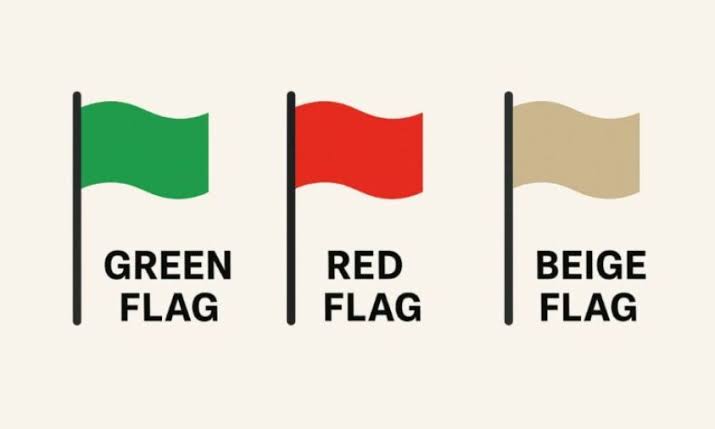
I recently listened to a discussion on the At Last She Said It podcast with guest scholar & researcher Jana Reiss. They were talking about the current trend in which many more young women are leaving the church as they come of age, far more than in prior generations. The trend used to be that women were considered “more spiritual” because no matter how you treated them, they kept coming to church. Jana had pointed out what she calls the 3 Ps as reasons more women are leaving: politics, purity culture and powerlessness. Dave B also posted about this last month. While these are interesting findings sociologically, the ALSSI discussion added some color to the conversation. They particularly talked about missions being beneficial to women, but at the same time showing them very starkly that they are not valued on par with men in the church. That was definitely my experience, which I wrote about in my mission memoir The Legend of Hermana Plunge.
Another observation the three women made is that Gen Z women are aware of the compromises their mothers have often made in marriage, and they are unwilling to put up with half a life. They expect to be equals in their marriages. When I was a young woman, there weren’t many men in or out of the church who met my standards for equal treatment. Now that decades have passed, it’s more likely you will be treated as an equal if you date outside the church than inside the church, although there are plenty of people to avoid everywhere.
Women have long talked about how to avoid red flags in dating, but there are some uniquely Mormon red flags that are how problematic behavior shows up due to the culture. A “red flag” can be a bit subjective, of course. I may have less tolerance for being treated unequally, and my own needs may differ from someone else’s. We all have our own hopes and dreams for how our lives will be. With TikTok culture, women are much more aware of what others consider to be “red flags,” and are using these as criteria to avoid problematic relationships.
When I was dating, there were a few things I used to do to avoid men who did not see me as their equal (which was ironic since a lot of them were totally not worth my time). A few of my strategies were:
- Light swearing. If he was missish about this or worse, tried to lecture me, forget that.
- Referring to women’s body stuff to see how he reacts
- Age gaps–this changes as we get older, but I was not interested at all in anyone who was more than 5 years older than me, particularly when I had basically no life experience yet, so what was I even bringing to the table? A blank slate he could write on, that’s what.
- If he used the word “female” as a noun that’s a nah for me. What are we, lab rats?
- Suggesting a date to the temple was a hard pass–that’s not a date. You are literally not interacting with each other at all. Plus, it’s not fun. Have a personality, my dude.
- Being insufficiently outraged at polygamy. Men have various responses if you bring up the concept of eternal polygamy doctrine. Nearly all of them have the good sense to look like they just accidentally stepped on a landmine and are now afraid to move for fear it will go off. Some try to fob it off on “I don’t really understand that, but it sounds awful.” Obviously it’s a ginormous red flag if they are rubbing their hands together with glee at the prospect, but that was never enough for me. Either they see that it’s exploitative, or they can keep walking.
- On my mission, while I thought some of the elders were great guys I would consider dating, I would not have dated anyone who was corrupted by leadership. Even if they started those roles humbly, they quickly started to get really full of themselves. Not everyone to the same extent, but enough of them did that it was a big turnoff.
- If he talked about the future as if the role of “wife” could be filled by just about anybody, and he didn’t assume I had my own dreams and plans or simply didn’t ask about them or listen when I shared them, that’s not IMO a relationship. That’s a guy looking for a Plus One. Anyone can be your “plus one.” I’m more than that.
This last one is a huge issue in dating Mormon men, particularly since Pres. Benson shamed women for wanting careers and financial independence. Quite a lot of men have what’s called Main Character Energy. They see the other people around them as supporting players in their story. To some extent everyone does this, but in a relationship, both people have to matter or no thanks. At the extremes, men who think this way see their wives and children a possessions, under their control and authority, resources to them to help them in whatever their own goals are, but not fully people in their own rights. This is how domestic abusers and family annihalators think.
I also asked some other women who grew up in the church what “red flags” they experienced with Mormon men in their dating experience. Some of these apply to all men, and some are unique to Mormon culture. Here’s a starter list they provided:
- Using his patriarchal blessing to try to manipulate you, claiming it is somehow binding on you (e.g. you have to marry him because it’s describing you).
- The “spirit” told me–using this statement to justify what he wants, to add pressure to get you to do something or not do something.
- Name dropping his church pedigree to add weight to his importance.
- Speaking his mission language and claiming he forgets sometimes and just slips into it.
- Bragging about his missionary leadership positions. To quote Jim from the Office, “Never has so little power gone to someone’s head before.”
- Bearing their testimony unprompted
- Praying in a restaurant
- Claiming “revelation” to get you to do what he wants (including marriage)
- Talks ad nauseum about his mission
- Gives you a list of traits that would disqualify someone for marriage: tattoo, not being a virgin, short hair, how you dress, what you are studying, etc.
- Wants to do scripture study together
- Blames you for his sexual urges and takes no responsibility
- Thinks he’s smarter than you, even in your area of expertise
- Has no women friends
- Is disgusted by women’s bodies, except as relates to his own pleasure (e.g. makes a face about periods or breastfeeding)
- Uses violence against objects around you (this usually escalates to domestic violence)
- Can’t list any women’s achievements he admires–except motherhood
- Uses the word patriarch
- Modesty shames you
I mentioned that a lot of Gen Z women are discussing these red flags, not just in the church, particularly since toxic masculinity is really having a renaissance among many men thanks to the rise of the manosphere which has been embraced by the political right. While Mormons are generally less problematic than Evangelicals, the difference is in degree, not in kind. They are on that same spectrum culturally. You can’t really have one spouse “preside” in an equal marriage. Sorry, but that’s not a thing. That’s a hierarchy, not equality. Here are some red flags that Gen Z women seek to avoid:
- He sees the husband as the “leader” of the wife. He sees disagreement as disrespect. He claims women are happier with this arrangement.
- Women’s pleasure is not on the radar. Sex = p in v with male orgasm, and anything the woman experiences is either a bonus or irrelevant.
- He talks about a woman’s role in marriage, but has a hard time articulating his own obligations. That’s entitlement, not equality. He assumes childcare and housework are “women’s work,” or doesn’t know how to do things like laundry, cooking, cleaning or changing diapers. He doesn’t understand or value the amount of time and work involved in these tasks. He expects gratitude for pitching in at all or wants to be told what to do to help.
- He sees his career as more important. If he needs to move for a promotion or transfer, that’s a given. If she does, that’s just silly.
- He believes that earning money gives one more power and authority in the relationship. This is a transactional approach to marriage that results in lack of respect for the work done by the lower-earning spouse.
- He makes jokes about “allowing” you to do things, but doesn’t like those same jokes about himself.
- He has a double standard about sexual behavior. Women have to be controlled, but men can’t control themselves.
- He expects to be appreciated as provider and protector, and you show that appreciation by obedience and supportive actions, not by having your own opinions, contributions and goals.
- He never apologizes or admits being wrong. He gaslights or blames you for any disagreement.
Most of the ex-Mormon women I’ve talked to say that you should avoid Mormon men altogether, and that ex-Mormon men are just as bad. They think never-Mormon men are a better bet if you want to be treated like an equal, but you still have to be on the lookout. Since people often misrepresent themselves in dating, women know to watch for things like how men interact with or talk about:
- female servers
- female employees
- women in positions of authority
- female contractors or mechanics
- their mothers
- ex-wives or ex-girlfriends (“She was crazy” isn’t hitting the way men hope it will)
- women who disagree with them or tell them no
- women he finds unattractive
- older women
It’s easy for a man to claim he’s a feminist or that he sees women as equal, but the test of that is watching how he really sees them. He can say “my wife doesn’t work for me, obey me or belong to me. She’s my partner. We make decisions together.” The real test is when he doesn’t get his way. Does he still behave like they are equals or does he revert to domineering behavior or childish tantrums?
I have certainly been fortunate in my choice, but many have not, and boy oh boy did I dodge a bunch of bullets at BYU. The majority of Mormon men I dated were not going to be good partners for me. The idea that any two people can make it work (Pres. Kimball said this) is pure tosh. Why should we make it work with someone who thinks we are on par with the family pet, if the family pet could bear children and do dishes?
Beige Flags (!)
My daughter who is Gen Z also explained to me that in addition to Red Flags and Green Flags, there are Beige Flags. These are things that are quirky habits that raise questions but aren’t deal breakers. Here are some examples:
- Eating the same meal every single day
- Setting phone alarms for unusual numbers like 6:27 instead of 6:30
- Leaving half empty cans or bottles everywhere
- Refusing to follow GPS instructions because they think they know better
- Having a dating profile that is based on generic phrases like “I love to travel” or “fluent in sarcasm” revealing little about the person
- Slipping into random accents when excited or ranting
- Never closing things completely, leaving food containers and cabinets slightly open
I mean, a lot of these sound like OCD to me, but who knows. It’s probably not serial killer behavior, but it’s a little off, right? Whatever you can say about Gen Z, they are certainly full of interesting insights about the human condition. The amount of crap we Gen Xers put up with is kind of crazy when you think about it.
Do these red flags in dating apply to the church, and if so, does that explain the exodus of Gen Z women? Possibly. On the one hand, I have higher expectations for a life partner than I do for any organization to which I belong. I also have higher expectations of people my own age or younger than I do for those who are from older generations. When I meet someone who is sexist or racist, I certainly feel differently about it if they are Boomers or older than I do if they are in their twenties. I generally assume young people should know better. But that doesn’t mean someone gets a pass for their bad behaviors either. It just means I expected them to have bad views.
- If you have sons, how have you raised them to see women as equals?
- Have you experienced any of these red flags in others or even yourself?
- Do you think Mormon men are better, worse or the same as non-Mormon men when it comes to dating red flags? Does this vary by generation? How much does family influence this?
- What red flags have you looked for in dating? What about in friendships or when you just meet a new person?
- Have you seen beige flags? What were they? Are there any uniquely Mormon beige flags you can think of?
Discuss.


It’s an interesting comparison about Gen Z using red flags to evaluate the church. There is a content creator on YouTube I like who talks about patriarchy. She conceptualized in a way I hadn’t heard before where in a patriarchal society, women are essentially in a forced relationship with a male narcissist. Not individual narcissists necessarily, but the patriarchal system works using the same rules as a narcissist. While the word has become a bit overused, I do think it applies here.
I think it applies to the church. She was saying that narcissists have their own reality and refuse to view others as complete people who also have their own reality and lived experience. Only the narcissist’s reality is the truth. Instead of having real relationships with others, others are a means to an end or tools the narcissist can manipulate to achieve their goals. Other people’s feelings or experiences aren’t relevant or don’t exist in the narcissist’s reality.
While this description is stark and many would say the apostles are loving and well-intentioned, I think looking at their actions towards women reveal so many red flags. In all the recent rhetoric about young women leaving the church, the young women are not treated as complete beings with their own lived experiences and values. These women are resources, specifically child-bearing resources for the institutional church. Whenever the church has given women more breadcrumbs, it hasn’t been a matter or conscience, justice, or revelation. Instead it’s always about preserving the patriarchal institution.
Women were only put on top councils in the church after Ordain Women. The age drop for women serving missions twice was because young women were leaving the church. The changes in the temple script were only because more young female missionaries were getting endowed. The policy of not firing pregnant female seminary teachers was after bad PR news articles. The garment changes were also after bad PR. With all the church’s vast resources, have you ever read about their humanitarian contributions tackling violence or sexual assault against women? I haven’t. I’ve read about maternal-child health initiatives, which are noble of course, but also serve the church’s interests.
The apostles concede the smallest things they can to women at a pace that is just slow enough to not upset their true target market (men) and “fast” enough to prevent enough women from leaving. Every change they make is not about what Jesus would do or how Jesus sees the humanity in women, it’s all about protecting the institution.
When Idaho’s trigger law took effect after Roe v Wade fell, the church could have expressed concern then and put public pressure on Idaho representatives to create a law that mirrored the church’s own policy and saved the lives and health of more women. Instead they are stepping in now. They don’t care about the lives or health or pregnant women as much as ensuring women continue to procreate for the institution.
When the church does make changes for women, there are never apologies or any kind of recognition that how things were done before were wrong. A narcissist is never wrong in their reality. A narcissist is not bound by a coherent set of morals. A narcissist changes the rules whenever it suits them. They also apply different rules to themselves vs others. According to Declaration 2, the church believes all are alike to God, which is why black men deserve the priesthood. In the same verse women are mentioned, yet church leaders get to decide when women are like men and when they are subhuman. Instead of engaging in good faith with scriptures and Jesus’ teachings about women, the church cherrypicks whatever verse or modern revelation that will keep women subordinate, but not offensively subordinate where women leave and are no longer useful to the institution.
I have mostly daughters. I am genuinely concerned about their dating pool in Utah and in the US in general. I would also add a certain political party to the red flag list right now in this current moment and definitely voting choices as well. IMO, there is so much about male behavior in the church that would change if only women could be in the Q15, seventy, etc. And I kind of wonder if they would clean house. So many men get away with things because other men are in charge. Christofferson is a prime example of this. I also wonder what would change if we had a healthy heavenly mother theology rather than a token one gatekeeped by men.
Let’s be honest, young men in the church are trained up to believe (at least this was the case when I was growing up) that women want a Peter priesthood, temple recommend holding, worthy priesthood holder, returned missionary. My mission broke me of the notion that returned missionaries were cream of the crop. I couldn’t understand after being out how some of these elders were ever attractive to women. I knew they’d be a huge drag on any marriage just watching them fumble stupidly and immaturely as missionaries. I guessed they’d go on to probably get married and divorced. And this was me as a 19 year old seeing this. And I largely credit this recognition to my parents treating each other with respect and as equals. Church callings or offices were never used a leverage. In fact, my mom and her mother are/were very strong and independent and they did not hold back in voicing their distaste of idiotic and piggish male behavior. My sisters and spouse are the same way and it is quite fun. They are very accomplished humans. I have one son and my hope is that I will have taught him and shown him what equality means.
You highlight bringing up women’s body stuff. No one really teaches young men about that. No one teaches young men how to support and accept women in all of that. For crying out loud, a large part of Christian scripture teaches women are unclean during their periods and need to remove themselves from society during that time. And if they don’t, they run the risk of making others unclean. This was eye opening for me early in my marriage and a point of struggle. I’m sad to admit that I was a bit embarrassed by my wife’s body stuff. That has since changed, but still. I don’t want to paint myself as some enlightened man in all this. Our marriage has been super rocky in spots. And I think we both have come to a realization that we each got married way too young and needed more time to mature. But, there is literally no framework in the church for true maturity. So unless you happen to luck out to have a parent or someone else that modeled personal maturity and autonomy for you, not much growth would ever happen because you’d then just be alone in pointlessly banal elders quorums for men….and I guess I don’t have an opinion on how the RS does things so I’ll leave it at that.
The Dude Dad Youtube channel creator runs a dad’s only Facebook group aimed at providing a support space for dads. I joined thinking that hey, this could be a positive space of mature men having good discussion on important things. Sadly, it is a lot (not all, just want to be clear) of immature Christian man babies wondering why they are struggling in their relationships, single and can’t find anyone or divorced multiple times. It is male decline on full display. And I think their churches (including ours) are part of the problem, because they are shielding these men from the consequences of their actions and behaviors. In fact, I think church is one of the last vestiges of protection available to them, which I think is part of the reason why we are seeing men return to church. When you’re allowed to hide behind Bible verses instead of encouraged to make change–decline is the inevitable outcome.
As for you flag list, I’ve seen the red ones in other men. Most of them I’ve always found weird, but one or two I could see in myself. The beige ones don’t strike me a gendered. They seem more like personality quirks that could exist in anyone that become pet peeves in a relationship. I don’t know that they pertain to original point of your post as those things exist in both men and women and could be considered “flags” in both directions.
“As long as old men sit and talk about the weather / As long as old women sit and talk about old men”
The beige flag list seems more like describing neurodivergents of various stripes, not just OCD – ADHD tendencies for leaving things half-whatever, cabinets slightly open (my wife does that!), or autistic (maybe ADHD?) tendencies for eating “safe” meals, etc. Which, fair, those are quirks that after decades might not be so cute, but still.
Otherwise, so much of the rest of the discussion seems to be so keyed on individual experience and training, as to whether the man leans into the toxic sub-culture (not to mean it is a narrow one, just not the only one), or is able to live up to being an equal partner in a relationship.
You have unfairly misrepresented President Kimball. Here is what he actually said (emphases mine):
He delivered that quote at a BYU devotional in 1976, which I attended as a missionary in the LTM (the only BYU devotional I have attended in person). That quote was impactful enough that I recorded it in my journal. My future wife was a BYU student at the time and was probably in attendance too. (She had no specific memory of attending, but she had a clear memory of the quote and I found the brochure from which I drew the above quote among her effects.)
It was explicit throughout our marriage that we were not soul mates–we were a man and a woman who thought of themselves as “good” paying the price to have happiness and a successful marriage. We did not achieve happiness and our children have not used ours as a model for their marriages. But they made it clear that they preferred us to stay together and the evidence is that doing so paid off, at least for them. Whether we ever qualified as “good” is open for debate. More significantly, we were both (unknowingly) neurodivergent, which may have placed us outside Kimball’s “almost” qualifier.
In short, I find nothing objectionable in Kimball’s quote. Your invocation of it in the context of less-than-good men who are unwilling to pay the price does it a gross disservice.
> If he used the word “female” as a noun that’s a nah for me. What are we, lab rats?
…
> female servers
> female employees
I see what you did there 😉. Just kidding. This is a good list. I can’t help but try to compare myself, both now and as a younger person entering the dating pool, against the red flags. I’d like to think I did alright, although I did insist on reading scriptures before a make out session once 😅 I was on a long scripture reading streak and didn’t want to break it. Ha! How embarrassing.
Also, like Chris said, I was getting a lot of messaging from the church and, at least in my case, my own mom (a genuine woman!) that spirituality is what women wanted. Seems the Gen Z women at least are doing better for themselves. Hopefully the men figure it out.
I have one college age son. I think a lot about whether we taught him to see women as equals. Really the best I can hope for is that he saw his father treat his mother as an equal, and has decided that is worth emulating.
LDS red flag:
– Do they think they are owed a great partner because of their righteousness? (i.e. I was such a great missionary and now I’m gonna go get my hot wife!)
General red flag:
– Is this person in a relationship with their phone or interested in actual real-life people? This is a problem for all age groups, not just Gen Z, BTW.
As a mom of a Gen Z young man:
– I’ve raised him to see people as equals by trying to model healthy behavior and consistently calling out bad behavior where I see it…. so he learns what it looks like and why it’s just “off”. When I’ve made a mistake, I apologize for it – out loud, to the other person, engage in a conversation and commit to do better. Husband does the same thing. We normalize the process of self-improvement by identifying faults, taking the shame out of it, and moving forward. Likewise, when I see someone in the news making poor choices, we talk about it… not in the spirit of piling on, or kicking someone when they’re down, rather to make it crystal clear: hey, those people named in the Epstein files really thought they wouldn’t get caught, thought that these trafficked girls were sub-human property to be abused, and that money and influence can now protect their reputations. What kind of person will you be? What will you do when you see others who are vulnerable? Does friendship and loyalty obligate you to protect secrets that hurt others? Ongoing conversations about ethics and justice will grow a strong moral core that will guide decision-making and behavior long after I’m influencing his daily life.
– My son is an RM at BYU. I can count the number of dates he’s ever gone on (that I know of) on one hand. He thinks that the dating culture is artificial and forced and he is focused on schooling, internships, setting himself up for graduate studies and career life. His hobbies trend more solitary: swimming, golf, lifting. If I had to put on my Amateur Psychologist hat, I think this is because of the feeling that every BYU team sport/study group/campus club is really a thinly-veiled construct to introduce you to Mr or Miss Right. It’s exhausting, so he’s opting out. If and when he meets a woman who is a good match for him, he’s open to dating and moving forward, but he’s not obsessively running around trying to find someone to marry. (maybe it helped his parents were 30 and 27 when they married?) He is President Oaks’s worst nightmare.
I’ve told all of my children: better happily single than unhappily married.
That list of beige flags is . . . interesting. I’m glad I’m out of the dating pool because I pretty sure I have a dress drawer at my house that is half open right now. And raising a flag, even a beige one, because of eating the same meal every day has a tendency to rule out whole cultures. (Rice and beans for lunch anyone? They’re delicious.) I remember an Ensign article from long ago, where one half of a newly married couple wanted to make lists of things they didn’t like about the other person. One of the lists included that the other person ate grapefruit “wrong”. (They pealed it like an orange.) The other spouse, of course (because it’s a story in the Ensign) couldn’t come up with anything to put on the list. If you’re concerned that my morning alarm is set for 5:58, *that* might be a red flag.
Kids these days seem far more able to talk about women’s bodies than we were back in my day. A 16 year-old boy was over at my house for dinner recently (my daughter insists they aren’t “dating”; this is clearly untrue) and my daughter just talked about having her period (or not having it, I don’t recall). The boy did not spontaneously combust, as my 16 year-old self would have assumed. I was a teen in the 90s and had 3 older sisters and can not imagine any of them daring to say anything about a period at the dinner table even without a guest there. At my dinner table, it is a perfectly reasonable topic, and apparently even when a boy is over. Clearly we’re making progress.
As mentioned, some of those beige flags are neurodivergent, ADHD, autism spectrum, and the like. But, maybe they SHOULD be red flags for neurotypical people. Stim behavior can drive a person to distraction, but people don’t do it much while dating. And if a person is driven crazy by half finished jobs all over the house, DO NOT marry someone with ADHD. If open cupboards bother you…don’t even come to my house. And if constant tapping or needing one special spoon, or eating the exact same meal every day bothers you, do not marry someone with autism. If you despise picky eaters, don’t marry someone with autism because their eating “habits” are nonnegotiable. Finishing one job before starting another, nonnegotiable. Also, do not expect your kind of thinking. Sometime they are brilliant but have no common sense. Sometimes they are not capable of keeping to a budget or going to your office party. It is not a matter of being lazy or unwilling to be “uncomfortable” meeting new people. Just as you see no point and therefore could not learn every fact known to science about dinosaurs, they cannot do some things you find simple. Their brains are just wired differently. It is hardware, not software.
My one daughter is neurodivergent different than I am and I could live with her. But the daughter who is SO much like me, well, we couldn’t even live together when she was a child. She makes me nuts and I make her nuts. From the time she was born as a screaming premie, she has caused me to have melt downs. I felt like a total failure as a mother, because I loved her and hated her at the same time. As she got older and I would try to teach her normal life skills, it was a coin toss as to who had a melt down first. And now, she is disabled and needs a different place to live and just, nope, she is not coming here even for a month. But then again, we can talk for hours because we have the same weird obsessions.
So, my advice is know yourself well enough to know which traits will bother you and then get to know the potential spouse well enough to make sure there is not some behavior that they really can’t change that is going to be water torture to you. Because, no, I cannot stop the foot tapping, sorry it bothers you, go away. Stimming for an autistic person can be like breathing. Know your personal red flags.
As far as the red flags go, I have a problem with the church pushing girls to marry “temple worthy” as if that is more important than if he beats you. Girls should be taught that Christlike behavior toward all others is an important part of religion, not if he was zone leader on his mission. It is no wonder Utah is fraud capital of the US. The church teaches people the exact wrong things to judge others on. So, if he has a temple recommend is a more important gauge of “honesty” than all his prior convictions for fraud. If he pays tithing on his gambling wins is more important than if he gambles away the rent and grocery money. The church teaches that only goal is temple marriage, when the important goals are a good relationship and developing your own life skills and goals.
Another red flag. If he jokes about things, take his jokes seriously—they are not jokes unless both people are laughing.
And Aunt Polly’s red flag about lack of face to face relationships is important. It is a really recent problem when people have their whole life on line. It isn’t just the incel groups that are a problem although that is a big red flag. But others should be having your therapy/psychologist on AI, or their social group is all on line groups or from the online gaming. Our society has changed and we are only beginning to adapt to all the changes. My son just described AI as an extremely intelligent, happy puppy that will do anything to make its programmer happy. If someone interacts too much with AI, they can develop false expectations of human interactions. It is just like heavy porn use changes a guys expectations of human women and probably more dangerous than porn ever was.
lastlemming: You said I mischaracterized the Kimball quote, something I heard all the time when I was growing up. I said “The majority of Mormon men I dated were not going to be good partners for me. The idea that any two people can make it work (Pres. Kimball said this) is pure tosh. Why should we make it work with someone who thinks we are on par with the family pet, if the family pet could bear children and do dishes?” So I don’t really see how that is a mischaracterization. As you point out, Kimball added that “almost any good man and any good woman can have happiness and a successful marriage if both are willing to pay the price.” In these red flag scenarios, the men are revealing that they enter marriage assuming that they are the prize, and that loads of “females” are lining up to attach themselves to their rising star. That’s not men being willing to pay any sort of price. No sacrifice required for these special boys, just for their long-suffering wives and girlfriends who are so “lucky” to have such a “great catch.” You can’t make a good husband out of a narcissist, and a narcissist is never going to try because they already think they are perfect. So these are not “good men,” but they certainly think they are–they think they are the BEST men. You’ll never convince them otherwise, and frankly the church does nothing to check their egos. I had a guy at BYU tell me that he was wary of these girls who were trying to get all they could out of men. I wasn’t even sure what he was talking about. This was in the getting to know you phase. It’s not how I viewed relationships at all, but his attitude seemed pretty common to me. They saw women as takers who had to be viewed with suspicion and held at bay, not as individuals with hopes and dreams of our own.
Just curious, but how would you view the Kimball quote if the man was abusive? I can tell you that as a woman raised in the church, most women would be advised and or would feel like it was our responsibility to still try to make it work, while the abuser would blame his victim or at least say she shared responsibility for the abuse. Hell, we had a fairly recent General Conference talk claiming that victims of abuse should introspectively determine how much of the abuse was their fault and repent. That’s where I reject the Kimball statement. It works when both parties view each other as equals, but when they do not, it’s a recipe for further mistreatment. It’s like when people say you have to give 100% to make your marriage work, and sometimes that’s you, and sometimes that’s your spouse. Sure, that’s true, but if one of you always has to give because the other is a man-baby narcissist who thinks even a tiny setback is grounds for a temper tantrum, then no, that’s not worth your effort. Move along.
Charles: Using female as an adjective (female servers) is one thing. Referring to a group of women as “females” is where it sounds like talking about lab rats. I knew an elder who said he was “corresponding with several females.” That was a phrase that gave me the ick big time. What is he, a serial killer?
chrisdrobinson: I’m actually pretty hopeful about how many Gen Z men are actually totally comfortable talking about periods and stuff, buying products for their girlfriends, etc. I’m not sure that’s as true everywhere, but I’ve been pleasantly surprised among my kids’ friend groups. And you are totally right that there is a political disqualifier for many Gen Z women who refuse to date anyone who has ever voted for Trump. There are conservative men out there who try to hide their voting history to avoid detection. My daughter said you can tell because they are vague and say they aren’t political or they try to use both-sidesism to deflect.
Regarding your red flag list, I definitely talked about my mission a lot for about three months. I feel like we all did. So maybe the real issue is recently returned missionaries aren’t worth the effort until they’ve been home long enough and re-assimilated =).
As for beige flags, to pile on the notion these are neuro-divergent items, and regarding random alarm times, my iPhone has a dial for setting the alarm. When I want to wake up at 6:30 and I swing the dial and it lands at 6:32, I call that good enough and move on with my life. I feel like the beige flag is Apple’s and not mine =). Or maybe I need to do better and just have Siri set my alarm but I just don’t trust her.
My oldest son is about to be 17. We’ve talked a lot about consent, and how consent can be invoked or revoked at any time, that he also has to consent to whatever. These were not conversations my parents had with me in the 1990’s. I hope that conversation was grounded in treated everyone as an equal.
As you say, bad people exist everywhere. I do think non-Mormon men quite simply come with less baggage that needs to be managed. And from what I hear generally, Mormon men that leave the faith deconstruct it and stop there when they also need to deconstruct other things such as patriarchy or other social/economic myths. So there’s that.
Is this a colored flag? Do you hit the space bar once or twice after a sentence? Asking for a retired high school typing teacher (who happens to be my mom) =).
Mary-
I love your post- it makes sense (finally) of the uncaring impenetrable brick wall at the top levels of LDS leadership! The narcissism model helps me understand so much uncaring treatment much better! Not only did I not feel like a complete person, I object to so many other people being viewed as incomplete, othered, lacking, queer, trans, feminist, divorced, and so on…
I am a boomer and left almost 2 years ago, so am still overcoming the anger at so many lies I was taught, and the trauma, after trying so hard to make everything make sense!
Thankyou, Hawk, for a very interesting post!
Loudlysublime just said “boomer” and that reminded me of something else I wanted to say.
Please do not give boomers a pass on things like disrespect for others such as sexism or racism. Why shouldn’t they have learned something in all the years they have lived? They are not idiots who are incapable of learning and doing better. So, no pass. If they are still racist or incapable of seeing women as equals, or a different color of skin as just as human, then they are just awful people. No excuses.
Part of growing up is to see that other people have needs and value and different perspectives, and to learn how to treat others with the respect that all humans deserve, just because they are human.
And even back in the 50s, or the 1800s, respect and love for your fellow being was still part of following Christ. Unconditional love was not different back then. Sure, maybe science didn’t know the “inborn” part of homosexual behavior, but “loving your child no matter” was still loving your child. Love and respect for fellow humans has not changed. Yes, it was different for a husband to expect his wife to stay home in 1950, because the economy was such that he could support her and 15 children. But anyone who can’t see that as having changed is just a horrible person. And even in the 50s, it was even better if he supported her if she wanted to work as my mother did. But no, my father did not support her in wanting a job because he wanted her to be his servant and admirer and reduced her to less than him, which was never OK. The problem wasn’t her working, but that he treated her as if he was owed her worshipping and serving him. Working was the only place she felt like she had any value or was a human instead of reduced to nothing but wife & mother. The important thing then and now is that both people in the marriage are treated like full human beings, with separate emotional needs. That was just as true in 1950 as it is today.
Sure, if your grandpa is a sexist a**hat, you can still love him. That is you being a better person, but you still need to recognize that he is refusing to grow up. A jerk is a jerk even if he is an old jerk.
Chadwick: Yes, I totally agree that everyone coming home from a mission is going to be weird for three months, minimum, and they are definitely not fit company as a result. I got home and basically had no normal clothes anymore, and no interest in fashion (believe me, a big change from my pre-mission life). I ended up wearing these dowdy dark clothes I never would have worn before, and I was just contemplative and unable to be interested in anything normal.
Re: the space bar, that’s not beige. That just means you learned to type on an actual typewriter. I’ve quit doing it, but it was not easy.
Anna: good point about how people treat others. There are so many fiction books out there right now that depict these horrible dynamics in marriages. It’s just not OK to be treated like you are less than human by your life partner. It’s not OK to have your achievements belittled and your dreams crushed. It’s not OK to be patronized and treated like an imbecile and barred from opportunities for things outside your control. You can love your sexist, racist father, but that doesn’t mean that you agree with him, and it sure as hell doesn’t mean you marry someone just like him. It also doesn’t mean you don’t correct him. When it comes to a sexist, racist, homophobic church that claims Jesus agrees with all that, well, that just undermines any moral authority of the speaker.
Just curious, but how would you view the Kimball quote if the man was abusive?
Such a man would not meet either Kimball’s “good” or “willing to pay the price” tests, meaning the promise of happiness and a successful marriage does not apply to him.
lastlemming: Yes, I agree with that. But I’ve also never met an abuser who admitted he was one, nor the wife of an abuser who did not defend him for way way too long.
More red flags:
– tells you, on the second date, that his future wife had to have pioneer ancestors (which I don’t) so that “his children would have ancestors they can be proud of”
– brings up BYU-Jerusalem in every conversation
– tells you he’s marrying you ‘in spite of’ your student loans (this was before GBH told young women it was okay to borrow money to get an education) and most of your family not being LDS
– insists you read ‘The Miracle Of Forgiveness’ before he will “take you to the temple”
Married him anyway, because nobody was talking about red flags 25 years ago. It went about as well as you’d think.
I am going to look at my parents relationship and say that marrying someone more than ten years older when the girl is not even 19 yet.
So, power differentials, where one partner usually the man is older with life experience or in any way has more power or money or influence than the other.
Any guy who expects the wife to support him while he gets his doctorate. I have seen this one end when he graduates, gets his high power job, and then decides he needs eye candy.
I have never seen women abuse either of these like guys do.
I’m interested to hear more about how the beige flags are more about neurodivergence? I do several items on that list. lol. If I am neurodivergent that is new to me…
Over the last few years I realized how my patriarchal blessing pushed me towards ignoring bright red warning flags when dating my future spouse. It told me I would know my spouse when I met them, so anytime a red flag made itself known I told myself that was why I was given that instruction. Otherwise I would have turned and run away. I’m really having a hard time with this as the red flags were real red flags. If my children were dating people like that I’d tell them to run and not look back. It’s very distressing.
Anna: When I was an 18 year old freshman at BYU, there was a guy who was my sister’s age that she had a class with, and he kept coming by our apartment. He was 25 as was she. While he was cute, to me he was just this weird older guy who kept darkening our door, I assumed because of my sister. He kept following me around, including when I was getting my laundry (and he was so embarrassed at the sight of my bras that he turned beet red and ran out which I laughed at). He barged in on our apartment dinner one night so my sister invited him to stay, and when I said something (light swearing) that he didn’t approve of, he lectured me. I told him off and left the room to go back and do homework because why should I be lectured to in my own home, and who the hell did this guy think he was to me? Nobody, that’s who. I barely knew him. He was my sister’s age. Anyway, he called me to say he was pursuing me to date me. I asked what he was talking about–he was my sister’s age, not mine, and what on earth could we possibly have in common. He tried to make his case, and I shut it down. I said if he was pursuing 18 year olds with no life experience who had barely left home, he needed to take a long look at himself and what that said about him.
KW9438: I wouldn’t over-read anything into quirks and idiosyncrasies necessarily equating neurodivergence. Everything is on a spectrum anyway, but there’s a tendency to over-label things as neurodivergent without an actual clinical diagnosis. If you think you have other markers of neurodivergence that you want to diagnose, that’s a whole ‘nother thing. I was telling someone about how my dad’s garage is so organized with labels on every tool, the screws and nails, etc, and someone said “Oh he must be neurodivergent.” I mean.. maybe (?) but he was in the Navy for two years, and he was an engineer for decades, so some habits just come with all that. Then again, maybe a lot of engineers are neurodivergent. I think the issue with over-diagnosing neurodivergence is that it’s fine if it’s useful to you to consider that, but if you are functioning just fine in life, you don’t need therapy to fix what is just part of the diversity of life. All people have quirks and eccentricities. I often put the milk away before anyone else has a chance to put it on their cereal, but I think that habit is just that 1) I really like getting tasks off my plate, and 2) I have a secret fear that the milk will go sour. And beige flags are neither red (danger) nor green (selling points). They are just quirks that everyone should consider how they feel about. Does it drive you absolutely nuts that your partner does this? If so, is it something they feel they can’t change? I suspect beige flags are really just an offshoot of sitcoms. Think of all the dumb reasons Jerry Seinfeld came up with for breaking up with girlfriends.
I think some missions are incubators for male entitlement. I was the worst version of myself in my post-mission years at BYU and it was a very different self from the sweet, humble kid I was in high school.
My particular mission (Brazil in the aughts) was, rather than the grueling lesson in humility that my dad and brothers got, a high-baptizing, high-back-patting sales bro extravaganza where the sun was always shining and the elders were all working towards the 100 club (read: baptisms) or, in some particularly smarmy cases, the 200 club.
We were insufferable. One of my district leaders literally told me: “Repeat after me: I served an honorable mission and I deserve a beautiful wife.” Fast forward to BYU where I got the real lesson in humility: bearing your testimony on dates does not go well (yes, I did that one) and being a returned missionary doesn’t mean you deserve anything.
Dating was hard for me (in hindsight, it’s probably hard for most guys who are under 5’7”) and the church did nothing to coach me through handling rejection gracefully or learning to be happy with myself without a girlfriend. Entitlement, left untreated, calcifies into depression. It’s a miracle I got married. But it’s no miracle that’s kept us together—that’s the result of hard work, therapy, diagnoses (yay neurodivergence!), and more hard work. And leaving the church. That honestly helped our marriage more than any other single thing.