
When I was a kid, one of my family’s go-to TV shows was The Love Boat. This hour-long dramedy took place on a cruise ship. Every episode, the ship’s zany crew made a new voyage with new guest stars. Boasting one of the most ear-catching theme songs ever, it ran for 250 episodes over 10 seasons.
The Love Boat proved formative for me. Broadcasting in the early 1980s, the show coincided with my arriving at the age of accountability (an age God apparently first revealed to the Greeks and Romans). More critically, without any help from Mom and Dad, eight-year-old Jake decoded the magical method of this hit show.
Watching week after week, I discerned the following formula:
- Act One: the ship sets sail with lovers loving
- Act Two: on the open ocean, lovers fall to feuding
- Act Three: the lovers reconcile as the ship returns to port
I felt downright prophetic as I began clocking the formula. At about 47 minutes past the hour, I’d look at our family’s grainy analog TV screen and say to myself, “The characters are about to start making up.”
Those Were the Days
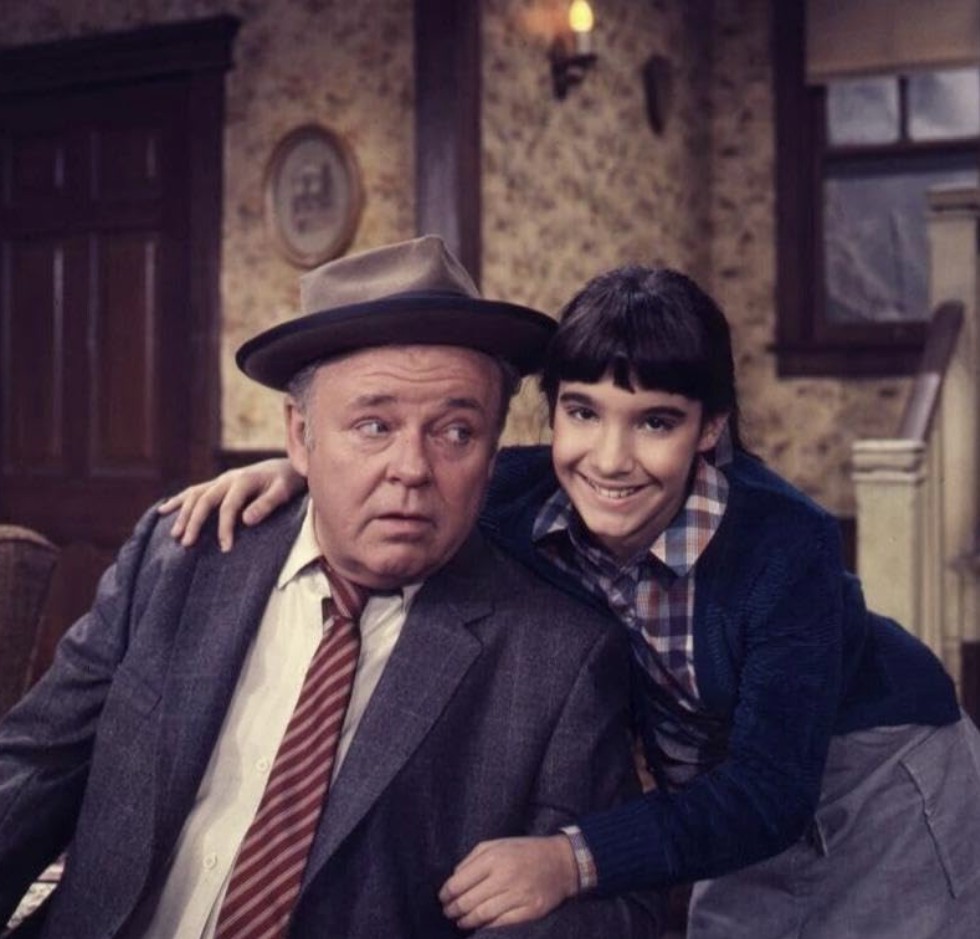
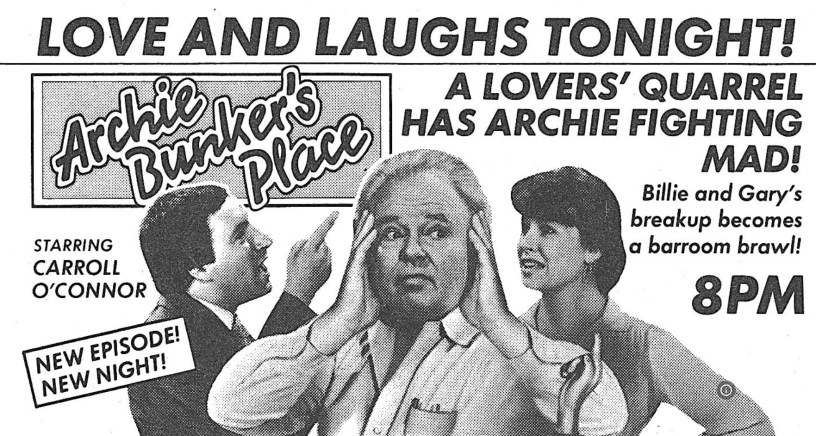
In recent weeks, I’ve enjoyed deciphering another show’s formula, working my way through the sitcom Archie Bunker’s Place. This show ran in the early ’80s, just like The Love Boat. A spinoff of the classic All in the Family, Archie Bunker’s Place sees the titular character living out a comedy-of-errors life in Queens, New York. To mixed results, it straddled the subgenres of family and workplace sitcoms. Archie, now a widower, juggles restaurant ownership with raising an orphaned niece, played tenderly by Danielle Brisebois. (She’d previously appeared in the original Broadway production of Annie.)
Neither a big hit nor a huge flop, Archie Bunker’s Place ran for four seasons. Some episodes are wonderful, others are forgettable. As I worked my way through the series (thanks to free ad-supported streaming on Tubi), I experienced the same satisfaction I did with The Love Boat. I noticed the following formula:
- Act One: Archie expresses bigotry by objecting to a loved one’s life choice
- Act Two: Archie witnesses his loved one being persecuted by an even worse bigot than himself
- Act Three: Archie experiences a change of heart, choosing to stand with his loved one
One of the best examples of this formula involves Season 2’s episode The Incident. Archie becomes self-conscious when neighbors see him grocery shopping with his housekeeper, a woman of color. Initially played for comedic effect, Archie exhibits bumbling self-consciousness. Things turn dramatic when Archie finds himself caught between his housekeeper and a white store manager whose racism plays far more cruel. As the situation escalates, Archie must choose between saving face with his fraternal lodge or setting an inclusive example for his young niece. It’s a mainstream sitcom, so no big spoiler to say Archie makes the right choice.
Worth noting: this is one of the top-rated episodes of the series on IMDb. The episode’s penultimate scene features actor Barbara Meek. Playing Archie’s housekeeper Ellen Canby, she reflects hauntingly on a moment she witnessed racism turn fatal.
You Are What You Eat (Watch)
I could do multiple posts on the cultural dynamics of 1970s sitcoms like Archie Bunker’s Place. How well has the show aged? How is it problematic by today’s standards? A big part of my enjoyment comes from experiencing these shows as cultural time capsules. Back then, what could make tired adults laugh at the end of a long day? What social trends concerned them? What outcomes brought them comfort?
I find Archie Bunker’s Place problematic in all the ways you’d expect. But I think the character of Archie has aged wonderfully. He may get his conspiracy theories from print copies of the National Enquirer instead of doom-scrolling on a smartphone, but folks… like Archie, our world hasn’t changed much.
It’s easy to point fingers and scoff at what offends you. Nobody’s garments are spotless on that score. I’m more interested in discussing what the formulas of popular shows say about us today. So readers, it’s time for you to weigh in.
Questions for Discussion
Think about shows you enjoy. What formulas do you see utilized to tell the stories? How and why do they work?
What do the shows you watch, and the formulas they use, say about you? For better and worse.
Framing it as we do here at Wheat & Tares: In religion in general, and Mormonism in specific, what formulas do you see church leaders and parents relying on to inspire and persuade?


Love Boat Formula=Hallmark Movies Formula. We always predict the first kiss, then the falling out and then the happy ending. My husband cries happy tears at the end of each one. We watch them occasionally (especially at Christmas) just to see some feel good time.
The positive (IMO) with the Hallmark movies is the diversity in casting which sets good examples of how life can/should be.
I suppose the examples I see in the church are the good people I know who are tireless and kind. I think the church takes wild advantage of those people, but I admire their willingness to serve just because they are good people.
What amazes me the most about old TV sitcoms is how a story was told in 21 – 22 minutes of programming. I suppose with limited time to develop a story it helps to have characters with predictable quirks / behaviors. The episode then being a story of how that character responds to a common, everyday dilemmas.
The church program is definitely streamlined by the expectation of certain behaviors by members and leaders. We LDS adopt a similar language and religious philosophy. This minimizes confrontation and helps people feel comfortable and confident in what is believed.
Is this a good or bad thing? I think some conformity is a good and necessary thing for a religious community. But conformity invites complacency and that is not desirable.
Jake is absolutely correct about classic television having a formula that promoted goodness and morality. Sadly, those days are gone.
The modern entertainment industry, however, has an open and stated formula of promoting substance abuse and wanton sexuality. Part of this agenda includes an attempt to destroy traditional marriage and family.
Modern Hollywood portrays marriage as a burdensome institution to be scorned and ridiculed. Indeed, Hollywood treats marriage as something to be avoided at all costs.
As Jake point out, people are what they watch. Unfortunately, an impressionable public has begun to imitate what is shown on television and movies. As a result, the rates of illegitimacy and disease are skyrocketing.
The irrefutable fact is that wanton, uncontrolled sexuality does have harmful effects for both the individual and society. Shame on those who seek to impose this harm.
I disagree with JCS. I doubt there is any good evidence that the modern entertainment industry as a whole has an openly stated, coordinated agenda to promote substance abuse and wanton sexuality. Isn’t a more rational explanation that Hollywood frequently caters to those with a taste or weakness for such themes?
I agree with A Disciple’s point. In a few weeks the church will institute an educational program with 25 minute soundbite lessons. Given the time granted for announcements and prayers, the Sermon on the Mount will now have about the same time as a TV sitcom with commercials. Conformity, lack of context and any chance to develop ideas. What could possibly go wrong?
The Love Boat was one of three shows my sibs and I would watch on that night. I can’t remember the first one but Love Boat came after and Fantasy Island took us to Bedtime. We loved watching Mr. Rourke and Tattoo. That formula was simple too. Guest comes with trauma or some impossible problem. Guest ends up in a pickle and finally guest figures out they has the answer all along. Sometimes Rourke uses his deus machina powers to helps things along .
When there was a still an Ensign magazine, a lot of the articles had the same feel. You have a problem, pray, The church or god solves the problem.
When I was younger, I really liked Star Trek. I’ve watched the original series, Next Generation, Deep Space Nine, the old and new movies, and the new series like Discovery and Strange New Worlds. I even watched Star Trek Academy. It’s been one of the constants in my life. I like how it presents a problem involving something new, unknown, with different people/alians, finds solutions, and moves forward while trying to adhere to the “Prime Directive.” It’s based more on science but touches religion and spirituality as well. I like how it has a deep following and pushed our social boundaries. For example, the first interracial kiss on TV was on Star Trek.
I also like Star Wars but not as much. It seems that if there is science, it’s lost in religion with the Force. It seems to me to be more about authority and following than about discovery and solving problems.
If I talk with people long enough, we may get to Star Trek or Star Wars. Most religious people are aware of both franchises, but I’ve found religious people are more Star Wars, I assume because of the Force or because the themes always seem to center around authority, rebellion, freedom, looking to a higher power, mystery, and a great evil. Star Trek presents too many topics that are liberal, woke, or non-formulaic.
As for Church Leaders, I think they present the world and answers to world problems much more Star War like that Star Trek like. There is a great evil, and the force will help you with obedience. In Star Wars, right and wrong are presented more clearly. Star Trek asks questions Church leaders don’t want to answer.
Star Trek mention! I agree with Instereo’s assessment of the heart of each show, what it bases its formula on.
Sadly, I was not allowed to watch Love Boat or Star Trek as a child because of the implied sex (Love Boat) and immodest costumes (every single alien who wanted to seduce Captain Kirk). You see, JCS, television shows have always promoted wanton sex. There is nothing pure and chaste about past shows compared to today’s shows. (Or, you know, we could all accept that sex is part of life and that’s why it’s part of shows. Why don’t we all clutch our pearls about murder, cruelty, racism, and violence instead? We should be trying to eradicate one of those categories from society and it isn’t sex.)
My current fave is Supernatural, which ran from 2005-2020. It’s about a couple of brothers who fight overwhelming evil. They are never going to completely win this fight. God and angels are in the show, and they are part of the problem. Humanity is beset from the evil and the supposed good. So how do our heroes make decisions? Whatever saves human lives. They’re on their own and they generally manage to save someone’s life. I’m drawn to the secular and worldly attitude of ‘save mortal life’ even though the characters know for sure that heaven exists. They fight to make this world better and safer. Writing this, I see why I like it so much. I’m pretty much done with thinking heaven is the solution to all our problems. Save mortal lives; make this life better; religion isn’t going to help.
The Church formula is to learn correct principles, have your faith tried and tribulated, persevere and then bear your testimony of the blessings. Anything else does not get renewed for a second season.
I had a coworker lend me a DVD of the best 10 He-Man episodes, because in conversation it came up that I had liked He-Man as a boy. As she was handing me the case, she warned me that they weren’t really good. I remember adults ragging on how the He-Man episodes weren’t any good. I watched them expecting to at least enjoy them a little but, but they really were poor TV. As an adult (especially with binge watching) you could tell that they were saving money boy reusing a lot of the same cell’s from episode to episode – perhaps swapping out the background.
Then in dawned on me that they were even reusing the same soundtrack. Not just similar themes, but I believe that they recorded one soundtrack, and made every episode match that soundtrack. So scenes could only last as long as the music that was going to be played along with them. I never rewatched the show with a stopwatch to prove it, I have better things to do.
Janey: I remember having a conversation about sex vs violence portrayed on TV on my mission. The elder I talked to was all for violence instead of sex because he knew he wouldn’t be violent, but he might have sex. I thought it was a lame excuse, but I didn’t have enough confidence in myself to say anything.
I also remember a Stake President talking about the evils of “X-Files.” I’d never watched it, but I did then and thought he was crazy because it was good. It also wasn’t like most of the Fox programming. It made me wonder how Fox News could be so conservative, and Fox programming could be so lascivious.
I also wanted to give a shout-out to Apple TV. There are so many media choices today, from Netflix, HBO, and Paramount to Hulu, Peacock, and Pluto. Cable is so frustrating because it’s so expensive and you’re tied to time slots, yet you can spend just as much because what you want to watch is not on one streaming platform; it’s on three or four other platforms. Then there are YouTube and TikTok, with short- and long-form videos from influencers. I love the “how to” videos but am getting really tired of the endless droning about decorating small apartments or living in New York City on a small budget from twenty-somethings. There is a huge amount of media and I’m a bit on Media Overload. That’s why I like Apple TV. It doesn’t have everything, but what it has is usually pretty good, thought-provoking, well done, and sometimes provocative.
I didn’t really watch TV growing up in the late 80s and 90s. We had a TV, and my parents weren’t particularly strict about our media consumption (as many of my friends’ parents were), but we just didn’t use it much. My parents never watched it, so we never did either.
That meant that the first time I watched a lot of the shows that were popular during my childhood and teen years was with my wife, long after they were off the air. That was an interesting experience; often, on an episode of Friends or the Simpsons, there would be a phrase or a hairstyle or something that I would remember had suddenly, and (to me at the time) inexplicably entered the zeitgeist. In hindsight, I think I would have understood my generation a little bit better if I had participated in those cultural experiences, as vapid as they often were.
Recently we’ve been binge watching King of the Hill, including the recent reboot. A running theme is the difficulty parents can have relating to their children due to cultural changes and shifting generational world-views. Honestly, it’s great, and has, without exaggeration, helped me work through some metaphorically similar challenges I’ve had parenting my kids as they enter a world that is both the same as the world I entered at their age and also very different.
Hello everyone. I have been enjoying myself today, reading your comments as they have rolled in. And that’s pretty much all I want to say. No specific argumentative goal with this post other than to have readers share in an intentional, thoughtful look at the stories we seek out or have presented to us. And that’s what each of you have done, each in their own way. Thank you for bringing thoughtful reflections.
ALF 1986-1990 – the diminutive furry alien life form would usually cause a ruckus but then fix the situation and always be forgiven by his host family. If there was an empty chair (i.e. he left the house) the family especially the bumbling father Willy Tanner would go to his rescue. This usually happened after Willy humbled himself and removed the beam from his eye. Actually, the Tanner family as a whole seemed to live with a lot of nuance and the neighbors the Ochmoneks were held up as an example of ignorance and possibly intolerance.
I still love Buffy the Vampire Slayer. It seems to me the writers did a decent job of disguising the main formula. And, in later seasons, the formula shifted or faded. But boiled down, the basic idea is a vampire or demon would be causing trouble in Sunnydale. Buffy hunts said monster. Monster starts to affect her personal life, causing conflict with her mother and school authorities. Buffy and friends figure out how to slay the demon while keeping Buffy’s secret (mostly) intact.
MASH is another show I love. The formula’s a bit easier to find. Majors Burns and Hoolihan want to run the camp by the letter of the law, which means withholding aid from a patient, for whatever reason. Hawkeye and others just want to be doctors and help everyone so they find a (usually comedic) way to work around the majors and help the people. And they always have at least one scene in the Operating Room because wars cause there to be wounded and they are a hospital.
And I issue my strongest possible condemnation of the idea of Hollywood promoting drug use and wanton sexuality. For a narrative to function, there needs to be conflict. This usually arises from two characters having different goals that can’t easily coexist. The tension between the characters as they resolve this conflict is what drives the action of the narrative forward. I would say that two of the easiest sources to tap for conflict in a story are drug use and sex. Drugs use because it’s a real issue that causes real problems. And sex because we are all human (pretty sure) and generally strive to connect with others. Buffy’s first sexual experience resulted in her boyfriend (Angel, the vampire with a soul TM) losing his soul and becoming evil. Much later in the series Buffy’s friend Willow became addicted to magic which caused her to be undependable, sneaky (trying to hide her use of magic), and causing harm to others (if I remember right she drove while on a magic high and got in an accident, resulting in injuries to Buffy’s younger sister).
Sex and drugs are easy sources of conflict because a large percentage of the population has seen real life examples of where one of these two topics has caused problems. My TBM, straight-laced father managed to become addicted to aspirin and his detox (while living with dementia/alzheimer’s) was painful to witness. So the sex and drug use tropes get overused, but to say Hollywood is promoting those lifestyles is incorrect at best.
Just my 2 cents.
Back when I was 9 or 10 years old the stories in the children’s friend magazine were pretty formulaic. Recognising this I sat down and wrote one myself. I recall my parents were pretty impressed with it.
Star Trek and more Star Trek. I still remember watching “Devil in the Dark”. I was a child who had watched enough television to know monsters must be destroyed. Something was killing miners down in the dark tunnels, But then Spock mindmelded with the Horta and we learned she was a mom protecting her children. The miners in their ignorance were collecting her eggs as rocks. The episode ended with miners and the Horta working together. My young mind was blown.
The trouble with formula’s, while they can be comfortably predictable, lend themselves to silly parody. (Or gems like Galaxy Quest)
Which brings me 2 shows I thought brilliant. WandaVision and Agatha All Along. (I have high hoped for the upcoming VisionQuest) WandaVision with each episode advancing the story through different decades of Sitcoms, and Agatha making use of horror tropes. I loved the opening episode with the riffing on Mare of Easttown.
(and as an aside, what is with all these cis men wondering who the father was. Everyone where I worked, didn’t need the showrunner or lead actors to confirm it was Rio. And I appreciate the level of detail. when they cast a child that looked like both Katherine Hahn and Audrey Plaza)
So I really like it when someone takes the formula and creates something new. It’s like mind expanding.
This is one thing I loved about Veronica Mars when it first came out–the plotting was so much more complex than shows had been. There was a full season arc, plus “red herring” plotlines that extended for a few episodes and also fleshed out recurring characters, and on top of that, there was usually a smaller plotline that resolved itself within the individual episode. It was like watching a master juggler. Compare that to most TV before 2004, and it was just not that complicated, plot-wise. It mostly was a one and done episodic formula. Now these more complicated plots are the norm, and TV is much better for it.