
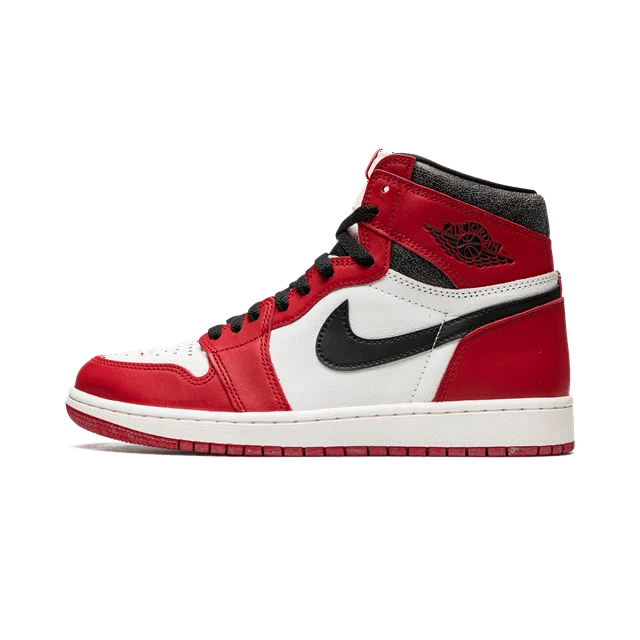
We all know what celebrity endorsements are. You’re streaming a TV show or a football game and encounter a commercial or two where a celebrity endorses a car or a cologne or a hotel chain. Now some endorsements may have a certain degree of legitimacy, as when Michael Jordan endorses his brand of basketball shoes. He does, in fact, know a lot about playing basketball and how particular shoes help or hinder one’s performance, although it’s hardly an objective endorsement when he is endorsing his own branded shoe. But most celebrity endorsements are simply the company paying the celebrity to shower some of their fame and charm onto the endorsed product. They have no objective credibility. And most of us realize this when we reflect rationally on the whole set up.
But here’s the problem: celebrity endorsements apparently work. Here’s a quickie from Google AI: “Yes, celebrity endorsements are highly effective … They work because they grab attention in saturated markets, build consumer confidence, and make purchasing decisions faster and more secure.”
Here’s an example: In the 1990s, Subaru paid Paul Hogan, the actor who played Crocodile Dundee, to endorse their newish product the Subaru Outback. The ad campaign was wildly successful and here we are, thirty years later, with the Outback still going strong. But honestly, do you think Paul Hogan knows anything more about the mechanics or performance of an Outback than you or I?
I would be a more credible endorser than Hogan/Dundee, because I owned a Subaru Impreza Sport with a 5-speed manual transmission that got 180,000 miles, had almost no mechanical problems, and got pretty good gas mileage. On top of that, when a family member was driving it at highway speed and a deer jumped out in front of the car, the front-end crumple design absorbed all the shock and said family member suffered no injury whatsoever. Amazing, really, as that sort of incident can be much more serious (my sympathy if that happened to you and there was a bad outcome). So I can very credibly say, “Subaru, great cars, you won’t be sorry you bought one.” But Subaru didn’t pay me for an endorsement, they paid Crocodile Dundee, who may or may not have actually owned and driven one. And it worked marvelously well for Subaru.
What about religious endorsements? And I’ll talk about LDS religious endorsements, but I’m guessing a similar story can be told for other denominations. You don’t see them on commercials like the average celebrity endorsement, but the same dynamic is in play. One variation is when a famous actor/actress or sports star or musician is known to be LDS and that fact, with maybe a story or two, gets circulated.
A generation ago, there was Peter Vidmar, a gold medal gymnast who is LDS. The story was told of his coach insisting he practice seven days a week, but Vidmar nevertheless took Sundays off. (I guess it worked.) My quick check on Wikipedia reports that in 2015 he was called as a mission president in Australia. And there was Donny and Marie, Steve Young, and a few dozen others you can think of if you try.
Let me add that I’m not throwing shade on any of these LDS celebrities/stars. They are all pretty low-key about it. They are generally good examples despite being in the public eye (not an easy task) and generate good PR for the Church, which indirectly benefits you and me, so there’s that. And I’m sure there are times where being LDS creates real complications for a celebrity/star. Then there is the blowback they likely get from time to time from judgmental Mormons because they have to play on Sundays or perform in a production or role that isn’t G-rated. So they deserve some LDS respect, maybe more than they are generally given. But from the viewpoint of the average LDS member in the pews, there is definitely a “halo effect” from knowing about celebrities and stars who are also good LDS members.
A second variation is what I will call religious celebrities. I’m thinking of General Authorities, with a few LDS religion profs who hit the lecture circuit or write a popular book thrown in as well. GAs get a lot of screen time at Conference and streamed firesides, so we get to know them (their face and voice) pretty well. Their testimonies/endorsements of the Church are of course part of almost every talk. Do they have an effect? Well, yes. Whether realizing it or not, I suspect a lot of average Mormons lean on GA stories and testimonies (religious celebrity endorsements).
If we take a step back, we might ask (as we might ask of celebrity endorsements for cars or cologne): How objectively valid are LDS religious celebrity endorsements? That’s a serious question and can go either way. On the one hand, they do have a lot of religious experience, both in visiting congregations around the world and in reading/praying/speaking about religious topics. And they usually have their own deeply personal spiritual events to draw on. On the other hand, they are pushing their own product (like Michael Jordan pushing his own shoe brand) and they probably tailor and exaggerate their stories from time to time. If they have non-faith-promoting or even faith-damaging experiences, those don’t get shared. While they have broad life and career experience, they have little or no training for the ministry.
So this is really a wide-open question. Have some fun with it.
- Name your favorite LDS celebrity.
- Is there a story you heard about an LDS celebrity that encouraged you?
- Name your favorite LDS religious celebrity.
- Is there a talk you heard or a book you read by your LDS religious celebrity that encouraged you?
- Any reverse effects, a book or story by an LDS religious celebrity that rubbed you the wrong way and pushed you away from testimony or activity?
- Is LDS religious celebrity overplayed, underplayed, or just about right? Compare it say to the ostentatious religious attire the Pope wears in public appearances or to the hyped-up performances of Evangelical tele-preachers.


Praise to David for raising this important issue. It should be getting much more attention than it has.
Let me begin by issuing my strongest possible condemnation to the so-called hym Praise to the Man. That pernicious song is directly responsible for the culture of hero worship in the Church. We are to worship God, not man, and this song has caused much harm.
While I’m at it, I give secondary condemnation to the false practice of giving the sacrament to the bishop before anyone else can partake. The bishop is no more deserving than anyone else of partaking of the sacrament.
Modern society is flooded with a plethora of croc-wearing Dua Lipas and Bon Jovis who demand the attention and worship of the ignorant masses. Church is a place we should be free of celebrities, not inundated with them.
I’ve always thought that Mitt Romney was a unique kind of LDS celebrity. But his fate went in a direction I would not have predicted. Initially, he was very popular with LDS folks who had at least a mild interest in politics. After all, he was one of us and he made us look pretty good. He wasn’t extreme so therefore he wasn’t an embarrassment to the Right or Left LDS folks even if you didn’t agree with him 100% (note: I lived in Mass. when he was governor and allowed gay marriage to proceed there).
But here’s where it gets so interesting: While he was pretty popular among LDS folks in general, the right wing of the Republican Party turned against him and therefore the LDS right wing did the same. I must admit I’m impressed with them in a way; they demonstrated that they weren’t going to support an LDS politician just because he’s LDS and that’s pretty principled. But it was wild to me that some of the most religious people I know were supporting Trump over Romney and thought that Romney was evil. I had a MAGA friend tell me Trump was more Christian than Romney.
So while Romney benefited at least initially from his status as a Mormon celebrity (a kind of endorsement), many of those same folks turned on him when their allegiance turned to Trump. I actually wonder who would win an election today among LDS voters, Trump or Romney? I also wonder if Romney would today be more popular among moderate Democrats than he would Republicans…not because he changed but because they did.
My favorite church celebrity has to be “Uncle John”. I may have met him at my wedding, but I can’t remember because he would have just been one more relative on my husband’s side. There were relatives o my husband’s side who were not sent an invite but showed up at the reception with a gift anyway, just because my DH’s family is very close and loving and big. And it was before he was even called into the Seventy, I think. I would have to look up the exact history. My first memory of him is at a family reunion and he was sitting on a picnic table with his feet up on the bench telling stories about his mission in the Pacific Islands. I probably rolled my eyes at the stories, because, well see Angela’s most recent post about stories that are exaggerated or made up to promote religion and go read Uncle John’s book, The Other Side of Heaven. But probably everyone here is quite familiar with the book and movie of John Groberg’s. But I saw him at the last temple wedding I went to in the family and by then, the temple workers were practically worshipful, which was when it hit me that he was quite a beloved church celebrity. Not just one more of the Seventies. Temple workers paid respect to other GAs, but the temple workers had a extra warm kind of reverence for John G.
But even if I roll my eyes at his stories, he was a great guy, always kind and caring. And people loved him, and I guess I am no exception to falling for his charisma. People loved him and he loved them right back. He was charismatic, yes, but he was also very loving and kind. I would also call him genuine, but there is the problem of those stories. So, we will skip the word “genuine” as to the stories and go with down to earth, and his kindness and just goodness WAS genuine.
Last week, I watched the movie “The Spirit of the Game” about missionaries in Australia helping to train the Australian basketball team for the 1956 Olympics. It was on Amazon Prime and I had never heard of it, even though it is ten years old. I don’t think it was made my Church members, because the mission president’s favorite outfit included a brown shirt and sweater vest. He and his wife were, however, quite stereotypical in their denunciation of basketball as a waste of missionaries’ time.
Anyway, when the hero of the story boards the ship to Australia, he is paired up with “Elder Groberg”, who announced that he was getting off in Tonga. About 30 seconds later he did just that and was never mentioned again in the movie. I suspect that people who had never seen “The Other Side of Heaven” were wondering why that character was even necessary. Or maybe he was mentioned in the source material, so they wrote him into the movie never knowing of the connection to the other movie.
Favorite LDS celebrity: Brandon Flowers perhaps?
LDS celebrity story: Nah. I mean good for them but the person sharing it always wants it to apply to me somehow even though I don’t play professional ball sports or sing outside the shower or was never a school mascot.
Favorite LDS religious celebrity: After ponderizing, my answer is none of the above.
Religious celebrity that encouraged me: Hard pass.
Any reverse effects: I mean, I found both Rough Stone Rolling AND No Man Knows My History to have about the same effect so it’s wild the different treatment the authors received inside the church.
I think the Church has learned the hard way to keep all of these folks at a distance. At best, their poster boy leaves the faith (David Archuleta, Imagine Dragons, most of the temple actors), and at worst they give the church a black eye (Tim Ballard as the most recent). The track record for an LDS celebrity to stay orthodox is pretty dismal. And eventually even the religious celebrities write or say something that contradicts the Brethren (what like it’s hard?) Seems best for everyone to probably just stay in their lane.
I’m a fan of Steve Young. He was good at the sport that made him famous and from what I can tell pretty good at being a Christian.
On the question of whether celebrity is “overplayed”, I’d point to Chadwick’s list of celebrities who are no longer members, which include cases where apostles had developed mentor-like relationships with them. That sounds like overplaying it to me, partly because it hasn’t really worked out well, and partly because giving out special access like that rubs me the wrong way.
Name your favorite LDS celebrity. Steve Young
Is there a story you heard about an LDS celebrity that encouraged you? Steve Young’s book had some stories that encouraged me.
Name your favorite LDS religious celebrity. Uchtdorf
Is there a talk you heard or a book you read by your LDS religious celebrity that encouraged you? David Archuleta’s new book encouraged me to be kinder to LGBTQ members
Any reverse effects, a book or story by an LDS religious celebrity that rubbed you the wrong way and pushed you away from testimony or activity? No
Is LDS religious celebrity overplayed, underplayed, or just about right? Overplayed. The LDS church is moving to leader-worship, rather than focusing on worshiping God. Top leaders too often quote one another in talks rather than referencing Jesus’ life.
Dan Reynolds of Imagine Dragons. He’s not often cited as an LDS celebrity. But he wrote the rhythm to one of his massive hit songs It’s Time in his dorm room at BYU. He was kicked out because of sleeping with his girlfriend. Dan is a one-of-a-kind song-writer. So many of his songs are truly amazing. I saw him and his band in concert a couple of years ago and it easily ranks as among the best I’ve ever seen. Insane energy. He is also a huge champion on LGBTQ rights. Dan suffers from ankylosing spondylitis and maintains a rigorous workout regimen in order to control the pain. He is ripped to the core and runs and jumps while singing throughout his concerts. I suffer from something very similar to what he has, although I’ve tested negative for AS. Similarly, a rigorous workout routine is my only remedy to control pain reverberating through my spine. Dan is my inspiration to get through it.
I read Lindsey Stirling’s autobiography when it came out about 10 years ago. Her music is not to my taste, but I admire her boldness as a performer, and I respect that she found success by carving out a unique niche for herself, and leaning into a non-conformist, quirky personality, while staying true to her principles. She was heavily featured in the “I’m a Mormon” campaign, and made regular appearances in Church-sponsored firesides and productions. In the book, she was refreshingly candid about her struggles with eating disorders and self-worth. She didn’t get too religious or preachy in the book, but factually mentioned her full-time mission and time as a BYU student. These days, among the Mormon interwebs there is a lot of speculation about whether or not she is active, PIMO, or totally out. Sometime last year she posted a picture of herself on social media enjoying an iced coffee drink, with a statement to the effect that she consumes whatever she pleases and owes nobody an explanation, and further telling people (specifically, Mormons most likely) to quit judging each other for appearances. As far as I know, her successful performing career continues full steam ahead, but she is not the darling of Church propaganda that she used to be; we don’t see her representing the Church like we used to, and as far as I can tell, she doesn’t seem to mind. I don’t know exactly where she is with the Church these days, but I hope she is living her best life, and still on her own terms.
I seem to recall reading somewhere about the decline of the Osmonds, after Donny and Marie’s fame fizzled out in the early 80s. At that point the main source of their exhaustion was not so much their pop stardom, but from having to be unofficial spokespeople/poster children for the Church all the time. I imagine David Archuleta felt some of this exhaustion too (still need to read his book!); perhaps Lindsey Stirling is trying to protect herself from it by not being so open about her faith anymore.
Because of the subsequent W&T post, I got to wondering if there would be any LDS celebrity endorsements of the new temple garments, who would be best for that, and if paying out a couple million in endorsement fees would be a considered a legitimate use of the Ensign Peak funds. After all, one gets the sense that many Mormons aren’t wearing them anymore, so I could see someone in the Q15 convincing DHO that maybe instead of browbeating. they go with making it seem cool with a celebrity endorsement.
On a more serious note, when I was Mormon, it puzzled me that so many Mormons seemed to really badly want celebrities to turn out to be secretly Mormon or who seemed to celebrity worship not-quite actually famous Mormons and try to make them seem more famous than they were. It seemed to me at the time that this suggested a serious inferiority complex about being Mormon.
When I was a child and our family moved to Utah from Hawai’i, I had never heard of the Osmonds and yet Utah people seemed obsessed with them and that every knew who they were. I never quite got that. Still, the three really famous Mormon athletes when I was young, Steve Young, Danny Ainge, and Dale Murphy, seemed to actually be pretty decent guys and actually legitimately star athletes that probably were also pretty good examples of how to move in the world of fame and stay grounded.
Nowadays, I certainly root for several former Mormons mentioned by others, like David Archuleta and Dan Reynolds.
Anna, I loved John H Groberg’s books about serving in Tonga! I still have both of them and have read them multiple times. His kind and hardworking personality really comes through in those stories.
The religious celebrity who meant the most to me was Sheri Dew. I believe she was the first unmarried woman called into the RS General Presidency. Then when she was released, she became president of Deseret Book. I really looked up to her for remaining faithful despite not getting married.