
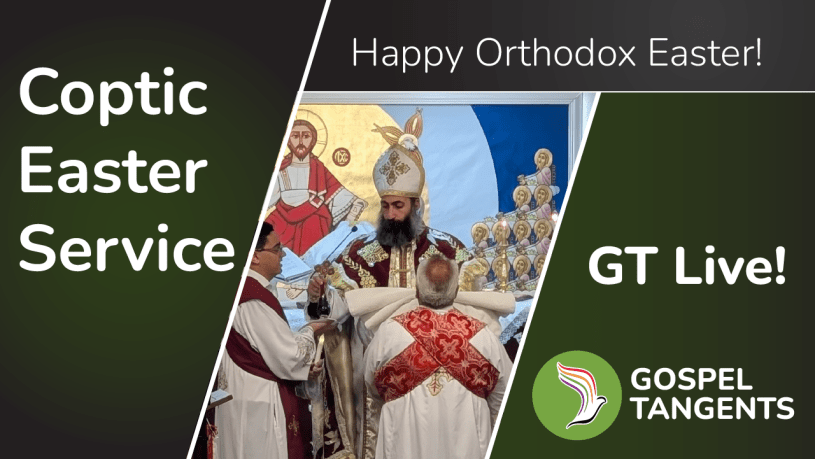
Orthodox Easter this year was a week later than Western Christianity. I was able to take a unique journey into Orthodox Easter traditions and the historical resilience of early Christianity.
It was a fascinating experience to visit St. Mary’s Coptic Orthodox Church in Clearfield, Utah, after meeting a California member named Daniel Michalski. Unlike Western traditions, the Coptic Easter service is held on Saturday night and can last up to four hours, featuring a blend of English, Coptic, and Arabic chanting. One of the most striking rituals is the procession of the icon of Christ, which is buried in roses during Holy Week and then “resurrected” as the lights are turned on, accompanied by the unique sound of cymbals. Beyond the personal experience, we dove into the history of the Coptic Church, which split from Western Christianity in 451 AD following the Council of Chalcedon over complex theological debates regarding the nature of Christ.
This history is framed within a broader discussion of the early Christian era, moving from the movement’s roots as a persecuted sect to its establishment as the Roman state religion under Constantine. Most Mormons are familiar with the death and resurrection of Christ and Constatine’s ascension in the 4th century, but know little about history of Christianity in the centuries in between. I discussed various early factions, such as the Gnostics, who prioritized secret wisdom over the physical resurrection, with the orthodox view that eventually triumphed.
We also touched on the following key points:
- LDS Perspectives: We emphasized the physical resurrection of Jesus, citing recent General Conference messages regarding the victory of the empty tomb.
- Calendar Differences: The discrepancy between Western and Orthodox Easter dates were explained by the use of the Julian calendar versus the Gregorian calendar.
- Coptic Practices: Insights into infant baptism by immersion, the practice of closed communion, and the fact that Coptic priests can be married are also highlighted.
- Community Highlights: The episode concludes with a book giveaway of Holiness to the Lord and a teaser for a future discussion with Dr Matthew Bowman on the “Christian” roots of basketball.
Part 1: Personal Experience and the Coptic Orthodox Easter Service
- 0:00 – Introduction and Book Giveaway:
- 2:00 – Meeting Daniel Michalski:
- 5:00 – Attending the Coptic Service in Clearfield: attending a four-hour Saturday night Easter service, including observations on the small congregation and the use of English, Coptic, and Arabic.
- 10:00 – The Resurrection Ritual: An explanation of the dramatic liturgical moment where an icon of Christ is “resurrected” from a bed of roses, accompanied by chanting and cymbals.
Part 2: History of Early Christianity
- 15:00 – The Great Schism of 451: includes a discussion on the Council of Chalcedon and how a theological dispute over a preposition regarding the nature of Christ led the Coptic Church to split from Western Christianity.
- 19:00 – Historical Jesus and the Temple: The host analyzes the cleansing of the temple as a political act of subversion that directly led to Jesus’s execution.
- 23:00 – The Crucifixion and Gospel Narratives.
- 27:00 – Mechanics of Crucifixion.
Part 3: Early Factions and the Rise of Orthodoxy
- 29:00 – The Gnostics and Secret Wisdom, including a mention of the Gospel of Judas.
- 32:00 – Marcionites and the Canon:.
- 34:00 – Bishop Irenaeus and “Straight Thinking”: The origins of the term “Orthodox” and the establishment of the four-gospel rule.
- 37:00 – Eras of Roman Persecution: Christian martyrs, including the story of Perpetua.
Part 4: Constantine and the Modern Church
- 41:00 –Constantine Transformation.
- 45:00 – LDS Perspectives on Easter.
- 47:00 – Coptic Practices Explained.
Part 5: Conclusion and Teasers
- 53:00 – Book Giveaway Results.
- 54:00 – The Future of “Church Ball”: Upcoming interview about the Christian roots of basketball and the role of Mormon missionaries in spreading the sport.
- 56:00 – Calendar Discrepancies: explanation of why Orthodox Easter often falls on a different date due to the Julian vs. Gregorian calendars.
 Wheat & Tares