
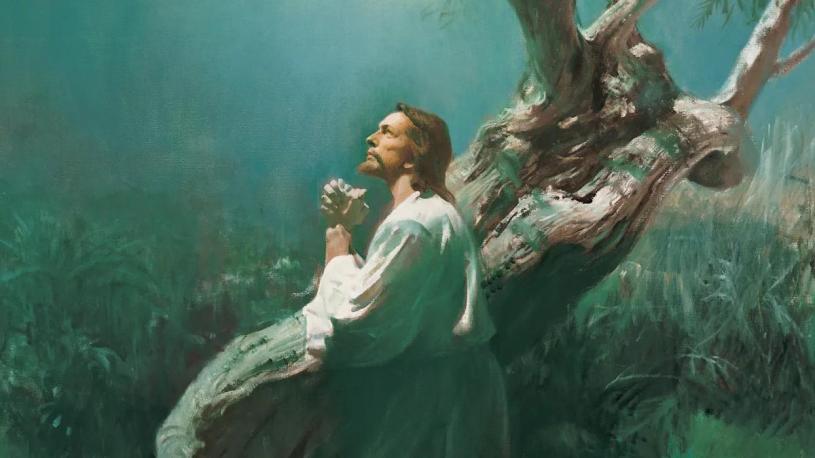
“But Thomas, one of the twelve, called Didymus, was not with the disciples when Jesus came. He returned to Gethsemane in search of blood drops. Despairing, he longed for proof that Jesus had ever existed. He gazed over broken stones and trod on puddles of soil. Coming to the spot where his Lord had prayed and suffered, Thomas examined a leaning olive tree. On it, he beheld splotches caked in dust. Blood? Olive oil? Wine dregs? Thomas fell to the ground and cried out, ‘Lord! Stanch my doubting!’
“Then, after sunset, the other disciples came to Thomas and said unto him, ‘We have seen the risen Lord.’ But he said unto them, ‘Except I shall see in his hands the print of the nails, and put my finger into the print of the nails, and thrust my hand into his side, I will not believe.’”
—John 20:24-25, Fellow’s Translation of the New Testament in the Holy Bible
The above “translation” emerged from a contemplative meditation session I did using the text of John 20:19-29. This passage tells us Thomas is absent when the resurrected Jesus Christ first appears to his disciples, but it neglects to tell us why Thomas was absent or where he went instead. So, as our brains always do with scripture, mine filled in the gaps and came up with a narrative that felt compelling.
Your Turn: A Writing Exercise
- Choose a famous/favorite scripture passage. Preferably something involving physical action.
- Reread it to refresh your memory.
- Contemplate the physical details included in the scriptural account.
- Take note of what details the scriptural account lacks.
- Write down what details you imagine to fill in the gaps.
- Ask yourself: Why do you suppose you fill in the missing details the way you do?
- Share your results in the Comments section here.
Featured image accessed from The Church of Jesus Christ of Latter-day Saints. For more information on a contemplative approach to creativity, visit Loyola Press’s article: Ignatian Contemplation: Imaginative Prayer.
 Wheat & Tares
For once I deeply appreciate what is written. Thanks.