
In the past, before Google and AI, the Church could just deny a teaching or former practice that was an embarrassment without much investigation. In 1997 Pres Hinkley was asked during a Time Magazine interview about man becoming like God. This is of course 100% a Mormon teaching, but it makes us look kind of wacko, so Hinkley said those famous words “I don’t know that we teach it”.
The “Rock in the hat” translation method of the Book of Mormon was once taught as “Anti-Mormon lies”
From the Maxwell Institute at BYU
Joseph Smith translated much of the Book of Mormon by placing a seer stone in a hat then reading the book’s text to a scribe. Once thought by many Latter-day Saints to be an anti-Mormon fairy tale, recent Latter-day Saint scholars have affirmed this story, one that some historians had long known.
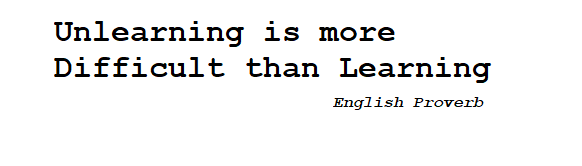
One way around all these messy truths that are coming out is to “unlearn” them. There is a Church apologist who said that some things we have learned in Church in the past were wrong, and we need to unlearn them in order to move forward. I didn’t even know unlearn was a real word, so I looked it up: “to discard or put aside certain knowledge as being false or binding.” (Bishop Bill is now two for two in using a dictionary definition for his post. What do you expect from a 6th generation Mormon?)
The Church is aware of these problems from past teaching, and in fact in a recent survey sent to selecte members, asked specifically about some of these teachings to see if members still believe them, and how well their “unlearning” is going.
To see if the members have unlearned the old temple endowment where the woman covenants with her husband while the husband covenants with God, they asked in the survey if the member agrees or disagrees with the following statement: “After a woman gets married, she accesses God through her husband, not directly”
Have the members unlearned the old talks by Church leaders condemning birth control? The survey asked is they agree with the statement that “Having a lot of children is a commandment”.
Have the members unlearned all the harsh statements about homosexuality from the past? The survey asked “is it a sin to feel attracted to members of the same sex?” Well it used to be, but once you unlearn it, not so much!
The Church must be really be concerned about how the unlearning is going with prior explanations on Blacks and the Priesthood. They had multiple questions to see how the unlearning is going. Again the member was to agree or disagree with each statement
- People with dark skin were not as faithful in the premortal life
- Dark skin is a curse
- The Church’s history with Blacks and the priesthood shows that doctrine itself can change.
Lets parse these questions to see what the church is looking for. It was commonly taught that Blacks didn’t have the priesthood pre 1978 because they were less valiant in the premortal life. They now disavow this, but how many members still have not unlearned it? The Book of Mormon says that the dark skin of the Lamanites was a curse. Apologists would like you to believe that “skin” does not really mean skin. How well is this change in the meaning of skin going? Lastly, maybe the denying of the priesthood was not really a commandment/doctrine! How well does this idea play out with the members?
Finally, the survey asked about polygamy. Have the members unlearned enough to reinterpret D&C 132? The survey asks yes or no if “Members must enter into plural marriage (polygamy) in order to to be exalted”. Have the members unlearned the fact that the “New and Everlasting Covenant” was a code name for polygamy? How well is this reinterpreting of D&C 132 going?
What has your experience been with unlearning at Church?


Nice post 🎸🎸
That survey had some seriously weird questions. I noticed that there wasn’t an option for “I am well aware certain GAs/apostles taught that, but I didn’t (don’t) agree/thought (think) it was (is) nonsense”… I did complete it, but made the mistake of not noting down all my observations for the comment box at the end, as I went along, so in the end only commented on a couple of the questions.
I find it interesting that you see the survey as an assessment of how well unlearning is going. That hadn’t occurred to me.
Jim Bennett is doing a series of episodes about the survey on his Inside Out podcast, should anyone be interested in listening to the discussion.
We could help “unlearning” if we could practice “unteaching.” For example, Presidents Kimball and Benson taught from our pulpits In my lifetime that women should stay home. Our leaders probably want that teaching unlearned, but they won’t actively unteach it, meaning that they won’t teach today that their predecessors may have erred. Here are two more examples of where unteaching could help unlearning: a woman need not wear her garments under her bra and next to her skin; and gross income is not a proper basis for tithing. One major impediment to unteaching to help unlearning is our false teaching that our doctrine never changes and has never changed. Doctrine is what the leaders teach the people, and that has changed and will continue to change.
We all learned the Alphabet song. Now sing it backwards. Why did you sing it from ABC, when now it should be from ZYX?
Why is the church taking teachings that we spent literally thousands of hours learning to shove it down the memory hole and contradicting the past ? For those paying attention, those teachings no longer apply in today’s world, or there is so much evidence against it, that they are forced to change the narrative.
I see that the church is literally throwing away the all Grandmas/pas in Sanpete now, along with anyone born before 1990. Those born in these generations that still attend church must have significant cognitive dissonance or were never paying attention and following the prophets during their youth (I know many people like this). I have younger family members who blame at us (those who paid attention and were obedient) as the old men/women who misunderstood what was taught during our teenage years.
The LDS focus is now solely on the youth. However, the church does not realize they will be lucky to retain 20% of the upcoming generation. For those who remain, they will learn this new narrative under inoculations of 1/2 truths and the church will continue with a new TBM generation. This approach will work for those who take the bait hook, line and sinker.
How many of us born before 1990, were apologetic for polygamy?
Let us not forget that according to Oaks, NOT unlearning these things equates to personal apostasy. He gave a leadership training before April 2024 GC that has a PDF summary on the church website and gives the following as one example of personal apostasy:
Focusing on past prophets rather than living—“They who garnish the sepulchers of the dead prophets begin now by stoning the living ones. They return to the pronouncements of the dead leaders and in-terpret them to be incompatible with present pro-grams” (Teachings of Spencer W. Kimball [1982], 462).
You seriously can’t make this level of irony up – quoting a dead church president to make the point that focusing on past prophets instead of the living is apostasy.
Why I try to keep church at a distance these days, no answers to the questions, just more hazing. I try to be a reasonably christian person and take my place in the world constructively. I love the gospel, not so much the church.
My unlearning didn’t go well. I just can’t see God misleading one prophet so badly as to accept something like polygamy or the priesthood ban. So, rather than learning the new fib, I decided it was all bunk. Much simpler.
Georgis, you hit the nail on the head! They want us just forget about past teachings, but will do little to push down the (what is now) false teachings.
Sad that we have to unlearn now more than learn.
I wonder if we will unlearn separation of religion and politics and learn politics reflects religion.
When a person participated in a survey, he or she has to consider how the answers will be received or viewed — or, in other words, do I answer with or without regard to how I think the church wants me to answer.
I think Nephi would suggest that if we need to “unlearn” anything it’s the “wisdom of the world” — or those things that keep us at odds with the Lord’s servants, the apostles. 1 Nephi 11:
35 And the multitude of the earth was gathered together; and I beheld that they were in a large and spacious building, like unto the building which my father saw. And the angel of the Lord spake unto me again, saying: Behold the world and the wisdom thereof; yea, behold the house of Israel hath gathered together to fight against the twelve apostles of the Lamb.
36 And it came to pass that I saw and bear record, that the great and spacious building was the pride of the world; and it fell, and the fall thereof was exceedingly great. And the angel of the Lord spake unto me again, saying: Thus shall be the destruction of all nations, kindreds, tongues, and people, that shall fight against the twelve apostles of the Lamb.
I like Georgis’ point about “unteaching.” The reason the leadership won’t unteach these things, though, is because of the Why Should I Listen To You problem.
The church has a Why Should I Listen To You problem. The good reasons for listening to and obeying the prophet have been crumbling away one by one as initiatives like the Joseph Smith papers continue to validate what have traditionally been anti-Mormon talking points. How do you convince people to follow your teachings and practices if you’ve been so abysmally wrong about things as important as polygamy and slavery?
“Yes we were wrong about black people but we’re definitely not wrong about gay and trans people today. Hey, where are you going? Guys? Guys, come back!”
I’d love to see a world where the LDS church expressed contrition over past mistakes and humility about their own limitations. But I fully recognize (and so do, probably, the Q15) that churches that express this kind of humility do not command the kind of power and wealth they do. So it is a lose-lose situation. Personally, I think they should just choose the right and let the consequence follow, but I doubt they will any time soon.
Jack, those verses could just as easily describe the great and spacious conference center full of proud, proud men in fancy velvet chairs who won’t admit their mistakes or adopt Christ-like attitudes towards the most marginalized people in our society. And perhaps with the hemorrhaging of membership we are beginning to see the fall thereof.
Kirkstall,
I can imagine Mount Zion being a large gathering and the General Assembly perhaps sitting in some comfortable chairs–but we shouldn’t confuse them with the Great and Spacious Building because forsooth they are a large gathering. The real test is in who has apostolic authority–and if those men whom you call proud are, indeed, the Lord’s anointed then perhaps you, and I, and all of us have some “worldly wisdom” to unlearn.
My daughter low key believes I’m low key either making up some of these old teachings or that I misunderstood them. Ala the Mandela effect.
When I was a kid growing up in New Jersey in the 1950’s I noted that in Sacrament Meeting talks, people rarely mentioned the Book of Mormon. The way I rationalized it was that the Book of Mormon was mostly derivative. The key scripture was the Bible, particularly the New Testament.
You could say that the Church was slowly “unlearning” the Book of Mormon, using it mostly as a missionary tool.
Then came E. T. Benson who insisted it was literally true. And now we have a problem with DNA.
The Book of Mormon is a miracle in and of itself. Just its existence. Why do we need to have it any other way? The slow unlearning was a gift.
Elder Bednar, Oct 2020 GC: “Some Church members opine that emergency plans and supplies, food storage, and 72-hour kits must not be important anymore because the Brethren have not spoken recently and extensively about these and related topics in general conference. But repeated admonitions to prepare have been proclaimed by leaders of the Church for decades. The consistency of prophetic counsel over time creates a powerful concert of clarity and a warning volume far louder than solo performances can ever produce.”
Elder Bednar admits that the Brethren have not untaught what was previously taught for decades about food storage, and he declares that this old learning doesn’t need to be unlearned because of “repeated admonitions” over decades and because “the consistency of prophetic counsel over time creates a powerful concert of clarity…” Wait: We should listen to what was taught in the past, per this quote, especially if it was taught over decades and consistently. I’m OK with that, but is that totally in harmony with other teachings about following only what is currently being taught? It appears that old teachings on food storage are still valid because they were taught over decades and with consistency. What about women working in the home? We haven’t taught that doctrine for some years now, but it was taught consistently over decades and with consistency. Today we elevate women who heard but did not follow this counsel to general leadership positions. What makes the teaching on food storage different from the teaching about women staying home? I am not arguing that women should stay home, or that people should or should not have food storage. I am looking for a difference in the teachings: how do we know which teachings are passé and which ones remain in force? If I speak in sacrament meeting next week about food storage and quote from Kimball or Benson, I’ll do well, but if I speak on women in the workplace and quote the same people, I’ll be vilified, both by members and by the bishopric. How does one know when teachings expire?
@Georgis
See this is why we need modern-day prophets, to be able to decipher the unwritten order of expiration dates on previous prophesies and doctrine.
Mere mortals like you and I can’t know if things that were consistently taught and repeatedly admonished for decades by the living mouthpieces of God have now expired, only a currently living prophet like Bednar can tell.
It may seem like whether a doctrine persists or not has to do with whether it fits with the personal prejudices of the current President. We might think an old doctrine smells mighty rotten for a long time, but that is because we lack that prophetic mantle. Only the Q15 know when an old doctrine is really rotten. And only they know when it is the proper time to let us know that.
Bednar didn’t see fit to reiterate it until in a position to castigate those who were apparently unaware, all the while patting himself on the back about it. Doesn’t seem fair to me.
72-hour kits must not be important anymore because the Brethren have not spoken recently and extensively about these and related topics in general conference
Back in the mid-2000s, I checked on the frequency with which 72-hour kits were spoken about in general conference (it was for an HP lesson). The answer was “never”. So even if the answer is no longer “never” (‘I’m too lazy to check), 72-hour kits do not qualify under the “consistency of prophetic counsel over time” clause. So Bednar himself seems to be unable to apply his own criteria with any degree of consistency.
Either the unlearning is working great or members gaslighting on TikTok is out of control. I love exmo posts’ comment sections as they are full of members saying “no we didn’t…”.
I’m like, Bryson, yes we do believe this, I’ve been taught this for years.
@Jack, if “the world” is not causing us to question and scrutinize our dogmas, we are doing something wrong. There was so much pressure from “the world” to eliminate the priesthood. Try as we might to suggest that it was prophetic direction to drop that, history seems to show that it was the pressure that forced the question to be asked and the change to be made.
Sorry, I meant, “the priesthood ban.”
chrisdrobison,
That’s what the wisdom of the world would suggest. But rather than assume that ten consecutive presidents of the church got it wrong–it might be worth considering other explanations before we settle into what could very well be a false narrative.
Jack, thanks for your input. This issue has perplexed me ever since I joined the church, which was post-1978. The best explanation that I can get to in my admittedly fallible brain is error. Joseph Smith allowed ordination of Black men. A few years later, Brigham Young refused to assent to the ordination of a Black man. I don’t know why. Maybe the individual wasn’t ready, or maybe Brigham Young had some racist tendencies, or something else. He never claimed revelation. It simply became a practice. Fast forward many years: Spencer Kimball gave Bruce McConkie unfettered access to the church archives with the charge to find something, or anything, indicating that the priesthood ban was revelation–a letter from BY to a son-in-law, a talk somewhere, anything. He found nothing, and informed Pres. Kimball that the ban did not appear to be revelation. In 1978, for the first time, the FP and 10 of the 12 knelt in prayer, and for the first time they were united in the desires of their heart, and the Lord revealed His answer. 2 of the 12 were away, and it may be coincidence that they were vocal opponents of Black men holding the priesthood: Mark Peterson was in South America and Delbert Stapley was in the hospital. For the first time since the 1850s, the FP and 12 knelt in prayer with a common purpose. Bruce McConkie had vocally opposed Black men receiving the priesthood, but that is because he assumed that the ban was revelation; Pres. Kimball neutralized him by allowing him to learn for himself that there had been no revelation, and since he recognized Pres. Kimball as the prophet he was able to support him. Thus an error existing from the 1850s was corrected by following the Lord’s long-established council when the FP and 12, in unanimity and with open minds, prayed for guidance.
Other explanations don’t seem to pass muster for me, but I’m not the fount of all truth. This explanation works for me. Can the FP and 12 err? Yes, they can. The teaching that they can’t lead the church astray is still true. The restoration and ordinances can be valid while the people (including leaders) labor with some elements of doctrine wrong. The important thing is that the wrong was righted, and for the first time all worthy men could receive the priesthood, as Joseph Smith had envisioned. I see what happened in 1978 as a course correction, and to me that is a testimony that the church is restored and is doing God’s work. Hey, back in NT times, there were no doubt churches where men couldn’t be baptised if they weren’t circumcised. It took some time for the correct teaching to be understood and applied. To deny any possibility of error is to embrace infallibility, and I’m not there. My explanation may be a false narrative, but it works better than anything else that I have seen. It also teaches a good principle, which is that good men can err, and when they do, and when they come together in common prayer with single purpose, the Lord will answer. That’s beautiful to me. Maybe ten presidents of the church got it wrong because either (a) they themselves were comfortable with the status quo, or (b) they did not have counselors and a 12 who supported them and who could leave previously learned teachings (maybe even false teachings) alone. Maybe some in the leadership were not able to unlearn what they had learned. Haven’t we read that David McKay wanted to end the ban, but his successors JFS and HBL make it clear that they wouldn’t support it? Did they sustain the prophet? This is a tough question, and I wasn’t there, so I rely on writings of people who were. Didn’t we hear not too long ago, a couple of times, from Wendy Nelson that once Pres. Monson was dead and her husband was in the head chair, her husband was finally able to do what he’d been wanting to do for years?
Georgis,
I very much appreciate your sincere reply. And truth be told–I’m open to the notion that there was error on the part of the apostles vis-a-vis the ban. Except, I would place that error within the larger context of the overall culture. And it’s within that framework that our leaders (IMO) could be both right and wrong at the same time–right to hold off for a time and wrong in their reasons for so doing.
That said, I am suspicious at times of those who readily accept OD2 but not the proclamation on the family (and I’m not talking about you personally). The latter is a hair’s breadth away from the former in terms of its authoritative weight. And so, either that split-hair difference is enough for some folks to reject one and accept the other in good conscience–or they accept OD2 on purely secular terms without any reference to whatever inspiration may have been involved.
That said, the reason I bring up the above dichotomy is to convey the idea that there can be great unevenness in our perceptions of what the church is or isn’t doing right. And that we need to be careful in how we judge the Kingdom–especially when we are not in a very good position to know the mind and will of the Lord on the direction it take at any given time.
Georgis,
That was a beautiful sum up of the questions presented by the reversal of the priesthood ban. A similar story could be written about the 2015 policy and it’s reversal.
Another aspect of this is to consider it’s current impact on black members of the church. White members continue to preach the infallibility of leaders. The effects of this attitude on black members is very negative. White members want to believe that God withheld the priesthood from black people for His own reasons.
Most black members know that is not true. They know Brigham Young was racist, either because they have read the awful and racist comments he made about black people recorded in the records of the territorial legislature, or simply because they have experienced racism in their lives over and over and over at the hands of members (and nonmembers) and they know that our leaders, including Brigham Young, are no exceptions to the reality of racism they experience regularly all their lives.
To be clear, the attitude of white members insisting on the infallibility of Brigham Young, and blindly insisting he wasn’t racist, it’s just that God didn’t want black people to have the priesthood, is hurtful and insulting to many black members. To be clear, as a white woman I only know this from following James Jones and the Sistas in Zion.
The church has a lot of unlearning to do on this topic and we need to formally teach this in Sacrament meeting, and 2nd hour meetings instead of hiding it away in carefully worded Gospel Topics Essays buried in the Gospel Library App, that point toward Young’s comments in the territorial legislature without quoting them, but fail to label his actions as clearly racist.
In a general way, the essay vaguely tries to disown the racist theories I was actively taught in my childhood by church leaders, such as the idea that skin would lighten up as people became more righteous. As a church we need to take more formal and intensive action to unlearn the racist information and teach prophetic fallibility as a clear basis for the change. This is the only way to do right by our darker skinned brothers and sisters.
Accepting prophetic fallibility is also the only way we can become more spiritually mature as a church community.
lws329: “Accepting prophetic fallibility is also the only way we can become more spiritually mature as a church community.” The problem is that the leaders don’t accept it, except in the BS limited way that they may err in ways that don’t matter or are trivial. The inevitable outcome is that the members who do see them as fallible quickly become nuanced or PIMO in our authoritarian church because the members who think the leaders can’t make significant errors, who insist that any criticism of them or their ideas is apostasy, will push the rest to the margins until we just leave.
I just finished Animal Farm again, and I’m reminded of the revision of the animals’ “Seven Commandments” that occur throughout the book. They start out with these seven commandments: 1) Whatever goes upon two legs is an enemy. 2) Whatever goes upon four legs, or has wings, is a friend. 3) No animal shall wear clothes. 4) No animal shall sleep in a bed. 5) No animal shall drink alcohol. 6) No animal shall kill any other animal. 7) All animals are equal.
When their leaders become corrupt, they start to “revise” these commandments which alters the meaning to favor the leaders’ privileges. #4 becomes “no animal shall sleep in a bed with sheets.” #5 becomes “no animal shall drink alcohol to excess.” #6 becomes “no animal shall kill any other animal without cause.” And, we all know the most famous rule change, #7, “All animals are equal, but some are more equal than others” (which sounds a lot like how married people are equal but men somehow ‘preside.’)
@Jack
“That’s what the wisdom of the world would suggest.”
That is rhetorical prophylaxis that, in my view, you are employing to insulate yourself from the realities around you. The idea of allowing ourselves to be affected by “the world” actually comes from a book called Wholehearted Faith by Rachel Held Evans. I highly recommend it.
I was raised on the premise of near prophetic infallibility and I now find that the lengths to which the church and all apologists go to, to explain away bad things is quite troublesome. I would reflect back your comment in this case: “it might be worth considering other explanations before we settle into what could very well be a false narrative.” That being said, the effort being put into more honesty about our past is a positive thing, but the one thing we continue to fail to admit to and talk about with any sincerity is prophetic fallibility–the idea that past leaders have been wrong and how that should inform our relationship with leadership and the institution today. For example, the SEC violation. It if my belief that had the church, supposedly an institutional that holds honesty and integrity in the highest regard since it is a barrier to temple entrance, publicly discussed the reasons why these decisions were made and then made an apology for breaking the law and violating the trust of the members–it would have ultimately resulted in more trust as people can see they too are repentant. But what did we get instead? To quote: “we consider the matter closed.”
Let’s take the priesthood ban as another example. For ~150+ years it has been framed as something revelatory. We know that got challenged by Lester Bush. We now know even better because of the work of Paul Reeve. Lester Bush, as I understand it, was ostracized for this view–I’m guessing his views were probably considered “wisdom of the world.” Even after the 1978, it took until 2021-22 for most apologists and church reps/leaders to finally stop referring to the priesthood ban as revelation from God. Yet, in all this, they still have not taken the next step of asking “what does this mean for us?” We still are trying to build our houses on certainty–certainty that these men are always acting as prophets, certainty they will never lead us astray, lots and lots of certainty. Certainty is our greatest enemy. To quote Conclave: “Certainty is the great enemy of unity. Certainty is the deadly enemy of tolerance.” So while yes, they may not always be wrong, history has shown they have not been as “right” as they would have us believe they are. And without proper outward acknowledgement and repentance in that regard, for a religion that teaches to know something by the fruits, this will continue to be a blight that produces rot–hence the reason many have left and found good fruits elsewhere.
As the saying goes, with age the broadness of mind and narrowness of waist trade places. Confirmation bias seems to set in more and more as people get older. People tend to become less interested in learning new ideas or especially challenging beliefs and ideas that they’ve held for a long time and more interested in protecting and justifying what they already believe.
Over the last 16 years, I’ve carefully watched my wife’s 30 cousins on her mom’s side (as well as her three siblings), all of whom grew up in Salt Lake Valley, and their journeys within the church. Almost all have married in their early to mid 20s in the temple, had at least three kids (or are on their way to so doing) and appear to remain active in the church. There are two who left the church outright and one who seems to be a liberal Mormon and who may be inactive to some degree. But in general, they all seem fairly active and standard believing Mormons. And honestly I wouldn’t expect any of them to leave the church.
When you’ve adopted views that are part of your core identity and the main reason for you to be able to connect with a family and friends network, you don’t really want to go out of your way to look at ideas that challenge those views. It is easier just to go along with the plan, even if that plan costs you thousands of dollars a year and can take a lot of your time and be quite demanding, than to abandon the plan and even go against it. I know for certain that a part of me would like to just go along with the flow of things. But I know I can’t do that. I’ve spent hundreds upon hundreds of hours in deep introspection and thought and research and study about the church’s teachings, and it almost feels for me that they get less true by the day. So I live in a world where I have to set boundaries that need regular assertion and enforcement. I live in a world where I am always prepared for awkward interactions to come up that may have an impact on a relationship or two. I live in a world where I am prepared with a narrative crafted in my head, one that maintains my boundaries and preserves my relationships, that I am ready to deploy at certain times when needed. I live in a world of trepidation when a son approaches the ages of 8, 12, and 18 or when a family members marries in the temple. What do I say at that moment? Do I say anything? Do I just let things happen without my participation and then carry on as normal? I live in a world where I am ready for a passive-aggressive comment to come out of the blue against me and my lack of commitment to the church if some tragedy befalls me. My wife or child gets severely ill. Do I all of a sudden start hearing my parents or parents-in-law start shaming me saying that this is my fault because I was not faithful in the church? How exactly do I handle that conversation?
Lastly, just this week, my 10-year-old son asked me to talk with him about a serious religious question. I sat down and asked what was on his mind. His question: “was Brigham Young really guided by the spirit to find Utah, or did he know about it beforehand?” My answer: “they knew where Utah was beforehand from travelers and trappers. They had a sense of the geography and what they were intending to do. Were they guided by the spirit? Some people say they were. I don’t really believe everything, but that’s something you’ll have to decide for yourself as you get older.” I thought that maybe this might be the best response to him to avoid upsetting my wife who does scripture study and prayer with him and his younger brother every night. I don’t look forward to the teenage years. The seeds of skepticism seem to be already sprouting inside him. He is also already questioning the veracity of the Stripling Warriors story and thinks that Joseph Smith translating the Book of Mormon by looking at a stone in a hat is a little fishy. A part of me is grateful to see him realizing that it isn’t true and thereby avoiding a mission and anchoring himself in to the point where he feels that couldn’t leave. But another part of me worries that his skepticism will only grow during his teenage years and he will develop a resentment towards the culture around him as well as his mother. His mom will require him to go to church. He is close with his cousins all of whom are likely to serve missions. I just don’t want to see him conflicted. The easier path is staying the course in a sort of shroud of ignorance. But I can’t do that myself and he looks to me for wisdom and example.
Brad D,
It sounds like you have done a wonderful job of teaching your son critical thinking skills, and the relationship skills of autonomy and differentiation. I have confidence he will make his own decisions for himself, based on his own assessments, while respecting the decisions of others in their own lives. With those skills he will do excellently in any setting he is in.
@Jack, I’m sorry, but I just feel like I have to call out your statement here:
When you speculate like this, you are directly violating the request of the 15 prophets, seers, and revelators to stop making up reasons for the ban. Now, I personally don’t subscribe to the idea that always doing whatever the Q15 says is a good idea because I think, based on the historical record and my personal experience, that they are a less reliable source of truth for me than my own internal conscience and spirituality, but you are on the record over and over again stating how we should always follow the prophets, seers, and revelators, so I would just like to point out that when you openly speculate about possible reasons for the ban, you are actually violating the requests of these prophets, seers, and revelators to the Church membership to stop doing so. And to be clear, speculating that it was God’s will that the ban remain in place until 1978 *because the Church body couldn’t handle it or because the overall culture of the USA or the world would cause too many problems* is pure speculation on your part. Please stop.
If you wish to be operating within the bounds of what the prophets, seers, and revelators have asked you to do, then pretty much all you can say right now is, “I believe the priesthood ban was God’s will, but I have no idea why He wanted it that way, nor am I going to speculate on reasons for the ban because my Church leaders have asked me not to, for it is very hurtful to my black brothers and sisters when I engage in such a practice.”
I also believe that more recent statements by Church leaders, including the 2013 essay on race and the priesthood, very much leave open the possibility that a string of 10 consecutive prophets, seers, and revelators were simply wrong to institute and continue the ban. So, perhaps your statement should be improved to say something like, “I personally believe the priesthood ban was God’s will, but I have no idea why He wanted it that way, nor am I going to speculate on reasons for the ban because my Church leaders have asked me not to, for it is very hurtful to my black brothers and sisters when I engage in such a practice. Many other faithful Church members, including, not surprisingly, over 99% of black Church members, believe that the ban was a false doctrine instituted by Brigham Young, which was finally corrected and disavowed in 1978.” Can you just leave it at that? If you want to follow the Q15, then I think you need to leave it at that.
I hesitate to do this because I don’t want to hear any more of your justifications for why God wanted to withhold blessings from black people, but I guess I’ll provide a few sentences to shoot your theory for the ban down. First, both Joseph Smith and Brigham Young (as an apostle and early years as Church president), are on the record multiple times with being perfectly content, and even ordering, that black men be ordained to the priesthood. This means that the first two prophets of the Church didn’t have any problem with the cultural issues of ordaining blacks way back in the 1800s, much less the 1950s, 60s, and 70s, when US culture was much more open to racial equality. Second, Brigham Young literally said, on multiple occasions the reason for the ban, and it wasn’t that he was worried about the “larger context of the overall culture”. No, Brigham is very clearly on the record as a Curse of Cain guy–a theory that is now disavowed. Finally, by 1978, the culture wars over racial equality were largely over. Many, many other Christian denominations in the US had long ago ordained black pastors and ministers. Your argument that the Church couldn’t have also done so much earlier ignores this.
In short, we simply should not be making racist excuses for God and/or the Q15 to justify the priesthood on temple ban in 2025. Please stop.
Brad D: “His mom will require him to go to church.” She seriously needs to rethink that as your kids become teens. I can’t think of any successful examples of teens who didn’t want to go to church but were forced to go who then embraced it, and I can think of many many examples of the reverse happening. As kids grow up, part of human development is that they need the freedom to differentiate from parents. If they aren’t allowed to make choices as they age (I’m not saying at 13, but probably by 16 or 17 they need the freedom to choose how to participate at church) they will resent it and instead of the experiences they have as a teen providing them a valuable foundation for life, it will provide them a clear-cut case against religion as a mechanism of control.
To Mountainclimber, my thanks for addressing the hurtful problems that arise from the gymnastic thought processes that members will engage in to follow the prophet(s) before any other consideration.
To chrisdrobinson, I appreciate your mention of the deficits of insulating oneself from the “real world.” I could ramble on at length with my thoughts on the topic, but I’ll limit that exercise and say that so many (almost all?) of God’s children simply don’t have the luxury of insulating, particularly the marginalized ones. Yanno, DEI types. Also, as part of that cohort, I’ve come to see those buffetings as something so valuable to earthly experience that, while one doesn’t welcome them, they should not be devalued as something most instructive from which to learn wisdom. That even though writhing in pain— physical, mental, emotional, whichever— the experience alone has great value, the pain does eventually subside somehow, and there’s meaning and purpose to be found amid the ruins. I believe we are mistaken to ostracize people based on their harsh life experiences, and refuse to accept their reality or their truth.
I would like to know what RHEvans says about this so I’ve ordered her book. Thanks!
And to Hawk, you’re a wise mom. Accepting your child’s autonomy is a delicate dance even when they’re relatively stable, indeed the stakes are raised when they are in puberty and its aftermath. Parents who try to control that may well reap the whirlwind. And would you just look at all the metaphors employed in that last paragraph! It’s because the actual lived experience of parenting a teen is so intense, so personal and individual, only another parent could understand.
Unlearning is just growth layered onto previous learning, finding out another true thing and integrating it into the past summary, it’s normal and natural, even when (especially when) it comes at great cost. The disciplines of science have codified this principle into practice as a norm, with new findings having value but subject to more testing and crowdsourcing with proper controls before integrating it. Why do we resist doing so in other areas when we know that truth and understanding is not static?