
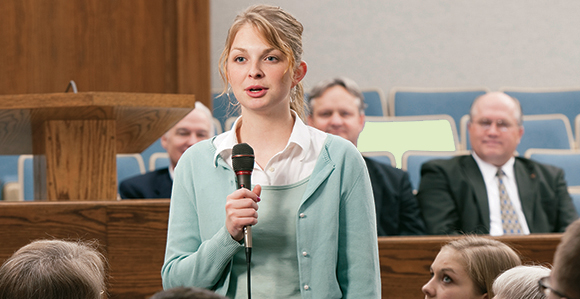
I was recently listening to an interview with actor / comedian Tig Notaro. She talked about a mentor she had who really supported her and believed in her when she was a teen struggling with learning disabilities. Her mentor believed in her and was kind when she needed it, but she also said several really hurtful things about LGBTQ people that were particularly harmful to Tig, a young lesbian grappling with her identity. Decades later, now that Tig is pretty famous and successful, in a loving relationship, a cancer survivor, she happened upon this former mentor on social media. She noticed that this prior mentor was very pro-LGBTQ on social media, and she asked her to lunch. The woman was as supportive of her as ever and as enthusiastic about her success. Tig mentioned the mentor’s anti-LGBTQ views that she had shared back in the day, and the mentor explained that she knew she had said those things, and that she wished she hadn’t. She said that at the time she didn’t know that they weren’t really her views–they were views she was given by others that she mistakenly accepted without really thinking about it. She apologized and felt remorseful.
This was such an interesting story to me. Why do people profess to believe something they don’t actually believe? That’s a very salient question to anyone raised Mormon, although it’s obviously got much broader application as well. Being raised in the church, I remember a war in my thoughts at times between the idea that I should always be totally honest, and the idea that I was supposed to “bear testimony” of church doctrines, some of which I either didn’t believe or didn’t really care about or didn’t really know what I thought about. The church, particularly at that time was teaching the youth that it wasn’t enough to say you “believe”–you had to say you “know.” Rather than embracing the uncertainty inherent in faith, we were told that belief was a temporary stop on the way to absolutely certain knowledge, and that only when we had achieved knowledge (of things that are essentially unknowable) would we have a “real” testimony.
“A testimony is found in the bearing thereof,” we were told. It occurred to me that this meant that this could either mean that you could tell if something was true based on how you felt when you said it. We would have said that the spirit would testify that the thing was either true or false. The thing is, you can feel something’s true because you want it to be true or because you fear it to be true, and ruminating about your fears or desires may make your emotions stronger, but it has no bearing on reality.
But it also occured to me as an adult that the more you said something, even if it wasn’t true, the more you came to believe it was true, like Stuart Smalley’s daily affirmations of “I’m good enough. I’m smart enough. And doggone it, people like me” or like Trump’s claims that any election he lost was stolen. If everytime I make a mistake I hit myself in the head and say “Stupid! Stupid! Stupid!” it might reinforce the belief that I’m stupid. Neither of these things (using our feelings to test statements or saying something until we believe it more strongly) really has anything to do with how true something is, though.
There are reasons that religions require attestations of belief. It’s the sort of thing that draws a boundary between insiders and outsiders. If you declare belief in a specific doctrine, you are showing that you accept the group’s worldview and authority. It also makes it difficult for you to distance yourself later on if you realize you don’t believe it. You will not only lose face socially, but you will lose face to yourself. It’s embarrassing to realize that you said or did something harmful that you didn’t even believe in the first place but just basically did from peer pressure, group identity, or to signal that you were part of the group.
That’s not to say that all attestations are negative–on the contrary, they are often aspirational reminders of values that encourage good behavior or moral clarity, not just the more questionable values of loyalty and conformity. Consider the Hippocratic Oath to do no harm or the ethics pledges required by the bar association. These are also attestations. We talked about vocational awe in last week’s post–the mission statements we use in companies and other organizations can link us to a higher purpose. A doctor’s belief in first doing no harm may not provide a clear roadmap for how to respond to every situation, but it will give the doctor pause in making ethical choices. That’s a good thing.
There is a risk with some of these attestations of belief that less virtuous psychological needs like belonging or staying out of trouble can outweigh the weightier ones like “doing what’s right.” Here’s how it works when we attest a belief that really aren’t sure we believe:
- A person publicly affirms a belief.
- They experience tension if their private beliefs don’t match.
- To reduce that tension, they gradually adjust their internal beliefs.
Conformity + repetition = internalization. That’s a formula that makes it much harder over time to let go of beliefs we didn’t even believe in the first place.
It also has social consequences. When many people publicly state the same thing, whether they believe it or not, it creates:
- a sense that the belief is widely accepted or “common sense”
- social pressure for others to align
- a stable framework for interpreting events that may not accord with factual reality
The collective affirmation supports and sustains the alternate reality. Group cohesion depends more on commitment from members than it does on the sincerity of their belief. For example, if you were a Russian soldier conscripted into an unjust war, the war relies on your actions and commitment, not on whether you really believe in the war or not.
- Have you ever attested something that you knew you didn’t believe? How did you know you didn’t believe it?
- What happened when you had to change what you said you believed? Did you lose face socially? How did you feel about your former statements of belief?
- Do you see the social consequences of attestations of belief in things that are either untrue (e.g. stolen elections) or unknowable (e.g. belief in God)? Does this differ from attestations about moral values (e.g. human rights)?
Discuss.
 Wheat & Tares
This is a great and timely post. I was just thinking (after having sat through yet another tedious testimony meeting) what the real purpose of it all is. I think you’re spot on when you talk about the role that social pressure plays here, but I want to pick up on something else you noted in your post:
That whole idea of a testimony being found in the bearing of it always struck me as just a kind of internal brainwashing. I’m sorry if that offends folks who believe they came to their testimony in that way, but I can’t think of another term for it. And that idea of repeating something until you believe it’s true makes me nervous because in my view, that is really much more closely aligned with dictatorial regimes bent on “reeducation” than on a sincere search for actual truth, which IMHO is much more grounded in the scientific method than anything else.
To return to your point about social consequences, I’ve often thought that testimony meetings really are about a kind of social coding as well as the internalization process you lay out. If we track Mormon rhetoric about “the world” and its attendant “evils”, we can get a sense that the church is about creating a social structure/community that supposedly values being apart from the world. If we recognize what it takes in order to do so, we can readily understand the true purpose of testimony meeting. It’s designed to create a community of believers that is supposedly held together by a shared belief system. That’s often how communities are held together; a shared vision of values/beliefs/interests that folks have in common, so that’s fine up to a point. However, if that community depends upon people’s fear of being ostracized, then it’s not a healthy community. And BTW, I’ve never understood the role that testimonies play in keeping this community together. I’ve met a lot of Mormons in my time and no one ever had the exact same beliefs about the church as as any other Mormon I’ve met, so I’m not really sure how the shared beliefs thing could work unless there is a significant element of fear about being excluded if one shares any kind of non-standard testimony, which of course leads to the very conformity you talk about.
I wish we could get to a place where folks would stand up in testimony meeting and say, “it doesn’t matter so much if all of the church’s truth claims are actually true because that’s not as important as Jesus wanting us to be kind to and love others. Here’s how I tried to follow his teachings last week.” That would be a testimony meeting that I’d stay awake for.
First of all, I wonder whether that story involving Tig Notaro’s mentor is actually about affirming something she did not believe, or whether it is about retroactively convincing herself of that because she has now become uncomfortable with views she once held. I think both things happen, and I think the second interpretation (which is where my mind went) might be an interesting separate post at some point. I’ve never met a Mormon who was old enough to remember life before 1978 who wouldn’t say they were uncomfortable with the priesthood and temple exclusion, but surely that can’t be true for everyone who has said it any more than all the people of a certain age who remember being at Woodstock.
The one time I really felt I was attesting something I wasn’t sure I believed was about 15 years ago, going through a significant questioning of my faith, and sitting in a temple recommend interview unsure whether I believed in God. I hadn’t discussed what was going on in my head with anyone, including my spouse, and I wasn’t ready to, nor was I ready to forego a temple recommend. So I said yes to the first question, and gave the expected answers to the rest. Since then, my doubts have not gone away, but I continue to hold a temple recommend and serve in callings, including as an ordinance worker. I believe there are many like me in the church, and that a recommend interview that forces such belief questions on people who question their beliefs yet sincerely desire to participate fully in the church is a problem that needs to be dealt with at some point. As for the long-term effect of continuing to answer that question in the affirmative, I’d say that it hasn’t made me believe in God more, but it has actually expanded my mind to rethink what I think God is to me, and what it means to “sustain” leaders, and related questions associated with the recommend interview.
I find it interesting that we have one scriptural example of someone who claims they said something the didn’t believe in Korihor in the Book of Mormon. He says he knew what he was saying was wrong but liked the response he got so he kept repeating it until he believed it. As someone who doesn’t believe the Book of Mormon to be literal history I have tended to not find some of the more cartoonish characters in the book very interesting, including Korihor, yet I feel like I see parallels to him nowadays, so I’ve come to regard the story as more useful than I once did. I really think repeatedly saying something can lead a person to believe it more over time. We should think about what we’re saying and why we’re doing it and how it’s shaping our thinking.
I know the feeling all too well. For the longest time I felt the need to give in more than I felt comfortable to conservative talking points to receive my family’s validation and in order not to go against the grain when political issues were brought up in family gathering conversations. It felt easier to just pile on when political correctness or a “crazy” Democratic politician was mocked. Conversation in real time moves fast and it is hard to build a counternarrative that can be deployed quickly and effectively. You have to anticipate what will be said and how to counter the annoying things said with grace and polish quickly. What I noticed in myself is that my resentment for anti-liberal things my family would say simply grew exponentially, to the point that I have asked them no longer to bring up politics several times. Several times because they kept not respecting my requests. Now finally there seems to be silence on not just politics, but on other things as well. People don’t want to rub me the wrong way, but there is a greater sense of frigidity.
On matters of the church, I find it fascinating that no one talks of church belief outside church (at least not in my environment). But at church they let loose. They say things I’m not sure they fully believe, but they think they’re supposed to say. People want validation for comments and talks. They want to join in in the groupthink and feel a sort of camaraderie from saying those things. But there’s a certain setting for it, and many other settings just are appropriate. I used to make lots of comments in Sunday School. Now I haven’t made one in over a decade. I just can’t bring myself to. I know that whatever I have to say simply won’t be welcomed, even if deep inside make people agree with it!
I once went to a testimony meeting where a young man (but married and with small children) got up and said that he didn’t know that the Church was true. I could tell that he had wrestled with this, that it was hard for him not to be able to have that affirmation, and that he longed for it. But he said that he didn’t know and that the most he could do was to want to believe. And I think he did, desperately, want to believe for his marriage and family and all that goes with the church.
I was so stunned to hear such honesty. And grateful. I kept thinking that there were a lot of people in the congregation that needed to hear someone admit this. There are people everywhere that need to hear this, so as not to feel so alone.
All of our experiences are separate and many lives look nothing like the cookie cutter examples that are often held up as “right.” While the church may look strong if everyone walks in lockstep, it is weaker individually if we do not honestly share who we are because then we feel isolated and inadequate which will always cause people to fall away.
Five of my kids (all adults now) were questioning the church’s beliefs and I was listening to them
Any post that seamlessly quotes Stuart Smalley is genius.
I grew to hate conducting testimony meetings. Without fail, I could count on follow-up texts, phone calls and office visits. Most were just passive-aggressive complaints attempting to point out hypocrisy and inconsistent behaviors – as in “I saw Brother S drinking coffee, or Sister F actually wore a two-piece bathing suit”.
Testimonies often attempt to recount faith-affirming experiences while leaving out doubts, struggles, or contradictions. That creates an impression of superiority and causes real sadness for those who suffer in silence.
I resorted to using Church Lady quotes as responses. Favorites included : “We all have agency—some people just use it… unwisely”, and “We all struggle, but some of us don’t advertise it.”
Wasn’t finished sorry, anyway I trust and value what my kids think and feel, so I came to believe there wasn’t much I truly knew. Years earlier when my 19 yr old son was killed in an accident, I woke up early the following morning and said to my husband, we really don’t know a darn thing do we? So a few years later, I was asked to give a talk in Sacrament meeting and they were totally unaware it was going to be my farewell talk. It was mostly about the few things I did know, like I know I love my kids, I know certain things fill me with hope but I didn’t know if there was a God or if the church was true (whatever that means!) and then I expressed some things I had decided to believe in, like I want to believe there is something out there greater than us, that miracles can happen, that we don’t end at death. I’ve decided to believe in those things because they give me hope. So I sit down and immediately a bishopric member stands up and says some are given the gift of knowing, and then proceeds to express knowing the church was true, the prophet Joseph was….. and on and on. Anyway, I do know I have felt a freedom and deep gratitude of finding a way that has brought me so much peace in my life. Anyway, I say these things, hahah jk!
This is such a good post! I think one of the most damaging things for me about the LDS faith culture I was raised in was the pressure to perform certainty. I don’t want to doubt other people’s convictions, but I do much better with questions than I do with answers. It was corrosive to my own faith to tell me that I needed to know things rather than to question them. I’m happier in ambiguity. It feels more honest to me. But I as a conscientious and trusting sort of person, I thought for many years that I must be the problem. So I knew _____ was true too, even as I didn’t. I probably did a lot of damage by parroting that language. These days, my testimony, when I bear it, is a lot closer to the template that Brother Sky shared. People nearly always find me afterward to talk about it–in a good way. Questions and doubts and uncertainty are such a rich part of the journey, and ignoring them ultimately benefits nobody.
I understand there is a lot of nuance in life in decision making. It is anything but the black and white I think we’ve been taught a long time. With the temple specifically, I personally decided I was done doing mental gymnastics to make answering the recommend questions work. So, I let it expire. Obviously when my kids or other family gets old and we are invited to temple related things, that might be interesting, but at this point I’m just not going to answer questions of orthodoxy (read costly signally) to enter a building. My wife has said she’s tired of wearing a mask at church so she has stopped doing that. I know there is a social cost to things like this, which I think is why church is so sticky. But honestly, if everyone were to put down their masks and be themselves, we might actually have a chance of building a healthy, lasting, strong community.
“‘Sister F actually wore a two-piece bathing suit”.” Would he have complained if she had worn an imaginary rather than a factual two-piece bathing suit?
(Sorry. Sometimes I can’t help myself.)
Bookwormandapple – 2 Corinthians 12:10, we read, “When I am weak, then am I strong,” and in Ether 12:27, “When men come unto me, I will show unto them their weakness… then will I make weak things become strong.” I wish, as you alluded to above in your comment, that we as a people would take these ideas more seriously.
Testimony meetings—often centered on expressions of certainty—can unintentionally reshape these teachings into something more like: “When you perform strength, you can avoid the appearance of weakness.” But that approach doesn’t unite us. Instead, it can quietly reinforce a culture where we feel pressure to hide, leading many to struggle in silence. It’s time to stop trying to outrun our humanity and begin to see it as essential—a foundation for real relationships built on shared vulnerability, rather than on the performance of certainty.
Quentin: Yeah, I also wondered if Tig’s childhood mentor was accurate in how she understood the evolution of her beliefs about LGBTQ rights. But I do suspect that a lot of people who spout the party line just haven’t really given it much thought beyond seeing “those people” as outsiders with low status that they don’t need to think about much. It doesn’t take much thinking or knowing people from marginalized groups before you conclude that stripping them of their rights is not a moral choice. But then again, maybe this woman’s change of heart was just a change of social groups. Maybe she was suddenly pro-LGBTQ rights because her current friends were whereas her prior friends were not. It’s impossible to say for certain.
There have been many times that I can think of when I have said the party line, but then when asked to elaborate or explain it further, it all fell apart. For example, there was a discussion about tattoos that I was in probably 10-15 years ago, and I was definitely anti-tattoo at that time. But why? Probably many factors: 1) tattoos weren’t as common at the time, so having one was much more of an outlier behavior–kind of like taking a public stand for something sort of pointless, 2) they seem painful, so I didn’t personally want one (no dog in the fight), 3) I’m literally covered in freckles, so even if I wanted one, it would look terrible on me (like a haircut I couldn’t possibly pull off), 4) they are permanent, but the things they represent often are not permanent (relationships, ideas, symbols that are meaningful to us in a specific era of our lives)–they seem to tie us to a specific feeling or idea when life is not so easily tied down. So I probably said something that to others sounded like “Follow the prophet and don’t have tattoos,” which wasn’t at all my reasoning, but in a group of Mormons is readily accepted, adds fake gravitas to your point, and is a sort of ace in the hole in the argument. But it was a stupid argument, and I didn’t ever (including at that time) feel strongly about tattoos.
I feel much more pro-tattoo at this point, for many reasons: 1) it’s a personal choice that others make that has nothing to do with me, 2) the history of tattoos has religious and cultural significance to indigenous groups that should be respected, 3) there’s a classist component to tattoos that also should give me pause when criticizing it, and 4) it’s super common now and doesn’t limit your job prospects or whatever like it probably did in the 90s. I still don’t want one, but two of my kids have them, and I think that’s great for them.
So back to Tig’s mentor, she probably didn’t know Tig was a lesbian at the time she said what she did, and she probably didn’t know any lesbians and hadn’t given it much thought at all at that time.
I rarely bear testimony in testimony meetings. I believe a lot of things, but I know relatively little. A sweet older sister told me several years ago that I should say “I know” and not “I believe” when bearing testimony because we testify to what we know, and we cannot testify to what we believe. I don’t think that she is right, but she may be in the majority. Paul taught we that had liberty to act, but that we should refrain if our actions (or words) would put a stumbling block in the path of believers. I don’t want to cause someone to stumble on account of my believing testimony, so I let others bear their knowing testimonies.
Georgis, many of the testimonies that most strengthened me were those that expressed doubt, uncertainty, “mere” belief or simple desire. There is immense power in humility and in modeling that humility for others. We will collectively learn more by acknowledging our unknowing and opening ourselves to wonder than by blinding ourselves with certainty.
Georgis, I agree with bhbardo. The only testimonies that I even begin to find honest are the “I believe….”kind, because when someone gets up and spouts about how they “know” stuff that is totally unknowable then I believe they are lying to themselves and others. It is easy to do in a Mormon environment, so I don’t hold it against them. I just don’t believe a word they say. I know exactly how they convinced themselves that they know. One of my psychology classes covered it in our chapter on cognitive dissonance. The professor even listed a book as suggested reading that I bought because if this professor suggested it, I knew the book was worth reading. It is called The Wisdom of Uncertainty, and the main thesis is that you are much more mentally healthy if you maintain uncertainties . Or put in less flattering language, People who demand a lack and white world are idiots. But anyway, back to how to convince yourself of stuff you cannot possibly know. It is exactly that a testimony is gained by sharing it. Stand in front of a group and say, “I know that Joseph Smith was a prophet,” and you have just put yourself in a bind. Well unless you were there are saw God appear to Joseph Smith, you don’t *know*. You believe. You believe that he was telling the truth when he claimed that he saw God. You don’t know; you just believe him. So, saying you know when you don’t puts you in a bind because you just lied. Now you have to either accept yourself as having just lied, and being a liar, or you have to twist your brain into being positive of what is impossible to be positive about. Most people do not want to see themselves as a liar, so they twist their brain into being absolutely positive.
So of us are just too self honest to fall for twisting our brain so we do not like getting up and saying “I know…” when we don’t. Makes us very uncomfortable to lie and we just do not like twisting our brain around into making ourselves not liars. The fact that you refuse to say you know when you only believe gives me a lot more respect for you, but the people who DO twist their brain around in circles will NOT admit what they did, so they want you to do it too. Makes their conscience feel better because they remember feeling uncomfortable before they twisted their brain into being positive. So yeah, unfortunately people who don’t like to lie just don’t make very good Mormons.
I was talking to an older LDS woman about a funeral I recently attended and I mentioned that the deceased was cremated. The woman expressed concern that cremation makes the resurrection harder–a thing I’ve certainly heard older LDS people claim–although she kind of quickly said she thought cremation was probably hard regardless of these things. Given the Holocaust, I can’t imagine a more unjust God than one who would differentiate resurrection priority based on whether one was cremated. Likewise having been to the Ganges. I didn’t point out that the Mormon obsession with viewings, embalmings, and fancy funerals is really just a byproduct of when the church was coming of age. Preserving the body through unnatural means was popular during the Civil War so grieving families could see their dead sons one more time. I mean, it’s just my personal theory here, but I think the horror of cremation in the church is a complete post hoc justification, and that it’s just continuing a tradition that was popularized in the mid-1800s.
I’m 70 and I’ve wanted to be cremated for years because of the outrageous funeral/burial costs. I grew up hearing how much harder cremation would be in the resurrection and also it was disrespectful to the body. And when I heard those things, I always thought, “He’s God for Pete’s sake! How incapable is he?” (My belief now is that I don’t identify him with a specific gender, just to clarify). And your body ending up being slowly eaten away with worms and what not isn’t showing all that much respect! Haha, you know we are (or for some of us were) a very weird people in some ways.
kmitch1126: Count me in the “I refuse to fall for the scam that is the funeral industrial complex.” Plus, shouldn’t we be donating basically everything to help others? I’m not going to be using it, so why shouldn’t they?
Hawkgirl, I’m right with you. I’ve gone from cremation to donating my body parts or if none of those are any good to the local university near by.
The whole “bodies have to be embalmed and properly buried” is emotional and cultural baggage that falls apart the minute you think about it. Bodies weren’t embalmed for most of human history. I guess I’m gruesome, but what about all the sailors who were eaten by sharks?
An idea for those who live in/near northern Utah:
https://medicine.utah.edu/neurobiology/body-donor-program
One of my favorite books also touches on this issue.
Our doctrine (what the church teaches its members) when I joined the church was the cremation was bad and was to be avoided unless the laws of the land required cremation. Our doctrine has changed. It was never the word of the Lord, but it was in the handbook, and it reflected the western European and northern cultural heritage of the people who were our leaders. Their opinions too often became doctrine, because doctrine is what the church teaches its people. Fortunately current leaders are trying to disassociate cultural attitudes from the word and will of the Lord. Women no longer required to wear bra over garments, black men can hold the priesthood, governement assistance before church assistance, women can be witnesses, women can offer opening prayer in a meeting, masturbation is not a vile sin, gays (celibate) can hold callings, etc.
A danger. Church policy was against cremation. Members created reasons, like cremation made the Lord’s work harder. Stupid people creating reasons where God never gave a reason. Nature abhors a vacuum!
I like this post as it gets at how we know things, and how we know (or feel that we know) them. It should make us cautious about not only what we say that we know, but also about what we revise and later say we know better. I’ll use Tig’s mentor as an example. She later revised her view and came out as pro LGBTQ. But is her latest revision the last? Or might it get revised again or even reversed? After all, the mentor doesn’t appear to have a very good track record of not needing to revise their view.
It’s easy to relax after revising one’s view and say, “Whew! I finally now see things correctly”. But there’s an “ethnocentricity of the present” that never goes away. It always lulls one into thinking ones current view, whether revised or not, is the correct one. It contains no hint the view may later need to be revised yet again. I sometimes even think that after especially struggling discoveries, we risk being even more wrongly wedded to the revised view. We think to ourselves, how can the view be wrong since it took so long and I struggled so hard to revise it?