

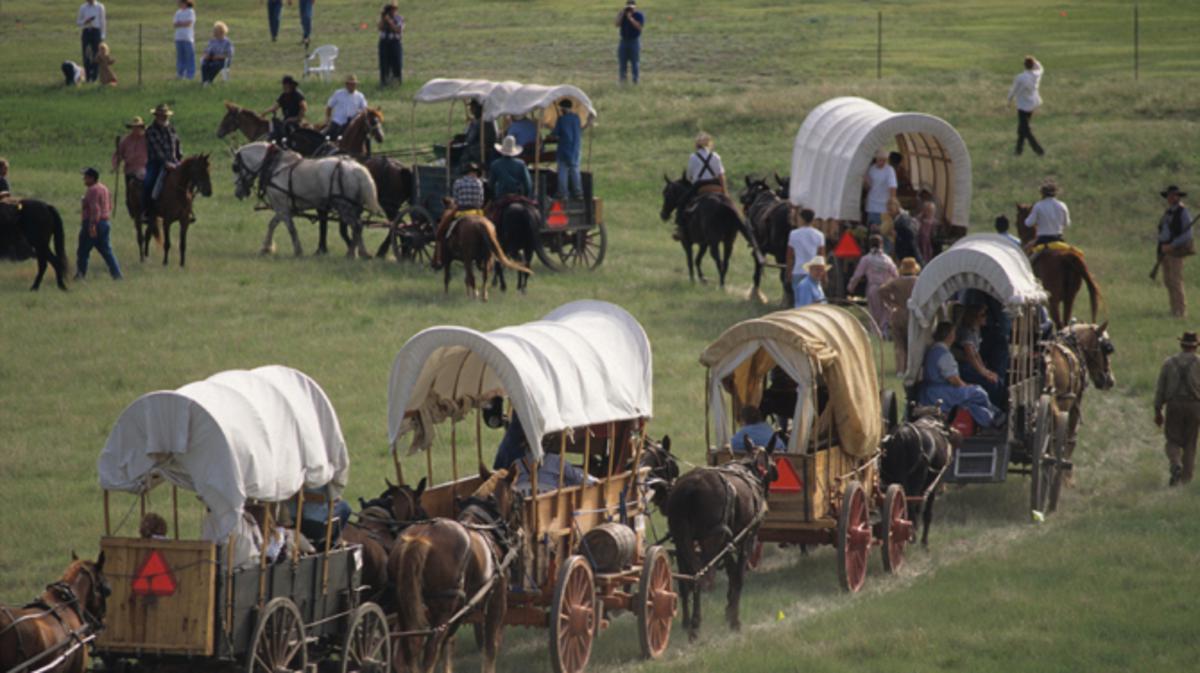
Image from the Church website.
I read Devout this week. That’s the memoir written by David Archuleta, who rocketed to fame on American Idol and was briefly the Church’s most popular Mormon before he left the faith. It was highly readable and I finished it in two days. I’ll write a full review for my next post. I didn’t finish it in time to write a review by today.
But it got me thinking about memoirs in general. Remember when we were encouraged to write our family history and research our ancestors? Especially the pioneer ancestors? I’ve got a stack of published books that make up my family history. One of my relatives became a publisher and the entire extended family benefited because he gathered up every family history ever written and put them in book form. It seems to me that we cherry-picked from those histories to tell the most faith-affirming stories. When I’ve sat down and read the entire memoir, it contains things that would challenge faith too.
I don’t hear much encouragement anymore to keep journals or research pioneer stories. I wish more women had left memoirs. In my family history, which goes back to Nauvoo, the written family histories focus on the men. I posted before about two polygamous brides in my family tree who didn’t leave much detail and I wish they had.
I’ve toyed with the idea of writing my own memoir. I have a story to tell. I want to be understood. I think that’s my biggest motivation — I want to be understood. I do have one memoir written by a ggg-grandmother who emigrated to the USA to join the Saints and then left the Church a few years after arriving in Utah. She tells a lot of her story, but she left out the reason she left the Church. I understand from asking around that it had to do with a business deal gone bad with a Church leader. I wish I had her full perspective on that, rather than just the oblique way she hinted at it.
Hawkgrrl wrote a memoir of her mission, The Legend of Hermana Plunge. It’s well-written and I was immediately right there with her, teaching the gospel in the Canary Islands. It was so authentic that it raked up a lot of feelings about my own mission that I hadn’t processed. Which goes to show the purpose of a memoir — to connect with others, to find commonality in our experiences. Memoirs matter.
So here are today’s discussion questions:
- In general, do you enjoy reading memoirs and family histories? (professionally published or not)
- Have you ever thought of writing your own memoir? It doesn’t have to be a long book, just typing a half dozen pages counts as a memoir.
- How honest do you want a memoir to be? I know I’ve set at least one memoir down because it felt more like a rant. But I also feel that memoirs that are only focused on the good stuff are hollow. (I felt that Archuleta struck a good balance in Devout. He gave enough details to give context, but it didn’t feel voyeuristic. And he treated everyone in his story with respect for their humanity.)
- Do you have family history on your bookshelf? Or on a website? How much research have you done into the stories of your family members? Interviewing your grandparents for a school project counts.
 Wheat & Tares

Thank you Ms. Janey for this post. I have found folks’ lives interesting in broad swaths – perhaps that is my YouTube mentality showing – but it is good to have a general quick view of a person’s lifetime.
In my retirement, I have set myself to entering the data from published obituaries into the genealogy databank maintained by the LDS Church at FamilySearch. While combing thru these obits, I am uplifted by the personal details also contained therein.
Here is a particularly inspiring example, from a farm girl-turned golden ager in Montana:
” Darlene had her own career teaching at Sunny Ridge Elementary school starting in 1971. She thrived on teaching. Her students learned to make applesauce on Johnny Appleseed Day and gingerbread people in December. She devised her own individualized spelling program before that was a popular method. Each year she read Charlotte’s Web to her class, striving to not cry during the ending. Darlene’s teaching style and mothering style were much the same. She was always approachable and kind, inspiring obedience through her great love.
Darlene looked forward to yearly trips back to the dairy farm to visit her parents and meet up with Dorothy’s family. Ever the farm girl, she loved being outdoors, including working in her yard and garden. She and Art loved camping at Cascade Lake and the Oregon Coast and skiing at Bogus Basin.
Darlene’s great loves beyond her family were children, birds, wildflowers, sewing, and knitting. She once had a hummingbird land in her hands while she was rescuing it from the garage—much to her awe and delight. She sewed her own wedding gown and thirty years later sewed her daughter’s–and the four bridesmaids’ dresses! ”
Either the Charlotte’s Web vignette or the picture of the gentle hummingbird would be a marvelous way to remember this gentle lady, and I am so glad that somebody wrote it down.
I don’t generally have any interest in reading memoirs of famous people. I don’t like, or understand, our cultural fixation with celebrity.
I have no memories of my mother, who died when I was 3 years old. I am lucky that she was able to record a personal history before she died, so I have her life story in her words including the audio tapes (converted to CD) that were used to create the history. My mom kept a near daily journal for the last 8+ years of her life. I’m not kidding, there’s 330+ entries per year, detailing buying new shoes for the kids, canning fruit, having kids, getting colds, and giving talks in church. Often just two or three sentences per day. I typed up most of her journals when I was in my 20s, but admit that I ran out of courage to do the last one. I was too nervous about every entry where she was tired, or something hurt, because I knew her cancer diagnosis was lurking. I suppose I should try to get that last volume from my Dad to complete the job.
I have started a personal history of my own. It’s 68 pages and only gets into my 30s, because I ramble too much. But I don’t worry too much about that. I’m aware it won’t ever be read by anyone but maybe my own kids or potential grandkids. I want them to understand who I was, how I thought and why I did things. I want them to understand that I ramble too much.
I’ve also started a memoir of my mission. I find it a compelling segment of life because it is two years that I experienced that no one else in my life was around for. The first draft is maybe 20% complete and I haven’t touched it for several years. It’s been a struggle to understand my audience and purpose with that one, and I’ve been meaning to have my wife read through the chunk that is most complete to try to get a feeling for whether I’m producing something worthwhile at all. But life is busy, and my relationship with the church has changed significantly since I started that one. I want it to be completely honest, but also capture my feelings at the time, not just my cynicism of the present.
I’ve been able to read a few stories of my ancestors collected and published by extended family members and I’m glad to have them. There’s a lot of pioneer material in there, but there’s also a history of the Irish Catholic side of the family written by my never-Mormon grandfather. At some point he realized he was the last of his generation and the only one living who had in-person memories of some of his relatives, so he wrote down what he remembered, and I’m glad to have it. I’ve come to appreciate how fleeting that knowledge can be and the value of having it recorded while those who have it are still with us.
I think some level of honesty is good in a memoir. It depends on the intended audience, but sometimes I appreciate just reading about mundane details about someone else’s life, especially the further back in time it is from, because my life is so different now. My grandfather left behind a mostly completed life history. He was an engineer and the history sometimes got sidetracked with really technical details about jobs he had early in his career. It’s not the stuff that makes it into a well-edited memoir, but as someone who also went into engineering, I found it quite endearing. My inner nerd felt solidarity with the urge to talk about something that’s probably not that interesting to most people.
I feel like I could write a book about my mission. I served in a time and place that wasn’t your average mission experience (former USSR during its disintegration). There is much to say about it, but I always worry that it’s just a vanity project and wonder who would even read it. People do read memoirs, though, and I have appreciated reading what family members have written. Perhaps at some point I should do it, even if it’s only eventually read by posterity in the distant future. Someone I haven’t met yet may be glad to know something about what my life was like.
I would love to write my history in the context of having been a TBM for over 50 years and then leaving the Church entirely. There are many lessons to be learned about high demand religion and confirmation bias. I would love to pass these lessons on to my kids and future grand kids.
Irony alert: in order to save parents and in-laws from heartbreak and hostility I won’t be writing this history until all four of these individuals have passed away.
Don’t worry about whether something may just be a vanity project (unless you are deliberately trying to spin the past in your favor). You will get a lot out of writing your story (or even somebody else’s story) and there will usually be at least one person who will read it and benefit from it. I once wrote a piece that riffed on the song “Mercedes Benz” by Janis Joplin. Whether anybody read it or not, it was a lot of fun to write “Having reached my goal of owning a Mercedes, I set about to acquire a color TV.”
I also recently finished writing a bio of my dad. It was a mashup of facts that I pulled from old documents, excerpts from my mom’s personal history that overlapped with his, my own memories, and those of my sister. Just before I was ready to distribute it, I found a workbook he had competed during rehab that gave his perspective on his early life, so I wove quotes from that into the existing narrative. As an appendix, I included a detailed analysis of the events leading up to his decision to resign his tenured university position (ironically over the university’s tenure policies). Basically, I was challenging my own longstanding assumption that his decision had been morally correct. (I concluded that it had never truly been a moral question, so the rationale was shakier than I had assumed, but was also not in any sense evil.) I fully understood that it would be of interest only to people interested in an academic career or who are studying the practice of protest resignations (which describes none of my father’s grandchildren). But my mom said that she learned stuff from what I had put together that helped her understand the whole episode better. So I am glad I did it.
Recent biographies of church authorities have squelched the general emphasis of writing a journal. The general authorities are told they must surrender such to the church upon death. Too many details that top leadership doesn’t want known. There is a reason no disagreements or controversies are known as they once were to the public.
Both my paternal grandparents left memoirs which I value. My sister wrote a book containing a very brief summary of a pioneer ancestor from each pioneer ancestor line. Very cool but she left out the juicy parts (and boy are there some quite important juicy parts).
My siblings and I didn’t grow up in a family with much family lore. A little before our father died, he published a family history of his progenitors with a couple of stories from his youth. Our mother wrote micro-memoirs over the years, which she pulled together into a couple small collections and gifted us when we were all older and out the door. Those collections are prized possessions as both parents died in the 1990s. Our mother’s writings include hopes and disappointments, failures, humor and insights. They are real and relatable. Our dad’s book is good for history and dates and plenty of documentation, with some personal stories. Both have value.
I have taken up writing for self-discovery and creative expression. I am part of a small group who are working on memoirs by writing one micro-memoir each month to share and receive feedback. That keeps us moving ahead. I’ve come to understand that my life story is a collection of memories mostly small and mundane by society’s standards, but which take on meaning and beauty when looked at closely and in retrospect. I recommend the practice of writing about the small events and memories, about people who have come and gone in your life. And please don’t clean it all up to present a tidy moral lesson that will edify your posterity. It will bore them, and they won’t grow closer to the real you.
My mother once took a class on personal history writing from BYU. She wrote up a small bit about when my oldest brother was hospitalized with a traumatic brain injury. The professor wanted her to completely rewrite it into something uplifting and inspirational. What pray tell is uplifting or inspiration about your oldest child being in a coma for 5 months in which you don’t know if he will live and the doctors are saying he may be a vegetable for the rest of his life, but he will never be the brilliant, talented, good looking young man that he was before a 22 caliber bullet hit him point blank in the back of the head. She was trying to tell a story honestly, but not cave into total despair. She would have had to make up crap that didn’t happen to make the whole experience some happy uplifting, inspirational, life history to pass down to her great grandchildren. Just to make the professor happy.
She dropped the class and told me later that it had shown her that her life is best forgotten. That is how I feel. I don’t want to write a sanitized version that has the purpose of my great grandchildren sharing inspiration in Sunday School.
Yet, honesty is too brutal, too hard to explain.
When I was about 18, I was visiting my maternal grandmother and she went on an angry rant about the personal history her brother had written about their father. She said that her brother had tried to turn him into a saint, instead of telling the truth. She was banging pans around and slamming cupboard doors in the kitchen for a good two hours. Saying things like “how can we learn from a person’s mistakes if we pretend he never had any?” And, “When you have to tell lies to make it look like prayers are answered, how can faith sustain us through real life?” I think I must have kept quiet and let her take her mood out on the kitchen, but I have remembered her ranting about fake faith building stories, so it was way familiar when Packer said what he did about only telling faith promoting church history, instead of the truth. Grandma had the honesty to deal with truth.
My paternal great(great+)grandfather is the guy whose journal is used by trek when they talk about the hardships of the handcart companies. He has frequently been quoted on TV specials then they try to make the whole handcart thing inspirational. Even in Sunday School, I didn’t admit my maiden name that day. But the oral history that came down in the family was not faith promoting. There were no miracles, only hard choices, running out of food with weeks to go, trying to drag handcarts through snow and having fingers and toes amputated.
For what it may be worth, here’s my advice for anyone contemplating writing a history of their family, family members, or themselves. Do it. Don’t second-guess yourself. You may worry that no one will be interested in it beyond immediate members, at most. The truth is you never know who will find your work, who will read it, who will be moved by it, who will use it to construct a larger historical narrative. And be as honest as you dare to be. The truth is tonic, corrective, and validator. There’s also a good chance it’ll be one of the hardest things you do. And also one of the most fulfilling.
Anna, My maternal GGG Grandfather’s journal was also used to describe the Willie/Martin handcart trek and it’s hardships. He later went on a mission to France and described how wonderful the wine was! He and the family settled in St George where he was the church historian. Is there a link perhaps? They certainly at least knew each other. Very interesting to me, is the fact that my dearest friend’s GGG Grandfather was one of the rescuers at the Sweetwater.
I’m feeling a little motivated. Thanks Janey. If any of us are thinking about it, we need to get on it, every day is a gift!
Cheers –
Thanks for all those great comments! I posted this and left town for a couple days. Too busy to be on the Internet. But I’m back now.
raymondwinn – thanks for sharing that excerpt from an obituary. Obituaries may be the closest many people get to a memoir type summary of their life. Bless the person who included those vignettes. The best obits, like the best memoirs, let the writer shine through. Like, you can tell the person who wrote Darlene’s obit loved her greatly. That’s as important to Darlene’s story as what she actually wrote.
Dave W – if your memoir progresses further, please do update us. About the rambling — go ahead and ramble. If that’s the way you talk, then include it all. If you want to trim it down later, save the doc as a new version called “Second Draft” and cut out the rambling. But keep both. Someone may want more info about a certain event and go looking for the rambling.
I understand the reluctance to go through the journals of your mom’s final years. When I started toying with the idea of a memoir, for some reason I decided to start with rereading the journal I kept while going through divorce. Mistake. I dropped the whole project rather than revisit that experience. If I do write a memoir, the divorce will be a short chapter. Honest, but short.
Quentin – that is awesome. Most memoirs are going to family members, including extended family. That takes off the pressure of trying to write a story that will get sold in a bookstore. Who cares about sales? Most memoirs and journals are just treasured possessions passed down and around to family. Who cares if it’s just a vanity project? It isn’t going to be required reading for anyone unless they’re interested. You’re supplying the material for someone else’s curiosity project.
lastlemming – good for you for writing your dad’s history. And I hope you got that color tv in addition to your Mercedes. Just writing stuff helps us think and process and learn. That’s reason enough to write.
josh h – you can write the history now, but don’t give it to anyone until the people in question have passed away. Write while it’s fresh. You can always include an introduction later that explains any changed perspective you may have.
JC – yeah, that reason makes sense from the Church institution’s perspective. We lose something about the humanity of our leaders, though. As others have mention, having a memoir that is completely faith-affirming isn’t honest. I wish the Church saw the humanity of its leaders as something to be honest about, rather than something to edit out of its history.
Tim – My family histories also have a lot of juicy parts. I didn’t find them until I went and read the full memoirs rather than just the faith-affirming bits that got told orally during reunions and such.
LHCA – that’s awesome. Micro-memoir is a good term. Writing one memory at a time, picking out something meaningful, is a good idea. A memoir doesn’t have to start with “I was born” and then progress chronologically. Collections of memories, and why the writer considered this particular memory meaningful, sounds like a beautiful way to structure a memoir.
Anna – I totally agree. A memoir is not a sacrament meeting talk in which our experiences are tied up with a bow. Life is messy; memoirs should acknowledge that. Honesty is the key to connection, not preaching.
15RRider – my family history might overlap with yours too, in the Martin Willey handcart hardship. My ggg-uncle was coming home from a mission and they asked him to accompany one of the handcart companies to help out. Then my ggg-grandfather was in a rescue party. I don’t know if they met each other out on the plains, or if their paths missed each other. No one wrote down that detail. Was the first time my ggg-grandfather saw his brother in three years out on the frozen wilderness where he kept his brother from starving? Why did no one write that down???
My ancestor was in the company just one week before the Martin and Willie companies. So, not with the Martin or Willie, but just a bit ahead of them. I forget who led that one. But they had more deaths than all companies before them added together. Then Martin and Willie were both worse. They were the first party reached by the rescue teams, who gave them food and warmer clothing and let them continue into SLC. People often do not know that there were really three companies that ran out of supplies and could not get more at Ft Laramie, then had snow and freezing temperatures. If fact, I have had people call me a liar when I have said there were actually three companies that were rescued. I know there are more than just his journal that get quoted with trek. In fact, his is kind of dry and boring. It talks about exactly how many pounds of flour, coffee, and shortening each hand cart carried, describes the construction of tents, how many people per handcart and tent (15, they were not family groups at all) how many miles traveled each day, any breakdowns or problems.
When they got to Utah, he was put in charge of a group and sent to settle Farmington Ut.
But speaking of finding connections of having ancestors in the same handcart companies, my husband has an ancestor in that same company who was an older child who also kept a journal. So, they would have known each other.
Much of my family lineage has been traced back centuries. When I look at the information I get overwhelmed because it’s mostly dates, not a lot of history, at least until the Nauvoo era on my mother’s side. From that point much of her family history has been detailed.
I’m more interested in the more recent legends and lore in my family, on both sides. My father’s first wife passed from cancer, leaving him with six kids. He and my mother dated via letters. There is a lot of legendary tales of the time after my older siblings’ mother passed. They speak fondly of that time, dad’s culinary misadventures notwithstanding. I still know very little of my siblings’ mother. She is the great shadow of our past. Even her family doesn’t speak of her often.
My great-grandfather on dad’s side was something of a celebrity at the North Rim of the Grand Canyon. He was a trail guide and well known. I occasionally search for his name online and find some new tale of his life.
My maternal grandmother was the 2nd woman to graduate from the University of Arizona with a Civil Engineering degree. She did write her life story, and it’s one I’m grateful to have.
As for writing my own story, I honestly don’t think I am all that interesting. I have had a few experiences that readers might enjoy, but I don’t know who would benefit from the telling. I tend to be a lot more open and forthright when I write about myself. I think the page gives me enough distance that I can just let it out, not worry about protecting myself.
In my own reading, I much prefer fiction to non-fiction.