

Since we are coming up on the Bible next year, I thought I would address a tool often used in Biblical analysis: Source Criticism.
Source criticism, in biblical criticism, refers to the attempt to establish the sources used by the authors and redactors of a biblical text. It originated in the 18th century with the work of Jean Astruc, who adapted the methods already developed for investigating the texts of classical antiquity (in particular, Homer‘s Iliad) to his own investigation into the sources of the Book of Genesis.
In general it is the process of evaluating an information source — analysis of sources rather than “criticism” or an attack on a source.

The general elements are:
- Human sources may be relics (e.g. a fingerprint) or narratives (e.g. a statement or a letter). Relics are more credible sources than narratives.
- A given source may be forged or corrupted; strong indications of the originality of the source increases its reliability.
- The closer a source is to the event which it purports to describe, the more one can trust it to give an accurate description of what really happened
- A primary source is more reliable than a secondary source, which in turn is more reliable than a tertiary source and so on.
- If a number of independent sources contain the same message, the credibility of the message is strongly increased.
- The tendency of a source is its motivation for providing some kind of bias. Tendencies should be minimized or supplemented with opposite motivations.
- If it can be demonstrated that the witness (or source) has no direct interest in creating bias, the credibility of the message is increased.
So with studying the Bible and the materials around it, items are more credible than stories. The closer to the original source the text is, the more accurate it is considered. Primary sources (the Bible) are considered more reliable than secondary and tertiary sources (commentaries).

This comes up often where the Bible has internal contradictions.
For example, was everyone except for Noah’s family drowned in the flood or did various peoples from before the flood have descendants that show up after the flood? You will find both narratives in the Bible.
Was Noah and his family the only group on the earth or did they encounter others who spoke different languages with whom they reached treaties and divided the earth?
There are also records of the books of the Bible being edited and compiled and rewritten somewhat during the exile period when Israel was in Babylon. Source criticism is one of the tools used to untangle the original text from things that were added later.
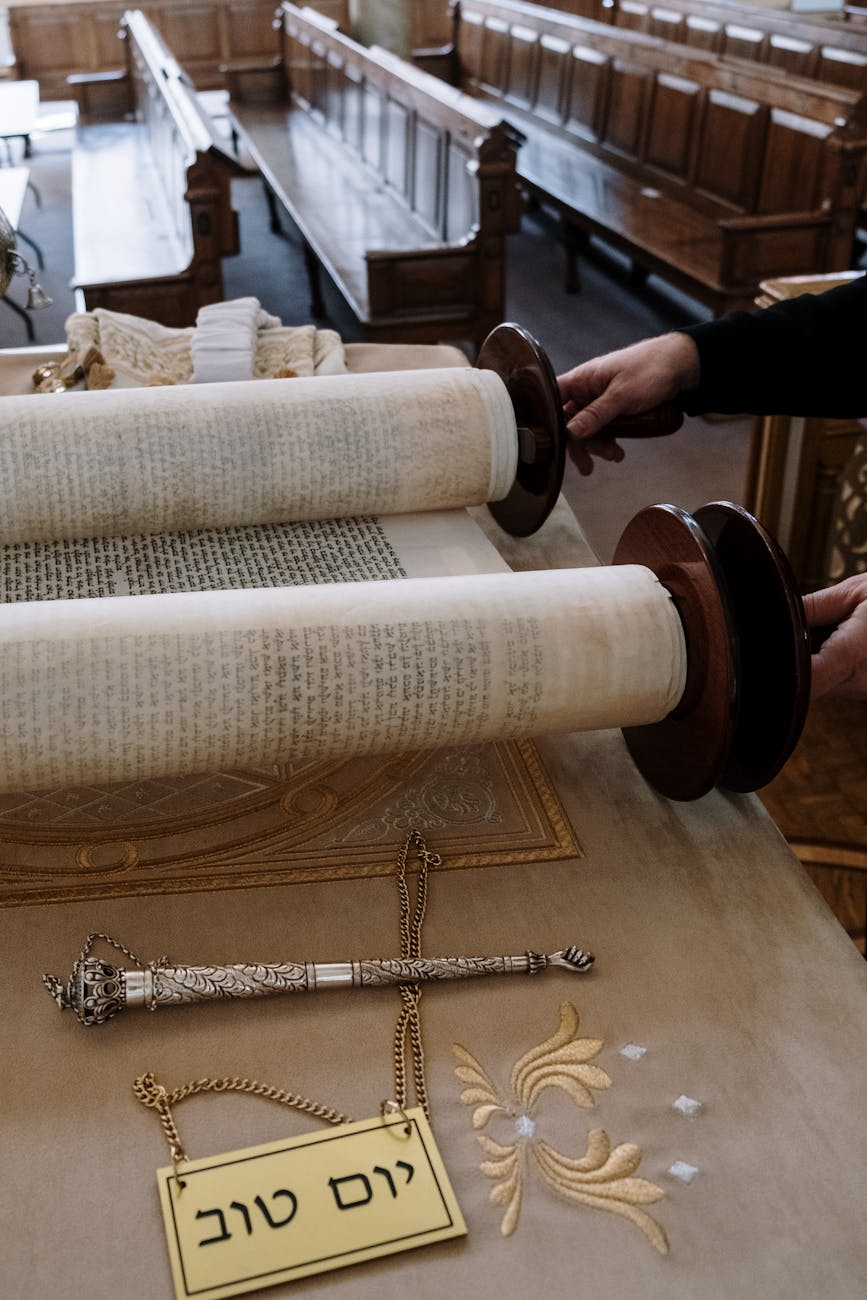
For example, the Bible includes details of “everyone” being killed as the Israelites migrated into the promised land with discussions of interactions with the descendants of those people and God explaining why he was not clearing off the land before the Israelites.
While it is easy to get into the weeds with source criticism, it can be useful in looking at the texts as a whole and in understanding parts of the Bible that have multiple versions or sources and in knowing what a book or reference means when it mentions source criticism.
 Wheat & Tares
It’s worth emphasizing that “source criticism” didn’t come about because some rebel scholars woke up one morning and said, “Let’s complicate the biblical story by positing multiple sources instead of just Moses.” It is doublets and contradictions in the narrative that pushed scholars to explain how the text of the Pentateuch came to be in the form that it is: two radically different Creation stories, a self-contradictory Flood story, several different versions of the Ten Commandments, and so forth.
The LDS curriculum doesn’t actually study the first chapters of Genesis anymore. Instead, it focuses on LDS narratives in the Pearl of Great Price, which of course makes it even more difficult for LDS readers to understand Genesis.
Stephen, personally, I love this stuff. Bart Ehrman’s books got me into textual and source criticism and I really enjoy the ins and outs of trying to figure out exactly who wrote what and when amd what that can tell us about how to read the stories of the Old Testament. That said, I’m not at all certain that textual criticism has much of a place in Mormonism. What Sunday School class is really willing to wrestle with the possibility that the monotheism of the Bible isn’t historical and is merely the result of the religious reforms of King Josiah (including the introduction and enforcement of the Mosaic Law)? As has been stated here many times before, Mormonism relies heavily on the history of the Bible being literal (indeed Mormonism makes a lot less sense if the Patriarchs were not historical) and such a view doesn’t play well with textual criticism or source criticism.
I have a professional interest in primary source materials; I work as an archivist for a university. The closer something is to a primary source, the more I trust it. Growing up, I was perfectly willing to believe in the translation of the Book of Mormon from golden plates. It took a little faith, but I could understand the concept. In those classes I took, any suggestion that the translation happened any other way was quickly dismissed as false. The translation narrative of the stone in a hat becoming the new “official” take was the straw that finally broke my shelf for good.
Now in my mind the stone in a hat is another step removed from the primary source (the plates). It felt like claiming I had a thorough understanding of Romeo & Juliet from watching Warm Bodies.
@Dave B, I believe the CFM curriculum also only covers Revelation 1-2/3 and 21/22, because otherwise we’d be forced into wrestling with the fact that in the middle part, God imposes a many month long conscious suffering for most of humanity and other horrible things. The god depicted in Revelation is not good.
Oh joy. Starting the Old Testament next year? That always brings out the most enlightened opinions among the rank-and-file.
I think it is useful to consult patterns of human history to inform ourselves of how the Torah/Pentateuch may have been constructed. Look at Homer and Hesiod, look at the Vedas, look at the Instruction of Ptah-Hotep, look at the Epic of Gilgamesh. These ancient works became the cultures’ most central and vaunted pieces of cultural knowledge. They were never the reflections of a single composer but took important figures of the community over the course of decades to write. The Torah is no different. Contradictions are readily apparent in the Torah. There are not one but two creation stories. Later editors included the contradictions to honor the earlier thinkers. Early holy texts were polytheistic. The Torah is similarly polytheistic. Yes, YHWH becomes a patron god, but Baal, Asherah, Amon, and El also exist in ancient Israelite thinking.