
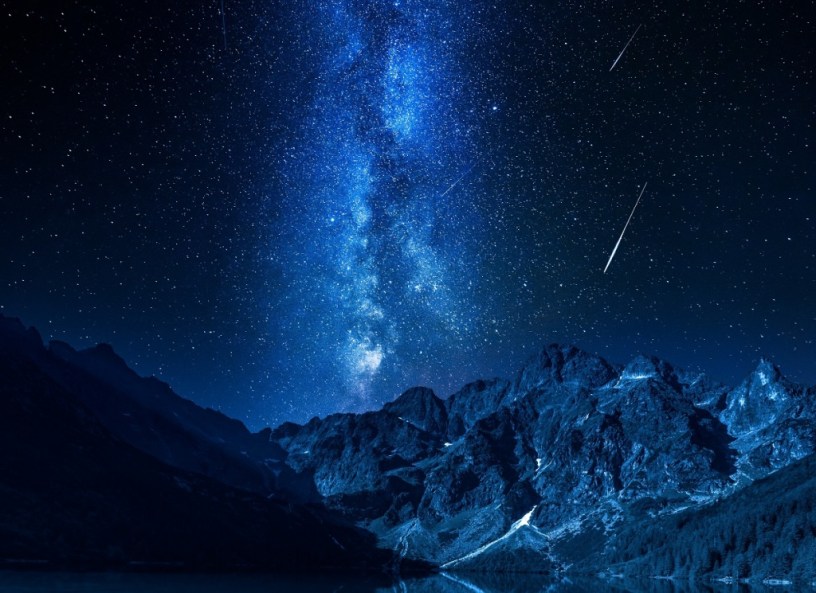
“There is something extraordinary about being alone on a mountain. Vulnerability sharpens every sense. Fear visits the body with a physical coldness. Moments of bliss are intensified and made melancholy by the realization that the moment will be yours alone and never shared.”
—Writer and mountaineer Bruce Barcott
Yeah, I know, I’ve had mountains on the brain lately. Kinda like whoever wrote the Books of Mormon and Moses. Mountains and hilltops are excellent places to ponder, pray, to contemplate. High places have their benefits. But…
What attracts me to the above book excerpt is the notion that vulnerability and fear may be good things, or at least offer some benefit to the human soul. Do you agree? Why or why not? And might melancholy play a necessary role in tempering the bliss which religion stokes in church members?
“It’s difficult to overstate the importance of St. Helens to volcanic research. Recent American earth science is now divided into epochs: Before St. Helens and After St. Helens.”
Hallmarks, touchstones, and turning points. Moments on which history hinges. We should study these out in our minds.
What attracts me to the above quotation is the notion that a catastrophic event can pay useful, even desirable, dividends for society. I’ve heard this many times. In the aftermath of a forest fire, many previously stifled and suffocating plants experience new growth. The ecosystem is able to diversify and revitalize itself.
What do you think of that? In your life, how eagerly, or hesitantly, do you allow optimism to inform your reaction to traumatic events? Also…
Why are we so dependent on catastrophe and tragedy to get anything great done? Why do we lean so heavily on the war metaphor, especially in Mormonism and Christianity?
“We live at the bottom of an ocean of air.”
—Barcott paraphrasing 17th century inventor Evangelista Torricelli, who created the barometer
I just love the above quote. What a fantastic and (hopefully) humbling image! I believe this point of view is worthy of adoption.
“I’ve never fathomed why we, like the psalmist, look to the hills for our salvation. If God exists in all things, it makes as much sense to look in the ditches and drainfields.”
Again, I love the above quote. What fantastic imagery, smacking of wisdom! Do you agree? Why or why not?
The above quotations all come from The Measure of a Mountain: Beauty and Terror on Mount Rainier by Bruce Barcott.
 Wheat & Tares
I had friends out fishing east of St. Helens the day it blew up. They were caught in the ash plume and didn’t think they’d make it out. I watched the grey haze from the safety of Tacoma.
What I remember about Rainier is how hard it is to even take a step at the summit. The air is so thin.
Lately I’ve been out on the lava beds in Central Oregon and Idaho. The Crack in the Ground is like something out of Tolkein. Strange monoliths like Fort Rock. Newberry Caldera, a mountain the size of Rhode Island, with two crater lakes. The vastness of the black fields at Mackenzie Pass and Craters of the Moon, full of lava tubes to scramble in.
Regarding literature, I finally finished rereading Moby Dick.
Oh my Captain! my Captain!
I like to say, although I’ve camped on Rainier I’ve never seen it. (I meant visually but it works metaphorically) I don’t think anyone has looked on a drainfield with wondrous awe. I guess Arcata Marsh could be nominated.
Thhq
I think the progression of the North American plate over the Yellowstone Hotspot is fascinating. One of my favorite memories is watching the Perseids stretched out on the black lava at Craters of the Moon. But if I were to sing the praises of the volcanic features of Oregon and Idaho, then my voice praises Crater Lake and Island Park.
I can see why people believe in Naiads.(and more friendly than an angry sky father of the Steppes)
As for catastrophe– Chicxulub, bad for dinosaurs great for mammals. Also there is a hypothesis that meteor impact cratering was a necessary biogeological process to the origin of life. The application of that story to the justification of cruelly seems likely, a modern form of manifest destiny.
Jake, I have to admit your point was lost on my because I cringed so bad about the idea of optimism amid trauma. Nope, just nope. If one is capable of optimism during a “traumatic” event, it is hardly traumatic at all. One can be optimistic during bad events, scary events, even catastrophic events. But with the traumatic events I have been through, and treated as a social worker, no, optimism is not possible. It is the utter overwhelming hopelessness of traumatic events that defines them as truly traumatic. I have had few, and I guess many people have only had bad events, because the way many people talk about trauma feels like children who missed the school bus and are calling it traumatic.
Sorry, but I think the word trauma ought to be saved for things that are life shattering, not just life changing or scary or bad. Rape, child abuse, combat where you watch your buddies blown apart, watching your spouse die in the St Hellen’s eruption, those are traumatic. Being caught in the ash from St Hellen’s might be traumatic if you are pretty sure your or loved ones are going to die. Otherwise, it is just pretty scary. From a psychological point of view, for something to be traumatic it requires serious fear of death, and usually other emotions like shame, guilt, betrayal. Trauma is complicated and life shattering. Complex trauma is repeated trauma, with things like child abuse where it happens over and over, or being held hostage and raped or beaten repeatedly.
Once one is out of the traumatic event, then optimism can be regained, and often that takes some therapy or mentally healing from the trauma.
Other than that, you most likely have good point about opposition in all things. It is just that sometimes a person is reduced to just the horrifying and nothing else fits at the moment.
Island Park…..another place to visit someday. Looks beautiful. US 20 is kind of like our Route 66, from Newport OR to Idaho Falls, but I’ve never traveled it any further east.
I quoted Starbuck, pleading with Ahab during the final battle with the whale. Walt Whitman used similar words 10 years later, after Lincoln’s death. Lincoln’s obsession was a worthier cause to die for than a whale, but the struggle was far bloodier.
This summer I hiked Maroon Bells and the Maroon Traverse in Colorado. It’s a class 5 14er not for the faint of heart. I’ve been wanting to do it for years and trained for it and hired a guide to help me do it safely.
Mountains are beautiful and menacing and inspiring and deadly all at the same time. Hiking up to the ridge was brutal because it was a couple of miles at a 50 degree angle at high altitude. All I could think about was “pain is finite and this will end.” I don’t think that counts as optimism.
Once at the peak all I could think about was the upcoming traverse with its deadly drop offs. You could look and see the next peak after the traverse only 3/4 of a mile a way. I can run that in a few minutes at home but this would require a lot more than that. When I got home I showed a pic of the traverse view to a co-worker and she didn’t notice the deadly cliffs – she said it’s so pretty, look how close you are to the clouds! She had a different perspective than I did.
I partially agree with Anna. When I’ve been in difficult or traumatic situations I concentrated on what would get me through it. It was survival. I suppose when you don’t think you’ll survive that maybe that’s what hopelessness means. Unlike Anna, I do think that trauma can be a whole spectrum. I’ve never experienced capital T trauma but I had a life of trauma in the church that my therapist calls trauma and which will take years to overcome.
Mountains are one of my favorite metaphors. We’re all hiking invisible mountains that are threatening to kill us but nobody around sees how hard we’re breathing. We make it to the top and may have a fleeting moment of reprieve and then we notice the next peak. If we’re lucky we can enjoy the view for a bit and hike with a friend.
This summer I hiked Maroon Bells and the Maroon Traverse in Colorado. It’s a class 5 14er not for the faint of heart. I’ve been wanting to do it for years and trained for it and hired a guide to help me do it safely.
Mountains are beautiful and menacing and inspiring and deadly all at the same time. Hiking up to the ridge was brutal because it was a couple of miles at a 50 degree angle at altitude. All I could think about was “pain is finite and this will end.” I don’t think that counts as optimism.
Once at the peak all I could think about was the upcoming traverse with its deadly drop offs. You could look and see the next peak after the traverse only 3/4 of a mile a way. I can run that in a few minutes at home but this would require a lot more than that. When I got home I showed a pic of the traverse view to a co-worker and she didn’t notice the deadly cliffs – she said it’s so pretty, look how close you are to the clouds!
I partially agree with Anna. When I’ve been in difficult or traumatic situations I concentrated on what would get me through it. It was survival. I suppose when you don’t think you’ll survive that maybe that’s what hopelessness means. Unlike Anna, I do think that trauma can be a whole spectrum. I’ve never experienced capital T trauma but I had a life of trauma in the church that my therapist calls trauma and which will take years to overcome.
Mountains are one of my favorite metaphors. We’re all hiking invisible mountains that are threatening to kill us but nobody around sees how hard we’re breathing. We make it to the top and may have a fleeting moment of reprieve and then we notice the next peak. If we’re lucky we can enjoy the view for a bit and hike with a friend.
***this is a repost as my previous comment arena to have been deleted by mods. Not sure why?? I had a pic of a mountain maybe.
I really appreciate the introspection offered by each of you, in particular Anna’s and Trevor’s perspectives on trauma and optimism. Wheat & Tares is at its best when readers weigh in with insights like that. Thanks to each of you
Trevor, your first comment went into a filter automatically, perhaps because of the images but I can’t be sure. It’s a very proactive filter, which does keep out some pretty bad spam content, but also the occasional good comment gets held up. I will say when attempting to include images, important to include a credit declaring you have the rights to the image(s). Again, not sure why the first comment was held. I’m at work so I wasn’t able to review it right away. Thanks for sharing again, everyone!
There are many mountains in our lives, just like there are many mountains in the world. Yet, when you think about the mountains that we know in our country, they have all been traversed. Many have not only been traversed but have roads built over, around, or through them. So how many mountains do we have to climb that haven’t been climbed before us? While climbing the mountain is always hard, we rarely have to blaze the trail ourselves, but we have to find the trail that someone has been on before. Like anything, it’s always best to keep your eyes and ears open for those that have gone before.