
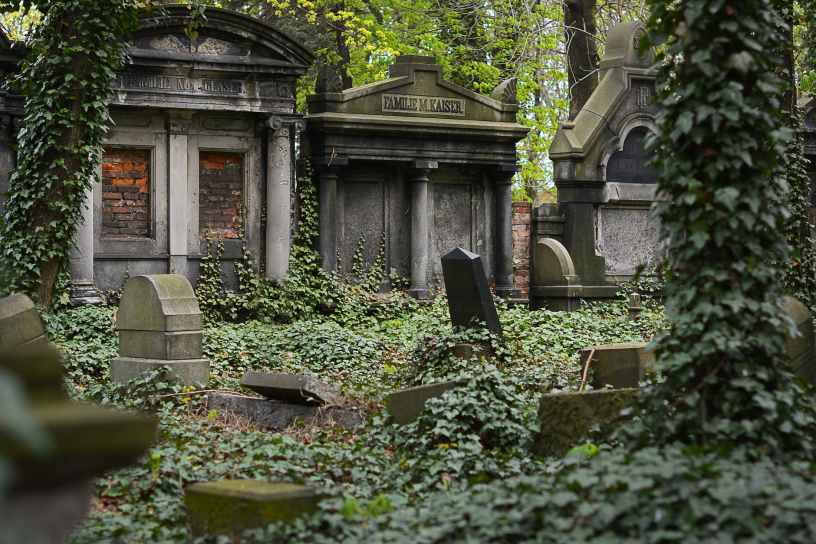
When people think of Shakespeare speeches which explore mortality and death, they usually go straight to, “To be or not to be…” from Hamlet. Or maybe “All the world’s a stage…” from As You Like It. Those are great speeches. But when I attended a performance of Measure for Measure at the Utah Shakespeare Festival during college, I heard the line which titles this post. One could say, it was love at first hearing.
As part of my recent foray into posting Instagram reels, I decided to tackle this speech, voicing it over a sunset stroll through a cemetery. Wheat & Tares readers are great at tackling big topics, ruminating on serious ideas, and explaining what makes sense to them. I’d love to read your perspectives on this Shakespeare passage. Please watch the following video, about 90 seconds long. You’ll probably need to unmute it as soon as the link opens.
Once you’ve watched the video, please share your reactions in the comments section below. Suggested discussion points follow the reel.
Questions for Discussion
Do you agree with the message in Shakespeare’s speech about how to live in the face of death? Why or why not?
How do you process the reality of death in our world?
How does religion, especially Mormonism, help or hinder your ability to find peace and understanding? And how does fear of death affect your behavior?
What other literature helps you ponder and come to understanding about the absoluteness of death?
 Wheat & Tares
Shakespeare is, of course, brilliant. And I think this particular monologue is an attempt on the part of a specific character (with a specific mindset) to show that death outweighs life in the balance of things. It’s calculated, in a strange sort of counterintuitive way, to bring comfort to the one who is faced with death. But even bereft of it’s context the monologue can stir the soul of the reader. When I hear those famous four words I can feel my psyche shifting into an “I can do this” mode. There’s a lot to be said about the strength of mind in coping with difficult situations.
That said, while the gospel can certainly strengthen one in terms of heart, mind, and will, there’s also the added element of cosmic context. It is profoundly useful in navigating this life to get our bearings on as large a scale as possible. The gospel helps us to see our lives in the here and now as only one act of a much larger work–and the atonement as a mechanism of restoration and progression across a cosmic narrative. And that, to me at least, brings a kind of understanding and hope that even Shakespeare, for all his brilliance, could not summon.
I have a real hard time with those funeral attendees who express sorrow for someone’s loss of a spouse and then end with the sanctimonious phrase “But doesn’t the Gospel bring so much comfort?”
No. It doesn’t. The widow or widower is weeping. They have spent the previous few days grappling with the finality of death and the wretchedness of their situation. Their soul has been rent in two and half of it is lying in the casket.
The agony of separation, even with a promise of resurrection that one hopes to trust, is cosmically jarring. The coming of old age and watching you and your spouse slowly (or quickly) disintegrate into dust is lethal to the pseudo self-confidence of those who faithfully refuse to face the existentialist angst at the core of our humanity.
I want to be among those who reverence such cosmic loss, be among those who mourn with those who mourn. Express condolences, pay tribute to their emotions and experiential knowledge. We should not pretend we have power over death or minimize any such loss. That is the heighth (or should I say depth) of hubris. I hope to remember that Jesus didn’t give a sermon on Gospel principles when he saw those who suffered and wept at a funeral. He wept with them.
My favorite line in this speech comes a few lines down: “…Happy thou art not; | For what thou hast not, still thou strivest to get, | And what thou hast, forget’st…” Too often I think of what I lack, and what little I have, combined with a good spouse and good health, is really a lot. It is too easy to want more and to not do right with what one has.
At the last eclipse, my wife worked so hard to get the perfect picture, but she didn’t pause and enjoy the totality. She also didn’t get her perfect picture. I won’t begrudge her trying to the perfect picture in April, but I hope she takes a moment just to soak it in the experience.
Georgis, sometime the challenge of getting the perfect picture is more important than soaking it all in. Unless you are an artist you don’t understand that the importance of the art is actually greater than the importance of the marvels of the universe.
I can’t do the video, because it’s the middle of the night and people are sleeping, but my reaction to death is sort of opposite to Jack’s. It was leaving the church and doubting God that made me appreciate life and my loved ones even more. I have no guarantee of eternity, so I have to get to know them now.
I can’t ever ask my mother about her childhood because I won’t see her again now she has died. I thought I had a few more years to learn the things she can teach, or learn more about her thoughts and feelings. Silly things like why did she make us go to church when she honestly thought Joseph Smith was a conman and why didn’t she ever tell me that she read “No Man knows My History” before I was born and still pretended to believe for the next 60 years? I can’t ask or even sit her down at the computer and tell her to write her history. She got erased like an unsaved computer document. Her whole history of 84 years erased.
My dad, well, it is a relief to think I don’t have to spend eternity pretending that I want to be around him. I can forgive him, but not restore the relationship because I don’t want a relationship. Even if I thought he repented. Even if there are parts of me that love him. And God won’t force me like everyone else all my life tried to force me to “forgive” by pretending nothing happened.
So, other people I care about, I need to enjoy them now, ask the questions now, get to know them now. My time is limited and there are no second chances.
But people that I “should” care about, but quite frankly don’t, well I can let them go and not feel guilt about thinking, “but he’s my brother.” If I don’t enjoy visiting them now, why do I think I want to spend eternity with them?
If it turns out we have eternity, well good because I have more time with the people I love. And if I have to be in relationship with the family that I don’t like, well it gives them time to repent and me time to decide if I like them after all.
And I get too talkative in the middle of the night, or in this case, writative.
It’s amazing to me how many people appear able to hold it together despite knowing their life will end at any time, a few decades best case scenario. Have they consciously arrived at some sort of satisfactory but imperfect resolution; have they “reason(ed) thus with life” and decided it’s not all that great anyway; or are they really good at distracting themselves? Do they believe in the afterlife so confidently that it doesn’t occur to them to question? I think about it daily and barely manage to function most days. On good days I can get by with distraction or Hope. But on the death question, I’ve got nothing. I wish the church would acknowledge the enormity of the death question, acknowledge the enormity of the world’s people and history, and put itself in a bit more humble perspective about how it can’t possibly be all things to all people.