
I have read a lot of Jane Austen fanfic, probably too much. Some of it is really terrible, truly just unreadable, and some of it is extremely good. As an English major, we learned about a method of literary criticism called Reader Response:
Reader-response criticism is a school of literary theory that focuses on the reader (or “audience”) and their experience of a literary work, in contrast to other schools and theories that focus attention primarily on the author or the content and form of the work.
https://courses.lumenlearning.com/suny-introliterature/chapter/reader-response-criticism-suggested-replacement/
Most other forms of literary criticism that we discussed were focused on either the author’s intent or the cultural milieu in which the book was written, and how those norms altered the literary work (e.g. feminist or marxist criticism). But Reader-response criticism was right up my alley! Whatever your response to the literature was, it was valid. You could write your paper on anything that struck your fancy. How freeing!
With the rise of the internet, fanfic became its own literary form; people could post and discuss their stories online. Authors who wanted to delve deeper into a beloved text could simply create new plotlines using familiar characters, cross the characters and plots of multiple books, or insert new characters into an existing narrative to see where it took things. Published fanfic also found a new distribution channel with Kindle Unlimited (readers have a monthly subscription to borrow, read & return an unlimited quantity of titles without purchasing them individually.) It became easy to consume one after another. If it was terrible, the options were to continue to hate-read it (its own guilty pleasure, believe me) or just return it and start with something else.
There are many different types of fanfic. Here’s ChatGPT’s take:
- Canon Compliant or Canonical Fanfic: Stories that adhere to the established canon (official narrative) of the original work. These fanfics often explore events or perspectives that might have occurred off-screen or between established plot points. (These are the most conservative stories in the genre, but they can also be written well, provided they avoid the big sin of just copying out large patches of text from the original).
- Alternate Universe (AU) Fanfic: Stories that diverge from the canon and create a new universe with altered settings, character backgrounds, or events. AUs can range from slight changes to complete overhauls of the original world. (This is incredibly common in comics, another great example of this type of writing).
- Crossover Fanfic: Stories that combine characters, settings, or elements from two or more different works of fiction. Crossovers can be within the same genre or across genres, bringing together characters from different fictional universes. (This includes things like Wentworth from Persuasion meets Lizzy Bennett instead of her meeting Darcy).
- Fix-it Fanfic: Stories that seek to “fix” perceived problems or unsatisfactory elements in the original work. Writers may alter the plot, character outcomes, or relationships to create a more satisfying narrative. (Super common, and sometimes satisfying, e.g. a secondary character gets a better outcome or undergoes a personal change that improves them, turning them into a protagonist).
- Ship or Romance Fanfic: Stories that focus on romantic relationships between characters, often exploring pairings that may not have been explored or developed in the original work. “Shipping” refers to supporting a particular romantic pairing. (There is also a genre of Slash fanfic in which the pairings are queer, and these often expand on subtext that can be very interesting; a classic example is Star Trek fanfic with Spock/Kirk pairings).
- Hurt/Comfort Fanfic: Stories that revolve around characters facing challenges, adversity, or emotional distress, with an emphasis on the comforting and supportive actions of other characters.
- Angst Fanfic: Stories that emphasize emotional pain, conflict, and turmoil. Angst fanfics often delve into darker or more intense emotions, exploring the struggles and challenges faced by characters. (There are so many of these out there in which the author primarily wants to torture Darcy to the point of madness, and ngl, these are bangers).
- Crack Fanfic: Humorous and often absurd stories that intentionally deviate from the serious tone of the original work. These fanfics might involve bizarre scenarios, exaggerated character traits, or improbable plotlines. (Consider Sea Monsters & Sensibility or Pride & Prejudice & Zombies).
- Fluff Fanfic: Light-hearted and feel-good stories that focus on positive and heartwarming moments between characters. Fluff fanfics often emphasize romance, friendship, or familial bonds. (These are mostly not my jam, but they are popular).
- Epic or Long-Form Fanfic: Extended and comprehensive stories that go beyond the scope of a typical short fanfic. These can be novel-length works that explore intricate plots, character development, and world-building. (These tend to be my favorites).
- Drabble or One-Shot Fanfic: Very short stories, often consisting of a single scene or moment. Drabbles are typically 100 words, while one-shots can vary in length but are generally shorter than full-length stories. (Definitely not for me, but again, very popular in online forums.)
- Meta Fanfic: Stories that explore or comment on the nature of fanfiction, fandom culture, or the relationship between creators and fans. Meta fanfics may blur the lines between fiction and commentary. (One story I read was about a woman asked to complete writing a newly found unfinished Austen manuscript, and her own personal storyline turned into a non-angsty version of Pride & Prejudice.)
These categories are not mutually exclusive, and many fanfics can fall into multiple types or genres depending on their focus and themes. Fanfiction provides a creative outlet for fans to explore, expand upon, and reimagine the worlds and characters they love.
ChatGPT, with a few of my own comments added
Canon vs. Fanon
Canon refers to events, characters, and motivations as portrayed in the original work, without deviation. Fanon, however, is what is often mistaken for canon in fanfic communities. These are details that become common in fanfic through repetition to the point that people forget what the original work even said (or didn’t say). For example, an unnamed character is given a name that is then used over and over by other authors, even though that name doesn’t appear in the original text. It’s a byproduct of engaging in fanfic. We forget what the text even said eventually.
One of the things I like about fanfic is that it reveals so much about the author. It’s not just about the exploration of the plot or characters of a beloved book. It’s about understanding how another person (a different reader) responded to that text, and what they brought to the experience of reading it. There are some authors whose takes I really like, and there are some I just can’t stand. For example, when they completely alter a main character’s motives in a way that reveals their assumptions, but is just not in the original text, I want to throw the book. I don’t do it because it’s on my phone, but the feeling is real.
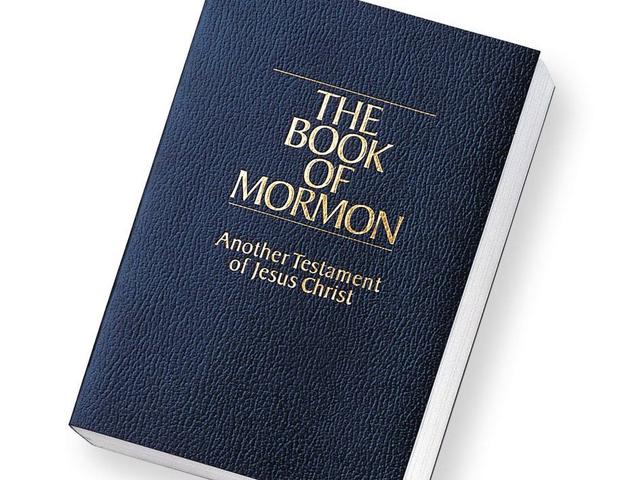
Which brings us to the Book of Mormon. The cover of the book says it is Another Testament of Jesus Christ, which puts it into the category of supporting or alternative canon to the Bible, as literature. It’s a similar narrative, but in a different geography, and with only a few crossover characters, chiefly Jesus Christ, but also (anachronistically) Isaiah. This gives the book a lot of freedom. Generally speaking, the restoration fits into the “Fix It” category of fanfic, attempting to resolve issues created through nearly two-thousand years of apostasy-driven erosion of the original church.
Pseudepigrapha is actually not at all uncommon, and it’s very similar to fanfic. Pseudepigraphical writings are new literary works written using Biblical characters, settings, or themes (ascribing the writing to a famous character inaccurately). The purpose of these works was to explore untold stories that filled in gaps in scripture or to creatively reinterpret or expand on Biblical stories, themes or doctrines. Specific communities of believers found different pseudepigrapha useful and used them in their communities. Other groups disregarded those writings, considering them heretical.
When I was about 9 years old, we once attended a non-LDS church in my parents’ hometown (they are both converts from different Protestant sects, and I’m not sure what sect this was), and I was put in the Sunday School with other kids. The teacher asked a question, and it was something the Book of Mormon had a clear answer to, so I raised my hand and answered the question. The teacher was bewildered and asked where I got that idea, and I said it was in the Book of Mormon (like “duh!”). The teacher didn’t know what the Book of Mormon was. When I told my parents about this later, they were either amused or embarrassed, maybe both. This is similar to the above description of pseudepigrapha; one community accepts it as authentic or at least as having content that is canonically consistent, but that acceptance is not universal.
In some of the Austen fanfic I’ve read, I can actually tell what other literary sources they have read because they have used quotes or themes that are almost word-for-word lifted from those other novels (quite a few of them appear to be well-versed in E.M. Forster’s novels). Likewise, some Book of Mormon stories appear to be retellings of Bible stories: Alma’s conversion is strikingly similar to Saul’s, Jared’s daughter who seductively dances and demands the head of is Omer is like Salome who seductively dances and demands the head of John the Baptist. The Book of Mormon also includes some elements of the 19th century religious movements: when King Benjamin speaks, his followers all speak in unison, just as they might have at a 19th century religious revival.
Additionally, several of the political intrigues in the book are parallel to 19th century American political questions: masonic brotherhoods (secret combinations), white Christian nationalism (the book supports the idea that white settlers would be the saviors to the natives), and issues of a burgeoning highly-individualist democracy (the freemen vs. the kingmen, among others). These explorations make the book more salient to a contemporary audience by expanding on themes that the Bible doesn’t really resolve. After all, fanfic is basically an exercise in “likening the [text] unto ourselves,” or at least unto the author’s perspective of the original text.
- Do you see the Book of Mormon as a verson of pseudepigrapha or fanfic?
- Does reading the Book of Mormon as fanfic change how you view it or expand your understanding of it?
- Do you think church members would find this viewpoint heretical or interesting?
Discuss.
 Wheat & Tares
1. I think that the Book of Mormon is more like 1830’s fanfic.
2. I hadn’t thought a lot about what meaning the Book of Mormon would have in my life if it was considered a form of fiction rather then “gospel truth”.
Most of my attention in terms of scriptures had been identifying what was useful/meaningful to me aka “personal canon” rather then the “communal canon (official and unofficial)” – which is text that is being quoted/referenced in public meetings (sacrament meetings, general conference meetings).
NOTE: “Official communal canon” is like “Proclamation to the Family” while “Unofficial communal canon” is quotes from C.S. Lewis, Brene Brown, “Star Wars”, and “Lord of the Rings” to name a few. “A Christmas Carol” (1984 TV Version) is “communal canon” in my household as we have a tradition of watching it every December.
3. I think it depends on the church member(s) involved in the conversation. In my experience, a lot of “communal canon” is fine as long as it isn’t defined in a way that puts it as “more important” than “official canon”. I get the sense that generally you can “supplement” your spirituality and personal canon with whatever brings you closer to God EXCEPT if it explicitly counters “official canon”.
I would classify the BoM more as pseudepigrapha, because Joseph Smith passed it off as real writings of ancient people that should be accepted as scripture rather than as fiction. And I don’t know of any other fan fiction that doesn’t accept its status as fiction. It is closer to the book that Josiah “found” in the temple that was used to end worship of the Goddess and all other gods except Jehovah. Scholars say it contains things that prove it was written in his time (probably by him or under his direction) and was not written in the time claimed. It was incorporated right into the older Hebrew scripture, as if it really was written by previous prophets and the current worship of Wisdom, the Wife of God, and all the other gods and goddesses was a recent corruption of the religion of the Israelites. The statues representing those god were then declared idols and thrown out. Funny, but the Jewish menorah is modeled after the statue representing Wisdom as she was represented by a tree, and the Menorah is a stylized tree. So, Josiah’s reforms weren’t quite successful.
But it is interesting to look at it from the perspective of fan fiction. I have heard the idea discussed before, but I like your information on different kinds of fan fiction. And the BoM has many of the characteristics of fan fiction. So, if we weren’t supposed to accept it as equal to the Bible, it could be classified as Bible fan fiction. But Joseph Smith tried to actually elevate it above the Bible, claiming both that the Bible was full of translation errors and purposeful changes while his was the most perfect book ever written.
I still thing Mark Twain had the best classification of the BoM when he called it something to the effect of chloroform in print.
In fiction, it seems fairly easy to distinguish between original works and derivative fan fiction pieces, even if the fan fiction is very well written and is able to convincingly mimic the style of the original writer. For one, fan fiction authors are (I think) quite open about the derivative status of their writing.
Applying this paradigm to scriptural works is much trickier. First, there is a whole body of non-canonical writings for both the Old Testament and the New. These works do not acknowledge they are derivative, they try to pass themselves off as legitimate scripture. Furthermore, almost all scripture is to some degree derivative. Unlike fiction, where the original writing is clearly visible, it’s much harder to identify an “original” scriptural text.
The canonization process and the passage of time gives us, centuries later, a set of canonical writings and various other non-canonical writings which, to the lay person, looks like a clear distinction between two different classes of writings. But dig into the scholarship and the history of the canonization process and that supposedly clear distinction disappears. They are all just writings, some of which eventually get canonized and some that don’t. Believers will claim that some writings are “inspired” (hence legitimate scripture) and others aren’t (why they don’t get canonized) but that’s more ex post rationalization than objective description.
As for the Book of Mormon … well, if you think it sprang from the Bible-soaked religious imagination of Joseph Smith, then it’s fan fiction. If you think actual people who were actually inspired by God wrote actual words (well, icon-like scribbles) on the gold plates, later translated in some inspired way by Joseph Smith, then it’s legitimate scripture.
I’ve spent a significant portion of the past year buried in fanfiction, and just finished a fabulous Fix-it Fanfic/Epic rewrite of a problematic fourth book in a problematic series. I love exploring AU versions of the characters.
I am no biblical scholar, but I think I recall there are questions as to whether many of the books of the KJV are pseudepigrapha. I definitely believe that the Book of Mormon falls into your description of a pseudepigrapha/fan fiction mash up.
Fiction can still contain truths and improve our lives. There is much good and much that I agree with in the Book of Mormon. I just happen to believe that Joseph Smith wrote it.
The Book of Mormon is more like pseudepigrapha to me. Joseph Smith made the case that he was translating something real. Fan fiction is acknowledged by the author herself to be fictional.
When I was younger I avidly read the Book of Mormon as real history. The characters really existed, and the stories really happened. I remember apologists introduced me to the idea that there were probably other people in the Americas arriving from other places when Lehi’s party arrived. They also introduced to other ways of not seeing the Book of Mormon so literally. I used to think that the apologists were more open-minded and liberal in their interpretations of the Book of Mormon. I guess compared to the orthodox view, they are.
Then it dawned on me one day reading the Book of Jacob in the Book of Mormon that the demographics of the Book of Mormon just seemed bizarre. How could Sherem learn the language of a small community without the community knowing who he was? If Sherem was an outsider, why would he be concerned with the Law of Moses? Wouldn’t he belong to a completely different religion that had nothing to do with Judaism? I then read the Book of Mormon with a new skepticism towards its historicity. The book appeared pseudepigraphical to me and I could never see it the same afterwards. The apologists appeared as extremely closed-minded and bizarre in the context of the larger academic community.
Glad to see Wheat and Tares has come around to the more skeptical side of Book of Mormon historicity. That said, I think that inspiration can still be derived from the stories. But let’s focus on the stories, not the alleged history for which there is no evidence.
Interesting post. When I teach some of the Gnostic gospels to my students, we don’t talk about fan fiction per se, but there is clearly something compelling about texts that are in dialogue with “established” works. The Gnostic gospels are considered pseudepigraphic, of course, but they also offer compelling alternatives to traditional biblical narratives; as seen in the Gospel of Judas, e.g.. I don’t consider the B of M fan fiction per se, but, as someone who believes Joseph Smith made it up (with help from others, IMHO), I can see a few parallels.
The other interesting aspect of your post is the question of authority. When it comes to usual fan fiction there’s got to be some sort of ur-text (Austen’s novels, Hamlet, Star Trek, whatever) from which certain elements are extracted and then combined with some non-original elements in order to create the new fanfic. There is a kind of built-in authority because of the legitimacy and status of the original text. The same, as you point out, could be said of the B of M (biblical borrowings, etc.), but the “authoritative” nature of the original text is, of course, an open question itself. And, as most scholars of religion could tell you (and as most Mormons don’t know), the question of what biblical texts got canonized and what texts didn’t is a complex and fraught issue indeed, from Iraneus, to Athanasius of Alexandra’s Festal Letter, to things that were getting re-litigated in Luther’s time, and on and on and on. My own view is that Joseph Smith’s claimed prophetic mantle is no more legitimate than early church fathers who sought to keep certain texts out of the biblical canon for perverse reasons of their own, so it’s hard for me to read the B of M entirely as fan fic; I frankly see the borrowings and biblical echoes as proof of Smith’s chicanery and lack of imagination, especially given the points you make about the text’s 19th century provenance.
But in an odd way, I actually think things might improve for folks at church if they did view the B of M as purely fiction. They’d likely feel more free to interpret and apply the text to themselves without having to carry the burden of convincing themselves that it’s the “most true book” on earth. And that, I suppose, is your point.
Brad D: That’s funny that you mention the inconsistencies in the Sherem story. When I was a freshman at BYU, I had a notebook that I filled with these BOM problems. There are many places where the characters and stories aren’t well thought out or have logic problems and inconsistencies. And any way you slice it, the characters are just flat. They don’t feel like real people. Funnily enough, that’s one of Austen’s strengths–her characters are fictional, but they feel like real people with real human motivations and depth.
Personally, I think pseudepigraphical writings and fanfic are similar enough that we can use the terms interchangeably. If I were teaching a college course on it, that’s the approach I would take to make it feel more relatable to the students. The key difference is whether the author intends their text to be taken as authoritative or not. And we should also acknowledge that some of the books that are in the accepted biblical canon are likely pseudephigrapha: James in the New Testament, and who really wrote Genesis? Not Moses, since it post-dates him by hundreds of years. Yet, even Jesus credits him with writing it. So, whoever wrote these books wasn’t usually who we are told wrote them.
From a qualitative standpoint, I’m honestly not that interested in the BOM. I’m not that interested in the 1830s (the revival stuff and white Christian nationalism has always been just bizarre to me), and most of the themes of the BOM feel irrelevant to me. Plus, it fails Bechdel hard.
“Personally, I think pseudepigraphical writings and fanfic are similar enough that we can use the terms interchangeably… The key difference is whether the author intends their text to be taken as authoritative or not. ” This.
I just see so much of JS in the book I feel like it’s fanfic regardless of whether JS really thought he was channeling the divine of whether he knew he was making stuff up.
Writing himself into the book. The younger brother being the first protagonist. Moroni answering 19th century theological issues. JS telling these kinds of stories in his youth that pre-dated the book. I even recently read/heard that the book of Jacob was possibly being written around the time JS was living with the Hale family and was propositioning Emma’s friend, which may have influenced him writing the condemnation of polygamy into the book to appease her for this huge gaffe.
I also find it interesting that he tried to monetize the book and once that failed he really didn’t talk about it much in Kirtland or Nauvoo. It was a failed nanowrimo experiment and he moved on.
My two cents.
I see pseudepigrapha as a form of fanfiction. Folklore, through the ages, has functioned as fan fiction.
I see the Book of Mormon not just as Bible fanfic, but as part of a wider something(pop culture overman gestalt?) . You have a guy cosplaying as Captain Moroni during an insurrection. Along side guys cosplaying as GI Joe and some sort of Shaman.
Even though I’m a paperback reader, I’m a bit of a snob. so I really don’t read fanfic. So there I was, enjoying my paperback, when a friend who wrote Xena fanfic pointed out it was Xena fanfic. Horrified, and I couldn’t unsee it. It was everywhere. It seemed back then, it became a requirement that lesbian romantic fiction was now uber Xena this and uber Xena that. I had a mouth and I could scream.
And then I think of Star Trek and the incessant canon wars. But things from fan fiction, have become canon, such as Number One being an Illyrian named Una Chin-Riley.
And when it comes to star trek fan fiction, who doesn’t love “Galaxy Quest”. And the episode of Black Mirror “USS Callister”, which went where no trek has gone before–winning an Emmy for best movie and writing.
Maybe the Book of Mormon will have it’s Ben-hur/Ten Commandments movie moment (instead of a Demetrius and the gladiators moment)
Already had the magic on Broadway with the tony winning musical, with it’s mashup of Star Trek, Star Wars, and LOTR.
I have no idea what Mormons think of Fanfic. But I am interested if anyone will cosplay Captain Moroni and have no idea who that is. Now that would be a Mormon moment.
I don’t see the BofM as pseudepigrapha simply because it doesn’t claim to be written by a known authoritative figure like the Book of Abraham does, for example. Sure, we have Isaiah sitting there awkwardly, but he’s pretty much just quoted verbatim. Nothing new. Then there’s a tie in to Jeremiah in 1 Nephi where the text seems to hint that Jeremiah and Lehi were at least aware of each other, if not best buds. But I don’t think any of this qualifies as [that really fancy, long word I don’t want to try to spell again]. I think there’s a good case to be made that the BofM is a reamagining of the Hebrew Bible on another continent but this time the Israelites “get it right” and somehow figured out that the Law was pointing toward Jesus – at least until they killed each other off. But then again, the Hebrew Bible was probably a reamagining of a much older, cross-cultural oral tradition, but the Israelites (eventually) “get it right” and embrace monotheism. So in that case, I guess they both qualify as Fix-it Fanfic.
Brad D,
I agree that the devotional content of the Book of Mormon is more important than its historicity–though the truthfulness of the latter greatly enhances the truthfulness of the former–IMO. Even so, there are (IMO) good explanations for most of the seeming logistical inconsistencies in the text. And I think the first thing to remember when running up against these questions is that the BoM is a culturally tight writing. It assumes that the reader has some familiarity with its world. Imagine a Nephite miraculously discovering a text from our world. How would he interpret a statement about someone turning on the light? Or running to the store? Or flying to Miami? So too when the BoM speaks of Sherem as a stranger who somehow knows their language and is familiar with the Law of Moses it’s perfectly reasonable to assume that there must be more to the story than what we find in the text.
I just finished an academic book about Jesus’ identity and how the New Testament came to be. The battle between Paul and Peter is found in the pages of the Bible and it seems that Paul mostly won, but it’s unlikely Paul’s version of Jesus was accurate. Generally the further removed in time the authors are from Jesus the more divine Jesus becomes. So not only is the BofM fan fiction, the New Testament is also.
To most orthodox LDS and Christians the idea that either book isn’t literally true is heresy.
This post was fun to read and think about. When I started to read the OP I thought Hawk was going to ask for examples or ideas so I was getting warmed up. How about we face off Captain Moroni with George Patton. Or put Beyonce anywhere in the BofM (she’d need an army of bodyguards to be sure) and watch their heads explode.
On the Bible being pseudepigraphical, the Bible is mostly a product of writers gathering stories that were passed down over generations mostly orally but also in written draft fragments that have not survived in the dirt for archaeologists to dig up (at least not yet) in the modern times. These writers over clearly tried to do some justice to how events may have taken place and what words the characters of these stories may have said. But mostly later writers and editors are filling in a lot of blanks and they probably take a lot of license to create a text that speaks more to their present conditions rather than maintain the integrity of the past. The major difference between the Bible and the Book of Mormon, however, is that the narrative of the Bible was clearly constructed by Israelites living in the Levant between 450 BC and 100 BC, and in the case of the NT by Judeo-Greeks living in the Levant, Anatolia, Greece, and Egypt between 70 and 100 AD, and no scholars question that. By contrast no non-Mormon scholars accept there being any evidence that the narrative of the Book of Mormon was constructed before Joseph Smith (aside from the passages in it that are similar to the KJV and Apocrypha texts). In other words, the narrative of the Bible is ancient but the events described in the narrative mostly cannot be ascertained (with the exception of a few, i.e. the existence of King David, Sennacherib’s siege of Jerusalem, Babylonian captivity) whereas neither the narrative nor the events described by it in the Book of Mormon can be shown to be ancient.
Jack,
“Imagine a Nephite miraculously discovering a text from our world.”
So if they had a time machine? We have a much greater understanding of human limitations in the past over 1000 years ago than possible human limitations and advancements of 1000 years into the future.
Brad D:
“So if they had a time machine? We have a much greater understanding of human limitations in the past over 1000 years ago than possible human limitations and advancements of 1000 years into the future.”
True–and maybe I’ve chosen a bad analogy. Still, I think the analogy has some application when it’s applied more strictly to the idea of differing worlds–irrespective of time. And though you’re correct that we know more about the past than we do about the future, there’s still a lot to be learned about the past–and, of course, no less about the future. 😀
There seem to be two trains of thought in the comments here. It’s pseudepigrapha because Joseph thought he was translating a real historical record. It’s fanfic because it’s not written in the voice of a known character (like the books of Abraham and Moses). There’s obviously a third option, that it’s the literal historical record it’s claimed to be, but there are too many problems with that for me. So it comes down to whether or not it is relevant what Joseph Smith thought he was doing. We’ll never fully know what was going on in his head, so it’s easier to take his motivations out of the picture and focus on the text itself. When I do that, it clearly looks more like fanfic to me.
I love fairytale fanfic. I enjoyed those by Robin McKinley, but also more recently Marissa Meyer. Cyberpunk Cinderella who loses a foot rather than a shoe .. for example, and the way the different fairytales connect up in her alternate universe, Rapunzel in an orbiting satellite..
On Austin fanfic, I did get to proofread first drafts of a couple of books by Jenni James back when her family were in our ward and she’d just started writing, and I particularly enjoyed a radio dramatisation of an Austin book set in India.. titled Memsahib Emma..
As to the BoM, it makes me feel tired to think about it… it’s so male-centric.
I think whether JS knew he was writing it or thought it was an authentic record, it’s still going to reveal his imprint as author, just as Paul’s epistles reveal his perspectives (speaking generously), and just like current church leaders who speak in General Conference reveal their own biases and understanding in their talks. And as Hedgehog mentions, one thing we know for sure is that women were not very important characters in the BOM which has to tell you something. They are far more important with more agency in the Old Testament, and even in the New Testament than they are in the BOM. Plus, they even have names.
I completely agree with your comments Angela. It’s a sad reality to have to accept how Joseph Smith regarded women. It’s there in D&C 132 as well.
It takes a lot of gaslighting for church leaders to try to overcome this, and reassure women that we are important to the church and listened to, without actually giving us final decision making power anywhere in the church.
We as women want to believe we are important and listened to so powerfully, that we talk ourselves into believing the reassurance. We want it so much we don’t allow ourselves to think, and fully examine what is really happening.
Recently found out I am being redeployed from teaching Gospel Doctrine to youth Sunday School – from an ethical standpoint I should “resign” based on my concerns with historicity but the decision is complicated – also probably moving out of my ward in the next six months.
“Do you think church members would find this viewpoint heretical or interesting?
Heretical for sure. Primarily because it make JS into a charlatan. The keystone is removed and the entire house crumbles.
I was listening to a podcast recently and there was a Jewish rabbi who read the Book of Mormon and declared, “This book is a midrash that Joseph Smith wrote about the KJV of the Bible.” That actually made a lot of sense to me.
Fun post, fellow English Major! An indie book author I used to hang with was a big proponent of writing fanfic. She recommended it to people attempting their own creative writing for the first time. It’s like a starter kit: readymade characters, plot points, settings, all of which you’ve already taught yourself as a fan. You can dive right into constructing new narratives. It really is a useful thing, and so expressive as an avenue to self-discovery and deeper connection to literary loves.
To put it respectfully, I’ll call The Book of Mormon pseudepigrapha. Notwithstanding it absolutely being, first and foremost, a piece of racist white Christian nationalism, it is also–and at times remarkably so–a work of serious Christian thought with its finger on the pulse of 19th Century theological issues. It is not a book to be dismissed. Honestly, if the BoM were fanfic, I think you’d see Joseph Smith incorporating a lot more women in the narrative.
If Brother Joseph was just setting out to explore literary themes and characters he felt personally drawn to, I think we’d see Abishag from the Old Testament show up, or maybe even Ophelia from Shakespeare’s play Hamlet. Yeah, Ophelia would appear and interrupt Enos as he prays, and then the two go for a walk together, eventually holding hands, which escalates to Enos and Ophelia having a–harmless–picnic on the shores of the narrow neck of land. Ophelia would complain about Hamlet not paying attention to her because he’s off hanging out with Lehi, which is how Lehi is able to quote Hamlet so well. But Jake, you say, that makes no sense, Lehi and Enos are in totally different eras. Yup, which is why the 9th Doctor shows up, trying to rescue Ophelia from a crossover gang of Gaddianton Robbers and Danites after she falls through a time portal in Elsinore Castle that is also connected to the Holy of Holies in the Salt Lake Temple, and yeah! I totally see how addicting fanfic gets…
Jake C.
If it was fanfic, No. I wouldn’t expect women.
Perhaps I can’t see past the techbros/4chan crowd. Look At the abuse they have directed towards Kelly Marie Tran and Moses Ingram. They have monetized their hatred with incessant attacks on “Woke”. They’re like little boys up in a tree fort with a big sign “No Girls Allowed”.
And if they were to put in a women character in their adventure fanfic, she would have a name variant of Jezebel and a physique to match.
Anyone else remember that series by Chris Heimerdinger called “Tennis Shoes Among the Nephites”? That’s Book of Mormon fanfiction. Deseret Book carries a lot of Book of Mormon and Bible fanfiction in the form of novels about characters in the scriptures, or others who witnessed scriptural events. Much of that is aimed at young adults, and is clearly adult authors trying to make scriptural stories relevant for teens.
Joseph Smith claimed the BofM was scripture. I’d posit that, as mentioned already, fanfiction authors know that they’re creating something based on someone else’s ideas and don’t try to elevate their writings to the same level. I doubt JS thought he was writing fanfiction, or even pseudopigrapha. I’ve never viewed the BofM through either lens, really. Fanfiction nearly always has a focus on the characters and relationships, often at the expense of plot, and the BofM has very flat characters and relationships. There isn’t any depth or layers, or any exploration of what makes someone tick. JS doesn’t see a lot of layers in people. His black and white worldview comes through in how people are presented in the BofM. Most of the people with speaking roles are either prophets or antichrists. There are very few average human beings. The BofM may meet the technical definition of fanfiction, but it doesn’t read like modern day fanfiction at all, because there is so little emotion in the book, and no depth to the characters.
I was going to continue writing a serious comment, but then I made the mistake of looking up Book of Mormon fanfiction and I must share with you all that someone has written “Zoram’s Bad Day”, which tells the story of Nephi and Bros trying to get the plates from Zoram’s point of view (that poor guy) and I just really think that should be adapted into a children’s picture book and then sold at Deseret Book.
“Yup, which is why the 9th Doctor shows up, trying to rescue Ophelia from a crossover gang of Gaddianton Robbers and Danites after she falls through a time portal in Elsinore Castle that is also connected to the Holy of Holies in the Salt Lake Temple, and yeah! I totally see how addicting fanfic gets…”
Jake: I want this book, with both Rose Tyler and Dr. Martha Jones playing prominent roles! Get right on it.
I’d substitute for the Fourth Doctor and Sarah Jane and K9.
What I want to know, what was early 1800’s American fan fiction like?
Heck, what American literature was there. I can only think of “Last of the Mohicans”. (and I can see Daniel Day Lewis as Nephi).
Somebody somewhere pointed out Captain Kidd pirate stories and Comoros and Moroni.
And revivals were big.
And Missionary Societies out to convert the heathens. They’d give talks to raise funds so brown skin folk could be saved. And there was a New York Missionary society in the early 1800’s (and my memory could be making this up) who were all excited to preach to Jewish groups in India who fled there after various destructions in Jerusalem. And something about copper plates.
So I can see the Book of Mormon as a creation of it’s time. So alas, no Daleks
Seems like this new movie “The Oath” is riffing on the BOM and also has a female character named Bathsheba.
Post shoah the reputation of Xtianity totally shot. By their fruits you shall know them. Actions speak louder than words, and how much more so personal beliefs in this or that or some other dead gods.
Rabbi Yechuda named his Mishna based upon the בנין אב/precedent that Moshe Rabbeinu named דברים the Mishna Torah — which means common law. The Mishna codified by Rabbi Yechuda in 210 ce follows the משנה תורה common law model established by the Book of דברים. The Common law legal system stands upon precedents. The Hebrew for precedent: בנין אב.
The Gemara, compiled by a later set of scholars AFTER Rabbi Yechuda “sealed” the Mishna, based upon the precedents of the sealing of the T’NaCH, which in its turn caused Rav Ashi and Rav Ravina to seal the Gemara in about 450 ce. The purpose of sealing this Oral Torah methodology of common law? To prevent some tumah perversion which would modify or change both T’NaCH and Talmud. These the sealed masoret/traditions, thereby protected, think fence around the Torah, from counterfeit imposters like the New Testament replacement theology, whose “good news” seeks to cause Jews to assimilate and intermarry with Goyim; to pervert the sealed masoret/traditions unto tumah avoda zarah – Old and new testaments.
A second primary purpose of sealing the masoret/traditions: that all downstream generations of Israel, they equally inherit the identical masoret; thereby preventing an equally vile Av tumah avoda zarah commonly known as ירידות הדורות – falsely understood, that later generations cannot dispute the rulings made by earlier generations. This Av-tumah avoda zarah collapses when confronted with Oral Torah logic which validates that no one generation enjoys a monopoly of Torah logic over later generations.
The correct understanding of ירידות הדורות refers to the idea of “domino effect”.
Talmud, which means learning (Yeshivot fail to learn Talmud, when they study Gemara.), the Gemara brings halachic precedents from across the Sha’s Bavli as בינין אב depth analysis. The purpose of learning by way of compative similar precedents, (this unique Oral Torah logic format) the Common Law Baali Tosafot commentary/criticism of Rashi p’shat on the Talmud, none the less fundamentally erred and failed to learn a halachic precedent to re-interpret משנה תורה the k’vanna of the language of a Gemara sugya, to likewise employed that revised depth anaysis of that sugya of Gemara to re-interpret the Home Mishna which the Gemara brings outside precedent halachic sources to most essentially re-interpret the k’vanna of the language of Rabbi Yechuda’s specific Mishna.
This failure of Reshonim scholarship went across the board, some Reshonim learned with greater clarity than did others. The B’hag, Rif, Rosh common law halachic commentaries, like the Baali Tosafot – correctly learned and understood the Gemara commentary, restricted to a specific Mishna as Common law. Not so the super-commentaries written on these excellent Reshonim scholarship of Talmudic common law. The later scholars confused and perverted Talmudic common law unto Roman statute law. Students in Yeshivot across the world, never receive any instruction which differentiates between T’NaCH/Talmudic common law from Roman statute law. A most basic and fundamental error. Which has plagued g’lut Jewry down through the Ages.
In like manner, and equally as bad: the Reshonim scholars abysmally failed to discern (One and All, they failed to make the מאי נפקא מינא הבדלה with discerns “like from like” the basis: which observance of all Torah and halachic mitzvot most fundamentally require. A most basic and fundamental error. Which has plagued Jewry down through the Ages. The Av/toldot relationship between tohor time-oriented commandments — from positive & negative “toldot” commandments. The primary/secondary relationship expressed throughout the entire Torah.
Even Rashi’s common law commentary to the Chumash (as opposed by his “טיפש פשט” reading of the Talmud. Rashi changed his sh’itta of p’shat learning from wisdom. He correctly foresaw that the Church hated and feared the Talmud. Rashi changed his sh’itta of p’shat as learned from to Chumash and contrasted by his sh’itta of p’shat made upon the Talmud to prevent church barbarians to learn how to learn Talmud as common law!
Reshonim scholarship disgracefully failed to note this fundamental contradiction in Rashi scholarship. Proof that the Reshonim learning had derailed itself and gone off-track. Why? Because the Reshonim and their later rabbinic lackeys failed to understand how the concept of ירידות הדורות refuted the Xtian avoda zarah known as “Free Will”.
A colossal error made by a great Jewish leader: be it King Shlomo who built an assimilated Catholic Cathedral, rather than prioritize the judicial pursuit of justice; or the Rambam who perverted Talmudic common law unto Roman statute law. Once a great sage/leader worships avoda zarah, (Shlomo perverted the priority of establishment of Federal Great/Small Sanhedrin courtrooms as the k’vanna of building the Beit HaMikdash), the Av tumah of this perversion which validates the 2nd Sinai Commandment, all down-stream generations likewise pursue this Av-tumah avoda zarah abomination, from generation to generation to generation! Hence the concept of ירידות הדורות invalidates the Xtian dogmatism of “Free Will”.
The Torah mitzva of Moshiach does not learn from a NaCH sources as the Av tumah gospel avoda zarah declares. Torah mitzvot learn from Torah sources. Why? Because Moshe Rabbeinu, the greatest of all prophets. The failure of Reshonim scholarship to correctly grasp how the Chumash learns the mitzva of Moshiach (as just one example), proof of the cursed existence of g’lut Jewry who lacked the wisdom to do mitzvot לשמה.
The Torah operates upon a most basic: Av/Toldot relationship. The Book of בראשית, together with the tohor time-oriented commandments codification known as the Siddur, commands Av tohor time-oriented commandments. “Time” not tied to a watch, but rather to crisis situations which threaten the chosen Cohen people with Shoah; like Akadat Yitzak, or the mitzva to remove the sciatic nerve! The latter explained by targum Uziel. Esau approach “toast” Yaacov with an Army lead by 400 officers. NaCH precedents: D’vorah and HaDassah, whose רשות מצוה likewise defines the k’vanna of תפילת ערבית according to rabbi Yehoshua. Av tohor time-oriented commandments learn from women, that doing mitzvot with k’vanna — a רשות rather than a חיוב.
In the defence of the Reshonim: in the Gemara of ערבין the Baali Tosafot did not know how Rav Ashi could change the halachic dispute between Rabbi Akiva and Rabbi Yose haGelili in favor of the latter. According to the כלל, the halacha should follow the opinion of rabbi Akiva. The Baali Tosafot clearly did not have access to the Targum Uziel. Otherwise, they would have understood that Rav Ashi’s recognition that Uziel agreed with the opinion expressed by rabbi Yose haGelili, and therefore changed the halacha expressed in that halachic dispute as recorded in the Gemara of ערובין.
Therefore, the First Book of the Torah serves as the Primary אב טהור זימן גרמא מצוות. The second, third, and forth Books of the Torah serves as the secondary ביטול תולדות מצוות; hence the B’hag ruled in his Hilchot G’dolot: that 100 blessings, nar shabbat, nar hannuka, kre’at m’gillah, Shemone Esrei דרבנן (as opposed to ק”ש דאורייתא etc) qualify likewise as mitzvot from the Torah!
The Rambam, whose Yad Chazaka perversion worshipped avoda zarah: (understood as a) assimilation b) intermarriage with Goyim), as opposed to the Xtian avoda zarah Av-tumah abomination, which erroneously translates avoda zarah as idolatry; the 30 year-war slaughtered as many as did WWI when western Europe’s population about 1/3rd of 20th Century European populations, over a debate over the catholic crucifies and worship of saint statues.
The Rambam abomination of avoda zarah assimilation to ancient Greek logic, that fool did not understand the kabbalah of how Rabbi Akiva’s פרדס logic, interprets the k’vanna of the revelation of the Oral Torah at Horev. A most basic and fundamental error. Which has plagued Jewry down through the Ages.
The last and 5th Book of the Written Torah משנה תורה commands the generations to learn the Torah through the wisdom of common law ie Rabbi Yechuda and the Gemara sages as codified in the Talmud. And likewise enforced and emphasized through the mitzva of lighting the lights of Hannukah.
The disasters of ירידות הדורות Av-tuma avoda zara, this opening question, fails as a consequence, to equally differentiate Geonim Midrashic scholarship which defines the contribution made by the Geonim, much like as does the halachic codifications stamps Reshonim scholarship.
As a loom has its warp/weft relationship, the Talmud designated by its halacha/aggadita relationship. Midrash functions as the Geonim scholarship, which delved into the Aggadic portion of the Talmud. Yeshivot across the world do not know how to learn, not only Midrash as the primary source-commentary which links the דרוש-פשט with T’NaCH prophetic mussar, but how to interpret the k’vanna of prophetic mussar. This disgraceful ignorance similar to Yeshiva rabbinic scholarship whose drivel commentaries on Rashi’s chumash fails to inspire down-stream talmidim to study Rashi’s Chumash דרוש\פשט sh’itta of common law. As contrasted by the halachic Oral Torah logic of רמז-סוד. A most basic and fundamental error. Which has plagued Jewry down through the Ages.