
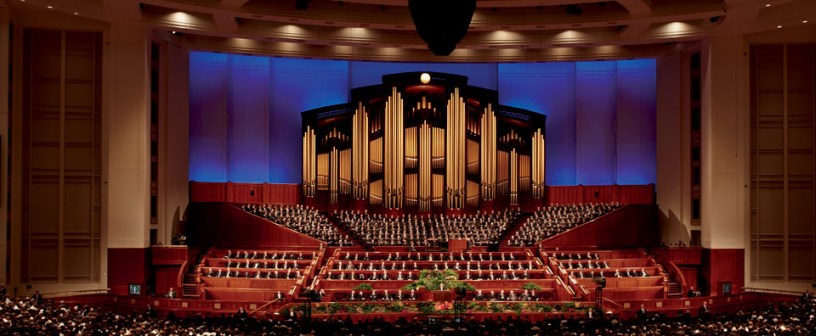
It was the best of talks, it was the worst of talks. I didn’t have time this weekend to do my usual real-time review of General Conference, but I’ll do a deeper dive into two talks: “Brothers and Sisters in Christ” by Elder Soares and “Kingdoms of Glory” by President Oaks. I’ll let you decide which was the best and which was the worst.
Against Prejudice and Intolerance
Elder Soares was the concluding speaker of the Saturday evening session. If a talk like this had been delivered twenty or thirty or forty or fifty years ago and if the leadership of that era had reinforced this message regularly, the Church would be in a much better place now. I’m afraid this talk is too little, too late to stop the majority of active LDS from sliding into a narrow and intolerant Mormon version of White Christian Nationalism mixed with Trump’s cult of personality. I think that at this point, a talk like this goes in one ear and out the other for most Mormons. I nevertheless salute the effort by Elder Soares. Here’s what he said.
First he quotes President Nelson from 2020: “I call upon our members everywhere to lead out in abandoning attitudes and actions of prejudice. I plead with you to promote respect for all of God’s children.” He continues:
As disciples of Christ, we are invited to increase our faith in, and love for, our spiritual brother- and sisterhood by genuinely knitting our hearts together in unity and love, regardless of our differences, thereby increasing our ability to promote respect for the dignity of all the sons and daughters of God.
After recounting the encounter between Jesus of Nazareth and the Samaritan woman at the well, Elder Soares gives some insight into why he, of all the apostles, is the one to deliver this bold and progressive message:
I have deep compassion for those who have been mistreated, belittled, or persecuted by unfeeling and thoughtless people, because, in the course of my life, I have seen firsthand the pain good people suffer from being judged or dismissed because they happened to speak, look, or live differently. I also feel genuine sorrow in my heart for those whose minds remain darkened, whose vision is limited, and whose hearts remain hardened by the belief in the inferiority of those who are different from them. Their limited view of others actually obstructs their ability to see who they are as children of God.
You should read the whole talk. It might brighten your day. Here’s one more plea from Elder Soares:
The world in general is polarized by strong divisions, accentuated by racial, political, and socioeconomic lines. Such divisions sometimes end up influencing people’s way of thinking and acting in relation to their fellow beings. For this reason, it is not uncommon to see people characterizing the way of thinking, acting, and speaking of other cultures, races, and ethnicities as inferior, making use of preconceived, mistaken, and often sarcastic ideas, generating attitudes of contempt, indifference, disrespect, and even prejudice against them. Such attitudes have their roots in pride, arrogance, envy, and jealousy, characteristics of a carnal nature, which are totally contrary to Christlike attributes. This conduct is improper for those who are striving to become His true disciples. In fact, my dear brothers and sisters, there is no place for prejudiced thoughts or actions in the community of Saints.
I don’t like posts that insert too many long quotations, but these seem like such important points, made (for once) at length in a bold and direct fashion. Let’s hope the Mormons were listening! It’s a message for all of us, regardless of where we fall on the conservative/liberal religious spectrum or the reactionary/progressive political spectrum. My opinion of my fellow church members who fall in the Republofascist Trump-worshipping camp (about two-thirds of active LDS, I’m guessing) has fallen rather dramatically the last few years. Likewise for my opinion of most LDS leaders, whose obsession with the recent culture wars has largely squandered the moral credibility of the Church that was built up over several generations. Maybe I need to look in the mirror, see some pride and arrogance, and jettison some of the “contempt, indifference, disrespect, and even prejudice” that I sometimes feel. If we all do likewise, it will be a better Church. But it has to be a two-way street. I would be encouraged if some of the Republofascist Mormons showed signs of looking in the mirror, too.
Digging In and Doubling Down
Now for President Oaks, who spoke from the pulpit with a bit more authority than usual because President Nelson could not attend Conference in person. He was the concluding speaker for the Saturday morning session. In the course of hitting a few topics and doctrines that set the LDS Church apart from other Christian denominations, Presdient Oaks rather predictably revisited gender, marriage, and the Family Proclamation:
God’s plan, founded on eternal truth, requires that exaltation can be attained only through faithfulness to the covenants of an eternal marriage between a man and a woman in the holy temple, which marriage will ultimately be available to all the faithful. That is why we teach that “gender is an essential characteristic of individual premortal, mortal, and eternal identity and purpose.”
Eternal truth? In the past, LDS “eternal truths” like plural marriage as the central doctrine of the Church and a required component of exaltation in the highest tier of Mormon heaven (19th century) and consignment of those with African ancestry to lower kingdoms in the hereafter as well as second-class membership in the Church in the here and now (20th century) turn out to be not very eternal after all. It is quite reasonable to suggest that Oaks’ view of current LDS teaching on gender and marriage as “eternal truth” will almost certainly turn out to be not so eternal in just a few years.
Yes, for a lot of people, gender and attraction is a fairly straightforward condition. But everyone should buy and read a copy of Gregory Prince’s Gay Rights and the Mormon Church: Intended Actions, Unintended Consequences (Univ. of Utah Press, 2019), which reviews the medical and scientific data showing that there is a certain percentage of people, including many Mormons, for whom gender and attraction are not at all straightforward. You can’t wish that away just because you want reality to conform with the simplistic, traditional LDS view of gender, marriage, and attraction. That seems to be what President Oaks tries to do every time he addresses the subject. At this point, that seems about on a par with preaching that the Sun revolves around the Earth. It doesn’t do much for LDS leadership credibility to continue doubling down on this approach. He continues:
A uniquely valuable teaching to help us prepare for exaltation is the 1995 proclamation on the family. Its declarations clarify the requirements that prepare us to live with God the Father and His Son, Jesus Christ. Those who do not fully understand the Father’s loving plan for His children may consider this family proclamation no more than a changeable statement of policy. In contrast, we affirm that the family proclamation, founded on irrevocable doctrine, defines the mortal family relationship where the most important part of our eternal development can occur.
Excuse me, who doesn’t fully understand the status of the Family Proclamation? Sorry, but it is, in fact, a changeable statement of LDS policy. It has not been canonized. It was not and is not presented as a “revelation.” The facts and circumstances of its production and presentation support the view that it is, in fact, a statement of LDS policy that certainly can change. Waving your hands and reciting the phrases “eternal doctrine” and “irrevocable doctrine” does not change that status. The way things work in the Church is that any doctrine is called a doctrine until the leadership wants to change it, then suddenly it becomes a policy and it gets changed. Whatever current leadership calls the Family Proclamation and its associated doctrines, one day it will be relabeled policy and it will change.
Immediately following this discussion, he goes into some detail about who’s going to end up in the telestial kingdom, essentially people who don’t agree with President Oaks. Okay, that’s a little unfair, but the language from D&C 76, penned in 1832, seems a little harsh in 2023. “Liars, and sorcerers, and adulterers, and whoremongers ….” Well if lying gets you to Mormon mini-Hell, it’s going to be a very crowded place. Sorcerers? Are there really any sorcerers out there apart from role-playing games? Whoremongers? The Internet tells me that refers to “sexually immoral persons.”
I suppose there are plenty of sexually immoral persons in the world, so honest whoremongers who don’t fall into the “liar” category will end up punching their ticket to the telestial kingdom anyway. Being honest about your whoremongering won’t save you. Although the whole discussion seems to ignore repentance. Repentant liars, sorcerers, adulterers, and whoremongers have a chance at the upper levels of Mormon heaven. So if you’re going to quote the harsh language of D&C 76 to a Mormon audience in 2023, you really need a couple of paragraphs on repentance and the Atonement to put it in context. We’re all sinners, after all. The Celestial Kingdom will be a pretty lonely place if only morally perfect people get in, as opposed to flawed but repentant sinners. To be fair, President Oaks does give a nod to repentance later in the talk:
Because of Jesus Christ and His Atonement, when we fall short in this life, we can repent and rejoin the covenant path that leads to what our Heavenly Father desires for us.
And there is the obligatory mention of “the covenant path,” the latest term for the Mormon checklist. And now we have “think celestial,” describing the approved mindset of those who seek to follow the covenant path. Just following the path is not enough. Now you have to fully internalize your indoctrination and think celestial.
Conclusion
Okay, I confess. It was the talk by Elder Soares that I liked, and I really didn’t like the talk by President Oaks. Let us all pray for the continued health and longevity of President Nelson.
Your comments welcome on either talk. Or on any other Conference talk you liked or didn’t like.
 Wheat & Tares
You make a great point about Oaks claiming that his views of gender and sex are eternal truths. Does Oaks not realize that the Internet exists and that we can easily research previous “eternal truths” and doctrine and see that these have changed? Does he not realize that the logical conclusion we make after doing this research is that today’s “eternal truths” and doctrine will also be modified in the future? Does he think that Brigham Young got it wrong but he’s got it right? It is so obvious why the Brethren don’t want us to study Church history outside of approved sources. because when we do so, we can clearly see that they are making it all up as times change. It’s wild to me that some people can’t see this (then again it took me 50 years to figure it out).
Thank you for sharing Elder Soares talk with us. I would have loved it if I could have listened.
I really struggled with conference. I thought I was going to be fine. I was good with the first three talks. Then Elder Godoy spoke. I only got as far as where he starts blaming parents for leaving the church and breaking the chain. Our circumstances have been the opposite of that. We were TBM until our kids taught us otherwise. It would have been a more normal reaction to listen and just think “he’s talking about someone else”. Instead I unexpectedly felt stabbed through the heart and blamed for my children’s choices. I turned it off.
A few minutes later I bravely tried to listen to Oak’s, but within a moment I knew my heart was too tender to listen to him. I have family issues about the issues he discussed too.
I felt like the wives and children in Jacob 2:7-10… my feelings are exceedingly tender and delicate. I needed the word of God to heal my wounded soul, to console my broken heart, but instead daggers have been placed to pierce my soul and wound my delicate mind.
I tried to log in again a number of times, but each time I suffered PTSD or something. I couldn’t do it. Finally I got brave and tried one more time on Nelson’s talk. I had to turn that off too.
No, I can’t “Think Celestial”. I will be thinking terrestrial. I have no interest in being anywhere my children aren’t.
I don’t know if I can go to church with the fear that they revisit these talks. I don’t know if I would be alright. Maybe I would ignore them and read my cell phone. Or maybe I will throw up, or suddenly run out of the room, or shake my head or yell “Think Terrestrial”.
I am an unsafe person now. I don’t know if that will change before Sunday
I would take your self reflection a lot more seriously if you didn’t use the purely derogatory term “Republofascist” in the very next sentence. It totally undermines your point.
Thx for this excellent OP. I completely agree, but I also had a more complicated response to Soares’ talk: while agreeing with all he said, I kept wishing he would give actual examples of what ‘racism’ and ‘discrimination’ look lilke in real life. Newspapers are replete with jarring instances of people being thoughtless, or rude, or violent, and to have such instances described and dissected brings the villany into clear view. But sentences such as ‘The world in general is polarized by strong divisions, accentuated by racial, political, and socioeconomic lines. Such divisions sometimes end up influencing people’s way of thinking and acting in relation to their fellow beings. For this reason, it is not uncommon to see people characterizing the way of thinking, acting, and speaking of other cultures, races, and ethnicities as inferior, making use of preconceived, mistaken, and often sarcastic ideas, generating attitudes of contempt, indifference, disrespect, and even prejudice against them’ . . . just leave the conoscenti nodding in general agreement and the MAGAs dozing off.
While listening to Elder Uchtdorf’s telling of the Parable of the Prodigal Son, I thought about that parable in a way that I had never considered before. New Testament scholar Amy Jill Levine, who is also Jewish, talks about the parables of the lost sheep, the lost coin and the prodigal son as being about what happens when someone forgets to keep count. In prodigal son parable, the conversation between the father and the older son is about not being counted. When the responding to the older son’s statement’s about his faithfulness to his father. The fathers answer to me signaled that the father had for a long time had taken the older son too much for granted. The question came to me was: how many members of the church who having done all that was asked of them, who then asked why weren’t they told about that which they should have been informed and were not, went away (from the church) disillusioned perhaps feeling that they were being taken for granted. As time has gone on I have at times had those kind of feelings.
Ten hours of “sit and get” with nothing new being said and the problems of the world ignored with any specific comments but only referred to in generalities makes it hard to really take the conference seriously. I thought Pres. Oaks promoting the Proclamation about the Family is offputting because it will now be used more for division than it will for unification. Finally, I thought that Pres. Nelson’s “Think Celestial” made sense but what he followed it up with about not listening to those not converted was not only divisive but unobtainable. Just think about a conversation about climate change.
Ten hours of “sit and get” with nothing new being said and the problems of the world ignored with any specific comments but only referred to in generalities makes it hard to really take the conference seriously. I thought Pres. Oaks promoting the Proclamation about the Family is offputting because it will now be used more for division than it will for unification. Finally, I thought that Pres. Nelson’s “Think Celestial” made sense but what he followed it up with about not listening to those not converted was not only divisive but unobtainable. Just think about a conversation about climate change.
To me the talk by Elder Soares was a righteous middle finger to some of the older hardliners, as he then gestured everyone back toward Jesus.
At this point Elder Oaks is that bigoted old uncle at Thanksgiving dinner with a one-track mind who can’t figure out how to read the room.
Another bright light in GC what Alan Phillip’s talk which also spoke a lot about being less judgemental, helping each other, and building communities. Also that all people matter.
Much of the old guard preached a lot of spiritual elitism which cast a bit of a shadow over the high points. There was a lot of doom and gloom, and assuming that anyone who has left the church or is on the fence is out there partying with the devil (or worse…LGBTQ people) and burning their scriptures.
E. Oaks’ single-minded homophobia and promotion of his Proclamation against certain families is starting to remind me of Mean Girls: “Quit trying to make [the Proclamation] happen!” They haven’t canonized it, as Dave points out, but it’s noteworthy that in an end-run around that E. Oaks got them to change the handbook to include disagreeing with policy as apostasy. So basically, “heads you lose, tails I win.” He’s rigged the game so that no matter what, anything he says is binding on the members, and if you disagree or criticize or even raise an eyebrow, you might be labeled apostate and subject to discipline. That’s what religious freedom means, BTW, freedom for religions to do whatever their leaders want.
Without question, my favorite talk, which is a very short list, was Christophe Giraud-Carrier. “I pray that, like him (Jesus), we will love others because it’s the right thing to do, not because they do the right things, or fit the “right” mold.” That pure gold and also a bit an under-the-table middle finger to the old stodgy bigots at the top.
He preached the Gospel according to Jesus, instead of mans desired interpretation of Jesus.
The worst, for me, was Elder Anderson, who clearly drew the short straw, having to beat the dying horse, “Tithing”. Of course, the church needs to double down on the manipulative tithing bit, after all this is their source of revenue. But it’s not about money, says Anderson, it’s about faith (big eye roll). If you have to begin the sentence with (It’s not about the money), rest assured, it’s about the money. And, if it’s not about the money then I’m going to ask my bishop if I can donate 10% of my time, I mean 10% more of my time. Tithing has become a racket, and we continue to abuse Malachi 3, by completely ignoring that that entire book is a rebuke of the “Priests”, the leadership, for there misuse of the tithes. Hmm, sounds eerily familiar.
How dare you hold people hostage, especially the impoverished, to what you call, God’s highest blessings, by the use of “Money”. He said that the key to getting out of poverty is the gospel of Jesus Christ, specifically, the law of Tithing. First of all, that’s just nonsense. Secondly, the only one that has 100% been delivered from poverty due to tithing is “The Church”. This is straight prosperity gospel garbage. If you believe that the gospel is the path out of poverty, then you have to accept the Pharisaical baggage that rides with that claim, namely, economic success becomes an easy visual indicator of righteousness. As far as I can tell, the only way the Gospel of Jesus Christ is the path out of poverty is if we, the disciples of Christ, heed Jesus’ command to feed the hungry and clothe the naked. In other words, Gods blessings are a sacred trust that he works through us. We must help these people get out of poverty, not do things that contribute to it. So, my paying tithing is my willing participation to contribute to the cause of caring for the widows and the powerless, but the Church instead is hoarding the money for a “rainy day”, instead of using for its sacred purpose, to get people out of poverty (their words).
@toddsmithson: I’ll also agree that Anderson’s was particularly in poor taste. Especially his bit about, “being honest in our tithing.” Has the church itself been as honest about tithing and its finances as it demands of the members?
Contrasting it to Joseph F. Smith’s 1907 GC words about tithing is eye-opening, especially when he said that there will be a day when the church no longer needs to ask for tithing and will switch to voluntary donations because it will have enough money to support its endeavor.
The tone surrounding tithing started as “the church really needs financial help, you’ll be blessed for helping,” to “You best have my money. Trust me, it’s for your own good…oh, and you can’t get those saving ordinances done if you don’t pay.”
What’s really striking from the 1907 talk is that JFS very openly said that GAs weren’t directly supported by tithing, but that GAs were supported by businesses that the church started by using tithing money (namely sugar production and ZCMI). This was said openly across the pulpit at GC…a level of transparency we just don’t receive now.
The Pirate Priest: “JFS very openly said that GAs weren’t directly supported by tithing, but that GAs were supported by businesses that the church started by using tithing money” And THAT is what I call a distinction without a difference.
My wife had conference going on Sunday with our 5 and 8 year olds being told to watch some of it and play conference bingo. They just played with each other most the time barely paying any attention at all to conference (a meeting that has zero appeal to young children). I heard some of the talks and just silently cringed and rolled my eyes to much of what was said. And occasionally we were graced with an enlightened statement or two. But nothing earth-shattering. Nothing of the sort that you don’t regularly hear from non-LDS speakers.
I feel like conference is a big old game of holding back. The more liberalish authorities have to hold back on their liberalism, lest they get demoted like Dieter Uchtdorf did from first presidency counselor to member of the 12 apostles. Likewise the more doctrinaire authorities have to more careful word their disdain for LGBTQs, lest they provoke a backlash from more liberal Mormons, much like Boyd Packer did for his horrendous comments against gays in 2010. The talks are canned, repetitive, often have bad humor, and don’t do much to address real world challenges. Rarely have I heard a conference talk about protecting the environment, caring for the homeless and refugees, caring for the sick and poor, or other important real-world topics.
President Nelson’s “think celestial” talk was all about worrying about an unforeseeable future possibility and not about worrying about the here and now and foreseeable future. In it, he stressed the importance of the poor paying tithing, noting some woman who made only $15 a month paying $1.50, which she could not afford, to a church worth over $150 billion. I’ve never heard leaders stressing how the rich should pay full tithing. Why is it always the poor?
I took in about 90% of the conference talks and my expectations were exceeded. Some of the instruction was exceptional. The instruction by Elder Saures and Giraurd-Carrier on human dignity and seeing each other as equal in God’s eyes was perfect. Likewise, Sister Freeman delivered an excellent lesson on the power each of us has to choose to accept Covenants. She made the most salient point that the decision is ours individually to make and the reward is ours individually to receive.
I missed the Tithing talk by Elder Andersen but I did watch President Nelson’s remarks and observed his emphasis on paying a full tithing – even as a “widows mite” 10% on a gross stipend when he was a poor married student. As a personal spiritual doctrine the principle of Tithing is important and I believe it is beneficial. My bone to pick with the church leadership as it concerns Tithing is they demand we do as the Wizard of Oz demanded of Dorothy, that we pay no attention to the man behind the curtain.
But we do see the man behind the curtain. We know the church is flush with money. In fact we know the church has so much wealth it cannot figure out how to spend it fast enough! So we members are curious. Why does a fabulously wealthy church with mostly fabulously wealthy church leaders demand the widow’s mite? Are the church leaders mindful of the condemnation given in the 8th chapter of the Book of Mormon, in the Book of Mormon? Quote: “Yea, it shall come in a day when there shall be churches built up that shall say: Come unto me, and for your money you shall be forgiven of your sins. O ye wicked and perverse and stiffnecked people, why have ye built up churches unto yourselves to get gain?”
The message of church leadership seems to be exactly what is condemned. The message appears to be that to be fully righteous – to be forgiven of sin – we must pay Tithing and it seems to be that the church, despite its massive wealth, wants even more gain. This appearance could be wrong. But WHY DOESN’T THE LEADERSHIP ADDRESS THIS VALID CONCERN?? No, it just ignores what we see and it sells the charade that the church is a lowly, non-profit operation that can only by sustained if some members make great financial sacrifice. This is dishonest and the leadership should know better and do better.
An additional issue with LDS tithing is that donations are paid by members but ALL decisions about how much is spent and where it is spent is decided by the corporation. Again, this is the leadership demanding that we don’t see the man behind the curtain. Elder Andersen explains all the wonderful projects and churchwide efforts enabled by tithing and the investment income from tithing. Notice he says nothing about direct investment in local church programs and local members, other than the provision for chapels. Apparently, Tithing funds are so sacred only the most privileged can be allowed authority to spend them. I don’t see how this pattern helps build Zion – I always imagined Zion being many persons having a stewardship – a shared responsibility, not many persons contributing to a pot and leaving it to a select few to spend the pot independent of the needs and desires of the many.
@Angela C: Oh OI totally agree. The actual meaningful distinction here for me is the transparency of JFS. The deviation from the original purpose of tithing is what’s problematic for me.
Lorenzo Snow:
“Folks we’re in trouble and we need tithing to get the church out of debt. You’ll be blessed for helping.”
Totally fine – lots of churches are supported by donations and/or tithing.
Joseph F. Smith (literally the next president in line)
“Good news! Tithing worked and we’re out of debt and trying to keep this ball rolling. One day this church will have enough money that we can stop tithing – to help with this we used some of the extra money to start some businesses that will generate income for the church. Also, it’s these businesses that are supporting full-time GAs. I hope we can end this tithing thing in my lifetime so you can just give voluntarily.”
It’s also completely reasonable to invest some money investing in businesses that can replace income from tithing…and then being honest about it.
Fast forward to now, and it’s a very different set of messages. The most telling was Bednar’s words to the National Press Club in 2022,
“The Church doesn’t need [member’s] money, but those people need the blessings that come from obeying God’s commandments.” Anderson’s talk bludgeoning people with the word “honesty” just irked me further.
The real kicker is that I am personal friends with a person employed by the LDS church to fly around visiting rich and famous members worldwide and ask them for large supplemental donations. I don’t have a problem with tithing in particular, but tithing + $100B in the bank + all the other businesses + asking for voluntary donations …then Anderson standing up in GC and questioning whether people are being honest about their tithing?! I wonder what would JFS have to say about how members are being hounded for money (especially the impoverished ones)?
lws329, I didn’t hear Elder Godoy’s talk. And I’m glad I didn’t. The leaders are overly preoccupied about membership in the church as if that is an end unto itself. Rarely do I hear them talk about how one might leverage church membership to enhance life on this world around us. The problem of “breaking the link” is a completely made-up problem. Does he not realize that the vast and overwhelming majority of humans who have been in existence on this earth are unidentifiable? They don’t have their names and birthdates listed on censuses. They aren’t remembered individually in any written way. Temple work cannot be done for them according to proper procedure. Plus, temple names are recycled over and over 4, 5+ times. The temple ritual is a waste of time and the building is a waste of money being used for barely anything other than some repetitive ridiculous ritual. Do temples serve to shelter the poor? No. Do they serve to shelter victims of disasters? No. Do they serve to have large gatherings where people can interact and build community? No. I’m tired of this perpetual blame laid on the parents or anyone who leaves the church or even so much as reduces the degree of their participation in it. “Bad things will happen to you” seems to be the message to those who leave. Wait, do you leaders want bad things to happen to departers to teach them some sort of lesson? Are you willing to impose bad consequences on them to teach them this lesson? I kind of think that they do. At the very least, they love shaming the departers and less active to death, and implicitly encouraging the membership to shun, divorce, and ostracize them.
Is anybody -really- listening to President Oaks anymore? Even reasonably TBM-y family members and friends of mine white knuckle their way through his talks. Next to no one in my SoCal ward thinks of The Gays and The Gay Agenda(tm) as the enemy because our families and workplaces are full of great LGBTQ+ folks. Sure there are some homophobic kooks in my ward, but like President Oaks, they are invariably very, very old. And unlike President Oaks, they no longer have access to meaningful power or influence.
President Nelson seems determined to live forever, but when nonagenarians start taking falls, it’s not good. An Oaks presidency could push the Church to a place where go-along-to-get-along-let’s-not-make-Mom-cry-PIMOish members like me feel we have no ethical recourse but to formally cut ties.
I’m sure DHO would say the Church is better off without folks like me. Only problem is, there are an awful lot of us.
Elder Soares is a gem.
I loved the whole conference–and I see nothing mutually exclusive between the two talks in question. It’s important that we love all of God’s children in spite of our differences. And it’s also important that we know the boundaries that God has established vis-a-vis marriage and family.
Jack – I have to give you some credit for having the courage of coming here and with composure, stating your position. I disagree with it, but an opposing voice is always good to have. Although, you might want to be careful as W&T might be one of those exotic and novel sources Renlund warned to stay away from.
I do love Oaks calling out “liars” among those damned. Ya mean, like, all those involved in the criminal lying that went on with the Ensign Peak/SEC charges that go directly back to the First Presidency. You mean, those kinds of liars? And those who certainly held temple recommends while lying about it all? You mean THOSE liars?
I think likely not. Sadly
Jack: “I loved the whole conference–and I see nothing mutually exclusive between the two talks in question. It’s important that we love all of God’s children in spite of our differences.” Lovely comment. “And it’s also important that we know the boundaries that God has established vis-a-vis marriage and family.” As a fellow heterosexual, I won’t gay marry if you won’t. But seriously, why was this additional statement necessary? Just needed to kick sand in the faces of our LGBTQ loved ones? Do you really think our support of our queer loved ones is lack of awareness of church leaders’ opinions on God’s boundaries?
Angela C:
“But seriously, why was this additional statement necessary? Just needed to kick sand in the faces of our LGBTQ loved ones?”
I was addressing the dichotomy between the two talks–as per the OP.
“Do you really think our support of our queer loved ones is lack of awareness of church leaders’ opinions on God’s boundaries?”
I think that we run the risk of misinterpreting those boundaries when we assume that the apostles are not speaking for the Lord–especially when all fifteen of them–together–solemnly declare what the boundaries are.
Andersen built his career on following the brethren (and publicizing it) so I view him as one of the old guard. I tried to stay busy with projects all weekend but my wife said there were some uplifting talks from Phillips, Runia, and a few mentioned here.
Thank you all for the comments on problematic talks, could be helpful as I determine when to skip 2nd hour and head to my local 7-11 whilst blasting some Bon Jovi, returning home to put on my crocs and sweatpants.
Jack: Oh, well, if they declared it SOLEMNLY, then…
@Jack, you mean like how the Q15–all 15 of them together–solemnly declared that the Church could never stop practicing polygamy, how the Q15–all 15 of them together–solemny proclaimed that witholding the temple and priesthood from blacks was unchangeable doctrine, how the Q15–all 15 of them together–solemnly proclaimed that children with a gay parent can’t be baptized was a revelation from God, and on, and on, and on?
mountainclimber479,
I don’t have the mental fortitude (at this moment) to parse all of those examples into their proper categories. Suffice it to say that all of them differ from the proclamation on the family in one way or another. But the one way in which *all* of them differ from the PoF is that they have less to do with doctrine and more to do with temporary practices. The proclamation reestablishes unchangeable doctrine–as well as promoting good practices. Plus it is a single document sent forth to the entire world in one unified action by all of the apostles.
My big take away from conference is that it’s become pretty clear that Uchtdorf will be the next major president of the church. I fully expect Nelson, Oaks, Ballard, Holland, and Eyring to pass in the next 3-4 years. Oaks seems to be laying the groundwork to have the proclamation added to the D&C as soon as he becomes president and appears to be building up a coalition among the brethren to keep Uchtdorf from removing it by declaring it irrevocable etc. I see it becoming more of a word of wisdom document though where the general understanding gets changed pretty quickly such that the way it’s practiced in no way resembles what it actually says. It’ll be interesting to see how retrenchment works under Bednar. Hopefully they get a good ten years of Uchtdorf before that. Would enjoy seeing him make Soares and another new racially diverse apostle his counselors.
Please no more talks about idol worship* (Waddell) from the same dude who defended Church finances on 60 Minutes.
I remain excited about the Priscilla Presley movie to be released on November 3rd.
PS a great celestial thinker for me is Uncle Jesse from Dukes of Hazzard.
*someone should do a W&T post dissecting this talk
Corou, I too am looking forward to a Uchtdorf presidency. However, he may not be able to do too much. His successor (Bednar) is 11 years his junior. Think back to David O McKay. He had some liberal ideas, but he knew who his successor would be (Joseph Fielding Smith) and who the next president after him would be (Harold B Lee), both arch-conservatives. Knowing that his successors could undo anything he did, and trying to work in unanimity, President McKay may not have been as bold as he might have been, had he had a successor and a Q15 that thought like he did. I think that McKay allowed those around him to have their own opinions, and he did not demand conformity as a sign of faithfulness. I hope that leaders today lead by persuasion, and do not view disagreement or reticence as budding apostasy. Does it really matter how we crush the empty plastic water bottle?
I think y’all are missing the fact that Oaks and Nelson are not on the same page. Oaks essentially said that we will all get the afterlife that we really want, regardless of kingdom. He even quoted Nelson to that effect. Then Nelson comes on and says, basically, that we will only get the afterlife we really want in the celestial kingdom. You can’t have it both ways, guys. (And Oaks is the one getting it right here, so maybe cut him a little slack already.)
@toddsmithson, if you want to keep your views from becoming isolated in an echo chamber, we don’t need a Jack on W&T. You could attend church, watch general conference, or follow any of the tens of thousands of Mormon social media influencers to keep it real.
What Jack does is not the least bit courageous. He comes here, to my safe space, and regurgitates things I’ve been taught my whole life that makes my gender fluid child feel extremely unsafe. Over and over and over again. It does not add to the conversation, and it does not keep us aware there is a whole contingent of my faith community that Mormons different than I do. And when other sites ban him, he simply rebrands himself and does it all over again. It’s not courageous. It’s dishonest.
As to the OP, I have little to add other than thank you for the reminder why I don’t partake. Instead I spent Sunday afternoon at our local theater watching the touring production of Les Misérables. “To love another person is to see the face of God” beats “think celestial” in my playbook.
Jack said: But the one way in which *all* of them differ from the PoF is that they have less to do with doctrine and more to do with temporary practices.
Very common defense of changes. The problem is that it is only true after the fact. Being old enough to remember 2 of the 3, I’m pretty sure that is not how those positions were understood and taught prior to the changes.
I’m willing to believe that God’s doctrine does not change, whereas man’s practice does. My lived experience is that we are quite bad at knowing what falls into each category.
Exactly, @PWS. When (not if, but when) the Church finally decides to give LGBTQ+ individuals a place in the Church, Jack will almost certainly be claiming that the PoF was just a “temporary practice” and wasn’t really intended to “establish doctrine”.
Chadwick,
I’m sorry that my comments offend you–I wish it were otherwise. But even so, one of the reasons I post my rather orthodox views here is because, with the amount of traffic this site gets, I fear that there are many folks–lurkers primarily–who need to know that there are other viable opinions besides those expressed by the regular commenters–which opinions gain a lot of traction because of the powerful monolithic quality of the community. I don’t think I would bother commenting here if the topics had to do with art or philosophy or even politics. But because the vast majority of them have to do with criticism of my religion I’ll chime in on occasion–if for no other reason than to protect the fledgling testimonies of lurkers.
Oaks’ repetitive focus on the PoF has long had a “the lady doth protest too much” quality to it. The more he tries to defend and extol its importance, the less convincing it seems to the uneasy audience. And the easier it becomes to imagine that he is concerned that he might not actually be correct.
Jack,
A true apology need not be caveated with a ‘but.’
New members are not weak. They can, and should, be made aware of nuance. And my child’s mental health should not be at the expense of these hypothetical new members.
No need to respond to my comment. You’ve said your piece.
Chadwick:
“A true apology need not be caveated with a ‘but.’”
If nothing else–I hope that you’ll take my “apology” as a sincere expression of regret.
“New members are not weak.”
I wasn’t speaking of new members per se. But, rather, of members with fledgling testimonies.
“They can, and should, be made aware of nuance.”
Yes–as long as we remember the wise dictum: milk before meat. And as long as the nuance is not set forth for the sole purpose of destroying faith.
“And my child’s mental health should not be at the expense of these hypothetical new members.”
I in no way intend any ill will toward your child. But you must remember that there are many mentally ill folks (such as my self) who are killing themselves by the tens of thousands every year. And the church, with its focus on traditional values, is a place of safety for many (like me) who feel like people without a country.
And as I said before–I was not speaking of new members. And those of whom I was speaking are not hypothetical. It is a known quantity that many members are becoming disaffected because of information they read online–most of which is disinformation, IMO.
That said, I wonder sometimes why the folks here — rather than spending so much energy criticizing and de-edifying the church — don’t create or at least go to another platform that is more affirming of their beliefs. You can only go so far disaffirming other people’s beliefs.
“No need to respond to my comment. You’ve said your piece.”
Sorry–I felt that some clarification was in order.
Jack: “But the one way in which *all* of them differ from the PoF is that they have less to do with doctrine and more to do with temporary practices.” Doctrine just means what is taught, and “temporary practices” are things that WERE taught, but now are not. The only difference between the two is the passage of time and social change. “The proclamation reestablishes unchangeable doctrine–as well as promoting good practices.” Doctrine is always ‘unchangeable’ until it’s changed. Nobody ever says “this new doctrine is just temporary;” it is ALWAYS presented as unchangeable at the time. “Plus it is a single document sent forth to the entire world in one unified action by all of the apostles.” And yet they didn’t sign it like they did The Living Christ, and some of them have tried to claim it was done by revelation (Packer, for example) and had their claim corrected / memory-holed because they actually know it was written by lawyers to bolster the Church’s anti-LGBTQ protections, not in the Holy of Holies under inspiration from God. We may not know how each individual apostle views the document, but it’s clearly not exactly the same across the board or Packer wouldn’t have tried to expand its authority and been corrected (albeit quietly and behind the scenes).
Angela,
I’ve already reached my quota–so I hope I don’t get in trouble for posting one more comment.
I agree that doctrine can be viewed as anything that is an accepted teaching. But among those accepted teachings are eternal truths that don’t change. And so, the term “doctrine” can be applied to anything from the transitory Law of Moses to the unchanging reality that redemption can only be found through Christ.
Have said that, the proclamation is a mix of both “hard” and “soft” doctrines, IMO. And even though the document doesn’t carry any signatures it does say — The First Presidency and Council of the Twelve Apostles of The Church of Jesus Christ of Latter-day Saints — right below the title. That means that all fifteen apostles spoke with one unified voice vis-a-vis those doctrines–both lasting and temporary.
But even if I were totally wrong — and the proclamation proved to be transitory in the long run — I’ve no doubt that some folks would herald a new document that allowed gay marriage as definitive and inspired. Oh, the irony.
I meant to say:
I’ve no doubt that some folks *who don’t agree with the proclamation* would herald a new document that allowed gay marriage as definitive and inspired.
@Jack, the true irony is that I strongly suspect that you yourself would be counted among those “some folks” you deride that would “herald a new document as definitive and inspired” because you seem to accept everything that “Church leaders–all 15 of them together–solemnly declare” in spite of clear historical evidence and statements of the Q15 admitting that they’ve made serious mistakes in the past. Instead of heralding the “eternal truths” and “unchanging doctrines” of the PoF, it seems like you’d pretty quickly start dismissing the PoF as “transitory” and full of “temporary practices” if a new document from the Q15 were to surface that significantly contradicted the PoF.
@Jack There’s not a blue light that illuminates when God turns on the microphone to dictate something through one or all of the Q15. Even if they are inspired and well-intentioned (and even if God does speak directly through them), all those words are still being filtered through fallible human beings who are prone to all the usual human ailments and cognitive biases.
In the case of the PoF, the whole thing was filtered more through the minds of Kirton McConkie lawyers than through the Lord’s prophets on earth. It wreaks of legal wordsmithing that is just specific enough to be obvious but still vague enough to avoid stepping into the boiling water of discrimination.
Proclamations are open letters…5 of the 6 just tell the world that the Mormons are still around and still like Jesus. Then there’s the PoF…I’ve posted this summary of the proclamations before, but it’s probably worth posting again:
PROC. 1 (1841) – “Hello fellow Mormons! Look we made a proclamation! What happened Missouri was really awful…we’ll get through it.”
PROC. 2 (1845) – “Joseph Smith was murdered…we’re regrouping, but we’re still here. Come hang out with us! Also, a big hello to our friends across the pond!”PROC. 3 (1865) – “Alright guys…lots of interesting ideas out there. Let’s just let the first presidency handles all that doctrine stuff.”
*** 125 year pause for dramatic effect ***
PROC. 4 (1980) – “Hello world! We’re the Mormons…still here after 150 years! Come hang out!”
PROC. 5 (1995) – “Here’s what our lawyers say we can imply about what we’ll call “alternative lifestyles” (*wink wink*) without actually saying anything about them. Ready…FIGHT! (look we made posters this time!)”
PROC. 6 (2020) – “It’s us again! The Religion Formerly Known as the Mormons! 200 years already?! Still here! Come hang out! (unless you work for the SEC)”
When placed in context with the other proclamations, the PoF looks a lot like an old potato hiding in a basket of apples.
I had to stop listening as I could actually feel my brain cells dying. Pulled through Jerusalem? Really? Is stubborn the same as selfish? The name change focuses us on Jesus Christ? Really? Maybe in your airless cube but in the “real” world, that wasn’t even that carpenter son’s name. Also the story of the widow’s mite doesn’t mean what the Church teaches it means, because the Church seems to be profoundly ignorant of the old and new testaments, and always proof-texts, which IMHO always confirms what they think they know.
Jack – what orthodox online forums do you recommend that we visit to chime in on occasion with other viable opinions besides those expressed by the regular commenters–which opinions gain a lot of traction because of the powerful monolithic quality of the community?
Chadwick, thanks for your response, I can see where you are coming from. I personally think censorship is worse than stupidity, so I will continue stupidity, mine included, to be presented and challenged. I think it’s fair to say that, Jack is getting the crap kicked out of him on this forum, plus their is a greater possibility that Jack may see the world through a broader lens if he continues to expose himself to it.
Jack – The fledgling testimony you refer to is already fragile by the very way the Church defines it. The testimony you refer to is more of an agreement, it’s a consensus of thought and acceptance of the Church’s propositional claims, even in the face of expansive evidence challenging those claims. IMO, the Church as well as organized religion made a fatal error by building their foundations on facts, “doctrines” (per se), dogmas, and other provisional ideological tenets, instead of values. If the church built itself on what appears to be Jesus’ “Highest” value, love, then a testimony would look and sound a little different.
The Church today looks and acts much closer to the Pharisees than to Jesus. I’m afraid, if Jesus showed up today, we may in fact miss him for the same reasons the Jews did. They were looking for something else, something powerful by their own definition, a political and social behemoth that would come and destroy their enemies and solve all their problems. Instead, he asked them to love their enemies and he came from “Nazareth”, nothing good comes from Nazareth. He illustrates power by restraint instead of force, and authority by washing his disciple’s feet instead of demanding they wash his. I’m afraid DHO, as an Attorney, might find himself asking Jesus, why are you sharing a table with sinners? Why are you hanging out in unholy places? Why are you spending the most time with LGBTQ persons, women, poor people, uneducated, etc? Why are you not with us like we told everyone you would be? I can appreciate your orthodoxy because I was once there myself, but not anymore. God is way, way, way bigger than how my LDS tradition is acting right now.
@Jack–as a “lurker” of many years, with rare comments, I release from you self-appointed calling to fellowship the lurkers. I’m 64 and a life long member of the Church. I did my undergraduate at BYU and took a PhD from the University of Chicago, as did my husband of 39 years, married in the SLC Temple. I have a TR and a calling–Adult Sunday School, my usual calling. I often get ideas for my class here, and they are well received. I truly enjoy the diversity of thought, fellowship, and honesty found here. Do you really think the average lurker is an investigator or a new member with a fledgling testimony? Do you have an official calling for which you have been set apart to gadfly on different websites until they get sick of you? What you call “the powerful monolithic quality of the community” is more easily discovered on the Church’s official website, & News Room.