
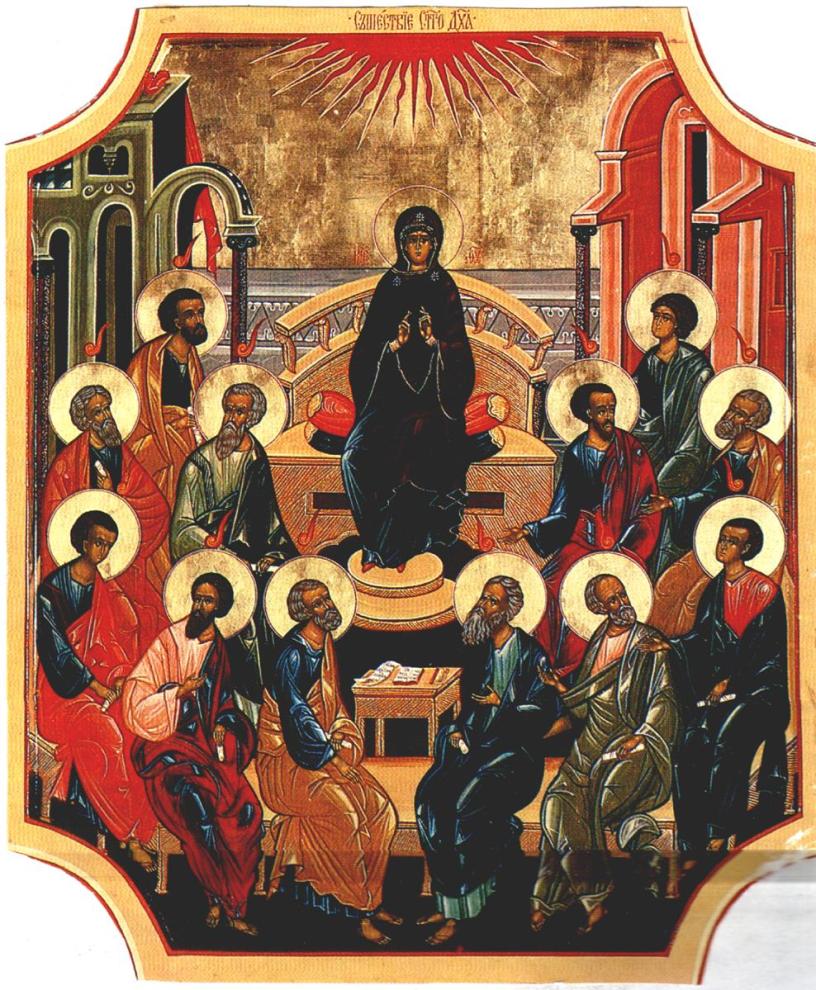
We believe in the gift of tongues, prophecy, revelation, visions, healing, interpretation of tongues, and so forth.
Article of Faith #7
Do we, though? There seem to be two personality types in the Church: those who embrace a more reality-based, logical, Jesus’ teachings and messages, pragmatic, application-based, common “sense” approach, and those who prefer the supernatural gifts, miraculous stories, emotional and subjective “proofs” of the Church’s veracity and authority, the spiritual manifestations of God’s power. There are certainly plenty of both types of people in the present and historical Church, but there is a definite trend away from the more “enthusiastic” style, at least in its most radical sense.
I was reading an essay this weekend about Jane Austen’s religious views as revealed in the book Sense & Sensibility. While Austen’s family included two clergymen and several of her novels included members of the clergy (some idiotic, some laudable, even one social climbing hottie), she never talks directly about religion. As an English citizen living in the late 1700s and early 1800s, she only pre-dates the Mormon Church by a little bit; had she lived longer (she died at age 42) she would have heard of its rise. Her views about religion are colored by many of the same political and religious events that were familiar to early Church members, albeit from an English rather than American perspective; that difference in perspective was vast.
The word enthusiasm comes from the Greek enthousiasmos, which means to be filled with a god . . . The word assumed more pejorative associations in the early church, which battled various groups, like the Gnostics and Montanists, who valued private revelation or inspiration above scripture or church tradition. The breakdown of political and ecclesiastical authority during the English Civil War led to the appearance of many enthusiastic groups, from the Quakers, Ranters and Seekers to Fifth Monarchists and Muggletonians, all of whom claimed direct access to the Spirit . . . The fear they inspired was so great that the Church of England continuously defined itself throughout the eighteenth century as a moderate institution opposed to the excesses of enthusiastic religion.
Is Sense & Sensibility Jane Austen’s Most Religious Novel?, Roger E Moore in Persuasions #44
In the novel, Elinor is the sister most associated with “sense,” while her younger sister Marianne exhibits the concept of “sensibility,” being highly emotional, confident in her personal “truths,” in touch with the artistic and relational side of life, while deriding others as lacking in feeling or missing the point. Henry More considered religious enthusiasm to be a “full, but false persuasion in a Man that he is inspired.” Marianne’s over-confidence in her feelings leads to negatives: melancholy, near seduction and ruin, and borderline mental illness / suicidal ideation. Austen portrays the problems of being carried away by your own imagined reality. She seems to be on the side of “sense,” which feels very Anglican from a religious perspective: anti-fantasy, focused on the practical side of faith community and worship, and making the practical changes that are necessary over time.
While enthusiasm is for modern audiences a good trait, a largely praiseworthy excitement or intensity of feeling, eighteenth-century readers were far more likely to regard it negatively. For them, enthusiasm meant religious zealotry; enthusiasts were convinced they were specially inspired by God and were therefore regarded as dangerous and subversive. Austen’s contemporaries were wary of enthusiasts and fearful of a repetition of the religious strife that they had unleashed in England in the seventeenth century.
ibid, Roger E Moore
Marianne exemplifies what was called “enthusiastic” religion at the time, and any way you slice it, Mormonism was, at the time of its origin, a much more “enthusiastic” faith than it is now. People were standing up in meetings, speaking in tongues, seeing angels walking on the roof of the temple, having visions of Jesus with flaming eyes, bringing forth new scripture, and claiming revelations. It’s one reason so many current Church members are so uncomfortable with the temple (or the Hosanna shout); we don’t belong to the same kind of Church that Joseph Smith founded. We find enthusiastic worship unsavory. It’s something to make fun of, like mocking the “snake handler” faiths or the high energy worship of tent revivals. Our meetings are boring by contrast, almost like a business meeting.
Jonathan Swift and other contemporary essayists considered Enthusiasts to be spiritual pretenders, working in a “trade” (a priestcraft, if you will), plying the uneducated with tricks or emotional manipulations to ensnare them. Some referred to these practices as leading to mental illness. We get another glimpse of Austen’s anti-enthusiasm perspective in her portrayal of Mr. Parker in Sanditon whose entire life is engrossed in his vision of building a seaside resort. His friends the Heywoods observed that he was:
“perceived to be an Enthusiast;–on the subject of Sanditon, a complete Enthusiast. Sanditon was a second Wife & 4 Children to him–hardless less dear–& certainly more engrossing. He could talk of it forever. It had indeed his highest claims–not only those of Birthplace, Property and Home,–it was his Mine, his Lottery, his Speculation & his Hobby Horse; his Occupation his Hope & his Futurity.”
Sanditon, Jane Austen
We’ve all met Church members like this, who can’t have a conversation or relationship that doesn’t revolve around the Church, whose hobbies and pursuits are all tied up in the Church or its various activities: genealogy, temple, etc. To critics of Enthusiasts, this was regarded as a type of mental illness, an obsession, an unhealthy zealotry. To Austen and most of her contemporary Anglicans, people who behaved this way were living in a fantasy world that could lead them to dangerous revolutionary behaviors if unchecked. The American colonies were founded by these types of zealots who left England to pursue their own imagined realities.
Our enthusiastic roots still exist in the Church, to a greater degree than they do in other faiths, including Anglicanism. The elements we still see include things like:
- Reliance on personal emotional response as arbiter of truth
- Belief that the strength of feeling is evidence of reality
- Focus on the private perspective rather than a shared and tested reality
- Proselytizing their beliefs to others
- Seeing everything through a Mormon worldview (e.g. Satan, Plan of Salvation, prosperity gospel)
- Living a life that is completely consumed by Mormon community and pursuits
When my parents first investigated the Church in the 1950s, my grandparents were very skeptical. They warned them not to take it too seriously, that it was all good and well, but you didn’t need to upend your life or go overboard. They clearly understood that Mormonism did in fact require that kind of commitment and life change. It may not be “enthusiastic” in the sense of speaking in tongues, spontaneous visions in the chapel, or swooning theatrically when moved on by the Spirit (all of which were early features of Mormon worship), but it does retain the underlying enthusiasms: reliance on emotional responses as “truth,” converting others, a supernatural worldview, etc.
Chris Kimball’s book Living on the Edge of the Inside seems to be a more “sense” than “sensibility” approach, or as he might say, growing up. I have also noticed that many of my friends who have left the Church have gravitated toward the Anglican Church. Perhaps this is because they were all along more “sense” than “sensibility” oriented, or maybe they became moreso as they got older.
- Do you see the Church as more “sense” or “sensibility” at this point?
- Has your own orientation toward “sense” or “sensibility” changed over time?
- Would you have found the early Mormon Church attractive or too steeped in fantasy?
- Do you see us downplaying these early “fanatical” practices in the Church?
Discuss.
 Wheat & Tares
As a “sense” person myself, I think scrupulosity can produce a sensibility affect. My mom checks most of the “sense” boxes. She converted to the church at 21. She speaks with distaste of the revival style meetings in her former faith group. She has said she’s never heard a voice or seen an angel. Seems almost proud of it too. When she bears her testimony, she never gets teary. She strikes me in just about every way as being a “sense” kind of religious observer. And yet, she’s borderline obsessed with church and always has been: every hobby has a church overlap, every conversation, right down to the contents of her purse (pass along cards and Liahona magazine). She assiduously avoids material that would cause her cognitive dissonance about the church. My father is more in the sensibility camp. I grew up hearing about visions he’d had, voices he’d heard, emotional (overwrought?) tearful testimonies. He’s a man with non-church hobbies, and a wry sense of humor, who always warned his kids not to take the institutional church too seriously. Although very devout, he was my first introduction to many CES-letter issues a decade before the Internet. He finds pass along cards and the like vaguely distasteful and won’t usually proselytize “unless very strongly prompted.”
Anyway, the result of all this is that the “sense” one, my mom, is more the zealot than my “sensibility” father. I expect a higher level of scrupulosity is driving Mom. But I also suspect Dad’s sensibilities have moderated him, not made him more zealous.
Thanks for a great post that made me think!
The 6th Article of Faith says that we believe in the same organization that existed in the primitive Church. I personally don’t believe that Christ ran an organized church so of course I can’t agree with the 6th Article of Faith. But for those of you who do believe it, I guess my question is: do you believe Christ’s church was more “sense”, or “sensibility”?
I’d say we land firmly on the sense side when push comes to shove but we talk a good game about sensibility. My reasoning: money. When any decision on the local or global level impacts church finances we decide pretty quickly using logic that will result in the largest financial gain or the least spent / lost. Even on the individual level we’re generally all about the prosperity gospel which to me has rational (financial) undertones. If someone tried to speak in tongues – besides bearing testimony in a foreign language after a foreign language mission – we’d quickly run them out of the building.
That said we lean heavily on emotions to convince (ie manipulate) people into joining or not leaving. I’m that way sensibility comes pretty naturally.
Today’s Church tries to have it both ways. It recognizes that many people aren’t going to want to be part of a Church in which they have no personal spirituality at all (sensibility), so they allow for and even actively promote that sort of thing. However, it only allows individual Church members to experience this “sensibility” as long as it makes “sense” to Church leaders–in other words, personal spirituality (“sensibility”) is only allowed if it completely agrees with the Church’s official positions on everything (which Church leaders, of course, all believe makes perfect “sense”).
For example, many members get all starry eyed when they hear Quentin Cook make a plausibly deniable (probably because he is grossly exaggerating) claim that he’s had a face to face conversation with Christ (https://www.youtube.com/watch?v=2xRO4nPbrxk). Read how the Church news covered this, “Elder Cook concluded his message by sharing his testimony of the Savior. A hush came over the congregation as he bore his witness, ‘I know the Savior’s voice. I know the Savior’s face. Jesus Christ lives.’” Note how the Church News says that “a hush came over the congregation” when Cook made his (almost certainly highly mispresented) claim. Now think about how most members would react if your average primary teacher got up in sacrament meeting (possibly even a woman!) and made the same exact claim. Many members would have serious doubts and negative feelings about an average member making such a claim while they love the idea of Cook having such an experience. Most members love the idea of the Q15 seeing Christ, but despise the idea that the primary teacher next door might have this experience. How could your average member have more “sensibility” than a Q15 member? Impossible! Honestly, the primary teacher next door might be excommunicated if she spoke too openly and strongly about such an experience.
The missionary elders spoke at a very recent sacrament meeting in our ward. One of the elders gave an incredible story of how he (as well as his “super lucky” non-Mormon friends) had their lives saved because he’d followed the promptings of the Spirit that commanded him to immediately leave this house they’d been watching movies to walk out into a torrential downpour. They had no car or other shelter, so they just got soaked until they had walked quite a ways to get to a store. According to the story, later in the day, this elder and his non-Mormon friends were in shock as they watched the local news and saw that a fugitive gunman had taken refuge from a police chase in the very house they had been in and that the gunman “didn’t make it out alive”. My wife loved this story. She just ate it up. She definitely leans “sensible” with regards to these kinds of stories. I, on the other hand, have serious doubts about the veracity of the story (not the least of which is how this guy managed to convince his non-Mormon friends to walk out into a torrential downpour based on some prompting he had). My bosom definitely didn’t burn when this elder told this story. While I would never confront someone for sharing a story like this, stories like these shared by others where I wasn’t an active participant, typically don’t do anything for me. My wife, who can’t help but constantly pester our son who has stepped away from the Church, insisted on making this son watch the recording of this talk (our ward is still livestreaming sacrament meeting and sometimes the recordings stay available for a week or two) later that evening. I advised her that showing him that video was likely to do more harm than good, but she persisted anyway. It turns out that I was right. Our son is leaning heavily towards sense over sensibility right now, and this kind of story just seems like non-“sense” to him. Sharing these kinds of stories does appear to be acceptable in Mormon congregations today: the story didn’t conflict with statements of the Brethren and also didn’t make the teller of the story appear to be above the Brethren with a visitation from Christ or some other heavenly messenger (just having a prompting or internal voice is OK, though).
Contrast the story of this missionary elder by imagining a mother or a father of an LGBTQ kid getting up in sacrament meeting and saying that they’d been struggling with how to counsel their kid regarding the Church and that finally they’d felt an impression that they should counsel their LGBTQ child to step away from the Church since it was doing them more harm than good. This type of “sensibility” would likely not be well received my many members or Church leaders, and again, if this person continued to be open and loud about it, they might very well be excommunicated.
Another element of the Church’s “enthusiastic roots” that still exist that you didn’t mention are patriarchal blessings. I realize that some people that lean towards “sensibility” love patriarchal blessings, but I just wish the Church would completely get rid of them (and I guess just get rid of patriarchs, too, since what else do patriarchs do these days besides give patriarchal blessings?). I highly doubt that any stake patriarch receives the word of God for each youth that comes to them for a blessing in the stake. I even doubt that they normally receive the word of God for any of these youth. And, even if the patriarch could actually determine which tribe of Israel (talk about weird!) that someone belongs to, who even cares? There have been a number of cases published where patriarchal blessings from the same patriarch have been compared and found to be identical or substantially the same, so at least some of the time, patriarchs aren’t getting any revelation at all. I lean towards “sense”, so patriarchal blessings are no different than any other kind of fortune telling, which most Mormons despise.
My daughter, who is serving a mission, had a companion who turned to my daughter one morning in tears and just gushed on and on about her special experience with re-reading her patriarchal blessing that morning. She then asked my daughter about her patriarchal blessing. My daughter said that she felt her patriarchal blessing was kind of generic–it was a good experience, but that it hadn’t really meant a lot to her so far. My daughter’s companion then pleaded with my daughter to “keep trying” and that she needed to set aside *at least* one hour each time she read her patriarchal blessing so that she would have enough time to receive the spiritual experience that was surely coming. My daughter just kind of internally rolled her eyes and said “OK”. My daughter is serving in a non-Christian part of the world (not going to say where to avoid doxing her), and the people of the dominant religion there have temples where they go and pray and perform some acts in these temples that are supposed to help them discern future events. This companion would be absolutely horrified to learn that the local’s initial impression of Mormon patriarchal blessings is pretty much identical to her own impression of the local religious practices. In other words, they each think each other’s practices are simply superstitious fortune telling.
I wonder what the Q15 thinks about patriarchal blessings these days. They don’t speak much about them in General Conference or other forums. I kind of suspect that there may be some Q15 members that might like to eliminate patriarchal blessings since they also know that such blessings are no more useful than sitting at a fortune teller’s booth at the county fair. However, they don’t feel like they can eliminate them since a lot of members really like them, and if they do eliminate them, it would kind of imply that all the patriarchal blessings done for the last 150 years or so weren’t really useful or real as well, which would shake the faith of some sensibility-leaning members. And, again, if they eliminated patriarchal blessings, how would people know what blasted tribe they belonged to?
This is a great topic.
This idea of sense vs sensibility is similar Kierkegaard’s idea that there are ages of passion and ages of reflection. There are always passionate people and reflective people, but it’s about which temperament is more dominant in a given time/place.
The LDS church is in an age of sense/reflection. Everything seems sort of slow, systematic, and theoretical. E.g. “we’re going use our money to just build a whole bunch of temples and abstractly talk about the covenant path.”
The contrast is more obvious if we look back just ~15 years to when the church openly and passionately mobilized people to fight against the proposition 8 in California about same-sex marriage.
Right or wrong, there’s no arguing that it’s a very different ethos than we’re seeing now. The church’s position hasn’t really changed, but now it’s mostly talked about abstractly at GC rather than literally getting people into the streets to fight for it.
For me personally, it’s a mixed bag. There’s still fire, but it’s tempered and matured.
I think there’s a natural tendency for individuals to shift somewhat from passion/sensibility to reflection/sense as they get older. It’s probably a combination of life experience, brain development allowing for more abstract thinking, and risk aversion (i.e. having more to lose).
I’d probably be Lutheran or Catholic like my ancestors and think that Mormons were kinda kooky. It’s hard to say though. That said, every religion has elements that appear as fantasy to others on the outside.
I think “downplaying” is the wrong word. Beliefs and practices have certainly evolved. The early church was chaotic, and a lot of practices we consider fanatical were very common elements in many contemporary religious movements. Someone who came from a Pentecostal background converting to Mormonism would have felt like expressing spiritual experiences with something like speaking in tongues…just like someone with a catholic background may still find comfort in the idea of praying to a particular saint or crossing themselves. As Mormonism matured and took on its unique identity, some of these older ideas/practices inevitably fell away. I don’t really see a point in the church trying to address every odd idea or practice that happened almost 200 years ago…so no, they’re not downplaying them – things just change with time.
This is a fun post. I noticed several years ago that my wife puts a lot more value into emotional understanding than I do. It a wonderful trait of hers. The problem I see with sensibility in the church is not that it exists but that its claimed to be sense rather than sensibility. Elevation emotion can be a great thing and lead to happiness and contentment with life. I just take issue with it always having to be literally true. If the church could get away from the word true the way they’ve shunned the word Mormon it would be an incredible improvement.
Pirate Priest: You made the observation that as we age we become less passionate and more reflective, less sensibility and more sense. This observation goes along with Austen’s novel somewhat as well, at least in the fact that Marianne is very young and Elinor is older and possibly facing spinsterhood (unemployment for women in the Regency period). Related to Church leadership, though, do you think the “sense” focus is a byproduct of a gerontocracy, as the “sensibility” / enthusiasm / fanaticism was a focus of a very young leader like Joseph Smith? It does seem kind of ridiculous to imagine really old men doing some of the things attributed to these more enthusiastic religions, like it’s just unseemly and not stately or something.
@Angela C: That’s a thoughtful question. I think that the age of top leaders has a definite impact, but I don’t know that I could attribute all it to that. We focus on the religious aspect because…well…it’s a church. However, it’s also just a great big organization with lots of organizational inertia. On top of that, it’s archaic organizational hierarchical structure makes it even slower moving…it’s like if Ford motor company didn’t bother to update how its leadership is organized since it was founded 120 years ago.
Early in my career I did some work with the church and a member of the Q12 openly admitted that the church tends to “walk into the future while facing backward.” This was said in the context of using new technology, but I think it applies pretty broadly.
The addition of the correlation department also turned the dial even more the the “sense” side…I can see how it was necessary to unify doctrine and practices, especially in areas where the church is relatively new and doesn’t have the benefit of generational members who know the routine. However, correlation was absolutely implemented at the expense of innovation and sensibility/passion – it’s essentially a self-imposed requirement to find legal precedent before any sort of change is made. It instantly puts a lid on any hip young bishop doing something off script to attract local youth.
To steal a page from the business world, in some ways it feels like there’s a bit of religious Innovator’s Dilemma going on. Mormonism was like a new disruptive innovator in Christianity for a long time, but has now grown to a size where having trouble bringing enough innovation to the “market” to attract new members. It has the resources to innovate, but they’re being focused on keeping existing members around, which then makes it harder implement the innovations that might attract new membership.
Ironically, the Harvard business genius who wrote The Innovator’s Dilemma (Clay Christensen) was LDS.
Corou,
I just want to second you. For me church would be much improved if everyone were told they couldn’t use the word “true” any more. It is overused to the point of being meaningless. My husband cannot even stand to attend church when it’s fast Sunday. We are both irritated by people sharing sort of magical stories about how God led them to do things that saved them by pulling over by the road or, not touching a door knob, or finding their keys in an odd place. I can’t explain why exactly this is irritating. It just seems to be magical thinking about how God protects them over other people. Maybe it would have felt right to say myself at one time. But now as a more experienced person, I know many very very good people who try hard to do what’s right live through many difficult even horrible things without the supposed protection imagined in the past. This isn’t to say I don’t believe in God or Divine guidance. I do. But I don’t want to diminish it with an oddly magical story in a sacrament meeting. I tend to think God works through science. I am all for personal revelation over external authority. My husband hates emotional talks while I enjoy them. My thoughts don’t fit easily into your topic, but thank you for giving me place to express them.
I appreciate lws’ thoughts on this question. Sometimes we (as a people) speak with forkèd tongue. We have Russell Nelson who told us to learn how to get inspiration individually, and we have people under him clawing that back, telling us that any revelation we receive must completely match, jot and tittle, the revelation already received by leaders over us. If we’re going to get individual revelation, as Nelson has suggested will soon be essential, then leaders and members need to give space to individuals to receive different answers. Maybe you pray about whether you should stay in your church clothes all day on Sunday as keep the Sabbath day, and your prayer is answered yes. That doesn’t mean that your neighbor should also wear his church clothes all day. Or you pray about whether you should do whatever–the answer is for you, and only for you. If you pray about wearing church clothes all day on Sunday, you might get a yes, and if your neighbor prays about not wearing church clothes on Sunday, he might also get a yes. Maybe I am more sensibility than sense.
I don’t like testimony meetings. I don’t like hearing about someone having exactly $54.19, and his tithing was exactly $54.19, and his light bill was also exactly $54.19, and he paid his tithing on Sunday, and on Monday he got an unexpected check in the mail for $54.19, and he was able to pay his light bill. I don’t think it is a miracle when you found your lost keys, when in fact you found them exactly where you had left them. I don’t think that God gives students answers to test questions because they prayed for forgiveness for not studying. So maybe I am more sense than sensibility.
A to Q1: We are willing to talk “sensibility” (get your answer by prayer) but the Church doesn’t trust us, so we are 100% “sense”: your leaders will tell you everything that you should do, or any personal revelation, even for personal matters, isn’t valid until validated by superiors. We also unfairly judge people who live some principle differently from the majority. We want homogeneity above almost everything and anything else.
A to Q2: I am suspicious of another’s claim to “sensibility” if they share it in a pulpit at testimony meeting, because I see that as speaking to be heard of men, and I generally think that personal things should be kept personal. I am readily willing to acknowledge the Lord’s guidance in my own life, but I do not proclaim it from pulpits and rooftops. I also acknowledge that if all were silent then none would be edified, and that isn’t good, so I acknowledge that I speak with forkèd tongue on this issue.
A to Q3: I don’t know if I would seen the early Mormon Church as too steeped in fantasy. I would have wanted to listen to the message of the restoration in the 1830s, including prophets and priesthood, and I would have been OK with angels appearing as part of that restoration.
A to Q4: I think that we are trying, if not to erase, then certainly not to rely on, the pioneer heritage. The “fanaticism” that I would like to see lessened is follow the prophet, even to how we crush plastic water bottles. And the Bensonites, who won’t quote an on-target Bible verse if there’s anything in the BoM that might be close. Or fanaticist Seventies who tell us to pay tithing before we buy food for our children. General officers who tell us that we need to have exact obedience, when we also have Elder Gong telling us that the pursuit of perfectionism isn’t our goal. People who count and declare all their good deeds, but who show little love for their neighbors. Talk tape and podcast sellers and lecture circuit celebrities holding general office who profit off the word, and whom people idolize, and these celebrities eat it up. People who get in the pulpit and speak to the congregation in the second person, you, you need to repent, you need to change, you need to be like me. People who get all distraught when a nine-year-old boy rides a bike near his home wearing a tank top shirt, because of his immodesty in showing shoulders that garments will one day cover. This is a different fanaticism than the OP intended in her question, and I apologize. I’ll take talk of angels and ministrations over modern LDS fanaticism masquerading as fidelity any day of the week.
I believe in spiritual gifts, and have seen in examples in many different faiths. But the good Lord gave us a rational mind for a reason. What an awesome gift! Are we not supposed to “study it out” before we seek an answer in prayer? Joseph Smith described revelation/inspiration more like enlightenment, not a sob fest. Extreme emotions reveal no truth but the emotional state of the person experiencing those emotions. To put it bluntly, some of the very worst lies I have heard have been in testimony meetings. So much of what is left are hastily drawn conclusions. If what another’s inspiration says conflicts with what your rational mind discerns about the real world or a set of facts, trust the rational mind. Let’s remember that cognitive bias harms many more people than asking questions in church or developing a nuanced approach to your religious practice and beliefs. My children have read the CES letter and wrestled with many of the historical issues in church doctrine. Did not hurt them a bit. They have been most harmed by fools standing at the pulpit spouting off things they really didn’t really know.
@lws329 I think it’s an interesting thought to frame personal revelation as being more on the side of sensibility and external authority as being more on the side of sense. It’s a good tie-in.
@Georgis you mentioned RMN talking about personal revelation but then having people lower down the hierarchy saying personal revelation is only valid if it’s perfectly in line with leadership. This is a tale as old as religion: which rules are God’s and which rules are made up by controlling leaders? I think it depends, but it can easily turn into a sort of competition to see who can follow commandments the hardest…kinda like religious Crossfit – “I win at exercising and I’ll never stop talking about it.” (Meanwhile, your doctor just says, “get enough exercise to be healthy then go live your life”).
I think the real distinction between personal revelation and rules imposed by the church is scale – trying to implement guidelines for 17 million people is very difficult and much different than an individual seeking personal revelation just for themself.
A good illustration is the Word of Wisdom: even though lots of people drink, alcohol is pretty objectively unhealthy. So the broad rule is don’t have any alcohol. It’s a straightforward, broad rule that will protect all 17M from alcohol-related problems if they follow it. But at an individual level, are you actually going to hell for having a sip (or even a glass) of champagne at a non-Mormon wedding? No that’s insane, but lots of people tell you to repent for your moment of “weakness.”
From the top of the church hierarchy it’s just not possible to say, “Hey Jack, you can’t drink at all because alcoholism runs in your family…Jill, you can totally handle two drinks a week with friends.” It’s totally possible to follow the letter of the law and then be a jerk, while it’s also possible to know your personal limits and be Christlike.
We can see a microcosm of this with our own kids. “No candy before dinner” could be the broad rule. Now, do I really care if my 8yo eats a single square of chocolate before dinner…of course not, I’m not ridiculous. However, I do care about them getting so full of candy and snacks that they don’t actually eat their dinner and are up all night with a stomach ache. I have one kid who can totally have that one square of chocolate, and I have another kid who would love nothing more than to eat a bowlful of candy for dinner…so the rule is “no candy before dinner” and I then use my adult judgment to be reasonable about enforcement.
One last thing when this gets applied to the church: The vast hierarchy of church leadership (both religious and corporate) is made up almost entirely of middle managers…and I’m sure we’ve all had to deal with middle managers at work. In the church they can quickly overstep their authority and make claims that are either personal opinion or flat wrong. E.g., “Only wear church clothes on Sunday” is totally fine as a personal decision, but a middle manager imposing that on others is overstepping.
I personally find praying to ask God about trivial things a bit silly(“Dear God, is it your true will that I wear this suit and tie all day??”). I tend to imagine God rolling his eyes and answering with whatever the person already wants to hear.
The church has largely abandoned that fantastical version of religion that was being practiced in the 1830s when it comes to daily practice. Most members would find it weird and uncomfortable, as I’m sure I would. I agree that the discomfort many feel over the temple is a prime example. The problem is that the existence of Mormonism depends on a very fantastical origin story that didn’t sound crazy to apparently quite a few people in the 19th century, but does increasingly sound crazy to modern ears, and in fact it is not holding up well under scrutiny in the age of the internet. So the church has mostly become a ‘sense’ church that is run like a modern corporation, yet wants to cling to some vestiges of that old ‘sensibility’ church. That seems to stem from leaders’ sincere belief in the fantastical parts of the origin story, and from an insecurity that letting go of the origin story somehow destroys the church’s raison d’etre. Certainly many who leave after a faith crisis see things the same way: if the origin story has problems, what am I even doing here? The problem is that I think this perspective underappreciates the real value of just being a modern ‘sense’-based religious community that doesn’t worry so much about the validity of the origin story. I’m of the belief that religion can still have an important place in 21st century life, but it will need to adapt and ultimately become more ‘sense’ over time. The Anglicans are doing it, why not us? One possible answer is that the ‘sense’ oriented churches seem to be shrinking faster than the ones clinging to elements of ‘sensibility’. It certainly happened to our cousins at the Community of Christ, but I think it would be worth it.
On the question of whether my own orientation has changed over time, absolutely yes. I started life with a certain amount of ‘sensibility’ but that’s mostly gone now. I’m not sure it was ever my real nature; it’s probably just a result of a religious upbringing. I think ‘sense’ is my natural default and I was destined to head there eventually. I wonder how much people’s personality traits figure into all of this.
Regarding the “fantastical” elements – Mormons need to acknowledge the fact that Mormonism is very protestant in its approach to worship service…and frankly more bland that many protestant denominations. Not every religion is like that.
– It’s the same format every week, except fast and testimony week (which is even more bland).
– Of the 341 hymns, we only rotate through a dozen or so.
– There’s not really art in the chapel.
– Services are devoid of ceremony or symbolism (with the exception of the sacrament, which is arguably “symbolism lite” when it comes to the religious world).
Have you ever been to a Catholic or Orthodox service? It’s packed with meaning and “fantastical” ceremonies. There’s a ton of stuff to look at, think about, and try to relate to. It makes sacrament meeting look very ascetic and vanilla…Even many protestant churches get a wicked guitar or drum solo from time to time.
I’m acquainted with a religion professor at BYU who converted to the LDS Church from being Greek Orthodox. He talks about how for years he’d go to sacrament meeting and be flabbergasted about how it felt sort of hollow compared to services in his old Orthodox faith…then he finally went to the temple and felt relief that he had found the ceremony and symbolism he’d been craving in his worship. It’s frankly not that odd for a religion to have elements that might seem fantastical or theatrical to outsiders…they just sorta got left out of Mormon Sunday services and I think it’s simply because that’s the sort of churches many of the founding members were used to.
mountainclimber 479″ “And, even if the patriarch could actually determine which tribe of Israel (talk about weird!) that someone belongs to, who even cares? ”
Wait, is this something Mormons do? What does it mean? Surely not genealogical descent, or reincarnation, but then what? Do the different tribes stand for different personalities or something?
Zla’od,
No one really knows why lineage matters. Historically, the tribes intermarried when they existed. It’s not like there is some Ephraimite DNA surging through European nations. I believe it is simply a connection with Jacob blessing his children. During the Restoration period, Joseph Smith was literally trying to restore Israel. You’ll note that in talks prior to about 1880, LDS leaders rarely talked about a “restored church.” It was a restored Israel, the Kingdom of God to rule during the Millennium that they were constructing. We dumped that phraseology because it sounded dated and unAmerican.
I know a Jewish man, married to a Jewish woman, who joined the LDS Church and was declared to be from the lineage of Judah. Well duh. Five of his six sons received the same declaration. The youngest was declared to be from Manasseh. (No, he did not resemble the mailman!) I think the patriarch may have been getting a bit too old for the job when the youngest showed up.
I don’t think we should do away with patriarchal blessings, but like the temple sealing ceremony, the blessings of the ancient patriarchs can be promised within the blessing. I doubt the future Israel/Kingdom of God/heaven will be so tribal. I doubt that God will divvy up the Celestial Kingdom based upon tribal inheritances. We are one in Christ. But that’s just me talking.
I suppose another way of handling it is to sell tribal tie tacks at Deseret Book. “Tribe of Ephraim is #1!” “Manasseh wins football games!” for the LDS with Polynesian ancestry.
I kind of suspect that the tribes, which feel 100% made up to me, are a lowkey racial category. Manasseh = brown skinned / hispanic / Polynesian. Ephraim = caucasian. Judah = any Jewish descent. It’s honestly not great. As to what they mean on a practical level, nobody knows. I guess the one thing I’ve heard is that Ephraim is responsible for missionary work (white saviors?), so there’s that. Basically I think they were meant to add gravitas and continuity to the way early Church members perceived their role in the kingdom of God.
Thanks, Old Man and Angela C.! Please accept my gentilogical blessing!
Well, this stuff is no weirder than all the other stuff…
One piece of evidence confirming that the tribes are a 100% made up, racial construct like Angela C said is how lineage (tribe of Israel) was handled for black people throughout the history of the Church. This Dialog article about this topic is a fascinating read: https://www.dialoguejournal.com/wp-content/uploads/sbi/articles/Dialogue_V51N03_4.pdf. A short quote from that article kind of sums things up, “Mormon leaders created an inchoate, confusing, and unevenly applied policy. Some patriarchs pronounced ‘the seed of Cain’ on Black members during their blessings; others the blessings of Abraham, Isaac, and Jacob; while still others no lineage at all. ” It should also be noted (as the article does) that some patriarchs refused to give blessings to black people at all. The inconsistency where some patriarchs were declaring Cain (or lineage at all) as the lineage for all black people while other patriarchs were declaring Ephraim (or Manasseh) as the lineage of black people is a pretty clear piece of evidence that patriarchs do not receive revelation from God telling them the lineage of the person they are blessing. It’s all just 100% made up.
A lot of Church members used to take the lineage from their patriarchal blessings a lot more seriously than they do today (I’m sure there are still some Mormons who consider this important today as well, but I think it’s a lot smaller than previous generations.) In the past, a lot of Mormons understood the lineage declared in their patriarchal blessings to be a quite literal determination of their heredity. As Old Man noted, this all seems pretty ridiculous nowadays with our understanding of how complicated people’s ancestry is through DNA studies (an awful lot of patriarchs who were refusing to declare lineage to black members probably had “drops of Negro blood” in them that would horrify them if they knew about it). The Dialog article I noted above also discusses how white Church members were almost always declared to be descended from Ephraim, which is why they literally held almost all of the Church leadership positions. White people were simply better (because of their actions in the pre-existence, among other things), so it was just natural that the Church would be led by white people (well, white men).
For me, if patriarchs are/were making up the lineage declaration part of the blessing, then they are/were also probably just making up the rest of the blessing as well. That’s why I think we should get rid of them. I’ve seen some of the instructions given to patriarchs today, and unlike in the past where some patriarchs gave wild blessings (promises to be a future apostle or prophet, for example) that people were confused about when then didn’t materialize, they are now instructed pretty strongly to mostly just give bland blessings that would largely apply to anyone. My kids’ blessings are pretty vanilla. Each of their blessings is basically just listing out each step of the “Covenant Path” that they should follow (mission, temple marriage, kids, etc.) and how God will be happy with them if they complete each step. It also touches briefly on a few things that my kids mentioned to the patriarch in a brief chat we had prior to the blessing (so, also not inspired). If this is all patriarchal blessings are going to be, perhaps we should change their name from “Patriarchal Blessings” to “Covenant Path Blessings”? Maybe the wording of the blessings should be codified so that they are literally the same for everyone and there is a witness present to whack the patriarch on the back of the head if he says a word wrong like we do with the sacrament prayer or endowment ceremony?
Zla’od
Part of Mormon doctrine is that many (most) members are literal descendants of Israel, the OT prophet with 12 sons, including Joseph (that Andrew Lloyd Webber & Tim Rice wrote enthusiastic songs about). Joseph named his sons Ephraim and Manasseh. Israel gave blessings to his offspring.
The lineage can be direct or through adoption, at baptism. The stake patriarch tells you which tribe you are from. In Genesis you can read the blessing Israel gave to the corresponding son/grandson. This links members directly into the Abrahamic Covenant.
In Mormon doctrine, part of Joseph Smith’s mission is the gathering of Israel in preparation for Christ’s Second Coming.
I think a lot declare a direct, literal descendant line, saying something like, “you have within your veins the blood of Israel flowing through the loins of Ephraim”. Since the tribes of Israel were scattered, it makes sense when you have a biblical mindset.
The race aspect that Angela C mentioned is real, not said out loud, though. My sense is that most patriarchs would assign someone from Europe to Ephraim, someone from the Middle East to Manasseh. Probably the Book of Mormon tie-in to Lehi’s family being righteous and elect would thus make most people native to North, South and Central America descendants of Ephraim.
If the declared literal bloodlines were literally literal, then DNA testing (that have Utah links, and a lot of Mormons do) would pick up the Middle Eastern DNA. These guys would humbly proudly declare it on social media. Church leaders would add a division to the Genealogy Library to collect the data and study the patterns.
Instead, we are left with the Gospel Topics Essay explaining why people native to the Americas don’t have ME DNA. At least, for those who notice the gap on a personal level and are willing to think about it.
I was well into my faith transition, I knew about the lds church quietly altering the BOM title page to “among the ancestors”, etc. when a friend in a similar place mentioned that Simon Southerrton’s findings would apply to PB lineage declarations, as well. I was very surprised. It was another finding in my transition.
A clear collision of the “sense” and “sensibility” wings of the Church happened during COVID. Some members (generally Trumpists) wanted the Church to ignore all the wicked “worldly” responses to the pandemic, like masks and later vaccines. They wanted the Q15 to be out faith healing all the members, or maybe local priesthood holders could do it too. Where is our faith, they asked.
I was not at all surprised when the Church almost entirely came down on the “sense” side, canceled church, closed temples, and encouraged masking and vaxxing. As Angela and so many others have observed, its commitment to the “sensibility” side has been waning for a long time.