
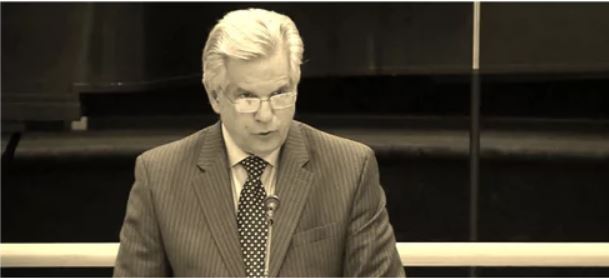
Greg Prince spoke at Sunstone in a talk titled “Own Your Religion”. I highly recommend paying $5 to get access to the audio at the Sunstone website. And hopefully Dr. Prince will release the transcript of the talk, but for those that weren’t in attendance, here is a summary of the talk with selected quotes.
Dr. Prince is very important to me. I went through a painful faith crisis and deconstruction phase 8-12 years ago, followed by a faith reconstruction phase that is based on a new paradigm that appreciates the beauty and truth of the LDS Church outside of historical and factual accuracy of scripture and historical claims. I’ve been trying to popularize this paradigm and reach out to others in faith crisis, and a lot of times am met with a “uh what? This makes no sense.” Dr. Prince has a view of the LDS Church which is the most like mine I’ve encountered, and this talk was very powerful to me. This a new perspective for many LDS, but hopefully after reading this, the “uh this doesn’t make sense” will be lessened a bit.
He introduces his talk talking about the historical challenges with a literal and fundamentalistic view of Mormonism.
By democratizing data, the Internet has given easy and often unwelcome access to Smith’s foibles and the response of many church members who never bothered to study him deeply has been to denounce him in the church he founded and then walk away, but that is throwing the baby away with the bath water.
Think of the role that a founder of a religious tradition plays. It has two parts. First, he or she must have the vision, some kind of encounter with the infinite that is apart from the ordinary…The second part, perhaps the more difficult is to make that vision available to a community of believers, to give them direct access to the infinite. That’s where it gets tricky and it is why most religious movements do not survive long following the death of their founders, and it’s where Joseph Smith excelled.
He then goes into the problems but also the wonders of two of those symbols.
First the Book of Mormon. Even though it was presented as an actual history, viewed through a scientific lens, the Book of Mormon appears to be obviously non-historical. Dr. Prince goes into a few of those areas.
1) Archaelogy. No evidence found for BOM. Lots of evidence found that seems to disprove it.
2) Language. We can trace language evolution just like biology, and we don’t see any evidence in Native American languages of any kind of Hebrew influence.
3) DNA sequencing. DNA study of Native Americans does not support an influx of Middle Eastern DNA in the BOM time period.
4) Anachronisms. There are many anachronisms in the book, such as the Deutero Isaiah problem or the highly developed Protestant Christology, and many of the themes are somewhat narrowly focused in Joseph Smith’s time and setting, such as the discussion of infant baptism.
So, that’s the problem. But what is the book and why is it important?
What is it?
Denise Hopkins, a professor of Hebrew Bible at Wesley theological seminary, read the book of Mormon and said it is a book length midrash on the King James Bible. Midrash is the longstanding Jewish tradition of scholars reading the Hebrew Bible and under inspiration writing commentaries on it.
Why is it important?
(I ask people about the Book of Mormon) What did you experience as you read it? The floodgates open and stories of personal conversion emerge. Therein is the timeless value of the book, what it does transcends what it is. No other aspect of Mormonism has brought more people to the convincing of the Jew and Gentile, that Jesus is the Christ. And yet many become so hung up on issues of historicity.
A second symbol that allows LDS to share with Joseph in experiencing the divine is the First Vision. It too has historical problems that can cause literalists or those taught in a black and white way to throw the baby out with the bathwater.
The 1838 account is the one canonized that most LDS grow up knowing and teach to investigators as missionaries. The 1832 account has been popularized recently in the internet age. The church is trying to teach them both in a way that minimizes the differences and maintains a literal-fundamentalistic (revelation is perfect) perspective, but that’s difficult.
1832 account:
- written in Joseph’s own hand
- saw one personage, The Lord
- purpose was to worship God and seek repentance
- language implying more of a visionary experience
- no language or information related to starting a new church, or implying LDS exclusivity
1838 account:
- written in collaboration with other Church officials
- saw God the Father and Son Jesus Christ
- purpose was to find out which church was true
- main outcome was the call to become a prophet and start a new church which would be God’s exclusively one true church
- language implying more of a material, physical experience
So, just like the Book of Mormon, we have a problem with how it is viewed. But what should we believe about the First Vision and why is it important?
From a previous Greg Prince interview:
Joseph touched the face of God. He somehow had access to the divine, to the infinite. He allowed his community of believers to touch the face of God. It doesn’t matter to me what that face looks like. It doesn’t matter that in his telling of visionary accounts the story changed. I got no problem with that.
Back to the Sunstone speech.
What you see is the process by which a historical account became theological. Joseph Smith is in good company in doing this as one can readily see by examining the Christological narratives in the New Testament which evolved in the linear direction. Over time, try that sometime. Look at the Christology of the earliest writer, Paul then Mark then Matthew and Luke, who wrote simultaneously and then John. The Christological event moves back, back, back in time until John, the latest writer, says, Jesus was God before he was born. The same thing is going on in The first vision,
Part of the reason why being too literal is bad is because when faced with contradicting science and historical fact, we’re tempted to toss it all out. But another reason the literalistic, ultra-certain view is bad for us, is that it reduces the amount of mystery about God and religious doctrine. Being overly certain stops one from the searching and seeking that religion should. Too often the answer to a question is to look up what some LDS prophet or apostle said about it (which very well could have been speculation or conjecture) rather than struggle and search ourselves.
(We should) place mystery back where it belongs at the forefront of religion for over a century. The primary theology pervading the LDS church has been fundamentalism, which includes absolute scripture literalism coupled with answers for any question you can think to ask. This approach is problematic because the scriptures are not always literal or inerrant and indeed many contradict other scriptures. It is problematic because many of the answers are bogus, but it is most problematic because it pulls us away from the vital essence of religion, the mystery and majesty of God.
Dr. Prince gave some background on the apostasy of Hans Mattson, a high level church leader in Sweden, who went through a public faith crisis and took many with him out of the church. This was reported on the front page of the New York Times. A well known Jewish Rabbi Harold Kushner wrote an opinion piece on this a few days later with a message to Mormons. Roughly: “You have a great religion, don’t ruin it by chaining yourself to literal scriptural interpretation.” Prince quoting Kushner:
Might I suggest that they use the tactic used by many modern Jews dealing with biblical narratives that defy credulity. From a six day story of creation to Jonah living inside a large fish, we distinguish between left brain narratives meant to convey factual truth and right brain narratives meant to make a point through a story. The message will be true even if the story isn’t factually defensible.
Prince’s addition:
If you seek to own your doctrine as Rabbi Kushner suggested, learn to differentiate literal scripture from allegorical, scripture and doing so, appreciate the power of myth, which is one of the best means through which we learn truth, even though the stories within the myth may never have occurred, the time and means through which the earth was created are for science to determine, but the myth of the creation narratives does what science cannot do. It answers the why.
Quoting Kushner again:
My answer to someone who asks, do you believe the story of the six days of creation is true, is yes, I do, but not from a factual sense.
I would say the same to question whether the Book of Mormon is true.
Dr. Prince goes on to list a few important principles in understanding LDS doctrine and revelation.
- Continuing revelation which is bedrock within Mormonism means progress, and that means that new scripture can supersede old scripture. Don’t cherry pick certain scriptures to justify bigotry, injustice, and cruelty.
- Learn the difference between the “Word of God” and the “Words of God”. God is infinite and beyond our comprehension. “My thoughts are not your thoughts.” All written formulations that invoke the name of God bear the limitations of the humans through which they imperfectly passed. We are products of our own times and scriptures written centuries ago by people who reflected then common wisdom may be outdated in a data driven world.
- Understand that all doctrine is evolutionary. I have yet to encounter a single, significant doctrine within Mormonism that has undergone no change since the earliest days of the restoration. It is literally an article of our faith that we don’t have it all and that we believe that there is much yet much yet for God to reveal. Rather than denying or fighting doctrinal evolution, we should welcome it and pray for more.
Dr, Prince provided four realities that we as a church need to accept and incorporate into our worldview.
Reality #1: Fallability of LDS leadership, scripture, and doctrine
So reality number one is that we are all imperfect, but on a good day, we reach beyond ourselves and try to make the church and the world better imperfections in our leaders should not deflate us. Instead, they should reassure us that we’re in this together and that there is room on the bench for all reality.
This leads to a question about LDS truth exclusivity.
This again from my interview with Rabbi Kushner. I think if we had enough data points, we would probably find that most, if not all religious traditions at some point in their maturation process either said, we are better, we are the best, or we are the only. I think that the ones that I would consider more mature have softened those stances.
Kushner: Yes, due to reality.
Prince: The Mormons unfortunately immediately populated the top one and have been very reluctant or incapable of vacating it.
Kushner: To say our religion is the best, is like saying our baseball team is the best. It’s not a statement of fact. It’s a statement of loyalty. I think what we want people to believe is this religious system works for me.
Reality #2: We can accomplish more by cooperating with other religions
So reality number two is that we are in this together and once we drop our defenses and joined forces with other faith traditions, we find that there is no limit to the good that we can accomplish working together.
Reality #3: A Church being good is as important as it being true
Reality number three is that institutional religion has only three cards to play and for millennials, one of them “truth claims” is off the table. That leaves only two: moral authority and community. People, and particularly younger people want a church that walks the walk, that takes a stand for values and that tries to make the entire world better. They don’t want empty talk and neither do I.
Reality #4: Science
Reality number four is science matters a lot where science can speak.
DeMille said, we cannot break the 10 commandments, we can only break ourselves against them. Similarly, we cannot break scientific truth. We can only break ourselves against it.
Dr. Prince then lays out three areas where science has affected or is affecting the LDS Church to seek revelation to progress and change.
- Race. 19th century understanding of race stemmed from outdated and misunderstood interpretations of the Bible. With better science came reinterpretation of scripture and progress.
- Book of Mormon. Scientific and historical understanding is forcing us to reinterpret how we understand the Book of Mormon. Faithful scholars like Richard Bushman, Sam Brown, Nick Frederick, are leading the Church to explore areas accepting much 19th century content appearing in the Book of Mormon by way of revelation or an expanded translation. The Church appears willing to go this direction.
- Homosexuality. Science is changing how we understand homosexuality. There is hope among many LDS LGBT+ supporters that better understanding of science will lead to prayer and revelation and new policies and doctrine in a similar way
I would add, and I’m sure Dr. Prince would agree that there are many other issues science and better understanding can lead us to better policies and doctrine, especially female equality issues.
He ends his talk with a call to “own our religion”. In this portion, he introduced a phrase I believe he coined recently “trickle up revelation”. This is the power of the LDS community to work out ideas and policies and answers to questions, and then they get pushed up to leaders who can pray over them, receive revelation, and establish them formally in the Church. He quoted President Spencer W. Kimball.
Now my brothers and sisters that seems clear to me indeed this impression weighs upon me that the Church is at a point in its growth and maturity when we’re at last ready to move forward in a major way. Some decisions have been made and others pending which will clear the way organizationally, but the basic decisions needed for us to move forward as a people must be made by the individual members of the church.
Dr. Prince admonished us to be serious about our callings, prepare when we have lessons, read, have influence locally and in your sphere. He provided an anecodote in how the Young Adult program came about.
In 1972, the LDS Students Association president in the Long Beach East stake, a stake almost adjacent to ours saw that there was a void. People were getting married at an older age and so students were graduating from college, but they were still single and there was nothing in the church curriculum for them. So they started their own program. They didn’t ask anybody’s permission and they called it Young Adults.
They implemented it, and it was successful, and then it got pushed up to Salt Lake and made a formal policy across the Church. This is “trickle up”.
I will defend “trickle up” as the most potent force within the LDS Church. If you look historically, you can verify that because every cell of the organization, without a single exception, started from the grassroots and worked its way up. So (the question is) how to pierce the bubble? (How can normal members affect change) I can’t give you the specifics, but I can say historically it is a very, very powerful force. When people at the grassroots are doing something that turns out to be right and they’re not asking permission to do it, it may in fact go all the way up. I see no distinction between organization, policy and doctrine. You can draw lines on them buy those lines. I think it’s all flexible and I think history will back me up on that.
In the Q & A, he was asked how much people should speak up, when taking a different perspective on these things than fellow members.
There is a moral imperative at times to speak out. And if you’re afraid of the consequences of speaking out, then get off the field. I don’t do it irrationally. I try not to do it thoughtlessly. If you are totally risk averse in life, you’re not going to lead a very interesting life, and you probably are not going to make much of an effect for good in the world. That’s my answer.
In closing, I’ll go back to an anecdote Dr. Prince shared to get at what’s really right about Mormonism.
You also realize that the secret sauce of Mormonism has always been the laity. You and me sweating it out in the trenches day by day. Consider this simple entry from the 8th ward historical record trial before the Bishops Court, June 10th, 1856 of Charles King and Elmira Tufts. In the complaint, Charles King says that Elmira Tufts owes him $2 for setting two tires on her wagon wheels, which she refuses to pay him. The court heard the evidence that was given and decided that Mrs Tufts pay the plaintiff $1 and that they take each other by the hand and live their religion.
Beautiful. That’s our religion.
We have a beautiful religion. It’s under fire right now due to modern science and historical information that make many of our historical-literal claims impossible or implausible. A strength of our religion is that we believe in revelation and progress. We can drop what doesn’t make sense and shift into a more mature religious view. Just like we’ve done for the global flood, we can shift an implausible foundational claim from having literal to metaphorical value. We can embrace science, and take the best of our religion and progress and move forward.
 Wheat & Tares
Amen CIT. I agree with nearly everything you have written above.
Serious question, when did we shift away from the global flood?
Zach, well maybe I might be stretching a bit there. But I think that most college educated active LDS would say there was no global flood, and that it should be considered metaphorically. But I could be wrong there. At minimum, many people have moved to that position, and it doesn’t seem to matter a lot in terms of evaluating the value of Mormonism in total, to view that metaphorically and not literally.
I don’t like calling the flood metaphorical. I think there is a good chance it was a large localized flood rather than a global flood. I know some people like John Hamer believe it is completely metaphorical and he doesn’t even agree that a local flood happened. So I think college educated people may be split on larger local versus metaphorical.
MH. Right. I’m fine either way. A scripture or church history story that is better to be taken metaphorically than literally could be based on actual event but which the reality is altered in the telling or it could be purely metaphorical with no historical basis. With the global flood, the point is not which category of those two it’s in, but the point is that the way it’s described in the Bible, it’s best to take that metaphorically. ie that God destroyed all humans on Earth but Noah’s family, the animals all were preserved on the ark, etc.
Legends of a “Great Flood” can be found in the Epic of Gilgamesh, Sumerian King List, Greek and Hindu mythology, etc. Some of these sources predate the book of Genesis. A Jewish man at a Torah study I attended remarked that these stories “do not happen in a vacuum.”
I think a lot of college-educated folks in the Church take the position that historical accounts in scripture are based on the ability of the observers to describe them and of records kept through time to transmit them, and that the details of what did or didn’t happen aren’t nearly as important as the lessons learned from them. That is, I and others like me don’t affirmatively label certain accounts in scripture as allegorical only, but that the historicity is unrelated to the spiritual value.
For example, my view of the Book of Mormon is that it is an account of people who actually lived in the Americas, but that Joseph Smith’s translation pretty liberal, importing concepts, language, and anachronistic details in order to convey the lessons to be learned from the stories.
i am repeating myself, but Greg whom I know and respect, misses the point I fear. The question we should be asking is not whether the book of Mormon is a midrash on the bible or historically accurate but whether there is power in this religion to bring us into the presence of God in a literal not just figurative sense. Power to make us Sons and Daughters of God . If we can not pass through the veil and communicate with the divine through the ordinances of the gospel ,if we cant entertain angels here and now why bother to jump through all the hoops of Mormonism. Do as your neighbors do . Be a good person ,stay home on Sunday .watch TV and drink beer. Greg’s approach and yours effectively eviscerate the gospel by denying its transformational power. If we don’t believe in that power why bother ?
I have to agree with bellamy. We have been told that the book of mormon is a history of the ancient inhabitants of the Americas – turns out they lied. We have been told that jospeh saw God and Jesus with his own eyes – turns out they lied. We were told polygamy was from God – turns out they lied. I could go on and on. Why stay and continue to pay into an organization that has LIED to me? You wouldn’t put up with that in any other aspect of your life. This is my eternal soul we are talking about! I have bailed out and most of my family has too. I still have one son and his family and my dear husband in their clutches, I am hoping not for long.
CIT, I really appreciate your thoughts here. I have from time to time attempted to put on the hat of seeing value in metaphorical rather than literal truths. But it remains elusive for me in being a transformative view. I don’t know if it’s just the way my mind processes things or if I need to continue to develop into a broader paradigm, but it hasn’t worked for me yet. The Book of Mormon was transformative for me when it was a literal history and Joseph Smith translated an ancient history by the gift and power of God. If it’s not historical, then everything Joseph Smith and every prophet since has taught about it becomes problematic. It becomes an inspired fairy tale, whatever “inspired” means. And I have a hard time dedicating my life to a fairy tale, however powerful it may be.
The following article lays out some of the problems I see with trying to maintain a viewpoint that the book is not historical, but yet still “true” or “inspired.”
https://rsc.byu.edu/archived/historicity-and-latter-day-saint-scriptures/5-joseph-smith-and-historicity-book-mormon
The book itself claims it to be something it’s not, and Joseph Smith continually claimed the book to be something I cannot continue to hold belief in. How do we reconcile these things? I am not there yet, and I honestly don’t know if I ever will be. There are simply so many other more deserving works for me to devote my time to.
“In their clutches…”
Bellamy. The question you bring up is a critical question. Is there power in this religion to bring us into the presence of God? Power to make us the Sons and Daughters of God? I say emphatically, yes. Prince talks frequently about the transformative power of the Book of Mormon. He talks about the spiritual language we use in our testimony meetings to share with each other our personal experiences with the transcendent. This church is changing lives across the world. You add the phrase “bring us into the presence of God in a **literal not just figurative** sense.” No religion can do that. God either is or isn’t. And the question of whether you or I will meet him someday is outside the scope of any religion. No religion can snap its fingers and make God happen or not happen. We have faith and hope. My definition of faith is “act as if one knows”. By the teachings of this church, I will have faith, ie “act as if I know” I will meet God again by living the gospel of the Church of Jesus Christ of Latter-day Saints. I do my best to love others, sacrifice, serve, support, obey. When I really try at this, I am transformed. Other than this kind of transformation, I don’t know what other transformation there could be. So I answer yes, this church and this perspective of it is transformative.
Jenny and Bellamy are absolutely correct. Until very recently I have lived my life for the Church. I sweated it out in the trenches as an EQP, a bishop, taught four years of early morning seminary, and held so many other very time consuming ward leadership callings for decades. I did this because I “knew” it was true…until I realized it wasn’t. That discovery has been devastating and continues to cause problems in my marriage, as my wife wants nothing to do with the less than literal ideas discussed in this essay. Additionally, with all the lies and cover ups throughout the church’s history, not to mention that I just don’t like it and have long felt very uncomfortable while participating, I find it very hard to justify doing all that is required to attend the temple, given its historical origins. I simply don’t have confidence in Joseph smith’s testimony that the temple ordinances are of God. He’s lied before, you see? Tithing, total belief in our leaders being prophets, seers, and revelators, etc. is a big price to pay to attend something that has a dubious godly origin and doesn’t do anything for me spiritually. Now, after taking a break from regular church attendance for awhile, in order to smooth things over with my wife I find myself faced with the prospect of attending a church I don’t believe is the one and only true church, while hearing lesson after lesson declaring exactly that. What it comes down to is this, I love my wife and will attend as often as I can stand it but I have no real hope that the truth claims our leaders make will soften significantly in my lifetime just because I and many members like me aren’t buying it.
I wonder sometimes what it is that allows some people to find inspiration (and even transformation) in the face of ambiguity and uncertainty or even outright rejection of some teachings or aspects or ordinances of the church, while others flip from knowing it is true [however broadly that is intended by a particular person] to realizing that “it” isn’t. The flippers sometimes seem to be unable to escape
all-or-nothing thinking — rejecting all if they find any proposition or practice taught in the church to be less than completely and wholly accurate and entirely uninfluenced by human error, fear, greed, impulse, understanding, power-seeking or whatever. Maybe it’s a matter of finding the human problems overwhelming relative to their experience of any inspiration. Maybe some have been so sucked into the predominant church culture of certainty (instead of faith), that it’s the one thing they are unable to shed. Maybe there is no simple answer to my wondering what it is.
Alma 32 clearly states that people with even a desire to believe can start with a portion of the word, and obviously, the choice of which portion to begin with is up to each person.
Alma also talks about experiments upon portions of the word, and it seems to me that Prince’s talk, as summarized here at least, does not involve portions of the word that I personally experimented upon, and other significant experiments that I have followed over the decades.
1) No evidence for the Book of Mormon? Really? Obviously we have very different concepts of what constitutes “evidence” as distinguished from coercive proof. Evidence invites, by offering “cause to believe” in support of faith that falls short of perfect knowledge. I’ve seen a great deal of “cause to believe” and hundreds of books containing such in my personal library. (See the Maxwell Institute and others on this. Things like In the Footsteps of Lehi and Glimpses of Lehi’s Jerusalem, and Mormon’s Codex, and Second Witness strike me as representing something other than “no evidence.”) If a person is complaining that they cannot have faith without perfect knowledge, without absolute certainty certified by skeptical authorities, they demonstrate that they misunderstand the concept of faith. The recent National Geographic special on a detailed LiDAR survey of Mesoamerican sites could very well have been devastating to the Book of Mormon by peeling back the jungle and revealing in a moment a hundred times more than we knew before, rather that way cool.
https://bookofmormoncentral.org/blog/4-ways-the-new-maya-discoveries-may-relate-to-the-book-of-mormon
2) “we don’t see any evidence in Native American languages of any kind of Hebrew influence.” Brian Stubbs, among others, disagrees, and it would seem his work ought to merit a mention and argument.
3) DNA? The LDS DNA scientists who actually hold patents on processes and perform testing have a much different view of the significance of the current state of the art. There is a big book DNA and the Book of Mormon for those curious.
4) Anachronisms? This simple dismissal does not do justice to the situation as I see it, regarding Deuter-Isaiah, Book of Mormon Christology (I’ve published on that, as you know), or even Infant baptism in pre-columbian Mesoamerica, on page two here:
Click to access S00001-23-3.pdf
If Denise Hopkins says that the Book of Mormon is a Midrash, does she do so from a position of infallible omniscience? James Charlesworth and Robert Price have also made this argument, but I’ve also read and considered much that they did not consider and do not account for. There is Midrash in the Book of Mormon as in the Bible because those people knew what it was and how and why to do it, but there are informed people who do not believe that is all it is. If that is a portion you can work with, fine. But the kinds of experiments that reveal that there is more involve different contextualization and effort than the experiments that presume there is nothing else to find and no reason to perform those experiments.
And regarding the fallibility of LDS leadership and scripture, our own scriptures bluntly state that in D&C 1 and in the Preface and content of the Book of Mormon. The reason this comes across as a radical insight for some has to do with human development (see The Perry Scheme for Cognitive and Ethical Growth) in any society, and it not a Mormon peculiarity.
It is one thing to obsess over and generate political narratives over the faults and limitations of LDS leaders. Quite another to take them for granted and spend more effort on removing the beams from our own eyes first, that we might begin to see more clearly.
Expansion of the mind, enlightenment is one of the things that Alma says ought to increase faith. It can be devastating to those who have difficulty letting go what they learned while young. The difference between disillusion and enlightenment can be a matter of whether one considers that one’s beginnings of understanding ought to have been an unchangeable end, a rock, rather than seed to nurture with the expectation that growth with produce shoots, roots, leaves, and branches and fruit that were not there before.
Prince always has interesting things to say and presents them in a positive fashion, not just railing at the Church and its shortcomings. Let’s talk about the Four Realities and why they are such a challenge for the Church and its membership:
1. Fallibility. Mormons allow for fallibility in theory but not in practice. While leadership generally shies away from making direct claims for infallibility, it also won’t tolerate members who embrace the idea of leadership fallibility. So you might describe the Mormon position as passive aggressive infallibility. I think the problem is a combination of the Mormon sense of insecurity (because we get picked on by other denominations) coupled with Mormon hubris.
2. Cooperating with other denominations. Well sure, except they don’t like us and Mormons can’t mentally get past “all their creeds are an abomination” and the lingering doctrine of the Great Apostasy. Mormons think of all other Christians as heretics. Leadership could help the membership get past these mental blocks if they would back away from exclusive truth claims and acknowledge some degree of validity for other churches (that is, back away from the standard Mormon understanding of the Great Apostasy). Don’t hold your breath.
3. The Church being good is as important as the Church being true. Maybe more important. But goodness considered independently of being true, as applied to the Church, is just not an idea most members or leaders can grasp. When your holy book features a prophet who cuts off an unconscious guy’s head, another who enjoys whacking off his rivals’ arms with his shiny sword, a celebrated general who engineers a coup then threatens objectors with death — and these people are the moral heroes of the book? No wonder most Mormons can’t grasp the idea of ethical goodness separate from religious truth claims and loyalty to the hierarchy.
4. Science. In the ongoing battle between fantasy and reality, science is an indispensable tool for identifying reality and avoiding fantasy. I’m thinking here of Carl Sagan’s book The Demon-Haunted World: Science as a Candle in the Dark. It would really help if we called a few scientists into the senior leadership. As a Church we really need to improve our reality to fantasy ratio. We need more candles.
Dave B., very well put. As to point 2, our stake PR person recently addressed various ward leaders and encouraged us to reach out to other congregations and invite them to our ward activities. No one said anything, but it seemed to go over like a lead balloon. As you say, from a conservative member’s perspective, why would I invest time and energy to build bridges with churches who are essentially nothing more than rivals for the affections of potential converts. Add to that the lasting antipathy many Christian denominations still have for Mormons (I remember being called a cultist, polygamist, and pagan, and being told I was going to hell because I didn’t believe in Jesus), and it’s not a recipe for success. Without a fundamental shift in LDS doctrine about exclusivity, I don’t see us moving farther into the Christian mainstream anytime soon.
Greg’s model doesn’t work for me. Unless one buys into the need for the Church’s saving rituals, I see little reason to stay. I can find socialization and good works elsewhere. And the Church’s obsession with the dead distracts from the mission to help “the poor among us.” My time and 10 percent can be better spent with humanitarian groups. And the OT and BoM don’t “light my fire.”
How did that “trickle up” force work for Kate Kelly? Sam Young? The September Seven? Others? And did polygamy start as a “grassroots” organization that worked its way up? There are too many red flags and major problems with the “trickle up” approach. Many items within the church are not flexible. Legitimate suggestions to change organization, policy, and doctrine are usually not met with open arms. Instead, one may be faced with questions from church leaders, discipline, or ultimately excommunication.
I love Greg Prince and have read (or am currently reading) most of his wonderful books, but I just can’t go – where he is asking us to go. I’ve been lied too, mislead, shamed by and really intellectually abused by this organization which has claimed to be the “one and only true church on the face of the earth” and now I’m supposed to embrace it *for the good it sometimes does?!”. A great big, NO THANKS to that. I can BE GOOD myself and with others WITHOUT the overlords who have perpuated the like to begin with! Love you, Greg – but you’re on your own on this one!!
Meant to say “lie”. Darned spell checker!
Churchistrue – I think I am probably in the place of:
a lot of times am met with a “uh what? This makes no sense.”
But I am open to trying to see your point of view. I appreciate you sharing and explaining. Maybe it is a matter of time on my faith transition, or maybe my brain and my circumstances are different and we will never see anything close to 100%. I will admit there is a part of me that is intrigued in your point of view even if at the moment it still leaves me scratching my head and asking, “why?”
Church is true. As I read him the message of Joseph is that we like others before us can receive the “fullness of the Gospel” in this life. If you say no we have to wait for the next life in what way are we any different than the Baptist . To the extent your baptist neighbor is a good person will he nat see God in the next life ? Read Sections 84 and 124. Both demonstrate that Gods work in mortality is to prepare us to enter into his presence. This is what Moses tried to do but the Israelites would not . This is what the B of M (in which I believe) teaches. Look at Lehi ,Nephi,Jacob ,Joseph ,Alma, the brother of Jared,Mormon.Moroni Nd Ether. All did what Section 93 implores us to do and they received the promised results. We had the fullness in the beginning of this dispensation but lost it See section 124. Christ and angels appeared to many at the dedication of the Kirkland Temple but how many other times at Temple dedication. since then NONE.. Read 124 carefully. See why Joseph and Hyrum were killed .See why the Saints were cursed. It is no accident that the largest massacre of whites by whites in US history was done by Mormons . The largest massacre of Indians in US history was committed by Mormons. The greatest disaster in the history of the Westward settlement of the U S happened to Mormons.Read 3Nephi 16 and 21 and Sections 84 and 124 AMD Mormon 8 in a single sitting. You will see why we are where we are ,denying the power of God to redeem us here and now.