

I am sure most of you have listened to the “Yanny or Laurel” phenomenon that went viral this month. If you read my first guest blog entry you can probably guess I am intrigued by things like this. Being older (and enhanced by playing rock music too loud over the years) I can only hear “Laurel”. I enjoyed this and learning a bit of the “how” different people hear this differently for about 10 minutes then I was done.
Over this last weekend I was with a group and this was brought up. A young lady in the group had not heard about it and someone played it for her. She of course only heard “Yanny”. Even after a 5 minute conversation and even technical explanations, she was sold that all those around her were pulling a prank on her.
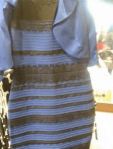 I view this as similar to “The Dress” photo a few years ago where people argued endlessly (I personally would call it “needlessly”) about the dress being white and gold vs black and blue. There were 10 MILLION tweets about the dress. I just have to be clear, not none one of them was from me! Having been into photography back a few years ago, to me this was simply an issue of lighting. I lost interest in this “debate” in about 2 minutes.
There are some illusions that you first see them and you grasp what the picture is of, but if someone explains another “interpretation” of it you can “get it”. Sometimes your brain then wants to go back to the initial interpretation and sometimes it can be rather indecisive and somewhat randomly switching back and forth. A classic is the “My Wife and My Mother-in-Law” published over a century ago by a British cartoonist.

 There are some people that very literally see things differently than most. Take color blindness. Those with this condition will just not “see” the same colors that others do – no matter how someone explains it or tries to convince the them to see it the same way.
As interesting as these phenomenons are, I am actually more intrigued by why people become so passionate about convincing others to see things the way they do. I absolutely get that we have an intrinsic need to feel validated and find “our tribe”. I guess many are reading this blog for that very reason. But I just don’t quite understand why some people care so much about others agreeing with them on what I see are totally petty issues.
And just as we often like to have others visually seeing things the same, we certainly like to have others “seeing things the same” as in agreeing with our beliefs and views. I recall how Jonathan Haidt framed moral matrices that I mentioned in the The Self-Righteous Mind post. My interpretation of these moral matrices are formed on some base personality characteristics. As an example, there are people that just have a strong desire for liberty and/or a strong aversion to oppression and they will naturally become what we generally call Libertarians. Another person in the same environment that has a strong sense of caring for others and an aversion to people being harmed will tend to move to a Liberal stance. We almost all have our own “Uncle Bob” in the family that nobody is ever going to change his mind on some views. For some Uncle Bob has a strong desire to get everyone else to see the world their way. It is what makes families fun!
This does remind me of a topic I have heard about with relationships on the scale between being enmeshed and differentiated. Enmeshed relationships require others to feel/believe the same. I heard a great example of an enmeshed family. It was a case where the parents found what they thought was a great insurance policy. They told their adult children about it and encouraged them to switch to it. The parents were upset that one of their children didn’t switch over to the same insurance like the rest of the family. This is in contrast to differentiated relationship where one feels solid in a relationship and is fine with the other person(s) not fully agreeing on every item.
I have noticed a strong desire for most wards I have been in to have everyone generally aligned and believing the same. Of course you can disagree what flavor of Jello you put shredded carrots in, but there are many topics/beliefs that if you are not aligned the way others think you should be, then there are significant social costs.
Have you found that wards you live in have different items that are stressed differently across the wards? Has this generally been a good thing (creating unity and community) or has it been more decisive (making some feel unaccepted)?
Other than being accepting ourselves as individuals, how can we help our wards be a bit more open even to those that don’t believe everything the same as we do?
Images from wikimedia commons.
 Wheat & Tares
That was an interesting read.
Laurel, white and gold, young woman…
I still maintain the dress looks better in white and gold than blue and black…
I’ve lived in some wards (Provo, big city Midwest) where everyone was welcome, regardless of their political views or their level of conformity to the culture. These wards had the ability to retain members who otherwise may not have stayed (many of whom left the church after moving to wards that were less accepting).
My current ward’s just the opposite. Conformity is essential. The ward is large, uniform, and not welcoming of diverse viewpoints. The assumption is that everyone is a cultural Mormon and loyal to the Republican party. Those who aren’t are made to feel unwelcome (sometimes intentionally) and end up leaving. I still attend, but I stopped attending 5th Sunday combined meetings because the Bishop would use them as an excuse to mix his politics with gospel topics. I’ve also stopped attending Sunday School when one particular teacher teaches, for the same reason.
I wish there was someone else at church willing to speak up and say something, even if it’s just a “I’m sure there are diverse views on that subject in the church,” or something similar. The people willing to do that have given up on the ward and no longer attend (and have, in fact, gotten so sick with the area as a whole that they’ve moved out of state), and I’m getting tired of being the only person willing to ever say anything.
Tim, I hear you. I grew up in a ward much more like the heterogenous ones you described. The one area where conformity was required was you had to be willing to listen to someone else’s view with kindness. I suppose that could be a sticking point for those who value ideological purity, but I loved it.
I recently started opening up to my extended family about the fact that I’m on a break from church. I haven’t been going into my reasons or trying to persuade anyone (that would just cause unnecessary discord), and I’ve been pleasantly surprised with how well they are taking it. Most respond either nonchalantly or “ya I could sort of tell.”
Contrast this with their reactions when I opened up a few years ago about switching my voter registration to Democrat. Holy crap! I similarly didn’t try to persuade people at that time and just stuck with small comments like, “I actually think [subject of political rant] would be a good thing, but I know we disagree.” I was constantly harangued with the necessity of Standing for Moral Values and the Evils of Degenerate Democrats. I was told I must not have a real testimony if I wasn’t on the Christian Right. When I tried to explain that the Christ of the New Testament doesn’t align squarely with either party and that I both have positions that are consistent with His teachings and positions that are squarely condemned, I was completely shut down.
My extended family were so worried that having liberal beliefs would drive me to apostasy that they spent a lot of time and effort trying to convince me that, Jesus of the New Testament aside, liberal views are incompatible with the modern LDS church. Sadly, they ended up succeeding in convincing me that the two don’t do well together, but rather than changing my opinions, it changed my commitment to the LDS church. They see my current inactivity as the logical conclusion to my political heresy, but I see it as the natural end of a very, very self-fulfilling prophecy.
My husband and I bought a house in a growing community in Utah that we hoped would attract diverse members of the Church. And I think that we do have more diverse backgrounds and ideas in our large ward compared to other wards in Utah. However, I have noticed that by and large the leaders in the most powerful, visible callings here prize conformity. I hear other members express ideas that are out of the box, usually in talks or classroom settings, and I suspect that some of them have been “punished” and removed from callings where they might openly share those ideas. But I also think that things have slowly gotten better since we moved here. There are just so many of us who believe different things, and we’re tentatively speaking up.
Autumn, what about your community is it that attracts diverse members? Any idea of what to look for in communities that aren’t close to big cities?
My long-term goal is to move to a more diverse ward. Due to limited job options, the chances of me being able to move away from my ultra-conservative corner of the Mormon Corridor is unlikely. Plenty of wards out this way, but finding a diverse one has been a challenge.
Tim, the community that we are in is a planned community designed to have diverse housing in the same neighborhood. So within the six or seven streets that make up our ward, we have single family homes, townhouses, and condos. We have mansions with large growing families, we have small homes with empty nesters, we have newlyweds, we have singles. We have very wealthy people, and lots of upper-middle class people, but there are also plenty who need fast offering funds on a regular basis. And we have lots of ward member who were raised in Utah, but there are a whole lot who are transplants from other parts of the country and world. It’s a good mix – for Utah, anyway.
You put shredded carrots in jello?!
Elizabeth St. Dunstan – I too have seen what a dramatic response to a not too distant relative coming out as a Democrat. I thought my extended family was a bit more accepting. They did not reject him, but certainly made a big issue out of it.
Autumn – Sounds like a good mix. I was in a ward once that had a bit of nice suburb and then extended into the country. That mix was a really good mix.
Handlewithcare – I do NOT put carrots in jello, but I have been served them before and heard of others that have commented this is a “thing.”
Tim, sounds like my ward. I rarely say anything in church anymore. It’s wonderful not to get stifled on the bloggernacle! It keeps me sane.
Liz, I’m sad you became their self fulfilling prophecy.
It’s always good to hear other people are staying in the church despite being in tough wards.
My mother expressed her disappointment in me ten years ago when I told her I was voting for President Obama, but other than that the grief I’ve gotten from family has been minimal. It probably helped that at the time I lived on the other side of the country from most of them, and that a short time after that election I became an EQP. My mother-in-law also gives me grief, but it’s more of a joking manner and it’s tempered by the fact that she has more serious issues with her other children-in-law.
Tim I think we are in the same ward. I can’t attend any of the meetings any more because of all the us and them talk and the blatant hate towards difference. There is an underlying assumption that we are all the same so it’s ok to make degrading and disparaging remarks about Democrats or gay people or Baptists.
Are we supposed to believe that a liberal-majority ward would be open to diverse opinions other than their own? In political/social circles, I don’t see it. Gloria Steinem, in a feminist gathering, told a woman with more traditional views “We don’t give a sh– what you think” and then laughed. Black liberals call black conservatives “Uncle Tom” .
Do you need an example of liberal bias in religion? Look to the Community of Christ (RLDS). They didn’t reach out with kindness to those who disagreed with liberal views. As one General Authority put it, they “dragged the RLDS, kicking and screaming, into the 20th Century”. Members who weren’t diverse enough were called “ostriches with their heads in the sand” The open-minded attitude needed to instigate change was now close-minded.
So, I did the most logical, sensible option; I withdrew. I wasn’t planning to be an activist every time I walked into the Church. And I’m immensely happy, and my family too.