
The Book of Mormon includes interesting insights into women and children that accompanies armies, possible military colonies, and the dual and ambiguous role it played in both promoting and diminishing Nephite security.
And also there were sent two thousand men unto us from the land of Zarahemla. And thus we were prepared with ten thousand men, and provisions for them, and also for their wives and their children. (Alma 56:28)
A modern reader would react with a great deal of surprise that women and children would accompany an army to the battlefield. Modern armies usually travel far greater distances from home and operate as an all-professional force. These professionals often have organic logistical supports built into the unit that are also staffed by professionals. Ancient armies normally operated under different constraints. Even armies that fought at the Battle of Saratoga from the American War of Independence still had a significant camp following. Ancient battlefields were often just outside their city walls, and rulers constructed armies composed of people who were normally peace-time farmers. With limited manpower, the bulk of the conscripts were needed for fighting, and the remaining camp followers transported supplies, prepared the food, and performed other non-combat functions in order to maximize the use of fighting men. The lack of weapons and armor for camp followers allowed them to carry more supplies than the soldiers could carry, thus extending the operating range. It also sped their march to the destination city. Based on rough estimates from other ancient armies which conclude that non-combatants constituted roughly 33% to 50% of the army,[1] there were an estimated 700 to 1,000 additional women and children following the Nephite army.[2] Since their intent was to garrison a city (Alma 56:15-28), it is assumed that these additional women and children allowed the maximum number of soldiers to perform military tasks, in this case providing scouts as well as building and manning the city walls.
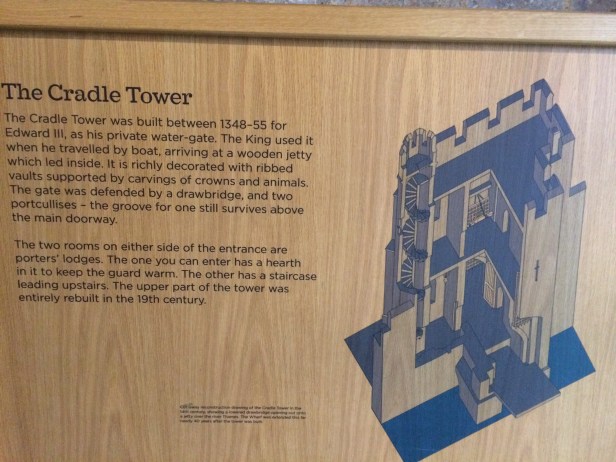
Additionally, this would bolster the morale of the fighting men, who were presumably conscripted for the duration of the war. Under this assumption, and unlike America’s modern tour-of-duty system, the soldiers stationed on the frontier at Judea would not see their families until their release at the end of the war. The pragmatic solution of bringing the families along not only bolstered morale,[3] but also solved the manpower problem that plagued the Nephite nation (Alma 58:8; 51:11).
The brevity of the text excludes definitive statements, but another possible explanation for the verse is the transfer of loyal soldiers and their families to the frontier as anchors. The Han Dynasty in the first century B.C. established military colonies to protect their frontier and reduce logistical burdens by establishing local farms.[4] Caesar and other early Emperors of Rome granted land bonuses upon the retirement of their soldiers.[5] These soldiers would gain the chance to become local magistrates, and their sons could become patricians and senators.[6] In return, the central government knew that their frontiers contained a greater number of demonstrably loyal citizens capable of organizing and leading local militias in the defense of the Empire.[7] In the case of the Romans these military colonies were a short lived phenomenon in the late Republic until the rise of more limited garrison soldiers in the late 4th century.
In the case of the Nephites, they desperately needed more soldiers in the theater, and there is evidence that they needed more loyal soldiers, as well. The war chapters in this section of The Book of Mormon are replete with references to subversive elements and anti-war factions (Alma 43, 48, 51:13, 53:8-9). In this theater, Mormon also mentions how the enemy gained advantage through “intrigues” on the Nephite side. Thus it is believable that the central government and Moroni sought to bolster a faltering theater with a relocation of loyal soldiers and their families. After the relocation of these soldiers, the Nephite commander felt they were prepared with the addition of these reinforcements.
Women in Combat:
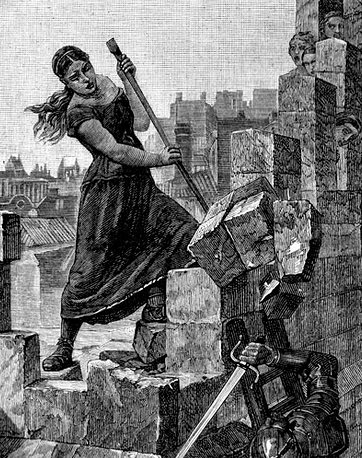
Women and children performed a strategic role in forming armies or defensive colonies and increasing morale as well as lowering the monetary cost of warfare. They also had a close physical and functional relationship to the army for protection and supply. Historically, the breakdown of the front, and particularly the fighting in cities led to women being involved in combat. The Book of Mormon doesn’t record women’s role in combat, but it is still likely, especially in urban combat, or in the camps following the rout of the army. For example, the absolutely horrific account of murder, rape, and rampant cannibalism in Moroni chapter nine helps explain why it sounds as though women and children were included in the army when the Nephites made their final stand (Mormon 6:7). In the abyss of destruction found in Ether 14, the last verse says that “the loss of men, women and children on both sides was so great that Shiz commanded his people that they should not pursue the armies of Coriantumr” (Ether 14:31).[8] Again, the women and children seemed to be included as an integral part of the army. In crusader cities under siege women were recorded as manning the wall with a pot as a helmet.[9] (Some scholars suggest the strange headgear highlighted the otherness of women fighting in a traditionally male domain.) The women normally filled a role as water carries and boosts to morale. Ancient Greeks women and slave would hurl stones and boiling water to kill invading soldiers.[10] Again, note the nontraditional weapons. The women present in crusading camps often faced the enemy when the army was defeated and fled. One account includes a camp follower killing a soldier with a knife. The Muslim victim being killed by a woman was used by writers to make the enemy seem less manly and the knife implied a cooking instrument and not a weapon.[11]
While women helped morale and likely performed vital functions and even fought, the concept of military colonies may have hurt the soldiers and ironically put the women and children in danger. Again, an example from Roman history might help. Towards the end of the empire the government made the distinction between the frontier soldiers and a mobile reserve. Though there are significant problems with relying upon the mobile reserve. The logistics needed to support an army that big means they were fairly spread out, by the time they mobilized and marched to the frontier their enemies would have had as much as 3 months to complete their objectives and withdraw from Rome’s counter strike.
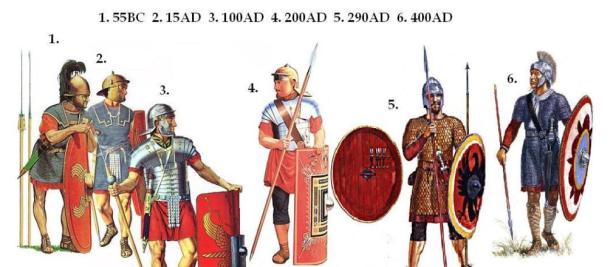
The forces on the frontier had different problems. They were often regarded as secondary soldiers. In a strategy that called for a delaying action by frontier forces followed by a reprisal by the central army, the frontier forces weren’t expected to win which helped cause dangerous declines in quality. Helping this decline according to some scholars was the farmer soldier model. In order to ease the burden on the state soldiers often grew their own food, ran small businesses, and even became land lords. The basic premise is that every moment that soldiers spent farming, tending their herds, or otherwise engaged in business was time that they couldn’t spend honing their war making skills such as being able to operate in large formations or effectively use their swords. (Though the weapons and armor had changed by the late period.) Then the less effective soldiers would not be able to defeat armies in the field, or keep them beyond the borders of the empire, requiring women in camps and city walls to fight. I’m not sure how much I agree with this. Many military skills are like riding a bicycle, and most soldiers throughout history weren’t full time. Rather they were part time soldiers with military skills drawn from farms.
The inclusion of women and children in Alma 56: 28 is extremely curious in several ways. It suggests that women and children accompanied the army to the field or garrisons consistent with historical practice. This was possibly done for several reasons ranging from money to morale to help the army. But the inclusion of women and children with the armies could have hurt as well. If the army spent too much of their time supporting themselves as farmers and artisans, this would decrease their combat power. If the army failed or a city under siege the women could find themselves on the front lines and having to fight.
[1] Donald W. Engels, Alexander the Great and the Logistics of the Macedonian Army (Berkeley: University of California Press, 1978), 13. Ross Hassig, Aztec Warfare, 64.
[2] This assumes that every soldier was married with children, which is impossible to say for certain.
[3] Engles, Alexander the Great, 13.
[4] Graff, Medieval Chinese Warfare, 29. Lewis, Mark, “Han Abolition of Universal Military Service,” in Warfare in Chinese History, ed. Hans Van De Ven (Boston: Brill CO, 2000), 33-76.
[5] P.A. Brunt, The Fall of the Roman Republic: And other Related Essays (Oxford: Clarendon Press, 1988), 264.
[6] John Patterson, “Military Organization and Social Change in the Later Roman Republic,” in War and Society in the Roman World, eds. John Rich and Graham Shipley (London and New York: Routledge Press, 1993), 92-112.
[7] Of course, local leaders could also raise armies to support their own interests. See chapter two in Bleached Bones and Wicked Serpents: Ancient Warfare in the Book of Mormon about the breakdown of central control and the rise of private armies.
[8] See chapter one, in Bleached Bones and Wicked Serpents: Ancient Warfare in the Book of Mormon.
[9] Michel Evans, “Unfit to Bear Arms: The Gendering of Arms and Armor During the Crusades, in Gendering the Crusades, Susan Edington and Sarah Lambert eds, (New York: Columbia University Press, 2002), 54.
[10] John Lee, “Urban Warfare in the classical Greek World,” Makers of Ancient Strategy: From the Persian Wars to the Fall of Rome, Victor David Hanson eds, Princeton: Princeton University Press, 2010), 152-153.
[11] Evans, Bear Arms, 52.
 Wheat & Tares
Interesting thoughts.
Great post. But I think you overlooked the best historical example. The Jewish mercenary garrison at Elephantine in Egypt established circa 600 BC clearly included wives and children of the soldiers. We know these from the famous Elephant one papyrus which were discovered in the early 20th century . I just returned from examining the collection in the Brooklyn Meusum. Among the documents are marriage contracts etc . The community existed until at least 400 BC and had a temple.. There was a Sariah living there which is the only other place that that name appears outside the Nook of Mormon in the entire mid eastern corpus,
I don’t know much about this topic but I will venture a few comments anyway.
One of the important distinctions might be the kind of culture the people lived in . For nomadic people who moved all the time, the women either pregnant or nursing small children could not move as fast and probably went in the most direct route while the more mobile men who hunted probably ranged around more widely. Hunting animals for food and waging tribal war was not that different. The women would be near the armies. The Mongols were a successful nomadic people of war.
For people who became farmers, they needed to stay put for most of the time and these cultures tended to produce more food which allowed for specialization into societies with full-time soldiers and also more social stratification. Larger armies could be supported. War is not as compatible with agriculture as it is with hunting and gathering. The fields and graineries where the food was produced and stored needed to be protected. Their loss would be catastrophic and I think the farmers and families tried to stay away from battlefields unless forced into it by severe defeat.
War is brutal and it is astonishing the ends to which people have and will go to torture and brutalize each other, This does not need to be restricted by gender. But women can be punished in one unique way that men can not.They can be raped and impregnated with the offspring of the enemy soldiers. This pits maternal instinct to protect their children against social loyalty they might have to their family or village of origin. I suspect a large share our ancestors were the product of rape, slavery and human spoils of war.
Women, especially younger ones who were more submissive probably had a survival advantage and had more children make it to adulthood over generations and generations of brutal war. I think this partially explains why the human race has been so abusive and exploitative of women across much of history.
“The inclusion of women and children in Alma 56: 28 is extremely curious…”
Interesting. I’ve never saw this as curious, but it could be because of my own, similar ‘camp follower’ experience as an Air Force ‘brat’ and my subsequent Air Force career. Also, when Joseph Smith translated the Book of Mormon, the concept of camp followers, as noted by the cited historical examples, was pretty common. What probably makes it curious now is that the US has been relatively free from warfare, within and near it’s own borders, since the Civil War. For most US civilians, war has been something fought on distant continents. In some ways, however, the nature of the Air Force has now obscured this ‘distance’ for some families.
During the fall of South Vietnam, in 1975, my family lived in the Philippines where my Dad was a C-130 pilot stationed at Clark Air Base. He would frequently fly into Vietnam, particularly during the last several months leading up to the fall of Saigon during the refugee airlift. One day we’d be eating dinner together. The next two days he’d be in a war zone. Then we’d be back together again. My whole community lived this way. It was a very tense time. This is probably not atypical for families of modern day B-2 bomber pilots. A lot of their combat missions are flown directly from a base in Arkansas.
Many people are surprised when I tell them most Air Force drone combat missions are piloted with personnel operating about 20 miles North of Las Vegas. I’ve read accounts about the stress these pilots have in such an incongruous situation. For 12 hours they are part of combat. They directly interact with forces in theater. They launch missiles or drop bombs that kill people and bear the responsibilities that entails. Then they go home to their families, the kid’s baseball game, their homework, or whatnot. The transition is very unsettling and some say its hard to see anything as a priority at home after their shift with combat. I can see families in these situations experiencing similar feelings felt by camp followers from previous eras. I imagine social media and telecommunications provide a similar emotional effect for other service connected families as they communicate with loved ones in theater in real-time instead of via letter.
Thanks everybody. Bellamy, did you know of a place where I can find those translated documents? Would it look something like this? https://www.sbl-site.org/assets/pdfs/pubs/069552P.front.pdf