
There is one quote (among many) that I heard over the last few years that has changed the way I see and live the Gospel of Jesus Christ:
“When I give food to the poor, they call me a saint. When I ask why they are poor, they call me a communist.” -Dom Hélder Pessoa Câmara
Hélder Câmara was a Brazilian Roman Catholic Archbishop who was instrumental in the development of liberation theology in the 1950-1960s. Glenn Beck calls liberation theology Marxism disguised as religion, one where you always see yourself as a victim and someone as your oppressor. Liberation theology has many of definitions, but according to Rev. James Martin (a Roman Catholic Jesuit priest):
“Liberation theology is a Gospel-based critique of the status quo through the eyes of the poor. Contrary to what Beck implies, the liberation theologian doesn’t see himself or herself as victim; rather proponents call us to see how the poor are marginalized by society, work among them, advocate on their behalf, and help them advocate for themselves…..[I]t sees the figure of Jesus Christ as the “liberator,” who frees people from bondage and slavery of all kinds. So, as he does in the Gospels, Christ not only frees us from sin and illness, Christ also desires to free our fellow human beings from the social structures that keep them impoverished. This is this kind of “liberation” being espoused. Liberation theologians meditate deeply on Gospel stories that show Christ upending the social structures of the day, in order to bring more—uh oh—social justice into the world.”
For example, the other day a preacher (@BroderickGreer on Twitter) taught a Bible story through a lens of liberation theology:
In liberation theology the Good Samaritan helps the man on the side of the road and also asks “why?” in the face of suffering and seeks to change systemic issues that are causing the suffering. This approach concerns itself with issues of social justice. Thirteen years ago at Sunstone R. Dennis Potter, a philosophy professor at UVU, presented his paper on Liberation Theology in the Book of Mormon (focused on Nephi 4 and King Benjamin’s address). Blair Hodges has written about social justice teachings in Jacob. Last year Gina Colvin posted a fascinating podcast with Janan Graham and Fatimah Salleh discussing black liberation theology and Mormonism. Each one of these was a new way for me to see how our scripture and beliefs quite easily support social justice. If you haven’t guessed, this isn’t a mainstream modern Mormon view.
A few weeks ago in my BYUI history professor taught us two different approaches of eschatology (beliefs about the end of the world). The first group, pre-millennialists, believe that the world is getting morally worse and worse, that it will continue unchecked because of its fallen state, and then Jesus will return and brings all of the living saints up to heaven. They tend to be outspoken about behavior they consider to be particularly sinful: abortion, lgbt+ issues, pre-marital sex, etc. Pre-millennialists tend to see evil as an individual problem of free agency. Post-millennialists believe that we create the Kingdom of God on the earth first; that through our actions and advocacy we bring to pass the millennium (an extended time of peace and righteousness) on our own. Our professor told us that throughout our own Mormon history we’ve had leaders and teachings that espouse both views, but that lately our teachings have been much more pre-millenial than ever. Based on the rhetoric I’ve heard my whole life I’d assumed we’d always been that way; but I suppose every place the early saints settled they attempted to live a post-millennial vision and create Zion on earth. Recently in pop culture I heard what sounded like a post-millennial critique of pre-millenialism.

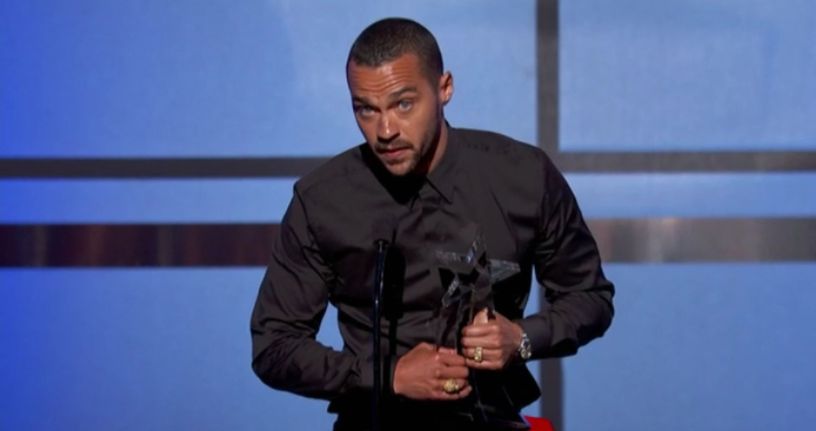
The actor Jesse Williams made news for his acceptance speech for the Humanitarian Award at the BET Awards. He addressed many issues of civil rights and social injustice in society today. In one part he said, “Now, freedom is always coming in the hereafter but, you know what, though, the hereafter is a hustle. We want it now.” For the oppressed, they see God’s hand in the work of freeing the slave, of breaking the chains of oppression in this life. I admit I can’t study the civil rights movement without thinking the same thing.
The introduction of these ideas of liberation theology have turned me into a liberal Mormon. I now believe that living the Gospel of Jesus Christ requires me to advocate on behalf of the oppressed and afflicted – I view correcting injustice as God’s work. Yes, God will enact justice in the hereafter, but he also wants us to work toward it in this life. Can you imagine the callousness of early Christians in the American continent if they continued to believe in salvation and justice in the next life for slaves without being prompted to break those chains in this one? I’m studying the Nashville Sit-ins right now and I’m appalled at how many white Christian people just didn’t care about the lack of freedom and the suffering of their fellow Americans during the Jim Crow era. How can we claim to love someone and want to save their soul without ever caring to save their bodies?
_________________________
When were you first introduced to ideas of liberation theology and what do you think? Did it change any of your beliefs? Do you lean more towards pre- or post-millennialism? What do you think about how the two ideas interact? Why do you think in early Mormon history we leaned more post-millennial and now lean more pre-millennial?
 Wheat & Tares
I now believe that living the Gospel of Jesus Christ requires me to advocate on behalf of the oppressed and afflicted – I view correcting injustice as God’s work.
Advocate for the oppressed and afflicted, or relieve and succor the oppressed and afflicted?
The danger of advocacy is that it breeds contention and haughtiness (my way is the right way, and all others are wrong), while the benefit of relief is that it develops charity (I care about you and will help you). Our God cares more for our souls than our bellies.
It is better to do good, quietly and compassionately, for one neighbor in need than to advocate for laws that impose one’s viewpoint on others and establish programs to address the neighbor’s need. In the first instance, one develops charity and the neighbor develops gratitude, and an onlooker is moved to do likewise, and the souls of all three are closer to being saved. In the second instance, well, the neighbor might get some relief after filling out all sorts of forms, but there is no humanity, no charity, no growth towards salvation.
How can one be so proud as to claim that his or her political viewpoint is God’s work? As citizens in a democratic republic, let’s work within the system to pass just laws, but let’s be careful about claiming God’s imprimatur for our own viewpoints. In the meantime, those who really want to do God’s work can find opportunity to meaningfully do so among his or her neighbors.
Who says that advocacy is limited to passing laws? The most powerful advocacy of the civil rights movement was arguably not that which resulted in legislation, but that which awakened the conscience of the nation. Working to personally give to the poor is great, and we should all do it, but throughout the scriptures, prophets almost always do more than just give, they advocate for the poor by awakening the conscience of the rich, and demanding that we not close our eyes to their struggles.
JKC,
I understand your point.
In most of the advocacy that goes on these days, I discern very little faith, hope, and charity. Instead, I hear shrill and discordant voices calling for political actions and creating animosity. I am unmoved by such. Maybe you’re suggesting another style of advocacy?
In the meantime, I am moved (my conscience is awakened) by individuals and small groups who quietly and meaningfully minister to their neighbors, maybe sometimes asking for a little help and appreciating whatever is offered. I see faith, hope, and charity, and I want to do likewise.
Liberty theology is important, as long as we recognise that the most important kind of liberation is the liberation from ourselves, from our self-defeating cultural ideas and addictions. True, the poor need to have an improved social structure to help them move up in society. But they also need help liberating themselves from patterns of dysfunctional thought and behaviour.
There is a universal truth that gets in the way of the wars over liberation theology, and that is, as Jesus said, “the poor you have ALWAYS with you.” In the parable of the talents, Jesus presents three archetypes of human behaviour, one of which will always be to bury the talent in the earth. When faced with this reality, sometimes we look around for someone or something else to blame. And there are tons of poor people who WOULD multiply their talents, if they had a more fair access to the marketplace. But we must still acknowledge that it is intrinsic in human nature for a certain portion of society, rich and poor, to bury their talent. Hence the importance of basic safety nets to protect these people.
If all could recognise the truth of this principle, I think it would help conservatives and liberals come together in a more realistic way to deal with the problems of the poor and the disenfranchised. Conservative social structures are not entirely to blame. Nor are the poor. It is rather a complicated problem with no ultimate solution. The best we can hope for is some kind of balance between education, incentive, and safety nets. But we must always remember that no matter what we do, it won’t work perfectly. And we must not blame each other entirely for the dysfunction. The dysfunction is central to the human condition.
p.s. I think that the American civil rights movement was successful because the advocates were personally involved in the work. That was before my time, but I read the history and watch the videos. There were great men and women in those crowds. They moved the conscience of the nation not by mere advocacy, but by doing and being done unto.
“I discern very little faith, hope, and charity. Instead, I hear shrill and discordant voices calling for political actions and creating animosity. I am unmoved by such. Maybe you’re suggesting another style of advocacy?”
Yes, to the extent that advocacy is limited to what you describe here, I am suggesting a different style. I will say, from my personal experience, that there is plenty of advocacy that is done with faith, hope, and charity, but unless you are either doing it yourself or on the receiving end of it, you may not be aware of it, because that’s not the kind of advocacy that gets much attention in the news.
“They moved the conscience of the nation not by mere advocacy, but by doing and being done unto.”
I think you’re drawing a false distinction between “advocacy” and “doing and being done unto.” The whole point of liberation theology is that they are the same work–that service that addresses only symptoms and not underlying causes of poverty is superficial, and policy discussions that seek to address underlying causes of poverty without engaging in personal service are theoretical. Like I said, there is a ton of this kind of advocacy going on in the U.S. and elsewhere, you just don’t see it on the news very often.
Very interesting. I think it would be an interesting book to contrast the post and pre mellinnialists teachings of our leaders over time.
Thanks for shining a light on liberation theology. There is a core part that I feel rings true to me. Like some of the comments above, I focus a bit less on passing laws and more on how I can help others around me that are in need.
In my history class the advocacy they are doing during the nashville sit-ins is fighting against the boundaries of a specific Jim Crow law, but they trained for months before they ever sat at a counter. The only ones who could sit at the counters were people who could love their attackers amidst the abuse (verbal harassment and physical attacks like grinding cigarette butts into their necks and backs, etc.). They learned the principles of non-violent civil disobedience; as a result their peaceful actions exposed the hatred & violence of those in power and eyes were open, hearts were changed, and consciences were moved. While I was reading John Lewis’ account in his memoir I felt I was learning a beautiful part of the Gospel of Jesus Christ I’d never learned before. It reminds me of a recent devo by this same byui prof Love Your Enemies.
I think it’s important to note that during the civil rights movement most of the Church and its members viewed it with suspicion; ETB thought/taught it was a communist plot.
Our modern interpretation of the CR movement tends to cherry pick quotes (not surprising) as police forces quote MLK to communities of black people when one of their own was just shot down. It would do us good to also remember that King also said, “A riot is the language of the unheard.” So those moments that you feel division is a response to not being heard or asking for change they’ve been calling for. He didn’t advocate for/encourage riots, but he understood them.
Nate, When I retweeted Broderick Greer’s story of the Good Samaritan someone responded, “I don’t get it, the robber used his free agency and then we choose to help. It’s a parable of Christ. There will always be robbers.” But why isn’t it possible to believe both? That it’s our personal responsibility to do individual one-on-one acts of charity and kindness but also be aware, find, and work to change the circumstances that are causing so many robbers to beat people up on the road? Can’t we believe in both?
I think that often the oppressed are the most aware of the kind of redemptive power that comes from individual suffering and overcoming….and behavioral patterns can often be broken from changing the systems they are stuck in.
Dysfunction may always be with us, but that doesn’t mean Christ wants us to ignore issues and allow them to run unchecked. If we don’t have anything to say about how people’s children are being gunned down and their bodies are falling to police brutality, will they really listen to any message of redemption of their souls if we don’t have anything to say about the plight of their bodies? And keep in mind I have family that are police officers that I worry about. Whenever I bring up this topic I always like to open w this quote bc it often goes off the rails quickly:
John Stewart said, “You can truly grieve for every officer who’s been lost in the line of duty in this country, and still be troubled by cases of police overreach,” he continued. “Those two ideas are not mutually exclusive. You can have great regard for law enforcement and still want them to be held to high standards.”
Happy Hubby – That’s one of my next projects I want to study: the different pre- and post-millennialist teachings of our leaders over time. The overall philosophy of how we see the world totally changes what we do in the here and now.
Looking forward to that.
I do find it interesting that many Mormons that become atheists that they come to value NOW much more than ever. They come to feel that they used to be placing almost all rewards into the afterlife.
Supporting corporate capitalism, as most Mormons now do, will result in worsening conditions for 90 percent of the population. Laws can do much to correct social disintegration. What I find ironic is that so many conservatives are supporting political and economic policies that create less freedom for the masses, and they do this in the name of freedom. I don’t think they really understand what freedom is. It is not freedom from government.
The first quote reminds me of the Jackson Browne song, “The Rebel Jesus.”
“And perhaps we give a little to the poor
If the generosity should seize us
But if any one of us should interfere
In the business of why there are poor
They get the same as the rebel Jesus.”
“The danger of advocacy is that it breeds contention…”
LOL, kind of like contention that might get you (literally) crucified? That’s a silly reason to not advocate, frankly.
Thanks for bringing this up, Kristine. I love the statement you use as your title. It’s so very broadly applicable to one of the big downsides of religion: if we really believe in neverending happiness in the next life, it’s so easy to trivialize and even outright ignore all kinds of suffering in the present.
I hadn’t hear of liberation theology until my sister Lynnette told me about it. I love how radical it is, and how it puts power in our hands. It’s kind of scary for the same reason, I think, because it makes us responsible to do good now and not wait on this or that divine intervention. I also loved the A Thoughtful Faith podcast episode you pointed to. Wow! That was so full of things to think about that I found myself repeatedly pausing and skipping backward so I could more slowly digest what everyone was saying. It was excellent!
As far as why the Church moved from a post-millennial to a pre-millennial view, I’m probably oversimplifying, but is it as simple as that organizations get conservative over time? Early Mormonism was radical and full of doctrinal innovation and on-the-ground experimentation (polygamy! united order!), while now in many ways we’re indistinguishable from other conservative Protestants. I’m figuring that pre-millennial views line up more with organizational conservatism, where we’re just hanging on for Jesus to come back, while post-millennial views line up more with radical action to change the status quo to prepare for Jesus to come back.
Anyway, great post!
Yes, I agree with James. Jesus was an advocate. In fact Christianity tells us to advocate constantly for the poor, the sick, the needy. I don’t think we can be a true Christian without advocating for those in need. Advocacy is not the same as militancy, yet even Jesus was militant on occasion. When he cleansed the temple, he certainly was militant and contentious, turning over tables. So there is a time and a place.
The problem I see with ji’s advocacy of non-militancy (which I think is what ji is really getting at, because even ji advocates for his/her position), is that for a white, middle-class person, they don’t want to be reminded of the plight of the systemic failures to the poor and needy. Things work well for us, and why change the system that works well for you? You don’t want to pay more taxes for welfare because it hurts you? Well, Jesus said to be free with the poor. He told the rich man to sell everything he had and give to the poor. Too many of us (and I include ji and myself) want only to give what’s comfortable, and not truly consecrate all we have to help the poor. (I’m just as guilty as anyone in this regard.) The system works for me. I give what I’m comfortable with, and why should I advocate for more?
We really should advocate for a more equal society, rather than complain that such advocacy is contentious. I’ve got news for you. Jesus was so contentious that they killed him. There is a time and a place for contentious advocacy. I’m generally not the kind of person who is so militant that I choose to go on strike, or join with Ordain Women, or wears a rainbow pin to church, but such actions are FAR LESS contentious than anything Jesus did. I praise such advocates for their courage, and don’t try to disparage them as being “contentious.” Such disparagement is simply a bad reason to keep the status quo. I think labeling advocacy as contention is a mis-application of the terms, and a way to justify one’s own inaction as somehow Christlike. I’ve got news for you: it’s not Christlike.
Yes it’s great to help the poor without publicity, but it’s even greater to advocate and create a Zion society where the systemic failures don’t exist.
I studied liberation theology extensively while earning a BA in Latin American Studies at BYU. Oscar Romero was one notable figure of the movement I remember. As far as how the movement intersects the Gospel, it’s complicated.
On the one hand, Church leaders across three centuries have preached that mankind cannot focus on the spiritual until there physical needs have been met (BY:”Prayer is good, but when baked potatoes and pudding and milk are needed, prayer will not supply their place on this occasion” DOM:”The Church of Christ should be and is interested in the temporal salvation of man. [The woman without bread]was in no position to receive the message of the gospel.” TSM: Adding “care of the poor” as the fourth mission of the Church)
On the other hand, Latin American liberation theology from its beginnings in the 1960s has been dominated by Marxism, and promoted by communists who care little for agency and freedom, so on that front, it’s hard to square with the Gospel.
My view is that like Mormon and Moroni, or Peter and Paul, we’re to try to build Zion and the Church (post-millenial) despite it being a lost cause. (premillenial) I just don’t see how the pre/post split radically alters one’s outlook.
ji, I understand where you are coming from. The high intensity, rage inducing, “my way or the highway” attitude type of advocacy is frustrating and can get out of hand. No one person has all the answers to any question and we would be silly to think our own thinking is best or unflawed.
However I do disagree that there isn’t a place for advocacy. Not only are there worthy causes to get worked up about or fight injustice, but I believe we are our brothers keeper and if we do nothing we perpetuate evils.
I am an advocate for many issues. I try my very best to be a positive thinker and respectful to everyone. I don’t think it’s enough to quietly serve our neighbors. I am flawed and susceptible to pushing my own agenda just like anyone else. But it’s not enough to sit back and serve our neighbors when others go wanting. We have to serve and protect each other.
This is a well done explaination of liberation theology without the Marxism.
I think when most people understand it they can see Alma 34 in it.
Quote:
” 28 And now behold, my beloved brethren, I say unto you, do not suppose that this is all; for after ye have done all these things, if ye turn away the needy, and the naked, and visit not the sick and afflicted, and impart of your substance, if ye have, to those who stand in need—I say unto you, if ye do not any of these things, behold, your prayer is vain, and availeth you nothing, and ye are as hypocrites who do deny the faith.”
In my opinion, we need everyone to become an activist for good causes that help others. I am known throughout my city as being an activist and am drawn to causes that help the poor, the mentally ill, foster children, rape survivors, addicts, and children. I have received much more than I have given, although the work has been tiring and draining at times. It is wise to attack issues and not people. Many activists focus on attacking leaders they do not like. I focus on highlighting policies that hurt people and trying to change them by educating others and then organizing, if needed.
With that said, I am a pre-millennialist and believe that our societal problems are reflected in Nephi 3. As the people rejected Christ, their culture became more violent and anarchist. We are seeing that today.
I believe that true social justice will not be restored until Christ returns but I will not sit quietly and watch others suffer. Through my service, I have found that one person can make a big difference. To remain silent when we see iniquity and inequality, which are the same in many ways, it to condone what is happening.
The Other Clark, I haven’t studied the much early liberation theology but I do find it a fascinating lens to view scripture and the Gospel with. I think the lens of black liberation theology that was discussed in Gina’s podcast to be more transformative when you include race in the intersection.
Been thinking about this post. It requires so much less of me to be pre-millennial, and despite the gloom and doom that tends to surround stories of Christ’s eventual return, that fear can be easily dismissed with a “but if you’re righteous, you’re fine. We know how the story ends.”
Then this morning, I read this from N.T. Wright (quoted in the book Jesus Feminist by Sarah Bessey): “Jesus’s resurrection is the beginning of God’s new project not to snatch people away from earth to heaven, but to colonize earth with the life of heaven. That, after all, is what the Lord’s prayer is about.”
I’d never thought of Christianity that way before–that the resurrection was a beginning. This also makes me think of the 10th Article of Faith differently. Perhaps the earth returning to its paradisiacal glory means, in part, that we’ve figured out how to correct injustice.
I’ve been increasingly despondent about the last two years of world events, and I’ll admit my default is stuck on “Jesus, just come back already and make it stop.” I’ll be rereading and figuring out how to switch my default.
I was a missionary when I had the thought that perhaps instead of us humans waiting on god for the milenium to happen, perhaps he was waiting on us to be worthy and show our interest by creating a society that fit the ideals.
I come from a family who taught me that there are worse things than death or oppression. That never resonated with me. I’ve grown to despise the accusation of contention when I or any other person brings up things that make others uncomfortable. That comes from calling people out on their promises of a better world and the comfort and contentment they get from the assurances of the gospel. Yes, we have faith that there is a better world to come, but do we have the associated works? I think the contention that they feel is really a conflict between their faith and works.
Thank you for the introduction to liberation theology.
ji: “I hear shrill and discordant voices calling for political actions and creating animosity. I am unmoved by such.” Are you unmoved because they are shrill or are they shrill because you are unmoved?
Like Mormon Heretic, I think the pre-millialism we are hearing more and more reflects a fear of loss of privilege. We aren’t a very diverse church yet, and our leadership is the least diverse group of all within the church – all white upper middle class heterosexual men. I am dismayed when we focus on advocating for status quo privilege rather than addressing or even understanding inequalities associated with racial minorities, sexual orientation, women’s equality, or the economically disadvantaged.
As to the church’s norm, I’ve mentioned before that the ward I grew up in had several key families and leaders who were very liberal, so I assumed the church was mostly liberal until I went to BYU. I was surprised at the more conservative interpretation because I had always seen the gospel through that lens.
ji: “I hear shrill and discordant voices calling for political actions and creating animosity. I am unmoved by such.”
JI do you know that MLK’s letter from Birmingham Jail was addressed to moderates who thought he was a “shrill and discordant voice calling for political actions and creating animosity?”
If you want to know if you would have marched in Montgomery, ask yourself … “Am I marching now?”
I think that advocacy needs to be pretty direct and tactless, bordering on uncivil, in order to be heard sometimes. That doesn’t mean the ends justify the means. Just because most people won’t hear a still small voice, doesn’t mean that it might not have more influence over the long term, if it’s insistent.
As a heterosexual white male in the upper 10% economically, I’ve been blamed for subjugation of women and minorities, exploitation of the poor, and even the shooting of black people by the police, simply because I benefit from a system I’m not even aware is biased towards me. Even assuming I somehow had more power than the next guy to change the system (which I don’t), I don’t think blaming me is a particularly effective form of advocacy. It tends to just piss me off and dismiss the agitators.
I don’t believe in any system that eliminates poverty simply by taking money from the rich. There are plenty of people who are poor who deserve to be poor, and I don’t have a problem with that. These are people who’ve had plenty of opportunities and have squandered them by their own decisions, and this is why the poor will always be among us. I’m not saying we shouldn’t try to help them — I’m just saying you can’t blame the system for their problems. However, a lot of poor haven’t had opportunities and are simply stuck, and that does need to change. There are fewer and fewer opportunities for the poor to improve their lot through their own efforts and determination. I feel like 40 years ago, people really could lift themselves up by their bootstraps, so to speak. Low-level jobs could actually turn into something sustaining. Now? It looks a lot harder to escape poverty. I like having rich people, but the accumulation of wealth in the hands of so few has become as dramatic as in the old countries run by the nobility – even worse. Clearly, some systemic changes need to be made, but I’m a loss as to what they should be. “Solutions” implemented in the past look to have actually worsened the problem (eg., government-subsidized student loans driving up education costs). Give me solutions that make sense (e.g., increasing the minimum wage by 30-50%, a data-driven solution blessed by economists), explain why they make sense, and then explain how evil I am if I don’t support them. Just don’t lead with the evil part if you want me to listen.
That’s great that you are in a position to demand how others must approach you to beg for your help and support. I’m sorry your feelings are hurt that people are blaming you for a system you benefit from but did not create. /white, male tears/ Maybe they are blaming you because even if you did not create the system you are doing nothing to change it?
The oppression of the black and the poor people in our systems is not a bug, it’s a feature. The powerful and rich have always and will always find ways to change rules to consolidate their power and riches.
It is up to YOU to do your own research on the systems (slavery, jim crow, redlining, mass incarceration) that have planted the seeds of generational poverty and then fed them to grow unchecked. It is up to YOU to find out what you can do as a rich, white man to help. Do you want to focus on income/wealth inequality? Police brutality? Choose a subject to become passionate about and advocate for and then do your own damn research and then ACT. Call your local government representatives. Vote for people who support those issues.
And yes, you may have to give up some of the privileges you currently enjoy. To the privileged, loss of privilege often feels like oppression. Deal with it.
“I’m sorry your feelings are hurt that people are blaming you for a system you benefit from but did not create”
“To the privileged, loss of privilege often feels like oppression. Deal with it.”
And who’s got the entitlement mentality? Thanks for exhibiting my point exactly. I’ll tune you out now.
I did appreciate your post though — good thoughts there.
Martin, I liked a lot about your first post, not so much your second, although I take it Kristine didn’t care for your first one.
You said: “There are fewer and fewer opportunities for the poor to improve their lot through their own efforts and determination. I feel like 40 years ago, people really could lift themselves up by their bootstraps, so to speak. Low-level jobs could actually turn into something sustaining. Now? It looks a lot harder to escape poverty.” I agree, and like you I feel somewhat at a loss what to do about it. Every solution is a ticket to a new problem as Henry Kissinger famously said (when he wasn’t covertly bombing Cambodia back to the stone age).
Just as there are many who deserve to be poor, there are many who DON’T deserve to be rich. C’est la vie. But like you, I believe in the American dream rags to riches, bootstraps and all. We need to remove the obstacles and fix the problems. There are a lot of causes to these systemic problems.
“I benefit from a system I’m not even aware is biased towards me.” We are all privileged to some extent. We are college educated, white, well-to-do, American, have a car, access to clean water, etc. So, privilege is always a sliding scale. I’m less privileged than some and more than others.
I don’t think privilege is an excuse or something to blame people for, but we should ALL be aware of our privilege whenever we are talking about class, race, sex, sexual orientation, nationality, weight. Privilege isn’t deserved. It just exists. When people block changes that erode their privilege but make things more fair for the disadvantaged, that’s when privilege needs to be called out so that it can be removed as an obstacle to equality.
Martin I applaud that you find increasing income inequality an issue, but the reason I wrote off your comment is because you missed the whole point.
The whole point is that focusing on individual one on one acts of charity is a drop in the bucket when the issue is systemic. Poverty and racism are systemic in our country. Systemic, systemic, systemic.
I hope that you would listen to the Gina Colvin podcast discussion re black liberation theology. At one point Janan Graham Russel says in response to the ways people try to help without addressing systemic issues: “It’s like putting a band aid on a flesh wound.” I promise you will like the tone of the discussion, since you don’t listen to people who don’t approach you with a tone you find acceptable.
I think part of the problem is that many people with privileges others don’t have feel uncomfortable and guilty when these things are pointed out to them. You shouldn’t feel guilty about the present, you should feel responsible about the future.
Martin, people don’t want you to feel guilty, they want you to feel responsible.
I think our society is better off today than 50 years ago.
We need wisdom to know when to advocate, when to act, when to try to liberate, when to stand and cheer them while they liberate, when to preach, when to sit as Job’s friends did and be silent. We need discernment.
I don’t disagree that we need new ways of thinking so change comes about, but to make it sound like we haven’t made any progress and are morally headed towards certain destruction is naive. Perhaps new ideas are possible because we have already taken care of some issues, paving the way for new ideas.
Each generation can make it a better place for the next generation, but the next generation doesn’t need to scoff at how stupid and selfish their ancestors were because they didn’t address the problems this generation is faced with. The hereafter is not the hustle, but the Hollywood millionaires who hold gold trophies that are doing the hustling, as if it is so easy and they know it all. Ya right.
In my opinion, it isn’t about those who are poor. The system needs to better address the mental illness that plagues so many. We know so little and don’t have support for those who are incapable of helping themselves. National spending on mental health is surging. We need to take care the mental illness so they can decide if they want to be poor or work their way out of poverty with opportunities the system can provide.
We are getting closer. I’m glad I didn’t live 50 years ago.
Kristine–I’m late to the party, but Grant Underwood’s book _The Millenarian World of Early Mormonism is a good start on the project you describe (as you probably already know :))
Rather than advocating for programs to get other people to help the poor, I recommend actually helping them directly. Deeds are better than hollow words.
Heber13 I agree with the first half of your comment….The world is better off today than 50 years ago and we need to look at the actions of our ancestors through a historical lens and not judge them by modern standards (but we should judge ourselves by modern standards). But are you referring to Jesse Williams, the biracial actor who earned a humanitarian award and spoke about civil rights issues, as the hollywood one doing the hustling? And I don’t think we need to have an oppression olympics and compare the suffering of all groups and ignore the rest. Christ’s life work was among all of the margins, ours can be, too.
Kristine (#1) – Thanks (runs to go buy book)
ji – yes ji, we get that you reject liberation theology and that you are ignoring my comments that people who do believe in doing both. I don’t think anyone is confused about where you stand.
PS to Martin – I apologize if I was too emotional to engage respectfully. I posted this after the Anton Sterling story broke and before the Philando Castile one did. It’s been an emotional day.
ji,
When Brigham Young forced people to share food with the saints during the horrible winter of 1848, was he wrong to do so? (Many saints should have died, but without his forcing them to share food with others, nearly all survived.) Yes he forced many to live consecration in Utah. Was he wrong to do so? (And please don’t tell me that people willingly lived consecration–that’s BS. Look at my post on United Order vs Consecration or how consecration was forced on people in Orderville, Utah.)
I think it is relavent to look at the ratio between working wage, and CEO average. It is not only an indicator of inequality, but also disfunction increases as it increases.
The rate in 1950 was 20 times in 2000, 120 times, it is now 330 times.
We have a better society now in the sense we recognise, and try to improve our response, to racim, sexism, homophobia etc, but aHeber notes it is harder for poor to improve their lot by themselves.
If we are awate of this happening, we can vote against policies that increase this situation.
This relationship between average workers and CEO,s varies, and the lower the number the more cohesive the society (the more people feel part of society, and the less us and them there is). The figure for Australia is 93, and some of the dreaded Scandinavian countries is 40ish.
There have been moves to cap the ratio in some countries. Obviously it would be better to taise the working wage by raising the poor. I believe in a Zion society there will be no poor but also no super rich.
One of the best ways to help the poor is to have things like universal health care. It is also often the case that the wealthy have ways to minimise the tax they pay legally, but do not see this as comparable to welfare.
These are big picture things, and all other methods to help people can happen in the time
while figuring out how to reduce inequality.
We have just had an election in Australia. The conservative parties main policy was to fund a tax cut for everyone over $80k, by putting a charge on pathology, and increasing the charge for prescription drugs, and freezing the amount the Gov pays doctors, which would mean they would eventually charge customers. Taxing the poor to reduce tax on the rich, which is a recipy for disaster. They won but by such a small margin that hopefully they will not be able to impliment their policies.
@Kristine A: “But are you referring to Jesse Williams, the biracial actor who earned a humanitarian award and spoke about civil rights issues, as the hollywood one doing the hustling? ”
Yes, I included him and actors like him with net worth like his, who are publicly being given awards of the kind you mention for speaking with emotional words and then return to their mansions to lI’ve comfortably. They have their reward. And “hustling” were his words, not mine. He wants things now and doesn’t care about the after life. I’m pretty sure Jesus taught that the after life was very important, while we work with the imperfections of this temporary world we are in now. Christ had wisdom and perspective and backed it up with actions like sitting and eating with the poor and sick. Even without giving acceptance speeches for public humanitarian awards.
And I wasn’t comparing groups horizontally, as in “sick” vs “poor”, and which group is in greater need. I was looking vertically and the root cause that should have greater focus and attention if we want systemic change. Mental illness is a huge contributor to not only the perpetual poor who can’t learn to fish themselves, but also contributes to suicide, mass shootings, child abuse, violence, social stigmas and so many things in society worthy of mentioning in to a microphone on stage on satellite TV in front of millions.
I don’t mean to attack Mr Williams directly, he may be decent, I don’t know. I’ve never watched Grey’s Anatomy. Don’t care much. It was just thrown into the OP and the title of the post. But the hereafter isn’t the hustle, in my opinion.
It’s a phrase to get people to *also* enact justice in this life in addition to waiting for the next life. I don’t think anyone really believes he doesn’t believe in the afterlife.
Kristine A, I appreciate your follow-up comments, if not your original one. My original comment was spurred by ji’s and had mostly to do with advocacy, not the OP. Something I said must have pushed your button.
I am put off by people who attempt to blame me and shame me for things I didn’t do, and when they direct their rage towards me, I do tend to tune them out. The alternatives are to rage back or be bullied. Expressing sympathy just makes them angrier, unless I also agree that they’re entirely right, which I often don’t. Makes it pointless to engage.
I actually respect your passion and activism, even if your first response to me was a perfect example of what is, imo, poor advocacy. I think it’s bad form to attempt to shame someone into jumping on your bandwagon when they’re not sure they entirely agree with your position. For example, a friend with autistic children is actively protesting the new vaccination requirements to attend public school. She cannot believe I’m willing to sit back and require her to inject materials into her children that she knows are harmful (and she has scientific proof of this — just read her 2000 Facebook links). It’s extremely frustrating to me, because injecting someone against their will strikes me as a terrible violation of their person, but I’m NOT the one doing it, so she shouldn’t be shaming me. And besides, I feel like immunizations have been one of the greatest medical miracles in history, so I just can’t entirely support her position. It’s not that I don’t care — I do. I feel for her greatly. She has two autistic kids and genuinely fears for her third. And, she’s done the research. I haven’t, yet I trust THEM more than her. And just like you, she says it’s MY responsibility to do the research, or I’m to blame. ((yeah, I know, everybody here will want to dismiss the crazy anti-vaxxers, but they’re not necessarily all that crazy — their style of activism makes them look that way, which illustrates my point. There might actually be a reasonable compromise on their issues which provides for a vaccinated public and addresses most of their concerns, I don’t know, but who’s going to listen to them?))
Another thing — why do people suggest I fear I’m going to lose my privilege? This accusation is usually made when I disagree with something or another, but in your comment Kristine A, I hadn’t disagreed with you. What privileges are you threatening to take away? You just want to tax me more? You want to take away my gun? (I don’t have a gun) What privilege am I alleged to covet (that I don’t even know I have) that you’re intending to take from me? The way these things are flung about make no sense to me, so I tune out.
It’s true my original comment wasn’t really about the post (which I appreciated), but about advocacy. Is it really effective to designate a bad guy? (eg., rich white males, or corporate America, or the liberal elite). Doesn’t that just draw lines that separate people and create immediate resistance? Wouldn’t it be more effective to rally support to fix a problem without designating people as “the enemy”?
Hawk, I agree with your response to me completely.
Most of my privilege comes from growing up in a stable family, with a mother to take care of me and a father with a good job, a safe neighborhood with good schools, and a culture in which a college education was expected. Many successful people come from a similar culture who look similar, and to whom I can naturally relate and comfortably interact. There are natural advantages to this too, especially since people like me made the rules in the old days.
But those rules have changed. I claim that most (not all) systemic problems in the US have already been addressed. That is, the laws by and large have been changed. The problem that remains is primarily in the people and the cultures (especially racism and entitlement syndrome). You simply cannot legislate that out of existence. You can try. Bussing and affirmative action and education grants for the poor help, but they don’t fix things. Mixed-race schools usually self-segregate. Affirmative action appointees often underperform. Education grants for college can allow the disadvantaged to attend, but don’t help the underprepared succeed. The culture of the people must change. Maybe social media can accomplish what legislation hasn’t been able to.
So good, Kristine. Lots of food for thought here.
Is it also a post-millenial view that the Restoration is ongoing?
I’ve heard different opinions of this at church, one that “all was restored” during the Restoration and another that there are many plain and simple things that are yet to be uncovered.
Sometimes a post-millenial view helps me keep going in this Church. Accepting that things as they currently stand are imperfect and it’s up to us to try and get it right. And the idea that the work of the Restoration isn’t complete. I hope there is so much yet to be revealed, in particular Heavenly Mother’s role and the eternal nature of women.
Again, thanks for the great post!