
Related to my post about the Mound Builder myth, I recently read an article in Dialogue, entitled “White Is an Ite: The Book of Mormon’s Misappropriation of the Great Law of Peace,” by Thomas Murphy. [1]
In the article, (which is a summation of his forthcoming book) Murphy argues that the Book of Mormon’s depiction of a unified, “white” post-Christian society reflects settler colonial ideology and may draw, directly or indirectly, from Indigenous Haudenosaunee (Iroquois) traditions, particularly the Great Law of Peace.
The article begins by examining a paradox in the Book of Mormon narrative: after Christ’s appearance, divisions such as “Nephite” and “Lamanite” disappear, yet the people are described as becoming “white” and “fair.” Murphy highlights the contradiction that “white” is treated as a raceless or universal identity, even though it functions as another category like another “ite.” This framing, he argues, reflects a broader ideological move in which whiteness is presented as both normative and invisible, masking its racial meaning.
Murphy takes on others who interpret the Book of Mormon as presenting race as mutable, suggesting that darker skin (associated with divine curses) can be transformed through righteousness. While some see this as progressive, Murphy challenges that view. He argues instead that this “racial mutability” mirrors settler colonial strategies: rather than celebrating diversity, it promotes assimilation into a dominant (white) identity, effectively erasing Indigenous distinctiveness.
Using studies in Indigenous history, Murphy centers Indigenous perspectives that interpret the Book of Mormon not as liberating but as a tool of colonial erasure. He emphasizes that narratives of becoming “white” or joining a universal Christian identity often imply the loss of Indigenous sovereignty, culture, and identity. Indigenous voices cited in the article reject the idea that becoming “white” is desirable or meaningful, instead affirming their existing identities and traditions.
A major section of the article connects these theological ideas to historical policy. Murphy discusses mid-20th-century U.S. “termination” policies, which aimed to dissolve tribal sovereignty and assimilate Native Americans into mainstream society. He shows that some Latter-day Saint politicians explicitly drew on Book of Mormon teachings, especially the idea that Indigenous peoples would become “white and delightsome”, to justify these policies. The result was significant harm to Indigenous communities, including loss of land, political autonomy, and economic stability.
In response, Indigenous activists developed counter-narratives. Some argued that Joseph Smith’s Book of Mormon drew from Indigenous oral traditions, particularly the Haudenosaunee Great Law of Peace; a foundational narrative describing a peacemaker who united multiple nations into a confederacy while preserving their sovereignty. Murphy takes these claims seriously and examines both oral and written evidence suggesting that Smith may have had access to such traditions through early 19th-century interactions with Indigenous people or through published accounts.
Importantly, authentic Haudenosaunee traditions do not associate peace with whiteness. The idea that becoming “white” is the endpoint of spiritual or social progress appears only in settler interpretations, including the Book of Mormon. Murphy argues that this reflects a broader colonial pattern: Indigenous traditions are appropriated, stripped of their cultural context, and reshaped to support settler narratives and authority.
The article concludes that the Book of Mormon’s portrayal of a raceless, unified “white” society is not a progressive vision of equality but a colonial fantasy. By presenting whiteness as universal and nonracial, the text obscures the power dynamics and violence of settler colonialism. Murphy argues that this framework has had real-world consequences, from theological assumptions to federal policy, contributing to the marginalization and erasure of Indigenous peoples.
The main takeaway for me was Murphy’s call for a reexamination of the Book of Mormon through Indigenous perspectives. I found it interesting that he flips the narrative: that which appears inclusive or unifying may actually function to silence Indigenous voices and histories. Recognizing these dynamics, he suggests, opens the door to more honest and critical engagement with the text and its legacy.
Have you heard of this interpterion of indigenous influence on Book of Mormon themes?
Your thoughts?
[1] you can listen to a Mormonish podcast interview of Murphy talking about his book here.
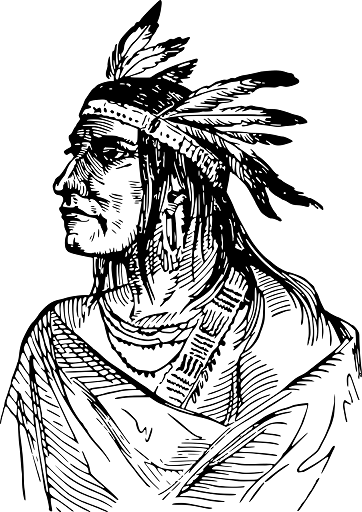
Image by OpenClipart-Vectors from Pixabay
 Wheat & Tares