
I just finished a book about Dr. Douglas Kelley, the psychiatrist who is featured in the film Nuremberg (played by the excellent Rami Malek). He was assigned to evaluate the captured Nazi leaders while they were awaiting trial and execution. He used tactics like psychological tests, including Rorschach inkblots, to evaluate why these men had committed such evil acts. The world wanted to know what made these men different from the rest of us, the “good people.” They wanted to know that there was something wrong with them that caused them to behave in such cruel and callous ways. They wanted to know how monsters are created.
Another person who evaluated Nazi leaders was Hannah Arendt, the political theorist and philosopher. She covered the Eichmann trial in 1961 and focused on the nature of evil and how totalitarianism happened in society. Eichmann personally oversaw the deportation and murder of 440,000 Hungarian Jews, traveling to Budapest and sending them to Auschwitz for extermination. He also devised the logistics of the Holocaust, the “Final Solution,” to speed up the murder process and eliminate the Jewish race entirely. He also oversaw the deportation of tens of thousands of Roma and deportion of Slovenian and Polish citizens to concentration camps. He was found guilty and executed for his war crimes by an Israeli court in 1962; he claimed he was a “small cog in the machinery,” but they found him to be a zealous and ideological participant in the genocide. Arendt’s most controversial claim was that Eichmann was not a monster or sadist–he was terrifyingly ordinary.
Her analysis showed how evil is committed by:
- mediocre bureaucrats
- careerists
- conformists
- people who stop thinking critically
In her view, Eichmann was not particularly ideological. He was thoughtless. He spoke in cliches and displayed no brilliance or insight. He considered himself a loyal functionary. She found that he lacked moral imagination. Her work showed that modern systems enable mass crime, like the Holocaust, through paperwork and procedure. Division of labor allows individuals to avoid moral responsibility (hence Eichmann’s “just a cog” defense). Obedience replaces judgment. Evil becomes normalized within a system.
One way this occurs is explored in the 1961 film, Judgment at Nuremberg. This depicts the trials, not of the top Nazi leaders, but of the judges they appointed to administer their unjust laws. In the trial, a judge talks about performing his role to administer the law, not about the broader goals behind the new laws that were designed to imprison and deport Jews who had lived in Germany for hundreds of years. This illustrates Arendt’s point, that an individual in an unjust system can keep their head down and perform their small role by avoiding the troubling idea of what they are doing.
In the book, the Nazi and the Psychiatrist (I read that one which is about the doctor, although Dr. Kelley also wrote his own book 22 Cells in Nuremberg), Dr. Kelley also showed that the Nazi leaders were not insane or psychotic. They were psychologically stable and many of them scored high on intelligence tests. He particuarly found that Goering was highly intelligent, charismatic, and narcissistic. He found the following traits through his analysis:
- narcissism
- grandiosity
- moral disengagement
- lack of empathy
- rationalization
- authoritarian personality traits
Like Arendt, he was disturbed by how normal they were. If he didn’t know what they had done, he would not have flagged them as dangerous based on their psychology. He did note their moral flexibility:
- They justified their actions as a patriotic duty
- They reframed atrocities as necessary policy
- They avoided personal responsibility
He saw ideology and ego as their primary psychological drivers. This was particularly true for Goering. Dr. Kelley’s work was not very welcome in the direct aftermath of WW2. People wanted to believe, they needed to be able to believe, that these atrocities were committed by people who were nothing like them, whose leaders were insane monsters, not that ordinary people could commit such crimes.
When I toured Dachau concentration camp (even more than Auschwitz which was larger and further from the town), I was struck by the fact that two story houses in Dachau had a clear line of sight into the concentration camp. They dressed their children in Sunday best and walked to church while ash from the crematoria fell through the air like snowflakes. That’s the banality of evil Arendt described. When it is normalized, you can believe the comforting lies that you are being fed through state propaganda. It’s easier to stop thinking too much because thinking puts you in danger. Instead, you can focus on the role you play in life, with your head down.
Kelley focused on understanding how narcissistic leaders could excuse their actions through moral flexibility, and Arendt showed how the rest of society allowed them to accomplish their evil goals:
- Civil servants who complied
- Lawyers who reinterpreted rules
- Legislators who looked away
- Media figures who rationalized
She also noted that authoritarian drift happens when:
- Professionals prioritize loyalty over legality and justice
- Careerism overrides conscience
- Voters shrug and say “This is just how politics works.”
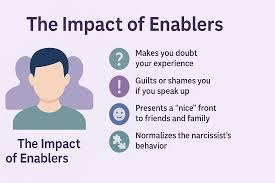
Kelley’s focus was on the leaders themselves, not on the bureaucrats. He saw that their aims were driven by their own narcissism, sensitivity to slights, desire for loyalty over competence, polarizing rhetoric, moral rationalization, and eventually increasing paranoia, but they would not succeed without the enablers identified by Arendt’s analysis. The pyschology behind the enablers fits into five different human tendencies:
- Careerism. “I can do more good inside than outside.”
- Normalization. “This is unusual, but not illegal.”
- Tribal loyalty. “Our side must win because the other side is much worse.”
- Fear of chaos. “Stability matters more than norms.”
- Diffusion of responsibility. “I’m just one person. I can’t make a difference.”
All of these psychological factors are common to humanity. Choosing to set them aside requires thoughtfulness and deliberate choice. It’s important to recognize that not every authoritarian leader equals Hitler (or Ceaucescu or Orban or Putin), and not all populism is fascism. Not every broken norm equals dictatorship. Not every authoritarian regime commits genocide, although they are certainly not celebrated for their human rights expansion.
There are some questions that we need to consider:
- Are truth norms eroding?
- Are institutions becoming loyalty-based?
- Are elites rationalizing what they would once reject?
- Is dissent increasingly framed as treason?
There are many of these qualities (of leaders and enablers) that we can see in the LDS church, which is full of human beings after all. Considering these last four questions, I’m not sure how to answer them as concerns the church because it seems to me that these authoritarian tendencies have been there at least my entire lifetime.
You could go back to Joseph Smith’s day and ask if truth norms were eroding when polygamy was happening in secret–yes, definitely. Has the institution become loyalty-based? Joseph Smith created a cult of personality with himself at the top, and many were excommunicated for criticizing him personally, such as in the Kirtland bank failure. Nelson’s self-reference in General Conference certainly reminded me of Trump naming buildings after himself while in office. Were elites rationalizing what they would once reject? Well, again, going back to the polygamy example, the BOM specifically calls it an abomination, and then ten years after its publication it was a secret privilege for the elites to participate in. Is dissent framed as treason? That feels like a repeat of the second question, but the answer as Joseph Smith got closer to the end of his life is pretty much . . . yes. He used the Danites as his own personal bodyguard force in Nauvoo. They took loyalty oaths, enforced church discipline, and intimidated dissenters with violence. In his defense, Joseph was also in mortal peril at times. As they say, even if you’re paranoid, that doesn’t mean they’re not out to get you.
Joseph Smith ran both the religious and political life of the church. Nauvoo operated under a theocratic political structure with him at the helm. Many would say Utah still operates this way. Is the conflation of political and religious power and authority something that has always been a part of the church? Is that why these authoritarian tendencies feel so familiar?
Regarding the enabler mindest, I couldn’t help but think of the SEC scandal, and the two employees who would not sign false statements who were immediately fired and replace with compliant individuals. I don’t know if that’s a new rationalization or business as usual, but it does mean that following your conscience (and the law) was not valued, but doing what you are told was.
I also wondered about the concept of loyalty oaths, something that has become relevant as during Trump’s second term, anyone who denied that he “won” the 2020 election was considered insufficiently loyal. Temple recommend interviews, which active Mormons undergo every two years if they want to remain in good standing in the community, include affirming that they sustain the current leaders as “prophets, seers, and revelators.” This language was not a part of the temple recommend questions until the mid-20th century, requiring members to agree that the apostles (and not just the President) hold those roles. It’s hard to see that as anything but a loyalty oath. Now, I realize that people get around that by telling themselves that sustain means my own conscience is still respected in the process, but that feels like a personal justification. Try disagreeing openly with an apostle at church, and see how that goes. I think we’ve got a loyalty oath.
- How does the modern LDS church hold up under these questions? Is it changing or the same as always?
- Do you see the LDS church functioning as a theocratical political entity today? If so, in what ways?
- Do you find yourself feeling these psychological dynamics when you are involved in the church?
Discuss.
 Wheat & Tares
LDS temple recommends do a lot of work in the modern LDS Church. Once upon a time, it was just a permit to enter a temple, and one could be a “member in good standing” without one. Now it functions as something needed for many callings, as a pledge of loyalty (the changing focus of the questions gets to this), as an employment permit for the BYUs, and as a passport into full membership in the Church.
If you are an adult and don’t have one, you will regularly have to explain why you don’t have one and maybe just are not interested in getting one, with no explanation other than “obviously, I am a faithless and stubborn sinner” acceptable to the questioner. The idea that one might have moral concerns or serious doubts or financial challenges paying tithing is just not acceptable to TBMs or local leaders, who might sometimes show patience but rarely understanding.
I agree the temple recommend system functions mostly as a loyalty test, though a softer one than the second Trump administration seems to have implemented. It appears we’re developing a second level loyalty test for church employment now, where one must prove one’s loyalty to the family proclamation, and specifically the most conservative possible interpretation of it. Let us consider how odd that is: nobody is checking anyone’s commitment to the Sermon on the Mount or the two great commandments, but rather this one document. I’m sure this sort of loyalty has probably been expected for some time, but Clark Gilbert formalized it. The insidiousness of such bureaucratic formalizations is that they become very difficult to undo down the road.
I don’t think the church is a theocratic political entity. Rather, at this point, not living in Utah but reading about its politics periodically, I think Utah politics have become a bit of an unhinged version of Bensonite politics that has taken on a life of its own independent of church power, and I think some of the leadership of the church feel a bit perplexed by it but have opted to stay silent not knowing what else to do.
I think the effect of demands of loyalty on members depends mostly on their role in the church. Most of us have no power over much of anything, and nobody cares much what we think. The exceptions are anyone at the bishop level and above, where the pressure to go along with what you’re told is much higher, or anyone who is publicly saying things critical of the church and has cultivated enough of an audience to be perceived as a threat.
“Before I applaud that the trains are running on time, I should ask where they are going and who they are carrying.” (Unable to find the French speaker of these words.)
Having been a lawyer in a big corporate practice, and a bishop in the LDS practice, I’d underline a couple of things:
Careerism, Normalization, Tribal loyalty, Fear of chaos, and Diffusion of responsibility are real. As in the OP, common to humanity. I’ve seen them all. I’ve lived most of them. There is a nugget of truth to each/all of them. In my opinion the real life challenge is not to avoid or step out of that world but to rationally and thoughtfully define one’s own boundaries. This much and no further kind of boundaries. It’s hard work.
The world of big law recognizes and talks about these challenges. To be clear, there’s seldom approval or applause when the lawyer says Stop or No more. But it’s not uncommon to be praised and considered honorable and a good actor fairly quickly after the smoke clears. I don’t see the same thing happening in a church context, neither the dialogue in advance nor the approval after the fact. Or maybe it’s just delayed. In these 2020s there is relatively public reassessment of some of the September Six, but that’s been 30+ years in the making.
The personal and individual costs sometimes look prohibitive. It can feel like putting your whole life, including physical safety, employment opportunities, and friends and family, on the line. Sometimes it really is putting your life on the line. We need to keep telling each other stories to help ourselves make those sacrifices when called for. As a personal note, retirement (from the law) and quitting on the temple recommend system (for the church) is tremendously liberating, but also a tricky ground from which to opine about what others should do.
I agree (with others here) that for most members in the pews the cutting edge is at the temple recommend and recognizing the loyalty oath characteristics of LDS temple practice is the gateway. I’ve written and spoken on the issue. Anyone who wants my opinions can find them. For this post and comment, I’d like to add that for anyone who gets a taste of positions in the church that include decision making authority, there’s another level of cost/benefit analysis. We also need to talk about that. (Those conversations happen, but in real life they are inhibited by a worry about elitism. I’ve had quite a few “former bishop” conversations but they tend to be private one-to-one conversations.)
christiankimball: “for anyone who gets a taste of positions in the church that include decision making authority, there’s another level of cost/benefit analysis. We also need to talk about that. (Those conversations happen, but in real life they are inhibited by a worry about elitism. I’ve had quite a few “former bishop” conversations but they tend to be private one-to-one conversations.)” That would be an extremely interesting OP / conversation to have. It’s definitely something I do not have any personal insight into. If you ever want to do something with anonymous input from individuals in the know (or the former know), I have no doubt it would be of great interest to readers.
I think that the realization that we operate under loyalty oaths is necessary and also points to the core problem in LDS culture. It’s why so many discussions of doctrine at church are pointless and circular with people relying on authority fallacies to prove their version of the truth is the most correct (based on the hierarchy of the person whose ideas they are quoting). There was a comment on Dave B’s post in which Clark Gilbert is quoted as saying he had to pivot from loyalty to Nelson to loyalty to Oaks, and that should sound like a needle scratch to every single person hearing it. If it’s Oaks’ church, then it’s no more valid than joining the Loyal Order of the Water Buffalo. Gilbert said the quiet part out loud, whether he realized it or not.
During the last three presidential elections I have been dumbfounded by my family. They purport to be believers in the Gospel. The explain to me, ad nauseam, that they are opposed to graft, lying, child abuse, racism, and a long list of other sins. However, when faced with individuals and policies that engage in reflect these sins they ostensibly oppose, they nevertheless vote for those who engage in or promote those anti-Gospel practices. In other words, no behavior or belief, however foul, prevents them from voting in favor of persons who commit or condone those beliefs and behaviors. Depravity, dishonesty, and bigotry aren’t deal breakers. Making healthcare affordable and widely available? Can’t have that.
Back before 1978, there were a few common members in the pews that dared say we felt that the priesthood/temple ban on blacks was wrong. We were labeled as bad members and told quite firmly to keep our mouths shut about it. After 1978 there was no recognition that we might have been ahead of the curve or morally correct while leaders were catching up. No, we were still bad. No one EVER said, “hey, you were right.” The label of being disloyal stuck even when the institution changed to agree with us. There was zero recognition that there might be a higher law than “follow the prophet.” No, following Jesus was not good enough; we must be loyal to the church above love/Jesus/our morality. It was simply impossible that anyone could get true inspiration before the prophet did. Even now, I am feeling some anxiety about saying that I knew the priesthood ban was wrong because even after the institutional change 50 years ago, it is disloyal to admit that I really disagreed with the church’s position and figured that the old men in church leadership were racist. No, we are supposed to pretend that God wanted it right up until overnight God changed his mind. We are disloyal not to throw God under the bus in order to support church leaders.
So, yes, Gilbert said the quiet part out loud when he admitted he shifted his loyalty from one prophet to the next. Which of course means it is now perfectly fine to call myself Mormon. But it is still not fine to love and support my LGBT daughter and hope, now that her wife has died, that she find another woman to love.
I don’t know that it is worse now. In fact it might be slightly better. There are things like stop wearing garments that my nonbelieving inactive parents never dared to do, that is quite common now among progressives and expos. I imagine that before polygamy was removed that people who felt it was wrong were looked down upon as apostate. In fact, ancestor stories indicate that those who refused to support polygamy or spoke against it had to flee the state because of death threats and were not exactly welcomed back after polygamy ended.
How does the modern LDS church hold up under these questions? Is it changing or the same as always?
I see the LDS church retrenching, with its current BYU policies, and don’t see anything that changes the issues you raised under Oaks. I hope he proves me wrong.
Do you see the LDS church functioning as a theocratical political entity today? If so, in what ways?
Absolutely. The LDS Church has aligned itself with evangelicals and even some Christian nationalistic positions. Its emphasis on “religious freedom” is really freedom to abuse and marginalize its LGBTQ members. It will quickly express sorrow for Charlie Kirk’s murder while it ignores the murder and placement in ICE “concentration camps” of some of its most faithful immigrant members. The silence is deafening.
Do you find yourself feeling these psychological dynamics when you are involved in the church?
Absolutely!
This explains why so many members are MAGA. No mindset change required. No revelation either.
Have you seen the MAGA Christ article at exponent?
Terrifying
Interesting post, Hawkgrrrl. I agree that it seems like Joseph Smith’s church was very much loyalty-based, with him excommunicating people he had disputes with and then welcoming them back when they changed their minds and accepted his authority again. I feel like the Church today in some ways wants to be just as encompassing and controlling as the old version, but it’s just less possible. Even the most rule-bound authority worshipping members live in the world, not in a Mormons-only enclave. They get driver’s licenses and vote (unfortunately!) and pay taxes (grudgingly). The Church just doesn’t have the leverage it once did in Joseph’s (or better yet, Brigham’s) day when it could control people’s whole lives. So the loyalty tests are there, but they don’t have quite the teeth they did in the 19th century, especially if you don’t live in the Mormon corridor.
I think in Utah, there is a close relationship between the church and the legislature, school districts, and even private jobs. Utah has a super-majority Republican controlled legislature, and even though every effort is made to make sure the church doesn’t soil itself with politics, we know most of the Republicans are members. We also know the church has lobbyists who work for them, even though they keep a low profile. Just look at the bills that are proposed and passed. Of course, there are the book banning, anti-transgender/LGBTQ, and “message” bills; there are also a reorganization and adding two justices to the Supreme Court, and the creation of a Constitutional Court after the courts ruled against their congressional maps. Looks like someone failed the loyalty test. I could give other examples, but I think the lens you used works if you consider that the church and state have had 175 years to work out that relationship, so it’s not so visually apparent.
I’ve also found in my job working with the teachers union that in Utah, a large number of superintendents and principals are also leaders in the church in many stake and ward leadership positions. Most of the time, they perfect exibit the “Utah Nice” approach in how they talk and interact with people, but I’ve seen a few times either in negotiations or open meetings where if you just question what they are saying, they get very upset. It’s like they are not used to having a conversation where there are different points of view.
I feel that in many aspects of our society here in Utah, it’s that way. Just asking a question is a sign of disloyalty. I also think that since the church has been in Utah for so long, it permeates all aspects of society. This makes it hard to separate out the “church” as a single entity by itself. Sure, we go to church, have church friends, and go to church activities. It can even be the center of life for some people, but when something happens in politics or at our job, it’s hard to view them as separate entities with no ties to the church. I don’t think that exists here in Utah. It’s all connected, and a loyalty test in one area is many times looked at as a loyalty test in the church. Just try to be a democrat south of the Point of the Mountain or someone vocal about the right and wrong of their job.
This is a great time to refer everyone to the Great Loyalty Oath Crusade from Joseph Heller’s masterpiece Catch-22. https://mathematicalcrap.com/2022/08/14/the-great-loyalty-oath-crusade/
I am still amazed that something can be so funny and so sad at the same time as this book. From the book:
Of course, it’s up to you,’ Captain Black pointed out. ‘Nobody’s trying to pressure you. But everyone else is making them sign loyalty oaths, and it’s going to look mighty funny to the F.B.I. if you two are the only ones who don’t care enough about your country to make them sign loyalty oaths, too. If you want to get a bad reputation, that’s nobody’s business but your own. All we’re trying to do is help.’
I think the church has made tremendous improvement over the last 30 years in stepping further away from “Loyalty Oaths” but we still have a long way to go. Go reread Catch-22 regardless.
Instereo – your summary of Utah’s theocracy was spot on. The Utah legislature has been trying to weaken the judiciary for years, since the Utah courts were willing to stand up to the theocracy. It breaks my heart that they were successful this year.
I saw a recent article that said Utah was now less than 50% Mormon. That may be true, but the political leaders of the state are Mormon in super-majority numbers, and have been pulled to the right even further by the Republican influence. The anti-immigration stance of the Utah govt is at odds with the Church. But of course the Church won’t do anything besides give a couple of faded statements in support of immigrants.
hawgrrl – I appreciated how you summarized how ordinary people did such atrocious things. It’s become glaringly apparent that the Republicans have decided to enable the USA’s slide into fascism and authoritarianism, with all the atrocities that go along with it. We will probably not know the extent of what ICE does in their detention centers until the administration changes and task forces start investigating. And when it is all exposed, the USA will horrify the whole world.
British and European tourists who find themselves incarcerated by ICE are telling their stories when they finally make it home. And what they’re saying is don’t go to the US. If it can happen to me, it can happen to you.