
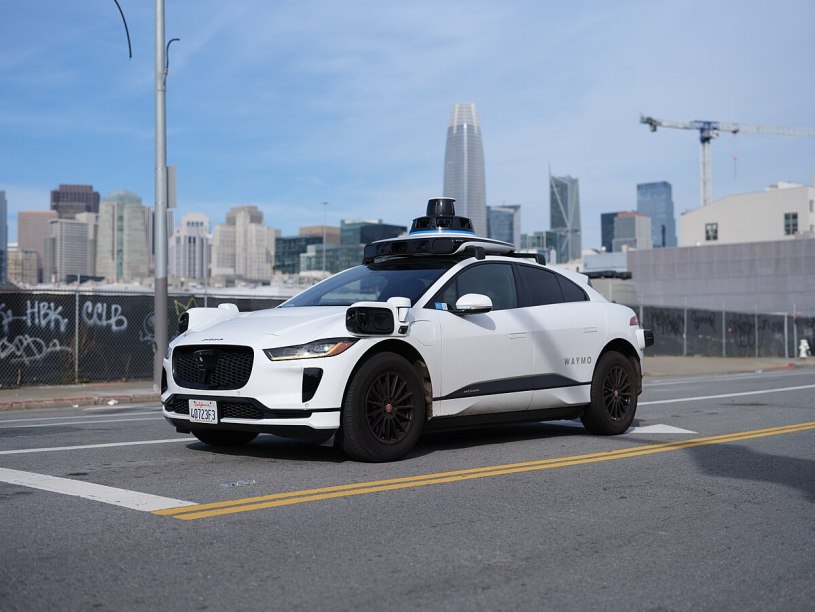
While visiting in Texas for a couple of weeks, I encountered two Waymo cars wandering through the neighborhood, driverless. It doesn’t need a human driver: it works on its own. I’m not sure if they were a fully functional Waymo vehicles looking to pick up a customer or whether they were just getting to know the streets in the neighborhood. It’s still a little disconcerting to see a driverless car on the streets I drive and at corners where kids and pedestrians cross. How safe are they? Safer than the average human driver? Perhaps. Even if the crash rate for driverless vehicles was say 25% of the crash rate for human-driven vehicles, that will not be much consolation to someone who gets sideswiped or run over. And the claim that, in general, driverless vehicles cause fewer crashes than comparable human-driven vehicles is likely not a valid defense to a particular lawsuit for a particular injury. I don’t care if your driverless taxis are generally safer, that one over there ran over my kid.
[Aside] But who do you sue? There is no negligent driver. A defective product? You’re not the purchaser. A software glitch? Can you, as a third party, sue a negligent programmer that works for the company that manufactured the vehicle? As the law evolves in this new area, the initial answer is going to be: Sue everyone and do lots of discovery. Put Elon on the stand, that will almost certainly win you the case. States that allow driverless taxis and driverless vehicles in general should require supplementary insurance and set up a statutory regime for assigning liability when driverless vehicles are involved in an accident. And require every driverless vehicle to have its own “black box” that records detailed info about what caused the crash or injury and that investigators and lawyers will have easy access to. Something like this will emerge from state statutes or evolving case law. [End of aside.]
Let’s jump from vehicles to organizations and services, as delivered by a retailer, a bank, or even say a church. Lots of systems you interact with these days are autonomous. Like autonomous driving units, they don’t need a driver, they work on their own. ATMs replace bank tellers, self-check stations at the grocery store replace checkers, ineffective help menus on the phone replace human customer service agents, and so forth. In the LDS Church, self-paying tithing through your online account has largely replaced the old check-in-the-envelope system, which means a clerk and a bishopric member don’t have to stay for an hour after church to record the contributions, make sure it all balances, and drive a deposit to the local bank. Is that an improvement?
Any other LDS autonomous processes or systems you can think of? I’ll jump right to the top and say: President. The LDS system is so conservative and conventional that, at this point, I suspect the President doesn’t have much to do. My evidential support for this claim is that when an LDS President enters a declining phase of incapacity … things go on pretty much as normal, even if the incapacity phase lasts years. Kind of like a car with no-hands driving: the driver is there but isn’t really doing anything. Sure, LDS Presidents go to meetings and sign documents. But when a declining President can’t go to the meetings and can’t sign the documents … things just carry on as normal. Driverless car. Leaderless church.
I’m stretching things a bit, but one must acknowledge that, for the most part, the Church as a system manages itself. There are some counterarguments to be made. Look, new LDS President, and now women can serve as missionaries at age 18 and we can openly use non-KJV Bibles in church! Yes, the new guy approves a few predrafted possible policy changes that they like and approve. Of course, the predrafted policy changes are produced by staff. Who are part of The System. So The System produces its own possible policy changes, which sometimes get approved and enacted. Another counterargument is that at the senior leader level, it’s really leadership by committee. It’s the First Presidency as a quorum of three or the Big 15 as a group that make decisions, so if the leading member is out of the loop, the remaining committee members soldier on.
So is the Church an autonomous system that functions largely without human direction? Have you ever had a local leader respond to your question or request by consulting the Handbook and saying, “I’m sorry, but the Handbook does not allow that, even if it strikes me as a good idea.” Translation: the human thinks that’s a good idea, but The System won’t allow it. No different from the airline agent at the ticket counter saying, “I’m sorry, but the computer won’t let me change your reservation.” Also, think about how long, years and decades, it takes for patently obvious changes to be made to The System, from big ones like dropping racial exclusion practices (priesthood and temple) to little ones like getting from three-hour church to two-hour church. It is so robust that even when changes are obvious it takes an amazing amount of effort to change The LD System.
But here is the big question: Is replacing human decisions and systems with system interactions or online exchanges an improvement or the opposite? Honestly, it turns out I’d rather submit tithing through my LDS account than hand off envelopes and have a couple of local leaders read and record my checks. I’d probably rather visit the temple recommend kiosk and hit the “Yes” button 14 times than visit with my bishop. It could even have you stick your arm in a blood pressure and heartbeat cuff to monitor your responses. “Your biometrics spiked when answering the last question. Would you like to reconsider your response?” I’m sure it wouldn’t take much effort, if the ward data file were expanded to include more demographic, work, and education for each member, to write an algorithm that could scan ward membership records to suggest the best candidate for the next YW President or Gospel Doctrine teacher. How about a little robot or two to travel around the chapel, dispensing bread and water to congregants? It could do facial recognition scanning to make sure those on the bishop’s naughty list don’t partake.
So what do you think?
- Are there other examples you can think of in the Church where the human element has been removed from the system or practice? Any eliminated callings? Maybe the ward magazine rep?
- Any good examples from the wide world you’d like to throw in? Holiday travel should give some ideas. Maybe renting a car you set up with an online reservation and later return it, all with no human interactions. Cars that rent themselves.
- Is the LDS President largely a ceremonial position at this point? Does The LDS System or the balance of the management committee take care of everything whether there is a capable President or not?
- At the local LDS level, is it an improvement or a problem that services and practices are slowly being replaced with online services? Any new proposals?
 Wheat & Tares
I had a bishop who would only approve activities if they were specifically condoned in the handbook. If it wasn’t written there, then it would never be approved. He was hard to work with, The next bishop took the opposite approach. If it was not condemned in the handbook, then it was okay to do. I guess the world needs both types, but I sure liked the 2nd bishop better. There was a human at the wheel.
Here in Phoenix we’ve had a fleet of Waymos all over town since forever (one of the first 4 pilot cities). There was an early accident involving either a cyclist or pedestrian that got a lot of negative press, but having driven in Phoenix for 20 years, I see accidents with drivers all the time (not quite daily, but close) without any mass hysteria. When we took an Uber home from the airport last week, we watched about half a dozen Waymos arrive, drop passengers, and then take off again with a new passenger. I had serious Waymo FOMO (no driver playing country music, trying to have a conversation, or smelling like something unpleasant), but unfortunately Waymo is currently city streets only, not on the highway. I think it won’t be long before kids grow up and don’t know how to drive anything that isn’t mostly self-driven, just like how our kids can’t drive stick shift. But I’m still OK with it. The biggest question is how it will fare in states that actually have precipitation.
Much more concerning to me is insurance companies using AI to evaluate claims. Not that I think the humans are great at it either. Mostly I think insurance companies are an insane way to handle health care since what they actually care about is extracting maximum profits out of us on our way to dying.
If the goal is to maintain the status quo and keep the trains running on time, the church can in fact run on autopilot for a long time without a functional president, but it does appear to require at least one first presidency member who is functional, as evidenced by the addition of Hinckley as a third counselor during Kimball’s final years. What appears not to be possible without a president in charge is making significant new changes. We’ve seen the last two presidents make a big flurry of changes right after they take office. One could point to the 1978 priesthood revelation as a similar change, occurring 3 years into Kimball’s tenure only because it took that long to get the apostles on board, not for lack of desire on Kimball’s part to make it happen as soon as he assumed the office of president. I doubt it could have happened during Kimball’s final 3-4 years. These examples suggest that the dynamics of decision making at the top still give disproportionate power to the president to set the agenda and steer the church in new directions. When he is unable, the system goes into status quo mode and steers itself.
I can’t think of any cases at the local level where humans have been removed entirely, other than possibly your example of a magazine rep. Instead, I do see certain callings significantly simplified by better tools. I’ve been a financial clerk for the last several years and have seen aspects of the calling made much more efficient by software, including audits.
The rate of accidents with driverless cars is far less than those with drivers. Yet if a driverless car kills someone, the media explodes with calls to ban them. We’d be much better off banning humans from driving.
As a ward organist, I think music in our worship services will either essentially disappear or become little to no human involvement. Our church building has 3 keyboard instruments, one piano and two electronic keyboards that can play preprogrammed music. We go through periods of not having enough pianists in the ward to cover callings. At this point, I think there’s a good chance that I will be replaced by someone who knows how to use the recorded music on the chapel organ. Ironically, the one position that will likely always be filled is the least necessary–sacrament meeting chorister.
I totally see the point about software genuinely helping clerks. That really can’t be said for music. The loss of human musicians is a big loss! Programmed music is soulless and uninspiring.
Thanks for the comments, everyone.
I probably could have framed the discussion better. My primary claim might have been: The Church hasn’t done too much human replacement changing, resisting to a certain degree the changes hitting businesses and government, and that might be a good thing for the moment.
Gilgamesh, yes one aspect of bishop roulette is between those who follow the Handbook very closely and those who treat it as guidance subject to circumstances.
Hawkgrrrl, I have another post coming up on AI, which is likely a more interesting discussion.
Quentin, it seems like the Church can run on “status quo mode” for decades, if necessary.
PWS, I hadn’t thought of music. The Church ought to pay for piano lessons for any LDS kid who wants to take them if they want to have the next generation of human pianists and organists.
Regarding Sacrament Meeting choristers – My friend who is a convert was shocked to see someone leading the music in Sacrament Meeting the first time she attended. She said she’d never been to another denomination who had that. People just sang when the organ started playing.
I am self-driving pilled. It’s basically one of the 5 things I’m most passionate about (EVs, clean energy, affordable housing, running, and of course self-driving). I have absorbed gobs of self-driving content and am fully plugged into all the various different ways US and Chinese companies are attempting to solve the problem.
Waymo publishes their stats and they are ridiculously good! I also agree with Gebanks: better to ban humans from driving. Having worked at an ER and seeing the most horrific deaths and outcomes of the most vulnerable children, I would come home and tell my wife, “That’s it, you’re never driving again. Public transit from now on.” The most dangerous thing anyone does on any given day is simply drive. It’s amazing how much loss of life we just casually accept as the status quo.
The faster we get to universal self-driving, the better. However we need to ammend our laws to enable that out come. In medicine, when a drug works so well that continuing the placebo would knowingly harm participants, the trial is stopped early for ethical reasons. That is how I see self-driving. At this point, it is policy malpractice to slow down or impede self-driving given the clear improvements in safety (and I’m not talking about Tesla’s vision-only approach, I’m talking AI vision + lidar + radar).
I am startled to read there are actually fleets of live autonomous vehicles running around cities in the US. My husband raised the issue of who would be at fault were there an accident, and he decided that would prevent such systems from taking off. Certainly, we don’t have any in the UK. My husband definitely appreciates the intelligent adaptive cruise control of our new car though, which makes driving along highways so much less tiring.
On the online tithing payment system. I refuse to use it. My husband still uses the old online payment system which was set up in the UK to handle the gift aid system. The new online payment system was pushed here during the pandemic, and I really, really don’t like it. It requires setting up a single time direct debit from your bank account per payment. This is peculiar from the outset, since direct debit are used to make regular payments on an ongoing basis. First off, it feels clunky to have to set up the direct debit for a single payment, and then cancel the direct debit so that it is only a single payment. That’s not how the banking system is supposed to work. It feels like one of those work arounds so that the church can avoid paying or perhaps reduce bank charges. And it annoys me. Any other charity soliciting online payments doesn’t require this rigmarole, you can simple go online and donate by a debit or credit card payment. From a user point of view, I would find this simpler and safer. My second issue is that I don’t trust their online security to be keeping my bank account details secure. Finally, I am not at all sure that I trust the organisation itself with my bank account details, which the system would retain. Especially in this dystopian world Trump seems to be creating in the US, given that church systems are so centralised, with that centre in the US. So for the moment I am sticking with the cheque in envelope method. Since I am not in paid employment, I do this annually to keep work for the clerk to a minimum.
Our ward organ also has the 1985 hymn book preprogrammed. We do have a good organist at the moment. However, I am wondering will the software get an update with the new hymns, or will all these instruments be stuck in 1985. Also, whilst members may learn the basics of getting the instrument to play the preprogrammed hymns, and even input the number of repeats for the number of verses, there are little nuances they may not realise are available, such as adjusting the tempo to something faster than the funereal pace that seems to be the default for a number of the preprogrammed hymns.
Jacob L, the issue I have with autonomous vehicles is the potential for hacking by rogue actors/ organisations/ states. Of course this also applies more and more to vehicles with drivers as systems depend more and more on software.
If I am ever allowed to vote on the matter, I will vote against driverless vehicles on our roadways. I am opposed.
I am saddened by the thought of automatic playing organs for worship meetings — I think humans, even imperfect humans, are an important part of worship. I would support allowing stake presidents to pay for piano lessons for interested young persons.
So humans are too dangerous to allow them to drive. And clearly humans are too dangerous to allow them to own guns, knives, hammers and chainsaws.
When I read people espousing a technology culture where humans are made to serve and rely on technology I ponder:
What exactly are humans living for?
If humans are too inefficient to be allowed to do things – computers can do human better than the humans – then why have humans at all?
And why should humans trust computers will be benevolent to humans? Does it not reason that certain humans will happily use computers to enslave other humans? How do we guard against that?
@Hedgehog
We don’t have to rely on hypotheticals here: we’ve already seen real examples of rogue actors and terrorists using vehicles to drive into crowded areas and kill people. Individuals with malicious intent can use either high-tech or low-tech means. 9/11 itself involved something as simple as hijacking airplanes, yet it remains the deadliest act of terrorism on U.S. soil.
I understand the concern being raised, but compare that to what is actually happening now. When you look at what has actually happened with coordinated cyberattacks on U.S. hospital infrastructure, it becomes clear that Iranian, Chinese, Russian, and North Korean hackers are already causing real-world harm. By taking down hospital systems and impeding care, they are effectively putting critically ill patients at risk, and in some cases, costing lives. The worry about foreign actors hijacking cars is much less salient to me than foreign actors hijacking nuclear facilities, electrical/utilities, and hospital systems and we don’t advocate for unplugging from the internet for any of these systems.
Jacob L, yes, we have seen vehicles used that way in the UK. However, I find the idea of fleets autonomous vehicles of autonomous vehicles, hacked, and possibly with trapped passengers, to be rather more alarming.
I hope that civilian vehicle cybersecurity has become a serious concern, but for a long time it was neglected.
Hmm, I am neutral on self-driving cars because they’re not going to be very relevant to me. I drive as rarely as I can. I like the train and the bus. That said, anything that brings down traffic fatalities would be an improvement.
Libraries are automated now too. Check in and check out don’t involve people anymore. Although it takes a human to put library books back on the shelves!
I agree that Church can run for quite a while without input from the top. That’s a good thing in a big organization. You don’t want the entire thing to screech to a halt when someone is incapacitated, especially in a system like the Church, in which very elderly leaders are common.
Automation reduces human contact. It makes up for it in being more convenient. I don’t imagine financial clerks enjoyed logging tithing checks every week. But you got a handshake when you handed someone your tithing envelope, and for someone who is otherwise socially isolated, that might have meant something.