
Dear Heavenly Mother:
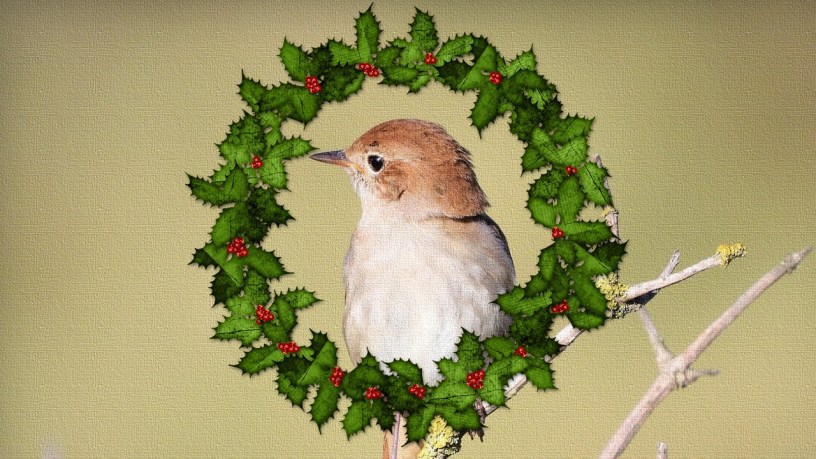
I slither beneath your nightingales.
Flying free, preening for thee, panging
me, they pass above me, beyond me,
never perching for me, never mine.
I hunger on the earth
alone and with no prize.
Falconers with leather-gloved
hands stare blanky at me.
Snake, they whisper—they
say it like Missourians said Mormon.
Upon my belly I go, like
the serpent—punished for being
what I was made to be.
Nightingales roost fitfully. Dust
from their nests drops and sands
the fork of my flicking tongue.
I too thirst.
Mother, why do you see my bitterness
yet remain silent? Why do you humor
the Church’s fetish for Fatherhood?
In this season of Advent, I ask:
of what value is this myth
to those who feel only frustration,
who live alone and unrequited?
Why should we pray to a Father—
a hawk who takes what he wants
when he wants from her he wants?
Perhaps I have answered my question
by asking it.
On and on, I pine for nightingales.
Outwardly, I am cold. Inwardly I am
embers hemorrhaging light.
Mother, defeat me with grace,
for I am the privy anger of primitive
Joseph. I am the salty anger of Sidney,
and I am the anger of latter Joseph over
fallen Hyrum. I would be slain
in my anger and consummated by
following bright stars to pools
of blood. I say again,
defeat me with your grace!
Swaddle me, unsanctified,
in a manger of infantile malaise.
Though the world judges me
a man, yet I feel myself still
the boy whose heart was broken
by your precious nightingales.
In the name of your firstborn Son,
I pray. Amen.
Poet’s Notes and Questions for Discussion
In these supercharged times, I hope the above prayer can be seen for what it is: a thought exercise via contemplation and creative writing. It is an attempt to enter the mind of someone in deep pain, seek understanding, and find a way out of the bitterness.
What is your reaction to this prayer? More generally, what can society do to reach individuals overcome with anger? What tools does the Season of Advent offer to foster peace and wellness?
Relevant Mormon scripture passages for this poem come from Genesis 3:14, John 19:28, and Doctrine & Covenants 93:21-22. For practical and researched views of incel thought and culture, read this BBC article and this commentary from The New Yorker.
 Wheat & Tares
This is beautiful. To demonstrate that I’ve not been a follower of the man from Nazareth, I will share this story. When I was much younger, I was at an event discussing the South African efforts at reconciliation. One of the speakers was asked if God could forgive Hitler. The speaker said yes. I walked out in fury. Looking back on my young self, I see my intolerance and arrogance.
I do not believe that prayer can change anything other than the person who prays. This poem touches on that. In our brokenness, in our depravity, in our arrogance (in place of “our”I should write “my”) we turn our backs on the “lepers” among us. And yet the man we say we follow cured all the ten.
Anne Frank said it so beautifully, “Despite everything, I still believe that people are basically good at heart.”
Thank you for this poem. It is stunningly beautiful.
Thank you for your comments vajra2, and especially the Anne Frank quote. One of my favorites ❤️
I am late in responding to this, but I enjoyed the poem. I also read the New Yorker article and the BBC article.
I watched the 2004 movie The Phantom of the Opera when I was in college. I never saw the Broadway production, so this was the first time I saw the musical. In my view, and as I think about theses articles and the poem, I think the Phantom character could be considered a type of incel. And the grace and (undeserved love) Christine gives to the Phantom when she kisses him is what transforms him. That kiss is almost her attempt “to enter the mind of someone in deep pain, seek understanding, and [help him] find a way out of [his] bitterness.”
She shows him compassion and mercy rather than fear, and that is what changes his nature. It’s a nice idea, but I don’t know if it really works that way in reality with incels. I think some (most?) are so ingrained in their misogyny that showing them any respectability, compassion, tolerance, or “seeking to empathize” might just justify their hatred or in a perverse way reward their sociopathic/anti-social behavior or thought processes.
It would be interesting to find out if anyone has empirical research on what types of behavior can deradicalize an incel, or if we are better off just seeing them as “black tags”—irredeemable collateral damage of online radicalization.
Really interesting thoughts, Jacob. Thank you for commenting. Similar to the Phantom, I had considered referencing the Grinch somehow, as that was the cultural reference which came to me as I was finalizing the post and looking for feature images. As you indicate for the Phantom, such characters are fictional. In the real world, both would rightly be seen as predators. The Phantom would be charged with murder if properly arrested.
I sure hope people can be brought back from darkness. I have had my wrestles with it, as I suspect we all do to some degree. But it is difficult, as the behavior here is sufficiently toxic that one must consider how to protect themselves while attempting to reach out to the person. If only there were easy answers…
When asked what he would say to the men who blew up the World Trade Center, Thich Nhat Hanh answered, “First I would listen.”