
Today, we have a new guest post from Carol B:
Although it used to be rare, institutions that are moral and ethical now apologize to function well. Research shows that institutional apologies can help repair relationships, restore trust, and acknowledge harm caused by past actions or policies. However, an apology must be followed by accountability and concrete action.
Because the LDS Church refuses to apologize, by default, God is blamed for its sins of denying priesthood and temple blessings to its Black members until 1978, colonizing (and killing) indigenous peoples, and refusing to allow LGBTQ members’ children to be baptized and blessed.
As all institutions do, the LDS Church has made its share of mistakes, but because its leaders claim to speak for God, perhaps they feel that apologizing would create a feeling of fallibility among leaders, yet leaders have never claimed to be perfect. President Harold B. Lee said, “It is not to be thought that every word spoken by the General Authorities is inspired, or that they are moved upon by the Holy Ghost in everything they speak and write.
In a blog post for BCC, T. L. Peterson writes, “A popular saying among Latter-day Saints purports to tell the difference between Catholics and Mormons: Catholics say the pope is infallible, but they don’t really believe it; Mormons say the prophet is fallible, but we don’t really believe it. This saying started as a joke, but I think it has become a truism.”
Honest, heartfelt apologies by the LDS Church would heal and strengthen the community, restore trust and integrity in the institution, make amends for past wrongs, and show moral courage.
Even the supposedly infallible Catholic popes have had the courage to issue apologies for a host of past sins. As Pope, John Paul II officially made public apologies to Jews, women, people convicted by the Inquisition, and almost everyone who had suffered at the hands of the Catholic Churchover the years.
Among other things, Pope John Paul II apologized in 1992 to the indigenous people of South America for “pain and suffering” caused during the Church’s presence in the Americas. He also apologized for those involved in the African slave trade, for the Church’s silence during the Holocaust, and for the Church’s role in religious wars following the Protestant Reformation.
He apologized for the Crusader’s destruction of Constantinople in 1204, for Catholic sex abuse cases, and the suffering of Aboriginal children in Australia. He also apologized to China for the sins of Catholic missionaries in colonial times.
The Catholic Church even apologized for placing Galileo Galilei under house arrest in 1663.
Imagine if the LDS Church did the same? Imagine if it apologized for the colonization of Native American and indigenous peoples, for the slaughter of the Timpanogos men and women in Utah county, and for its refusal to allow Black saints to receive priesthood and temple blessings before 1978.
Imagine if the Church apologized to every scholar they excommunicated for performing peer-reviewed research, to every woman who has been sexually abused by Church members and were then silenced by Church attorneys, and to every member who has been misinformed about the history of the Book of Abraham, the method of translation for the Book of Mormon, and the past misogynistic language in temple liturgy.
So much healing could occur if the Church of Jesus Christ of Latter-day Saints followed its own teachings regarding repentance.
A blog post in Exponent II shows what some of those abbreviated apologies might look like. The post includes imaginary Church apologies for racism, financial misconduct, sex abuse scandals, polygamy, and other misdeeds. It is incisive and worth reading.
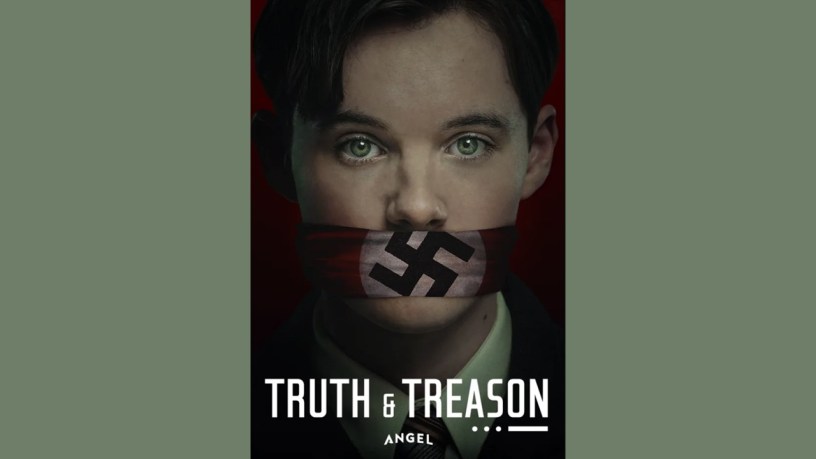
I recently attended the outstanding movie, Truth and Treason, about the LDS German youth, Helmuth Hübener, who covertly wrote and distributed anti-Nazi papers and was sentenced to death by the state (and excommunicated by his LDS branch president for doing so, although the movie does not go into that.)
At Hübener’s trial, he told the judge, “Now I must die, even though I have committed no crime. So now it’s my turn, but your turn will come.”
The day of his execution, Hübener wrote in a letter to a fellow branch member, “I know that God lives and He will be the Just Judge in this matter… I look forward to seeing you in a better world!”
Hübener’s membership was posthumously reinstated after the war ended.
In 1976, a BYU professor produced a play about Helmuth Hübener’s heroism. Entitled “Hübener against the Reich,” and the play sold out to BYU audiences. However, according to the New York Times, Dallin Oaks, then the university’s president, asked him not to make the play available again.
The Times quotes then-apostle Monson as saying, ‘Who knows who was right or wrong. I don’t know what we accomplish by dredging these things up and trying to sort them out.’
The article further says, “The church’s Twelfth Article of Faith states that Mormons believe in ‘’being subject to kings, presidents, rulers and magistrates, and in obeying, honoring and sustaining the law.’
“In the Nazi era, the church authorities in Utah counseled German members to support the Third Reich, making the three boys’ opposition to Hitler a violation of policy, according to Douglas Tobler, a professor at B.Y.U.”
Of course, the LDS Church has not apologized to Hübener’s family nor to the German people for supporting the Third Reich.
Many Latter-day Saints will and do face this dilemma: Is it right to obey their consciences or should they obey the state—or the church—when they contradict the fundamental standards of morality that Jesus taught? When the principles of love, respect, and equity for others collide with hate-filled violence, greed, and deceit, where do we stand?
I watched the movie about Helmuth Hübener and felt like a coward. I realized I would lack his fortitude to speak the truth to power, especially if my life is threatened. Great art teaches us the power of introspection and self-examination. I am grateful to those who created and produced that masterpiece.
The philosopher George Santayana wrote, “Those who cannot remember the past are condemned to repeat it.”
I remember studying the Old Testament in a BYU religion class. My instructor forcefully reminded us of Moses’ entreaty to his people in Numbers 11: 29, “Would to God that all men were prophets.”
The teacher then quoted Brigham Young, who said, “There is no doubt, if a person lives according to the revelations given to God’s people, he may have the Spirit of God to signify to him His will, and to guide him and direct him in the discharge of his duties, in his temporal as well as his spiritual exercises. I am satisfied, however, that in this respect, we live far beneath our privileges” (Discourses of Brigham Young, p. 75).
I suspect most of us live far beneath our privileges. I know I do.
What are your thoughts?
- Should Helmuth Hübener have remained silent?
- Should the LDS Church have spoken out against Hitler? Why or why not?
- Is it ever right to disobey church or state authority? Why or why not?
- Should the LDS Church speak out against current atrocities? Pope Leo certainly is.
 Wheat & Tares
“Do what is right, let the consequence follow.” “Dare to do right! Dare to be true! Other men’s failures can never save you. Stand by your conscience, your honor, your faith; Stand like a hero and battle till death.” We sing about standing up for our convictions. It’s unclear if we believe it.
I would never judge someone in Hubener’s position (or the other German saints) where speaking up could very realistically lead to death. Hubener heroically stood up to an evil regime. Some of his neighbors heroically kept their heads down so they could still be there as parents, spouses, friends and neighbors throughout the war. Even at an institutional level it is difficult. Strong condemnation of the Nazi’s from church leaders could have landed Mormons on the lists to be rounded up along with the Jews, Roma, Jehovah’s Witnesses and others.
Thankfully, today we don’t face many threats like the Nazi regime. Standing up against current atrocities is generally far less dangerous, which makes failure to do so significantly more indefensible.
Is it ever right to disobey church or state authority? Absolutely! I fail to see the point of an existence where we shift the responsibility for every tough choice onto others. Of all people, Mormons ought to treasure their individual agency. We believe a great war in heaven was fought over the subject. And yet we have a church that repeatedly values obedience over personal conviction. I have a great many disappointments with the institutional church; I have far fewer disappointments with my friends and neighbors, but primary among them is the way members refrain from calling wrong wrong when it comes from the church. Of course, I spent many years doing the same thing, so I’ve still got plenty to work on myself.
I’m proud of Huebner and his courage, and I wish we could sing songs about him instead of Nephi. But I also try not to harshly judge the everyday German people who may have privately opposed the Third Reich, but kept quiet in order to survive. None of us really knows how we would act in such circumstances until the moment we are faced with that brutal reality, up close and personal.
Whether or not the LDS Church should have spoken out against the regime, it’s hard to say. Back then the Church was much smaller, unknown, viewed with suspicion by outsiders, and far less influential (i.e. wealthy) than it is today, especially in contrast to the Catholic Church’s outsized influence in Europe, then and now (and there is no question the Vatican should have done more to oppose Hitler).
But there is a big difference between individuals living under an oppressive regime keeping quiet to survive, and institutions willfully engaging in Neville Chamberlain levels of appeasement of that regime. And the LDS Church certainly did this. LDS missionaries taught German athletes how to play basketball in time for the 1936 Berlin Olympics. The Third Reich also valued the Church’s genealogical research prowess and resources, which they were happy to utilize to determine who was (and was not) of “proper” lineage.
As I understand, Monson was very sympathetic to the plight of East German Saints during the Cold War, and made several apostolic visits there over the years. Around the time that the BYU Huebner play was being produced, Monson was in negotiations with East German authorities to permit a temple in East Germany, and he was also frequently at odds with Benson, who’s well-known anti-communist screeds were disrupting those negotiations. In that context, I understand why he said what he said in that article, as he was trying to make inroads with a communist regime for the benefit of faithful Church members there. The eventual fall of the Eastern Bloc and the reunification of Germany rendered that problem moot.
Is it ever right to disobey church or state authority? I think MLK’s Letter from Birmingham Jail makes this case much more eloquently than I ever could.
Should the LDS Church speak out against current atrocities? Absolutely, especially now that the Church is obscenely wealthy with its own army of lawyers. It frustrates me that, as we watch the rule of law getting trampled upon every single day, the current president of the Church also happens to be one uniquely qualified to speak intelligently and forcefully on the subject, yet he chooses to remain silent on that issue. Instead, he uses his legal prowess, along with the Church’s political capital, to oppress LGTBQ people and force temple construction in disputed locations, both of which will put the Church on the wrong side of history. Sad, but not surprising, as this is the same man who said the Church does not give apologies, and also feigned ignorance when confronted with evidence of the 1970s BYU electroshock conversion experiments (which records show, definitely happened on his watch).
Both DHO as a person and the Church as an institution have plenty of repenting to do, and I think formal public apologies would be a net positive for the Church, but it all seems unlikely in the current construct.
One of my main motivations for not being affiliated with any Church (I used to be a full TBM) nor with any political party (I was very involved with the Republican Party) is that I no longer have to apologize for any religion or political movement. I used to have to spin my way through excuses for the COJCOLDS as well as Republicanism. But in 2016 I discovered that the party was no longer what I thought it was and in 2021 I discovered the same about the Church. I know those two won’t be apologizing for their various offenses. In fact, they simply double down. So why should I be in the position of having to explain? I can’t tell you how much stronger I feel for NOT BELIEVING in the value propositions of these two organizations. I was taught that we should “stand for something”. And what I stand for is quitting what doesn’t align with your values.
When I apologize it’s sincere and authentic. It isn’t spin or excuse making. It’s on me. It’s not on folks in Washington, DC nor SLC, Utah. (rant over)
Nice post! I couldn’t agree more with the comments in the OP regarding infallibility. I am convinced that the Church’s de facto stance that the Q15 is infallible is the biggest problem with today’s Church.
Why did it take so long for the Church to eliminate the temple/priesthood ban? Infallibility (and bigotry)
Why can’t the Church truly apologize for its past racism? Infallibility.
Why can’t the Church disavow polygamy? Infallibility.
Why can’t the Church embrace LGBTQ members? Infallibility (and bigotry).
Why can’t the Church make women truly equal to men? Infallibility (and misogyny).
Why can’t the Church drop its puzzling bans on coffee and tea? Infallibility.
Why can’t the Church admit the POX was a mistake and apologize for it? Infallibility.
Why is Zion’s Camp presented as a roaring success in Church manuals when it was actually a miserable failure? Infallibility.
And on and on and on and on…
1. Should Helmuth have remained silent? Living under a violent and inhumane regime, that’s a tough question, as his actions may have put innocent family members or associates at risk of prison or execution. Germans in occupied France, for example, often shot local villagers in response to nearby French Resistance actions against German troops and facilities. Helmuth was a brave and courageous kid who deserves admiration for standing up to the Nazis, but it’s still a tough question.
Also, in wartime the social and legal view of activities that would otherwise be allowed gets warped. At the same time Helmuth was arrested and executed in 1942, Japanese Americans on the West Coast, over 100,000 of them (roughly 80,000 were US citizens!), were rounded up and marched off to concentrations camps for most of the war. In retrospect, that was entirely unjustified and was later — well after the war — deemed to be so by the US government.
2. Should the LDS Church have spoken out against Hitler? Yes, probably, but the more forceful the denunciation, the more LDS members in Germany would be at risk for Nazi reprisals. It’s tough to ask LDS leadership to make public statements that would put LDS members in danger. Should the LDS Church speak out against Trump? Same tough issue for leadership, which has to consider the moral benefit of denouncing authoritarian actions (such as, among many examples, using the US military to kill civilians on the high seas with no legal justification) against possible Trump regime reprisals against Mormons and also the reactions of the millions of Mormon MAGAts, some of whom would turn against the Church and (horror of horrors) maybe stop paying tithing.
3. Is it ever right to disobey church or state authority? Two different questions. For the state, there is a lively debate in legal philosophy over what might make a duly enacted law nevertheless invalid, and laws passed under the Nazis in Germany are a prime example cited in the discussion. But there are lots of people who invoke nutty theories (the sovereign citizen movement, for example) for not being subject to US laws (objecting to a speeding ticket, for example) or the IRS (how convenient). As for “Church authority,” the authority is much weaker. You can tell your bishop to go jump in the lake when he calls you to teach Primary or to kick in a hundred bucks for a Church political campaign, and you won’t go to jail. When contesting state authority, it’s better to play ball with the cop and fight it in court if you are being mistreated.
4. Should the Church speak out against current atrocities? See discussion in number 2 above. It’s not clear the Church has the moral credibility to speak out effectively. And if it did speak out against atrocity X, why not atrocity Y and Z? Maybe it is up to individual members to speak out against atrocities. It’s nice to live in a country where (for the time being, at least) someone can denounce Trump as a despicable human being, an embarrassment to our country, and our dumbest and most corrupt President — but not then be arrested by regime goons and possibly executed. That’s a right that ought to be exercised before it is lost.
The joke about the pope and the prophet show a superficial understanding of why Catholics don’t believe the Pope is infallible.”While Mormons hang on every word from the prophet as being the word of God (e.g.. the Proclamation), so that their most banal remarks at Conference are repeated endlessly as if they contained some kind of mind-boggling wisdom, in the 2000+ history of the Catholic Church only two statements by a Pope have been deemed infallible. The joke doesn’t seem to understand that for the most part Catholics do not receive constant infallible statements, down to the minutiae of shoulders, earrings, underwear, and morning beverages. They don’t believe that the Pope has a direct line to god’s dictaphone, while Mormons see the prophet as being such a mouthpiece for God, that even visible errors are above criticism.
I just watched Nuremberg this weekend, in which Russell Crowe plays Goering, Hitler’s successor, on trial for war crimes in the first international war tribunal ever. Since I went to Nuremberg last year and to Dachau and Auschwitz, and listened to about 20+ books on the Holocaust, it all felt very familiar. The real lesson of Hitler is not that he and his cronies were uniquely evil. It’s that anyone could do the things he and they did, given the right set of prejudices, circumstances, and yes, a bit of unchecked narcissism fuelling their corrupt ambitions. And when you live in such a country led by such people, you can either stand up to evil (in which case you probably end up dead) or you try to persuade it otherwise (usually unsuccessfully) or you go along with it and hope it ends (what most people do).
In the movie, Justice Robert Jackson seeks the Pope’s support for the Nazi war trials at Nuremberg. The Pope had originally been early to accept and work with the Nazi regime as a means to protect Catholics living in Germany. Was this the right action or the wrong one? You could cynically say (as the movie implies) that the Pope sold out the Jews to save his own Catholic people, but that’s with the benefit of hindsight. Did the Pope fully understand the peril of the Jews at that time, or only the peril of Catholics? After all, Jehovah’s Witness were particular targets of the Nazi regime. This is because they do not participate in politics, don’t vote, don’t join political parties, and would not give the Heil Hitler salute. They also continued to proselytize despite warnings to stop.
In my 10th grade my history teacher had us do a mock election for him as a dictator of a totalitarian county. The idea being to show that in such nations elections are a farce as people are compelled to vote for the dictator.
I did not feel so compelled to support my history teacher and so I presented my ballot to him that I had chosen my chemistry teacher to be “president”. And I was right. I did not face any consequence for my vote because the role playing was just an act.
In real life would I have defied the “supreme leader”? If I were acting solely for myself I could see myself being defiant. But if I had dependents then there is a different calculation.
Institutions see themselves as having dependents. This leads them to compromise and the compromises can be frustrating and beg questions of institutional integrity.
And as the Church is an institution the question of integrity is elevated. If Daniel & Meshach, Shadrach & Abednego & Abinadi are examples of Faith & Courage in defiance of their respective kings, why do we never see such defiance in our modern LDS prophets?
It is, I believe, because the LDS church leadership decided after the polygamy fight that it was better to oblige government authority than fight it. And this decision has helped the church institution greatly. But the success has come at the cost of institutional integrity.
For what Truth does the church stand for that it is willing to fight for? It is solely the ability of the church institution to exercise autonomy and bargain with the government for its rights. What the LDS leadership does not defend is the liberty of church members to have autonomy, and the LDS leadership is quite specific about this!
I think we can admire the heroic actions of those who risk their lives to stand up to evil, while acknowledging that not everyone’s has the same ability to take those risks. I don’t think surviving to help others or raise one’s family is a less worthy goal. Often what factors into these decisions is the ability for an individual or institution to bear the possible costs they are risking. Hubener was young and had no family depending on him. If he’d been 10 years older, it’s possible he might have made different choices, and that is fine. That leads me to the LDS church in the present day. In this era, the potential costs to the LDS church of speaking out against injustices seem tiny relative to their vast resources. When you are among those best positioned to speak out, at some point I think maybe it becomes a moral responsibility. Instead the church hides behind notions of political neutrality and conveniently selective judgements of which questions are “moral” in nature. The Catholic bishops who recently spoke out against treatment of immigrants seem to me also a pretty cautious and conservative group, but this was important enough to say something.
There is no indication that the “good Germans” who kept silent helped others. The neighbors who kept silent were NOT heroes. Is saving their own skin while watching their Jewish neighbors carted away, mentally challenged children, executed, millions killed heroic? This is just the way the Pharisee prayed “the Pharisee stood by himself and prayed: ‘God, I thank you that I am not like other people—robbers, evildoers, adulterers—or even like this tax collector. 12 I fast twice a week and give a tenth of all I get.’
“A certain scribe came and said to him: Master, I will follow thee whithersoever thou shalt go. And Jesus saith to him: The foxes have holes, and the birds of the air nests: but the son of man hath not where to lay his head. And another of his disciples said to him: Lord, suffer me first to go and bury my father. But Jesus said to him: Follow me, and let the dead bury their dead” (Matt. 8: 19-22).
And also “if you love those who love you, what recompense will you have? Do not the tax collectors do the same? And if you greet your brothers only, what is unusual about that? Do not the pagans do the same? So be perfect, just as your heavenly Father is perfect.”
I haven’t seen the Huebner movie yet. The best nazi movie for a glimpse into the lives of ordinary citizens, is The Book Thief; best book is The Nazi Officer’s Wife, which is the autobiography of an Austrian Jewess, that reads like good fiction. She takes her story thru the entire war and reconstruction.
Please do not use the suffix “ess.: it is a way of diminishing women’s efforts. It’s particularly offensive when used in the way you used it by non-Jews.
Edith Hahn Beer, the AUTHOR left Germany after being asked to be an informant for the KGB. Silence is complicity. I’m sure everyone who was silent during the Third Reich had very good reasons.
“II’d walk through fire for you.
Well, maybe not fire; that would be dangerous.
Maybe a super humid room, but not too humid, my hair…”
Apparently, the 12th article of faith did not apply in Nauvoo. Polygamy was against the law in Nauvoo, as Illinois state laws from 1833 and 1845 criminalized bigamy, a term that includes polygamy. However, church leaders and followers continued to practice it.
It should be noted that the play “Huebener” was written by the late Tom Rogers. I consider him heroic in the same way Huebener was, if not with the same degree of risk and cost. And I wonder if this story would still be buried in history if not for his work.