
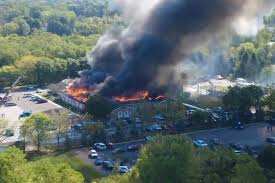
I haven’t been able to think of much else since the Sunday shooting, and I’m sure many of you have had a similar reaction. It’s horrific to contemplate, and it doesn’t feel like any meaningful changes are likely.
The mass murder at LDS Church services in Michigan last weekend are the third such mass shooting at a church this year. Last month, 2 children and 18 others were killed during mass at the Annunciation Catholic Church by a former student of the parish’s school. The month before that, two women were killed at the Richmond Road Baptist Church. The shooter’s motives are still unclear in that case. I found at least 10 other mass shootings at houses of worship since 2020 in a quick Google search. Congregations, like our precious school children, are sitting ducks, and the rate of violence is high and doesn’t seem to be decreasing any time soon. There is not only political polarization, but also religious trauma from harmful policies, and dehumanizing language toward disliked or competing faiths.
People I went to high school with literally accused “demons” in the Charlie Kirk murder, and the man who murdered Latter-day Saints in Michigan believed that the Church was the Anti-Christ. Believing “spiritual” things is one thing; using violence here in the physical world to fight “spiritual” enemies is quite another. Fortunately, although they were actually calling for civil war, none of my high school friends (to my knowledge) has actually committed murder to promote their cause. But it’s a given that disturbed, radicalized individuals in our midst will continue to do so. The mass shooter in Michigan used his military expertise to kill worshipers. We have a government that is not only unwilling to curb gun violence, but often actively celebrates it as a byproduct of freedom.
So where do we go from here? What do we do next to protect families from being murdered in places that should be a safe sanctuary?
Fight Fire with Fire. I’ve heard from more than one active LDS person that they are going to (contra church policy) get their permit and concealed carry at church. Given the speed with which law enforcement was on site, it made me think it was quite likely that members of the congregation who may have been in law enforcement were in fact doing concealed carry. This is the conservative answer to the problem of mass shootings: “the only way to stop a bad guy with a gun is a good guy (or gal) with a gun.” I don’t like it, but I also don’t see a lot of good options when common sense gun control is literally being kept off the table by the GOP, and they are the ones in power. Additionally, most mass shooters don’t expect to survive, and they usually don’t. You can’t really use punitive methods to deter someone willing to die to kill others.
There are reasons most Churches (except Evangelicals, apparently) don’t allow guns on premises. My own reasoning would be similar to the Catholic view, that church is a place of peace, a sanctuary of worship, not a shooting range where you (even if defense) murder evildoers. Turning the other cheek sounds like the Christian thing, but also, letting your children get shot up like sitting ducks is not really a moral good. The reason the LDS church doesn’t allow concealed carry in meetings is likely the same reason we can’t cook in the kitchens; it’s too big of a liability and would cost more for insurance.
There are a few things I can think of that the Church (and all churches, not just LDS) could do that would help secure the buildings without arming the congregation, but nothing is a perfect solution.
Partner with local law enforcement to ensure speedy response. This appeared to happen in Michigan, but like I said, 30 seconds seemed awfully fast for it to be someone who wasn’t in the congregation. Could you have cops in cars outside of all worship services? Maybe. Scarecrow cars (no officer) would be easier than having manned vehicles since churches usually meet on Sundays, and resources would be limited.
Install barriers. If you’ve been to a Target store, you know the things I’m talking about. If you have large concrete barriers that block vehicles from plowing into the church, that significantly improves protection from terrorist attacks (which this Michigan incident certainly looked like logistically). The problem is that the shooter crashed through a wall, not the doors. You could put a ha-hah around the building (like a dry moat) to slow down any vehicle trying to ram the building, plus the concrete barriers. I mean, we’re talking a total redesign here.
Monitor and moderate hate speech. I don’t really know how you accomplish this one. You’ve literally got some Evangelicals, including paid pastors, making sure that Mormons don’t get to claim to be “Christian” as their top priority in the wake of the attack, which is a choice I guess, but hey, that’s free speech. They can say what they want. And religions are free to say all kinds of horrible things about people they don’t like. The Westboro Baptist church literally picketed the funerals of gay people saying they were going to hell. Hate speech is still protected speech. Maybe some monitoring of this speech by FBI or CIA would help, but I doubt it would have prevented any of these incidents by lone actors. On the other hand, if religions weren’t using bullying speech toward trans people, could the Annunciation Church shooting have been prevented? Maybe, maybe not. Church isn’t a safe space for everyone, and with mass shootings it’s not really a safe space for anyone. Since we can’t change what other people say, my view is that nobody should be using language laced with violence (Holland’s “musket” talk, for one) toward their rhetorical foes. Just tone it the hell down, people, for the love of God, literally and figuratively.
Improve support for mental health. This isn’t, IMO, a strength for the church, even though they probably think it is. Why is that? I’ve heard a gajillion negative stories about experiences with LDS therapy services in which therapists, operating under church requirements, treat the church as the real customer, and the client’s needs are secondary. This runs counter to professional ethics in psychology, but given the prevalence of these stories, it feels like there has to be something to it. Bishops also don’t recommend leaving an abusive spouse or divorcing. Kirton-McConkie helps the church avoid liability for the sexual abuse of minors. Additionally, the exaggeration of “porn addiction” is another area where the church seems to want to lead psychology, not the other way around. There is always a risk (as in the Annunciation shooting) of a former church member with religious trauma attacking the congregation. That happened in my home ward when I was a teen and a former member set the church on fire. The fire was contained and it was while the church was empty, but there was damage. Especially if we’re going to have more people at church doing concealed carry, I’d like to hope none of them is going to go off half-cocked.
Stop naming mass shooters. The victims should be the story, not their murderers. While it doesn’t look like this shooter was specifically seeking fame, I was impressed when Jon Stewart did an entire interview talking about Charlie Kirk’s murder without naming the shooter even once. That should probably be the standard so that we aren’t encouraging killers who want to achieve notoriety. The only problem with that is that there is still internet fame, even if journalists aren’t the ones giving it.
I’ll also say that (checks watch) within 24 hours if not sooner, the only people talking about this will be Mormons. Until next month’s church massacre that is.
I also had the thought that, knowing what we know about the types of people who attend church, that there were a lot of PIMOs in that congregation, just there to keep the peace or help wrangle the kids. I have no doubt that they would leap to protect their believing neighbors and that the community will rally. These are our people. But it’s got to give someone pause about whether attending as a non-believer is worth it. It also might make some who aren’t believers want to go as an act of solidarity. People are tribal at the end of the day.
- What would you do to protect congregants from mass shootings?
- How would you secure the buildings even more than they are today?
- What role does rhetoric play in riling up those who are prone to violence?
- What would you do to address the mental health and religious trauma issues that churches encounter?
- Will this event impact church attendance? In what way?
- Will the hatred from MAGA Evangelicals get any MAGA Mormons to finally see that white Christian nationalism might not end well for them?
- What do you expect to hear at this week’s General Conference about this incident and the rising violence?
Discuss.
 Wheat & Tares
Might be a coincidence, but tonight I got a phone call request from Rasmussen Reports (they do regular public-opinion surveys and report the result to news outlets). This time they asked if I feel demons, or Satan, or other such influences, were responsible for the death of Charlie Kirk. The first time I have heard any such questions in those surveys . .
I truly think we can only counter the violence in our culture with increased peacemaking. I have been impressed with what I have seen from the congregants in this case. I roll my eyes at people whose answers are arming even more people. More guns! Bigger guns! More security! It is so sad that this is the response to mass shootings.
Tangentially, I honestly hate seeing the arguments that Mormons should reject Christian nationalism because they aren’t really our friends and it won’t end well for us. Can we not just reject it because it is wicked and totally at odds with the true gospel of Christ? Can we not truly love and work to protect the rights of everyone including those who are non-christian?
“I’ll also say that (checks watch) within 24 hours if not sooner, the only people talking about this will be Mormons.”
Speaking as a resident of Michigan, it hurts to have to confirm this. I work at a hospital on patient floors as a housekeeper. I overhear every kind of conversation that occurs in hospitals. Monday and Tuesday since the shooting have been ho-hum normal. The only mention of the shooting was me checking in with another hospital employee who I know is a Latter-day Saint. (He’s fine and said the members he knows in Grand Blanc are okay.) I’ve received one follow-up email from a Community of Christ leader and a text message from a non-LDS acquaintance expressing sympathy. Otherwise, in my 16 hours of conversing and overhearing conversations at work, there has been no mention of a mass shooting which happened just up the road a ways.
And the thing is, I can’t blame people. I think of what little attention I gave to the Annunciation Church shooting. None of us, in managing our own lives, has much if any emotional surplus at this point. We have to keep going with managing our own hectic lives.
As far as what the Church can do, I think there could be some simple and practical uptraining for those who usher. How to spot potential concerns, rehearsing how to alert ward leadership, and knowing chain of command every Sunday, so that if strangers need to be approached out of caution, it can be done so in a polite, efficient, non-threatening way. It’s the same principle, and not much more complex, than doing fire drills. But, are those being done either?
According to the mass shooting tracker there have been 384 mass shootings in the US so far in 2025, where mass shooting is defined as an outburst of violence during which at least four people are shot. It has been 3 days since the last mass shooting.
That said, you’d have to be extremely unlucky to be the victim of a mass shooting or be present at the scene of the shooting. You’d have to be extremely lucky to stop a mass shooting or even limit how many shots the mass shooter takes if you’re a good guy with a gun.
People shouldn’t all of a sudden feel more scared to go to church. More precautions are unnecessary. The Michigan shooting an act of arson was simply an extraordinary occurrence. To effectively reduce mass shootings drastically reduce the number of guns in the US. Repeal the Second Amendment. Even then, unfortunately, the cat may be already out of the bag. Still, I believe that there should at least be a gun registry. Ideally, almost all private ownership of guns ends. Guns and easy access to them are the problem.
A few years back, our ward leadership was concerned about a person within the ward boundaries who had mental health issues. They would rant about church leadership on social media and make strange statements during testimony meetings that were concerning. As a response a couple of folks were tasked with greeting everyone at the door on Sundays. There were a couple of Homeland security guys and national guard members who were enlisted to help keep an eye out during meetings. Eventually the person in question ran afoul of authorities in other ways and has since left the ward. When the incident in Michigan happened, those same brethren were discussing reimplementing the measures they had taken before.
The state I live in is not only open carry, but anyone can carry concealed also. I would rather have law enforcement members be the only ones carrying if they must at church. For myself, I know where the exits are and I will drag as many people out with me should the unthinkable ever happen at my place of worship.
I like the idea of having emergency response plans. Even something as simple as stating at the beginning of a meeting “in case of an emergency, please note there are exits on both sides of the chapel at the middle and rear of the room. Additional exits are at the front right near the sacrament table” The idea of training for ushers and greeters is good also. Certainly it should be considered in Ward Councils. The answer may vary depending on size of the ward or branch, layout of the building, etc.
Other faiths that have a history of being targets, like the Jewish community, often have security / lookouts / etc. at services. It’s time for us to at least (i) have a couple of (unarmed) brethren watching the inside and outside of the building during our services (this should be a specific calling and have best practices training associated with it), and (ii) consider requesting certain eligible and trained members of the congregation (off duty law enforcement, etc.) to concealed carry when they attend.
I’m OK giving my life or to sacrifice my life for my beliefs, as that Serves as an example to others, we must always be ready to give everything we have for our beliefs and not hold anything back.
My previous three wards all had policemen who carried. My last ward when I was bishop had 2(!) SWAT officers and I felt somewhat safer because of that. The wards in that stake had a plan for active shooters during church services. Where I live (Arizona) my understanding is that you can concealed carry as long as there isn’t a posted sign on the doors, or a few other specified places like schools. In addition to what the OP said, my understanding about why the LDS church doesn’t want to allow guns in churches is because guns would then also be carried in temples.
A good friend of mine is a mental health therapist for veterans. He once explained the vast emotional toll on children as they worry daily about school shootings and how they are utterly helpless and dependent on adults. He explained we are raising an entire generation (now going on two generations) of traumatized children that will likely pass that on in some way to their kids.
I have no idea how to get an entire country to overcome their collective fixation with guns. I’m afraid it will take decades of tiny, incremental changes.
About white Christian nationalism – I firmly believe that Mormons will never be the cool kids. We’re tolerated for now as the nerdy kid with glasses and bad clothes, but once the toxic males are in charge we’ll be bullied. I’m dumbfounded that the LDS have wholeheartedly adopted MAGA policies. I’m no fan of Oaks but I hope that his considerable experience as a judge will prompt him to warn us about every growing authoritarianism. We’ll soon find out.
More walls, more guards and more guns can make any place safer. But they will never make every place safer. The US maintains embassies in extremely anti-American places with force, and we can continue making our schools, churches and other spaces look more and more like that. But we can’t do that everywhere, and it will never be enough.
The only way this changes is when the people change. When society stops loving the power of guns and violence. When we quit idolizing Captain Moroni and start idolizing the anti-Nephi-Lehites who buried their weapons even during a time of war.
Come, let us go up to the mountain of the Lord, to the house of the God of Jacob; that he may teach us his ways and that we may walk in his paths. For out of Zion shall go forth instruction, and the word of the Lord from Jerusalem. He shall judge between the nations, and shall arbitrate for many peoples; they shall beat their swords into plowshares, and their spears into pruning hooks; nation shall not lift up sword against nation, neither shall they learn war any more.
We keep building more temples, but we don’t seem to be learning the lesson that Isaiah said we would. If we are not disarming ourselves, we have not learned his ways and are not walking in his paths.
I’m going to have to push back a bit on the idea that LDS churches are a hotbed for “White Christian Nationalism”. I think that is absolutely not the case in most places. I am sure there are plenty of these zealots in the church, by and large they don’t represent the people in the church and certainly in my neck of the woods are looked at with bemusement by most members. Instead, we have a wide variety of political views and we get along generally. I think W&T exhibits that too as there is definitely a majority here that do not espouse to those views.
If there is a positive for some of these horrible events, I hope that there is increased brotherhood and empathy from all people towards others. People on the left shouldn’t blame all problems on “right wing extremists” (see Charlie Kirk). People on the right shouldn’t blame all problems on “left wing extremists” (see Michigan). I am encouraged to see responses from many on opposite political or religious spectra that indicate sympathy, concern and a desire to grow closer bonds to our perceived enemies. I enjoyed Sean Penn’s comments about Charlie Kirk which were essentially “I disagree on almost everything but I still want to talk to him”. The outpouring of support from the local community in Michigan is also heartwarming. Here’s to a hope for a better and more peaceful world.
It might get worse. At yesterday’s meeting with the military generals, our president said, “Last month, I signed an executive order to provide training for a quick reaction force that can help quell civil disturbances. This is gonna be a big thing for the people in this room, because it’s the enemy from within and we have to handle it before it gets out of control.” That’s scary, but that threat might reasonably make more people want to own guns than already do.
I would recommend that you get out while you still can. I recommend Australia as a safe place, with a good quality of life.
E: I actually agree with you on both counts. 1) That peacemaking is the right solution. Jesus said “Put up your swords,” not “Annie get yer gun” and 2) that people should reject WCN because of their better angels, that they see it as a moral wrong, and not for tribal reasons. The problem is that many (most?) Mormons did not reject it on moral grounds. The majority believed MAGA / GOP lies that Demo(n)crats were far worse, and they voted for Epstein’s p*ssy-grabbing buddy. Given that this was the second time they did it, they were fine with his statements about women, our allies, and minorities. They knew what they were voting for. They are OK with WCN. They just need to know that when they put Evangelicals in charge, particularly those of the NAR (New Apostolic Reformation) variety, they are not seen as pure enough. They are still seen as the theological enemies of these people, no matter how much they look the other way as LGBTQ people, minorities and women are stripped of rights and beaten in the streets.
And a word about so-called “demons,” look, I know the New Testament talks about “demons,” but I think most Mormons would agree that these are not literal demon possessions, but probably an ancient person’s understanding of diseases like epilepsy, dropsy, or mental illness. That is not true for some people in religions. The Catholic church isn’t as open about exorcisms as they used to be, but there is still belief among some in literal demons. The only time, outside of teen girl slumber party attempts to scare each other senseless, that I’ve heard Mormons talk about demons in a serious fashion was at the MTC, as a warning not to leave the campus. IMO, these dark fantasies need to be set aside and not talked about as a real thing. It is psychotic to take them seriously. It is literally causing people to have psychotic breaks.
Generally my sense is that in the wake of traumatic events there’s a human tendency to overreact. I would argue that on many fronts we overreacted to the threat of terrorism in the last 25 years. There were simple and obvious changes to make, yes (changes to commercial aircraft and changes to airport security), but there were lots of other things that arguably made the problem worse (invading Iraq). The problem for me is that in the wake of this church incident, I don’t see any simple measures to take, and don’t think there’s a consistent enough pattern of risk to take more drastic measures, yet. My inclination if I had decision making power would be to not change things much, for now. Maybe check with me again in 10 years and see how things have gone.
Having said that, violence at religious buildings is a small subset of the bigger problem of it occuring at all public buildings, schools in particular. These attacks are the contemporary American analog to suicide bombers that have plagued so many other countries. They are carried out by individuals who are generally expecting not to emerge from the situation alive and have the intention of inflicting maximum mayhem on their way out. It’s suicidality mixed with a particular form of nihilism, and sometimes a grudge against some group. Defending against someone with that mindset is exceptionally difficult. It requires specialized training that your average aspiring concealed carrier does not have. Also, when the police arrive, having a gun in your hands is going to make you a target. Current church policy is that only law enforcement officers are allowed to bring firearms into a church building. I think that’s the right policy and it should stay that way.
The question of the role of rhetoric is a tricky one for me. I do think it matters. It’s clear that one person’s words have inspired others to do bad things on many occasions. Trump lying about a stolen election comes to mind. But, the second article of faith says we are responsible for our own actions. I think persuading others to do things is an action that we bear some level of moral responsibility for. Right now it is the responsibility of all who truly wish for peace to use their words to spread it.
One more comment, in response to Toad’s remarks about children bearing the mental scars of this scourge of violence. I think it’s true. A few years back I was teaching early morning seminary. I remember one day a student casually telling about the dream she’d had of a school shooter situation the night before. I’ve never done active shooter drills and I’ve never had such a dream. That was the moment when I understood the psychological tool this is taking on their generation in a way I never experienced. The young people now entering the work force and beginning to vote in our elections don’t know anything different. Their voice will be increasingly important in the policy debates of the future on how do deal with this.
John Kent – If you had said you were willing to give your life to save other “people’s lives”, I believe you would have gotten more thumbs up. Remember Jesus said in John 15:13 “Greater love has no one than this: to lay down one’s life for one’s friends.” Notice, Jesus did not say for your “beliefs”, he said “friends” (or other people). This die for your beliefs stuff is part of the problem, IMO. What makes any human being believe their beliefs are 100% correct? Sure, hold conviction, but have some humility and flexibility that keep the possibility open that you might be wrong. People are more important than ideas, so says Jesus.
To piggyback on toddsmithson, I would only add that sacrifice one’s own life for your beliefs is one thing, but children are being murdered here, not just adults with fully formed beliefs. Would you be willing to sacrifice your child for your beliefs? That’s a whole new ball of wax. I recognize that yes, per Christian theology (particularly Mormon theology), that’s what God did with Jesus. It’s also what Agamemnon did with his daughter before starting the Trojan War. Feels not quite right to me. Stories & myths, OK, but literally sacrificing one’s children for religious beliefs? That’s a no for me.
I’ve been sitting on this because it might be too much victim blaming, and because I’m not sure it really makes any difference. The latest comments, though, have given me cause to put this thought out there. Basically, all of us (meaning Abrahamic religions writ large but I will largely address examples from my own Christian/LDS tradition) all have a sense that God is not completely and totally opposed to violence — that God maybe even commands violence when it suits His purposes.
Example 1 — Abraham and Isaac (or Ishmael if you’re Muslim). Some will say that this doesn’t count because, at the very last second God’s angel stopped his hand, but that doesn’t address the issue that God Himself (allegedly) commanded Abraham to sacrifice (kill) his own son. And for no other reason than some kind of “obedience” test to see if Abraham would really do it.
Example 2 — I had reason to look ahead to next summer when our “Come Follow Me” curriculum will address 1 Sam 15. I notice that the official LDS manual includes a question like “God through Samuel gave a commandment to Saul that Saul disobeyed. Talk about how important obedience is, how you’ve blessed when you’ve been obedient, and how you look past the excuses you make to be disobedient.” For the last 2 Old Testament cycles, these kinds of questions have taken a new twist for me, because the unnamed commandment was “Go down and kill the Amalekites (ALL of the Amalekites) because I, God, remember how they persecuted you when you moved into Canaan, and because I am worried that they might persuade you to deconvert from my, true worship to the worship of their so-called gods.” Note here that our tradition attributes this commandment to God, and gives what most of us in our day would consider some pretty weak justifications for the genocide.
Example 3 — Nephi and Laban. God commands Nephi to kill Laban, and the justifications from the text are about the importance of having scripture. Better to have Nephi kill Laban than to find some other way to make sure the Nephites have a scriptural record from the Old World. (Nod to Janey for an excellent essay a couple of weeks ago exploring this episode).
I guess the point that I am seeing is that our religious traditions across a wide swath of religious thought includes the idea that God occasionally approves or commands violence against other people. Sometimes for no better reason than to see if we will do what (we think) He is telling us to do.
It’s a bit extreme and I really doubt that it would make any difference, but, this week, I’m wondering if we as Christians (and religious people in general) need to disavow (or whatever our favorite word for it is) all violence like this — even when said violence is canonized in our sacred texts. Part of me wants to be hopeful that, if we stopped telling people that God commands things just for obedience tests or whatever reasons our sacred texts might give and told them that God would never do such a thing (even at the risk of losing some faith in the authority of our sacred texts), there would be a few of these kinds of events that would be prevented. Our scriptures sometimes cast our God as a violent God, and I sometimes wonder if we need to distance ourselves from these scriptural characterizations.
A sad comment heard from an interview of member of the afflicted ward. He said that the kids were more calm during the evacuation because they have so much practice at school for mass shootings.
The risk of getting injured or killed in a serious car accident on the way to church is far greater than the risk of getting shot at church. However, the latter risk will likely increase exponentially now that numerous fellow members will begin carrying guns in their scripture cases, jackets, purses, etc. Even trained military personnel unintentionally injure their comrades with “friendly fire” in intense shootouts in close quarters. Can you imagine what would happen at church (or in a movie theater or mall) if a concealed carrier saw or suspected a shooter and tried to take them out and the absolute confusion and terror that would ensue as others began drawing their weapons? Even if that risk is still lower than the car accident scenario, it’s one I’m going to have to seriously consider given how many people in my ward I suspect are now packing heat.
Bryce, I’m with you on the risk of accidental shootings. I think more people being armed, no matter how good their intentions, are simply increasing accidental shooting risks. The number one reason I don’t own a gun is because the risk then drastically increases of a an accidental shooting by a family member. What’s worse is that many who concealed carry aren’t well trained. I trust law enforcement to carry around guns because they are well trained. A random civilian makes me worried.
Hawk and toddsmithson:
Great points, and I’d also simply add (@JohnKent) that “sacrificing your life for your beliefs” isn’t exactly the same thing as “getting shot while sitting in the pew at church on a typical Sunday.” Is that really a case of giving your life for your beliefs? The measure of your beliefs is your physical attendance, butt in the seat, at sac meeting? Sounds noble, but I just don’t buy it.
(Strikes me as a bit dramatic. Have you ever missed a Sunday meeting due to travel? Or waking up with a sore throat? In other words: if the answer is yes, then it feels a little weird to say ‘my life itself isn’t as important as sitting in the pew on Sunday’, yet that one time you missed a sacrament meeting due to that flight you took to Des Moines means that your flight to Des Moines is literally more important than your own life? The more you think about it, the weirder the argument/claim seems. Sorry to be judgy.)
I guess I’m just saying: let’s not get carried away here. Most of us deeply deeply value our beliefs/values, and can imagine unusual thought-experiment-type hypotheticals in which we’d be willing to make sacrifices (to our own health or safety even) to uphold those values, if it were somehow a poignant and pure choice. But it seems like a bridge too far to say: my attendance next Sunday is worth arbitrarily dying for, when you missed church that one time because you had a headache. But whatever.
The bigger problem here is: for those of us who ARE committed and hold callings and generally want to be there every Sunday, what do we do about the ever-present (and increasing?) risk posed by stuff like this, amid the backdrop of the escalation of hate rhetoric in the country? In other words, if I was faced with a fully-informed choice about whether I’d attend church on an upcoming Sunday KNOWING that a shooter would rain violence down on the ward that day, would I choose to go to church that Sunday and die? Of course not. Sister So-and-so’s talk isn’t worth dying for, in any universe that makes sense to me. The PROBLEM is the uncertainty. Not knowing means that there’s always some risk we take on. True also for driving our cars on the highway, or eating processed food, or a thousand other things we do every day/moment etc.
The question (as the OP points out) is: how to lower the systemic risk of “getting killed at sacrament meeting”? And unfortunately, there aren’t easy answers.
From a game theoretic perspective (think: prisoner’s dilemma, for all you nerds out there), the problem is that there IS a “future state” equilibrium in which everyone packs heat. This is the equilibrium the MAGA/2nd amendment advocates want, apparently, and it seems like the easier/path-of-least-resistance outcome. (In a prisoner’s dilemma 2×2, this is the “both prisoners defect” dominant equilibrium.) The problem for many of us is that this isn’t the equilibrium we’d PREFER…. we’d actually prefer the harder-to-achieve, less-dominant (pareto) equilibrium where instead, nearly no one has access to guns. That is an alternative equilibrium that would be objectively safer. (And is the equilibrium literally achieved by Australia and Ireland and most other developed nations with more restrictive public policies around gun access.) So it’s clearly empirically doable–other nations have done it. But is it feasible in THIS country? Seems unlikely given the current state of affairs. Half the country is hopped up on “this vehicle insured by Smith & Wesson” bumperstickers who are scaremongered into thinking that the next progressive POTUS will confiscate their guns…. and the other half thinks: well yeah, please confiscate all the guns. Seems utterly unsolvable from a societal path-dependence perspective. Sigh.
Utah had a ‘friendly fire’ death a couple months ago at the No Kings protest. Gamboa, a leftist, had a gun and a permit for that gun. He carried his gun at left-wing rallies because he believed there was a danger from rightwing counter protesters and he wanted to be ready in case a threat appeared. Apparently, he’d done this several times without incident. Utah allows people to openly carry guns. One of the ‘peacekeepers’ at the rally panicked. The peacekeepers were NOT supposed to have weapons per the rally organizers, but Utah allows weapons. The peacekeeper shot at Gamboa, wounding him. A bystander was killed.
My opinion is that the more guns you add, the more likely you are to have an accidental death.
The Sandy Hook shooting, when all those white kindergarteners in a nice neighborhood were massacred, was when I quit believing that any type of gun control would come soon, or in response to any type of tragedy. If the nation could watch and see what happened at Sandy Hook, and shrug and turn away, well … when I hear about another shooting, I no longer think that maybe THIS is the shooting that will change things.
When I was a teenager, I remember hearing on the news about suicide bombers attacking Israel. “Wow,” I thought, “that’s absolutely crazy that every time you go out in public, you’re at risk of being killed by some extremist who just wants to murder people. What a terrible way to live!” It’s horrible how fast that became normalized.
“Lord, have mercy, for we live in ordinary times.”
— From Jake C’s poem he posted on Sept 13.
You could add the attack on the synagogue in the UK this morning, leaving two people dead, to that list (no guns involved and not in the US, obviously, but still a hate crime on a house of worship).
In terms of how to respond to respond to Michigan; first, it would be a good idea for stakes to add “active shooter” to their emergency management plans, which I hope every stake already has. I have long given up on meaningful gun reform, so I would not be opposed to have a designated “good guy with a gun” on site throughout the day on Sunday. This person, would need to be a highly trained, skilled, and well-balanced individual with a concealed carry permit, (ideally someone in law enforcement) otherwise, you are making an already dangerous situation even worse. I don’t like the idea of guns in church, but pragmatically, it seems to make sense.
Secondly, I would like to see more accountability from the Evangelical community for the hate speech being hurled at Mormons from their ranks. This is nothing new. I was called “demonic,” among many other things by my Evangelical classmates back in highschool in the 90s. They got most of this from youth pastors. Anti-lds rhetoric was a normal part of their Christian education – for some reason. I would like to see pastors like Matt Driscoll be “defrocked” as it were, for constantly perpetuating hate speech (not to just Mormons btw, but also the LGBTQ+ community, and many other communities).
Finally, no I don’t think Mormons will stop cozying up to Evangelicals/Christian Nationalists. Most of the maga Mormons I know are connecting this incident the larger “attack” on Christians that they imagine to be happening universally in the United States. The only difference between someone like Driscoll and say, Mike Johnson, is that for Johnson, Mormons are publicly “Christian” and not “Demons,” so long as the former designation remains politically advantageous.
mat: “so long as the former designation remains politically advantageous” So long as the Mormon Church continues to bankroll causes like anti-LGBTQ legislation, as in the recent amicus brief to bar trans and non-binary people from protection against discrimination. It’s more important that religious people can BE bigots without being CALLED bigots than it is that tax-paying trans people can have jobs and housing. https://www.supremecourt.gov/DocketPDF/24/24-43/375227/20250919133740714_24-38-24-43acTheChurchOfJesusChristOfLatter-DaySaints.pdf
Someone on bluesky referred back to a post I forgot I even wrote back in 2020 about the thirstiness of Mormons for Evangelical approval, and here’s what I said then: [Evangelicals] “always seemed like more gullible, less educated, more rigid Mormons to me, political strange bedfellows who brought out the worst in my fellow Mormons, used the Mormon network as foot soldiers and our Church coffers as cash cows to gain a political advantage (usually in causes I personally found reprehensible), then derided us as “not Christian,” stirring up bigotry and hatred against us among their flocks. It seemed incomprehensible to me that in our relationship to Evangelicals, we were the insecure girlfriend to an abusive boyfriend. We were happy to be either a punchline or a punching bag, so long as we could have a few crumbs of approval from their more popular and populous group (25.4% of the US population is Evangelical vs. the meager 2% who are Mormons).” You can certainly disagree with my characterization of Evangelicals (Pew results agree about education levels, anyway), but that’s been my experience.
Watching the videos of the cheering Mormon kids at USU at the Turning Point USA rally this week was giving real Hitler Nazi Youth Movement vibes. Should we (on the left) have just said “OK, fine, you can say the N word”? But, it doesn’t matter how many Mormons work for TPUSA and how many of them donate and how many of them shout and cry and tear their hair out over the loss of Charlie Kirk and cheer for his widow. Religious freedom doesn’t really include Mormons when Christian Supremacy is run by Project 2025.
MrShorty – Love your examples.
Our modern sensibilities recoil at a story of a God who creates a test of loyalty which demands the killing of your child. (I know mine does). The day a divine being shows up on my doorstep and tells me to take the life of my child to prove allegiance to him, is the day I stop any relationship with that being. But maybe our modern minds are picking up on something in the traditional interpretation of the story that seems askew.
There is an alternative interpretation that doesn’t paint God as testing human loyalty by commanding moral absurdity. Abraham was raised in a culture and by a father who participated in placating their God by child sacrifice. Abraham, shaped by a culture steeped in child sacrifice (cf. references to Molech, and Joshua 24:2 noting Abraham’s father worshiped other gods), assumes that the ultimate way to show devotion is to kill his child. There is a reasonable claim that Abraham has been corrupted by his past and that the God of Israel is not commanding precisely what he has condemned but rather bringing it to an abrupt end.
God lets him walk down the path up to the point of violence to reveal that this is not who God is.
The real test isn’t “will you kill for me?” but “will you trust me enough to give up the violent gods of your past?”
Thus, the story ends child sacrifice—God provides the ram and redefines devotion as faith, not blood.
The death of Jesus could also be argued as the end of scapegoating, and the advent of atonement by voluntary self-sacrifice. Hence the idea of a broken heart and contrite spirit, not a goat or other person.
Hawkgrrrl: Wow, that amicus brief was… something? Imagine being a freshly-minted graduate of BYU law school working at Kirton-Mconkie, and you’re asked to write and amicus brief explaining how the mere existence of trans people poses an existential threat to religious freedom (for conservative Christians and Mormons) in America. There are more leaps of logic in that document than a game of Frogger. Oh, well, I’m sure the amicus brief Kirton-McConkie submitted for the Trump presidential immunity case before the Supreme Court was way more compelling…oh, wait…. Well, you know, priorities.
As far as Mormon-Evangelical relations, some portions deznat or deznat adjacent apologists on you tube are pretty upset that the anti-Mormon rhetoric on most corners of Evangelical apologist you tube hasn’t cooled since this horrific event. Not sure why they expected any different, but I’ll will be monitoring the situation closely (because I’m a YouTube apologist sicko, let’s be honest). In the real world, I expect Mormons will continue to vote reliably Republican in Utah, Arizona, Idaho and Nevada. The only crack in the armor I see is if Trump starts pulling tax exempt status for churches who refuse to specifically endorse Trump or maga candidates over the pulpit – or comes after the Church’s assets. That seems well within the bounds of project 2025.
@toddsmithson: That’s a good reply, and I have no problem with the substance of what you said. The only thing I would note is that this small internet venue is the only place I have heard this possible explanation. I have not heard these kinds of theories put forth by official church publications or church leaders. I would absolutely love to see something like your comment in mainstream places in LDS and Christian discourse.
MrShorty. I wouldn’t hold your breath on seeing interpretations like these that read scripture as a “transformative” endeavor. The Biblical stories are often utilizing literary devises that I believe we modern readers don’t recognize.
The literal reading of the story preserves the “obedience” theme, which supports institutional authority.
The Mass shooter was obviously an incel. I heard he was rejected by one of our Latter-Day Saint sisters.