

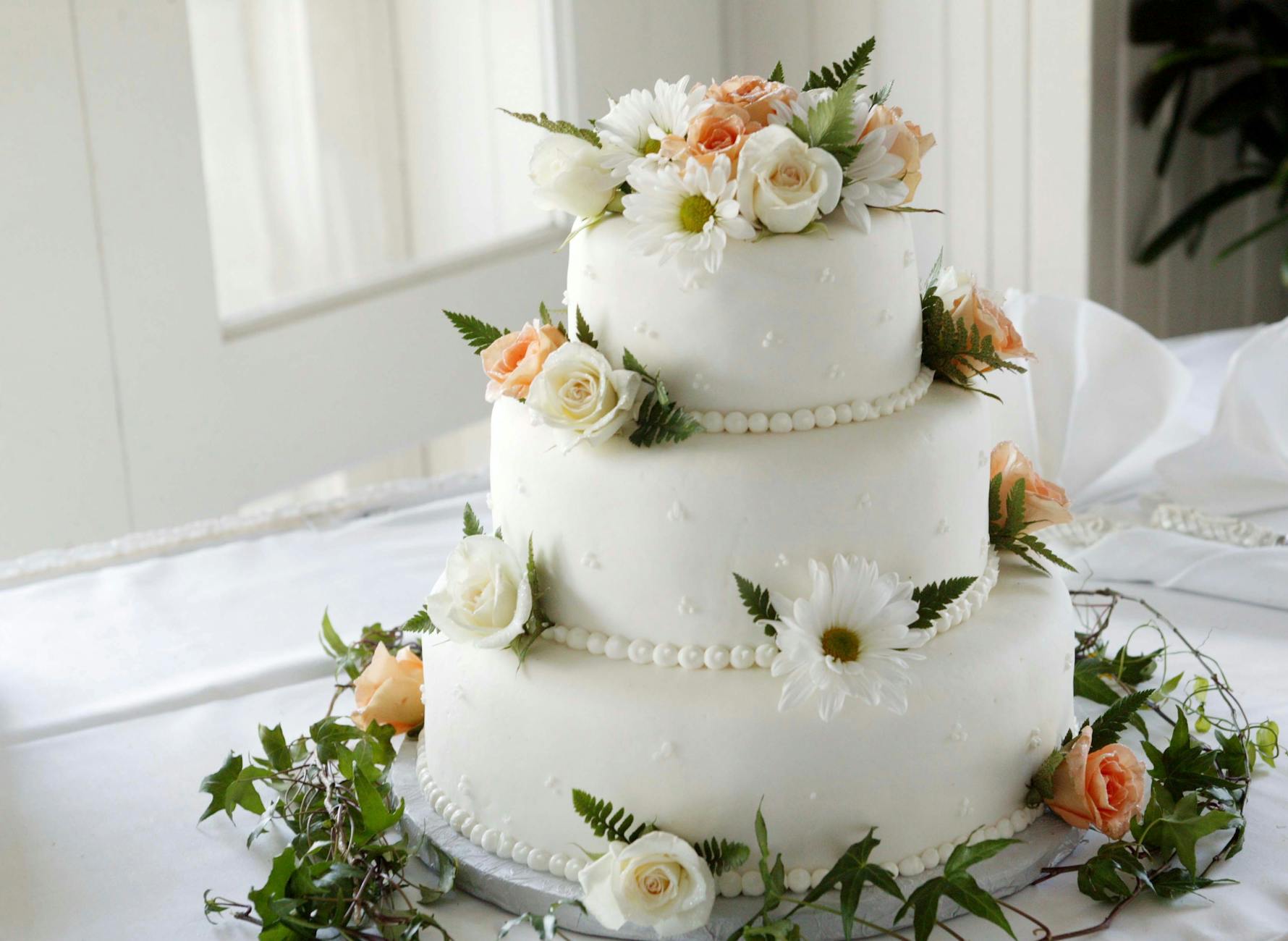
We’re all familiar with the Homophobic Wedding Cake Baker problem. If you run a business baking wedding cakes, can you refuse to bake a wedding cake for a gay couple if you have a religious belief that gay marriage breaks one of God’s commandments? The baker’s religious beliefs persuade them that it is morally wrong for a same sex couple to marry. Does the business have to accommodate a customer who, in the baker’s eyes, is doing something morally wrong?
Now let’s meet the (entirely fictional) Woke Bank. The Woke Bank does not want to offer banking services and financing to a fossil fuel company. Banks, like any company, are run by individuals and those individuals have moral beliefs about right and wrong. Once enough individuals on the Woke Bank’s Board of Directors believe that fossil fuels are contributing to global warming, and they believe that offering their business services to a fossil fuel company is morally wrong, does the bank have to accommodate a company which is, in the Board of Directors’ eyes, doing something morally wrong?
(To reassure any conservatives who fear that Woke Bank might become a reality, I will send you to this article that says banks are financing fossil fuel stuff as fast as they can.)
On August 7, 2025, Trump issued an Executive Order called “Guaranteeing Fair Banking For All Americans.” It says that financial institutions can no longer “restrict law-abiding individuals’ and businesses’ access to financial services on the basis of political or religious beliefs or lawful business activities.” Meaning banks can no longer turn away the gun industry, the fossil fuel industry, or white supremacists, or any other group carrying out ‘lawful’ activity because the bank morally disapproves of them.
Banks were not doing this anyway. But Trump says a bank turned him away after his first term as president, so he wrote an EO about it. It’s mostly political theater. Whatever.
The EO clearly acknowledges the marriage of Christians and Republicans when it calls out (imaginary) discrimination based on “political and religious beliefs”. Over the past ten years or so, we’ve watched as Christianity and Republicans have merged, influenced each other, and become a politically powerful force. Christian moral beliefs now have the might of the Republican party behind them, in addition to the protections extended to religion by the Constitution. And now Trump is putting political beliefs on the same high level as religious beliefs. After all, offering loans to the fossil fuel industry didn’t used to be a religious belief.
Here is the question that I want to focus on: Are moral beliefs that are NOT based on religion entitled to accommodation too? In other words, why does society treat moral beliefs based on religion as being somehow “better” (more worthy of deference and accommodation) than moral beliefs based on science and philosophy? Why allow the Homophobic Baker to refuse to do business with a gay couple based on her moral religious beliefs, and yet require the (wholly fictional) Woke Bank to do business with the fossil fuel industry despite the Board of Director’s moral scientific beliefs against the use of fossil fuels?
Let’s acknowledge that both sides think that the other side’s opinion is based on stupid woo-woo. “The Bible wants me to be a homophobe!” Yeah, you aren’t going to convince anyone who chooses science over the Bible that you’re anything but a bigot who fell for propaganda. “Science proves that fossil fuels contribute to global warming and I want to keep the planet habitable and avoid fossil fuels as much as possible!” Yeah, scientific people aren’t going to convince any religious conservatives that Jesus isn’t going to fix the planet when he arrives next week. Neither side can convince the other.
So … are ethical/moral decisions worthy of the same deference whether they are based on religion or science? Why should the Homophobic Baker get to pick and choose their customers, while the (entirely fictional) Woke Bank is forced to do business with all?
Or should the rule be that, if you’re in business, you can’t turn away customers for ethical or moral reasons? Whether those ethics and morals come from religion or science? My personal opinion is that the no-discrimination rule is the one that will benefit society the most. I’m a liberal, and I wish Woke Banks (should they exist) could refuse to provide bank accounts to the fossil fuel industry, but I acknowledge that I don’t want to open that door and let Homophobic Bakers turn away same-sex couples. If you’re in business, you’re in business with everyone.
And before someone jumps in with a ridiculous example, obviously you can refuse to do business with someone for other reasons. A bank can refuse to make a loan to a fossil fuel company if the risk assessment division says the loan doesn’t fit the criteria they require from any loan applicant. A baker can refuse to bake a cake for someone who won’t make the standard down payment if that is the requirement for both gay and straight couples. If a customer is loud, obnoxious, and rude to the staff, the business owner can refuse to do business with them based on their bad behavior. The rules have to be the same for everyone.
Questions:
Do you think business owners should be able to turn away customers based on moral grounds?
Do you believe that secular moral grounds carry the same weight as religious moral grounds? Or is there something special about religious beliefs?
Given the current political situation, obviously Christian/Republican morals are going to be favored and protected more. Should liberals retaliate? For example, I saw a news article a few years ago about a restaurant refusing to seat a prominent rightwing politician because of his politics. His behavior in the restaurant was entirely proper but they asked him to leave anyway. Is this comparable to the Homophobic Baker?
 Wheat & Tares
Trump’s executive order was not simply because a bank denied him services after his first term as President. Under both the Obama and Biden administrations, the Department of Justice was documented to have used it regulatory powers to coerce banks to drop customers who were providing services to lawful customers in businesses that those in power simply didn’t like. This included everyone from firearm companies to payday lenders. Under the Obama administration, this was known as “Operation Choke Point”.
If you read the actual Executive Order you linked to, you can see that it’s not directed at banks, but at the government’s banking regulators. While the policy section says “It is the policy of the United States that no American should be denied access to financial services because of their constitutionally or statutorily protected beliefs, affiliations, or political views…” when you look at the actual implementation section, it is all about removing the “reputational risk” regulations that were used by regulators to coerce banks into denying services under Operation Choke Point. Those are the same sort of regulations that New York’s Department of Financial Services used to get insurance companies to drop business with the NRA, leading to the NRA v. Vullo case that the Supreme Court decided last year (unanimously finding that behavior unconstitutional).
An individual bank would still be allowed to choose its own customers under this Executive Order, just as much as a baker or florist should be able to choose their own customers. What the Executive Order prohibits is the GOVERNMENT FORCING a bank to drop customers because of their legal business activities.
I believe that artists have an argument that their art should not be forced into the service of something they philosophically oppose. The bakery offered the gay couple any wedding cake in their freezer, but refused to create a special cake celebrating a gay marriage. I think they have a valid argument. Similarly, a wedding photographer considers their business to be artistic, with good reason. Thus, some religious wedding photographers refuse to shoot gay weddings. I think a good argument could be made that they have a right to refuse to perform on command. Incidentally, I have favored gay marriage publicly since the 1990s and was sanctioned by my Stake President for expressing this opinion which he considered out of harmony with the brethren prior to Proposition 8.
Q1. Do you think business owners should be able to turn away customers based on moral grounds?
No. A baker who sells pre-made doughnuts and cakes should sell those doughnuts and cakes to any customer with money (provided that he’s wearing shoes and a shirt!). A restaurant should seat and serve any customer who is able to pay, and who is appropriately dressed. But no one should be forced to do something. For example, a Black wood crafter should not be compelled to make a cross for a KKK rally because he creates other objects in wood for other customers. A Jewish videographer should not be required to put together film segments for a documentary by a pro-Nazi denying the holocaust just because he puts film segments together for other customers. A Christian photographer should not be required to film a pornographic scene because he also films weddings or birthday parties. A business who sells products on a shelf must sell them to any willing buyer who walks in the door. But creating something for someone is different. Think also about a lawn service guy who is approached by a bordello to cut the grass, or a painter to paint the walls of the establishment. The lawn guy and painter should be able to say no, and there are plenty of other lawn guys and painters, especially if you have enough money. The bordello owner has no constitutional right to compel any particular lawn guy or painter to come do work at his facility. But a banker who offers savings and checking accounts: these services should be offered to any legitimate and legal entity. Banks are highly regulated and should generally treat all customers equally. A Catholic bank should handle Protestant accounts no differently from any others. Even a Wiccan group should be able to bank, provided that it has a business license. The bank may refuse, however, to print witchcraft symbols on their checks.
Q2. Do you believe that secular moral grounds carry the same weight as religious moral grounds? Or is there something special about religious beliefs?
In the US, our constitution’s first amendment acknowledges and protects religious belief, specifically and by name. I think that there is something about religion that sets it apart from secular moral grounds in our American society. I am not keen on people saying that they oppose vaccines on religious grounds, for example, when the church with whom they claim affiliation does not oppose vaccines. I think that religious freedom is abused, both by religions and by people seeking the cover of religion. But, to answer the question, yes, there is something special about religious beliefs in our American system. The contours of that specialness is where it gets tricky.
Q3. Given the current political situation, obviously Christian/Republican morals are going to be favored and protected more. Should liberals retaliate? For example, I saw a news article a few years ago about a restaurant refusing to seat a prominent rightwing politician because of his politics. His behavior in the restaurant was entirely proper but they asked him to leave anyway. Is this comparable to the Homophobic Baker?
Two wrongs rarely make a right. No restaurant should be able to exclude a left-wing or a right-wing politician. They may choose not to rent out a room to a cause they don’t like, but table service should be provided to anyone and to everyone, if dressed and acting appropriately (no shoes, no shirt, no service!). No one has a right to have a cake prepared and decorated by an individual baker; and one can generally buy a unique cake in the marketplace. A company might choose not to sell products from Israel, but I can get the product from Target or Amazon. I would be slow to compel someone to do something contrary to his religion, because if we can compel the baker to make a cake for a gay wedding, then can we not also compel the Black wood worker to make a cross for a KKK cross burning? I think the market works better without compulsion. But there are limits. A restaurant cannot refuse service to Black customers, nor a hotel to Black travelers, because they’re in the business of serving people who walk in. They create nothing unique.
I think the question of protecting religious vs. non religious beliefs is an interesting one, but I’m not sure comparing the cake shop and banking examples is a very good test case for that. The cake shop decision, even though I didn’t agree with it, did try to rule narrowly in scope and make it clear that it was about artistic expression. I think the courts might be friendly to similar arguments over a business that involved refusing some kind of artistic expression that not based on religious beliefs. Refusing banking services to someone who frankly isn’t a very good credit risk (especially 4 years ago before Trump got a lot richer on his latest new grifts) seems like a perfectly defensible business decision, and may have had very little to do with Trump’s politics, despite what Trump himself might think.
I do not think that moral beliefs based on religion vs. secular sources should carry different weight. Frankly, some of the strong moral beliefs held by the non-religious often are the result of a good deal more thought than those held by many religious people, which is not to say that there aren’t religious people who do give their moral code a lot of thought, but I’m not sure it’s the norm.
I rarely defend the COJCOLDS but where’s the proof that the LDS church has told its members NOT to offer their services to the gay public? I can’t speak for other churches but I know for a fact that the LDS Church has never issued this directive. Sure, DH Oaks has made some pretty outrageous anti-gay comments but the Church itself is not telling members to discriminate against the homosexual community. Therefore, when an individual LDS member does indeed discriminate, that’s on him/her. Don’t blame the Church for your own bigotry (which I acknowledge may be rooted in LDS teachings but not justified nevertheless).
People have all kinds of prejudices and they love to justify these by invoking a Church or the Bible when in reality most people simply fear other people who are different. Leave religion out of it.
One problem the government ran into with moral as opposed to religious beliefs is the conscious objector problem and the draft. This is where the government put those whose religious beliefs forbid killing even in war into noncombat situations. Well, most everyone with any sense wants out of combat, so the government had to draw a line at only those who belong to a formal religion with that doctrine can get out of combat. But where would that put someone like me who has such strong moral objections to killing even in war that I would lay down my weapon and get killed before killing the enemy. Well, it puts me in combat forced with the real choice of kill or be killed and it puts my comrades in danger. Not a good idea, but the government had to draw a line in the sand and use formal religion as more “real” than moral objection.
The government runs into the same problems with mandatory vaccines. Too many parents want to opt out under “moral objection” just because they are idiots and fall for conspiracies. That risks all the other kids who for medical or real religious belief cannot be vaccinated. There has to be herd immunity to keep the community safe. But the government got too lax about people with conspiracy objections and now we have a measles outbreak killing children with real religious objections and those too young to be vaccinated yet.
When too many people refuse, it is a problem.
But that solution of respecting formal doctrine of a religion rather than just deeply held moral beliefs is an unfair compromise of the government. I think my refusal to kill in war is just as real as a Quaker’s although my religion of record (that I don’t believe anyway) says it is fine to kill in war, it is just a mis match between me and my religion. My belief is probably stronger in not killing than some who belong to a religion that has that as doctrine.
Also, when it is your only choice and they refuse, it becomes a problem.
It becomes a problem with people who object to baking a cake if it is the only bakery around. The people in support of this discrimination say “just go somewhere else.” As if everyone lives in New York City and there are lots of “somewhere else” to go. But my lesbian daughter lives in remote Kansas and there is one tiny bakery in the next town over and after that a three hour drive. YES, Kansas. One small bakery or a two hour drive. I live in a slightly less remote area of Idaho. One small in grocer bakery four small “wide spot in the highway” (can’t hardly call them towns) away, or a 1 1/2 hour drive. It is a real problem if that one bakery refuses.
Or nurses who think they do not have to treat lesbians, or recognize the wife of a lesbian as “next of kin”. My daughter recently ran into such an asshat nurse who said she had a “Christian right” to not recognize that spousal relationship. This caused real pain for my daughter when she couldn’t get updates on her comatose spouse over the phone 5 hours away (remember remote Kansas) or be allowed into the ICU. Luckily someone told the nurse she wasn’t being Christian, but cruel and told her she HAD to respect the legal relationship or get fired. This kind of discrimination based on “religion” can be especially traumatic when someone is dying in ICU.
So, I believe that if you are a doctor or nurse, you have job you signed up to do. If saving a patients life means you do an abortion then the oath a doctor takes covers that and he saves the patients life or breaks his oath to do his best to save people. I don’t think any medical personnel have the right to put their religion ahead of the patients life. Sure, if there is some one else handy, then trade doctors or nurses.
If their religion trumps someone else’s life, they have no right being a doctor or nurse and should find a different job.
Unlike some Republicans, I think taking an oath is serious and should be honored.
If you are going to take a job where you have to do something like violate your religion, then find a different job, whether you are a doctor, a clerk giving marriage licenses, or a baker baking cakes. If you can’t DO the job, then find a different one. It is the same as working Sundays. The person should not expect special treatment. I mean, in a religious area, no body wants to work Sundays, so why should the whiners get special treatment that not everybody in that job can get.
Other commenters have already drawn a reasonable line when it comes to businesses serving customers–if the service constitutes meaningful “speech”, the business should be able to say no if it disagrees with the speech. Drawing that line is much tougher when it comes to banks lending money to entities they have moral qualms about. In theory, I would say that if an oil company wants a loan to drill a well (not speech) and is otherwise a good risk, the bank should have to make the loan. But if they want the loan to buy a series of ads opposing tax breaks for clean energy (clearly speech), then the bank should not have to make the loan. Unfortunately, the fungibility of money makes that line impossible to enforce. An oil company that can afford to drill one more well or run one more anti-clean energy advertising campaign (but not both) can borrow the money and claim to be using it on the drilling while using its own money to run the ad campaign. I don’t see a good fix for that.
And I am sorry cake decorators, but writing on the cake what the customer asks for is NOT artistic expression. It is fulfilling a request. Quite different than an uncommissioned painting or a book of fiction. What if an artist got a commission to photograph a person and refused because that person is gay? To me that falls exactly into the same category as writing what the customer asks to be written. Printing something like a gay pride parade announcement falls into the same category. Not “artistic expression” at all. Just doing what your customer is paying you to do. I just think there is a difference between religious belief and behavior and hateful discrimination. Refusing a customer’s request is just discrimination, not artistic.
“And I am sorry cake decorators, but writing on the cake what the customer asks for is NOT artistic expression. It is fulfilling a request.”
That argument is fallacious, because it assumes that fulfilling a request cannot involve artistic expression. It can be both at the same time.
Is calligraphy artistic expression? If I’m a calligrapher, and you bring me a request to write a message, I still have a lot of artistic leeway in HOW I write the message. In many ways, decorating a cake to include a message on the cake is similar to calligraphy.
In a world where there are so many people who ARE willing to fulfil such a request, I see no justification to use to power of the state to compel anyone to provide a good or service against their will. (At the same time, I also see no justification for the state to compel anyone to deny a legal service to anyone, which is what this EO is actually about.)
Moreover, I don’t understand why someone would WANT to hire someone who has moral objections to providing you a good or service? Why would you want to give them your money? Why would you trust them to give you their best effort, or a quality product?
The only reasons I can think of are 1) if there are no other providers, or 2) to have the moral satisfaction of bending them to your will. The first scenario (in the case of essential goods and services only) is the only case where I can see state compulsion to be even arguably justified. The same principle outlined in D&C 121:41 with regards to the Priesthood should apply to government force. “No power or influence can or ought to be maintained by virtue of the [government], only by persuasion, by long-suffering, by gentleness and meekness, and by love unfeigned;”
Government exists to protect the rights of its citizens, but one person’s rights end when they infringe on another’s rights. No one has the right to the labor of another; to say otherwise is to justify slavery. Government should not be using its power to infringe one person’s rights to grant something to someone else.
Perhaps I’ve found my unpopular opinion but I view a cake as food and not art to be preserved in a gallery. If we can deny services by claiming art, where does it end? Is a specialty drink at Starbucks art? How about the way an employee wraps up a burger at McDonald’s? Is the excel spreadsheet I created for my tax clients art? Cake is not art. It’s food. We don’t discriminate who gets access to food.
This whole conservative two wrongs don’t make a right schtick really just reinforces that their original position is wrong. People screaming that Governor Newsom is wrong for his social media posts and threatening to redistrict CA because two wrongs don’t make a right just reinforces that Trump’s social media posts are vile and that redistricting TX is wrong. So what are THEY doing about it? Nothing. Stand up and say that your party wants to win because you believe in your platform. Unless you actually don’t believe in your platform. Pro-tip, I believe in the platforms I support and vote for.
The longer this administration goes on, the more it exposes itself for what it really is, and while I’m exhausted from trying to stay informed, I’m hopeful that many are slowly becoming disenfranchised each day, even if the reason for their disenfranchisement is simply that they didn’t expect his cruelty to apply to them. Sometimes the best way to help people see what is happening is not for the other party to take the high road, but for them to show you what it looks like when your party loses power.
I’m personally still trying to treat everyone with respect. And there is a point where my empathy simply does not extend to fascists and bigots.
All these thoughtful comments are top-notch. This question is full of moral lines, and concrete examples, and other rights such as freedom of speech and freedom of association. It isn’t easy to answer and I appreciate the thought that has gone into all the responses.
Observer – Probably Operation Chokepoint had some influence on this EO, but it ended 10 years ago, about two years after it began. It found some fraud and stopped some usurious payday lenders. From what I understood from non-rightwing sources, the investigations targeted businesses that had a higher than usual risk for fraud and money laundering. Yes, payday lenders and gun dealers were scrutinized, as were dating and escort services, lottery companies, coin dealers, telemarketing, and a bunch of others.
gebanks, Georgis, and Quentin bring up the difference between artistic services and services without a speech or expression component. Bank accounts are not artistic, so discrimination is indefensible. A wedding cake may be a standard product, with just the names and dates personalized, or it may be a custom made work of art. Getting into the weeds of where that line is makes for interesting discussion. I mean – calligraphy, color choices, borders – when does that cross from “just put the name and date” and “be artistic”? Reasonable minds can differ about wedding cakes. It would be much harder to make that argument about, say, painting a wedding portrait. That’s entirely art.
What about a service that requires you to spend time with your customer? Would a Christian realtor be required to work with a gay couple who wants to buy a house? The easiest solution would be for the gay couple to go find another realtor, but as Anna points out, not every place has a ton of options. And if you allow discrimination because customers can go elsewhere, what happens when the discrimination gets so widespread that there aren’t options anymore? Allowing the Christian baker to turn down the gay couple works if there is just a few Christian bakers and a hundred other bakers. Does the right to turn away a customer depend on how big your city is and the availability of options?
Georgis is right that being able to turn down a customer matters for a whole bunch of different viewpoints and situations. He gave good examples. This protection is needed.
And – new thought incoming – I think this exception works better as “freedom of association” than it does as a religious freedom. That might be where secular moral beliefs get their protection. The bank doesn’t have to make a loan to finance fossil fuel ad campaign because of freedom of association.
josh h brings up a point that courts never want to examine — is the belief a genuine religious belief? Courts don’t want to start ruling on which religious beliefs are valid or not. So while no religious doctrine prohibits vaccines, courts don’t want to rule on that. It’s called “excessive entanglement” and they avoid it.
Anna’s points about conscientious objectors shows what happens when the government gets “excessively entangled” and tries to determine if a religious belief is genuinely religious. This same issue came up when a bunch of marijuana churches sprang up in the 70s or 80s (I think) and their sole religious doctrine was smoking weed and their only members were their family. The govt shuts down insincere religious belief when it has to, but it isn’t going to challenge a Christian who is homophobic, even though there are also a lot of Christians who accept homosexuality just fine.
Something these so-called Christians should consider (but they won’t and they don’t) is that these exact same arguments were used to justify refusing to provide services to black people.
If there is a political pendulum swing in the next three years will the next POTUS have to spend a month drafting and signing EOs overturning Trump’s EOs, or should she just sign a single EO overturning every single one of Trump’s EOs? Those who live by the EO may leave a legacy that dies by an EO.
No shirts, No Service:
We don’t serve Bigots or Racists here:
Businesses make declarations about their expectations. Usually about selling the best product or service, but it can include “moral” beliefs. Chick-fil-A does it with their not being open on Sundays, and Hobby Lobby with making sure their insurance doesn’t pay for abortions or same sex marriage partners.
When I don’t agree with a business’s stand on an issue, I just don’t go to it. So it’s Michael’s instead of Hobby Lobby, Target instead of Walmart. Even these can change, though, because Target caved on doing away with their DEI training, and Walmart invests so well in their local communities. I vote with my dollars and resent the government getting involved in my decisions.
As for Executive Orders, there are so many other “issues” the next president will have to deal with. The GOP has been crying about a “Deep State” that has been trying to stop them, yet Trump has fired and retaliated against those who have spoken against him and put in place those who agree with him. Not only civil servants but judges to the Supreme Court and lower courts who constantly rule in his favor when it’s clearly against the Constitution. Business rights are only one issue. Hundreds of others have changed the landscape of our country. We need to speak truth to power to have the Constitution apply to all people, not just the “elect.”
Obviously the motivation is an important consideration.
During the week my wife and I drove down the coast, for a day out. On the way back we needed a few more kilometers on our tesla x, and lunch. We found an RSL club that had tesla chargers and a restraunt, so asked the car to take us there. When we got there there were ice cars in all the ev charging spots. The club said disabled drivers took priority. We checked when we got home, and there is a $2000 fine for parking an ice vehicle in an ev charging spot, so we sent an email to the club pointing this out. They sent back a message that they would be educating their staff.
On a much more serious moral question.
Australia, has joined France,Germany, UK, Canada, NZ, and 150 other countries in saying they will recognise a Palistinian state with the borders it had in 1948 when the UN next meets in September, and if hamas is not in the leadership, and if there is an election within 12 months. Unless Israel withdraws it’s troops, restores power, food and medical supplies, and stops invading palistine, bombing it, starving its people, and assisinatingDel it’s journalists.
They are not specifying what Israel’s leadership should look like. I would.
The problem is that this will not save lives because USA will veto the UN vote and continue to supply bombs, guns etc to Israel. Could you please contact your federal representatives and convey that you would like America to not veto the vote, and stop supplying bombs etc. to Israel. Israel’s reputation is destroyed, and America is too if it continues to aid in the killing of women and children.
Anon, Geoff, I don’t see your posts’ connection to the original post or to the comments. Can you help me out?
I need to correct and clarify my prior comment. I praised Georgis’s examples of situations in which someone would have a legitimate objection to doing work – like a filmographer not wanting to film porn, or a lawncare company not wanting to take care of the lawn at a bordello. Those are good situations to discuss that help illustrate the issues.
But I’m going to push back on two of his examples. Georgis said, “For example, a Black wood crafter should not be compelled to make a cross for a KKK rally because he creates other objects in wood for other customers. A Jewish videographer should not be required to put together film segments for a documentary by a pro-Nazi denying the holocaust just because he puts film segments together for other customers.”
You can’t compare an engaged gay couple to the KKK or a pro-Nazi holocaust denier. The KKK have lynched and terrorized Black people. The Nazis tried to entirely wipe out Jews (and the Roma, disabled, homosexuals). The KKK and Nazis are vile hate groups who have murdered, destroyed, and terrorized Blacks and Jews. No Black person or Jew should be forced to associate with them. Ever.
Gay people have never done harm to Christians. Probably the worst is a gay person saying something mean on Twitter in response to a Christian telling them they’re abominations and going to hell. But those are just words, and gay people have a right to speak up on their own behalf. Gays have not persecuted Christians. The book bans are all Christians banning queer books; gay people have not tried to ban any books. Gays are not trying to pass laws to prohibit Christians from meeting, or even to stop them from all their annoying proselytizing. Christians don’t think twice before holding hands with a spouse in public — something that can trigger physical or verbal attacks if a gay couple holds hands.
Homophobic Christian Bakers are whiney snowflakes. Gay people exist. Get over yourselves and learn to share the planet.
I strongly condemn any hypothetical that equates gay people with Nazis or the KKK. Gay people are harmless. You may find them annoying or excessive, but no gay person has ever threatened your rights or your life.
Regarding your first number 1. question (I guess they were all equally important :-), should businesses turn down customers based on moral grounds, I can tell you that banks do this every day. Ostensibly a bank will have a policy that they cannot lend to the gaming industry because they do not have a gaming license and therefore cannot take a security interest in the equipment. Also, a federally charted bank will have a rule that they cannot lend to cannabis growers because even though in many states marijuana is legal, it is still illegal on a federal level. Do they prohibit lending in those situations for the technical reasons they give or is it for moral reasons?
Janey, we agree, and I do not equate the LGBTQ community to the KKK or Nazis. My examples focus on the artist or service provider, not on the customer. When can one say no to a business proposition? When can we use the power of the state to force someone to do something for money? When can we compel another’s action? When can one person impress another person to perform some act against their will? Can I compel, under penalty of law, a 16 year old to babysit my children tonight because she babysat a neighbor’s children last night? But the restaurant owner must, by law, provide meals to customers irrespective of their race, and this is right. Who decides when a provider can say no? What is required for a citizen to engage the power of the state to compel performance by another citizen? Sometimes compulsion is legitimate, but not always. Who decides, and how? Where do we draw the lines?
My eternal question to all backers of homophobic bakers who refuse business to individuals on what most clearly appears to be exclusively in the basis of sexual orientation. What if they were doing that to someone because they were a Jew? You have the freedom to be homophobic. You shouldn’t have the freedom to impose your homophobia on someone by denying them business. All reasoning defending this is mealy-mouthed nonsense. I’m interested in true freedom: the freedom of LGBTQs to patronize whatever business they want. I’m not interested in the fake freedom of business owners to impose their homophobia on anyone.
As a graduate student in counseling, studying at a Catholic University, this is an ethical and legal issue every counselor is asked to be prepared for. The ethics code of the American Counseling Association teaches that an ethical counselor cannot turn a client away because of their own religious beliefs. Additionally, counselors defer to the client’s goals and purposes for counseling, and do not impose their own goals and values on the client (for instance a counselor may not encourage or discourage a client from seeking an abortion). Counselors should encourage the client to explore the pros and cons of a decision based on their own values.
If a counselor lacks expertise in a certain area, they must seek supervision and educational resources for themselves rather than automatically referring the client. Obviously a counselor must stay within their scope of practice of the jurisdiction in which they offer services.
It is considered unethical for a counselor to refuse to counsel an LGBTQ person. Counselors in training can plan to be cut from their program if they do this, fired from their jobs, or sued by their clients. No one is required to accommodate the counselor’s beliefs.
The reason for this is because LGBTQ people often do not present clearly as LGBTQ, looking for an LGBTQ affirming counselor, because they often do not feel safe to come out as LGBTQ. Instead they seek counseling and then when over time they eventually trust the counselor, they share their situation. If the counselor refers at that point it is experienced as a rejection and can make the client’s mental health worse. It’s unethical for a counselor to do harm in this way.
Counselors are to prepare themselves to offer counseling services to people of all races, ethnicities, politics, religions, gender or sexuality. This isn’t easy to do for many counselors but it is a necessary ethics for counseling, though there are counselors that do better with this than others. We are just people.
Frankly, I have a hard time having respect for businesses that choose not to find a way to serve any customer that asks for their services. I wouldn’t protect them under the law if it were my choice. If you go into business to make wedding cakes you should make a cake for any wedding in your area, as long as they are willing to pay. As for banks, they should offer loans based on fiscal safety for the bank, not based on their own morality.
“Who decides, and how? Where do we draw the lines?”
Same mealy-mouthed questions were asked during Jim Crow. Same bad argumentation that individual white business owners had to have their freedom to deny business to whomever they wanted. These questions are nothing more than a poor excuse to not stand up for justice. These questions are weak and cowardly. If you believe that white business owners were wrong to deny business to blacks simply on the basis of their skin color, then you are a hypocrite who holds a logically inconsistent double standard if you say that any business owner anywhere has the right to deny business simply on the basis of someone’s sexual orientation. “Oh, but artistic license… Blah, blah, blah…” Yeah and if that individual were black you know that argument wouldn’t pass muster and you know that damn well!
All the commenters saying this kind of weaselly crap are revealing that there is at least a part of them who is homophobic. Let’s just state the obvious at this point.
lws wrote: “I have a hard time having respect for businesses that choose not to find a way to serve any customer that asks for their services. I wouldn’t protect them under the law if it were my choice.” I read this to mean that lws would use the law to compel that business to “to serve any customer that asks…” So you would compel the wood crafter to make a cross for a client who intends to burn the cross at a kkk rally? Our law allows attorneys to refuse clients, does it not? Would we force an athiest artist to paint a painting showing the adoration of the Virgin Mary? My argument is less about the practice itself and is more about using the strong arm of the state to compel someone’s performance against their will. I can always take my business elsewhere if I disagree with a firm, and I can (and do) take my business to local firms who sponsor little league teams.
Brad, we agree: I do not see a lot of artistry in making a wedding cake. The baker is almost always anonymous to the guests who eat the cake, and the cake is intended to be consumed soon after its production. A baker is more craftsman than artist. But if we draw a line that compels the baker, would the same line not also compel the wood worker? As I undertand it, and I could be wrong, the baker had no problem selling to a gay couple. His problem was with creating something that would be used to celebrate something that he opposed. It wasn’t the customer, it was the purpose. Is it legitimate to look at the purpose? May a businessman (and mosts artists are in business) say no to a commission, looking at the purpose? In some cases, I think yes. I some cases, no. Where is the line? The line with Jim Crow laws is workable: hotels renting rooms and restaurants serving meals cannot look at the race of their customers. If you sell it on a shelf, anyone can buy it. That works. But commissions for created things, I can see where an artist or craftsman might want to look at the purpose. Same for services: would we use the law to compel a teenager who babysat last Tuesday evening for a straight couple to babysit next Tuesday for a gay couple? Must the teenager accept all commissions if she accepts one? Can we call the local police to compel her performance?
Out on this end. Thanks, Janey, for the interesting and stimulating post.
Georgis,
No, what the customer does with the item after it’s crafted is not the business of the craftsman. At that point the item belongs to the person, and the ethics involved are on the person who bought the cross. If I am a wood craftsman I can make crosses, and after they are sold, it’s over. Craftsmen can choose what kind of crosses they make and they can offer those alternatives to everyone. On the same basis a cake maker can sell cakes to anyone who wants to buy them. They can choose to only sell male/female bride and grooms the customer can add to the cake. They can choose not to sell same sex couples for the top of the cake, but they still should sell the cake to a same sex couple and let them get get their same sex ornaments elsewhere.
Teenagers aren’t compelled to babysit at all. In fact they often are only allowed to work at homes where their parents consider them safe. If their parents have gay friends I imagine they would be included. If the teenager wanted more work and was caught up on their homework they could take the job. Otherwise no.
As you stated, these are complex issues and making them black and white is a problem. Art work is about the artist. Artists can’t be compelled to work anymore than teenagers.
But no, I don’t think we get to decide what people do with our work after they purchase it and leave the premises. That’s totally on them. I think this is a boundary issue. Even artists don’t get to decide what happens to their art work after they sell it. Whoever they sell it to can sell to anyone and it can be used in an unexpected way, or even destroyed.
The cake sold for a heterosexual wedding could be resold right away by the heterosexual couple to a same sex couple the next day if the first wedding was called off.
Oh, and Georgis, my key word there was respect. I respect people who have clear boundaries, and don’t try to enforce their own values on other people. I said I have a hard time respecting people, I said nothing about the law.
Obviously, laws are often necessary to protect people who would otherwise face discrimination and stigma in every interaction, ruining their mental health, socioeconomic status and physical health. Discrimination and stigma have very serious negative effects and shouldn’t be brushed off as a trivial matter. However, the law also has complex effects, too complex for me to address completely. However, I just wrote a term paper on the effects of discrimination on transgender people. There are mountains of careful research on this topic. Discrimination is a huge predictor of higher rates of anxiety and depression. We need to do more to protect every member of society from these impacts rather than making people more free to hurt others.
As I said, it’s just a matter of my own opinion and my respect. A lot of people just have no idea the harm they are causing
“As I undertand it, and I could be wrong, the baker had no problem selling to a gay couple. His problem was with creating something that would be used to celebrate something that he opposed.”
A distinction without a difference. Raw homophobia was at the root of the baker’s decision-making, and it was unjustly imposed on the gay couple. Deny business for any reason, sure. But not because of someone’s race, gender, sexual orientation, or disability.
Some of these questions are very gray. The idea of my rights end where yours begin is great, except when either way you look at it, somebody’s rights get trampled. For example, trans athletes on women’s or girls teams. If the trans woman transitions late, years after puberty, there are physical advantages she has for life in upper body strength and lung capacity. So, look at a “girls” swim team in high school. The trans girl has a huge advantage because of the testosterone her body had until she completed transition. Very unfair to the is girls to put her on the girls team. But if you make her be on the boys team, it is terribly unfair to her as a (now) girl. So, whose rights are most important the trans girl or the cis girls? Either way, someone’s rights get trampled.
It is the same way with some of these questions. The right to associate IS important. And rather than free speech, I think we should be looking at some of these from a right to associate viewpoint. Let’s pick a more extreme example than gay rights. Should the black photographer be forced to spend time taking photos at the KKK rally? Obviously not. It isn’t his “speech” that is being infringed so much as his being forced to associate with such folk. Now, does this ruling apply equally to the homophobe photographer
Say my lesbian daughter wants a portrait painted of her and her wife? All she is asking is paint a picture of the two of them together. The “artistic expression “ is in how well he paints two people. It is not a statement approving of what any two people do in the bedroom. But does the artist have the right to object because he knows they are a married couple rather than two sisters? Seems he is first of all reading his approval/disapproval into the relationship and then discriminating against them because he knows they are married. If the couple lie and say they are sisters, then the artist would have no problem painting these two people. It really is a gray area of whose rights do we respect as a culture. Our current supreme court is respecting the artist and not the gay couple. I think that is going too far toward respecting wimpy snowflakes.
Think back a few generations to when us “good Mormons” felt morally superior to blacks. Yes, I knew people of the (self proclaimed) greatest generation who would think they had every right to refuse to serve blacks in their restaurant or photograph them or paint their portrait. Now we would say that is pure discrimination. So, how exactly is it different now that unChristlike “Christians” are claiming free speech rights to discriminate against LGBT.
Brad,
You are welcome to be bothered that someone thinks different than you. The question that matters is what obligation does a person have to SERVE the REQUEST of another person?
Must an illustrator accept requests to illustrate a book for anyone that asks?
Must a photographer accept requests for shoots for anyone that asks?
Must a writer accept a request to write what anyone asks?
Clearly no. Clearly a person reserves the right to reject offers for work. Should society care what those reasons are? Must a person accept a request so that Brad is not offended? I don’t see how that standard is workable. What offends Brad does not offend others and what offends others does not offend Brad.
What works in a free and open society is for individuals to choose for themselves the associations they support. Erode this freedom at great peril. For as much as you hate the idea of the cake maker choosing to act contrary to your wishes, someday you may find yourself in the same position as the cake maker and you will be very grateful you have the right to reject a request for your services. It should not matter why you reject the request. Maybe the request is contrary to your values. Maybe you don’t feel motivated about it. In a free society your reason for saying no should not matter! But in a society where you don’t have the right to say no, you are then in a predicament of justifying to authority why you said no. And when you must ask for permission to act for yourself, you are no longer a free person.
I’ve been thinking more about Georgis’s examples and my previous comments and I’m going to take a stab at answering these questions that he asked:
“Who decides when a provider can say no? What is required for a citizen to engage the power of the state to compel performance by another citizen? Sometimes compulsion is legitimate, but not always. Who decides, and how? Where do we draw the lines?”
We have non-discrimination laws that have drawn lines after years of societal argument and trial-and-error.
hawkgrrl’s comment about how the arguments the homophobic baker uses were also used against Blacks suddenly drew a connection for me that I haven’t seen before. I’d thought that comparison was the similarity between Blacks and gays was because they were both immutable characteristics. But it’s also about how Blacks and gays have been treated. Racists have murdered Blacks, passed Jim Crow laws, discriminated against them in housing, employment, and education. Black people have been subjected to widespread systemic harm that everyone can see. That’s why race is a protected class. Because of the harm that racists have done to Black people. The laws now say you can’t discriminate based on race. The racist baker has to bake a wedding cake for a Black or interracial couple. The laws, the power of the state, the collective will of the people, have said that no business can discriminate based on race.
Same thing with gays. Straight people have murdered gays, passed laws criminalizing gay sex, passed laws to criminalize being transgender or making it as hard as possible to transition, persecuted gays, discriminated against them in housing, employment, and education. Gay people have been murdered, harassed, and persecuted for a long time over such a wide range of behaviors that it’s systemic, and everyone can see that. There are now laws saying you can’t discriminate against gay people.
The similarity is that both Blacks and gay/trans people are part of groups who have been treated horribly. Society collectively realized that was wrong and passed laws to say, “no more of this!” That’s when the power of the state can compel a business owner to serve someone they personally don’t like.
The KKK is not a protected class. They are a hate group. No laws protect them because society does not want to protect them. A Black woodworker does not have to make a cross for someone in the KKK because it’s just fine to discriminate against the KKK. A bar can tell someone wearing a Nazi symbol to leave, even if the Nazi has been otherwise polite, because Nazis are a hate group and it is fine to discriminate against Nazis. The reason the laws don’t protect Nazis are because society doesn’t want to protect Nazis.
So. I walk back any thing I might have said earlier that suggested that business owners should be able to turn away customers for personal reasons. No. Follow the law. The people, through elected reps, have chosen to use the power of the state to say that no one can refuse to serve a gay person or a Black person.
Society isn’t protecting homophobes. That’s in the political crosshairs right now. Christians are trying to say that this is about freedom of religion, but it really isn’t. Christians are not being persecuted if they have to make a wedding cake for a gay couple. Instead, the gay couple is being persecuted by the Christians — Christianity is a huge reason that gays have been hurt and marginalized for so long. Christians no longer have the right to discriminate against gays, any more than racists have the right to discriminate against Blacks.
And it’s sure a twist of the word to say that more equality for previously marginalized groups somehow makes society ‘less free,’ Disciple. Sometimes we balance rights. And the right of gays and Blacks and other groups of people protected by laws outweigh the “right” (aka hatred, cruelty, bigotry) to “choose” who they associate with. If you go into business, you’re agreeing to obey the laws governing a business. Non-discrimination is one of those laws.
Disciple, a cake is not a writing assignment. While I agree with your examples, I don’t think your specific examples apply to bakers saying they refuse to write “congratulations Mary and Susan” on the top of a cake. Your examples were pretty much in the area that I agree with you. An author should not be forced to write something he finds offensive. But what about the printer who is hired to print what someone else has written? If the bakers puts up his shingle saying he does wedding cakes, he should not be allowed to say to customers who respond to his invitation for business with “except for gay couples.” If he says he does wedding cakes, then he better do wedding cakes or it is false advertising. He has no right to say no to one wedding because the couple are gay, or interracial. Like I said above, I remember people refusing to allow blacks to sit at the lunch counter. How is that different than the baker who is willing to write on the cake “Congratulation Bill and Susan” but refuses to write on the cake, “Congratulations Mary and Susan.” People used to have “moral” objection from drinking from the same water fountain or using the same toilet as blacks. How is that baker really any different that the people who have a “moral” objection to serving a black person.
I had a friend growing up who had to go out of state to marry her black boyfriend because some people in her state thought it was immoral. My daughter had to go out of state to marry her wife because some people thought that was immoral. How are those two things really different? Asking for some black guy on the Supreme Court whose wife is white and he opposes gay marriage. How is it different?
lsw, no wonder I draw the line on non discrimination the same place as you said. We were taught the same professional ethics. People are harmed by others treating as if they are not good enough to receive the advertised services. If a baker advertises that he does wedding cakes, then he should DO any wedding cake requested, or he should stop advertising that he provides that service. Maybe if he proudly announced his prejudice, by hanging up his sign as “We do *straight* wedding cakes,” then I might not have such a problem with his choice. But to start writing up a contract and then back out of it when it is “Mary and Susan” that is just false advertising. See, then I can boycott his business. But give me the respect of being able to choose who I do business with just as much as you want the right to choose who you do business with. I want MY right to boycott bigots. If a baker/photographer/whatever is restricting his business then I want to know those restrictions ahead of time. My daughter considers it most important to know which businesses are gay friendly and boycotts those who are not. In fact she has started boycotting all businesses until she establishes that they are gay friendly. She shouldn’t have to boycott until proven safe. But she has just run into too many bigoted ijits.
So much lack of imagination/understanding from the conservatives here. That they can’t tell the difference between a choice (belonging to hate group) and biology (being black or gay) is greatly disturbing.
Oops, left that thought haninging. Discrimination against the former (people’s choices) may or may not be appropriate, but should nevertheless be proptected; discrimination against the latter (biological difference) is not apporpriate and should not be protected.
As I understand as a layman, discrimination based on sexual orientation is prohibited under federal employment law because a court interpreted sex to include sexual orientation.
But the federal law that prohibits discrimination in providing public accommodations does not seem to include sex or sexual orientation. I don’t know why this is, but an action by the Congress to amend that law in two ways would seem to address OP’s concern: (1) add sexual orientation as a prohibited basis; and (2) expand the definition of public accommodation beyond places like hotels, restaurants, and entertainment venues so that it clearly reaches bespoke cake decorators.
Note: All of the above talks about federal law; some states may already have public accommodation laws that reach further than the federal law.
More fascistic bigotry from A Disciple (a disciple of bigotry and defending police brutalizers of Jan. 6, I guess?) who has a long history of such. Dial the clock back a few decades, folks like A Disciple would be kicking and screaming against the repeal of Jim Crow. Dial it back a few decades before that, they would be proudly fighting on the Confederate side in the name of preserving slavery and complaining about how we can’t call blacks monkeys anymore without one of them Yankees getting offended.
And of course these fascistic screeds wouldn’t be complete without lectures about the freedom of bigots to hate. Never does it occur to the fascists that the freedoms of LGBTQs matter somewhere in the overall calculus of what is freedom.
If a business is a public accommodation then it should serve all. This is a well defined legal concept. Basically, if you are open to the general public you should serve all.
I should note that just because of claims that a gay dentist spread HIV to straight patients to make the point that everyone can get HIV (debunked here: https://en.wikipedia.org/wiki/David_J._Acer) doesn’t invalidate the point.
As for military service, the non-combatant role of combat medic is always under filled. Without getting into the economics of it, serving as a medic opposes war.
That remains open for conscientious objectors.
Woke banks exist.
I work in financial services in Europe. and over here we have banks and investment firms who won‘t lend to, or invest in, fossil fuel and other types of companies (tobacco, controversial weapons etc).
And the investment firms will also analyze companies supply chains and hiring practices against social and environmental criteria.
As Janey astutely observed, these activities aren‘t equivalent to the baker denying services, because ESG investing doesn‘t discriminate against a protected group.
Eugene – thanks for your comment! I’m glad that woke banks exist in Europe. With America’s slide back into reactionary authoritarianism, it’s good to know that other parts of the world care about the planet and will take steps to address the climate crisis. Europe is making headway. I’ve also been encouraged by news stories about China charging ahead (pun intended) in adopting solar energy. The planet needs woke banks and woke countries. The USA has nothing to offer right now.
Anna
Thanks for pointing out how the issue affects real people just trying to live in the world.
About 30 years ago or so, my state or city added sexual orientation to the nondiscrimination code. Several older gay people were upset that the the lookie loos could now come in their safe space and gawk. That the gay bashers, instead of waiting outside gay bars, could now come inside. (As for registered domestic partnerships, why would they let the government know who they were.) Straight people could no longer be discriminated against.
If you don’t want to hide in the shadows(and then being blamed for being in shadows)then you have to be free to shop and live and walk down the street and buy crappy cakes.
As for moral reasons, health food store don’t have to sell junk food. But if the are open to the public or have government contracts, they should serve the public their tasteless food. No matter how much “moral” disdain they have towards certain protected classes.
I think you’re mischaracterizing the issue. This is a question of free speech. The government cannot limit legitimate free speech but the issue being missed is that the government cannot compel speech. That’s what you are asking the government to do to the baker, compel him to create something he does not want to do. That’s why the baker successfully won at the Supreme Court level. Twice. The baker cannot refuse to sell premade cakes on hand but he can refuse to create a cake for an action he doesn’t agree with and you cannot use the power of the government to compel him to create such a cake. Same with banking. Standard banking services are available to all but banks cannot be compelled to create special or unique loans and services that they do not want to do. You’re attempting to use the power of government to compel others to bend to your will and it isn’t the right thing to do.
Brad D,
Wikipedia gives this summary of Fascism:
“Fascism is characterized by a dictatorial leader, centralized autocracy, militarism, forcible suppression of opposition, belief in a natural social hierarchy, subordination of individual interests for the perceived interest of the nation or race, and strong regimentation of society and the economy.”
What power, authority and control does a cake maker have? You seem to be imagining a world where individuals exercising their personal agency constitute a centralized, oppressive force. But that makes no sense!
In all these disputes it is clear who is the Totalitarian. It is the government attempting to compel specific behaviors of individuals. It is the government arguing with the threat of force that an individual must comply with the state’s interest.
I marvel that those so eager to toss the Fascist label misunderstand so greatly what Fascism is. For how can one who desires the liberality that individuals be free to abide their conscience be labeled Fascist? Can you explain?
The greatest freedom an individual has in society is the power to say No – the power to act independent of the State, the Party and what other individuals want. The Totalitarian is the person who removes this freedom and imposes the burden that individuals must agree to what the Party demands.
How about you “stay in your own lane” – live your life as best you can and never, ever, ever attempt to compel another human being to absorb your way of thinking. Harsh? Perhaps. Realistic? Yes. Difficult? Of course. To do otherwise, is to create deep seated resentment – which festers and only grows. Attempts to force everyone to think or “do” a certain way….never works out in the end.
I missed the discussion on Janey’s amazing post Of Banks and Wedding Cakes. I’m late to the discussion, but I hope to offer a solution.
This has been a topic I’ve been mulling over for a very long time. Information policy, particularly in the First Amendment, has been a passion of mine, and the subject of many a writing. I see the entire spectrum when it comes to this issue.
Forcing artists to create is no solution, yet Anna’s insightful post highlights the real problem because there is a lack of services in certain areas. Even if there is more than one baker or other service in the area, there’s no guarantee that they all won’t have the same religious objections to having their art, their freedom of expression, used to support something they are vehemently against.
As I said, I’m into First Amendment Information Policy, and I think the solution lies in the now abandoned Fairness Doctrine. In ye olden days before internet, before even cable media, we had the big three networks and a handful of local television and radio stations.
These stations all broadcast on the electromagnetic spectrum, which it was determined belonged to the people of the United States as a whole. In order to broadcast, stations had to be licensed by the FCC, which authorized them to use the spectrum and designate which part they were allowed to use so there was no conflict with other stations.
Because of the scarcity of the spectrum and the barriers for others to become broadcasters, they instituted rules that ensured stations give fair treatment by presenting controversial topics and the different viewpoints surrounding them. This is different from the equal time rule where stations are obligated to give an equal amount of time to a candidate’s opponent on the station.
One of the more famous cases involving the Fairness Doctrine is Red Lion LLC v. FCC, wherein the station tried to get the FCC’s rule tossed out, claiming it was a violation of First Amendment free speech. The court ruled because of the scarcity of the spectrum and the barriers to entry for competing stations, that it is the right of the viewers and listeners, not the right of the broadcasters, which is paramount.” The Fairness Doctrine preserved the collective people’s right to receive the information, which was far more fundamentally important than an individual right to expression.
And this is the solution. Businesses must be licensed. They agree to certain rules in order to do business in the community, to do business with the community. There must be enough businesses in order to give services to every member of the community. They have a collective right authorized by their elected government that allows the business to operate within their community. When there are only a few businesses, they must all do business with the entire community according to the license. When a certain threshold has been passed, when there are businesses, perhaps then certain businesses can choose to limit with whom they do business with. As said, in New York City, there are plenty of alternatives, at which point the community can vote with their dollars as well as speech.
The obvious exception to this I think are civil servants, whose job it is to serve the entire public no matter what, and those in medicine, who have an obligation to do no harm. Both professions no full well when choosing their careers that this is the game. Teachers aren’t allowed to expel students based on religious belief or non-belief. It would be absurd. (Though I very much fear those in power may attempt it soon).