
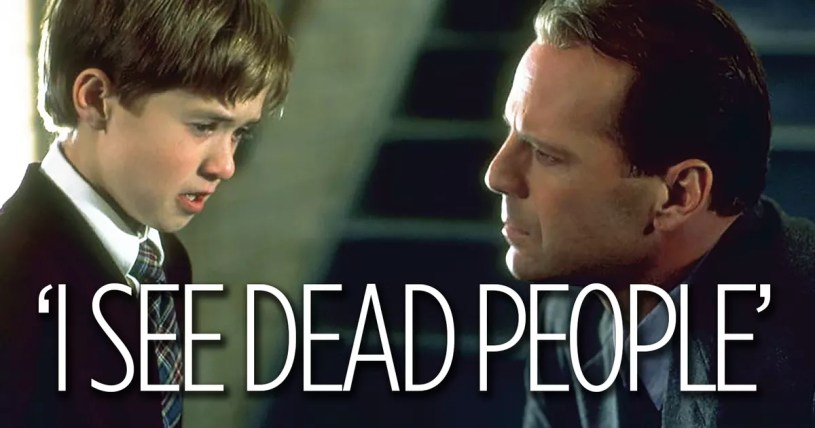
For me, 2025 has so far been a year of thinking about the end of life. I lost both my mother and my much younger mother-in-law in the first few months of the year, and was present in the room for the latter. These events have re-ignited my interest in stories about what happens to us during the process of dying. A few of the books on this subject that I quickly devoured are Roz Chast’s graphic novel about her parents’ eventual final decline Can’t We Talk About Something More Pleasant?, hospice care nurse and TikTok star Hadley Vlahos’ collection of stories The In-Between: Unforgettable Encounters during Life’s Final Moments, and atheist and journalist Sebastian Junger’s memoir In My Time of Dying: How I Came Face to Face with the Idea of an Afterlife.
One of the most common phenomena during the death process is that of seeing deceased loved ones shortly before death. This occurs across cultures, religions, and time periods. Studies estimate that 50-80% of dying patients experience seeing the dead during the days or hours before death occurs. These are usually family or friends. Sometimes they are deceased children of the one dying. Sometimes they are those who are very recently deceased. These experiences occur when the patients are conscious and lucid and are usually considered comforting rather than frightening.
There is a story I grew up hearing about from my mother’s Lutheran family. When her grandfather died, her aunt was very upset. They had been extremely close, and she was grieving so much that she wasn’t eating and had made herself gravely ill. She had a vision of her deceased father visiting her in her bedroom in which he told her that he was all right, and that she needed to stop grieving and start living or she would soon join him. She was so frightened by this encounter that she stopped grieving and went back to normal life. She didn’t want him to come back!
When I was living in Singapore, the much anticipated final movie in the Harry Potter series, Deathly Hallows Part 2, was in theaters. Everyone lined up to see it. In the restroom after the film I overheard two Singaporean women discussing their confusion about the King’s Cross scene in which a dying Harry has a discussion with Dumbledore. Ultimately, Dumbledore advises him that he can choose to return to fight Voldemort or can choose to die like Dumbledore has before him. This encounter is very similar to Near Death Experiences (NDEs) we’ve all heard about in western culture, but these women found the scene a bit confusing. It didn’t make sense within their worldview. There were some assumptions that were unstated in the scene that didn’t translate. I asked my assistant about it at work afterward, and she had also been confused by the scene. Was he dead or alive? Was it a vision or an encounter? Why were they in a train station?
While studies show that dying people across cultures, including Asian cultures, see “dead people” as they are dying, the meaning of these experiences about them vary depending on the cultural assumptions of the patient. They are not universal evidence of an afterlife that is consistent with Anglicanism, for example, except when the one dying is an Anglican. Deathbed Visions (DBVs) may be consistent across cultures, but how they manifest differs. They are not “evidence,” as some memoirs have claimed that their own religious perspective is correct; if they were, then dying Buddhists would see Jesus and angels.
| Feature | Western Culture | Eastern Culture |
|---|---|---|
| Common figures seen | Deceased relatives, Jesus, angels | Ancestors, karmic beings, religious deities |
| Afterlife belief | Heaven/hell (linear) | Rebirth, reincarnation (cyclical) |
| Emotional tone | Comfort, closure, reassurance | Transition, preparation, spiritual duty |
| Cultural reaction | Spiritual comfort or medical skepticism | Natural part of death, culturally accepted |
| Ritual response | Prayers, sacraments | Chanting, ancestor offerings, death rites |
This points to the idea that our religious or personal beliefs about the afterlife color the experience of dying rather than that the experience of dying reveals accurate, universally-true information about the afterlife.
In Junger’s memoir about his own NDE, he feels himself being sucked into a black pit. His deceased father assures him it will be all right if he gives in. This view of the afterlife honestly sounds terrifying to me, and possibly even to Junger. While he found his father’s words to be comforting, he chose to fight to live rather than have his consciousness be sucked into a black pit of unfathomable depths from which he could not emerge. The idea of remaining conscious but disembodied sounded bad, not good. Others who experience NDEs report being told it’s OK to “go toward the light” or to cross a river to the other side where their deceased loved ones will greet them.
Scientific explanations of these experiences include:
- Neurological responses to the brain shutting down
- Hypoxia (low oxygen levels)
- Psychological coping mechanisms
- Dream-like consciousness states in terminal phases
Spiritual traditions see them in the context of confirming existing religious beliefs: evidence of an afterlife, spiritual transition, or the presence of loved ones coming to guide them. That’s why the details often reflect existing belief systems. It’s also one reason I don’t find the religious beliefs about end of life visions very compelling; they don’t provide “proof” beyond the belief system of the one experiencing them.
But how could they? While there are elements of afterlife theory in nearly all current religious belief systems, that doesn’t mean there is a coherent dogma in any of those systems. For example, Mormons believe that through the sealing process, we will live together forever as families, an idea many find comforting. But how does that work exactly? If you are married, and you have children, do you live with your married children, their married children, their married grandchildren, etc.? Do you live with your parents? Isn’t the entire human race living together in this scenario? And what does “living” mean anyway? Is the afterlife like one big church meeting followed by a Sunday dinner? Are there planetary board meetings? Are we attending classes to learn how to become a God? Is it endless childbirth for women? Are we singing and strumming a harp like other Christian sects portray?
The problem with an afterlife is that once you go there, you don’t come back and write books. There are a few exceptions where people claim they literally walked the streets of Heaven, but again, they weren’t there for any great length of time. If you spent an hour in a foreign country, would you really understand what goes on there, what it’s like to live there for any length of time, how to navigate public transportation, what the culture was like?
Which reminds me of a joke my sister used to tell when I was a kid. A person dies and when they get to the afterlife, they are given a tour and told they can choose which room they want to stay in. In the first room, people are standing on their heads on a hardwood floor. In the next room, they are standing on their heads on a hard concrete floor. In the third room, they are sitting at tables drinking coffee ankle-deep in manure. While none of the rooms seems ideal, the person chooses the third room as the least awful. As they get situated, the supervisor comes back in and says “OK everyone, coffee break’s over! Time to get back on your heads!”
- Do you know anyone who experienced an NDE or who saw dead friends or relatives at the end of life?
- What do you make of these experiences?
- How do you explain the universality of these experiences? How do you explain the differences?
- What do you hope happens when you die? What do you think happens?
Discuss.
 Wheat & Tares
I think nobody knows what happens after we die. Most days I lean toward lights out. It’s my body that’s the source of my consciousness—it being gone means I’m gone. But I base that on… what, really? I don’t know what consciousness is. People much smarter than I am don’t either. I have blurry memories from what feels like a past life. Does that mean reincarnation of some sort?
What I hope happens is that in some way, somehow I get to be with the people who loved me well, and who I loved. My grandmothers. I miss them every day. My husband. I want no part of an eternity without him. And the only part of death=oblivion that makes me sad is the idea that our time together would be over.
NDEs haven’t really been part of my family’s lore. We have stories of seeing dead people while very much still in the thick of life though. My dad and my grandma both claimed to have seen people who warned them about the dangers of leaving the church. And here Margie rolls her eyes, except who am I to dismiss someone else’s truth. There’s no question in my mind that prolific church activity were huge wins respectively for Dad and Grandma.
I think it’s important, for me, not to hold any belief (or doubt) about the afterlife too tightly, and to try very very hard to enjoy everything I can about right now.
I’m sorry for your losses, Hawk.
I see the past in my dreams. Mostly places, sometimes people. Always distorted from what it actually was. “Unstuck in time.” Like Vonnegut’s Billy Pilgrim.
I’m sorry for your losses Hawkgrrrl. That’s a lot in one year.
I went through a phase when Near Death Experiences interested me and I read as many LDS books on the subject that I could. I was struck by the fact that the described NDEs had seemingly little in common to one another and also that most were about family rather than God/Jesus. It struck me that perhaps death isn’t what the LDS tradition claims if the experiences were “real.” But as Dumbledore stated during that same train station scene something to the effect of “why do you think that just because it’s in your head that it isn’t real.”
As a former staunch LDS member, now agnostic, I find death slightly less scary. This life is it, enjoy it today. One of my most spiritual experiences when I was LDS was when I was out solo, deep in the Arizona desert one winter night with my telescope. I remember thinking that I don’t matter *at all* in the cosmic scheme – and it’s ok. It didn’t make me feel lost or irrelevant, but rather, it’s a simple fact and that I can probably relax a bit.
I think the similarities are because we don’t know as much as we think we know and something is real. I think the religious differences and interpretations are the words we know to describe something. For example, many people in NDE see “a being of light”. Others name this being Jesus. Same dude, we just have different words to describe the experience.
I won’t say exactly what the experience means as far as “objective truth” but I think there is something we can’t explain that happens and I don’t think it is “brain shutting down” or “lack of oxygen” because people have similar experiences in trauma situations.
I have several friends who have had NDE, not getting as far as heaven but being out of their body and watching the doctors panic when they are lying on the table supposedly unconscious. There were able to see what was around them from the ceiling, or move into another room.
I have had a trauma induced out of body experience and there really is no “logical” explanation for this experience. There was just no logical way that I saw what I saw other than that I was observing the world from outside my physical body. So, if you are one of the “lack of oxygen” people, just try to explain to me how we are supposed to see things that are not possible to see from the perspective our body is in.
My mother had an emergency about 6 months before her death in which she was unable to breath. I was in the emergency room with her and about six people are crowded around her trying to get her breathing again. She saw my father standing just outside of all the people around her. He had died maybe ten months before, only he would be the last person on earth to come to offer someone comfort, as during his life he was a selfish, abusive jerk. I “knew” he was there even though he was behind all the people around the bed and I wouldn’t have been able to see him. The feeling puzzled me, but there was no time to think just then. After my mother was back home (living with us at the time) she told me she had seen him standing there, which was the spot I had felt he was. We both experienced him being there, me with my normal reaction of fear and discomfort in his company, and her by feeling comforted that he would care to come. It was strange. Did his own death change him into a less selfish jerk?
So, yeah, I think something we can’t explain logically is really going on with our consciousness being outside of our bodies and that whatever it is that separates from our bodies lasting after death. Religion tries to explain it but does a bad job because we just can’t keep what we want to be true out of our explanation of people’s weird experiences. But I have had too many weird experiences myself to believe people who dismiss it lack of oxygen in the brain, or psychologists who name it disassociation but fail to explain it. I just had one too many rape victims as clients describe “going into the wall and outside” to escape their experience. Just how does the brain do that? And psychologists have this big category of weird experiences they lump into “disassociation” with no more explanation of it than a shrug. But that would be a book to explain all the weird experiences they just shrug off as “disassociation”. But then they turn around and dismiss paranormal experiences as made up or fake or lack of oxygen to the brain.
There is more to this world than we know or understand.
I have also lost family in the last few months; my father and then my second wife. My father had congestive heart failure “saw’ my mother who passed away almost 68 years ago at the age of 19 shortly before his death. My wife had a hereditary neuromuscular disease and had fallen six months before her death and spent four months in the hospital/rehab. She was home for two months make slow but steady progress towards a recover and then took a turn for the worst and died four days later. Before she passed, we had a final conversation in which I helped her understand why she was dying, she expressed how she wanted to stay with me, and after accepting that she could not she told me to marry again. She gave no indication of seeing dead relatives. However, she had an out-of-body experience earlier in her life while in emergency surgery and “watched” the medical team revive her as she floated above her body. What does it mean; I do not know.
My first wife, who passed away 21 years ago from cancer, never told me of any visitation from dead people, although the whole brain radiation treatment resulted in the onset of dementia in the last 2 months of her life. I was the only one with them when they passed. For the first she stopped breathing, and for the second I felt her go cold.
As for the afterlife, I don’t know. The explanations I have heard both at church and other places sounds awful (do any of us really understand how long eternity is and its implication for the multiple repetition of experiences?). I lean (hope) toward death being final. I recognize that some will find this offensive, but I am sealed to both women. When asked by the counselor that I am seeing what does this mean? I responded, “I have no idea.” At his point I look forward to the end even if it is only being in the ground next to one of my wives with no afterlife; hopefully sooner than later.
This comment probably does not add much to the discussion, but it is therapeutic for me. Thanks for the post.
And Hawk, I am sorry to hear about the deaths in your family. It is hard when they hit close together as it doesn’t give any break from grief to get the world back upright. Hubby and I lost all 4 of our parents in 4 years. And just this year we lost a son in law and daughter in law. Almost as hard as losing your own kids and in ways harder than losing your parents because your children and their spouses are supposed to be the future. My daughter in law, in trying to comfort her wife (lesbian couple) told her, “we will go around again and I will find you.” They believe in reincarnation, which is more comforting than Mormon heaven.
I haven’t the foggiest idea of what the afterlife might be like. I only hope there is one. I don’t think NDEs are helping the case for an afterlife, though. There is too much variation in the accounts, and frankly, too much money from book sales and media appearances from NDE authors. I don’t want to discount people’s sincere beliefs in their experiences, but the monetization of NDEs is just a huge turn off. And from a Mormon perspective, it has done a huge amount of harm. There is a direct line to be drawn from LDS NDE authors to harmful end of days/ pepper culture to the Vallow/Daybell
murders. Sorry, but it’s true.
I have a dear friend who sees dead people. Often people who have not wanted to die. Most recently her dear sister. I do not mock but I don’t believe. The mind and heart are complex.