
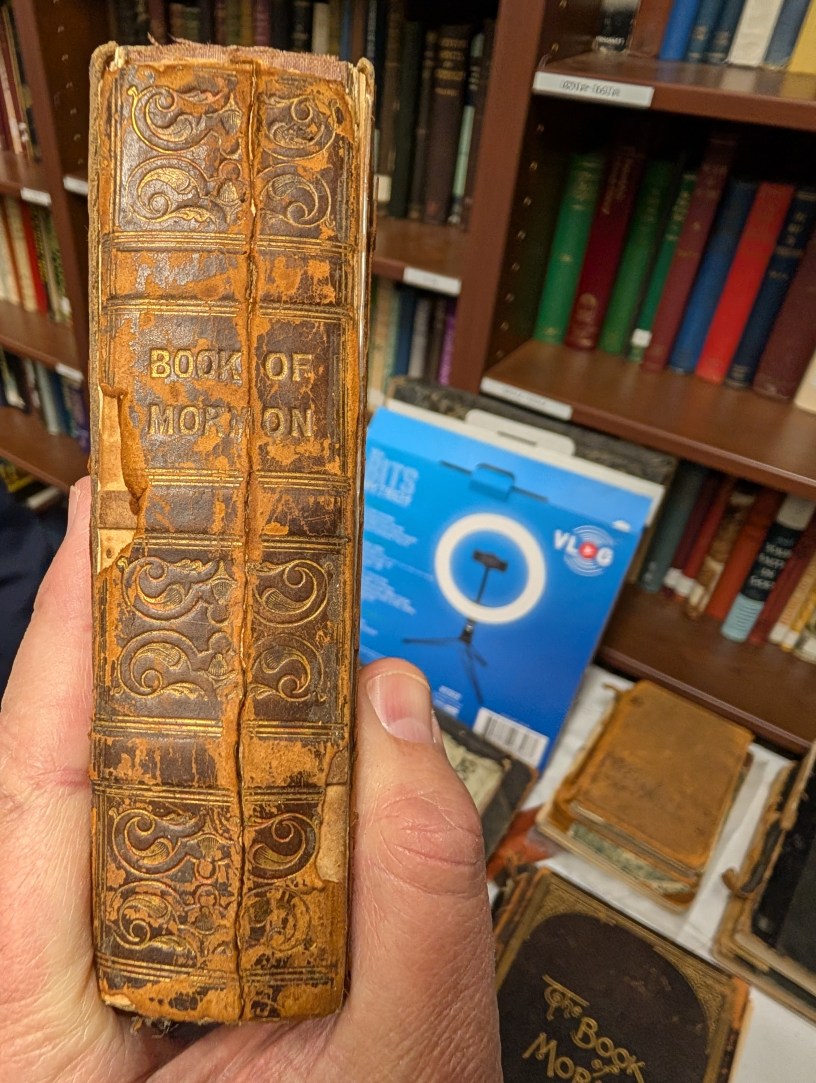
Did you know the LDS Church didn’t publish an official version of the Book of Mormon for 90 years?! Robert Messick knows about all of the LDS and Restoration editions. He’s the host of the YouTube channel called “Book of Mormon Editions.” We’ll dive deep into the publishing history of the Book of Mormon. Check out our conversation….
Book of Mormon Editions
Robert Messick hosts YouTube channel ‘Book of Mormon Editions. He focuses on printed copies and physical editions of the Book of Mormon. He started his channel during COVID as a Book of Mormon collector. He discusses various editions, including 2004 Doubleday printing authorized by Pres Hinckley.
Earliest Book of Mormon Editions
- 1830: First edition; 5,000 copies printed by E.B. Grandin and paid for by Martin Harris
- 1837: Kirtland edition. It was a smaller size for missionaries. People didn’t like it as much as the 1st edition.
- 1840: Nauvoo edition includes changes made by Joseph Smith, such as changing “white and delightsome” to “pure and delightsome.
- 1841: British edition. This was printed by Brigham Young, who used an earlier edition and continues “white and delightsome.”
- 1842: This is a replica of 1840 Nauvoo edition
Changes and Developments in Book of Mormon Printings
- 1920: This was the first edition published & paid for by the LDS Church. It is the first edition with double columns.
- 1960s: Blue cover with Angel Moroni, first to include Arnold Friberg paintings. It was introduced during the World’s Fair and is the first paperback edition.
- 1976-1979: Gold embossed edition with reformed Egyptian characters
RLDS and Other Denomination Editions
- 1908: RLDS edition based on Printer’s Manuscript. The RLDS Church purchased the manuscript from David Whitmer for $5000 and sold it to the LDS Church for $35 million. LDS Church balked at the $5000 price.
- 1966: RLDS ‘authorized’ edition uses modernized language. Ye becomes you. They get rid of -eth endings, such as “mattereth not” to “doesn’t matter.” It is 4% smaller due to removing “And it came to pass…”
- Discussion of various breakaway group editions (Whitmerites, Temple Lot, etc.)
Modern and Third-Party Editions
- Bickertonite edition uses red letters for the words of Jesus.
- 1981: LDS edition adds the subtitle ‘Another Testament of Jesus Christ’
- 2013: Updated LDS edition with minor changes
- Various third-party and specialty editions discussed, including Denver Snuffer, David Ferriman, & David Hocking editions.
Book of Mormon Census Project
Robert Messick is initiating a census of existing 1830-1842 Book of Mormon copies. The goal to have accurate count by 2030 anniversary of the Church. He discusses the challenges and methods of cataloging private and institutional copies. Institutions are happy to include information about their copies of the Book of Mormon, but private collectors are much more reticent. Robert promises anonymity to the private collectors and mentions a case where a private collector was able to recover a stolen copy of an early edition of Book of Mormon.
Notable Book of Mormon Copies
Robert discusses historically significant copies, including Alexander Campbell’s & Joseph Smith III’s copies of the Book of Mormon. He mentions of celebrity-owned copies (Winston Churchill, Buzz Aldrin.) He goes into an exploration of provenance and inscriptions in various copies.
Modern Adaptations and Editions
Robert discusses modernized language versions, such as Michael Hicks “Street Legal” version of the Book of Mormon, which uses slang. “Here’s the deets.” Others that appeal to ‘Gen Z’ using AI-generated text, like ChatGPT. He explores various study editions and annotated versions.
Institutional and Private Collections
Robert discusses early copies in university libraries and private collections. He mentions copies with unique provenance (e.g., Emma Smith’s gift to John Quincy Adams’ son.) He explores the challenges in cataloging and verifying authenticity.
Controversial Copies and Forgeries
He discusses several of Elvis Presley’s alleged Book of Mormon copies. He mentions Mark Hofmann forgeries and their impact on authentication, and explores the complexities in verifying historical copies.
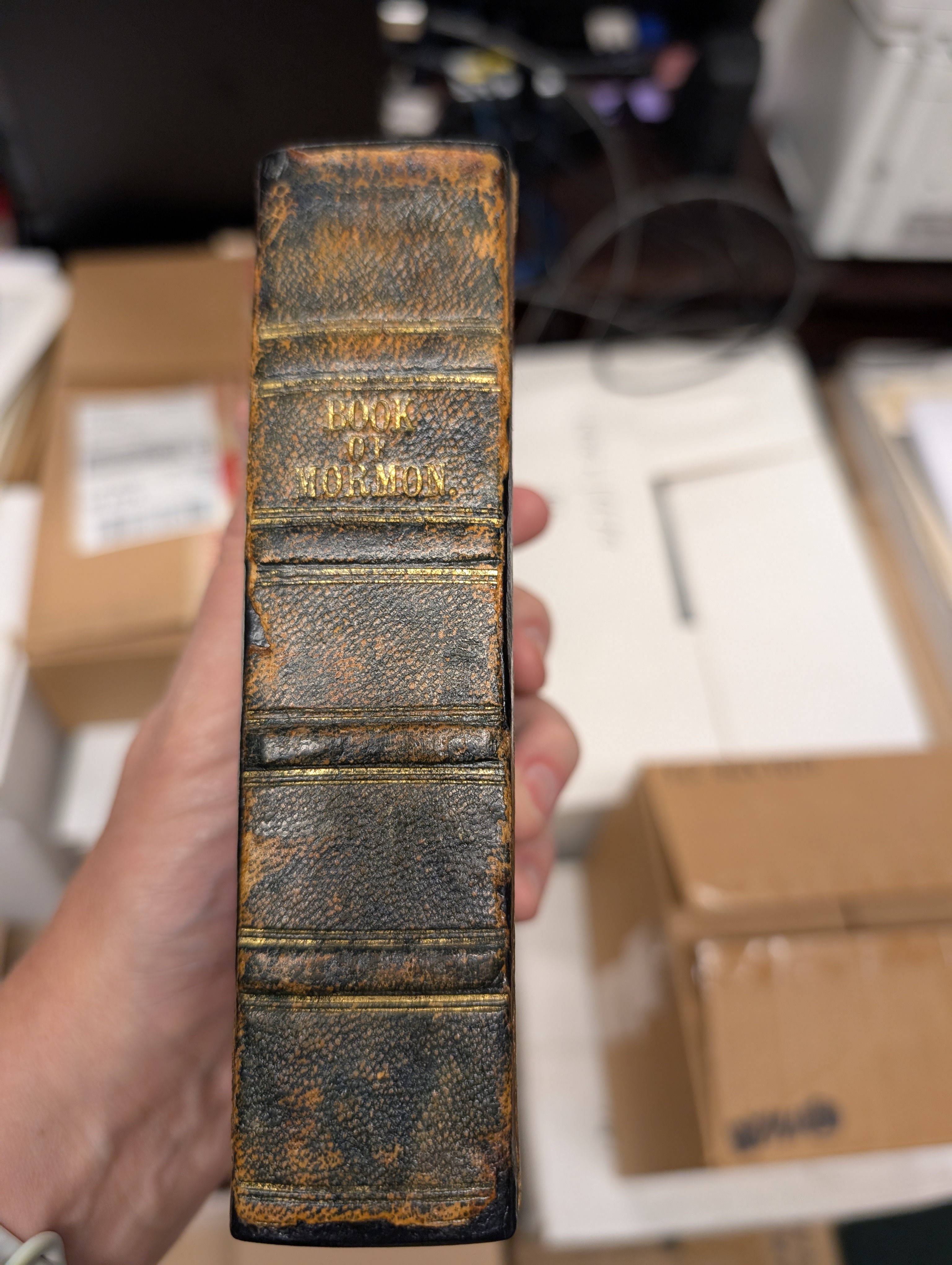
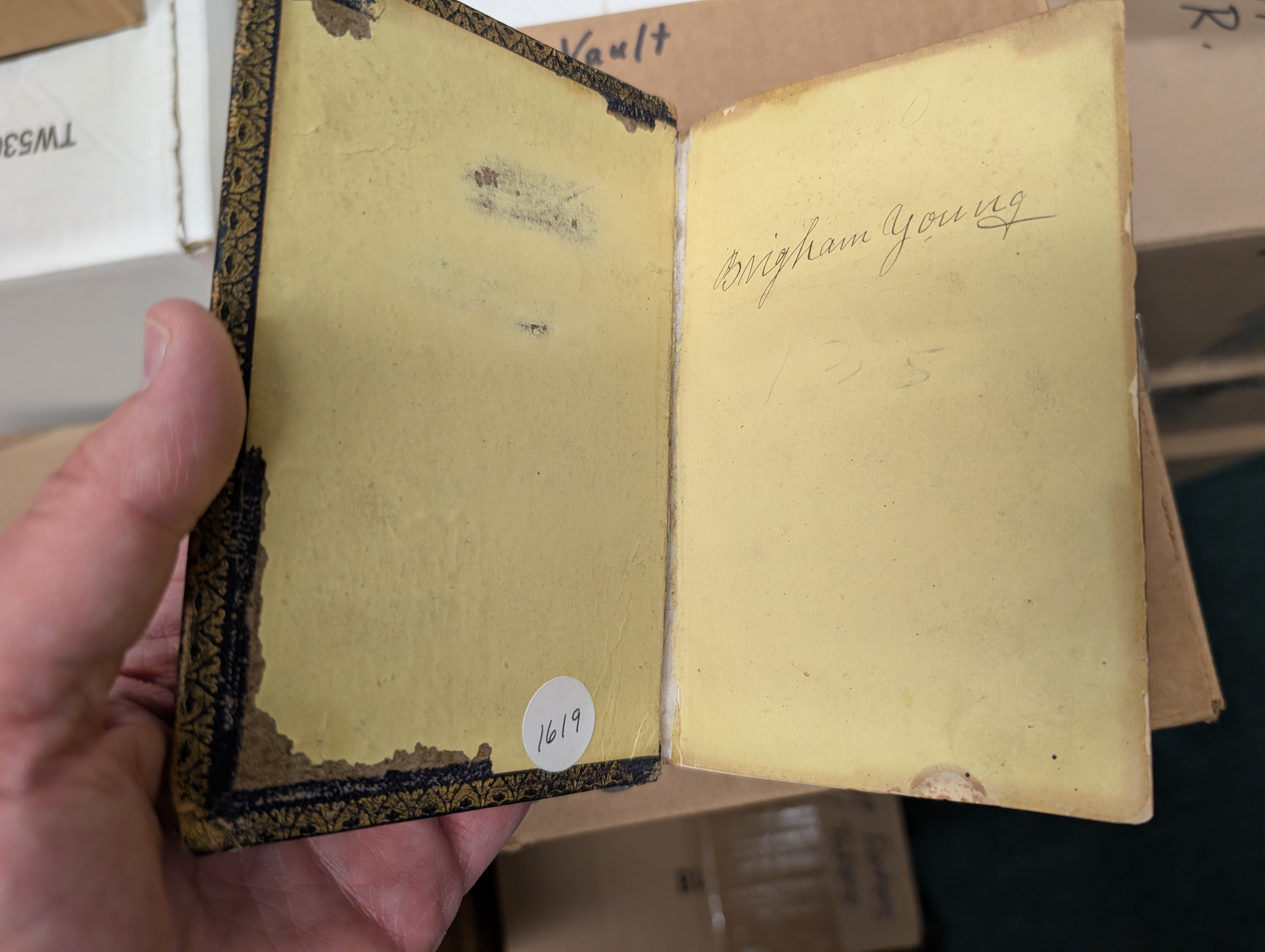
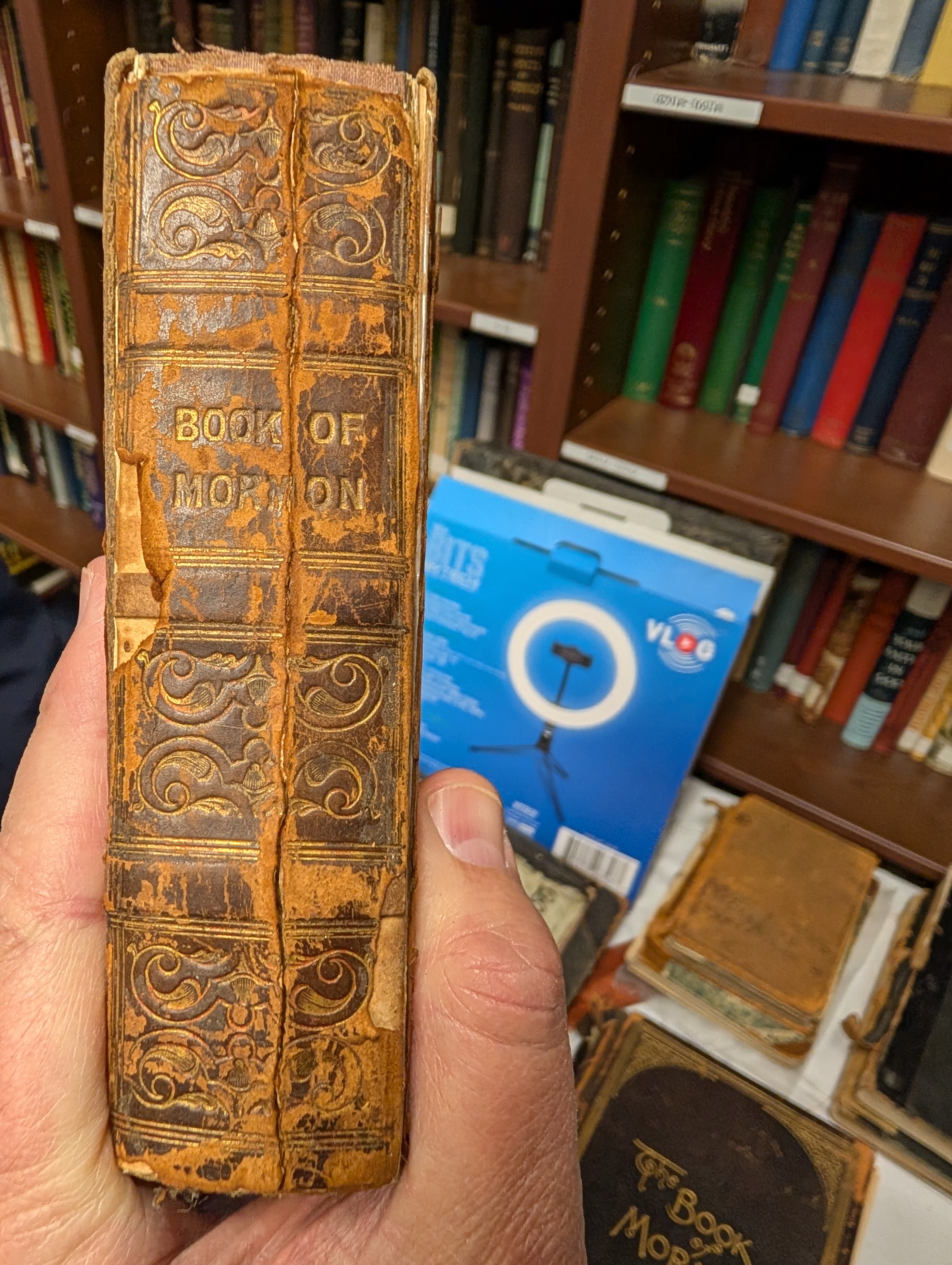
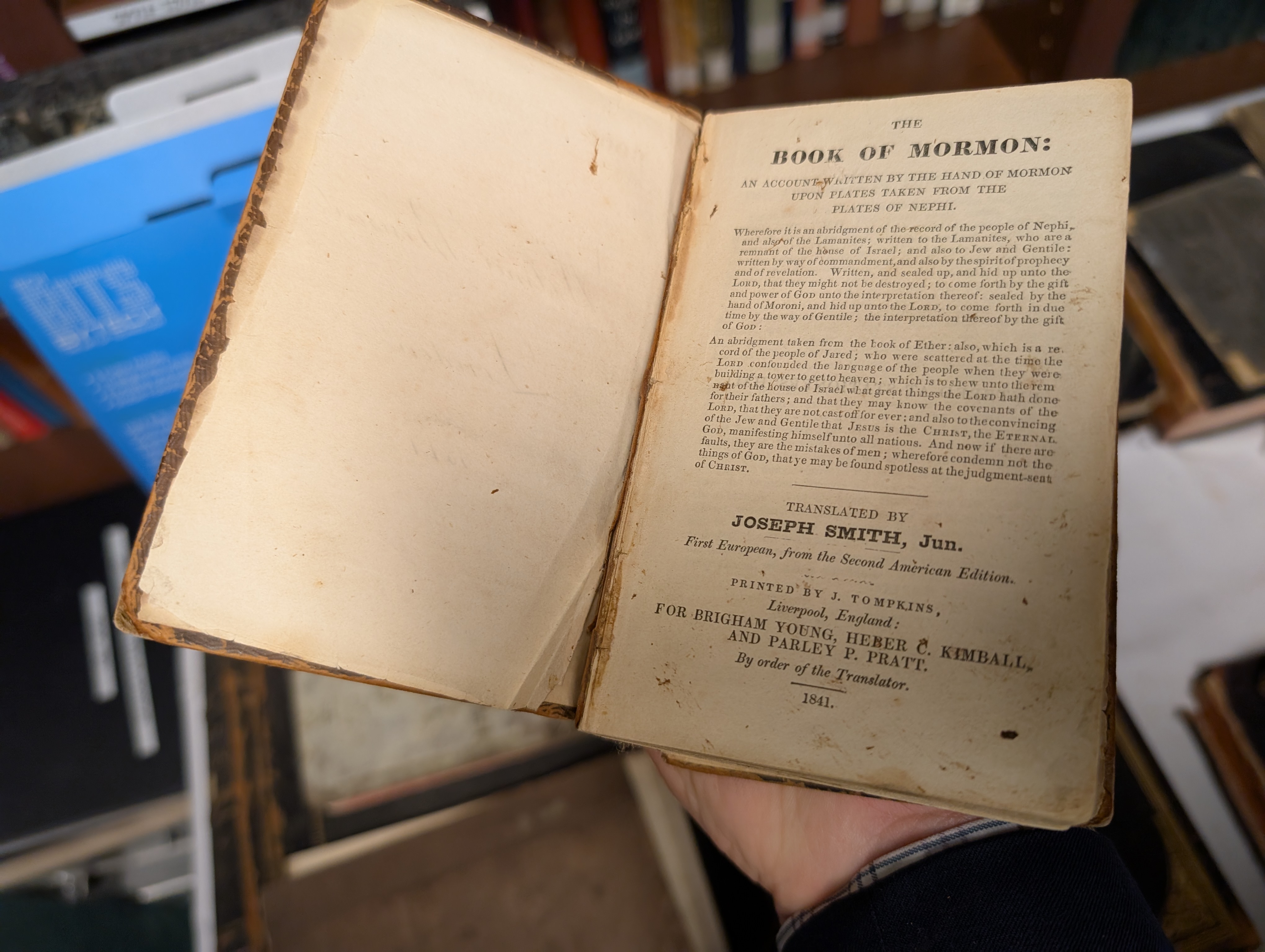
This past weekend, I was able to see the archives for the Nielson-Naylor fundamentalist Mormon group. To my delight and surprise, they had an 1841 copy authorized by Brigham Young in Liverpool, England. I texted Robert a few photos, and he called me immediately asking for more information. They also had an 1871 copy signed by Brigham Young and George Q. Cannon. Robert was excited to include these 2 copies in his census. (Both books were in poor condition.)

Me doing my best pose of Joseph Smith with sword in the air.
To my delight, I was also able to hold a Nauvoo Legion Sword. They think it was owned by Amos Milton Musser, a former LDS Church Assistant Historian.
Have you seen any early copies of the Book of Mormon? Do you follow Robert’s channel?
 Wheat & Tares
Thx for posting this. Kudos for including the obsolete word ‘explorate’; it caught my attention.
My grandparents owned a first edition of the BoM for a long time. It was cool to look at and handle. My grandma ended up selling it to Moon’s rare books in Provo.
Raymond, thanks for letting me know. I fixed the typo.
Chris, wow! That’s cool. I wonder if Moon’s Rare Books still has it?
Hereafter, thou shalt be known as Lieutenanat-General Rick B.
we need a heart or laugh emoji! ❤️😂
This part is not correct – 1840: Nauvoo edition includes changes made by Joseph Smith, such as changing “white and delightsome” to “pure and delightsome”.
The wording change in the Book of Mormon from “white and delightsome” to “pure and delightsome” occurred in 1981. This change was made in the Church of Jesus Christ of Latter-day Saints (LDS Church)’s official edition of the Book of Mormon.
The original 1830 edition of the Book of Mormon used the phrase “white and delightsome” in 2 Nephi 30:6 when describing the descendants of the Lamanites. The change to “pure and delightsome” was part of a series of updates and revisions made to the text in later editions, especially in 1981, as part of efforts to align the language with a more modern understanding of race and to address historical concerns regarding the original wording.
This adjustment was likely made in response to criticism and sensitivity around racial implications, as the term “white” in this context could be interpreted as problematic given its potential associations with racial ideas prevalent at the time. The revision to “pure” is seen as a way to emphasize spiritual purity rather than racial or skin color distinctions.