
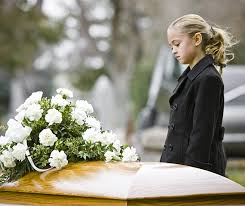
I mentioned last week that my mother died on the morning of New Year’s Day at 97 years old. We found out that she had undiagnosed colon cancer [1] which explains a lot about her symptoms during her last month of life.
The process of preparing for a funeral is so unusual. I feel like I’m caught in a whirlpool, buffeted by new feelings every day. I can’t predict how I will feel from one hour to the next. Everyone irritates me, but I also feel enormous empathy for them, for her, for myself, for my dad. I’ve been gathering pictures of her for a photo montage, many of which I’ve never seen before. It’s overwhelming and exhausting. I can’t focus. I haven’t listened to anything news related for at least a week. As I mentioned, it’s also been strange because the day my mother died is also the day I became an empty nester.
I just finished Donna Tartt’s novel The Little Friend that details the lives of two families in the deep south, a wealthy family whose young son was murdered and no killer found, and a poor family descending into crime, violence and religious extremism. The understanding of each of the characters on what happened is flawed and marked by prejudice, perceived wrongs, misguided justice, and the faultiness of memory, all leading to further tragedy and ultimate understanding–for the reader, if not the characters. It’s been a timely exploration of my own past, which is much less dramatic, but equally human. I’ve explored the topic of confabulation in family stories here before.
I’ve also blogged about the topic of Mormon funerals, and Boyd Packer’s insistence that they be church meetings, not about the deceased so much as they must be about the Plan of Salvation. This makes the deceased an object lesson about something that every single person raised in the church already knows, ad nauseum. Packer even made this outlandish claim in his admonition that the talks at a funeral should not be about the deceased.
I have told my Brethren in that day when my funeral is held, if any of them who speak talk about me, I will raise up and correct them. The gospel is to be preached.
Of course, when push came to shove, they did talk about Packer, and he did not in fact rise up to correct them. But he did influence Mormon funerals with his psychologically repressive admonition. I’m sure there are plenty of active, faithful Mormons who find a recitation of the Plan of Salvation for the fifty-thousandth time to be inspiring and comforting in their moment of grief, but most Mormon families include non-members and ex-members who don’t. I suppose a service is just a service. Grief isn’t confined to the borders of one hour of our lives. Speakers are speaking for their own comfort, not yours.
Many of you will have also gone through this process, and I wanted to reflect on what makes it so difficult. Grief is like a crucible: painful and intense, but also refining our feelings into something else that can endure. The person who has died is no longer capable of creating new memories with us. We have the memories we have, for better or worse. All we have is our interpretation of them, the narrative we have created to explain a life. Grief is strange and difficult and wonderful and transformative. But mostly, it’s exhausting.
Here are some of the things people deal with as they prepare for a family funeral:
Family dynamics. The survivors each had their own complex relationship to the deceased, but also to each other. We can’t fully understand the unique perspectives of each family member regarding the loss. Each will have their own grieving style, memories, interpersonal conflicts, support networks, expectations, guilt or remorse, misunderstandings, role, duty, temperament, need for control, and skills. In my case, these are people I have spent very little time with. We aren’t estranged, but we are spread out all over the country and have our own families and lives.
Emotional intensity. Any way you slice it, grief sneaks up on you in unpredictable ways, and the same is true for everyone else involved. You may carry your emotional burdens differently. You may not feel the same way about shared experiences or events. Some are uncomfortable with emotions, and some are judgmental about lack of emotions. Some expect specific types of support that others are clueless about.
Logistical and financial challenges. This can really add stress to a grieving family. Some live near the service, others have to make travel plans and pay for lodging. There are scheduling conflicts that need to be considered. Flights with less notice will be more expensive. In our family’s case, there were doctor’s appointments to work around and one family member who didn’t want to miss a Saturday session of stake conference. As a non-voting member of the sibling group, I lost a couple thousand dollars on a non-refundable work convention in addition to the expenses of traveling there, renting a car, and booking a place to stay. Fortunately, the funeral expenses were planned for and the funeral home is putting on everything, including the post-burial meal which is a load off everyone’s plate.
Cultural pressures. Families have to consider how to incorporate religious or family traditions into the service. In doing this, they need to consider the wishes of the deceased, the surviving spouse, and the remaining family members. It’s one reason I find Packer’s advice unhelpful in general, since he’s not part of the grieving family but his opinions apparently get a vote, but in this case, I am certain my mother would wish to be honored in this way. She was thoroughly devoted to the church in life, and so her service should reflect that, especially since it’s what my dad (who survives her) would also want. When my uncles died, my parents attended and my mother was alarmed at the rituals that were done because these uncles (her sisters’ husbands) were Masons. Many of the rituals and symbols were familiar to her from her time as a temple worker.
Facing Mortality. It’s hard not to reflect on our own mortality at a funeral. It can evoke fear and anxiety for some, and it can also remind us of other losses or regrets in life. Different family members have different needs. Not everyone has the same type of support network. The loss of a parent is different than the loss of a spouse. The loss of a grandparent is different than the loss of an aunt or uncle.
Support Systems. Some family members may want to contribute in specific ways that others don’t value. Some may not feel comfortable doing the things they are asked to do to contribute. Family members may feel unduly burdened or conversely, ignored or overlooked. There is a lot of space for personal grudges or hurt feelings to form. Patience is not just a virtue, it’s a necessity. Hurt people hurt people, as they say, and people who are grieving are not always the most skilled at navigating other people’s emotional states.
- Have you dealt with the death of a close loved one? How did you navigate these tricky issues?
- Do you feel the church’s push to focus on making funerals a church meeting is helpful or ill-advised?
- What advice would you give to someone who has lost a family member?
- Do you think Mormons in general are good at handling grief and family death?
- Do you have any quotes or poems about death or grief that you find particularly comforting?
Discuss.
[1] Apparently they don’t do colonoscopies on 95 year olds, even when a CT scan looks suspicious.
 Wheat & Tares
I’m sorry not only for your loss of your mother, but also for the stress and trauma of dealing with complex and deep-seated family relationships at the same time.
Within the past month I attended three memorial services (no casket at the services; two involved private burials before the services; one followed cremation). All three focused on the life of the deceased, and as a result they provided a touching and meaningful farewell. That is as it should be, in my opinion anyway.
Several years ago I attended a funeral held in a funeral home. A Baptist preacher officiated, standing behind the casket. While he did mention several aspects of the deceased person’s life, his main purpose was in issuing an altar call. I’ll give the guy the benefit of the doubt by saying he probably saw it all as a wonderful opportunity for folks to accept Jesus as their personal Savior. But the overall impression, to me and I think many others, was “You could be the next one in the box, so here’s what may be your last chance to avoid the eternal fire of Hell.”
I am so sorry for your loss.
When my father passed 11 years ago, his service was officiated by a Catholic priest, so it was a worship service and not a celebration of life. However, it was not used as a missionary opportunity the way that some Baptist, Evangelical, and LDS funeral rites are. The most difficult part for me was giving the eulogy. That put the period at the end of the sentence for me more than anything else.
I wrote a eulogy that shared a lot of funny stories, and ended it with the close of “The Sailing Ship” by Charles Henry Brent. Had people laughing and crying at the same time. My wife and two of our daughters sang at the graveside. It was a nice touch and it shocked several extended family members who did not know that my kids could sing.
I have attended an LDS service for a friend, and while I understand making it about the Plan of Salvation and emphasizing that it is not a time to be sad, I found that it missed the mark by ignoring the fact that funerals are for the living, to allow people to grieve. In my limited experience, I do think that Mormons are not very good at handling grief. It is almost like they do not want anyone to be sad or address the fact that you are not seeing them again in this life.
I don’t really have any great advice for people who are grieving. I learned at a very young age that death has a certain finality to it and that I would never have the chance to do anything with the deceased again. As I got older, I latched on to the Resurrection and life everlasting, but by then I had already accepted death. So I come across as a bit callous if I am not careful.
I’m so sorry about the loss of your mother. My heart goes out to you and your family. My wife lost her father last year, and it was rough.
Recently my son took a college class in which he had to plan his funeral as an assignment. It was enlightening and I learned some things about him that I didn’t know. Following his example, I decided to also plan my funeral also, in part because I sometimes engage in mildly dangerous outdoor activities and also because I want my funeral to be influenced 0% by the LDS church. Mine is not to be held in a church, no doctrinal sermon, and I asked everyone to wear hiking or comfortable outdoor clothes. We’re going to have a bowl of M&Ms (my favorite candy) and a bowl of broccoli (my favorite veggie that I eat twice a day). I don’t expect many will take the broccoli, lol.
Mormons are ok at handling death and grief but it depends on the circumstances. For example – if you are a true believer – the unofficial doctrine that you’ll raise a lost young child in the Millennium could be quite comforting. Similarly if your elderly parent was faithful to the end you might take solace in the certainty you’ll see them again. If someone isn’t quite faithful or a believer, funerals are even more difficult because you’re reminded of a lot of painful things, like they or you aren’t up to snuff.
I love the song “Always Remember Us This Way” the Noelle Johnson version. It talks about the Arizona Sky… I’m getting teary eyed listening to it right now.
My husband died last year……we were married for 65 years! I knew the “rules”! I had not heard about Packer’s talk and certainly don’t agree. I wanted my husbands service to be a celebration of his life and that’s what I did. Only family participation in music and talks. It was a beautiful service held at the mortuary. When the stake president and crew made their obligatory visit the SP told me that a funeral was a Church service……. I told him not for me……I also told him that I was a liberal feminist Mormon woman and I wanted my hhusband’s life celebrated and that is why I chose to have his service at the mortuary. It was a wonderful service. It upsets me that even in death the Church wants to control. I refuse to “play” their games and I live my life on my terms……..as I sit here having my morning coffee responding to this blog!
When my Dad died last year we planned the funeral at the LDS church up the street. This was important for encouraging the support of the ward for my mother who is now an older widow who lives with a fall risk in heavy snow country. Their support is crucial for her continuing independence.
My mother, a former counselor, is very empathetic and in crowded spaces she feels the pain of people around her strongly. She doesn’t attend church for this reason, but she cannot explain it to LDS leadership in her area either.
So she planned a basic LDS funeral and asked a church leader to give the final talk about resurrection etc. It was interesting how this affected different people.
My youngest sister left the church at 14. Now she has a 14 year old son who has never attended church. He was very disturbed by that last talk because of the speaker’s implication that if we didn’t live right or do certain things he would never see his grandpa again.
My mother was disturbed by the talk because the speaker kept referring to heavenly parents. My mother was emotionally abused by her mother while she felt loved by her father. She says she can’t stand thinking of a motherly figure in heaven that might treat her like her earthly mother did. It upset her.
My kids aren’t active, but like me they know how to endure and ignore a talk that isn’t helpful. I am not interested in hearing heaven divided in hierarchy. I don’t believe in that. I think it’s just a man’s view of heaven that fits with how men think. A woman would have likely had a different vision on the same thing.
The theology talk would have been better left out, at least for us. Hopefully it was comforting to someone besides the speaker.
I would ask Packer why he thinks the command to preach repentance supercedes the command to mourn with those who mourn and comfort those who stand in need of comfort, specifically at a funeral. Really?
Something surprised me at my father’s funeral. He had outlived my mother by many years, and also his brother and sister, so funeral matters were obviously in the hands of my sister and I, his only children. The surprise was our role as mourners-in-chief, receiving the various friends who wanted to express something about him, and she and I were the ones to tell it to. It was an honor to serve them in that way.
Both of my parents and my older sister are dead, so I have great empathy for the loss you are feeling. It’s hard. And the grief will continue to hit at unexpected intervals. I genuinely do not understand President Nelson’s assertion that grief at a death is myopic. For me, the reality is Doctrine and Covenants 42:46: “Thou shalt live together in love, insomuch that thou shalt weep for the loss of them that die.”
Death of our parents also changed siblings and how we interact. We all reacted to the grief differently. We all reacted to the anger that is part of great loss differently. And we certainly have had to figure out what our relationship is now that we don’t have our parents tying us together.
I have not planned my funeral, but I have given our children general guidelines. Funerals are for the surviving family members, so they should do whatever gives them comfort. I have definitively said that my funeral will not be a church service designed to guilt them into returning to church activity. They know that if I were to choose, my service would be essentially a party where everyone ate good food, listened to songs from musicals (yes, Bishop Bill, including Always Look on the Bright Side of Life as well as One More Angel in Heaven and The Woman’s Dead), and told stories about me, preferably funny ones.
Advice to someone who has lost a family member is hard. I guess my major advice is to be easy on yourself. You’re going to respond emotionally and less than perfectly. That’s normal, so don’t beat yourself up about it. Spend time with people who help you feel better. I think one of the most comforting things I remember from the really hard funerals is time simply spent talking about and remembering the person who is gone.
I have chosen music not approved for the chapel, so my funeral will have to be in the gym. I have instructed my daughters that the ONLY men allowed to speak are family members and that there will be NO gospel topic stuff allowed. I am an acquired taste so there is no telling what will be said. I too want bright colors and a party.
My wife and I have decided on cremation with scattering of ashes at sea and no funeral. If the relatives want to get together for one or more memorials without our remains present, they can arrange it. But a big funeral and burial and cemetery, no.
I think LDS funerals are subject to leader roulette and the particularities (and maybe peculiarities?) of each family involved. I have been to wonderful LDS funerals and painful ones. I have heard leaders give kind, thoughtful remarks (usually when they knew the deceased well) and I have heard tone-deaf preaching that was upsetting at worst and awkward at best. I think, for me, there are several things to think about when it comes to funerals:
Don’t make them too long. An hour is usually more than enough time, especially for attending non-family that are missing work, etc. If you want to have a many-houred reminiscing session where many family members share unending memories, then do it at some other kind of gathering, maybe just for family, hopefully involving food and having a lighter atmosphere.
Be kind but honest in what is spoken. Many, if not most, people at a funeral are familiar with the reality of the deceased person’s life. No need to harp on faults, but no need to create a fiction/employ hyperbole, either. I enjoy funerals that are “real,” positive, and as hopeful as possible. Every person’s life is filled with good and bad. It is fine to focus on what was really good, but don’t act like the person was a saint. Nobody is.
If you don’t want to “follow the rules,” don’t have the funeral at an LDS church– go somewhere where you can do what you want to do. Although I am LDS, neither of my parents were. I had their funerals at the churches they attended, rather than the local LDS church, which would not have allowed alcohol at the luncheon, etc. It was better that way.
Know that a funeral at best is just one small part of your grieving process, and it can come at a difficult time when you are full of many emotions and probably need peace and solitude more than anything. I know that my grieving for my parents, who both have been dead for a few years, is ongoing, and comes over me in waves at the most random times. Like most things, it is a process that takes the time that it takes.
I am so sorry for your loss, Hawkgirl. I hope you can find grace and peace with your mother’s passing and with the rest of your family.
I really sorry for the loss of your mother. I hope you and your family can feel peace and a bit of joy in remembering her long life.
I think it can help to remember than funerals are for the living. As such, they should take whatever shape will allow people to process their grief and enjoy the memory of the person who has passed.
It could be something special requested by the person before they died, a wake, a celebration of life, military honors, a party, or even a Packer-style church service if that’s appropriate.
Hawkgirl, so sorry for your loss. I am sad that you were made a non-voting sibling.
The things you have been thinking about have been on my mind because my younger brother died unexpectedly two months ago. And that has brought up a lot of memories and grief from my father’s death 30 years ago.
I feel super fortunate the leadership roulette meant that the bishop agreed that the family could pretty much plan my brother’s funeral as his wife and kids desired, and I feel really thankful she included us in so many decisions. There was no forcing it into an LDS missionary opportunity, which I would have disliked. Instead, the funeral was a celebration of my brother’s life which did organically include elements of his faith. It helped that he was the most Christ-like person any of us know. A far better sermon than any talk by a GA.That’s not hyperbole. He was so kind and loving and funny and brave and adventurous. After family and friends spoke , the bishop said a few words, but it was short and appropriate for a grieving family, not at all the sermon that BKP seems to have desired. But I think BKP often missed the point of Jesus’ life too.
Honestly, while there have sometimes been tensions and hurt feelings between my siblings families during family reunions and such, that didn’t happen at all during the time my brother was in the hospital and while we were preparing and carrying out the funeral. I think it was both such a shock and also we all felt the absolute need to honor the kind of person my brother was. He was always the peacemaker. I am not sure I have ever felt as close to my brothers and sisters than on the last night we were gathered around my brother’s hospital bed telling stories from his life.
With all that being said, I told my kids I want my memorial service to be outdoors near our local river. While I hope that there will be some hymns sung along with the playing of some U2 songs, I don’t want a clergy person to lead it, just one of my friends or children. And I hope to make it easy for them by having planned and paid for the logistics like cremation, location, and where to scatter my ashes, etc … which of course reminds me that I still haven’t done that yet. But at least it won’t need to be approved by any clergy with ulterior motives.
Just one other quick note. For Christmas my daughter gave me the book “The Art of Losing-Poems of Grief and Healing” edited by Kevin Young. I am not sure it would be correct to say I have enjoyed reading the book, but I have definitely found it meaningful and a useful way to process my grief. I read a few pages each night, shed some tears and then go to sleep. It has some poems I might want read at my memorial service.
I am sorry, Angela.
My parents are both still here; my husband lost his mom twelve years ago. Some days he says it still feels fresh. I think I know what he means, but I won’t ever forget being there with him as he mourned in those early days.
It looked so hard, grieving a mother.
Please let yourself off the hook wherever and however you can, for whatever you can.
I think we Mormons can do death really well, not because of anything we say or believe about death (BKP is a prime example of how wrong we often get that part), but in the ways so many of us show up. Showing up when somebody dies is part of our culture. We bake the casserole. We set up the tables. We sit with the bereaved: in hospitals, in their homes, in the pews. We offer a hug. So many of my non-Mormon friends who grew up areligious in late Gen-X/early millennial America tell me that they don’t have the cultural scripts for dealing with death that I learned from childhood. To some people, maybe most, those sorts of scripts are valuable. Lots of cultures have them, and I do think they can bring a measure of comfort.
I’ll come back to this post in a bit to say more, but I had to say first and loud even as a TBM I’m stunned about the statement of someone not changing their plans because “who didn’t want to miss a Saturday session of stake conference.” That’s someone just too conceited and ‘looking beyond the mark’ too live (with?). You have to follow up with some about that dynamic.
I can’t say I’m surprised by the comment on not missing a Saturday session of stake conference. I have relatives who have had long tenured stake positions and it’s a badge of honor to them how many consecutive stake meetings they have attended or other events they’ve missed / skipped to attend their stake meetings. I’ve dealt with the death of one parent and the near incapacitation of another in rapid succession. I’ve found that I can’t rely on my parent’s siblings for any assistance as ward / stake meetings take precedence over helping family members. However I’ve had inactive relatives take a 5 hour flight or my college friends (some of whom never met my parents) drive 2-3 hours to provide assistance…all while a relative who lives 10 minutes away is too busy at a stake training meeting to stop by and just say hello.
Once the stake president made a comment to me how blessed I must be to have so many relatives in high level stake callings. My response was they may be great church members but they are terrible family members. He’s never spoken to me again…
So sorry hawkgrrrl. That’s tough.
Distance certainly makes things more complicated. We lost my husband’s mother a little over a year ago now, and organising flights and getting him over there as chief mourner as the eldest son was stressful, even though it had been expected for some time. Japanese funerals generally take place within a week of the death. Fortunately, his youngest brother lives over there and he and his wife were able to make most of the necessary arrangements. Modern internet communications make the kind of back and forth between the brothers much simpler at least.
We lost his father and mine within a few months of each other around 8 years ago. His father had made his funeral arrangements in advance, knowing he was dying, whilst in the care of a Salvation Army hospice in Tokyo. My father had made known his music preferences, and his was the perfect funeral. Only one of the three hymns was from the LDS hymn book. There were appropriate scripture readings, a eulogy, a video presentation of photographs of his life, and the bishop who gave the final address had known him for many years, and made it personal to him. The family was allowed to create the programme.
My mother is our remaining parent.
I am sorry your mother died. For me, that came with some unexpected things to process.
My family is getting through one of those”died much too young” deaths. One of the few upsides is that it just happened – nobody has any reason to feel blame or guilt. The focus is on the sadness and grief. And cherishing the amazing times together.
One very sad part is that small children have to manage an overwhelming loss. Fortunately, they have an extensive support system, with each individual providing a healing aspect for each child. (“Healing” being time appropriate, knowing that the loss will always be felt acutely, but will need years to be an accustomed part of life.)
Part of my grief is knowing that people I love are closer to it than I am, and their grief is more massive than mine.
My latest description of grief is that it’s like it’s in a hollow cylinder. The grief is always there, but stays contained most of the time. Sometimes the grief can’t be contained, and spills over. I accept the bereavement process. But sometimes the roiling grief part has wildly inappropriate timing. When I can, I walk away to deal with it. Fortunately, my own support system understands.
I’ve also reflected more on others in my life who have had such losses. My family is not alone. We are in a sucky club.
just one more thing: feeling support from family, friends, and colleagues really does make a difference. The support buoys me up. To put it in relatable perspective, a friend’s baby died shortly after birth. It was known beforehand. When they returned to work, no one said anything. No one can change it, but a hug, saying a few kind words, letting them talk, those go a long way.
Hawkgirl, I’m so sorry for your loss. Losing parents is hard no matter their age.
I lost my brother two years ago. It was a lot more painful than I thought it would be. My brother was 15 years older than me. He had severe social anxiety problems. So much so that he was unable to hold down any sort of job, for decades. My parents regularly gave him $1500 a month to survive off of. They did this because he kept running up credit cards getting his back against the wall with my parents bailing him out time and again. He had a fraught relationship with my parents and blamed them for the many problems in his life. Several years ago, he left the US and told us that he was living between Germany and Czechia (after he died, we found notebooks, passports, currencies, and his phone showing that he had been to over 60 countries in some 5 years, he was simply traveling the entire world). He wouldn’t give us much detail as to what he was doing. Then one year a desperate plea from my mother came to us children in a text. It was my brother. He needed help. He was suffering from a bad illness that sapped him of his energy even to go get groceries. He was in Mostar, Bosnia. The problem was that he was extremely paranoid of the medical establishment. He didn’t trust doctors. He didn’t trust hospitals. He thought that they would only make him worse. We pled with him to go to a hospital, but he refused over and over again. At last, I decided to go to Bosnia to see him and help him get better in the way that he would accept. I spent 9 days with him there. He was in terrible shape being barely able to walk too far without losing breath. He had a massive hematoma on his elbow. I helped him get food and find hotels. I took him to Sarajevo, for he said that he had lost his passport. We managed to get a new passport for him. He managed to regain some strength. My parents wanted him to come back to the US, but he refused. He was still not strong enough even to make the long journey through airports, sitting upright on planes, and standing in long security lines. But he was good enough to take buses and leave Bosnia before he would overstay and go to Montenegro and find a hotel there where he could stay and recover more. I left him in Europe. Six months later, we received another desperate call from my brother. This time he was in Munich, Germany. He was extremely ill. My aged, stroke-surviving dad, hopped on a flight to see him and help him. Upon his arrival in Munich, he found that my brother had passed. He had liver disease. He was 58.
My brother had long rejected the church. He blamed my parents and the church for his problems. We had a funeral in Provo at a mortuary, not in a chapel. My brother was not robed in the temple clothes. It was a nice funeral. Not too much churchiness or talk of how Mormons are better than everyone else because we know that we will see our loved ones again. It was a proper grieving process. It was not a church meeting. There was a family reunion aspect to it. But it didn’t have the same feel as the funerals of very old parents/grandparents whose eventual passing had been well anticipated. There was sorrow. There was mourning that was deeper. Mourning of those who were still too young to die.
My advice to those losing a loved one is that it is human and natural to grieve. Get it out. Take time off. Accept that they left. As hard as that accepting might be. Always cherish who they were. Find the good that was in them and celebrate it. Celebrate their lives here. Commemorate them for what they were to you in your life. Always hold their memory dear. Move on knowing that they would want you to move on.
I sang a song at my brother’s funeral. I took my guitar and sang a rock song (another way in which the funeral was not churchy). It is the most poignant amazing song that I had ever heard about dealing with the passing of a loved one and it applied directly to my brother:
Alter Bridge/Blackbird
The willow, it weeps today
A breeze from the distance is calling your name
Unfurl your black wings and wait
Across the horizon, it’s coming to sweep you away
It’s coming to sweep you away
Let the wind carry you home
Blackbird, fly away
May you never be broken again
The fragile cannot endure
The wrecked and the jaded, a place so impure
The static of this cruel world
Cause some birds to fly long before they’ve seen their day
Long before they’ve seen their day
Let the wind carry you home
Blackbird, fly away
May you never be broken again
Beyond the suffering you’ve known
I hope you find your way
May you never be broken again
Ascend, may you find no resistance
Know that you made such a difference
And all you leave behind will live to the end (will live to the end)
The cycle of suffering goes on (goes on)
But the memories of you stay strong (so strong)
Someday, I too will fly and find you again
Let the wind carry you home
Blackbird, fly away
May you never be broken again
Beyond the suffering you’ve known
I hope you find your way
May you never be broken again
May you never be broken again
Losing a loved one 15 years ago sent me into an existential crisis that I have never fully recovered from. The realization that the bell tolls for me hit home, and suddenly all the belief and faith I thought I had in the afterlife felt irrelevant in the face of such an immoveable reality. The mormon impulse is to make it more real by claiming knowledge of the details and the purpose, but to me it feels that the more detail one paints the more the picture is revealed to be a human creation. But I do believe and appreciate that Joseph Smith at least cared a lot about this problem and focused his energy and gifts onto creating theology and liturgy that addresses death.
Hawkgrrrl, I’m so sorry about your mother’s passing. And I’m sorry that it sounds like it’s brought up other family issues, like your siblings excluding you. I hope you have some peace and comfort in such a difficult time.
Both of my wife’s parents and a couple of her siblings have passed. We live far from where most of her family does, so even though attending their funerals has been sad, I’ve also always appreciated the family reunion aspect to it, as her family is kind and loving. Like you and other commenters, I’m not a fan of the BKP rule for funerals. I’ve appreciated much more sharing and hearing stories about the deceased.
20 years ago this year, I spoke at the funeral of my sister who had died at 21 in a car accident. The whole week between the accident and funeral was extremely hectic, because on top of the normal activities that go into planning a funeral, another sister had survived the accident and was in the hospital with severe injuries. After it was over with and I was back home, I thought I was dealing with it pretty well until my wife commented at some point on my irritability. That was the first time that I realized I was being affected in ways that could be observed by others.
The funeral was 90% a remembrance of her life, and it really was great. The last 10% was a stake presidency member giving a talk that would have made Boyd Packer proud. I don’t remember objecting to it at the time, but it would probably bug me now. My sister was very social and had many non-Mormon friends who turned up for the funeral. I don’t ever remember seeing a bigger crowd for any kind of meeting in that meetinghouse. It seemed a tailor made moment for preaching the Plan of Salvation. But did it actually help anyone? Did it prompt any non-Mormons present to reconsider their views about death? Did it help any of the Mormons to hear something they already know? I suppose it could have, but I’m skeptical.
What would I say to someone who has experienced a loss? I have no idea. It feels to me like every one is different. I’ve lost grandparents but no parents yet. It seems like losing a parent will be different. I hope never to lose a child while I live, and that I don’t have to think about the possibility of losing my spouse for a long while yet.
So here’s a fun (weird) fact that my son discovered as we get ready to leave today to fly to the funeral. My mom’s grandfather was a teenager during the American Civil War. Not possible, I’m sure you are thinking. Well, here goes. My mom was born in 1927 (she had me at age 41). Her mom was born in 1891 (she had my mom at age 36). Her grandfather was born in 1850 (he was 41 when my grandmother was born). I’ve always thought of the Civil War as something like the Black Plague or the Hundred Year’s War, but I’m apparently not that far removed from it.
To that last comment, my 2nd great-grandfather was born in 1820. His son was born in 1870, his grandson in 1920, my dad in 1950, and I was born in 1994.
Hawkgirl, sorry for your loss. Not only is it sad but these events are such milestones in our lives.
My brother passed away in 2008. He was not active in the church, was a starving artist that got his inspiration from nature and sometimes by smoking it. He was in Seattle and my parents in Ohio. I had another younger brother also in Seattle. While he was able to nurse by brother, he wasn’t able to put together a funeral, etc. Since I’m the oldest and my brother who passed was next oldest, it fell to me and I did all the little things for his cremation, memorial, and family celebration. He didn’t leave a will but my younger brother and I knew him so we had a night of Karaoke and a memorial in the middle of February in a park by the water of the sound. My mother was upset we weren’t doing something at church and that he was cremated but I explained the cost of everything, his desires, and what it meant to really honor him for who he was. So we had a great night of singing. The memorial service was in a corner of a park in Ballard with another brother and I singing The Who’s “The Seeker.” (my brother’s last words were “They call me the seeker.” He also sang Amazing Grace (not a Mormon song then) without accompaniment and there wasn’t a dry eye. My mother accepted things and sang a song as well. We sat there and told stories, cried, and laughed for two hours with people walking through our “service” some stopping to listen and cry with us and others excusing themselves for interupting. At the end a train came by, which had not happened during our memorial which was quite unusual and then a bald eagle flew directly over us, my brother was a verteran. The tears started all over again.
Afterwards our family started to say out loud, I love you, which we never did before that. My mother also came to understand that even though he was not active in the church he still had a huge influence when I showed her a blog of people who knew him in Jamestown, NY, where he did most of his art. My dad couldn’t talk about it at all and when we did, would start to tear up but of course ask us to change the subject, which we did.
When my dad died in 2011. My mom insisted on a funeral at the church, which my dad didn’t go to. But, since he was such an active member of the Elks, she consented to their ceremony as well and then since he as going to be buried in Jamestown instead of Ohio where he lived we have a small family graveside service. Of the three services, the Elks was amazing. To see these older men in their 70’s and 80’s take a rose and hand it to my mother and then tell her what my father meant to them was almost to much to bear, I couldn’t breath. The family service was also outstanding with tributes told like at my brother service. But, the church service was irritating. Since my brother in law works at BYU, my mother said he was going to conduct it. I was still basically active in the church then even though it was just after my divorce. So I pulled rank and said as the oldest son, I was going to conduct, and I was going to speak as well as others she wanted. I spoke about the parts of my father that he passed on to each of his eight children with laughter and tears shared by everyone. My bother in law spoke and talked about how they were going to do my father’s temple work and “save” him. My bother who sang at the first funeral, who is also not active, was so mad he didn’t speak to my BIL for 10 years. My youngest sister felt the same way. It was very divisive. Then of course there was the Bishop who spoke and didn’t even talk about my dad but onlyl about gosple principles. It was very insensitve. I didn’t say anything to my mother then but after a few years when she didn’t understand why my bother wouldn’t talk to my BIL, I told her and spent a lot of time talking about how she raised stong independent children who graduated from college and could think for themselves and that they weren’t bad because they didn’t believe in the church. They didn’t want her to leave the church because they knew it gave her such joy but they weren’t going back and she should love them and accept that. It took some time, but she’s been able to do that and people are talking to each other again.
These are major milestones in my life. They are major milestones in my children’s lives. Times like these are concentrated learning periods.
I’m so sorry for your loss. My mother died of cancer two days after I got home from my mission, in 2004. I was 21, she 51. I guess we won leadership roulette or Packer’s dumb thoughts on funerals hadn’t yet percolated or whatever, because the memorial service at the chapel was firmly focused on her life and legacy, with only token references to the resurrection. All present intuitively understood that it was a time to “mourn with those that mourn,” not preach the gospel.
She had been estranged from her brother for six years. He called her out of the blue earlier that year to reconcile, once he learned of her worsening condition. She was receptive, and he promised to fly out from Arizona in a few months to visit her in person, once he could get away from work. He ended up having to move up his plane ticket a few weeks to instead be a pall bearer at her funeral.
A group of ladies who had been young women in our previous ward mailed her a packet of letters detailing how much they had looked up to her in their teens, to comfort her on her deathbed. My mom passed away on a Saturday. The packet arrived on Monday.
None of these people committed any sin here, obviously, their timing was merely off. But it did force me to realize from a young age that whatever you’re going to do, do it now, because there is always less time than you think. It is always the Last Day for someone.
Thank you, Hawkgrrrl. Your posts are always interesting to read, but this one has already made the top 10 best for me. Thank you also to everyone who shared comments. We don’t talk about death very much or how much it affects those who have lost someone. I truly appreciate the dialogue here.
Your break down, Hawkgrrrl, of how many things are in play at the time of death and how each of those factors will affect people differently is so insightful. As I think back to my own experiences, I realize now that was exactly what was happening. So much grace for all is required.
Anyways, I really appreciate this post.
Hawkgrrrl, I am so sorry for your loss. So many unexpected emotions come up, and I’ve realized it’s a loss we are never fully prepared for even though we’ve always known we would likely lose our parents. Thank you for sharing your insights at such a vulnerable time.
Angela —
Your post reminded me of Emily Dickinson’s poem:
My father died unexpectedly in his sleep a few weeks ago on Christmas morning. Speaking solely for myself, Job’s friends had it right when, instead of talking, they simply sat in silence with their suffering friend.
Commenting here again after a long absence-
My father died six weeks ago as a widower. I have five siblings and was able to just listen to some of the siblings as they processed their emotions. I work from home (mostly) so I have a lot of time for my own introspection. My dad left some detailed funeral instructions which were fun to do for him in his honor.
He lived for almost 60 years in the same house he bought as a newlywed in a now aging part of SLC, Utah. Funeral was at the ward with a rookie bishop who offered a few innocuous closing remarks about resurrection. The Bishop also let us execute my dad’s request to sing “Take Me Out to the Ballgame” which we did as a rest hymn/7th inning stretch.
“why should you and I be grieved at this, since we are soon to follow, and know where to find him” – Benjamin Franklin