
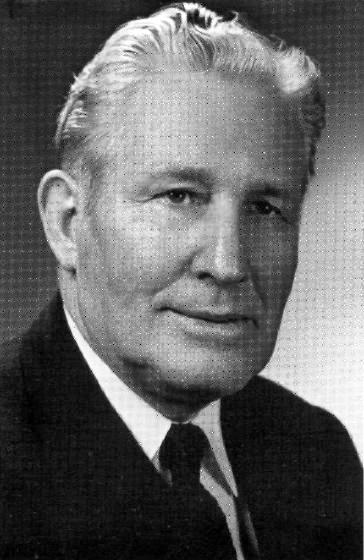
Hugh B Brown was in the First Presidency for for almost ten years, with seven of those as First Counselor to David O. McKay. Before that he was in the Quorum of the twelve Apostles, and before that an assistant to the Twelve. He was a vocal advocate for giving the priesthood to Blacks, and because of that was not retained in the First Presidency when McKay died and Joseph Fielder Smith became prophet. That was only the 2nd time that had ever happened, but we are up to three times with Uchtdorf.
In his biography called An Abundant Life: The Memoirs of Hugh B. Brown, Edwin Firmage (his grandson) edited together the writings of Brown in a wonderful book. Below are some highlights out of Chapter 8, “A General Authority”
The few years I spent as an assistant to the Quorum of the Twelve Apostles were some of the most profitable of my life. The one lesson I tried most to learn was humility.
When one is out speaking, representing the church, he is eulogized – almost idolized. What he says is taken as gospel, what he does is seen as an example to all. It places one, in other words, in the spotlight, makes one feel he is in a fishbowl and is looked upon by all who pass. Sometimes men in such positions are inclined to think that they themselves are the object of this adulation when, in fact, what people are doing is indicating their respect for the authority of the office and the appointment one has received. If we can keep in mind this fact and never abrogate to ourselves the honor which belongs to the office, we will be safe.
Unfortunately, my own experience has been that a number of the brethren never learned this lesson, instead becoming proud of the fact that they received an appointment which seemed to entitle them to the adulation of people. Sometimes they even gave evidence of the feeling that they, not their office, formed the object of an adulation which, in my opinion, should be reserved for deity.
My mind is drawn to Elder Bednar’s recent antics with regard to people not following his example. There are several reports in recent months where he has chastised the members of a congregation for not singing up to his expectations, and then when they stood to sing, he lectured them on not following his example. He he stands, they can stand, if he sits, they should sit. He said this is how the Catholics got infant baptism, by not following their leaders. One example can be found here. Sounds like Bednar would not be a fan of Elder Brown.
With respect to people feeling that whatever the brethren say is gospel, this tends to undermine the proposition of freedom of speech and thought. As members of the church we are bound to sustain and support the brethren in the positions they occupy so long as their conduct entitles them to that. But we also have only to defend those doctrines of the church contained in the four standard works — the Bible, the Book of Mormon, the Doctrine and Covenants, and the Pearl of Great Price. Anything beyond that by anyone is his or her own opinion and not scripture. Although there are certain statements that whatever the brethren say becomes the word of God, this is a dangerous practice to apply to all leaders and all cases. The only way I know of by which the teachings of any person or group may become binding upon the church is if the teachings have been reviewed by all the brethren, submitted to the highest councils of the church, and then approved by the whole body of the church.
I am afraid, however, that this is not as generally accepted or followed today as it ought to be. Some of the brethren have been willing to submit to the inference that what they have said was pronounced under the influence of the inspiration of the Lord and that it therefore was the will of the Lord. I do not doubt that the brethren have often spoken under inspiration and given new emphasis – perhaps even a new explanation or interpretation – of church doctrine, but that does not become binding upon the church unless and until it is submitted to the scrutiny of the rest of the brethren and later to the vote of the people. Again, we are only bound by the four standard works and are not required to defend what any man or woman says outside of them.
How often have we been taught that whatever the brethren say is Gospel? This may not be written down anyplace, but it is tacitly implied by having Sacrament Meeting talks based of the discourses of General Conference instead of the words of Christ. Same for Elders Quorum and Relief Society lessons.
The heads of the church, both in the Quorum of the Twelve and in the First Presidency, are careful to see to it that none of them should ever be guilty of actions which would require discipline if they were committed by men in lower positions. For example, if I go to a stake and find a stake president who does not use his counselors but who insists on having his own way in everything and if I can not get him to reform, I release him, because the whole genius of Mormonism is cooperative action. Every man in a position of trust and authority in the church should treat his position with great care and realize that he is, after all, simply an agent – one of many — and that his personal conduct should warrant the same kind of of disciplinary action that would be imposed on those working under him.
Those in high positions should guard against ever being deceived by the thought that because of their position they would be forgiven for doing things that they would not forgive others for doing. One man, who was a member of the Twelve, took it upon himself, ostensibly under the guise of polygamy, to have intimate relations with a woman other than his wife and was finally excommunicated for it. (Sometimes I think that the inspiration of many of today’s polygamists comes from below the waist.)
We cannot be too careful, after being appointed to an office, about feeling that we are somehow above the law. The fundamental is that we govern ourselves. And unless a church leader can get rid of the temptations of life and overcome them, unless he can so order his life that others can with safety follow his example, he is not worthy to be in a high position in the church. do not mean to intimate that a man would have to be perfect to be a General Authority of the church. But he should always be moving toward perfection, curbing his natural desires, his weaknesses, and tendencies toward self-aggrandizement and be worthy of the companionship of the Holy Spirit.
The 5 million dollar fine by the SEC comes to mind here. How many of those in charge felt that they were “somehow above the law” I also love the quote about polygamists inspiration comes from below the waist. While he tried to limit it to “today” polygamists, I would think it could apply to many of the original church leaders also.
Every person is entitled to his or her own opinion, which will be respected as long as he or she respects the opinions of others.
Individual General Authorities have the right and privilege to express their own opinions, which, when expressed, represent *their* opinions only. There may be different opinions among the General Authorities, but we are united on the basic principles of the gospel. When it comes to expressing an opinion on some other organization or some political or quasi-political question, one hopes that the authorities of the church will have the good grace not to be extreme, to keep near the center of the road. All my life I have advocated that people in and out of the church should think through every proposition presented to them.
Positions may be modified as time passes by discussing them with others, but there should be no question that both liberals and conservatives in the church are free to express their opinions.
What great advice on leaders keeping to the center of the road. Seems we have drifted to the right, and may need so course correction to get back in the middle of the road.
What are your thoughts about Hugh B. Brown? Have any of you read the book? Do you have other thoughts on his writings? Do you think any of the current Apostles believe as Elder Brown did?
 Wheat & Tares
I always thought Hugh b Brown was a Canadian and that explained why he was not a republican. Now I read he was born and buried in Utah. So what explains his views?
He was replaced by David b Haight. He was a mission president when I was a boy in Scotland. The thing I remember about him is that he drove a jaguar mark 10. Othet Mission presidents in Britain drove vauxall crests (general motors biggest british car). So he obviously didn’t learn from Hugh bs humility.
Perhaps Uchtdorf might be his political/spiritual successor.
I have the book and have read it multiple times. It is a reminder that the leadership of the LDS church used to be much more diverse in their theology and approach in the past than what it is now.
Certainly it was knowing that there had been people like HBB leading the church at one point that kept me in the faith for so much longer than I would have otherwise.
It is interesting to get more insights from Greg Prince’s book DOM:Rise of modern mormonism to see how strong the tension was between Hugh and JFS (and his SIL BRM) over the responses to the civil rights movement and MLK Jr’s assassination.
Had the HBB approach persisted in influence, Mormonism might be in a very different place than it is now. A more vibrant and outward looking faith, rather than what I see as the insular, theologically narrow and small-minded faith it has become. It makes me sad for what was lost.
Elder Brown spent lots of his life working in Alberta, north of Montana. He had a large and influential career in the Canadian Armed forces and so that probably influenced much of his thinking.
On the comment on owning a Jaguar automobile, when I served a mission in Ireland, our mission president, Stephen R. Covey, drove an E-type Jaguar and all of the missionaries thought it was great. I don’t know if the church owned it, but, as mission accountant, I wrote lots of cheques to pay for maintenance of that car!
I applaud Hugh B Brown and his life. His story is woven into many historical episodes of Mormon Stories and highlighted in #1928 & 1941, along with Greg Price’s book on David O McKay. He spoke and acted on the truth and lived the mantra that people are more important than programs/policies.
I have recently learned that the Stake of my childhood is being dissolved/combined with another SLC stake. The current Stake President is the son-in-law of my former SP, who eventually became a GA. Even as a TBM, I was a critic of how the leaders are chosen and the vast nepotism. I believe so many issues in the church are from this. There are generally only 2 types of leaders in the LDS church: nepotism or those chosen from fanatical hardliners. Pres. Brown as a GA choice was not immune to this pattern. His wife, Zina Card, was the granddaughter of Brigham Young. One difference of their journey was that her mother grew up in the Lion House and then lived in a tent when they moved to Alberta. Zina and Hugh were true Christians before they were Mormons. (As a side note, their first daughter Zola Brown was Rulon Jeffs first wife, and she divorced him when he took on other wives). When Brown was a Q15, he went to battle with Benson, Lee, JFS, and the ultra-orthodoxy policies.
If the church allowed the current Hugh Browns personality/management style types to be in decision making capacities the church would not be on its current trajectory. In North America/Europe/Australia the church has already lost most of those who have The Brown approach. As Marlin Jensen stated the church is losing many of its’ best and brightest. I wonder in Latin America and especially now in Africa, if the best and brightest of those countries are being placed in a decision-making capacity or pushed aside; or is the church setting up the same pattern of nepotism and choosing only hard liners who protect the good name of the church over people. I may be incorrect, but I have seen that frequently when the church attracts new members, it tends to retain mostly those who want adulation of the people. The other converts leave, seeking another scene. Multigenerational members are baptized and retained by mostly tradition. Then those seeking prestige percolate up through the system. I have shared this before, the prior GA in charge of the strengthening of members committee, told his brother he liked to be a GA to sit up front on the stand of GC in the velvet chairs to have the members actually see him on the stand.
In North America, most Bishops/SP/GA are chosen from those with the highest tithing donations and name. Most of them have big corporate titles and receive applause at work and double dip with the praise sitting on the stand at church. In some 3rd world places, including still parts the USA, the men who do not get the recognition and adulation at work, and seek it, can get it at church sitting on the stand. This reinforces leadership by power hungry people and not those with the Brown approach who are trying to follow Christ.
I’m writing a biography of Hugh B. Brown and I’ve seen his diaries, letters, memos, oral histories and FP/Q12 meeting minutes. He is indeed a great man and an important figure in church history. I’m thrilled to be telling his story.
Bishop Bill,
I find it rather ironic that you are using the words of one apostle to set forth the dangers of relying on the words of leaders who speak as lone authorities, outside the context of shared authority with the highest quorums.
But be that as it may, I do agree (generally) with the gist of your post. We have to be careful that we don’t get overzealous in our loyalty to our leaders–especially when much of their counsel is aimed at a particular group such as an individual stake or mission or what-have-you. Not every thing they say applies to the entire church.
That being said, the question that remains is: how willing are we to receive the counsel of leaders when the *do* speak in concert with each other? What prevents us from receiving the proclamation on the family–which was a collective pronouncement by all fifteen apostles?
I am looking forward to reading Matt Harris’ biography of HBB. IMO, the only current GA that comes close to HBB in compassion and ability to communicate that compassion is Elder Uchtdorf.
Jack, let me throw your question about members accepting the PotF back at you. If the Proclamation is agreed upon by all 15, then the next step is for them to bring it forward to the members and have the members vote as to whether or not they accept it as scripture. Why haven’t they brought it to the members for a vote? Afraid that the members will outvote them? What are they afraid of in giving the members the scriptural right members have to vote to canonize that proclamation? It tells me that they don’t even unanimously agree it is scripture. Or they would have the members canonize it rather than leave it sitting in limbo. The process isn’t waiting on the members to accept it, because the general authorities have NEVER asked us to. They just have a few of them that claim it as already scripture, but it is not because the members have not voted. Because we have not been given the opportunity to vote on it.
Anna,
Honestly I think it will be a sad day when the counsel of our leaders must be canonized before we are willing to take it seriously. That’s too fundamentalist for my tastes. I believe there’s wisdom in having both living prophets and the canon to help us along–we need them both. Even so, if I were forced to choose between the two I’d go with the living prophets.
Maybe there’s a comparison to be made: (1) scripture canon and current leaders is akin to (2) U.S. Constitution and current leaders.
in both, the written word guides, limits, and so forth, while the current leaders implement and carry out, but current leaders ostensibly stay within bounds of the written word. Of course, both also have a process for amending the written word.
it scares me when people say to follow current leaders instead of the written word, in either church and political settings. It scares me when people say the written word doesn’t matter, but that the words of current leaders trumps the written word.
i agree with this text from the OP: “Although there are certain statements that whatever the brethren say becomes the word of God, this is a dangerous practice…” President Hinckley said some things to this end, but I am unable to provide citations right now.
Counsel from wise and well-intentioned men is not scripture and should not be confused as such. He who cannot distinguish between scripture and a leader’s counsel is blind and is easily deceived. Sometimes our leaders are just plain wrong. I think of some of the addresses on politics by Ezra Taft Benson, and some of the teachings of Bruce R McConkie and Joseph Fielding Smith on race. The proclamation on the family is well-intentioned counsel, but it is not scripture and should not be touted as such. If I understand correctly, it was created for political purposes and came from many drafts and many changes between committees and teams of lawyers and others. Maybe the Lord can work that way, but that hasn’t been His usual practice. People who want to canonize it want to use it as a club or weapon against others.
Lots of actions may be contrary to God’s will, but we no longer have laws against those practices. We do not put adulterers in jail, for example, nor should we. Regardless of the laws, I can still pray, in my heart if not aloud; I can do good; I can testify, if only discreetly; I can forgive those who hurt me; and I can believe in Christ that He can save my soul. Would Latter-day Saints who want to ban gay marriage also want to pass laws banning infant baptism?
Jack,
The scriptures themselves are full of conflicts. One verse teaches the opposite of another. They are not inerrant. A good book on the topic is “All Things New” by Fiona and Terryl Givens at Desert book.
Our living leaders also have this problem. If you look closely they also teach things that conflict. Even President Nelson alone has said things that conflict with his own statements. In one conference he tells us to listen to each other even if we disagree. In the next he tells us not to listen to those who don’t believe.
The Proclamation of the Family was put together in order to give the church an official basis in our beliefs to join the suit against a same sex marriage law in Hawaii. Other churches also wanted to join this suit and they also put out proclamations at that time to give themselves a legal basis. These proclamations look very similar to our own with two columns like the scriptures, and so forth in presentation.
In a discussion of race, slavery and the priesthood recorded from the Utah Territorial legislature in the discussion that ended with Utah entering the union as a slave state, Brigham Young once said that people in mixed race marriages should have their own and their children’s throats slit. There was an actual mixed race family with children in the territory he was referring to.
We know President Nelson’s directions today on this matter conflict with President Young’s directions here.
While I consider the words of the current prophet prayerfully, it’s important to be aware that they are men with their own cultural perspective that may or not match God’s thoughts on a particular day. The things they say have a specific purpose at a specific time and place.
I deeply admire the mature faith of black members who remained in the church in spite of racism in our leaders. I deeply admire their patience and faith about being excluded from the temple. LGBTQ members and their families require the same kind of faith today.
Black members did not believe God cursed them or withheld the priesthood. They had experienced racism so often they knew it was man, not God that was racist. Like black members, I wait for the day when members of the church can see that it is man, not God, who is homophobic.
Hugh B Brown was my hero when I was a TBM and I still highly regard him and his advice though I no longer believe in Mormonism and Joseph Smith.
An excellent book. I read it not too many years after it was published in 1988.
Brown was the token liberal in senior LDS leadership for his generation. It might be Elder Uchtdorf for now, but is there a successor? When you have a conservative leadership cadre that recruits its own successors, you get an even more conservative batch to follow. It’s hard to see how that cycle will be broken, although the last few apostle choices seem to show a move toward more balance.
The problem is that only the senior apostles (the most senior three or four) really make a difference in LDS policy — and by the time a man serves twenty years in the Quorum, they all become more conservative. Elder Holland looked like a compassionate, open-minded thinker when he was first called. By the time he became a senior apostle, he became a very conservative voice. Not much compassion left there.
I should clarify what I meant to say. I didn’t mean to suggest that if I were faced with choosing between what the living prophets say and what the scriptures say I would go with the former. What I meant to say was–if I were faced with having access to only one of the two I’d prefer living prophets over the canon. Sorry for the confusion.
Thank you. Have you read Matthew L Harris’ book Second Class Saints. It was well put together. It in you learn much of the conflict Hugh B Brown experienced at the hands of the brethren. I will purchase Brown’s memoirs book. Thank you again.
Pres. Brown was hardly a free for all person, I love his quotation that Matt Harris may find valuable
“But freedom of the mind is necessarily dangerous. One cannot think right without running into the risk of thinking wrong.” Pres. Hugh B. Brown. Notebook, CHL. 1960-1970. MS 24896.
It was 62 years ago. Hugh B. Brown was touring the European missions and stopped in Vienna. He wanted to speak to some missionaries, so there was a hastily cobbled meeting arranged and about 15 missionaries met in the baptismal font of the Vienna chapel. I do not know why the baptismal font.
He talked for about an hour about subjects I cannot remember. Then he stopped speaking for a minute. Obviously he was trying to decide whether to speak or not. Then he continued. He stated “A well sexed man can be a servant of God.” He spoke on that subject briefly and concluded the meeting.
I have marveled on this, lo these many years. What chutzpa to speak to a bunch of 20 year old celibate, horney, missionaries about sex, with no particular relationship to anything else he spoke about. But that message has been great comfort to me all my life. (:-))
Thanks, Br. Brown.
I also found this to be an exceptional book. I received it from my late father’s books, and, it was interesting to see the sections my father underlined, like the currant bush.
My mind is drawn to Elder Bednar’s recent antics with regard to people not following his example.
In “An Abundant Life”, Elder Brown mentions that in the earlier 20th Century, it was expected for a father to “whale the tar” out of misbehavior of children. This also seemed to be expected of Church leaders. Elder Brown disagreed with this method of punishment, and was able to effectively punish his children without violence. So, some examples may not a good idea to follow!
His approach to discipline was also influenced by how verbally harsh his father was to his family. He noticed his mother seemed to die a little more each time his father berated his mother, eventually reaching the point where his family was distanced from his father, at the time of his father’s death.
The “Second Class Saints” book excerpts I have seen fill in the gaps in “An Abundant Life” about the Priesthood & race. I also was surprised at the fist edition “Mormon Doctrine”‘s entry for “Negro”, stating that their status had to do with being cursed, nothing mentioned about the possibility of racism holding them back.
And, The Proclamation of the Family was beat to death in my Ward, every 5th Sunday for a while, it was the topic. Yet, back in 1975, when what are now D&C Sections 137 & 138 were announced, not nearly as much hoopla over them.
lws329: Jane Manning James had some remarkable spiritual experiences, but, her story had little said about it before June 1978.