

Remember back in the 1980s when we regularly heard that materialism was a mindset we should guard against? I went trawling through 1980s General Conference and found this lovely gem from (a very young) Dallin H. Oaks:
“Materialism, which gives priority to material needs and objects, is obviously the opposite of spirituality. The Savior taught that we should not lay up “treasures upon earth, where moth and rust doth corrupt, and where thieves break through and steal.” (Matt. 6:19.) We should lay up treasures in heaven: “For where your treasure is, there will your heart be also.” (Matt. 6:21.)”
Oaks’ Conference talk included every scripture story and Church history story which illustrates the spiritual is more important than the material. Esau selling his birthright for a mess of pottage; Jesus telling Martha that Mary can focus on spiritual stuff; the Zions Camp march trained a bunch of future Church leaders even though it failed in its stated purpose; quotes from Peter, James, John, and Paul about prioritizing the spiritual over the material.
We don’t hear talks like that anymore. When was the last time someone gave a sacrament meeting talk cautioning us against buying too much stuff? Please give anecdotes in the comments. About 20 years ago, I lived in a modest home and the farmland that bordered our neighborhood was sold to a developer who put in some McMansion homes. Stake Conference included a speech decrying vaulted ceilings and wasted space. I doubt anyone would give a talk like that nowadays.
I watched “Buy Now: The Shopping Conspiracy” on Netflix. Fascinating documentary. I highly recommend it if you are not a Black Friday shopper and need something to do today. While Church cautions against materialism were based on the worry that focusing on things draws our focus away from Christ, Netflix’s caution against materialism is focused on the mountains of waste consumerism creates.
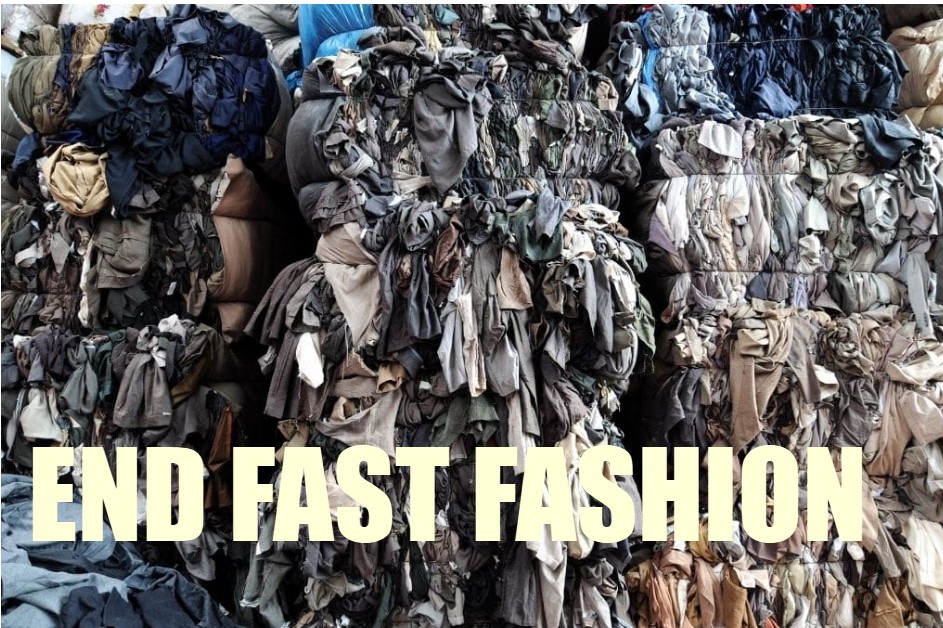
We make more than we need, and producers don’t have to consider how to dispose of their products. Behold fast fashion washing up on the shores of Ghana:

Electronic waste, exacerbated by planned obsolescence, is dangerous to recycle and the burden is dumped on the Global South.
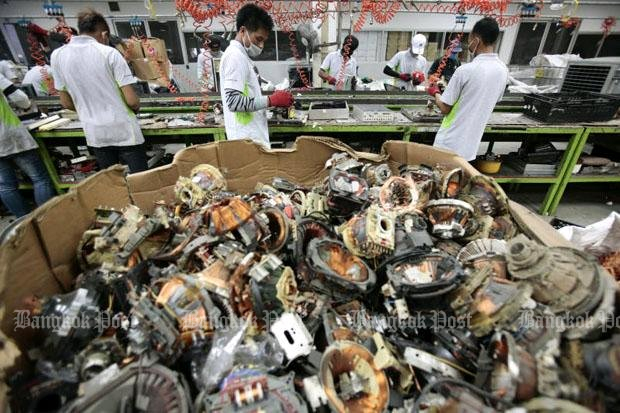
Don’t blame the consumer. The producers are at fault. Everything about the shopping experience is designed to get people to buy more. Producers hire experts and run focus groups to find out what makes people impulse buy and then sets up the shopping experience to max that out. Producers don’t have to consider how their products are disposed of. I recycle, but that just means my used laptop is shipped to Thailand where a person is paid a couple dollars per day to take it apart and expose themselves to heavy metals and other toxic components of electronics.
Solutions
California just signed a bill into law to address clothing waste. From this article:
California Gov. Gavin Newsom signed the Responsible Textile Recovery Act of 2024 on Sept. 28. The act seeks to address the growing problem of waste from the fashion industry. As it stands, the state ships 45% of the items that are donated overseas, which contributes to environmental pollution, and once there, much of it still ends up in landfills.
In Ghana, for example, which has seen its beaches polluted by fast-fashion waste, 40% of the 15 million garments received each week are discarded. All in all, despite the fact that 95% of California’s materials are recyclable, only 15% of clothing and textiles are reused.
“We worked really hard to consult with and eventually to align all of the stakeholders in the life cycle of textiles so that at the end there was no opposition,” he explained. “That’s an immensely hard thing to do when you consider the magnitude of the problem and all of the very different interests.”
According to the Guardian, the program is expected to go into effect in 2028, with its numerous backers anticipating it could create as many as 1,000 jobs in the Golden State.
Details are still being hammered out. However, garment manufacturers who aren’t already participating in eco-friendly programs will have incentives to adopt greener practices, with recycling collection sites and mail-back programs among the possibilities.
And while some have worried that small businesses and mid-sized brands could be disproportionately impacted by the legislation and end up passing on the prices to consumers, Newman estimates that the cost should be less than 10 cents per garment or textile.
“Our garbage bills will go up if the cities have to figure it out; our taxes are going to go up if we have to remediate environmental damage,” Dr. Brasch told the Guardian.
“The idea is that producers will take responsibility. So it will set up drop-off places where material can actually be recycled,” Toth said. “Legislation causes change. It brings attention to the issue, it brings investment to the issue.”
That’s great news! The rest of the nation can watch how California’s program works out and then adopt similar measures adapted for their own states. Reducing the amount of garbage and waste we produce should be something we can all support. I especially like that the California law appears to work by offering incentives to fashion companies, rather than regulation and penalties. That could make the solution a win-win.
“Right to repair” laws are spreading across industries. Farmers are fighting for the right to repair their own John Deere tractors. McDonalds can now repair its shake machines, thanks to a ruling from the U.S. Copyright Office. What will it take for smartphone manufacturers to make the batteries easily replaceable? Or make screens easier to replace so a cracked screen doesn’t mean you need a new phone? There are easy ways to reduce electronic waste. Will regulations and/or laws require some changes? Or will Big Tech cooperate and get rid of planned obsolescence?
Stay tuned while humanity works out this important issue.
Questions:
- When’s the last time you heard a speaker or teacher at Church caution against materialism?
- If you could replace the battery in your cell phone, would you keep using it for a few more years?
- Do you like nice stuff? Do you notice any difference in your mood or attitude that depends on what you have? I really like Marie Kondo’s idea to surround yourself with things that ‘spark joy.’ Less stuff, but make sure it’s something you really like.
 Wheat & Tares
I already had my phone battery replaced once a few years ago, it was officially done at the Apple Store. I am hoping it can be replaced again. My kids have replaced phone batteries themselves. There are YouTube videos showing you how to do it for different models of phone, and the correct batteries and necessary glues and tools can be bought online from reputable retailers. They researched very thoroughly before going ahead. A family member replaced the battery in my iPod touch for me, as the Apple Store couldn’t (it was too old).
I do agree that manufacturers should make things easier to repair. Built in obsolescence is immoral, in my view.
But the other issue is operating systems and software. I find the church isn’t great at supporting their apps on older phones and tablets. For example. My phone is OS 15.8…., and I find that I can no longer use Tools. My husband had had to replace his iPad back when he was on the high council because it was too out of date to do what he needed to do (not recent). Particularly given that the church requires so much to be done online now, members are expected to provide their own hardware. One of my early blog posts was about this kind of disenfranchisement of poorer members.
Who’s to blame here, the operating system folks, the app folks? Some updated blogs no longer work on my phone (looking at you exponent II) because a pop up window is too large for the screen, and I can’t access the x to close it.
For the moment then, I use my IPod for podcasts and audiobooks, my phone as a phone, for messages, and checking maps and online whilst out and about. For ebooks and Tools, and for stuff that’s better with a larger screen, I use the iPad. I’m hoping to continue this as long as possible.
Our desktop computer and laptop are still windows 7.
I really don’t like throwing things out for the sake of it, and prefer to repair.
We’ve been married 30 years now, and just got our 4th washing machine last year. We’re still on our second drier. We still have our first vacuum cleaner, a cylinder model, though we are on our third upright vacuum cleaner.
Timely post—thank you! I’ve noticed the FOMO I’m experiencing today—I need to hurry; they’ll run out of my size; I will miss out on the best deals; etc etc etc!
I’ll watch the Netflix documentary–thank you! Another is “Brandy Hellville & The Cult of Fast Fashion.” It focuses on the company “Brandy Mellville” and addresses the perils of fast fashion waste as well as eating disorders exacerbated by a company that originally only sold one size, copyright (the company “Brandy Mellville” built their brand on doing knock offs of current designs), the exploitation of young laborers (including, in this case including white upper middle class adolescent girls which might cause some to take notice who otherwise might not), and the extreme right wing politics of the company head (clothing line named after the character John Galt in Atlas Shrugged). I was unaware of this company but probably every GenZ and GenAlpha female knows if it, and the issues brought up in the documentary are found in many parts of the fashion industry. (Unfortunately this documentary has limited availability—I watched it on an airplane but otherwise it’s on only one streaming service and can’t be rented.)
I am too old to be caught up in the hype of Black Friday and yet here I am. Thank you for helping me to reclaim my day.
And yes—I have noticed the pivot from general conference and other sermons that in the past frequently highlighted the perils of materialism that now never do. Liked never. I had found it valuable during my formative years to hear those messages and we just don’t hear them in a church context anymore. I guess it’s the prosperity gospel alive and well.
I remember Spencer Kimball frequently admonishing church members to avoid materialism. I recall hearing of and once seeing the humble home Spencer Kimball lived in, and watching something once where his wife, Camilla, spoke of wondering what she might do to “earn a dollar,” and of the fiasco she experienced after dying her own hair before meeting the other general authority wives.
I do also remember hearing about general authority wives wearing ostentatious clothing while visiting the impoverished church members in post World War II Germany and how horrified some of the members were to see that insensitivity. Perhaps some of the cautions against materialism in talks were pointed at other general authorities, something that seemed to be somewhat common back in the day.
Hedgehog – I hear you about the operating systems. I have two laptops gathering dust that were bricked when the OS no longer was supported. They worked fine otherwise, but without security patches and support, using them risked viruses and someone getting my banking information. The machines didn’t have enough memory to upgrade to a newer operating system (or something like that; I figured it out at the time before concluding I couldn’t keep using them). Each of them were just four or five years old when Big Tech made them obsolete.
Same thing with my first smartphone. It was a Windows phone. It worked great, and then Windows announced they were shutting down their smartphone department and that was it for my phone. It isn’t just the hardware, it’s software support.
I wish all new hardware was backwards compatible. My son is a gamer, and when he upgraded his Xbox, a lot of the games he owned wouldn’t play on the new Xbox. He’s got to replace games as well as the console. That’s an issue that Xbox could easily solve, but they get more money by forcing gamers to buy new games with every console. We’ve had conversations about how the gaming industry is taking him for every dollar they can wring out of him, and he hasn’t wanted an upgrade in a couple years now.
MadiW – I haven’t heard of Brandy Melville, thanks for sharing. Netflix is my only streaming service, so I’m limited to that right now. Thanks for the anecdotes about Camilla’s hair dye, and the post-WWII visits. Very interesting! You know what else I noticed about Black Friday? I used to shop on Black Fridays. But like, the boots I bought at a great price were so uncomfortable that I only wore them a couple times. The good stuff doesn’t go on sale, and it was better to spend full price on boots I would wear for years than snap up a pair for $20 that gathered dust in my closet until I donated them to a thrift shop. Of course people had told me that before, of course they had. But I had to learn it for myself anyway. Sigh. I am not shopping today either. I’ve had the same pair of boots for seven or eight years now.
I was trying to recall the last time I heard a conference talk decrying greed and materialism – nothing came to mind. I did remember a saying that has come up in past conference talks (Hinckley for one) – “Fix it up, wear it out, make it do, or do without.” I quite like that saying, as it’s in the spirit of the OP and something we don’t hear much about in church anymore. In searching for use of that phrase, I found it in a 1999 conference talk that was surprising to me in how bold it was in calling out greed and wealth. Titled, “Greed, Selfishness, and Overindulgence” by Elder Joe Christensen, it’s a real gem. Why don’t we hear this kind of talk anymore? One reason might be that there are so many very wealthy “faithful” members, including bishops and SPs, who love their McMansions, Mercedes, and elite status, and the church doesn’t want to offend this important demographic.
I haven’t watched GC in years, but I do remember President Hinckley talking about some McMansions being built near a Utah temple and expressing the thought that he hoped no members were purchasing those homes. He found them unnecessary and extravagant. That’s the last I recall of such an admonition. There could have been more after that, but when you watch a minimum of 8 hours of the monotone talks, it’s hard to retain much.
We have several old models of cell phones, just in a drawer. Most are too old for a trade-in and I’d have to find a charger that worked before I could wipe all existing data for recycling. Tech does not make it easy. I love the idea of incentives for businesses to recycle their used products.
I can’t recall a recent talk on materialism, but I can say without hesitation Jacob 2:18-19 is probably in the top ten or top five scriptures I hear most often quoted in meetings and discussed regularly. I think it’s on the minds of most saints to some extent.
I would absolutely replace the battery if possible. I use my things until they die beyond repair. The main reasons I’ve more or less had to upgrade over the years was because of the nature of certain church callings, ironically.
I disagree that little to no blame lies with the consumer. I’ve managed to all but ignore advertising, and I think it’s largely a learned behavior. I’m even to the point where it pains me to buy new clothes. I wear them out until they become too immodest to wear anymore. When the self-reliance classes first came out, our bishop asked us to take it to get things started. I half-jokingly told my wife he must have seen me outside church, and concluded I had no skills or means to take care of myself.
Occasionally I like to buy a book, music, or go out to movies or restaurants with family and friends. I often feel these things provide a joy together that brings an immaterial aspect to it. I have no desire for boats or toys like ATVs or other things, but I do like paying for the experiences and memories that come from an occasional road trip. I wouldn’t mind doing internation travel in the near future.
If cheap will do, I’ll buy it, but I’ve seen so many people buy cheap, have it break, then buy it one or two more times, only to have it break again before buying something of higher quality. If I really need it and know I’ll use it regularly, then I’ll buy the best there is. I’d say it’s been a money saver overall.
We own a modest home. I’ve only recently developed a regret in not owning a bigger home, and that involves watching friends and family use theirs to bless others, even inviting whole other families to stay with them in times of need. That’s not something we’re currently equipped to offer from a practical standpoint. We do look for other ways to help others, however.
Eli, our toy (ATV) is what is giving us memories right now. We can no longer hike into remote areas, so rather than ruining our car, or getting horses, we have a toy. Of course, owning the land it takes to own horses or having them stabled and cared for like one richer than us friend did would cost more than our toy.
There is some blame to be had with consumers, but even more with manufacturer’s greed. Products now are carefully engineered to break within a few years and made so that it is cheaper to replace them than get them repaired. Others are specifically designed to be obsolete in six months and worthless in five years because they are no longer supported or upgradeable. Some you can no longer buy a copy, but have to pay every time you want to watch a favorite movie. This is all designed to give corporations max profit and gouge every possible penny from consumers.
One area where I think it is consumer’s fault is TV and entertainment. Instead of suffering through commercials on three free channels, people wanted no advertisements and lots of channels. Then more and more, cable, satellite, streaming, and it got more and more expensive, meanwhile quality went down and down and prices went up and up. Internet went from that horrible, but free dial up, to subscriptions, to 5G, getting faster and faster, but getting supper expensive. And phone went from land lines with 10 families per line for free, but you rent the telephone at 5$ per month to subscriptions and buy your phone for 1.5k and replace it in two years and pay 200 a month for subscription. Or you can bundle everything for one arm and two legs. Oh, and add in you subscription to an app for music, your subscription to a game or six, an app to store all your photos in the cloud because you can’t down load them to a CD like I stored thousands of digital photos to old camera method, oh and now I can’t get to all those photos because there are no CD readers on computers. My husband and my collection of bundled phone, TV, internet, and subscriptions for all that crap costs more than our car payment and more than our mortgage and would have been more than our groceries except we canceled a bunch.
When are consumers going to start saying “no” to all the faster and faster and more and more and the very latest that needs to be updated in six months and costs even more to update, and that all require subscriptions.
On the topic of operating systems going obsolete, can I recommend giving a Linux distribution a try? These are operating systems that are maintained by volunteer developers and are available free of charge (and generally free of ads and ‘spyware’ as well). Linux powers the majority of the servers and other infrastructure that runs the Internet. It’s a great way to breathe new life in to an older piece of hardware. It takes a little bit of tech savvy to get set up, but once it’s running is pretty straightforward. We use it on all of our family computers and laptops and even my seven year old can use it proficiently.
While I generally agree with the topic of the post, it seems like we have a little bit of frugality Olympics going on here, so I’m going to offer a counterpoint. I think it’s ok to use the resources we’ve been blessed with to improve our lives and the lives of others, even when that means we participate in our materialistic society. Like Eli mentioned, there are benefits to having a big house where everyone can gather! Some of my fondest childhood memories were from visiting relatives who had more money than we did.
We travel often, honestly probably more often than our budget ought to allow, because we value the time we get with our kids and see a lot of value in showing them as much of the world as we can.
The last time I remember hearing complaints about materialism from the pulpit was when my Stake President railed on people lining up to buy a Tickle Me Elmo. Obviously, this was close to thirty years ago.
Greed is good now.
Familywomen said: I haven’t watched GC in years, but I do remember President Hinckley talking about some McMansions being built near a Utah temple and expressing the thought that he hoped no members were purchasing those homes. He found them unnecessary and extravagant.
There is a reason they no longer say those things. It is the church themselves that is building the McMansions next to the temples. They buy the land around it and then have a builder (conspiracy hat on: that is a friend of a GA) build big homes that sell for a premium because they are next to the Temple. This only works in the Jello belt where members are willing to pay extra to live by a temple.
So it goes against their own self interest (money) to bad mouth the big homes.