
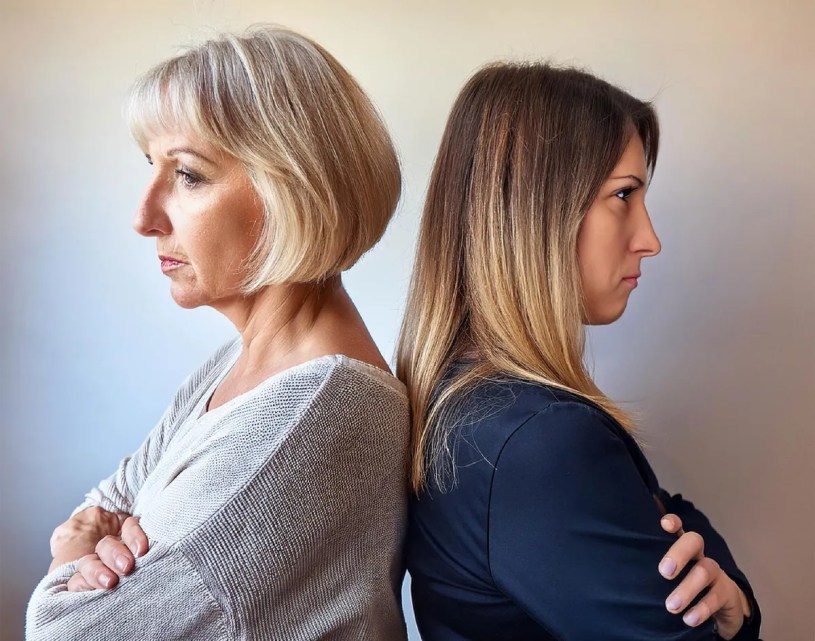
There’s a lot of discussion in the last few years, particularly among the younger generation, of cutting off “toxic” family members, refusing contact from them, and no longer seeing them. Maybe this is something you’ve experienced personally or maybe you’ve had family members who have made the decision to cut off contact with parents or other family members.
Here are some of the reasons this trend is on the rise:
1. Mental Health and Boundaries
- Toxic Relationships: Estrangement often arises from unresolved conflicts, emotional abuse, neglect, or manipulative family dynamics. Many people prioritize their mental well-being over maintaining harmful relationships.
- Therapeutic Awareness: Increased access to mental health resources has helped people recognize the importance of setting boundaries, even with family, to preserve their emotional health.
- Caution: The increasing awareness of mental health can also be subjective and can lead to armchair diagnosis of disorders like narcissism, BPD, anxiety, autism, or bipolar. If you are ingesting a steady diet of mental health TikTok content, you might be misdiagnosing yourself or others and making decisions based on those assumptions, or you might be self-selecting for content that supports your preference to avoid conflict rather than being challenged to become more resilient, listen to alternate viewpoints, and experience interdependence and personal growth. I read a funny Tweet that illustrates this point.
- Therapist: I think your parents are the problem. Based on your childhood trauma, maybe you should consider drawing some hard boundaries.
- Patient: Yes, that makes sense. I think you’re right. They are toxic. I’m going to cut them off. But of course, they are the ones paying for these sessions.
- Therapist: Hmm. Let’s rethink this and regroup next week.
2. Changing Social Norms
- Individualism: In Western cultures, individual autonomy and self-fulfillment are highly valued. People may feel less obligated to maintain ties with family members who hinder their personal growth.
- Reduced Stigma: Estrangement is becoming less taboo, with public discourse around it growing through media, books, and online communities. Support for estranged individuals has expanded, normalizing the decision.
- Caution: While estrangement might resolve issues in the short term, it also increases the potential for loneliness, financial insecurity (both in times of need and eventually in terms of inheritance), and removes a possible support network for both parties (childcare and elder care). Sometimes a temporary estrangement followed by a rapprochement is a better strategy when both parties lack the skills to navigate conflict and negative behavior cycles. A trial separation in marriage doesn’t always lead to divorce. Absence (sometimes) makes the heart grow fonder.
3. Generational Shifts
- Different Values: Generational divides in beliefs (e.g., on politics, gender roles, religion, or LGBTQ+ acceptance) can create irreconcilable tensions.
- Parental Expectations: Older generations often emphasize filial duty, while younger ones may prioritize personal happiness, leading to conflicts over family obligations versus self-assertion.
- Caution: Personally, I love that younger people are more assertive than they were in prior generations. We fought hard for them to have the freedom to be who they are, and if family acceptance is lower than societal acceptance, a “found family” can replace one’s estranged family. Older generations should be willing to accept their adult children for who they are, but it can be a tricky thing for people to navigate in those in-between years from dependent child to financially independent adult. It used to be that parents’ wishes dictated most of their child’s choices into adulthood, and that is no longer the case. Respect is a two-way street, and it must be earned and maintained.
4. Trauma and Abuse
- Many estranged individuals cite childhood abuse, neglect, or trauma as reasons for distancing themselves from their families. This is especially common when parents fail to acknowledge or take accountability for past harm.
- Caution: I have a hard time imagining anyone who doesn’t have some level of childhood trauma. Gen X specifically is the “latchkey / parental neglect” generation, who somehow turned that into helicopter parenting (not me, but others). If you were left alone, that was trauma. If you were never left alone and had too much supervision, also trauma. Basically, it’s not possible to parent perfectly, and it’s also a feature of growing up that you differentiate from your parents. Parents are themselves damaged, bringing their own childhood traumas into adulthood, and they may have been raised in an era where therapy was dismissed (or was not very reputable), or by parents who felt that you shouldn’t show emotion or “whine” (e.g. mental health = ignoring mental health).
5. Diverse Life Choices
- Families may disapprove of life choices, such as career paths, marriages, divorces, or sexual orientation. This can result in estrangement when reconciliation seems impossible or when the family imposes rigid expectations.
- Caution: I don’t see how a parent can reject their child based on adult choices. Our role as parents is to be that support network, the default. As poet Phillip Larkin put it, home is where, when you have to go there, they have to take you in. When your kids quit being financially dependent on you, you quit getting a vote in how they live their lives. If you expect a relationship with them, it’s up to you to be open-minded and accepting. As to their partners, so long as they are being treated well, you should probably butt the hell out.
6. Impact of Technology
- Increased Awareness: Social media and online communities have exposed people to alternative family structures and stories of others who have successfully distanced themselves from toxic relatives.
- New Forms of Connection: People can form “chosen families” online or in their communities, lessening the dependence on biological relatives.
- Caution: If you want your kids to choose you, you also have to be willing to choose them, as they are. But I would also caution that chosen families themselves may turn toxic, so learning some skills for dealing with people who lash out, are flakes, or become manipulative is also important. Ultimately, everyone acts in whatever they think is their own self-interest, and people come to relationships with traumas and skill deficits. Differentiating from your parents doesn’t have to be viewed as a rejection or grounds for estrangement by either the parent or the child, unless they let their insecurities get in the way.
7. Political and Cultural Polarization
- Differences in political ideologies or cultural worldviews have increasingly driven families apart. Contentious topics like race, immigration, climate change, and public health measures (e.g., during the COVID-19 pandemic) have exacerbated divides.
- Caution: Avoiding tribalism is difficult, but important. Knee-jerk reactions about something highly polarized are not very helpful. We can hear something a person from a different generation (or a different political party) says and immediately jump to conclusions when they might actually be more open-minded and less polarized than we think about a specific topic. We might hear one thing, and assume it’s part of a package of bad things that are all bundled together, but that’s not really how our brains work. I might care about three things that “people like me” care about, but not know much about or care about five other things that are assumed to be part of that same mindset.
8. Economic Independence
- As individuals achieve financial self-sufficiency, they may feel less reliant on their families for support, making estrangement a more viable option.
- Caution: This is true enough, but life circumstances can change. I’m also reminded of this exchange from The Breakfast Club:
- Vice Principal Vernon: The thing that really gets to me is that when I get older, these kids are going to take care of me.
- Janitor Carl: I wouldn’t count on it.
Research and Perspective
- Prevalence: Studies suggest that 10-15% of families experience estrangement, and it’s more common between parents and adult children than among siblings or extended family.
- Not Always Permanent: Estrangement doesn’t always last forever; some relationships heal over time, particularly if both parties work toward understanding and compromise.
- Caution: Parents should realize that if their adult child chooses estrangement, it’s a choice that should be respected as them making the best choice they know how to make for themself. Kids should consider that people and circumstances change over time, and that relationship skills can help, as well as time healing wounds.
Religion is one thing that can inflame these tendencies toward family estrangement, like other high control cultures. I’m not convinced that religion causes these issues, but it certainly acts as an accelerant when parents feel insecure, fearful or become controlling of their increasingly independent children whose choices may feel like a rejection. Church rhetoric also encourages putting the Church before relationship health, and leaders sometimes give poor parenting and relationship advice based on their own experiences and blind spots.
I’ve seen many examples of stories about family estrangement that started because a child left the Church and family members who are still fully believing were extremely judgmental or harsh in response to the person leaving, calling them names or assuming the worst about their motives or behaviors. Likewise, LGBTQ “coming out” stories can lead to family estrangement. Regardless the type of “coming out,” the scenario illustrates the same tension: the individual’s need to be accepted for who they are rather than having to pretend to be (or believe) something else. If you have to pretend or play a game to be accepted, you are not accepted, and the relationship has limited value. And yet, growing up in a high demand religion doesn’t exactly give you great skills at navigating differences. As someone once said, people exiting a high control religion often have the social skills of twelve year-olds.
A corporate trainer I knew years ago gave this advice: “the person with the greatest understanding in the relationship bears the most responsibility for how that relationship goes.” His mantra appeals to the vanity of the one hearing it. If the relationship isn’t going well, you are theoretically the one with the greater understanding of it, and therefore only you can direct how to improve things. That doesn’t mean that every relationship thrives when one party is trying and the other is not, or when one is actively harming the other. Everyone has to draw the boundaries that make sense for their own mental health. A boundary allows us both to be who we are. Good fences make good neighbors.
- Have you been in a relationship that was estranged? Was it by your choice or theirs or was it mutual? Did it improve over time?
- Do you think this is a health trend or that it signals a lack of resilience and relationship skills?
- How do you see the Church’s role in family estrangement? Is it helpful or hurtful? Does it depend on the individual?
- Do you think we are losing cohesive communities in our quest for individual fulfillment, or that these communities were harmful and are best left behind if they stifle individual health and choice?
Discuss.
 Wheat & Tares
I left the Jehovahs Witness religion when I was 15, and I have 7 brothers/sisters who have not spoken to me since then. I’m 52 now, my children have lost the chance to have cousins and family connections on my side. It’s been a sad situation but I couldn’t change it, so had to start building my own family security.
My wife made the decision to cut off her parents well before we met, and I’ll confess that I didn’t understand it. She tried to reconcile after our marriage, but now I understand why she made the decision, and I agree with her. What mother of six treats one daughter’s children with derision and only gives them collected happy meal toys for Christmas while buying cell phones and I-pads for other grandchildren? What father of six asks his one daughter, in front of some of the other children and grandchildren, to guess which child is his favorite, and when she says that it is her younger sister, he says “You’re absolutely right.” Meanness and toxicity abound, not physical abuse but lack of love, and to all appearances at church and elsewhere they present as loving and sweet. While I don’t understand everything, I have learned one thing: if an adult chooses to have little to no relationship with his or her parents, as an outsider I should be very slow to criticize. I admire my wife for trying to be engaged while also keeping some distance from her parents. We took our two young sons to see her parents several years ago, trying to be good people, and her brother was there with his family, including two sons who straddle my youngest in age. FIL and I took the four boys to a local museum, and we had to go through the gift shop on the way out. FIL bought a toy for each of my nephews, but nothing for my two sons, his grandsons. How was I supposed to explain that to my young sons? I quietly told my sons not to worry, and we would go back to the museum the next day on our way out of town, which we did. This may seem like a minor story, but my sons remember it and occasionally bring it up. Boundaries are sometimes necessary. While I think some boundaries are too hastily drawn, and maybe needn’t last forever, I defer to each individual to make those calls. I am glad that my wife has tried to have a relationship, and that children know their grandparents, but they also know something about their characters, and they’ve made it clear that they don’t want to possess many of their grandparents’ behaviors.
When I was in my 20s, long before cellphones, I might contact my parents by landline telephone two or four times a year, and see them maybe once in two years. That was normal and healthy growing up for a young adult.
I think today’s ubiquity of cellphones might be increasing estrangements.
Good question about the health trend vs. lack of skills. One would hope that, along with our increased ability to diagnose a variety of emotional/mental health issues, we’d see a corresponding increase in the adoption of strategies to cope with such issues. I wasn’t truly estranged from my parents (I still spoke to them when they were alive), but I certainly pulled back from them. My mother was an abusive alcoholic, so I did my filial duty by calling her on her birthday and on Christmas, but that was about it. I managed to keep things civil when she came (infrequently) to visit her grandchildren. Once I got out of my twenties and got some good therapy, I stopped being so angry and resentful towards my parents and instead established boundaries and protocols, and that worked pretty well.
It’s tempting to blame post-Romantic individualism for a lot of society’s ills, and I’m generally skeptical about such things, but I do think your question about communities is a really insightful one. I would say that I think we’ve lost the ability to mediate between our individual paths/desires and communal connection. IMHO, both are necessary for a well-balanced life, but a lot of 21st century American culture is all about focusing on one’s “journey” and not enough on really connecting with others. The culture at large, I think, errs a bit too far on the side of validating everyone’s “truth” (I DO recognize the deep importance of validation and care; I just think that that good and necessary impulse sometimes goes a bit too far) and tends not to reward calling people out on the bullsh*t, which is one function, I think, of a healthy community. It used to be that if one went a bit far afield, or was being too self-indulgent, one’s friends offered a reality check. My favorite part of Good Will Hunting, for example, is when Chucky tells Will to get out of South Boston and stop squandering his gift. That’s what a good friend does, and it’s also what a healthy community does. I think we’ve lost a bit of that.
And all this leads back to the issue of “cutting people off”. If someone is actively or passively doing you harm, or if they have done so in the past, you don’t owe them a damn thing and you owe it to yourself to do whatever you need to do to feel safe. I agree with Georgis that we should be VERY slow to criticize someone who cuts family off. And I agree that good fences make good neighbors. It may also be the case, however, that at least in some instances, a middle path can be walked. And finally, I do think that the church is often the cause of familial estrangement, in no small part because of the extreme binaries that modern Mormonism champions: Active/inactive, hot/cold, either it’s all true, or it’s all a lie, etc. That way of thinking tends to lead to people alienating and being alienated. Hardly the right approach.
I think the are legitimate reasons to cut family members off over political views. If a family member routinely spouts off insults, overt racism, aggressive homophobia, or maybe repeatedly pushes their views on you to the point of verbally attacking you if you disagree. That said, I think these circumstances are rare. And I generally think it is a bad idea to cut off loved ones from your life over different opinions.
I lessened contact, but have not completely cut off contact with my brother. He set up a property investment business that I started getting into with the intent of helping him out and making some money. At some point he found himself facing a number of problems and lawsuits and dumped the business off on me and fled to Russia (his wife is Russian) and has never come back. He obtained Russian citizenship. He also has a secret family and children with another woman whom he abandoned. I managed to resolve some of the business problems and put things in order to some extent. But he repeatedly used manipulative tactics to take blame from himself and force responsibility on me. There were many times where I felt absolutely overwhelmed and wondering if I would face bankruptcy. Occasionally I’ll talk with him over Skype at family events. But not about business or his secret family. Things certainly haven’t been the same between us since he left the US seven years ago.
There are MANY narcissistic parents and grandparents out there who play favorites with children/grandchildren, who fail to address the child’s needs instead of their own, etc. There is also a bias that favors one’s elders in the church which, if reflected onto family relations, can be quite damaging.
This family-estrangement question has, I believe, something to do with the increasing homeless problem. We have dealt with a few people who have no home and are in a bad way. In most cases they had family connections that could have been used as a solution, but “I don’t speak to them”, or “they don’t want anything to do with me” . . This need to maintain physical and emotional boundaries is in direct conflict with the mandate to love and support everybody as best we can, and the proper approach is a hard puzzle to solve.
Hawkgrrrl,
Thank you for your excellent article addressing this very pertinent subject. Coincidentally, I studied this topic for my graduate class in Research Methods in the Counseling and Human Development program at Walsh University, first half of Fall semester. I wrote a 26 page paper on this topic for the class. I called it “Parent and Adult Child Relationship Disruption Due to Faith Deconstruction in the Church of Jesus Christ of Latter-day Saints“, and it was supported by 26 peer reviewed journal articles.
Originally I was going to write about this in a more general way, however, I discovered that most of the research on this topic is connected with one researcher at Utah State University. Eventually I found her peer reviewed research that specifically addressed this problem with LDS parents and children who have left the church.
wendysparker72 notes the Jehovah’s Witnesses have similar problems. The research shows this is a problem that is occurring specifically in totalistic, high cost and high demand religions. In other words, part of the problem is the complete and total dominance of members lives by the high cost demands of these religions. Members are mostly thinking and talking about church topics and when their children start thinking about other things they have little in common, and are unprepared to conduct a relationship without the formal framework of the church. Members are used to having many of their relationships facilitated by the church and may find themselves unable to easily conduct relationships without this framework.
Another part of the problem is the unique theology of the LDS church. Unfortunately our most beautiful theology of eternal families has been used as a controlling mechanism by church authorities, that results in family estrangement. Parents are made responsible for saving their families by controlling their children’s actions (even as adults), in many talks by our prophets and presidents of the church. Parents are made to feel they are failures if their children make their own choices to leave the church.
While most parts of our society accept that the normal development of adolescence and emerging adulthood includes the child’s differentiation and autonomy from their parents, LDS parents are encouraged to continually mourn their children’s normal differentiation and autonomy and continually try to to bring them back into the church. This is very disruptive to these relationships. While there are are more healthy ways to interpret our theology, this remains a strong theme that continues to affect LDS relationships between parents and adult children.
I was surprised to discover that the research shows that the relationship mechanics between parents and children of “coming out” as not believing in the church, are similar, or the same as “coming out” as LGBTQ. And, of course, LGBTQ issues are one strong reason adult children differentiate from the church and their parent’s beliefs, regardless of the child’s personal LGBTQ status. Politics is also part of this pattern, according to the research.
Estrangement can be initiated by adult children who are uncomfortable with “coming out” to parents about their own beliefs. Often children make assumptions about their parent’s feelings and future actions based on the parent’s involvement in the church and comments made by other church members without actually asking the parents what they believe or sharing their own beliefs with their parents. In the case of LGBTQ adolescents and emerging adults, they may become suicidal or become homeless in order to get the distance they need from their parent’s perceived beliefs without coming out. Unfortunately, most parents in the church are unaware of this dangerous pattern. We are often unaware of the disastrous effects our comments can have on those who listen to us. We imagine that they are thinking and feeling as we do, when in fact, a certain number of them are pretending to agree in order to avoid coming out.
These effects on relationships are occurring at all generational levels in this church. Parents of LGBTQ children who have accepted them are becoming estranged or distant from their own parents in order to avoid outing their children to the grandparents. Meanwhile, the same parents are distancing themselves from their relationships with other members of the church, in order to avoid outing their own children, or to avoid outing themselves as having disagreements with the church. When people are unable to be authentic and open with one another, it undermine closeness and intimacy in any relationship. This results in many different levels of distancing and estrangement in many relationships; including the relationship between members and the community and institution of the church.
The church’s theology of eternal families has been seen as a hope to promote family love and togetherness. It is deeply concerning and disturbing to me to see this theology used to distance families and other relationships. This theology could be modified and used to strengthen families, as originally intended by many well meaning church leaders. We need to reassess the actual effects of this theology on real families in which members have different levels of belief and disbelief in the church and it’s theology.
Hawkgrrl,
And if I could kindly correct you on one comment you made:
“As to their partners, so long as they are being treated well, you should probably butt the hell out.”
Parents are wise to “butt the hell out” even if a partner is mistreating their adult child, while letting their child know they love and support them no matter what, and stand available to help them in any way needed; if the adult child chooses to ask for that help.
Unfortunately, butting in isn’t going to ever help the situation, even if their partner is beating them or mistreating them. In fact, it may further estrange your adult child from you if you make negative comments about a person that they perceive as the love of their life. They may then choose not to talk to you when they need you, rather than deal with your “I told you so” later.
Don’t ever put a barrier between your adult child and your support and help. Never make negative comments about their partners. Offer any advise only with specific permission and request from your adult child. Even then, offer it diffidently, allowing them the dignity and respect to make their own adult decisions.
For instance: “I am having an idea about that, if you feel like hearing it.”
“One suggestion or idea I have heard is this…. but your circumstance is unique. I don’t know if it would help you, but you could try it if you thought it would help…”
” You know more about your spouse than I do, however this is my experience. It may or may not apply in your case.”
Even in counseling, counselors do not tell their clients what to do. Adults make their own decisions, regardless of what people say to them. As a parent we can only offer our support to our children, in their own decisions and journey in life. When we withdraw our support initially, we run the risk that our children will not turn to us when they change their minds and really need us.
The overuse of the term toxic has left us with literally no non-toxic relationships. Most relationships just need healthy boundaries and a strong will committed to keep those boundaries. In that regard I have benefited greatly from Dr Julie Hanks helping me learn how to say things like “no” or “I’m not going to talk about that with you” or “while I’m sorry you are disappointed its not my job to manage your reaction to my choices.”
I do believe that what some view as just politics or religious beliefs are human rights to the other person and in that regard cutting off a relationship that doesn’t value you may be necessary.
I hope everyone has a lovely thanksgiving tomorrow. If you need some cues to steer a conversation in a different direction I have found responses like “Yes some people feel that way” or “yes some people like that person” or “yes I have heard that” or “that’s interesting” allow me to validate what they said but effectively allow us to move on.
lws329: Thank you so much for sharing this information. It is really consistent with so much of what I’m seeing, especially your observation that estrangement due to differences of political or religious belief is essentially the same as “coming out” in terms of perceived risk and potential rejection. Plus, the stakes can feel equally high in families where there is a lack of open-mindedness about these types of differences. Your observations about the church’s bad advice to parents that they should not respect adult decisions and fear normal differentiation are spot on. And I also appreciate your corrective about parental interference, even in situations of active harm.
There were a lot of people talking right after the election about their inability to stomach the victory crowing of their MAGA relatives who were seen as poor winners. At first I thought it was probably some hyperbole because I too felt extremely unhappy about Harris’s loss. But I have basically quit going to Facebook after seeing some of the really stupid things people who voted for Trump were posting that revealed their lack of information, their disdain for women, and their unfathomable religious biases (conflating Trump with someone godly or “chosen”). It was making it impossible for me to want to remain connected to them (Facebook connections are kind of weak anyway–cousins, high school friends, etc.), so instead I just shut it off and figured it will blow over in a month. Well, that and the fact that FB basically sucks anyway. Kind of the same with Twitter. I’ve spent much less time there because the bots and trolls are just exhausting, and the Mormons on Twitter are honestly the lowest of the low–they literally sound like cultists who want Andrew Tate to be the next apostle.
I have read so many stories of people “coming out” to their family about no longer believing the church or having their records removed, and the responses some of them have received are just astounding. I mentioned the Steve Hassan interview where they talked about being in a high demand religion basically stunting your ability to have adult relationships, and I really do think that’s a big factor at play.
I’m estranged from my father. He’s never respected a boundary in his life, so there were no other options. Also because he does not respect boundaries, I had to get really angry/upset/drastic about getting distance from him because he wouldn’t respond to any of my more measured efforts. That caused some family fallout. My mother said that she and my father were a package deal. Even when she finally divorced him, she never apologized for backing my father’s actions towards me. We remain estranged.
I miss the idea of having loving parents. I do not actually miss my father at all. Once I stopped being afraid of him, I had no other emotions towards him other than being sick of him. I missed my mom for a long time, but I eventually worked through that as well.
On the topic of estranging due to political beliefs — I think that’s valid if one person or the other won’t stop talking about them. I have a friend whose family has such a strict “no talking about politics” rule that she doesn’t even know her sibling’s thoughts on the topic. The rule was necessary to preserve her relationship with her father, and he’s followed the rule. They are still close.
Politics are no longer just about marginal tax rates and other topics where people can just agree to disagree. There are human rights issues at stake now. One bonus of being estranged from my father is that my children have never once heard him sound off about the groups of people he hates and all the destruction he wishes would rain down upon their heads.
raymondwinn – my father is either homeless or next door to homeless (living in a camper trailer) and he would be one of the homeless who say their family wants nothing to do with them, or he wants nothing to do with his family. He’s one of the reasons I’m a strong supporter of a government safety net. He needs someone who doesn’t know him at all to offer help. There is too much history, and too much baggage, for a relative to do anything for him. I hope he’s sleeping indoors and has enough to eat, but there is no way that family can help him with that. Impersonal government services, with no emotional connection at all, are the only chance he really has in accepting help.
When we were in French Polynesia last year, our tour guide talked about the fact that there were many homeless people by choice. For one thing, the climate makes it very easy to choose to live that way. He stopped and talked to half a dozen homeless people and introduced them to us. He said some of them wanted to be artists which doesn’t make much money, and maybe their families didn’t approve. Others were queer, and experienced family rejection. And still others just didn’t like feeling their families were controlling their adult lives, and they preferred to live free.
ji makes an excellent point about the default for those of us who grew up Gen X being to have very limited contact with our parents (unless you happened to live in the same city I guess). When you had to pay long distance phone call charges, it was pretty normal to speak very infrequently once you were out on your own. There was no social media. I remember when email became a thing, in the 90s. I would be really sad if I only had such limited contact with my own kids, holidays only plus 1-2 phone calls per year, but for my parents’ generation, that was kind of normal. During the pandemic, we actually did a few Zoom calls which was a nice change. We also have an issue that neither of them can hear well enough to talk on the phone much. It’s really difficult to manage. Even on Zoom, I had to rely on the chat window to type in what I was saying so they could “hear” it. To me, this feels normal. I haven’t been home for Christmas in 30+ years because we go to my in-laws, which suits me fine. My parents were never big on it anyway, and we’ve always been closer to my in-laws (in age and temperament).
I was in Poland on a walking tour last month, and another tourist asked me (after hearing how much we travel) if I would ever move outside the US to retire. I said that even though I’ve lived outside the US before, I just couldn’t live so far away from my adult kids. I would miss them too much. And yet, like lws329 points out, I do feel protective of them when it comes to my family. I expect them to be accepted and loved for who they are, and sometimes you have to point out that “You don’t get a vote on how other adults live their lives” applies to everyone. But also, since we’ve really never lived near my family (with one sister as the exception), none of my kids really have relationships with them anyway.
But my need to see my kids, to have a relationship with them as adults, this is just not something other generations necessarily had, or so it seems to me. I don’t think I’m hovering, but I just really enjoy spending time with them.
I am one who should have cut off all contact but didn’t. My parents were abusive, in different ways and to different degrees. My mother’s worst trait was failure to protect me from an abuser and failure to be a safe person for me to tell about the sexual abuse. But there was also some emotional and some physical abuse. I think my mother did the best she knew how, or best she dared. Women back then had to have proof of wrong doing or a husband who agreed to the divorce or she could not get the divorce and she didn’t have either. She was also unable to support 5 children, which I knew and was part of why I didn’t tell her. She was helpless in some ways. But compared to my dad, that was all very forgivable. I really do love my mother, and most of the time even liked her
I did not want to cut off contact with my mother and siblings, but my mother never did divorce my dad, so they were sort of a package deal. Turns out some of her traits that made it unsafe to tell her about the abuse also made it very difficult to be around her even after my father died.
My older brother did essentially cut his family off of the extended family, and he always seemed to have the best mental health when we saw him every ten years. I have a niece that I don’t think I ever even met, because he kept his children away from my parents.
But now that both parents are dead and buried, my mental health has never been so good.
I also cut off contact with the church for some of the same kind of reasons. To me at least, it is toxic.
I have had to limit contact with siblings in some ways, because I was made “junior mother” over my older brothers and younger siblings. I could hardly make the older ones obey me or do their chores. But I just cannot stand to be put in a caretaking/mothering role for any of them, and the two youngest have mental health issues and never married, so I am *all* they have. But every time I am put in that “mother” role, it takes me months to recover emotionally. And none of the crap or how I feel about taking care of them as next of kin is their fault, and they caught the worst of the family dynamics after I was out and married and not their to protect them…so how could I go no contact when I am the only relative who claims them. Would it be better for my mental health? heck yeah. But I am not that selfish, unlike that older brother who divorced his family.
on a different note, I have had to cut off one sister-in-law was was homophobic and said things about how we should cut our daughter off because gay. My oldest brother went with her, but he didn’t stand up for his own lesbian daughter, so no loss.
I have a “claimed child” who will visit her birth parents tomorrow for Thanksgiving pretending to be their loving son, instead of their youngest daughter. She hates it, but doesn’t dare come out to them and lose her parents most siblings. So, bind her breasts and take off the nail polish and pretend. I’m crying for her.
My daughter was not welcome in her parents in law’s home for 15 years, so they didn’t see their daughter much either, at grandma’s funeral maybe.
my niece cut off contact with her parents for 10 years because they refused to accept that she was lesbian
The four above family estrangements are all because of Elder Oaks and his religious idiocy. May he die a long and painful death. OK…I think I am only kidding about how Oaks dies. Maybe.
We pre-2019 missionaries had to go no-contact from our families for two years. We also received monthly training on how to “lock our hearts.” The shame heaped on “trunky” missionaries who succumbed to homesickness was a strong motivator to banish all longing for home. Even reuniting with family after the mission did not permit any confession homesickness; we were expected to promote the no-contact life as “best two years.”
But I am curious to see if post-2019 RMs will struggle with the concept going no-contact, since they are no longer required to cut off contact with their families during their missions.
It was Robert Frost who wrote “Home is where, when you have to go there, they have to let you in.” The Death of the Hired Man.