
The Gospel Topics Essays were published (posted at the Church’s website) about ten years ago, and they’re not dead yet. They are still available at LDS.org. But they never received much (any?) attention in General Conference and they only received marginal attention in the new LDS curriculum. With the steady move toward retrenchment over the last decade, that’s not going to change.
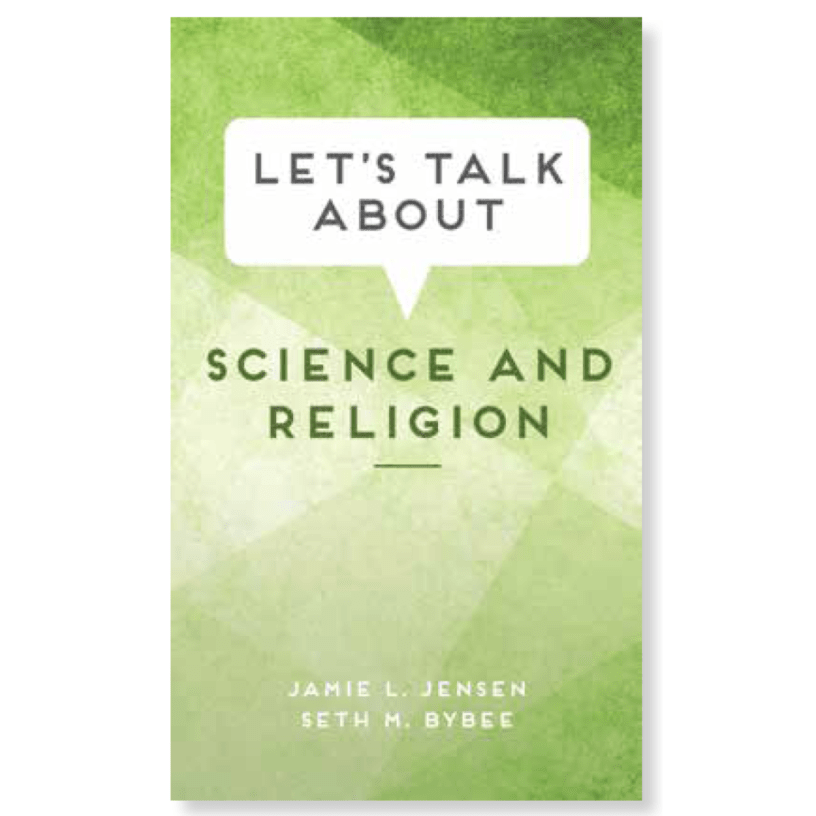
But an alternative set of publications seems to be taking their place: the “Let’s Talk About” series at Deseret Book. And since they are featured at Deseret Book, that almost guarantees that the series was approved by LDS leadership, although I don’t know if the volumes were individually reviewed by designated LDS leaders or by LDS Correlation. In any case, there are nine volumes in this series, covering some of the same topics treated in the Essays. Unlike the Essays, there are named authors for these short books or booklets. Unlike the Essays, they are not “official” publications of the Church, which puts some distance between the arguments and positions taken in the books and whatever the Church’s position (or no position at all) might be. Unlike the Essays, they give extended discussion about the issues addressed.
I have read three or four of them. Some are better than others, but what constitutes better is going to vary from individual to individual. As with the Essays, I think the target here is the active LDS member who is has a tough question or two and is hoping to find some faith-promoting answers or at least some reasonable arguments. They make nice little Christmas presents if you are thinking that far ahead.
I’ve talked about individual volumes in a few previous posts here at W&T, so I’m not going to rehash those discussions. There was recent discussion about the Essays in W&T comments, so I just wanted to post this follow-up for further discussion. My sense is the Essays are dead, but have been reborn as the Let’s Talk About series.
What do you think?
- I think the Essays are quietly being shelved and might just disappear from LDS.org in a decade or so.
- Have you read any of the Let’s Talk About volumes? What did you think?
 Wheat & Tares
The essays are still alive and are very much objects of discussion in my area. I could point out a fissure between those who trust the essays to a significant degree and a minority of fundamentalists who think the essays (and Saints) are part of some conspiracy to take over the history and doctrines of the church by “liberals” in the church history department and CES. A few are even disparaging the Joseph Smith Papers. Oh, the tangled webs we weave when we start creating and believing in conspiracy theories…
The Essays are not just dead in my area (Davis County, Utah); they never existed. I have yet to mention them to anyone who knows what I’m talking about.
On the other hand, on Sunday I mentioned to a fellow Gospel Doctrine attendee that her comment echoed the ideas in one of the Let’s Talk About books. She said she owns the book, but has not yet read it. She just moved into my ward, so I don’t know if this is a one off, a result of coming from elsewhere, or she actually reads.
I think they’ve generally moved on from the GTEs (though I believe they are still part of Doctrinal Mastery in Seminary). They revamped the Gospel Topics section as “Topics and Questions,” subjugating the GTEs to the Church History section. This helps church members access the more devotional-oriented topics in the Library app for their lessons & talks without running the risk of having them come across the GTEs.
More difficult Church history can be covered by the professionals in the Church History Department via the Church History Topics area. No chance of a Church member randomly coming across them, but they’ll pop up as coming from the Church’s website if someone uses a search engine to ask a history-related topic.
The “Let’s Talk About” series provides a perfect gift option if someone has a questioning friend or family member. That way people feel they’ve done something to help without having to climb into the icky subjects themselves.
An even more interesting site, not Church sponsored, can be found at https://mormonr.org/categories.
Seems to me that the Gospel Topics Essays presented more questions than they answered and I suspect that the “Let’s Talk About” material will be more of the same. If only we had 15 or so revelators who could ask God for clarification on these issues. Wow that would be so cool. Instead we get more philosophies of men mingled with scripture.
Looks like they’re going for $11.99 each. At least the gospel topics essays were offered for free. It would mean more if they would offer free PDF’s online.
I agree with the OP that there is likely some influence from Church HQ in having the “Let’s Talk About..” books published. Paul Reeve, a history professor at the U of U who wrote the “Let’s Talk about Race and Priesthood” book (who was also one of the unnamed authors of the Gospel Topics essay on the same topic), stated that he was approached by Deseret Book to write his book. He really didn’t want to do it and apparently rebuffed them a few times because he insisted he’d only write what he considered to be the true history, and he just didn’t think Deseret Book would publish what he would write. Only when they kept insisting that they had followed him and were well aware of what his book would say and promising to publish whatever he wrote, did he finally consent. For Deseret Book to commission and actually publish Reeve’s book says to me that they had very likely had approval, and probably direction to convince Reeve to do this, from Church HQ, probably from at least someone in the Q15.
Reeve’s book is the only book in the “Let’s Talk About…” series that I’ve read so far. I personally think it’s a real gem that should be required reading for every member of the Church. It’s quite short (somewhere around 100 pages), yet Reeve does a very convincing job of defending his thesis in those few pages. What is his main thesis? He’s not shy about it at all and directly states it from the beginning. Reeve wrote the book is to demonstrate that the priesthood and temple ban is 100% manmade and didn’t have a thing to do with God.
Reeve provides ample evidence to show that Joseph Smith generally approved of black members holding the priesthood and participating in the temple. He then goes through Brigham Young’s transformation from also seemingly supporting Joseph’s views to converting to the “curse of Cain” theory at some point after arriving in Utah. Reeve believes that Brigham very clearly told the Church over and over again why blacks shouldn’t hold the priesthood or enter the temple: they were still under condemnation for the sin of Cain. As a result, Reeve doesn’t believe that there is any mysterious reason out there that God wanted to withhold the priesthood and the temple from black members.
Reeve then spends time reviewing the actions of subsequent prophets who, in fits and starts, solidified and institutionalized racism within the Church and points out how there was never any revelation claimed for doing so (even by Brigham). The racist statements, policies, and doctrines all just generally pointed to what was said and done by their predecessors.
Towards the end of the book, Reeve has a chapter in which he debunks various theories that Church members keep coming up with to somehow put the cause of the ban in the hands of God in order to preserve prophetic infallibility. I watched a video on YouTube where he called this process “whack-a-mole”. As soon as good historians like Reeve debunk yet one of these theories, apologists just come up with another, often wackier, one.
Reeve even has a very short chapter at the end of the book where he very briefly addresses the issue of prophetic infallibility. In it, he acknowledges that the thesis of his book (that Brigham Young, not God, was the instigator of the Church’s racism and subsequent prophets just followed along) is a serious challenge to Wilford Woodruff’s claim that a prophet can “never lead the Church astray”. Reeve is a historian and doesn’t deal with this topic very extensively, but it’s clear that he feels that the blame for the priesthood and temple ban falls squarely on the shoulders of Brigham and his successors, so if that means they “led the Church astray”, then Woodruff must have been mistaken (Reeve proposes that Woodruff’s statement perhaps should be limited to his leadership regarding the big issue of his day, namely polygamy).
My EQ President frequently asks me to teach EQ. When he initially asked me to start teaching, I told him that I’d only do it on the condition that I get to pick my own topics and develop my own lessons. I also told him that my lessons were going to be about things that I felt would benefit the guys in our ward, but that I was going to talk about controversial things that are almost never spoken of in church. The EQ president, who knows me and some of my positions well, said that was why he was asking me to teach, so I agreed. I always “tie my lesson” to a recent GC talk in some way in an attempt to avoid objections (’cause I guess lessons are supposed to be on GC talks? I’m not even sure, and I certainly don’t care.).
I liked Reeve’s book so much that I recently gave an EQ lesson that drew heavily from the book. The main goal of the lesson was to try to convince quorum members that if we’re really going to eliminate racism from the Church that it’s time to stop coming up with excuses for why God wanted to withhold the priesthood and the temple from blacks (i.e., no more spreading the “whack-a-mole” excuses for God any longer). In order to get to that point, though, one has to make a case that the ban really did originate from Brigham and not from God, so we did that first. This included, among other things, putting the ugliest of the Brigham Young racist quotes up on the screen in EQ as part of my PowerPoint presentation.
I’ve covered some very controversial topics since I’ve been teaching these lessons, but this one was a step up from what I’d done before, so I didn’t know how it would go over. I could tell that I kind of rocked the worldview of a young man who had just barely returned from his mission, so I went up to talk to him afterwards, and I think that helped him feel a little better. Besides that, though, I received an overwhelming amount of support and compliments from the quorum afterwards. They felt that this was a topic that really needed to be talked about more openly. I even had several people explicitly thank me for reading the awful Brigham Young quotes out loud in EQ. Given the response to this lesson and others I’ve given in the recent past, I’m not sure that sweeping the gospel topics essays (and going beyond the essays) is the right way for the Church to go. I think a lot of guys in my ward are trying to process these issues on their own, and apparently they really appreciate me openly speaking about them in Church. If we don’t talk openly about the issues, then they may just eventually stop coming, as many in our ward already have. In fact, I think this is probably why the EQ president is letting me do this. I am getting a ton of engagement from quorum members during these lessons–it’s nothing like the normal “GC talk” lessons where only a few comments are made during the entire hour. I often have to continue lessons that should really only require one Sunday to the following EQ Sunday and even to a third EQ Sunday because people are engaging so much during the lessons and want them to run to completion. I know that this is all probably just going to end with me getting banned from teaching and possibly worse, but it’s going well so far. In the meantime, I’ll have to read some of the other “Let’s Talk About…” books to see if they can be turned into good EQ lessons.
I was released as a RS teacher for teaching things that the church then published in the GTEs, so from where I’m sitting, it’s all a matter of timing and bishop roulette. However, the church gets the teachers it deserves. The members will put up with a whole lot of faith-promoting garbage.
I don’t think the essays are going away. On the other hand I don’t expect the church to make an effort in the near term to draw attention to them. The fundamental problem, the reason they fear drawing attention to them, is that too many members have built their faith on a fragile narrative that makes unrealistic assumptions about prophetic fallibility. I hope for a future of a “post infallibility” church in which both membership and leadership have adopted a worldview that can tolerate a messy origin story of the faith, but it looks a long way off to me based on the current rate of change.
I think if the church and its membership truly accepted that the prophet is, and has always been, fallible – to the point where the average member could point to something they thought a prophet got wrong – it would transform the church into something almost completely different than it is now. I can’t think of something the church has done “wrong” that isn’t traced back to the idea that the prophet and the Q12 are fallible but never happen to make a mistake that a lay-member is capable or worthy of identifying.
Of all of the church’s objectives, the one that is highest priority is self-perpetuation. All other goals lose when they come into conflict with this one, even the goal to do what Jesus would do. Until that changes, I think we can expect short-lived well-meaning efforts such as the Essays to slowly make their way deeper and deeper into the memory hole.
@ mountainclimber479 – Thank you for that lesson! I was a youth Sunday school teacher for a bit, and I taught a similar lesson at the request of a young man in the class who happened to be African American. Boy howdy, at least two parents called into the bishop and complained about my class teaching “false doctrine.” I wasn’t immediately released but I did get chastised, then released when they did that YM/YW shakeup a few years back. Hope you’re able to continue teaching in freedom and wisdom.
To josh h’s point, the essays did indeed lend to more questions than answers and the leaders knew this. So they essentially buried them knowing full well that most members would not stumble upon them. The church simply wanted to select criticism from ex-Mormons that they were hiding information. Ok they’re not hiding per se, but they’re most certainly not featuring a lot of inconvenient information about church history and Joseph Smith’s character that would likely deter many from joining or staying.
I too believe that the church will eventually remove the essays from its website. Ex-Mormonism isn’t the force it used to be. If it continues to wane, they essays will be gone.
I’ve enjoyed the ‘Let’s talk about’ series, and the one about Science and Religion especially. But it appears that many of our faith were not ready for the nuanced discussions they addressed- the science volume specifically triggered a flame war in the review section at Deseret Books that was finally resolved by Deseret Books removing reviews for all products everywhere on their site.
ryanmerrilljones, that’s an interesting little anecdote about the online reviews for the book on the Deseret site! Thanks for reporting that. I wonder if those comments are available somewhere, out of curiosity to see the level of science literacy vs fundamentalist hostility in the DB community.