

President Nelson currently has three prominent legacies from his time as the President of the Church.
His first legacy is that President Nelson will be renowned as the person who stated that the Mormon Church is Satanic and that all prior prophets were Satanists.
This is because of the way that some communities have spread and popularized his teaching on the topic of the word “Mormon”. The “anti-Mormon” crowd admittedly isn’t much for nuance.
That group has taken the statements of “mormon = give the victory to Satan” as an admission that “Mormon = Satanic” and that “Mormon = Satanists” and have run with it.
That legacy will be with the Church for a long time with those outside the Church.
President Nelson has normalized retrenchment over conformance.
The primary “Mormon” virtue used to be conformance or compliance. In practice this meant that leaders spoke and followers followed.
Members and followers were seen as identical terms when the Church had new programs or directions with everyone going along rather than many members resisting the changes.
That cultural practice of complying has been fading with the result that recently there has been an effort to stress following current leaders over past teachings to try to counteract the trend.
In many ways, prioritizing current leaders over past leaders makes a lot of sense. Brigham Young had directions for how many pounds of coffee anyone coming to Utah was expected to bring with them. I don’t see those directions being followed by anyone these days.
Brigham Young University students used to be allowed to smoke cigars and cigarettes on campus. I don’t see anyone calling for BYU or the Church Office Building to lose their “smoke free” status these days.
When you think about it, President Oaks’ direction that we should prioritize living leaders over past ones makes a lot of sense as the world does change so directions and advice from leaders should change as well.
But the cultural virtue used to be conforming and complying with new directives. Now the virtue is retrenchment, where if you disagree with a current leader about something (like the “I’m a Mormon” campaign for example), you just retrench and wait for them to pass on and become a “past leader.”
There are a number of additional examples such as policies over baptism of the children of gay parents. In these cases retrenchment prevailed over compliance. As examples progress, the “doctrine” or “practice” of retrenchment has gained wide popularity.
Recently this was exemplified by the followers of Trump on things like vaccinations and other policies putting Trump first over what President Nelson has had to say on the same topics. Retrenchment has now spread across the political spectrum in the Church.
Finally, President Nelson has presided over dramatic reductions in Temple Attendence.
Covid, building new temples (and the staffing and scheduling problems resulting from that) and similar things have resulted in temple attendance being very reduced.
Changes in the endowment ceremony may or may not counter that trend. But the current statistics create the paradoxical result that he is currently the president of the Church most connected with reduced temple worship while also being connected with an explosion of new temples.
- What do you think of his legacies?
- Would you add to, change or modify this list?
- What legacy do you think other leaders in his administration, such as President Oaks, will be known for?
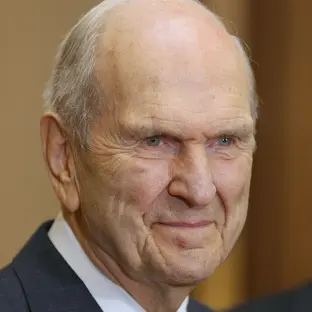
 Wheat & Tares
let me quote those immortal words of the Door Mouse here: “To live is to be marked. To live is to change, to acquire the words of a story, and that is the only celebration we mortals really know. In perfect stillness, frankly, I’ve only found sorrow.”
That is the problem with the legacy of retrenchment. It ignores the fundamental principle that this life is all about change. Indeed, how would we progress if we did not change? We wouldn’t. The same goes for the Church.
Unfortunately, the one area of actual change was the destruction of the Mormon Identity. A change that absolutely destroyed the sense of community that made people happy to go to church. They enjoyed being in a community with their friends. Now, they are being told that the community had Satan’s name attached.
What we have now is individualistic members who watch church at home in their sweatpants and crocs. This is the sorrowful stillness that the Doir Mouse spoke of. I condemn it.
On earlier leaders vs. present leaders, yes it makes sense to look to present leaders more. However, bear in mind that religion is tradition based, and is not progressive. This makes it different from the study of science, which is progressive. In science it is expected that new evidence be found and new discoveries made. In science, we can admire earlier contributors to different fields while finding a lot of what they theorized to be wrong. Isaac Newton was fundamental to our understanding of gravity. Still, he got it wrong, believing that gravity was a push down, only later to be disproved that gravity is the result of a pull down. Yet Newton is universally respected for his contributions to understanding physics. It doesn’t work that way in religion. Joseph Smith is viewed to have revealed things that are universally true, cannot be tested or scrutinized, and have to be continually accepted as revelation.
So, Mormons are bound to a good degree to what Joseph Smith said and cannot veer from that too much without compromising the tradition. By contrast, disagreeing with Newton based on evidence and experimentation, doesn’t compromise, insult, or dismiss him as the great figure he was.
As to Nelson’s contributions or legacy, I fail to see what these really are. He simply continued a well-established tradition to which he made some very minor adjustments. That’s all. Followers like to hero-worship. They like to view their leaders as these monumentally inspirational men who have accomplished all this good and have said all these amazing things. But when we try to get into to the specifics and find huge significance to them, there’s not a whole lot there.
Legacies are hard to judge while someone is still in charge, but I think Nelson’s primary legacy will be a rejection of tradition and a propensity for fiddling with whatever he wants to change. In less than six years he has:
1. Merged the HP and EQ into a single EQ.
2. Turned Home/Visiting Teaching into Ministering.
3. Ended Scouting
4. Announced (and nearly completed) a new hymnbook
5. Banished “Mormon”
6. Canceled most Church pageants
7. Let sister missionaries wear pants and elders wear blue shirts or no ties.
8. Let missionaries call home weekly
9. Changed seminary curriculum to align with Come Follow Me
10. Ended 1 year waiting period for sealings after civil marriage
11. Morphed EFY into FSY
12. Let women, youth and children serve as witnesses of ordinances
13. Ended YM presidencies.
14. Renamed (unnamed) YW classes.
15. Changed the temple endowment . . . 4 times (I think?)
16. Canceled the Saturday evening session of conference
17. Uncanceled the Saturday evening session of conference
18. Changes Tithing Settlement to Tithing Declaration
19. Changed Aaronic Priesthood ordination ages and youth class progression.
20. 2 hour church
All of these changes (and I could probably add more to the list) didn’t really “need” to be done. We had been using “Mormon”, putting on campy pageants, having YM presidencies, and doing temple stuff more or less the same way for decades; we could have kept all these things they way they were and no one would really have thought too much about it. Nelson has clearly shown that everything is subject to change according to the ideas of the president of the church. Personally, those changes I’ve listed are pretty equally split between things I like, things I don’t like and things that are neutral or inconsequential. But I think the church hasn’t had this sort of constant restructuring since the days of Joseph and Brigham.
I’m torn between appreciating a willingness to try new things, versus the whiplash of tossing aside so much tradition. For every change that I like, there is undoubtedly someone else that misses how it used to be. Some of it feels like making changes just for the sake of making changes. (Ministering, Tithing Declaration, YW class names) And the underlying question behind all of this is if the next guy will feel just as empowered to toss aside all of Nelson’s changes for his own. Will this start a pattern of every president remaking the church in his own image every 5 years? If Oaks is next, he’s perhaps in agreement with more of Nelson’s changes, but maybe he’s got ideas of his own. If Holland (never been in the FP) or Uchtdorf (got sidelined) is next, do they see it as a chance to fix things they disagreed with? Then does Bednar fix all of Uchtdorf’s fixes?
Next topic: What supporting evidence do you have for there being dramatic reductions in temple attendance? Certainly COVID caused temple work to nearly completely stop worldwide at its peak. But is temple attendance over the last 12 months dramatically lower than in 2019? It is unclear to me how assertions of decreasing, increasing or static temple attendance would be argued for or against.
I guess I see him as the great re-brander of Mormonism.
DaveW’s list is great but I believe some of those changes actually started under Monson and given Monson’s incapacitation at the end of his life it can be difficult to decide who gets the credit. Also he missed the re-branding of disciplinary councils to membership councils which, given that shallowness of the change, perhaps that was intentional.
His main legacy I see was coining the term covenant path. It’s everywhere in the Mormon Zeitgeist now. I’m not personally a fan as I simply see it as a move to ensure the institutional church stays relevant inbetween individuals and divinity but YMMV.
I look on him harshly, mainly for his name calling approach and signaling to friends and family that I’m lazy and not to be trusted.
But otherwise I look on him with sympathy. I’m not sure anyone could do better, taking the helm during both the information age as well as the polarization that followed the pandemic.
Similar to my dread of another Trump presidency, I’m not looking forward to the Oaks years. However, I do have older family members that have told me that they were similarly terrified for a Benson presidency but once he became president he actually quit with the Bircher crap. So maybe it won’t be so bad.
I think RMN’s legacy will be remembered as the turning point where the Church began its steep and irreversible decline.
At every step where the Church could have been transformed into something relevant and spiritually nourishing, RMN took the opposite approach. Making his own longstanding grievance about the word “Mormon” the centerpiece of his administration shows how small and petty he is. The explosion of unnecessary temple building is a personal monument to him, not the Lord – even going so far as to steal granite from the Salt Lake Temple he mercilessly gutted to use as his own tombstone. (Seriously. Look it up.)
Every part of Church that built community and fellowship has been equally gutted during Nelson’s tenure. We used to speak of a ward family, but that familial spirit has been replaced with drudgery and boredom. It’s ironic that Nelson made church shorter and still made it feel like more of a slog.
Nelson has also empowered bigots and doubled down on hero worship and infallibility. He has postponed the Church’s reckoning with its many mistakes and ensured that the reckoning, when it comes, will be that much more brutal.
I’d say I can’t wait for him to be gone, but I shudder to think that Oaks will probably be worse.
Dave W, thanks for the list of things done under Nelson. To the regular attendee and active member, these changes are noticeable. I remember going on a mission and being able to call my family twice a year. The end of scouting a big change. Home teaching feels like it no longer exists. People get up in arms about someone calling them a Mormon. Church feels shorter and less interactive. EQ feels like it doesn’t exist anymore. I no longer have the tradition of dressing up in a white shirt and tie every six months and going with my dad and others to priesthood session and then going out to eat afterwards. But when we zoom out, these changes are small and insignificant. They are far, far short of the much larger changes that critics had been demanding. The Book of Abraham hasn’t been decanonized. The Book of Mormon is still treated as historical. The Bible is still treated as mostly historical (even the Pentateuch stories). Women don’t have the priesthood and play no greater roles in local leadership than they had in the past. The church hasn’t expanded service projects. The wards haven’t become more focused on service to the community. Early morning seminary persists. The church is still investing significant sums of tithing money in stocks and other assets. The church still has lots of real estate projects. The church is still not transparent about how it spends tithing money. It still exerts high pressure on its members to pay a significant amount of money. Non-members and ex-members are still barred from attending temple weddings. Joseph Smith is still extolled as second to Jesus. The First Vision is still used as the main story of justification for Joseph Smith’s revelation. Missionaries are still subjected to a long list of highly restrictive rules and cannot leave their assigned areas without being kicked off their missions. They are forbidden from going home to see a funeral or attend to family emergencies. The temples remain a significant focus. Bishopric interviews of youth are still done one-on-one behind closed doors where invasive questions about sex and sexuality are asked. Gays and lesbians are still told not to be celibate. Trans people are punished for behaving like the gender they most feel like. The OT stories of murder are still used as lessons on obedience. General Conference is still stale and boring. Women barely speak at General Conference. Tradition carries on, with a few tweaks. Those tweaks may seem significant to the insider, but are hard to explain as significant to the outsider. Some of the tweaks are actually kind of embarrassing. Such as the change that allows girls to witness baptisms or the change that allows missionaries to communicate more regularly with family. “Wait you couldn’t do that before?” are what many outsiders might say to that. It is still the same stodgy, conservative, unbudging organization that it has always been that now allows girls to pass out towels at youth temple baptism trips.
The comments have been better than the original post so far.
I’ve said it before but I’ll say it again here: Nelson, whatever his other obvious personal flaws, tone-deaf talks, and weird-fixations have been, is also the man who finally eliminated wives covenanting to obey their husbands from the Temple endowment, reversed the POX, pulled the trigger on two-hour church, endorsed the COVID vaccines, allied with the NAACP to condemn racism, cut ties with the Boy Scouts, and called the first two people of color to the Apostleship—and even recently called a pro-Muslim-refugee European to the Twelve. If, say, a President Uchtdorf had done all those things, the Church’s progressives would’ve sang his praises from the rooftops.
Doe’s that mean he’s some sort of covert liberal? Of course not! It’s only to note that an awful lot of cherry picking has to go into making Nelson sound like an awful church president as into making him sound like the best one ever.
All these questions are of course academic in the end: most church presidents are forgotten entirely by the general Church membership the moment they kick the bucket (as shown by how many members who had gushed over Hinckley and Monson had no issue switching over to Nelson even after he threw them under the bus). Nelson will likely be no different.
The prophets that get remembered are: Joseph Smith for being the founder, Brigham Young for the pioneer trek to Utah, Joseph F. Smith for D&C 138, and to a much lesser extant Wilford Woodruff and Spencer W. Kimball for Declarations 1 & 2 respectively. Nelson did not make any radical, far-reaching changes to doctrine that rise to that level, so his legacy will primarily be of interest to only LDS academics and historians. I’m not saying that’s a good thing, only that such is the common fate of *most* legacies. But if his legacy is remembered at all, I hope it is as much for the genuine good he did as for the bad.
Brigham Young: “Perfection is doing the best you can in the circumstsances you are in.”
Russell Nelson: “God’s love is conditional.”
I’ll take the retrenchment.
JB, at the time scuttlebutt had it that Nelson was mostly responsible for the POX when Monson was nearing the end.
After it proved to be so unpopular and generated so much bad publicity outside the church (the biggest sin of all!!) then Nelson comes along as president and gets credit for getting rid of it.
I will admit it was hearsay, but from people pretty close to inner workings, that Nelson was involved in creating the POX.
RMN (and DHO) will be remembered for consolidating decision making powers at the Q15 level. Local leaders now have less discretion and must follow legalistic handbook language. So much for relying on inspiration.
RMN has also taken Mormon hero worship to frightening levels. Talks and class discussions now follow a familiar pattern: Find a GC quote and all critical thinking is suspended.
The behind the scenes influence of Wendy Nelson and Sheri Dew will likewise be of a topic of historical scrutiny.
Buckle up for the onslaught of church discipline to be administered by DHO. The SCMC offender lists are replete with names. I suspect most of us who comment at W&T and BCC are included.
As an octogenarian female it might be fun to meet a disciplinary council. I have a few things to say to them!!
I think questions of ‘legacy’ divide into several categories: general public, church memmbership at large, individuals. Starting backward, he will be remembered by me as an incredibly smug leader who make it clear the church was no longer the place for me. By church membership at large, they will hang onto some of his jargon for a while, but it will slowly be forgotten; they will think nothing of the small changes that have either hurt or helped (I’m leaning heavily on more hurt than help), because the membership at large doesn’t allow themselves to even consider such things; the failures will be reframed in some way to show evil the world is and successes how prophetic he was. The general public will have nothing to say because he hasn’t engaged the general public. Small PR bits here and there were not substantial in any way. In my view, Benson did more damage to the Church as an apostle than any apostle before or since; his political fear-mongering; his focus on meritocracy, on the individual over the community, and on the Church heirarchy and leader-worship over the gospel, still reverberates strongly in all aspects of the church. And I fear what Benson did may be nothing to what Oaks may soon do.
IMO, President Nelson’s greatest legacy will be his leading the saints to seek more personal revelation.
Chadwick: I’m pretty confident that the official announcement of everything from my list is from the Nelson tenure. Of course, prep work for some of those changes may have started years prior. They happened on his watch, even if we can’t say when the change started, who was driving it, or the real reason why most of them happened.
Brad D: “Gays and lesbians are still told not to be celibate.” Wow! I guess I missed that announcement! 😉
JB makes a good point that examining the legacies of previous presidents of the church might be useful to frame our thoughts. When I think about most of the presidents over the years, I’m struck by how little I think about them. What are the legacies of the last century of presidents? Grant? GeoAlbertSmith? Lee? Kimball? Benson’s focus on the BoM is his legacy for his presidency, but he might be more remembered for his politics as an apostle than his years as president. Hinckley gets the first temple boom and that one interview? Monson gets . . . . stories about visiting widows?
I think history shows that Nelson gets anywhere from 0 to 2 legacies, and that it’s more likely to be a very simple idea. My money is still one it either being the second temple boom (whether you think it is wise or foolish) or the more vague “throw out tradition and change stuff” I proposed.
JB wrote: “Nelson … is also the man who … endorsed the COVID vaccines, allied with the NAACP to condemn racism, … and even recently called a pro-Muslim-refugee European to the Twelve. If, say, a President Uchtdorf had done all those things, the Church’s progressives would’ve sang his praises from the rooftops.”
Those three things are, as JB says, agreeable to Progressives. Are those three things good policy? Is it good for the church to be openly supportive of them? The COVID vaccine is an article of faith for the political left, but among everyone else enthusiasm has greatly declined. Was the vaccine a “godsend” as the First Presidency once claimed? It is a curious thing that for all the criticisms LDS progressive have about the church, they generally agree with the church’s approach to COVID. Yet that approach proved so problematic that church leaders have chosen to ignore what they did – kind of an odd response if the church leaders were proud of their actions.
As for the NAACP, it has positives and negatives with one of those negatives being it is is an increasingly politically partisan organization. It is a paradox to watch the church leaders stand and teach the message to avoid partisanship and then watch them give money to and buy the approval of extremely partisan groups.
And about Muslim refugees in Europe? That also is a complicated issue. Not because of racism. But because Western Europe is facing real issues assimilating Muslim refugees and political opposition in those countries is growing. It is important to note that political opposition to illegal immigration in the USA is a significant issue in this year’s presidential election.
I am not interested in debating politics or even these particular issues. I only wish to point out that, as JB observed, the Nelson Presidency has associated the church with positions that are not only political, but also highly partisan. The question to ponder is what does the church do if the political winds change and positions popular and trendy now become unpopular? And political winds do change, sometimes abruptly.
If I were to summarize the legacy of the Nelson Presidency it is that it accommodated the church in embracing mainstream sentiment. Members wanted shorter church – and the church needed a solution to chapel overcrowding in the mountain west – so the church got 2 hour church. And members now even have shorter temple presentations! Members as a whole bought into the Pandemic and the church followed along with the mainstream in supporting and even demanding lockdowns (closing churches), masks and social distancing and then the vaccine. The mainstream reacted to Trump / MAGA by embracing Progressive politics and so has the church leadership. The mainstream has long had funny views of “Mormons” and President Nelson agreed and declared the label is satanic and no longer applicable to the church. And while the church continues to claim doctrines that are judged “Homophobic” the leadership more than ever before speaks in support of those with same-sex attraction and transgenderism.
The answer to the question of what to make of the Nelson Presidency will be answered after he departs. If the church continues on the path of alignment with mainstream sentiment then we will need to recognize Nelson as the one who initiated this bold transition. But if successors change course and make the church and its members peculiar again (imagine the slogan: Make the Church Peculiar Again) then we might conclude that President Nelson was an anomalous figure in church history.
Disciple actually proves Jack’s point. Tell people to get vaccinated, wear masks, and be nice to refugees and all of a sudden millions of members get personal revelations that those edicts don’t apply to them.
One thing I will remember is Sis. Nelson’s jubilant declaration soon after his ascension is that he can finally do all the things he has long wanted to but was previously blocked.
This line of thought raises for me the question of whether legacy constitutes anything that someone will be remembered for, or whether it’s only those things that persisted after they were gone. I’m not convinced some things that Nelson did will persist, so I’m inclined to say we need to wait a decade to see what the real legacy is.
Right now I’m sure people will say they remember him for shortening church, trying to eradicate the word “Mormon”, and announcing a lot of temples. Of those 3 things, I’m sure the first will stick after he’s gone, but I’m less certain of the other two. It may never return to the pre-2018 normal, but I could still imagine a bit of lightening up on use of the word “Mormon”. After he’s gone I predict a pause in temple announcements to let the temple department clear the backlog, and I could imagine such a pause extending for years and possibly some announced temples quietly getting removed from the list.
Some commenters have mentioned hero worship of the prophet. This is another thing I’m not convinced will outlive Nelson. The definition of “hero worship” is a bit subjective, but it’s objectively true that general conference speakers now mention the president of the church far more frequently than ever before. I did an analysis of this a couple of years ago (https://qhspencer.github.io/lds-data-analysis/presidents/). I don’t care for this trend at all, but I also strongly suspect that things may revert to previous levels under future presidents.
lastlemming,
Whether it’s in trying to understand how to follow the first presidency’s counsel on how to deal with the pandemic or the church’s teachings on marriage and family there will always be members of the church who receive counterintuitive revelation–some of it genuine, some of it bogus, and some of it in between. Even so, the only way to be transformed by the atonement of Christ is through a revelatory process. And so it is imperative that we learn how to receive personal revelation–even if it means that we get it wrong sometimes as we mature in the faith.
My perception of prophetic revelation before President Nelson’s tenure: “Oh, that’s the will of God for his church.”
My perception of prophetic revelation after President Nelson’s tenure: “Oh, well, that’s just like your opinion, man.”
I appreciate the list of things the President Nelson has done during his tenure that people have named here, especially Dave W’s. There was recently an interesting article by Jana Riess in the Salt Lake Tribune (https://www.sltrib.com/religion/2024/09/20/see-what-changes-latter-day-saints/) in which she presents the results of a survey recently done where Church members were asked to rank their favorite changes made by Nelson. Here are the top 10, in order:
1. Moving to a two-hour church meeting schedule.
2. Emphasizing home-based “Come Follow Me” gospel study.
3. Using the full name of the church and avoiding “Mormon.”
4. Allowing missionaries to call home weekly.
5. Allowing parents to accompany youth into bishops’ interviews.
6. Removing the one-year waiting period between civil weddings and temple sealings.
7. Allowing women and youth to serve as witnesses for baptisms.
8. Ending the relationship with the Boy Scouts of America.
9. Changing temple rituals to expand the role of Eve and give greater equality to women.
10. Calling the first Asian American and the first Brazilian as apostles.
Two hour church being the winner is not a surprise although I think that perhaps allowing missionaries to call home weekly might have won if the survey only included the parents of missionaries. I share the sentiment of many others here that while these changes are significant to the day to day lives of active Church members, they are not important enough that Nelson will be remembered for instituting these changes for very long. Most will fade from members’ memories very quickly, while a few will take a little longer to fade.
The one thing that I think Nelson might possibly be remembered for in coming years, but not in a good way, is for building all these temples. I have a feeling that these temples will end up being a huge burden for the Church to bear. Keeping them maintained and running will require a lot of financial resources. Each temple also demands a lot of time from local members: temple presidents and workers are needed, members will be asked to donate time to regularly clean and maintain the grounds, local Church leaders will inevitably criticize and chastise members, who are already overburdened with other Church responsibilities, for not going to the temple frequently enough, etc. A temple is currently being built in a foreign city with which I’m very familiar and to which I frequently travel (and often attend Church services when I am there). I am almost 100% certain that this temple will not be used very frequently because there just aren’t that many active members in the area. There are maybe 5 wards in this very large city, but they are tiny, tiny wards. If there are 50 people present at sacrament meting on any given Sunday, that is considered a good week. When I attend Church in these wards (and I ward hop when I’m there just to explore the city), I just get a sense of lifelessness. There just aren’t enough members in these tiny wards to keep all the Church programs going, and people are burned out. I see no evidence whatsoever that the presence of a different temple built 2-3 hours away decades ago in a different city in the same country has led to Church growth. I just looked at the schedule for the existing temple and was surprised to see that it is open most weeks on Tuesday through Saturday, but it’s only open for a couple of hours each of those days, and the new temple, when completed, will significantly reduce attendance at the existing temple. I already know that Church growth appears to be stagnant or even shrinking in both cities. I think the Church situation with this new temple is very similar to the situation in many other parts of the world where these temples are being built. It is possible that people will look back 10+ years from now and remember that it was Nelson who chose to burden the Church with all of these temples. Will the Church end up selling or repurposing these temples if and when they become too much of a burden?
I think that his legacy will be positive. I particularly appreciate his teaching that we can all receive revelation. I regret others trying to corral that horse back into the barn, but I think that he was sincere, and right. I regret his wife’s public pronouncements that her husband was now finally free after so many years to do what he has long wanted. He has asked us to be kinder and more tolerant, and that is good. He has tried to get us in the scriptures more. Come Follow Me is almost vapid, but for most saints who are effectively scripturally illiterate it can be a start for those willing to try. I do not see “Mormon” as a victory for Satan, but I agree that we could be more careful about using nicknames. I have found good teachings in most of his general conference addresses. I think he has done good.
With Nelson having anathematized “Mormon,” and as much as Nelson has been referenced and quoted during his presidency, I almost wouldn’t be surprised to hear someone proudly identify themselves as “a member of the Church of Jesus Christ of Russell M. Nelson of Latter-day Saints.”
Paul Toscano titled his critique of another well-known and controversial church leader “Boyd K. Packer—Modern Prophet in a Post-Modern World.” In that vein, I wonder if an analysis of the current church president could be appropriately titled “Russell M. Nelson—Newtonian Prophet in a Quantum Age.”
My impression of Nelson, based on his own words and the actions of his church administration, has been one of a man who has an obsessive need for the gospel to be something that can be contained and controlled within an older paradigm where all things are conditional, predictable, and neat and orderly. Hence, under his presidency we get the proliferation of the easily checklist-izable and measurable “covenant path” on which Nelsonian acolytes progress (only) by performing the next (temple) ordinance with its associated contractual terms, er—I mean, covenants. And so Nelson’s version of the gospel ends up feeling about as sterile as an operating room and about as alive as the anesthetized patient on the operating table.
I have not ever been a fan of Nelson’s. During Monson’s tenure I told family and friends that I dreaded what Nelson would do to the church. Ditto for Oaks. Everyone assured me that I was being too negative. However, I had had interactions with Oaks due to knowing a member of his family of his and knew about the private side of Nelson because a good friend had been married to one of his daughters before divorcing her because her allegiance to Dear Old Dad was absolutely mandatory and she chose him over her husband and their relationship. I also remember a YSA stake conference where he was the presiding officer and where he harangued us unmarried members mercilessly and called us to repentance for being unmarried past the age of 25 and then told stories about what an awesome person he was, especially as a surgeon. Needless to say, we attendees struggled to feel the Spirit that day. Now all but the most ultra orthodox people I know consider me to be a prophet of sorts because many of my predictions have come to pass.
I loved the fact that when Hinkley was the president his wife said that one of her most important duties was to make sure that he stayed humble and connected to the members of the church. During Monson’s tenure leadership worship really began to be a concern of mine, but under Nelson it has become outrageous and offensive to me and many other members I know.
I was raised to believe that Jesus and Heavenly Father loved me for being my own unique self. The Jesus and Heavenly Father that Nelson, Oaks, Bednar now preach are transactional deities that demand absolute perfection from us even though we know that we’re imperfect. Grace has never been a popular topic in the church, but now it’s almost treated as heresy. If we don’t exactly measure up to their standards, have fallen or accidentally gotten off the “covenant path” or questioned church doctrine and policies that make no sense or even appear to be wrong this proves that we have consciously chosen to be “lazy learners and lax disciples”. Mercy is an important Christlike quality, but you know that something is seriously wrong when Nelson, Oaks and others caution us against loving our neighbors too much because doing so might somehow cause us to ignore or break the First Commandment to love God. And yet, these men turn a blind eye and are overtly merciful to sexual predators, rapists, domestic abusers and to church employees who they order to hide precious tithing dollars in real estate, stocks and bonds, and in companies and organizations that members are told to avoid because of their bad reputations and illegal business practices.
In scripture Christ teaches us to be humble, merciful, peacemakers, loving, patient, and respectful of all people because they are all God’s beloved children regardless of gender, socioeconomic status, country of origin, amount of education, etc. He warns us against pride (the unhealthy kind), dishonesty, a lack of empathy and love for others, desiring to get back and get even with those who have have inadvertently or deliberately hurt or offended us in any way and much more. Judging the behavior and teachings of Nelson and Oaks against Christ’s own standards and his own behavior finds them wanting in the practice of many of those standards. To me this is their legacy, and it is a sad one.
Deputized Renlund to slience Heavenly Mother (again). Declined to take the Covid opportunity to make changes that would enable women without a priesthood-holding man in the home to take the sacrament on their own. Said to listen to women, yet then dramatically reduced the number of women speaking in General Conference & time they spent speaking. Declined to actually eliminate sexism in the temple and just hid it better. (If you think the obeying is gone, or the sexism is gone, you haven’t paid close enough attention.). Absolutely destroyed both the YM and YW program (at least in the wards I’ve been in0>.
He’s the worst and his ascension to the throne precipitated a steep decline in my mental health and then church participation to save my mental health. I basically no longer participate and Nelson’s narcissistic, compassionless, sexist, homophobic, fundamentalist leadership has a helluva lot to do with that.
Chadwick: “I do have older family members that have told me that they were similarly terrified for a Benson presidency but once he became president he actually quit with the Bircher crap. So maybe it won’t be so bad.” I’ve heard this a lot, I’ve even said it a lot, and while it’s true enough, let’s not overlook the conservative gender role smackdown that harmed countless women, his talk “To the Mothers in Zion.” I can’t overstate how many women’s lives were ruined by this talk, by the terrible advice that all women should avoid paid employment and be at home raising children. Sounds great on the surface, and it’s a fine enough choice to the privileged who can afford it, but what about everyone else, including those who accidentally marry an abusive or unreliable spouse and have no means to leave the situation as a result of this advice? Or those who feel their lives were not of their own choosing, that they were bullied into doing what they never wanted to do (marry young, forego education or employment experience, do just the one thing that Benson said they had to do or be considered “unrighteous” and “a failure.”) So, while I had the good sense to ignore his busybody sexist advice, for which many have criticized me, I will no longer give him a pass given the absolute carnage he created in the lives of Mormon women who didn’t ignore him.
JB: “the man who finally eliminated wives covenanting to obey their husbands from the Temple endowment” – Just to clarify, he instead has them covenanting to the new & everlasting covenant which is POLYGAMY, at least it is in D&C 132, so I call that a huge downgrade. Also, it was already “harken” rather than “obey”–that change was back in the 90s. And you can’t reverse the POX if there had been no POX to reverse; he was (along with Oaks) its architect, and he attempted to canonize it as revelation before later overturning it. I’m not really willing to give a pass on any of that.
@hawkgrrl don’t forget they *added* hearken language to the sealing ceremony.
Literally the fact that they just moved the icky stuff around to hide is better is worse than leaving it in. It’s dishonest.
And the POX really hasn’t been reversed. And even if it had, one could hardly say that queer Mormons are better off now with all the BS at byu, the excommunications of married queer couples, etc etc etc.
more Nelson legacies:
atrocious responses to MTC President sexual abuse scandal
atrocious response to revelation that the church has and isn’t spending on charity eleventy billion gazillion dollars
SEC violations
tbh it’s been a bad, bad time for the church. He didn’t create many of the problems he’s dealing with but his responses are awful.
History is written by the victors. Hagiography is a long-honored tradition, (and I support it to a degree), and the needs of the near-future church will drive the molding of the legacy more than actual facts. Life goes on. I wish him well.
The tenure when many members opened their eyes, had a faith or trust crisis. Many e-evaluated their relationship with the church and decided to make a change to what worked best for them and their families through: resignation, stop attending, becoming PIMO, or just wondering where went the church of their youth.
I think one of his worst legacies will be his neglect of the Young Men’s program. I don’t disagree with the decision to end the Scouting program, but they should have had a sturdy replacement. They did not. Instead, not only did he eliminate scout leader positions, but he also eliminated the Young Men’s presidency. His successor will have to deal with the resulting drop in activity and missionary service.
Elisa touched on an important one: public responses to the church’s mistakes.
This is made more stark by the comparison with Pres. Hinckley who was more thoughtful and graceful towards the public. In this last decade of expansion of social media, it is a significant failure to have responded with prideful doubling-down and defensiveness to the SEC scandal, the pox, the prominent abuse scandals esp. the one in Arizona, the steeple height ridiculousness, etc. Each one of these was an opportunity to show by response that the church leadership is guided by Christian virtues like humility, compassion, selflessness. Instead, every time we get legalistic defensiveness and victimhood.
President Nelson’s tenure is when I realized that prophetic revelation was really just one guy’s opinion. While I’d been struggling with specific Church issues for years before that, I still had the belief in the background of my mind that prophets were inspired and doing God’s will, even if it filtered through their individual personalities and they sometimes made a mistake. But Nelson and his ban on the word “Mormon” is when it really sunk in that this was just a bunch of old guys doing their best. And their best isn’t really that great. So that’s Nelson’s legacy in my personal life.
I am also curious to know the source for the claim that temple attendance has decreased. Is that anecdotal or statistical?
For me, Nelson’s legacy = ego-based words and actions
Leadership worship has noticeably increased, there has been doubling down on achievement and prosperity gospel, a nauseating emphasis on blessings for this/blessings for that, getting “special access” to Gods love and mercy and “special power”, the equating of the church with Jesus himself, etc.
I have decided as a whole, Mormon theology really appeals to the ego; the need to be right, the need to be special, the need to be loved by god, the need to feel admired, the need to be secure, the need to have surety of what happens after death, the need to know what will happen to your loved ones (temple work), the need to be powerful (thrones, principalities, kingdoms, dominions, etc).
After reading the New Testament, I’ve decided the best way I can see to reach heaven, is to humbly abandon the quest entirely and simply love my fellow man with no aim of reward, heaven, or exaltation. That type of theology is the antithesis of everything i have seen and heard under Nelson’s leadership.
Individual and institutional humility are absent. I much preferred Hinckleys “forget yourself and go to work” vibe.
Like many others, I regret the loss of community at the ward level. But I wonder if Pres. Nelson is really responsible. Thoughts on two aspects:
(1) The church stopped road shows and so forth long before he became president.
(2) He was a primary driver in dropping the Boy Scouts, yes, but we were all promised an equally good church-led program for both boys and girls. I want to believe that the general YM and YW presidencies briefed the Twelve about how wonderful and meaningful their replacement would be, and I supposed the brethren fell for it. At that time, I remember telling my brother that I had zero confidence in the yet-to-be-announced replacement, and sure enough, it was a pitiful milquetoast program. It pains me to think that the general YM and YW presidencies lied to the brethren, but I don’t know what else to think. Even today, Pres. Nelson probably thinks everything is great at the ward level because no one will tell him anything other than that, and he is so old and so far removed from reality that he has little alternative but to believe what he is told.
We have been trending towards less community at the ward level for many years — we’ve been having fewer, less meaningful, and less-attended activities for a long time. But Pres. Nelson was president during the pandemic, and that is, I think, when, so to speak, many frogs among us finally realized the water was hot.
What concerns me is that Pres. Nelson and those who are around him are totally unaware of the loss of community at the ward level — they haven’t participated in wards for decades, and have no concept of life in a ward except for what they remember from the good old days — and the social and economic and other realities are very different.
Anyway, I suppose the church lawyers are happy with fewer and less-attended activities — this means lower legal exposure.
So I don’t blame Pres. Nelson for anything in particular other than being so very old and for being president during the pandemic — I sustain, and I wish him well, but I do think he is far removed from reality and that no one will tell him anything except good news. But I am glad in a way to hear that maybe a few other persons in the distant periphery of the church also see and bemoan a loss of community at the ward level. Maybe one day someone in authority will care about that enough to start a discussion.
ji,
As much as I respect you–I can’t help but quibble with you on a point or two.
For some reason we tend to think that the community of the saints must be a fixed quantity at the ward level. But I give it to you as my opinion that as we cross the broad threshold of the Millennium the church could very well become transformed–over time–into a system that looks more like the Kingdom of Heaven. “Thy will be done on earth as it is in heaven,” is the direction that the church is headed in–in my opinion.
That said, I’m not suggesting that there will be less community among the saints–indeed, my sense is that there’ll actually be more. But it will take on a different form from what we see today–and I think it’s quite possible that we’ve been taking baby steps in that direction for some time now. And what is that form? Family. I believe that there’ll come a time when governance in the Kingdom–and the world at large–will be a priesthood order of matriarchs and patriarchs presiding over large familial systems.
That (and that) said, when I think about how–over the last 40 years or so–the apostles have been trying to get the saints to focus more on home-centered gospel living–it makes all the sense in the world (to me) that what I’ve described above–or something close to it–is where the Kingdom will arrive over the long haul.
@Janey – you captured my take perfectly. Despite many doubts, I clung to the belief that the prophets were inspired. Then Nelson rolled out the edict on not using Mormon. This caused me to ask myself why this was the most pressing issue facing the world. Why does God care more about the church’s name than the role the church plays alleviating suffering? I reached the conclusion that Nelson (the man who calls a family member myopic in front of the whole world) is silly, petty, narcissistic, and mean spirited. I stuck around a bit longer, trying to believe and to be a force for good in my ward and stake. The pandemic hit and I realized the gospel did not make people better.
Nelson’s legacy includes my departure, my family’s departure, and the departure of many others.
Jack, Well, if the goal is to raise the importance and standing of families and, in so doing, to lower the importance and standing of wards, I haven’t heard that message. I have heard thoughts of family-led and church-supported, but these messages are anemic and unsupported with real constructive teachings and meaningful support materials. Indeed, it seems to me that (1) our church culture still prioritizes rank advancement in the institutional church above all else, (2) the church is doing essentially nothing to help raise the dignity of effectiveness of fathers and mothers, and (3) the children are still singing “Follow the Prophet” instead of “Follow Your Parents.”
I think the loss of community at the ward level is an oversight or a neglect, not a purposeful aim. But as I said, social and economic trends have been moving people in this direction regardless, and the pandemic made people realize it. I don’t think it is being driven purposefully by church leaders. I think church leaders at the highest level are blissfully unaware, and are still thinking like wards function as they did forty years ago when they were last in them.
BTW, I support an idea of family-led and church-supported, or certainly some aspects of what it might mean, but I’m not seeing a purposeful move in that direction.
Maybe someone can point it out to me, but I haven’t been seeing any baby steps to transform the church where we will have “a priesthood order of matriarchs and patriarchs presiding over large familial systems.” Correct me where I err, but isn’t our teaching that where the man fails to make it for whatever reason, another man will be provided? How, per our current teaching, will we have matriarchs presiding over families? I will agree if one says that man and woman will be partners and peers, but per our proclamation on the family the husband/father presides if there is one. If the church is moving to honoring women-led families, I am not seeing it. In the long-term, aren’t women-led families supposed to get repaired? Sometimes baby steps are hard to see.
Georgis,
In his October 2022 talk “In Partnership with the Lord” Elder Soares tried to change the meaning of preside in the marital relationship. He claimed the term preside doesn’t imply hierarchy in the marital relationship in the same way preside means hierarchy in an LDS ward.
While I appreciated his efforts to change the hierarchy many women experience in the home, I felt gaslighted and sick to my stomach. He can’t just randomly change the meaning of a word, by changing it in one general conference talk. People use that word and know what it means. And married women and men feel hierarchy when that word is used in the temple sealing room whether Soares wants use to feel that way or not.
We all know what preside means. It means the bishop decides whether the chorister can ask the members to stand during a hymn. The bishop is the presiding officer (unless the SP is there) gets the sacrament first. The bishop presides and makes all final decisions in the ward. You can’t apply that word to the family and have it mean something else besides hierarchy and make that stick.
So that’s the most recent “baby step” towards matriarchy I have seen.
Georgis and lws329 – we can’t even consider this a baby step. Those are the words of one man. The church has come up with the squishiest definition of doctrine. An apostle can offer inspired words, but it’s not doctrine until lots (not sure how many) of other leaders teach it from the pulpit too. So if Oaks has his way, he will make the Proclamation canon, essentially nullifying the efforts of the moderates in leadership.
Friends,
I’m talking about a pattern that could be centuries in the making–and that will be a product of the fulness of the priesthood as alluded to in the temple.
I think that a lot of people today hate patriarchy because they have seen bad men (who often appeared virtuous and good) who were (are) tyrants on their own homes. They think that patriarchy as we see it practiced by imperfect people is the model for the eternities. I would not like that, either. A lot of men have done terrible things in the name of patriarchy.
I do not know what the future holds. I think that divine families will be like something never experienced on earth, because two perfected and perfect beings will be united as one. The men will no longer be flawed and the women will no longer be disappointed in their spouses. I don’t think that men will see themselves as dominant, nor will women see themseves as subservient. I don’t know how polygamy will work, but I don’t see a sex act as the way to create or obtain spirit children. If there is no blood, why would there be semen or egg? Maybe polygamy is a temporal condition, and there will be 1:1 matching in the eternities.
I can’t comprehend the eternities, but I can have faith all be made right. Apostles used to tell us with certainty why Black men couldn’t receive the priesthood, and we now reject all of those teachings. Maybe some people are still teaching in error, talking about what they don’t know. I can tackle faith, repentance, and baptism, and being a joint heir with Christ, but I make few or no claims about what heaven will be like.
My already-loaded shelf broke during Nelson’s tenure. As a lifelong TBM, Nelson did so much damage that my spouse and I both decided together that we could not in good conscience go back. We loved (and still love) our TBM friends and neighbors, but the thought of just stepping back into an LDS chapel feels too icky, because of what the Q15 have morphed into what that now means and represents.
Almost everything else that Nelson has said and done since denying the power of the priesthood to heal the sick and afflicted has only confirmed and reinforced that we have made the right choice for ourselves. I suppose I should be thankful of Nelson for finally pushing me over the brink to drop the scales over my eyes, and now seeing the truth, and the lies, gaslighting and deception perpetrated by the Q15 on the members. Our lives are so much better and mentally healthier now, without the constant pressure, fear and guilt in our lives of not being able to live up to the church’s endless expectations of “perfection”, and never being enough. So thanks, Rusty!
My wife and I also left the church early on in RMN’s tenure though I don’t know if I can attribute it to anything specific he did. The POX was a heavy shelf item but I don’t think there’s anything a church president could do short of admitting that revelations are fallible and allow members to follow their conscience rather than follow the prophet that would entice us to return. And it’ll be a cold day in hell before a church president does that.
I will say my favorite moment from RMN’s presidency so far was during a video he made with Sister Bingham at the Joseph Smith home where the Book of Mormon was “translated.” In the video, President Nelson actually picks up a hat and tries to demonstrate sticking his face in it to block the light. He stops himself, looks visibly uncomfortable, clears his throat awkwardly and sets the hat down again. It’s hilarious. Everyone should watch it.
@georgis, people hate patriarchy because it is a system of oppression that privileges men’s experiences and power and well-being over women’s. There’s no such thing as a palatable patriarchy for the eternities.
Highly recommend the podcast “Breaking Down Patriarchy” for more context. Just the first few episodes are enough to give a really solid background.
In season one, Breaking Down Patriarchy podcasts look at “the groundwork for understanding Patriarchal systems and how they’ve functioned in Western Civilization, mostly focused on Europe and the United States” (from their website). Very nice. I admitted above that patriarchal systems as we have seen them in history have not worked very well, but that says nothing about how it might work in the eternities, if there even is a patriarchal system at all in heaven. Eve may not have been subject to Adam at creation; that may have come only with the Fall (see Gen. 3:16). I am not sure that Amy Allebest knows anything about how patriarchy might work in the eternities. I don’t think that women will be subjected to the caprices, cruelties, or oppression of their husbands in the eternities. Indeed, I don’t think that it would be heaven if there were caprices, cruelty, or oppression. I am not prepared to hate what I don’t understand. I think I’m willing to trust that Paul got it right when to told us that our eyes have not seen, nor have our ears heard, neither has entered into our hearts the things which God has prepared for those who love Him. Some call that faith, some call it naivety, some call it stupidity. To each his own.
@georgis, my point regarding the podcast isn’t that it purports to envision a pleasant version (or any version) of patriarchy in heaven.
my point is that patriarchy is a made up concept – quite clearly historically demonstrated to have been created by men in response to historical and social circumstances. It is not, in any way, inspired by God. Religions simply took a man made concept and attributed it to God.
Even suggesting Eve was subject to Adam “after the fall” is wildly problematic and contrary to LDS theology positing that Eve made a brave choice to transgress a law in order to make the entire plan of salvation possible. Suggesting that Eve was somehow made subject to Adam as punishment is wildly problematic.
you def did not listen to the podcast (you just shared a description you read) as Amy pretty squarely takes on the intersection of religion and patriarchy and it’s plain as day religion simply co-opted a pre-existing social structure. God has absolutely nothing to do with patriarchy.
you don’t have to listen to the podcast but I think you ought to stop talking about patriarchy if you aren’t going to educate yourself about it. You’re creating a bunch of mental labor for other people explaining things you could learn on your own.
Thank you Elisa. I agree. People created patriarchy, not God. Men canonized scriptures that supported their desire to maintain power. Scriptures that supported women’s power were branded as heretical, lost, forgotten or destroyed.
Still there’s all kinds of evidence if you look for it.
Ladies, I have not supported or defended patriarchy as we have seen it practiced on earth. I’ve said that it has never worked well on earth. I’ve also not said that women will be subject to men in the eternities. I wrote that men and women will be peers and partners, there will be no caprices, cruelties, and oppression, and men will not be dominant nor women subservient. I also wrote that I’m not sure that there will be patriarchy in the eternities (“…if there even is a patriarchal system at all in heaven”). If the future has something that people call patriarchal, it will not be like patriarchy as we have seen it to date. I do not see patriarchy as we have seen it on earth as a model for what we will see in the eternities.
I know that hate for men runs deep in some imperfect women, as contempt for women runs deep in some imperfect men, but when imperfection gives way to perfection, and love replaces hate, I think that we will find balance, dignity, respect, and equality one for another. I think that my wife and I are finding these things now, or at least we are trying in our imperfection. We err when we put our earthly social constructs on God’s heaven, yet we can only imagine God’s heaven through our earthly social constructs because that is our only frame of reference. I don’t worry about it if people say that there is patriarchy in heaven (1) because they really don’t know, so why obsess about people speaking in ignorance, and (2) because we don’t have the faculties to imagine, much less express, what the future holds. That’s what I get out of Paul’s phrase that I quoted earlier. Heaven is not Mortal Life 2.0, more of the same but improved. It will be vastly different. It is a whole new operating system.
Elisa, you’re right that I did not listen to the podcast, and I do not intend to, because I already know that “religion simply co-opted a pre-existing social structure,” with patriarchy as it did with slavery and more recently with the 1950s perfect Beaver Cleaver family. I have more books in my house than I can read, and I’m not ready to take on podcasts. I already agree with your Amy that patriarchy has not worked wherever it has been lived. I know that it is both a flawed and a failed construct. I was evidently not clear in making those points in early posts on this thread, so thanks for giving me a chance to clarify.
Georgis, when you write, “I don’t worry about it if people say that there is patriarchy in heaven (1) because they really don’t know, so why obsess about people speaking in ignorance, and (2) because we don’t have the faculties to imagine, much less express, what the future holds.”
That you are not worried in no way obviates the problem of current LDS doctrine, policy, and teachings about patriarchy.
And also, your lack of worry sort of looks like a slap in the face to women who are worried. (It is, actually). Especially because you are a man who benefits from it now.
I’d recommend you stop with the logical speculations to excuse (or explain away) either your views or the church’s and instead express some sympathy for all of us on this good earth right now who live in patriarchal systems and ideologies and also express, perhaps, some frustration with it. You appear to keep defending the patriarchy because, who knows, maybe it’s not so bad in the eternities. Why do this? Instead of revealing your enlightenment on the subject, you’re showing your callousness towards the effects of it.
Georgis,
The church culture teaches women to defer to men in every setting. It teaches us to anticipate and accept that men will be able to change things in their world and women won’t. And then they tell us this is how it will be in heaven too, and to just accept it, because it’s no big deal and every one will be happy. So they teach women to be happy with a 2nd class role in our influence, in this life, and the next, having less influence than men. That’s patriarchy. Your post joins right into the goals of patriarchy: to encourage women to sit back and accept things as they are, and defer to men being in charge.
What if there is an almost whispered assumption that Patriarchy infuses organizations that endorse it that “men provide physical salvation (food/sealing power, etc.) in exchange for the emotional/mental/executive functioning salvation of women’s work (mostly mothers and wives)?”.
Dismantling the patriarchal order would be in part saying to men “your salvation for us isn’t good enough” and potentially signaling to men that “we are not here to save you” on some level. In a sense, it would become a choice again to be “cast out into the dreary wilderness” of moral autonomy and executive functioning from a “Garden of Eden experience of certainty and innocence” and/or “being reborn into equality empowered to make informed decisions based on preference, ability, resources rather then hormones or body parts.