
In your average Protestant church, speakers use a lot of material from Paul’s letters. Romans and Galatians are the key letters for Paul’s “plan of salvation,” which means they are the key documents for Protestant doctrines of grace, atonement, and forgiveness. That’s not how it works in the LDS Church, where speakers generally cite Book of Mormon passages (after all that we can do, etc.) for those ideas. Until Pres. Uchtdorf started giving talks on grace a few years ago, the term was hardly used in LDS discourse!
Let’s take a step back and kick around the more general question: Why do Mormons love the gospels but avoid Paul?
First, Mormons love scripture stories but don’t much like detailed doctrinal exposition. So they love the gospels and the parables but don’t read Galatians, Romans, and other Pauline letters. Also, stories can be massaged to support a variety of points of view. It’s probably too much to say that a parable or story can be twisted to say anything you want it to, but they can say a lot of different things. Mormons like that kind of flexibility. LDS leadership hates to be tied down to specific doctrines and interpretations.
Second, the LDS curriculum never slows down and takes a long or deep look at a particular book of scripture. Every four years, there is one lesson on Galatians and maybe two on Romans. In a similar Protestant class, you might spend the entire year on Romans. So nothing in the LDS curriculum and very little in LDS talks (either local or General Conference) point the average Mormon toward spending more time reading or understanding Paul.
Third, understanding Paul is hard! To go a little deeper with Paul, at some point you need to know some Greek or at least use commentaries by scholars who know Greek and explain some of Paul’s terms and usages. That certainly does not describe the people writing the LDS curriculum or delivering LDS talks. It’s a superficial reading of Paul, not a deep one, that one gets from LDS sources. I’d say “most LDS sources” if I knew of a good LDS treatment of Paul that was an exception to the rule. If you know of one, share it in the comments.
When I decided to do this post, I googled “mormons and paul” or something similar, and quickly came across a Jana Riess column from 2019 at Religion News Service, “3 reasons Mormons don’t know what to do with the apostle Paul.” You should go read it, but quickly here are some points she raises.
- Paul was an apostle in the New Testament sense, but he was not one of “the Twelve.” That doesn’t quite fit for the average Mormon and really doesn’t fit for the average Mormon apostle. In their heart of hearts, most Mormon apostles probably think that Paul was just way out of line.
- Mormons don’t like conflict. LDS leaders work very hard to avoid visible signs of disagreement. But Peter and Paul had big-time disagreements, and then Paul had the temerity to write about it! Very not Mormon.
- Paul talks too much about grace. Until fairly recently (see my earlier comments) “grace” was not even a term used much in LDS discourse. The LDS view of atonement is not at all parallel to the Protestant doctrine of grace, although there is some movement in LDS thinking. Time will tell.
Go read the article. She makes her points a lot better than my short blurbs did.
So what do you think?
- Am I just wrong about this? Do you get a lot of Paul in your ward or your LDS reading?
- Am I right because Mormons in the pews just don’t have the patience or focus to dig into Paul’s letters?
- Am I right because LDS leadership just doesn’t like the approach Paul uses and the doctrines Paul emphasizes, so they just avoid him most of the time?
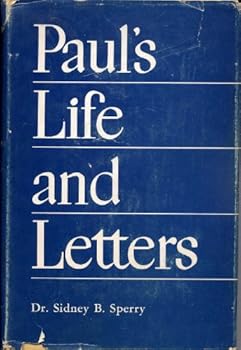
- If you, at some point in the past, decided to do a deep dive into Paul’s letters, what sources, LDS or otherwise, did you find helpful? Has any good LDS treatment of Paul come out since Sperry’s Paul’s Life and Letters (see image at top of this post) now almost sixty years old?
.
 Wheat & Tares
I think that Mormons don’t study Paul as much because other Christian denominations do – and no one has forgotten that LDS theology is a rejection of both Protestant and Catholic theology as part of the core origin story.
Boy Dave, I hope you don’t pigeon-hole nonmembers and less-actives the same way you do active members. You probably don’t, and I’ll concede we don’t emphasize Paul to the extent Protestants do. In my experience, it hasn’t been anywhere as extreme as you’ve outlined.
I actually quoted Paul yesterday in an online conversation with a friend. I’d say he’s a regular in my religious conversations, though not necessarily the most prominent figure to enter in.
I’m approaching middle age (or there by some standards), but I feel like the concept of grace has been emphasized since at least my teenage years. Maybe that’s because Stephen Robinson’s Believing Christ was pretty popular at the time. It was one of the few “extra-curricular” books I read as a youth.
An even deeper dive into Paul would be nice, but I will admit I have some greater Gospel-related interests at the moment.
”In humility value others above yourselves”
Phillipians sums up Paul’s theology the best in my opinion. The Restoration movement is all about bringing the Church back to those Book of Acts roots. Mormonism started out that way, but Smith set it on a course towards an American neo-Israel. Paul’s major impact is one verse in Corinthians about baptism for the dead, which justified temple building.
Paul didn’t build temples. He connected living people with Jesus.
A lot of Mormonism is an active rejection of Protestant, especially Calvinism. As Paul is the major source of a lot of Protestant theology, it makes sense that Mormons would reject him. That rejection probably was most extreme from the 60s to the 90s, where Church leaders made Grace out to be a dirty word. Fortunately Uchtdorf has brought in a different viewpoint, but you can see he still gets pushback from other leaders.
One can see the evolution of Mormonism’s rejection of Calvinism leading to Mormonism’s embrace of perfectionism (basically reinventing Pelagianism), which, anecdotally, has led to some extreme levels of religious scrupulosity in many of my Mormon friends and family.
For myself, the more I studied Paul, the more I was led to reject major parts of Mormonism’s theology and story. It wasn’t the major reason why I left, but if my experience is anything to go off of, you can see why Church leaders don’t want to emphasis Paul’s teachings.
Zwingli, I sum up Restoration theology as “no book but the Bible, no creed but Christ”. It was a rejection of dead creeds, which had been replaced by Universalism by 1800. Devout Puritans had become lazy Unitarians, Congregationalists and Presbyterians over 200 years. Restoration was (and still is) a Fundamentalist movement.
The major theological force in early Mormonism was Sidney Rigdon, who came out of Baptist and Restoration (Stone Campbell) background. He and Emma were disfellowshipped after Smith died, and from that point on Young built what is now the LDS. There are remnants of Restoration theology, but only an afterthought since the 1840’s
Jumping right to the last question:
IDK if Adam Miller counts as sufficiently LDS to everyone, but probably would to most in the W&T crowd, but I think his Grace is Not God’s Backup Plan is a refreshing look on Romans.
I would say that grace has always been mentioned regularly in my experience as a Latter-day Saint, going back to my teenage years in the ’80s/’90s. But always with caveats and conditions, underscored, so as never to diminish the essential nature of ordinances performed by Church priesthood holders. Almost like we were holding grace at arms length, giving it lip service but never fully leaning on it the way mainstream Christians do (often proudly).
I also have a clear enough memory of my New Testament year of early morning seminary, and the ease with which we explored the well-known narratives of the Gospels. Our married pair of teachers confessed how much they struggled with finding ways to teach us the epistles. Flummoxed, we all were.
My extensive in-person excursions in Protestantism match your descriptions in the OP. And on a personal note, I read Romans in the last year. Very interesting, but I would be hard-pressed to summarize it. I could, on the other hand and without a Masters of Divinity, sum up not only the life of Jesus, but the basic differences between the four canonized gospels. They just plain stick easier in my mind, and… I like the Jesus in them better than the sterner messages of Paul.
Really enjoyed this post, and interested to see what others’ takes are
We don’t read Paul because we don’t read the Bible. We don’t read the Bible because Benson told us to focus on the Book of Mormon, among other reasons.
I don’t think there’s a conscious effort to avoid Paul by church leaders in their public speaking. Mormon leaders use the scriptures as sources of citations to back up whatever it is they already wanted to say. That means many of them, who don’t really believe in grace, won’t be reaching for Paul much. I think there is more interest in grace among some of the rising generation of general authorities, so things could shift back in favor of Paul in the future.
When it comes down to it, Paul is a double-edged sword. He likes grace but he seems to hate women. The Book of Mormon acknowledges grace and forgets that women exist. If I had to choose which one to use as a basis for a modern theology that is both pro-grace and feminist, the Book of Mormon might actually be the better choice because there’s less to explain away.
Mormons are uncomfortable with the Bible in general. They’re instructed to apply the scriptures to their lives and memorize specific verses. Consequently, they pluck aphorisms and pithy sayings from it. The Gospels have lots of easily memorizable, quotable pith. Pauline Epistles do not. Paul is educated in Greek philosophical tradition and Classical Age Jewish theology which is incredibly dense and hard to understand for the lay reader. The political context of the time is also difficult to understand. And consideration the complex dynamics of Greeks, Jews, and Romans is imperative to making sense of Paul.
Mormons prefer the Book of Mormon. Written in the 19th century, it has a style and context that is much more familiar to them. The Book of Mormon, being heavily constructed from the KJV, contains a lot of KJV highlights without all the dense historical context and complexity of Bronze and Classical Age thinking.
Paul was also preaching something different from the apostles. He just was. Paul advocated for the spread of Christianity through Jewish synagogues in Greece to non-Jews. He sought to spread it through the Greek isles of the Mediterranean and Rome itself. He preached direct conversion without the need for the “works”, meaning, first conversion to Judaism and practice of Law is Moses. He emphasized grace to the chagrin of the apostles.
Mormons have a stubborn concept of Christianity as whole in the New Testament and by New Testament writers, only to be corrupted later and fall into apostasy. They are uncomfortable with the idea that Christianity was varied among the earliest of disciples. But it was. Christianity spread quickly to many different cities early on. It latched on to a variety of cultures, which shaped it in different ways, not long after Jesus’ death. Paul was simply of a different culture than the apostles. He was a Roman citizen and educated well beyond what the apostles were. He was a good writer and orator and could carry Christianity further than the others.
Adam Miller also says the Book of Mormon is Pauline and he’ll go to the mat to defend that statement.
But that doesn’t mean it agrees with the classic protestant intrepation of Paul. There has been a lot of work done by NT scholars as of late that gets categorized as new “perspectives on Paul” (Google that term to find out more) and those approaches seem to more closely line up with the restoration’s view on grace.
Years ago when I had recently returned home from a mission and was attending BYU, I would take a bus every day from campus to my job on the other end of Provo. There was a man who regularly rode the same bus, and we’d sometimes make smalltalk during our ride. He had moved to the US from his home in Africa (I forget where exactly), and was working at a company in Provo while also trying to start his career as a protestant minister. We’d occasionally talk generally about religion, but never anything particularly profound.
Then one day, out of the blue, he turns to me and asks, “are we saved by grace or by works?” He knew I was Mormon, and I knew he was devoutly protestan, so it was obvious that he wanted to start a friendly debate. Like most RMs attending BYU, I fancied myself something of a theologian and happily took the bait. I replied with the usual Mormon line about being saved by grace after we do all that we can. He cheerfully and flatly told me that my idea didn’t make sense.
We went back and forth on the issue, I was sure I’d come out ahead, and then he broke open the words of Paul and my arguments started to quickly break apart.
As we were nearing the end of our ride, I remember his bluntly asking me, “So you are telling me that you can somehow put in enough work to bridge the gap between you and Jesus? That if you just work hard enough you can reach his outstretched hand?” The question put be back, then before I could reply he added, “No, you are entirely dependent on him reaching out to you…you can never reach him on your own.”
After a moment of silence, I told him he was right, I was wrong, and that he had changed my mind. He was happy, but also stunned that he’d convinced a devout Mormon to concede on grace vs works and that he was the better theologian. We had many other great conversations after that, and I think I learned learned more about theology from that man on a bus than from most of the religion classes at BYU (with a few exceptions).
above: “Paul was an apostle in the New Testament sense, but he was not one of ‘the Twelve.‘” I don’t disagree, but I can’t affirm, either. We simply don’t know whether he was numbered among the Twelve. We don’t know, for example, who replaced James when Herod Agrippa had him killed in ca. 44 AD. Maybe Paul, maybe not. We also don’t know when most of the other apostles died or whether they were replaced.
Some may disagree, but Protestants used to argue that Catholics didn’t study the bible and they deferred to their priests. Martin Luther freely admitted that he, in his education, spent much more time studying the writings about the scriptures than the scriptures themselves, a practice he would condemn. We generally do not study the scriptures for ourselves, and we refer too easily to others to do it and to tell us what we need to know. Our leaders have asked the people to have personal and meaningful scripture study, but except for the Book of Mormon does anyone think this is happening across the church? We’re actively telling people to ignore the dead prophets and scriptures these days, and to rely only on what we hear at the most recent general conference, so we might send mixed messages.
When I run across a difficult verse in Paul’s epistles, I will usually do one of three things. (1) I will go to biblehub to see what other English translations do with it, and then I’ll scroll down to see the Greek-English interlinear. Frankly, sometimes looking at parts of speech can be helpful. (2) I will use my hardcopy of the NET Bible with all of the translation notes. This can cause some eye strain, but I keep a magnifying glass at my desk for that purpose. I also will turn to an ESV or NIV. These two come from different translation schools, but both schools have merit. (3) Instead of trying to figure out one verse, alone, I will read aloud, starting a few verses earlier and going a few verses past. I have found that the ears will hear things that the eyes will not see. Silent reading can be an enemy to comprehension, but using both eyes and ears is helpful. The tongue helps, too, because as you read aloud your mind and tongue will usually work together to help you figure where parentheticals start and end (and Paul does this a lot), it will help you identify subject, verb, and object (sounds simple, but it is sometimes not clear in Paul), and trying to get the right sentence structure will cause you to naturally pause at certain places, and this is very helpful.
We do not need to fear Paul, but he can be a tough nut to crack. But he is a rich nut, when we can get through the shell to the fleshy nut inside.
Dave, you are probably right when you say there was a lot of pushback by church leadership against Paul from the 60s to the 90s.
I remember one priesthood leadership training meeting I was in in the 90s. The visiting authority asked somebody to stand up and tell everyone what the definition of Jesus’ grace was. I said something like his grace saves us when we don’t really deserve it. He said that was a common sectarian notion, but that his grace is his enabling power
that exalts us. And then I think he went on to talk about the requirements to receive that grace.
I think the aversion to Paul by church leadership has somewhat lessened since that time.
It’s kind of ironic that there is the pushback given how much of Paul’s writings end up in the book of Mormon and in our temple liturgy.
On books that I found helpful in reading Paul, I really liked Thomas Wayment’s The New Testament: a translation for latter Saints. The translation follows more of the Greek koine and the commentary I found to be pretty helpful in understanding the text and the context of the culture of the time.
I love Adam Miller’s book, “Original Grace”. He explains the historical research into that Book of Mormon phrase “after all that we can do”. In the context of Joseph Smith’s 1800s world, it meant the opposite of how we understand it today in the LDS church. Historians’ have examined that phrase in context of numerous letters and other writings by Joseph, by people who knew him, and by the broader religious context of religious leader’s writings at that time. Without fail, in context, at that time that phrase meant that no matter how badly we mess up (after all the sinning we can do) Christ will still save/heal us from our sins and errors.
Whatever you believe about Joseph Smith and his writing of the BoM, you have to know, it came through his brain and was put into the words he had to express himself to others. He didn’t have that phrase to express the spiritual self reliance mentality as the church uses it today. His words indicated a complete reliance on Jesus Christ that we fail to give ourselves over to in the church today. I find the loss of the historical understanding of this phrase, to be deeply saddening and hurtful in the long term to members of the church.
Yes lws329, according to Dan McClellan, who apparently researched the usage of the phrase “after all that we can do in the 1700’s and 1800’s, it means something more like “despite all we can do.” Something akin to what we have in Mosiah where it says despite all we might do in keeping God’s law, we would yet be unprofitable servants and undeserving of the gift he offers.
Here’s his paper: 2 Nephi 25:23 in Literary and Rhetorical Context, Journal of Book of Mormon Studies, vol. 29, 2020, pp. 1–19
While Paul’s epistles are pretty dense (and often repetitive) the description of his life in the Book of Acts is easier to follow. Paul defines what a missionary is, for instance. His perseverance through multiple imprisonments is incredible. His courage in standing up against an array of powerful opponents is just as incredible. He lived what he believed. And he traveled a hard road.
The epistles make more sense in the context of who Paul was. Some are harsh, some are pleading, and a few (like Philippians) are full of compassion for a church he loved.
I will second Andrew S’s recommendation for Adam Miller’s “Grace is not God’s Backup Plan,” which translates Romans into much more accessible language.
Because of that, I can remember the basic gist of Romans now, and it’s in line with the discussion The Pirate Priest had on that bus with the pastor.
Basically, the law and commandments exist to show us how far we fall short. But the answer is not “you’re just not trying hard enough,” which we Mormons love to push. The law exists to show us how desperately we need Jesus. We need His Grace.
I listen to the At Last She Said It podcast, and like its hosts, Cynthia and Susan, I’ve become a Grace Peddler. I’m still active and in my RS Presidency, and I talk about Grace every chance I get.
I served my mission among Evangelicals, so I speak from personal experience when I say that, for all of the very real problems with LDS culture that are at least partially rooted in our collective deemphasis of grace—our perfectionism, our legalism, our checklists—they pale in comparison to the abject cruelty, viciousness, and bullying of Evangelicals, who proudly have a grace-alone theology.
The logical endpoint of claiming good works are irrelevant to salvation is that one ceases to do good works altogether. This frees them to be as openly mean as they want and still call themselves righteous. Anyone baffled as to why so many Evangelicals could support a serial-adulterer, serial-liar like Trump so enthusiastically would do well to remember that they seriously don’t believe you need to do good works to be a good person. Again, that is the logical fruit of a grace-alone theology.
Other comments have noted that the Restoration was as much a rejection of Protestantism as of Catholicism. I quite agree, and also argue that that’s a good thing: Calvinism in particular gave us the Protestant work ethic which in turn gave us prosperity gospel, which afflicts even the LDS church today. The problem, ironically, isn’t that Mormonism has rejected Protestantism, but that we still haven’t rejected it enough.
Overall, I am less concerned with the LDS deemphasis of the Epistles of Paul than I am with the Protestant deemphasis of the Epistle of James. If Mormons need to have a little more grace with each other and ourselves, Evangelicals need to believe more that faith without works is dead.
JB,
While I agree with you I think we put our emphasis on righteous behavior, on the wrong behaviors. For instance, it’s easy to check list tithing according to a math based 10 percent, but it’s harder to quantify if you act with bias and prejudice towards people of other races, ethnicities, religions, or sexual and gender orientation. Both are listed in the handbook book but only tithing makes it into the worthiness interviews.
We need to make more efforts to include individuality in our directions to people. Encourage people to follow the Spirit and have personal spiritual authority, and quit saying it’s from Satan if you see things different than from leadership. People are damaged by trying to scrupulously follow standards of behavior that are so extensive that they inspire OCD because people are trying so hard to control their thoughts. Thoughts happen. It’s where you go with that
I second Andrew S in the recommendation of Adam Millers “Grace is not God’s backup plan” and add his, what he calls, a thought experiment “Original Grace”.
Like many others, our LDS reluctance around Grace has a lot to do with differentiation or trying to create and preserve some kind of competitive advantage in the religious game, which is completely odd as our central doctrine is “At One Ment”, but we spend most of our time trying to “be different” rather than trying to make a difference. In addition, I think we just have zero language that allows us to fully accept grace without it seeming cheap. Grace by definition is “Undeserved favor”, which means that a full acceptance of Grace means that our precious Obedience is the effect of Grace, not the cause.
The Buddhist tradition has a beautiful way of understanding grace through the analogy of the flower. To see only the flower is to not really see the flower at all. The principle of interdependence and what it means to “find yourself” in the losing of yourself suggests that we (human beings), like the flower, are part of a much bigger whole, and to not see and acknowledge the other pieces you will actually fail to see the thing (self) you are trying to see.
You see, the flower is not a flower independent of all the other elements which make it possible. Without seeing the sun, the rain, soil, surrounding ecosystem of plants which contribute to the flower’s existence, we fail to see the real flower. Grace is not something we earn or deserve, it’s something we participate in, it’s the alternative motivational power to fear.
When Paul talks of grace and charity, he is invoking ancient Greek religion. Paul writes in Greek and his audience in the epistles is Greek-speaking people, some of whom are Jews and others of whom are non-Jews, who are familiar with and believe in traditional Greek religion and philosophy. The word grace itself comes from the Graces, three sister goddesses Aglaia, Euphrosyne, and Thalia who had characteristics of beauty, delight, and florescence, respectively. Charity comes from the Greek word charis which referred to gifts given by the wealthy classes to lower classes for which no repayment was expected. The concept of grace appears mostly in the Pauline epistles. In the Gospels it appears only in the Book of John, the most Greek-influenced of the 4 Gospel books. In the OT, there is a translation of the Hebrew word khen as grace, but it seems to have a different connotation from the Greek concepts in the NT. It means mercy, favor, and acceptance in the eyes of deity that is normally defensive and vindictive and wanting to show power. The Greeks, by contrast, have many gods who have frailties and human aspects. Their gods don’t tend to be all-powerful but govern only particular aspects of life and nature. The god of Paul is Greek-influenced, although molded to suit a Jewish audience. The charis of Greek religion and culture was more foreign to the Israelites of Palestine.
My take on the meaning of “all we can do” is that it means repentance. “It is by grace we are saved, after all we can do” (2 Nephi 25:23. That phrase “all we can do” is echoed in only one other place in the Book of Mormon. In Alma 24, Ammon and his brethren have converted an entire group of Lamanites, who call themselves the Anti-Nephi-Lehis. When they are facing an army of other Lamanites who want to kill them, they refuse to take up their weapons and fight. Their king says, “since it has been *all that we could do* (as we were the most lost of all mankind) to repent of all our sins and the many murders which we have committed, and to get God to take them away from our hearts, for it was *all we could do* to repent sufficiently before God that he would take away our stain–” (Alma 24:11).
Ergo, “all we can do” means repenting of our sins. That’s the ‘work’ that brings us to grace. Not the checklist of the covenant path, but repentance.
***
As far as Paul, I say bleh. I have never been able to just sit down and read the Pauline epistles, and the few times I’ve tried, I’ve realized how much I don’t like him. He says women should remain silent in Church. Jesus said Mary was right and proper to ask questions and actively learn. Paul thinks women should be submissive and silent. Jesus never said any such thing. Paul was a homophobe and his words have done incalculable damage to the gay community. A while back, I posted about my experience in having a JW witness to me. Towards the end of the conversation I said something like, “If you can reject Joseph Smith as a prophet, then I can reject Paul as a prophet. The only person in the New Testament who has any authority is Jesus.”
Anyway, Jesus ought to be able to override Paul’s misogynistic teachings, but misogynistic men use Paul to override Jesus.
The LDS church leadership has long been dismissive of Evangelical and Protestant Christianity as lacking substance. This criticism was much sharper in the late 20th century when Televangelists were a big cultural thing in the USA. Since these preachers relied heavily on the words of Paul it followed that LDS leadership made efforts to offer a rebuttal. The most prevalent being to quote James and emphasize that “faith without works is dead.”
My observation is that while there is some decent LDS scholarship on New Testament theology, the LDS church is simply not interested in teaching theology and it is certainly not interested in inviting members to make philosophical inquiry about the meaning of Christianity. The basic reason for this disinterest is the doctrine of the LDS church is dogmatic. There is little space to discuss the principles of salvation as there is nothing to discuss! The LDS “prophets, seers & revelators” have provided what is necessary for the members to know and if the members needed to know more than the “prophet” would tell them.
The remarkable thing to me is not only do LDS not understand New Testament Christianity, they do not understand Book of Mormon Christianity. Similarities taught in both books include:
A particular emphasis of Book of Mormon Christianity is the judgment and the totality of that judgment. We are taught that our words, works and thoughts will condemn us. At the same time, Alma teaches Corianton that all will be well for him (and all sinners) if he does good works. The Book of Mormon teaching that we are sanctified by our good works and righteous desires is presented multiple times. This concept is similar to that taught by Paul. Contrary to the LDS stereotype of Born Again Christianity, Paul does not tolerate sin. He, like the Book of Mormon prophets, teach that the proof our our repentance and change of heart is our desire to do good and then actually doing good. The performance of rituals, such as circumcision, do not make a person righteous. It is the yielding of our hearts to God, receiving God’s spirit and incorporating Christ’s teachings into our lives that sanctifies us.
The formal religion presented by the LDS church differs from both New Testament and Book of Mormon Christianity in several fundamental ways.
Due to these and other significant deviations of LDS dogma from classical Christianity, I have little expectation that LDS leaders will do anything different from what they have done with the scriptures. Which is to pick and choose verses from the Standard Works that support the church dogma. As the OP points out, introducing to members the idea that religious ideas can be debated and argued is the last thing the LDS leadership wants to allow. Conformity is what matters, even if what is being conformed is wrong – consider the priesthood ban and how long it took the church to change, even when many leaders knew the policy was wrong.
I remember reading Stephen E Robinson’s “Believing Christ” as a young man and finding it helpful for staving off the crushing guilt that came from other sources in the church (cough miracle of forgiveness cough). Then I had the pleasure of taking a New Testament class from him at BYU. He was a great teacher and a very liberal thinker. We don’t talk much about “Christian liberty” in the church but he sure talked about it and it felt revolutionary to me. Rest in peace, professor.
JB: “The logical endpoint of claiming good works are irrelevant to salvation is that one ceases to do good works altogether. This frees them to be as openly mean as they want and still call themselves righteous.”
So if Christians focus too much on righteousness they develop a crippling guilt complex and scrupulosity and if they focus too much on grace they become self-righteous libertines. Are we caught between a rock and a hard place or is there value to be found in the tension between grace and works?
I used to think there was. Now I’m persuaded that the problem is actually salvation theology. The idea that we are fallen, evil creatures, enemies to God, destined for hell by default unless we find salvation through the atonement—respectfully, I think it’s inherently unhealthy.
Instead of drawing a line between saved and not saved, worthy and unworthy, righteous and wicked, heaven and hell, I believe we’d all be better off leaning into a more humanist worldview: We’re all just primates with big brains and dueling capacities for empathy and cruelty. We each have good, healthy behaviors and some bad, unhealthy behaviors to varying degrees. None of us are perfect and none of us do as much as we could/should for our less fortunate brothers and sisters. And we’re all extremely susceptible to BS.
Instead of focusing on our need to be saved and make it to this or that place in an imaginary afterlife, we’d be better off following Jesus’ example of compassion, inclusion, and communal care. We’ve only got one life each, and we shouldn’t waste it on scrupulosity when we could be doubling down on kindness.
Paul’s life is recorded in the Book of Acts. He defines what it is to be a missionary. The Epistles are a record of a missionary’s thinking. He traveled a hard road connecting people to Jesus.
i read somewhere that Joseph Smith was really into Paul, especially in the Nauvoo period. I would love to see that thread traced out. It shows up a great deal where woman in the temple are concerned with quotes pulled directly from Pauline Epistles in the temple ceremony.