

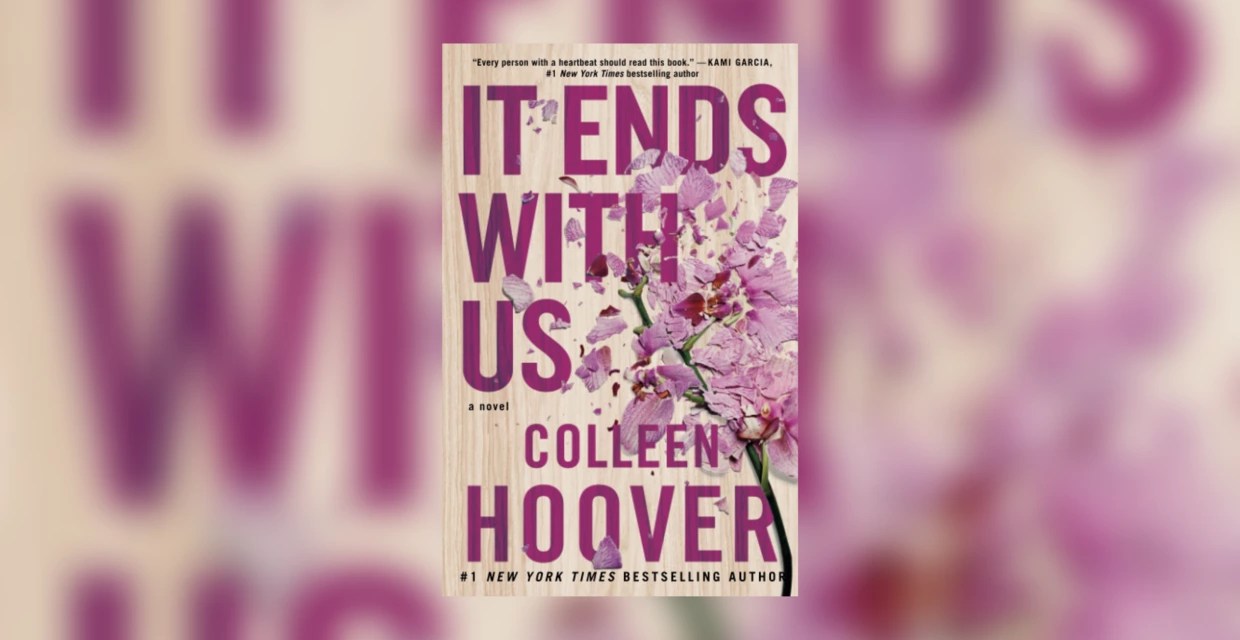
After reading an article accusing the book and movie “It Ends With Us” of romanticizing abuse, I read the book and watched the movie. “It Ends With Us” (hereafter “IEWU”) does not romanticize abuse. True, it is not gritty and realistic. Instead, it looks and feels like a fairy tale, which showcases the straightforward nature of the ‘moral of the story’ (leave him). It’s also the only story about abuse that I’ve read that fully takes into account the devastating impact of bystander trauma.
Summary
Lily is our main character. She is impossibly beautiful — the stereotypical vibrant romantic heroine with untamable red hair and a strong-willed, yet feminine, personality. She has an impossibly wonderful life — she lives in New York City and owns her own steampunk florist shop. Her clothes are adorably quirky. She never worries about money. Already, we are in a fairy tale.
Ryle is our Prince-Charming-turned-villain. He is impossibly handsome. He is impossibly employed at a dramatically important career — a 28-year-old neurosurgeon performing the most challenging one-of-a-kind surgeries in the world. If anyone has a high pressure, impressive purpose in life that might sometimes overwhelm him, it is Ryle. Ryle also has a tragic backstory that he has never fully come to terms with. Yes, if anyone could possibly justify lashing out in a moment of anger, it is Ryle.
Allysa is our best-friend-outsider-perspective. She is also Ryle’s sister. She’s in the story to give Lily someone to talk to. She’s also someone who might have some motivation to soft-pedal the abuse and defend Ryle. She does not do this. Instead, she is the story’s fairy godmother.
The story isn’t entirely linear. Flashbacks to Lily’s childhood show her father abusing her mother. They’re a little more fleshed out in the book. Her father never targets Lily. In fact, Lily can often short-circuit an abusive episode before it begins by going into the room. Her father is less likely to hit her mother if Lily is there. Once he’s started beating his wife, Lily can’t stop it. In the book, the only time Lily’s father hurts her is when she physically tries to pull him off her mother and he throws her. She hits her head. He’s immediately sorry. That scene is left out of the movie. Lily is only a bystander to the abuse in her childhood.
The movie opens with Lily at her father’s funeral, giving a eulogy. She stands at a podium and says, “I want to tell you five great things about my father.” And then she stops talking. Is she frozen in stage fright? Or is she saying that there is nothing good she can say about her father?
Lily struggles with understanding her mother – why didn’t she leave him? This is more fleshed out in the book. I thought Lily’s internal dialogues were realistic and important to the story. The way she questions her mother’s choices change over the course of the book. She comes to understand her mother better as she deals with what’s happening in her relationship with Ryle. She believes Ryle’s apologies and stays with him the first two times he hurts her. She leaves after the third time.
Lily and Ryle know each other for about a year before getting into a relationship. The relationship is wonderful for many months before the first abusive episode. This isn’t a case of Lily ignoring obvious red flags to rush into a relationship. It’s important to tell stories like this because so many victims blame themselves for getting into the relationship, and even outsiders can wonder why she didn’t see the warning signs. Good relationships can go bad. That’s an important point to tell; a relationship can become abusive, even if it doesn’t start that way.
The movie handles the abusive episodes very lightly to keep the PG-13 rating. At first, I thought they were leaving out the violence altogether. Ryle starts to get upset; Lily tries to calm him down; the scene ends abruptly. In the next scene, Ryle is concerned and helpful as he treats Lily’s injury.
At the end of the movie, when Lily acknowledges just how bad things have gotten, there are flashbacks to the abusive episodes that ended before they began and we see Ryle hitting her. We see Ryle pushing her down the stairs. She blocked those parts of the memories out while she was in the relationship. Abuse victims do this. If you are trapped with your abuser, the best survival technique is to forget exactly what happened. Trauma survivors have memory gaps, or even false memories. It’s not until Lily realizes that she needs to leave Ryle that she remembers she didn’t fall down the stairs. Ryle pushed her down the stairs.
Lily separates from Ryle after the third violent episode. While getting treated in the hospital for her injury, she finds out she’s pregnant. Ryle is so very sorry. He wants to be helpful. Lily keeps him at a distance, but the few times she lets him help (like building the baby’s crib), he’s charming and helpful and remorseful. It’s actually plausible they could get back together. Ryle is excited about being a father, loves Lily so much, and will never hurt her again. He promises.
The day the baby is born is when Lily asks Ryle for a divorce. She uses their daughter as the reason, and there’s this wonderful, cathartic, unrealistic fairytale scene where Lily forces Ryle to see just what sort of person he is. She’s holding their newborn in the hospital and she asks him, “Ryle, what would you do if this little girl one day looked up at you and said, ‘Daddy, my boyfriend hit me.’ What would you say to her, Ryle? What if one day this daughter of ours said, ‘Daddy, my husband pushed me down the stairs. He said it was an accident. What should I do?’ What would you say, Ryle?”
And Ryle, sobbing and brokenhearted, admits, “I would beg her to leave him. I would tell her that she is worth so much more. And I would beg her not to go back, no matter how much he loves her. She’s worth so much more.”
They both cry together, Lily and Ryle. And then he leaves. Lily kisses her daughter’s head and has an internal monologue that I’m copying straight out of the book:
Cycles exist because they are excruciating to break. It takes an astronomical amount of pain and courage to disrupt a familiar pattern. Sometimes it seems easier to just keep running in the same familiar circles, rather than facing the fear of jumping and possibly not landing on your feet.
My mother went through it.
I went through it.
I’ll be damned if I allow my daughter to go through it.
I kiss her on the forehead and make her a promise. “It stops here. With me and you. It ends with us.”
There are a few epilogue scenes. In the book, we see Lily taking the baby to spend the day with Ryle. He’s got ordinary visitation rights. Lily runs into a former boyfriend. She went to him for help the third time Ryle hit her. He’s the one who took her to the hospital and gave her a safe place to stay for a few days. Then he bows out and Lily goes through the pregnancy and divorce without him. I liked that choice, actually. Lily didn’t leave Ryle for someone else, and she didn’t know if she would get into a better relationship after her divorce. She left on her own, for her daughter’s sake.
Colleen Hoover’s Story
The book’s author wrote this story loosely based on her father and mother. Her mother left an abusive husband so that Colleen Hoover would never see her father hurt her mother again. Hoover’s earliest memory is watching her father hurt her mother. Here’s what Hoover says:
She divorced him before I turned three. Every memory beyond that of my father was a good one. He never once lost his temper with me or my sisters, despite having done so on numerous occasions with my mother.
…
I asked my father about the abuse once. He was very candid about their relationship. He was an alcoholic during the years he was married to my mother and he was the first to admit he didn’t treat her well. In fact, he told me he had two knuckles replaced in his hand because he had hit her so hard, they broke against her skull.
My father regretted the way he treated my mother his entire life. Mistreating her was the worst mistake he had ever made and he said he would grow old and die still madly in love with her.
I feel that was a very light punishment for what she endured.
Hoover gave Ryle many of her father’s characteristics. She purposely made Ryle handsome, compassionate, funny, and smart. And he still did unforgivable things. Hoover’s mother wasn’t rescued by another man, and that’s probably the reason Lily’s former boyfriend fades into the background and isn’t around during Lily’s divorce and the early times alone with a baby.
Nuance: Abusers Aren’t 100% Terrible
Society is rightly horrified about abuse, and getting canceled and ostracized is a fitting punishment for an abuser, especially when the legal system fails and abusers don’t go to jail. However. This has resulted in an assumption that abusers have no redeeming characteristics. Ryle has plenty of redeeming characteristics. He’s smart, hard-working, compassionate, charming, and other than the abusive episodes, he treats Lily really well.
She still leaves him.
If you talk to a woman who is staying with an abusive man, you’ll hear a lot about what a great guy he is. And you know what? He probably is. Books and shows about abuse typically paint the abuser as a monster who makes life unfailingly horrible, who has no redeeming characteristics, who never has a good day. A woman in a real life abusive relationship may see those portrayals and think, ‘my husband isn’t like that. He’s truly a good person most days. He just struggles with his temper sometimes.’ And she doesn’t leave.
Abuse is not constant. Some abusers only act out once in a while. It’s rare for an abuser to be horrible in every single interaction. The reason she stays is because of the good times. There are good times.
A man I know described his father this way: “He was a terrible husband, an okay father, and the best friend you could ever ask for.” Some people can’t handle close relationships. This guy’s father was a great guy to have as a friend. But to live with him every day? His father couldn’t deal with constant closeness and he took it out on his family.
IEWU makes the important point that abusive relationships are not always 100% terrible. The abuser can have some good traits; he can genuinely be sorry; he can sincerely love the woman he is abusing. It’s still abuse. It’s still enough reason to leave.
Bystander Trauma
Years ago, I was talking to another woman about our difficult marriages. She admitted her husband got violent and angry, but said, “I can make sure he aims it all at me. As long as he doesn’t hurt the kids, I can handle it.” What she didn’t consider is that her kids couldn’t handle it. The kids were going to watch their dad hit their mom … and then what? They go to Church and sing about their ‘parents kind and dear’? It screws up a kid to be told to love the man who is hurting their beloved mom.
Imagine the terrible situation in which you know someone is going to hit your mom. The only thing you can control is if it’s a stranger who hits her, or your father. If a stranger hits your mom, you’re free to hate him. He’s done something terrible and you can despise him and tell everyone what a scumbag he is. If your dad hits your mom … and then your mom makes excuses for him and tells you he’s a good man … and your Church talks about forgiveness … and your mom will be hurt if you don’t love your father because she’s sacrificing herself so you can have the blessing of a father in the home … and your dad actually is a great guy sometimes … then what do you think and feel?
Lily experienced bystander trauma and that was the reason she divorced Ryle. She wasn’t going to make her daughter watch her dad hurt her mom.
We (Mormons) are in a culture that emphasizes the importance of intact families and having two parents in the home. A woman who is only being hurt occasionally, and who truly loves her abuser, and who can point to her abuser’s good qualities, may stay in the relationship because of the emphasis on two-parent households. This book/movie teaches the opposite. Staying together will hurt the children, even if the abuser never actually physically hurts the children.
Bystander trauma is trauma. Mothers, don’t make your children live with the man who is hurting you. Don’t tell them they have to love that man.
No Excuses for Abuse
Lily’s best friend is Ryle’s sister, Allysa. When Lily finally tells Allysa what’s been going on, Allysa is devastated. She tells Lily, “As Ryle’s sister, I want to tell you to forgive him and give him another chance. But as your best friend, if you take him back, I’ll never speak to you again.” I almost cheered.
There is not one person in this movie who even suggests that maybe Lily should give Ryle another chance. No one talks to Lily about forgiving him. No one tells Lily she’ll be better off if she stays married. No one tells Lily that her daughter needs a father in the home. No one defends Ryle’s behavior at all.
This is where the Church fails miserably. The Church condemns abuse as a disembodied sin that is truly terrible, but the Church avoids talking about the abuser as a human being. Once there is a human being before a priesthood leader, crying because he’s so sorry, then he deserves another chance. His children need a father in the home. Blah blah blah.
IEWU does a great job of presenting an abuser who is a sympathetic character. Any priesthood leader would take Ryle’s side and counsel Lily to give him one more chance. The book/movie never takes Ryle’s side.
It’s a Fairy Tale
Fairy tales are archetypes. They tell a story using exaggerated characters like beautiful princesses and evil villains. They have a moral; wrongdoers are frequently punished. Society’s values come through in fairy tales. Fairy tales help us process dark and evil situations.
IEWU is a fairy tale in which the beautiful princess married the handsome prince. And then she discovered that the handsome prince was Prince Charming only most of the time. Some of the time, he’s the evil villain. Now what?
Belle was trapped by a beast, and redeemed his humanity by loving him. Is that Lily’s duty? Sleeping Beauty and Cinderella were grievously harmed by their families and waited to be rescued by the prince. Should Lily just wait for rescue?
Lily is in a different sort of fairy tale. It isn’t her duty to redeem a beast, no matter how good he is at being Prince Charming most of the time. She is a brave heroine who made a mistake in marrying the wrong man and she did not have to live with that mistake for the rest of her life. She rescues herself and takes her daughter with her.
The moral of the story is that if the beautiful princess marries the handsome prince, and he hits her, then the beautiful princess will leave him. This is right, good, and proper. All beautiful princesses should be taught this. All handsome princes should be taught that if they hit a beautiful princess, she will leave and he will be alone.
And having broken the cycle of abuse, Lily lived happily ever after.
THE END
Questions:
- Why might we want to think that abusers have no redeeming qualities?
- IEWU takes a zero tolerance policy towards abuse. Do you think abusers ever change? Does a victim need to stick around and help him/her? (women can be abusers too)
- What do you wish the Church would change in the way it addresses abuse?
 Wheat & Tares
Wow, Janey. This in particular is such an excellent point: “The Church condemns abuse as a disembodied sin that is truly terrible, but the Church avoids talking about the abuser as a human being. Once there is a human being before a priesthood leader, crying because he’s so sorry, then he deserves another chance. His children need a father in the home. Blah blah blah.”
I think you’re spot on. The Church condemns abuse kind of like how it talks about GA fallibility. Oh, sure, GAs are fallible. The moment you have a particular instance of an error they’ve made, though, they’re infallible. Along the same lines, spouses might be abusive, and the Church condemns this in theory. But the moment there’s a particular instance, then oh, no, that’s not that big a deal. He’s a good guy mostly. A priesthood holder.
Physical and/or Sexual Abuse is about stress relief and control. It’s about moving in a way that marginalizes the “other” as the main point, or as accidental fallout.
The church’s stance that “abuse is a moral failing” just adds “shame” to the mixture of stress relief, control, and isolation without providing whatever the abuser needs to stop the abusive process.
The church’s language and teachings about men “presiding” gives priesthood holders a platform for further being “over” other family members and a gives the presider, that priesthood holder an additional license to abuse those individuals as a corrupted means of stress relief and control.
The church as an organization needs to understand the cultural implication that physical and sexual abuse are passed down through generations just like other traditions. Stopping the “bad eggs” doesn’t stop the intergenerational trauma that they unleashed, or the other “copycat bad eggs” who were victimized that way once, had an example of someone being victimized that way once, etc.
Our culture needs to understand that the sexual abuse of others is a side effect of aging for some individuals (mostly men). While most of the time, it will be “just talk”, caregivers do have the additional complication of quarantining those older adults from abusing minors. “Older” doesn’t always equal “Wiser”.
What Needs to Change:
Really nice summary Janey.
Agree that the book does -not- romanticize abuse. I’m not planning on seeing the film, but I agree the narrative is so important.
I think the reason most of us don’t want to recognize that abusive people can be great a lot of the time is because in our hearts we all know that none of our behavior is beyond reproach with regard to the people we love most. When does bad behavior become abuse? That line is blurrier than most of us want to admit. And we’ve all probably come closer to crossing it than we tell ourselves. I’ve yanked my toddler out of the street they kept running into harder than was strictly necessary because I was just so frustrated and scared. I have shouted at my kids for similar reasons. On a handful of occasions in our 20+ years together I’ve said things to my husband expressly to hurt his feelings (and vent my own).
Knowing when to forgive and try again and when to walk away isn’t always as easy at it looks. I’m glad my husband decided that a cutting remark every so often is worth talking out and moving on from. I’ve certainly done the same for him.
Having said all that, physical abuse of the kind depicted in IEWU is a pretty bright line. As is Hoover’s asking us to consider the question “If someone did that or said that to someone I love, what would I want for them?”
And the church absolutely positively needs to promote narratives in which leaving the abuser, getting the divorce was the laudable, praiseworthy, brave thing: in General Conference talks, in leadership trainings, in Sunday School lessons: everywhere.
People want to think that abusers have no redeeming qualities for the same reasons that Church members;
1. Want to believe that “the world” has no redeeming qualities. “Safety” and “goodness” is only to be found by following “inspired” Church leaders.
2. Should “Never take counsel from those who do not believe. Seek guidance from voices you can trust—from prophets, seers, and revelators…”. Nonbelievers simply cannot be trusted to offer any guidance whatsoever, especially spiritual guidance. After all, why would you even need them when you have real, live prophets, seers, and revelators?
3. Need to remember that everyone who leaves the Church must have just been a “lazy learner” and/or “lax disciple”. Why else would someone lose faith in God’s “one true Church”?
Whether we’re talking about the redeeming qualities of abusers or non-members/apostates/questioning members, black and white thinking is always so much more easier and more comfortable than the grays (and colors) that comprise the nuances of real life .
When I saw that It Ends With Us was being made into a movie, I recognized it as a book that I read within the last year, but for the life of me, I could not remember it at all. Now that I read your summary, oh yeah, so unrealistic.
I couldn’t remember the book because I had dismissed it as one more fairy tale. In real life, a girl who grew up watching her father hit her mother would need some ten years of therapy before she would be able to leave an abusive spouse. I had hundreds of clients who fit this and not ONE of them actually left. Oh, I had clients who left abusive men, but none of the ones with childhood trauma managed to do it in the few years I knew them.
The trauma compounds. That is why therapists are starting to recognize complex PTSD. And I guess I am just too close to the situation both having grown up with a father who beat my mother, oh, only three of four times in 60 years together, and was sexually abused myself, spent my ten years in therapy, then worked in a battered women’s shelter. So, maybe the things this book could teach the world is stuff I have always known and the things it fails to see where just too glaring to me. I am too much in the middle of abuse issues and this book was too much of a fairy tale for me. It just was not realistic. The abuser’s sister believes that he was abusive? Ha! So not going to happen. No one pressures the wife to stay with the abuser who has all these redeeming qualities. What planet was this supposed to happen on? Because this is not planet earth.
Yes, my mother stayed because my dad had some redeeming qualities. And having grown up with abuse herself, my mother saw some abuse as just the way things are. I mean, she was emotionally abusive too, just like her parents. And with my brother the brat (he was older, but even I saw him as a problem child) and my undiagnosed neurodivergent younger brother, she crossed the line into physical abuse a few times. But she was trying.
So, one thing that bothers me about the “happy ending” where she leaves this wonderful guy who loves her and is sorry he loses his temper. Why not demand that he get into anger management?
When I was volunteering at Army Family Services (or whatever it was called) we had a really great program developed by the Navy for abusive husbands. And the program that ran the battered women’s shelter (think YWCA, but better, one agency ran a whole bunch of programs) they were just developing a program for anger management aimed specifically at abusers. There ARE programs and these men are not hopeless and they do have redeeming qualities and the women LOVE them, so instead of kicking the problem down the road for his second wife, why not get the guy into court ordered mandatory counseling? Fix the problem by fixing the abuser. Not just kick the problem down the road by leaving him. The kids grow up without their dad and he goes on to beat his second wife. Not the best solution. The best solution is therapy for the abuser, but it has to be mandatory for anyone convicted of hitting once.
Just think if when Gabby Petito was first hit in Moab Utah and the cops knew it, if they had laws that could back them up to give them authority to force that jerk into anger management. Problem solved, girl still alive. But, we treat domestic violence as if it is only the problem for the woman being hurt and if she doesn’t ask for help, nobody even has any authority to help her if they wanted to.
We need better laws.
To whoever keeps downvoting the women sharing the rawness, the wrongness, the pain associated with how the church today responds to abuse-
I want you to know that you are unlikely to ever be able to change.
You are truly are dammed (the wording is deliberate here) and damnable in ethical sense- being past feeling, reason, or a willingness to seek after ethical clarity, justice, or empirical truth, if it would mean acknowledging your having been previously wrong.
And this is what scares me about church for, despite all claims to the contrary, the ideal member in their eyes believes and does nothing contrary to what the Brethren officially (even sometimes implicitly) advocate for members to do, be, or believe.
Even the Satanic Temple* has a greater appreciation for a person’s moral, practical, and intellectual agency than the so-called Church of Jesus Christ of Latter Day Saints. Granted- I doubt they even believe in Satan, but that’s the joke, the doublespeak of it all- that great human evil too frequently finds itself on the side of societal power and holy priesthoods, while forces for human good often become marginalized and misaligned by the powerful and so-called holy.
*which btw is contrary to everything the church claims Jesus and “the Adversary” respectively stood for in the pre-existence. For Mormons, exaltation means something to the effect of becoming ‘Borg’.
Apologies for the length, and getting a bit emotional, but this again is what **broke me** when I began to investigate the church more honestly.
To borrow a phrase, it’s “Heel Realization”. Discovering that you and yours have often been more akin to the antagonist in your very own story- so far.
One can change of course but it’s a terrible process in the traditional sense of the word.
Old selves die hard.
My Mil abused her daughters physically (wife was hospitalised more than once) until they were big enough to defend themselves. She then changed to emotional abuse. She continually undermined their accomplishments, didn’t attend their achievements. She kept this up into their adult lives, until she died. Coercive control is abuse too.
Trump and his followers are doing the same to Kampala. She is as dumb as a bag of hammers, and has accomplished nothing except by using sex. She has 3 degrees to trumps one. The debate will be revealing.
Anna, I agree that this movie/book is unrealistic. Yet it is an important story for changing society’s narratives and expectations around abuse.
The book is aimed at younger women. I am older than the target audience and I recognize that. I love what this story does to teach young women a different narrative about abuse than the one that I saw growing up. I learned to pity the man who hurt women because “he’s hurting too.” I learned that a good woman’s love can redeem a man. I learned that if you meet a Beast, then the most romantic thing you can do is be the Beauty who finds his humanity and transforms him.
IEWU teaches the opposite. It’s such an important lesson. It was not Lily’s responsibility to help Ryle overcome his inner demons. Lily knew that her daughter would never thank her for making sure she had a father in the home, no matter the price. Instead of focusing on redeeming the abusive man, the story focuses on making the world safe for Lily and her daughter. That’s a huge shift from what society (and especially Church) focus on. It rejects the patriarchal narrative that women have to put up with anything, just for the blessing of having a man in their life.
It’s not a gritty, realistic, cautionary tale. It’s aspirational.
lws329, mountainclimber, and Margie – your comments were right on.
Abusers are not unrecognizable monsters. When I was working so hard to overcome the patterns I’d learned growing up, I had to acknowledge that I understood my father completely. I knew his feelings from the inside. I understood his frustration and what he was trying to accomplish with his temper tantrums and random violence. I understood because I was doing it to my kids. Before I could change myself on a deep level, I had to acknowledge my father’s humanity and his good qualities. Otherwise, I wouldn’t be able to acknowledge my own humanity and good qualities. It was a really … bizarre experience. The more I understood him, the more thorough my rejection of him became. Yes, I know why he did what he did. And I looked at that perfect understanding and thought, “I will prove your actions wrong by changing mine. You could have done this too, if you’d cared at all about the humanity of your children.”
Abusers can change, but they have to be so humble about it. You can’t hang on to any shred of self-justification. You have to make yourself completely accountable to everyone else. I went through this process when my kids were preschoolers. I told my kids what was okay and not okay for mom to do. I was so proud of both myself and my three-year-old when he told me, “Mom, you’re too mad. Go to time out.” I went to time out. He knew he could hold me accountable; I was willing to be held accountable. (I didn’t put the entire burden on my preschoolers, of course, I was also seeing an individual therapist, regularly attending 12-Step meetings (free group therapy!), and reading books about overcoming my problems and doing the journaling exercises. It was extremely hard work.)
I agree with Canadian Dude that the people who are downvoting comments from abuse survivors don’t have the humility to really, genuinely change. You have to see what you’re doing, you have to care about the impact you’re having on your loved ones, you have to acknowledge a victim/survivor’s right to their own feelings. All of that is necessary before you can change.
Physical and sexual abuse in a family is very complicated to talk about and deal with.
A number of years ago I was talking with my sister in law about a man in her community that had just died who was a convicted child molester with his own daughters. My SIL was furious about how his family talked about positively about him after what he had done. I said something about you never know the back story and he probably came from a long line of abusers in his family. That upset her even more and she didn’t talk to me for six months or more.
Eventually she got divorced and I also divorced her sister, my then wife. My ex and this former SIL along with a couple of other sisters went to counseling where it came out that their father had abused some but not all of them and various uncles had abused those sisters as well as some of their cousins, children of the uncles. My ex and I had been married 25 years and I had never heard of this but suspected something was wrong just because certain things didn’t add up. I had been talking to my ex-SIL by then for a long time but after this was revealed we had a long, heartfelt and tearful talk about the conversation we had years ago. It was sad because in spite of it all, she still loved her dad but it all hurt.
Do bishops understand these complicated feelings and emotions. The short answer is NO. I remarried and learned from her about how in her first marriage she was abused by her husband. The bishop’s response, stay with him, give him what he wants, just smile and accept it and stay together. When another bishop gave her the same advice after he wouldn’t change and respect her, she left. That was the beginning of her leaving the church. Her ex is still very active but he gave up his children for adoption to her second husband and he hasn’t contacted them in 20 years. We’ve been married 10 years now and I’ve never met him. I think he’s a putz. When I heard her father talk about him, and he’s very active, it just reinforced my feelings about him as a putz. Like I said about, abuse is complicated. It would be better if there were a way for members to be referred to counselors who knew how to deal with it instead of leaving it to bishops who are generally clueless about the issue.
Janey, I know. I know that the book has a good message for most women who marry an abuser. Like I said, I am too much in the middle. Objectively, the book does teach younger women to leave. The fact that it simplifies the abuse to one issue is actually good. If I could have handed out “leave pills” to my clients, and my mother back before I was even born, I would have done it. Leave him is the only effective message because our society does not force the abuser to fix HIS problem.
But I am too much in the middle of all the complications and I want abusers forced to fix themselves. It is too much like focusing on how *women* need to prevent rape. Because our society doesn’t hold the men accountable to fix rape.
And me, having been “daddy’s girl” with a cold mother, before the sexual abuse even started, I know what it is to love the abuser, with the abuser actually being the only one in your life that gives you any love.
The biggest problem is the victim doesn’t want her abuser to go to prison, or be arrested, or to lose him in any way, she just wants the abuse to stop. She doesn’t want the abuser punished or hurt and she does not want to live without him.
I see the human and redeeming side of abusers a bit too much for my own good. I was a sexual abuse victim who never told but defended my father from any of the horrible consequences he SHOULD have faced. The anger comes later for those victims who have so little self worth that they cannot face the lose of their abuser. The anger doesn’t come until after there is some self worth there, and for girls (especially girls in a patriarchal society and religion) who grow up with abuse there is so often no self worth. My mother emotionally abused me and neglected me in favor of my brothers since birth, so my *only* source of “love” was the narcissistic attention of my father needing me to adore him. Yeah, pretty bad.
But then this was what made me a good counselor for the women who were still in abusive relationships and had been abused themselves or seen abuse as children. I know they love the abuser more than life itself, which is what 90% of “helpers” don’t get and that “not getting it” makes it so they can’t help because they just want to shake the victim and yell, “stop being a victim and be a survivor.” But when you have a victim that would rather die than lose her abuser, there is a lot of work to do to get her to see she is worth more than that. See, many of my clients who were in battering relationships were passed to me because the standard battered women’s counselors …ummmm, sort of gave up on them. Then had a history of childhood sexual abuse and when the counselors in the women’s shelter got that far with them, they passed them onto me. ( I had a master’s degree and most of the women in the agency only had a bachelor’s degree.) and my new client would complain that the other counselor “didn’t get it,” that she *loved* her husband and didn’t *want* to leave him. So, first I worked on her lack of any self worth. And then we worked on her protecting her children, and her love for her kids was the only thing that got her to leave, because living in the same house as abuse is damaging, even if the kids never see it. And I could witness to that because I never once saw my father hit my mother. I hardly ever saw him lose his temper. But just the unhealthy dynamics is harmful to children. And the state of Utah recognizes that children witnessing abuse is harmful and even punishes abused women for “letting” her children witness her abuse. She is supposed to LEAVE to protect her children from seeing the violence.
So, yes, I *understand* that simplifying the whole story down to 1. an emotionally healthy woman (most of those don’t marry abusers because abusers know they won’t stand for it) 2. An abuser who has redeeming qualities. 3. A society that totally supports the woman to leave the guy. 4. A victim who has enough close friends to confide in and talk to and get support from. Because simplifying the story down to “leave him now” is really the most important message.
Really when it comes down to it, the message to leave the abuser is the most important for now in our society that doesn’t support the victim and doesn’t force the abuser to get the help he needs.
But it still kind of left me unable to relate to the fairy tale.
Anna,
As a graduate student in Counseling and Human Development, I really appreciate you sharing your story. It’s an education.
Thanks for sharing your perspective, Anna. I learn a lot from your comments.
Why Does He Do That? Inside the Minds of Angry and Controlling Men
Book by Lundy Bancroft
Helping Her Get Free: A Guide for Families and Friends of Abused Women
Book by Susan Brewster
^^^Two books highly recommended for a deeper understanding of abuse and how to give support to individuals in abusive relationships.
Empowering the abuse survivor is paramount. It goes against our instinct to push her (usually but not always her) to leave. Where the abuser seeks to take her power, we give her full power which in the end is what she needs to be able to break free.
Thanks for this post, Janey!
There is a columnist for The New York Times that I really like named Jamelle Bouie. He writes incredible pieces on politics in race. When the war in Gaza broke out, he said in one of his columns something to the effect of, “I don’t know a lot about this issue so I’m going to be quiet, listen, and learn.” I’ve never seen or witnessed physical abuse in my family, but I just want to thank you Janey for letting me listen and learn. I agree with everything you’ve written and I’m thankful for you shedding light on this subject.
One alegorical movie that I saw over a decade ago that helped me think deeply about sexual violence was Sucker Punch. I am wondering Janey if you saw that movie or have any thoughts about it? Spoiler alert: this movie is a symbolical representation of an sexual abuse survivor fighting/battling the psychological trauma of her sexual abuse. I didn’t really even grasp the allegorical nature of the movie until I read some succinct summaries/explainers after watching the movie.