
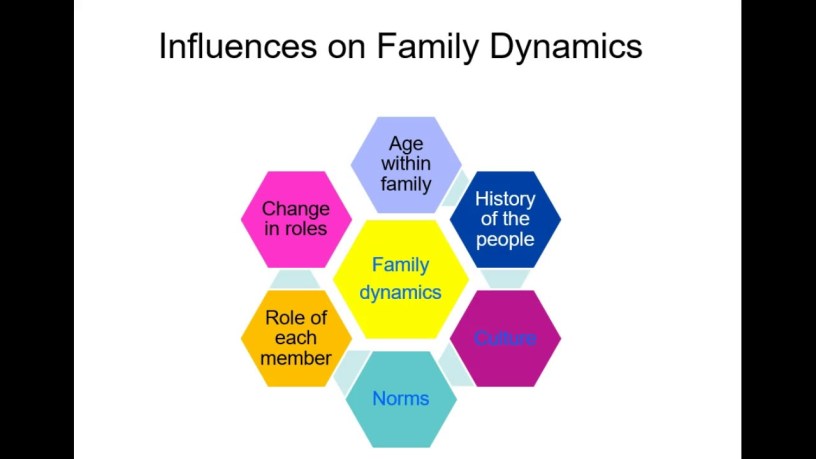
Do you have siblings? If so, you have the same parents, but you also have different parents. You may think you are talking about the same people, the ones that raised you, but your perceptions of your parents are different than your siblings’ perceptions. You may remember events that happened quite differently. Even the very character of your parents is different in your mind than in the minds of others.
Some of these differences are due to family order. If you are an oldest child, your parents may have been earlier in their careers. Maybe they didn’t have as much money or couldn’t afford to eat in restaurants or take vacations. They might not have been able to pay for your higher education, but they did for your younger siblings. As parents, they may have been more anxious and less experienced. They may not have experienced any serious health problems yet, or you may have been around when your mother was pregnant with younger siblings; you may have observed their parenting of siblings, while a youngest child did not. They may have placed more responsibility on you as the oldest among siblings, or had higher expectations that felt either unfair or instilled you with a sense of pride. You may have been given a caregiving responsibility for younger siblings that gave you a different view of the family than those who were younger. As the oldest, you are closer in age to your parents, and your generational ideas may be closer to theirs than your younger siblings’ are. If you were a younger sibling, the reverse of these things may have been your experience: parents with worse health but more money, parents who were not as vigilant, or even just tired, parents who had more leisure time available to them and felt less stressed.
Some of these differences in perspective are related to gender roles. Your parents may have expected you to behave a certain way because of your gender. They might have seen your potential differently than other-gendered siblings. They may have given you specific chores or taught you a set of skills designed to be “appropriate” according to their own gendered views. This can happen on a subconscious level, even if they were very forward-thinking.
There are also interpersonal dynamics between your parents that play out over time. Your parents might have had a high-conflict or passive-aggressive relationship that, over time, shifted to something better or worse, giving your siblings a different perspective than yours on what home life was like. Relationships between siblings also change the family’s dynamic. You might have had (or been) a rebellious child, testing your parents’ skills in a way other siblings did not, or you might have had a difficult relationship with a sibling, adding to overall tensions in the household. There may have been mental health issues or disabilities that changed how family members interacted.
My parents had seven children, with a huge age span. My oldest sibling got married at age twenty, the same year I was born. From family stories, I know that the oldest kids were raised very differently. My oldest siblings were teenagers in the turbulent sixties, pushing boundaries in their own ways, experimenting with things my parents found bewildering and scary. I grew up in the prosperous eighties at a time when my parents were financially comfortable and basically over the parenting thing.
When I talk to my siblings, their version of my parents is often recognizable, but at other times it’s almost like they had completely different parents. Have you experienced this as well?
It’s quite similar with how individuals experience the Church. For me, growing up in the Church was a generally positive experience. I had good friends, most of whom remain my friends still. While I didn’t play competitive sports at school, I did with my ward friends. I got to practice my leadership skills and be given responsibilities for other young women. I was even asked to substitute as the teacher for my own Sunday School class at age 13, and at 15 I was asked to lead the music in Sacrament Meeting when the usual chorister (who was a professor of musical theater) was travelling. I was treated like a grown-up, even when I definitely was not. I was treated with respect and care.
As a parent, I hoped my own kids would have a similar experience, and despite their adult beliefs, for the most part, they enjoyed their young adult experiences as well: trips to Disneyland, camps, and the friendships with other ward kids. But they did not choose to remain active and none of them served missions. They all were extremely turned off by things that didn’t exist when I was growing up. The culture has retrenched on social issues that weren’t as front and center when I was growing up. The culture has also become more focused on strict obedience, and ratcheted up worthiness interviews and a focus on quoting leaders, all of which raised questions that weren’t really a focus in the time frame and locale I lived in as a teen. If the Church is a parent, our descriptions of that parent may now be the same, but the Church I have described growing up in is not really what they experienced.
The experience is different based on one’s gender, one’s sexual orientation, the time and place one has lived, the personalities of local ward members, abuses that may have occurred, and just personality differences. The Church has too many people in it to be a panacea or to even be the same thing to all people.
One’s family dynamics also play into perception of the Church. Some families are very strict. Some parents are controlling. Others are lax and accepting. Some police their children’s relationship with the Church or make it clear that parental approval is contingent on one’s relationship with the Church and one’s worthiness. Whether the Church merits the term “cult” or not, it is more of a cult in some families than in others.
- Have you seen these differences in how individuals in your family perceive each other and your parents?
- Have you found these same types of differences in how you perceive the church vs. how others do?
- How did your family dynamics influence your perceptions of the Church?
Discuss.
 Wheat & Tares
I think the biggest difference was that I was the oldest (the youngest was born when I was 18) and largely immune from the abuse that happened in our family that my siblings experienced through no fault of their own. I found out years after the fact as the narrative was brought forward for processing by the abused siblings.
The church was ill-equipped to provide guidance on dealing with the first narratives of abuse in our household, and utterly failed to provide support for later narratives.
To be fair to my parents, they did not cause the abuse, and they did work to mitigate the situation. However, one of my youngest siblings is very much an Atheist with stuck points around the church and church teachings because of those experiences where the church doctrine did not include pragmatic support for the situation. Ironically, this sibling has “made peace” with their abuser, but not with the church.
I grew up in 60s in south Provo. At the time there were a lot of families who had been there for generations, with resentments going back to polygamy. It was very conservative, racist, VERY Republican. My husband was raised in the same ward, and our experience of that ward was very similar. We were both in families that were not well accepted in a ward where you know everyone, all family ties, where everyone lives and all the gossip. My mother was one that was viciously gossiped about because she was a working mother before the feminist movement. The only reason she could possibly have to work was to have an affair, so she was obviously promiscuous. That had some fallout that hurt us as children. But my siblings in law have many of the same kinds of experiences of being treated like dirt. Occasionally, we still laugh in derision about “pappy Whitehead” and gripe about some of the same jerk bishops. We kept zero friends from that ward.
My kids experienced the church in the 80, but they also had a unique experience of being military brats. So, moves every two years (we ended up with more than average even for military) and wards made up of a high percentage of transient military families. The constant moves probably had more influence on their experience of church, but it was good experience even if it wasn’t stable. So, in that way very opposite of my husband and my experience of a very stable, but hostile ward. But two oldest both dropped out of church before ever making it into Relief Society. My oldest didn’t transition to “Utah Mormons” and never recovered from the culture shock of us getting the assignment to Hill AFB in Utah. My lesbian daughter dropped out over feminist issues. My youngest, who was only 10 when we moved to Utah, so had the most stability with being in the same ward until after his mission, is the only one remaining in the church.
But, we do grow up in different churches. You can see that online when people talk about certain things, like the pressure to marry young, or for women to be full time homemakers. Someone always comes on to say that they never experienced any of that. Or some will say they never heard a particular doctrine taught. For example, the “going back to Missouri” prophecy. In 1970 you almost had your bags packed for the long walk back. By 1999, at the height of panic of the world ending because the second coming was the turn of the century, you never even heard a mention of heading back to Missouri.
I begged my parents repeatedly–to no avail–for an Atari gaming console like all my friends in the neighborhood had, so you can understand why I was seeing red when be younger brother (8 years younger) opened up his present from Santa containing a brand new NES (Nintendo gaming system)! So, yeah, my parents definitely relaxed a lot for my younger siblings after I’d “broken them in”.
My children had a completely different Church experience growing up than I did. I grew up in the “mission field”, and we moved a few times, but we always landed in a place where there was a strong enough Church presence that it was an important thing for me. I always made close Church friends, the Church sponsored all kinds of youth activities that are long gone now (or they’ve been so diluted that they are not recognizable). It was because I enjoyed my friends and the Church activities that the Church was able to draw me in to its doctrines and beliefs over time.
My children, on the other hand, grew up in a very Mormon part of the Mormon Corridor. You would have thought that their Church experience growing up would be even richer. However, their Utah YW/YMs groups were much smaller than many of mine were (at least in terms of the number of youth who actually showed up regularly), even when I was living in the midwest where there weren’t very many Mormons. Our Utah stake president continually tweaked ward boundaries in our area so frequently such that our kids bounced around between wards so that personal connections were lost. When they were in middle school/high school, another boundary realignment decimated our youth program because another neighboring ward needed “more Melchidizek priesthood holders”, and my kids lost literally all of their Church friends as a result (we’re about 6-7 years removed from this realignment, and our ward is now the smallest ward in the stake while the neighboring ward is one of the largest, so yeah, it turned out to be a really “inspired” move). I lobbied my bishop and stake to combine the youth programs across 2-3 wards so that the kids could actually make some friends, but my idea was completely ignored–things just aren’t done that way, I guess. My kids still had a lot of Mormon (and non-Mormon–it’s not like they discriminated) friends from school since we live in the Mormon Corridor, but they eventually just stopped going to the YW/YM activities because they just had no friends there (attendance was so low that I had a daughter that didn’t even have anyone within 2 years of age of her attending at all). The activities, camps, etc. were either gone or just a lot lower quality than what I had growing up in the Church. I have one kid who isn’t participating in the Church any longer. While it’s hard to say, I strongly suspect that he would still be participating if he’d had a more positive experience in the youth program. My other kids somehow developed their own faith in spite of the low quality youth program.
I come from a family with 5 kids spread over 17 years, so there are certainly differences in what we experienced as kids. As a parent, I have two kids that are 2 years and change apart, and I assume they’ll also have a lot of differences in how they were raised, because they’re just different kids.
In my interaction with the church over 4+ decades, I find it impossible to disentangle how the church changes over time, how the church changes over location, and how I’ve changed over time. I felt a lot more social connection with the church in my 20s than I do now. Is that because wards don’t care about that stuff as much anymore? Did cutting half of the EQ meetings for the year damage social connection? Or is it because the ward I was in had an EQ President that scoffed at the notion of an EQ activity? Or is it because as I got into my 30s I had neither the time nor physical desire to play basketball at the church twice a week? Or is it because my new ward just had fewer people my age? Or is it because I became increasingly liberal? Or because I moved from a ward with a bunch of science nerds (a compliment in my book) to a ward full of people with MBAs (a stain on their reputation to be sure)?
I’m not sure how to interpret my own individual dealings, let alone expand them over a sample size greater than 1.
I feel this. My parents had three kids then a huge life event that left my father disabled then five years later decided to have two more kids as if their lives weren’t complicated enough. My little sister and I are the caboose kids. It’s like my parents raised two families and our experiences were completely different. My little sister and I are extremely close because we can relate to each other.
With respect to church, my wife and I experienced the church on polar opposite ends of the spectrum. I grew up in Utah, she grew up in California. I had parents that were all in and preppers-lite and she grew up with a single mom that rolled her eyes a lot and didn’t take things too seriously. So like Anna notes, we are processing things differently now, but we see each other. If my wife mentions she didn’t experience something I did, she acknowledges my experience. And similar to mountainclimber479 my kids have also been collateral damage in constant stake boundary games. Between that and the current church positions on the marginalized, they simply aren’t interested.
I currently think about this a lot. (the generational difference, not the within-generation sibling difference..) The church always “worked” for me (which is a very white, priesthood-holder, male thing to say, I know), and still does, but some of that grounding was clearly, in retrospect, a function of growing up in SE Idaho. There was a rhythm to life revolving around the church – and including genuine and deep devotion in my family and in those around me – that was largely effective and genuine and effectual. Lots of program, from youth conference to roadshows to scout camp, not all of which was objectively amazing but it was there in abundance, and in large part I felt a part of something that was positive.
So one of the things about raising kids outside the jello belt has been a certain adjustment to how things “are” and what life’s rhythms turn out to be for my kids, both in the church and out. Maybe a dozen or so LDS in my kids’ highschool. That has provided a good sweet spot of not being the *only* LDS kid, but also a healthy dose of mostly working with/among nonLDS folks.
One thing that’s been interesting to observe is the recent changes that have dramatically altered youth experiences just within the timespan of my oldest to youngest child. (Mid 20s down to current highschooler.) Oldest was even in a roadshow or two, and caught the tail end of legacy programming via scouting and traditional EFY etc. Youngest has had the more “hollowed out” version with not much youth program per se. So even that shift has been interesting to observe, in terms of rapid changes in youth lived experience. Pros and cons, certainly. But youngest has also had a generally positive youth experience in the church as well, in large part through a continuance (on our own) of scouting-oriented Philmont treks and an HXP experience doing EFY/humanitarian work out of country, that sort of thing. All that has been great… and largely supplemental, versus “main” church program. Main church program for him has been.. ok.
But consistent with the OP, I also recognize (at a more macro level) that, generationally speaking, my kids have had to confront a range of complexity involving the church that frankly wouldn’t have ever even occurred to me as a youth. What I currently wonder is whether the church is (either purposefully or inadvertently) driving a generation of more progressive kids out of the church, such that future vibe will skew even more “homeschool”/MAGA etc in the future. I do wonder/worry about that. I think a lot of smart kids currently struggle to see the church (and what’s taught, and what’s talked about, and what they read in the news about the church) as being relevant or consistent with the lives they’re trying to live… or even able to rise to the challenge of addressing current/tough questions that actually matter to them. So I do also wonder what the NEXT gen church looks like, even compared to the current approach.
DaveW: Spot on.
Like Heraclitus said, you cannot step into the same church twice.
In a snapshot sense, we notice the differences in location, church in California versus Utah versus back East versus overseas, and so forth. Over the course of a generation or two, the changes over time will affect all places. So yes, the changes do really pile up over time.
Nobody has mentioned technology change. Once upon a time, a Mormon could view General Conference in person at the Tabernacle, or on TV if you lived in Utah, and that was about it. Everyone else read it in the Ensign. The Internet has dramatically elevated the role of General Conference in the Church, so everyone around the world can watch it in real time, and anyone can pull up any Conference talk to rewatch anytime thereafter. It also makes the Big 15 more of a presence, as those who watch Conference see and hear them regularly.
Going forward, I think politics is going to have a big impact. Thirty years from now, we will be able to tell our grandkids, “I remember a time when there were Democrats in the Church, and … sit down for this … there were actually a few Democrats in senior leadership!”
I’m the oldest in a large family (18 year span). The older siblings agree that the younger kids had a completely different experience, almost as if my parents raised 2 different families. The biggest difference was financial–we experienced struggle that the younger half of the family just didn’t. I’m not sure perceptions are all that different of my parents, though. They may have got a little more relaxed about rule enforcement but as far as I can tell they stuck with all the Mormon habits of family scripture study and all right up until the youngest left the house. One big difference in church experience was a major ward boundary change while I was on a mission. The younger 3/4 of the family know a whole different cast of characters from their childhood ward than me. 30 years later I still have to remind them when they name drop someone that I don’t necessarily know or remember them.
I do think people’s family of origin strongly influences their experience of Mormonism and where they come down on certain questions. There are a lot of mundane things like when to get a priesthood blessing or what kinds of questions are worth bringing to the bishop that I see a very wide range of belief and practice, and I can see I was influenced by the family I came from.
Great post. I really agree with the line, “Whether the Church merits the term “cult” or not, it is more of a cult in some families than in others.” My experience growing up was much more cult-like than my wife’s experience. I’m glad that I didn’t marry someone who also grew up in a cult-like environment because then I’d still think that’s the way it’s “supposed” to be. My wife has shown me how to have a healthier relationship with the church.
And I agree that it’s a different church now than the one I was raised in. I feel like I used to hear lessons about the teachings of Jesus and how to incorporate them into our lives. But it’s been a long time since I’ve had a lesson or heard a talk about that. I feel like now I attend the church of temples of latter day saints, and most of the lessons are about, “If you attend the temple, then your life will be good.” I have to learn about Christ’s teachings and follow Him on my own.
My sister and I are only 3 years apart and grew up in the same house with the same parents, but still had very different experiences. For example, when I reached high school age, early morning seminary attendance (this is CA) was mandatory and non-negotiable, and eventually my driving privileges were linked to it. By the time my sister reached her junior year, I was away at college, and my parents had given up on enforcing seminary for her, probably worn down from all the resistance. As adults, she and I still recall certain family events differently. And we both turned out very differently, and in very different places with the Church.
It works both ways, though. Every kid has a different personality and operating system, and parents have to raise them accordingly; I didn’t appreciate this until I had my own kids. When my middle child acted out one time, I instinctively reached for the same disciplinary approach that I used for my oldest, only to find it completely ineffective.
Jack Hughes: My mom has sometimes talked about the different disciplinary approaches, and how her kids reacted. My oldest sisters were defiant when disciplined and would laugh right in her face, and they were given corporal punishment as children. By contrast, many years later, I would crumble like a cake left in the rain as soon as I sensed I had crossed the line into parental disapproval. She realized she could dial it down with me, but the older sibs still talk about how soft she got as she got older (although to be fair, the draconian punishments of the 50s sound like full on abuse to me and would definitely be considered abusive today).
This is so true for my kids. My oldest was born while we were still at BYU and was seven when I finally finished my PhD. The second was born in Texas. Then we had a small farm in rural Indiana. Where the third was born. Then seven years and two kids later in a small town in Iowa and then 8 years in St Louis. My kids have had very different childhoods with parents at such different places in our lives and styles of parenting. The youngest was eight when we left the church and it is fascinating to see how those memories fade. Each of them has a very different identity and each of them have different memories of us as parents.
Agree with the OP. I’ve thought about this often and concluded that God will have to take this into account at the last judgement – if there is such a thing.
My wife and I wouldn’t allow our oldest child to watch PG 13 movies until the day they turned 13. This was a real trial when the new Star Wars movies came out and she was the only one to not see them. We watched (tame) R rated movies with my youngest well before he turned 18. On and on. Finances were hugely different between my first and last.
It’s interesting to compare perceptions of doctrine with my one child who remains in the church. She literally thinks I’m making it up that I leaned sexual sin is next to murder and that we’d all move to Missouri and that we’d get our own planets. She also can’t comprehend dating in the 90s. The word “dating” has an entirely different meaning now but church vocabulary is stuck in the 90s.
My parents believed in spanking. When the grandkids came along they announced that they no longer believed in spanking.
I’m in the older group of 7 siblings. We started out living in Utah, where the parents were in the STP (Same Ten People) who always had leadership callings. We were expected to attend Church every week, youth meetings during the week, get up early for family scripture study, pay tithing, and help can all the fruit from the garden. When three of us had started college, Dad’s work transferred him 1000 miles away. So half the sibs stayed in Utah at college, and the younger ones moved to the Midwest, aka the mission field. The Midwest ward was delirious with joy and my parents were in leadership callings within weeks of moving in. Parents kept all those super faithful practices in place. Once the younger sibs graduated from high school, parents bought them a plane ticket and shipped them back to Utah, where we older sibs picked them up at the airport. When dad retired, the parents moved back to Utah.
I had a completely different experience with my parents than any of sibs did. In doing loads of research about family dynamics, I found some books that validated my experience. My father’s particular mental illness makes him inconsistent. He really did single me out for special treatment. I was the golden child, the perfect one, the one who could do no wrong. Since he was threatening and beating everyone besides me, that drove a huge wedge in the sibling relationships. I hated it, but there was nothing I could do about it. I mean, it’s not like I wanted him to hit me; I just wanted him to stop hitting everyone I loved. When, as adults, I tried to talk about how my father’s expectations were crushing me, I got reminded that he had never even yelled at me (true). Dad had stopped beating and cussing out the sibs when they got older, and they’d processed a lot of what had happened. But my ‘golden child’ status never stopped and I’d never had the space to process any of it. I would rather have been part of the sibling group as their equals than having my relationship with them poisoned because my father wanted to redeem his fatherhood by being ‘nice’ to at least one of his kids. So yeah, totally different parents than my sibs had.
Our family was super Churchy, more like a cult than a lot of other families. Not participating in Churchy stuff was simply not acceptable. Super judgmental. Dad was really authoritarian and Mom followed his lead. It didn’t help that my parents got all those leadership callings and other adults always told me how great my parents were. I figured everything they did was endorsed by the Church. Now when I hear the Church talk about “family centered; Church supported” I shudder and feel bad for every kid who is going to grow up in a family like mine. They won’t even know that things aren’t right!
My three kids are only 3.5 years apart, and yet I parent them differently. It’s taken a lot to try and explain my oldest child’s special needs to the younger two, since his disabilities are invisible. I think everyone gets it now. I’ve tried so hard to not favor one child over another, because I don’t want to hurt their sibling relationships. I parent them differently because of my oldest child’s challenges, but I also am really open about that, and why it happens. I hope that helps.
I am the oldest of 4 girls born in 2 sets with 9 years between sets. I am a big confident personality, like my dad (who died in February by the way… revisited those family dynamics).
So I was a sensitive, loud, demanding child and my easy going dad was much more comfortable with my quiet sister who was born 18 months after me. My mom and I have always been super close. I tell her things almost as soon as I think it… even today. My dad and I would butt heads occasionally, but he would listen to me as well as lecture and perseverate. They are/were really good parents to me.
My family was very involved with the church, but made it clear that we had our own spiritual authority and that doing everything we were told was not always right. We had a wonderful kind bishop in my childhood. We were loved and supported in our ward.
There were huge differences in how my younger set of sisters were raised. My dad paid a lot more attention to them and made them fancy lunches whereas he wasn’t as involved with the older set when we were young. I got spanked some, but my parents decided that was wrong with the younger set.
I am really close with the sister close in age to me, but the younger set of sisters still resent me for my strong presence in our household. It wasn’t exactly anything I did that was wrong that I can remember or that they will confront me on clearly. But I am so close to mom, and I always tell people what I think, so they felt/feel marginalized in some way. Still we work at our relationship.
My youngest sister left the church in her teen years. She was mistreated and excluded by the other girls at church. She married a non member and doesn’t receive visitors from church. She had a transgender friend in her teenage years and this was a problem between us during Prop 8. I just didn’t know any better, but we are past that now.
My sister just younger than me is still active. Sister number three has remained single and been in and out of activity. We are all accepted wherever we are in activity, by my parents.