
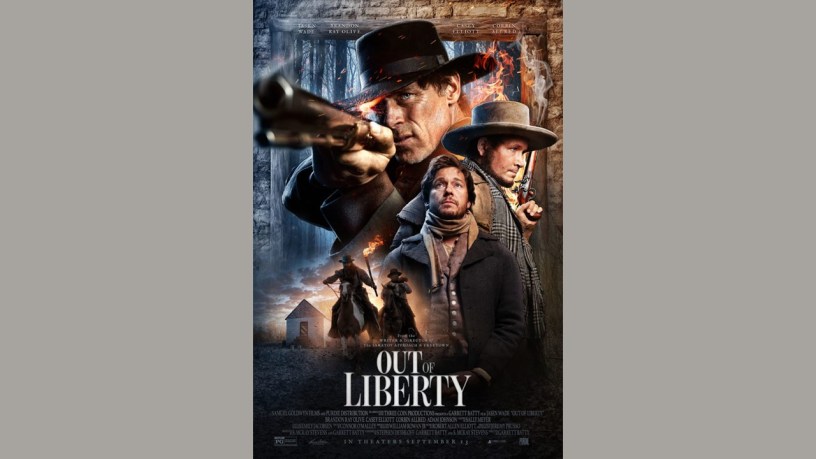
A year or so ago, during one of my where-is-Richard-Dutcher-now googling sessions, I happened on the film Out of Liberty, a 2019 retelling of Joseph Smith’s infamous stay in Liberty Jail. I considered renting it then, but I passed. Recently, my curiosity was sparked again after the release of The Oath—a movie written, directed, and starring filmmaker Darin Scott. Hawkgrrrl did a great write-up about that much-maligned passion project which can be read here.
Here is the trailer for Out of Liberty, and as trailers go, it’s pretty good:
Mormon Cinema as a Mirror
When we evaluate Mormon cinema, it’s important to look inward and be honest. As with Mormon podcasts, whether we like or loathe them says as much or more about us as it says about the film or podcast. For example, I really like the scrappy, unflinching God’s Army. I cared not a lick for the sappy, devotional The Other Side of Heaven. Both films are well-made, if shy of masterpiece. My sympathies tend to be with films that speak to me or on my behalf.
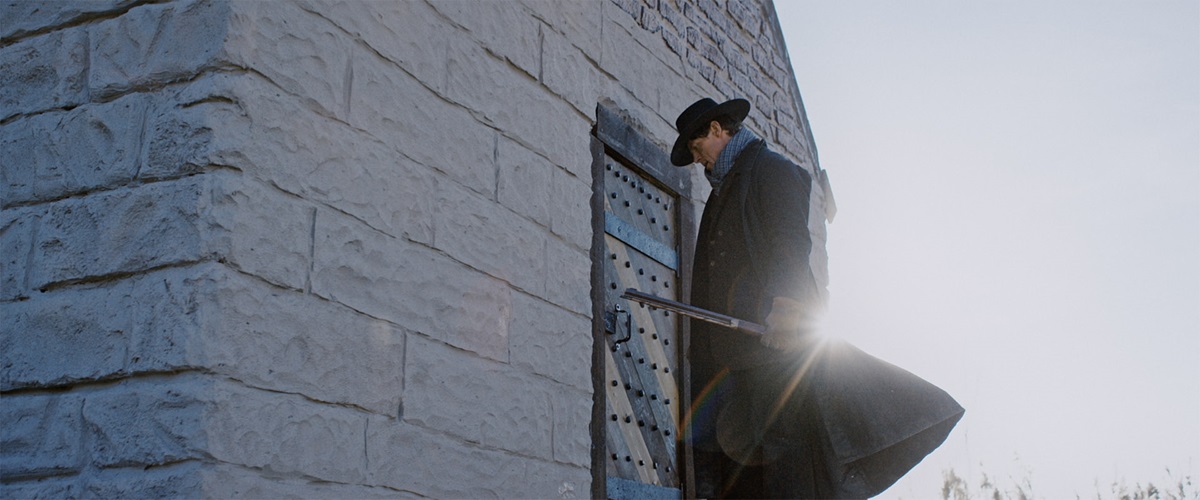
Essentially, Out of Liberty is a western in the style of High Noon, or the more recent 3:10 to Yuma. Both of these are, in my opinion, masterfully produced. Like them, Out of Liberty pits an everyman against dangerous gunmen hellbent on vengeance at the expense of justice. So it is, the protagonist of Out of Liberty is not Joseph Smith, but Samuel Tillery, the working class guardian of Liberty Jail. Tillery is just an honest veteran trying to make a living. He is no one the prophet Joseph will ever have cause to rebuke with a thunderous, “Silence ye fiend of the infernal pit!”
Tillery thwarts repeated, and increasingly desperate, escape attempts by the imprisoned Mormon leaders. Simultaneously, he must fend off an angry mob leader bent on killing Joseph. What results, quite like it does in High Noon and 3:10 to Yuma, is a brooding introspective tale and battle of wills. And since it’s a western, as the above trailer promises, you’ll witness LOTS of swaggering, stare downs, pistol tickling, and gravelly-voiced monologues.
‘Thumbs Down’ or ‘Thumbs Up?’
I may sound a bit cynical. In part, I’m pushing back against the movie’s unabashed bias for Mormons over non-Mormons. As evidence, Missourians in the movie who sympathize with the Mormons come off likable. Missourians crying for Mormon blood come off villainous and in need of a thumping.
Yet, I’ll stop short of panning Out of Liberty. Actually, if you have a strong interest in Mormon cinema, I recommend you give it a try.
Out of Liberty is certainly more interesting and balanced than Church-produced fare, though the dialogue has the blocky expositional feel of CES films. The performances seem generally strong, with actors delivering dialogue in a natural style that resists the urge to over-emote. Also, by choosing a small-scale subject, Out of Liberty manages to look quite good on what must have been a modest indie budget.
On the downside, there is a lot of air in the film in the form dramatic pauses, with actors gazing pensively while the underscore tells us how we’re supposed to feel. When Emma Smith arrives to show Joseph his newborn son, the scene is handled primarily via montage, with frequent cutting to the non-Mormon jailor Tillery, whose heart is obviously being softened by the doting couple. Spoiler alert: Out of Liberty stays out of polygamy.
Casting the Mormon Pantheon
The film’s villain sports a sinister bushy beard certain to make any BYU-alum viewers gasp, but he’s also given a compelling motive for hating Joseph. The Missourian’s relative was killed by a Mormon at the Battle of Crooked River. This leads to an inevitable he-said-they-said debate over murder vs. self-defense. As with every other issue raised in the film, the movie’s litigation of the Battle of Crooked River comes out on the side of the Mormons.
Among the historical cast of characters, Sydney Rigdon and Porter Rockwell receive passionate and colorful portrayals. Rockwell exudes childlike charm even as he seems ready to kill or be killed. Rigdon’s mental health issues are portrayed openly and unflatteringly. That is, until the movie flatters the hell out of Rigdon by giving him a big, impassioned speech in court. Like so many TV legal dramas, Out of Liberty dispenses with a close examination of evidence, opting to win over the jury/mob with a rousing closing argument. I didn’t buy it.
The movie’s portrayal of Joseph Smith is quite interesting. In Out of Liberty, Joseph is neither the tallest nor most confident man in the room. Diminutive, he wears a drooping expression, almost like a puppy dog who’s been spanked. In short, he’s disappointing in all the right ways, and quite believable as a man who has spent months in a dungeon and finds himself almost broken. While this is a compelling storytelling choice, it saps Joseph of his charisma. I find it hard to believe anyone other than 21st century Latter-day Saints would follow such a mild-mannered leader.
Spoiler Alert: No Moroni’s Challenge Here
While Out of Liberty references the Book of Mormon, depicts a blessing, and muses on prophethood, the movie spares us the cliched plot device of converting a skeptical protagonist in the third act, the way so many Christian films like Left Behind do. That said, Out of Liberty did move me during its depiction of Joseph Smith penning (receiving?) D&C 121. Even as a non-practicing Mormon and agnostic, I continue to regard this passage of scripture as a favorite. Remember what I said about how Mormon cinema reveals as much about us as it does the subject? I worried the filmmakers would play this revelatory event as an Oscar-clip moment. They kinda do, but they also find a clever way to use D&C 121 as a device for deepening the central Mormon/non-Mormon relationship.
Though not a masterpiece, I found Out of Liberty worth watching and satisfying. The story is told well and without excessive preachiness. Filmgoers are spared a pious finale that would amount to flashing a Church logo and 800 number, with a voiceover urging us to call the number if, at any time during the movie, we “felt something.”
Bottom Line
Out of Liberty is available for streaming rental or purchase via Apple and Google platforms. I recommend it to aficionados of Mormon cinema, no matter how you regard Joseph and his religion: good, bad, or ugly.
Okay, readers. Have you seen the film Out of Liberty? Based on the trailer, would you be interested to see it? Why or why not? What do you want to see from Mormon cinema next?
 Wheat & Tares
Thumbs up for 3:10 to Yuma (the more recent remake — haven’t seen the original). There are certain conventions for Westerns. Such as: at some point in the movie, the good guy is going to shoot the bad guy. Yuma plays with that a little bit, but at least at the end the bad guys get shot in the end, even if by the sort-of bad guy, not the truly good guy. As Doc Holliday reminded us, it’s not revenge that drives the plot — it’s a reckoning.
I doubt that there is any real gunplay in Out of Liberty. Which makes me wonder whether there is any reckoning, any satisfying moral closure with an emotional punch, at the end of the movie. I can’t see how escaping custody and sneaking off to Illinois gives that payoff. Religion doesn’t fit well in Westerns (Pale Rider being a shining exception).
Hi Dave B! Thanks for weighing in. To clarify, I am referring to the recent 3:10 Yuma starring Russell Crowe and Christian Bale. Rewatched it recently and found myself completely taken by it. Wonderful story. Interesting, with Out of Liberty, I quite like how they handle the “sneaking off to Illinois” in the film. It’s one of the best scenes in the film, a mix of wry humor and male bonding. Boys will be boys. It’s what we in the theatre/film community called an an “earned” moment. But I totally agree with your observations on reckoning. Guns do go off in this flick, with consequences. But gun violence that manages to come in safely under a PG rating? Yeah, it just plain lacks the emotional impact, and dramatic integrity, of R-rated gun violence.
Thanks for the review! I’m not interested in seeing the movie, but I really enjoyed reading your thoughts.
Thanks for your thoughts.
I’m easy to please overall when it comes to movies, though I’d like to think I’ve gotten a better eye for what’s good over the years. Still, I’m willing to forgive the occasional cheesy or preachy scene from LDS cinema over a lot of the gratuitous sex and violence from Hollywood.
I saw Out of Liberty within the first few days of release. I think Garrett Batty is one of my favorite LDS filmmakers, and I look forward to his treatment of the Joshua Dennis story, which is looking for more of a mainstream audience.
I’ve met actor Jasen Wade many times. He’s quite a humble man and I think this was one of his best performances. He really does resemble a lot of his characters.
I’ve seen Brandon Ray Olive, who played Joseph Smith, in a few movies since then. He plays a very interesting Mormon missionary in Out of Africa. Like Christopher Gorham, he appears to be another nonmember playing lots of member parts.
Although it would still be difficult for more mainstream appeal, I’d like to see more LDS science fiction movies. There are just a handful of rather cleverly done novels that have managed to do this by either embracing LDS doctrine or by tip-toeing around it for slightly greater appeal. If done right (and with the right amount of money), I could see how outsiders might find them fascinating.
Brock Heasley is actually a member and managed to combine Christianity and Science Fiction for The Shift. I was unprepared for the amount of faith that was initially in The Shift (still far from the preachiness of most Christian films), but when I went in the second time expecting it and looking for the details I’d missed the first time, it became one of my favorite movies. Interestingly, about a third of my favorite movies are ones I gave a second chance.
If Brock could do it for mainstream Christianity, I think it could be done for LDS cinema.
Thank you for the comments, Janey and Eli! Very interesting to get more details about some of the actors. I have seen names popping up in multiple titles. Kinda reminds me of how Clint Eastwood tended to keep the same group of actors around him for supporting roles in the 70s and 80s, and you’d see them showing up here and there in his work. Fun to notice familiar faces
Correction: Brandon Ray Olive plays a missionary in “Heart of Africa,” not “Out of Africa.” There is also a sequel movie called “Heart of Africa 2: Companions,” which is more of a companion movie rather than sequel, as it uses a lot of unused footage from the first one. I think you’d probably like both of them.
I hadn’t really heard about this film but after reading this review, I’m quite interested! Like you, I’m not exactly a believer but I think there’s wonderful lower-case-t truth to be plumbed from the strange and dramatic episodes of Mormon history. The key is to be honest about it and, like you said, resist the urge towards propaganda one way or the other. I would have enjoyed Under the Banner of Heaven more if it had been less heavy-handed in its messaging (and I say that as an exmo).
Man, Richard Dutcher put out some good stuff back in the day. God’s Army 2 and Brigham City in particular both deliver a very humanist emotional gut punch that works whether or not you believe in the church. I would love to see someone make a prestige TV drama one day that takes on the Nauvoo period with a similar approach.
More posts about Mormon cinema, please!