
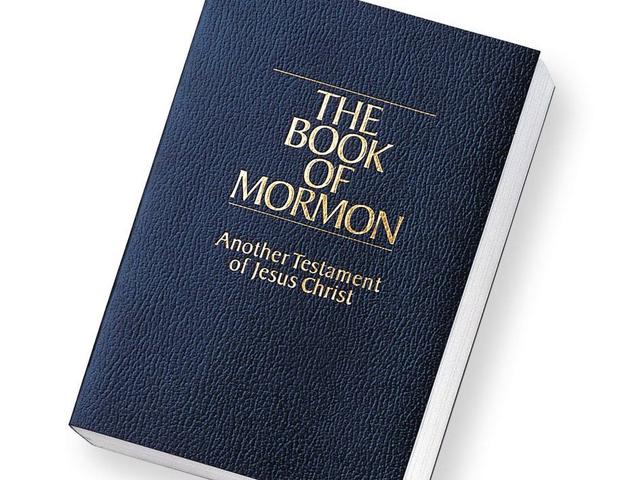
As we head into 2024, the LDS curriculum is going to be Book of Mormon and more Book of Mormon. So let’s do a quick review of the ways in which the Book of Mormon differs from the Bible and what makes it such a strange book. I’ll list some general claims, then circle back to a block of text in 1 Nephi 5 that talks about the brass plates.
Claim 1: The Book of Mormon is a very strange book. The Church portrays the Book of Mormon as just another book of scripture: Old Testament, New Testament, and the Book of Mormon, Another Testament. But here’s the thing: the Bible is a naturally transmitted set of texts. However the original form of this or that book first attained written form — whether by the purported author, a nameless contemporary of the purported author, or a later scribe rather freely writing in the name of a prior purported author — all biblical texts were subsequently copied and recopied for centuries, with a few copying errors here, a few additions there, until some much later set of copies eventually survived to be accessible to us in the present day. If an earlier and more reliable copy of a biblical text is discovered, as with the Dead Sea Scrolls, “the Bible” will be updated in future additions. Good study Bibles often give alternative textual readings in a footnote based on this or that manuscript. We need a whole cadre of trained scholars to be able to access surviving manuscripts, weigh them against each other for textual credibility and accuracy, and translate them into languages that most of us can read.
Claim 2: Unlike biblical manuscripts and texts, the Book of Mormon requires belief in supernatural transmission. The Book of Mormon is quite explictly held out as a supernaturally transmitted text. First, the various plates were not copied and recopied over the years; instead, the original plates were deemed to be supernaturally blessed to avoid the natural decay that would compromise or destroy any material buried in the ground for centuries or millennia. This view of things neatly avoids claims of scribal errors or unwarranted additions and deletions of the text, but at the price of requiring belief in a supernatural process to deliver an unedited original text direct to the modern era. Speaking of the brass plates, Lehi “said that these plates of brass should never perish; neither should they be dimmed any more by time” (1 Ne. 5:19). A similar claim is made of “the gold plates” and indeed of all plates encountered in the Book of Mormon. They don’t age. But anything, including metallic plates, that lies buried in a hill in New York doesn’t come out shiny and new 1400 years later. Nor do real-world artifacts and manuscripts conveniently disappear into the hands of an angelic messenger.
Claim 3: Unlike the Bible, the Book of Mormon requires belief in supernatural translation of a secret and unavailable artifact/document. I won’t belabor a discussion about translation. Unlike the Bible, it is not scholarly knowledge and publicly available manuscripts that underlie the Book of Mormon text. Many people reject the Bible’s divine claims, but not because of some fundamental objection to its transmission and translation. No one argues that the Bible is not an authentically ancient document. Modern editions of the Bible are based on extant manuscripts that you or anyone else can access and understand if you are willing to put in the effort to master the required languages. The Book of Mormon, on the other hand, is generally rejected by anyone who is not LDS because the transmission and translation process is, for non-LDS, largely untenable and unbelievable. To borrow a term from another field, what the Book of Mormon lacks in the eyes of non-LDS is credible provenance.
Claim 4: The Book of Mormon text is written as if the author(s) had a copy of the King James Bible in front of them while writing, although the claim in the narrative itself places the author(s) in a time and location where they would have had no access to New Testament texts or the KJV translation of New Testament texts. I’m sure most readers have puzzled over this at some point. It’s only a puzzle, of course, if one is trying to view the Book of Mormon as an authentically ancient text, as opposed to a 19th-century text. The Book of Mormon claims, in its text, to be thoroughly enmeshed in the world of the Hebrew Bible, citing Zedekiah and Jeremiah as contemporaries of Lehi and his family. There are Nephite temples and sacrifice modeled on Israelite practices: Lehi “built an alter of stones, and made an offering unto the Lord” (1 Ne. 2:7). “And I, Nephi, did build a temple; and I did construct it after the manner of the temple of Solomon save it were not built of so many precious things” (2 Ne. 5:16). The text claims that Nephites kept “the law of Moses,” whatever that means well removed from Israelite culture and institutions: “we keep the law of Moses, and look forward with steadfastness unto Christ” (2 Ne. 25:24). Yet, with all of this supposed rootedness in Israelite religious belief and practice, the book is saturated with New Testament language, doctrine, and practice. Likewise (and without going into detail) the text at various points seems to incorporate practices and doctrinal concerns that are rooted in the 19th century. The book does not seem to know where it is situated on a real-world timeline or limit its quotations from other historical texts to those which its writers would have had access. It’s just hard to make sense of the book’s claims in this regard.
I know that some LDS will dismiss this concern with the claim that God, being omniscient and knowing the future as well as the past, can certainly place in the mind of any prophetic writer not just knowledge of future events but also quotations from future texts. One might summarize this claim as, “There is no such thing as an anachronism in the Book of Mormon because ….” But that isn’t how the Bible works. As noted, it is a naturally transmitted set of texts. If an anachronism appears in a biblical text, it is evidence for reconsidering the date of the text’s origin or for suggesting that a later editor inserted a couple of verses into an older document. The “God can do anything He wants” argument is only employed by Mormons for the Book of Mormon. The book even spells out this argument, when Moroni claims, “Jesus Christ hath shown you unto me, and I know your doing” (Mormon 8:35).
Quick aside. Some readers may think I’m being harsh in Claims 2-4. Not really. I’m just spelling out what is evident from the text and the standard story told about the Book of Mormon. In the orthodox LDS account, an angel appears to reclaim the plates when Joseph lost the initial 116 pages, then delivered them back to Joseph, then later again reclaimed them. Nothing natural about that. The same for the standard LDS translation account. Then there is the “supernatural quotations” theory, invoked to remedy anachronistic quotes throughout the book. Let me quote a couple of reliable LDS scholars to suggest I’m not being unfair in my assessment.
In his The Book of Mormon: A Very Short Introduction (OUP, 2009), Terryl Givens describes the Book of Mormon as “claiming to be a literal history of ancient Israelites in America, preserved and translated by supernatural means” (p. 112). He offers two alternate reception histories of the book, one by early 19th-century believers anxious to find modern-day “miracles, spiritual gifts, and personal revelation,” and the other by more skeptical readers and critics who reject “the logical plausibility of a book laying claim not just to spiritual value but to actual historical foundations in an ancient American setting, with Israelite characters that seemed wildly out of place and a Christian religion that seemed just as wildly out of its proper time frame” (p. 113, underline added). Givens is certainly no critic. His summary acknowledges the concern I note above that the book itself (the text, the narrative and content) does not seem to know where it is situated on a real-world timeline.
Grant Hardy ranged far and wide over the Book of Mormon text in Understanding the Book of Mormon: A Reader’s Guide (OUP, 2010). The section he titled “The Puzzle of the King James Version” is particularly relevant to this discussion (p. 66-70). He states rather gingerly, “the Book of Mormon’s long quotations from Isaiah inevitably raise questions about the translation/writing process … and in particular why it appears in the language of the King James Bible.” Later, he states more directly, “Clearly the Book of Mormon Isaiah chapters, as we have them today, are based on the King James Bible ….” I quote these two respected LDS scholars only to show that, in Claims 2-4, I’m not just rehashing standard critiques of the Book of Mormon. These are issues that perceptive LDS scholars raise and discuss in a serious manner. If you are going to talk about the Book of Mormon, these are issues that you need to talk about. End of aside.
Claim 5: The brass plates don’t quite make sense. Here’s where this long discussion finally meets up with the LDS curriculum, which last week covered the first dozen or so chapters of 1 Nephi. After Nephi heroically absconded with the brass plates and returned to Lehi’s encampment, Lehi then examined them and rather quickly absorbed their contents. Here are selections from 1 Nephi 5:10-19, where Nephi writes about Lehi sharing his insights with the rest of the group.
10 … my father, Lehi, took the records which were engraven upon the plates of brass, and he did search them from the beginning.
11 And he beheld that they did contain the five books of Moses, which gave an account of the creation of the world, and also of Adam and Eve, who were our first parents;
12 And also a record of the Jews from the beginning, even down to the commencement of the reign of Zedekiah, king of Judah;
13 And also the prophecies of the holy prophets, from the beginning, even down to the commencement of the reign of Zedekiah; and also many prophecies which have been spoken by the mouth of Jeremiah.
14 And it came to pass that my father, Lehi, also found upon the plates of brass a genealogy of his fathers …
17 And now when my father saw all these things, he was filled with the Spirit, and began to prophesy concerning his seed
18 That these plates of brass should go forth unto all nations, kindreds, tongues, and people who were of his seed.
19 Wherefore, he said that these plates of brass should never perish; neither should they be dimmed any more by time.
The standard approach in LDS circles is to take the brass plates as essentially the Old Testament as we have it today, up through the time of Zedekiah. That treats the formation of the Hebrew Bible as something like a chronicle, where contemporary events are written down as they happen, including the idea that “the five books of Moses” were in fact written by Moses around the 13th century BCE and all of the book of Isaiah was written by the original Isaiah who lived in the 8th century BCE and wrote in the time of Hezekiah, king of Judah. This view of the formation of the Hebrew Bible may have been widely accepted in the early 19th century, but few scholars currently accept this view. On the modern understanding, the Torah was compiled from the late 7th/early 6th century through the 4th century BCE. Nothing like “the five books of Moses” would have been available at the time of Jeremiah and Zedekiah.
Likewise, the book of Isaiah is now understood to contain material from the original Isaiah, but also includes material from writers during the Exile (in Babylon, during the mid or late 6th century) and after. At least some of the Isaiah material quoted in 1 and 2 Nephi would not, under the modern understanding, have been available on the brass plates. What could realistically have been the contents of the brass plates? Either verbatim early versions of bible texts that circulated in priestly or courtly circles in the late 7th century (only those groups would have had the resources to collect and recopy texts) or extra narrative added on the brass plates by whoever was doing the transcription/writing onto the brass plates (sort of an Israelite version of Mormon doing compiling plus editorializing). The more you think about the question “what could realistically have been on the brass plates?” in light of current scholarship of the Hebrew Bible, the less sensible it is to think of the brass plates as essentially the Old Testament up through 587 BCE. Just like the Book of Mormon being a book out of time or a book that doesn’t really understand where it is on a real-world timeline, so also the brass plates don’t quite make sense on a real-world timeline, either.
I would love to find a lengthy, serious LDS discussion about the contents of the brass plates in light of modern scholarship on the development and formation of the Hebrew Bible. Maybe someone has a source to offer. Here is a diagram at the BYU Studies site, which presents the orthodox LDS view of some of what is on the brass plates, entirely derived from statements in the Book of Mormon. In other words, it brackets any consideration of what modern scholarship says about what Israelite texts would have been available in the early 6th century and focuses exclusively on Book of Mormon verses that cite the brass plates. It’s literary analysis masquerading as biblical scholarship.
So back to my post title. The Book of Mormon is a strange book, quoting material that authors wouldn’t have had access to as well as quoting pseudo-biblical material that appears nowhere in biblical or other ancient texts. It is offered as a book of scripture just like the Bible when, in fact, its transmission, translation, provenance, and contents (in terms of quoting material unavailable to the purported authors) is entirely different from how the Bible presents itself. The focus of this post was supposed to be the material in 1 Nephi 5 on the brass plates, with a short discussion of what modern scholarship tells us about what could or couldn’t have been available for inclusion on these brass plates. My introduction and framing of that discussion sort of took over the first half of the post. Anyway, there you have it, a short discussion of how we might look at the Book of Mormon. Not just canonized scripture, but in many ways a very strange book of canonized scripture. Likewise for the brass plates: the closer you look, the more puzzling the speculated and somewhat hypothetical contents of the brass plates become.
 Wheat & Tares
There are answers to these types of questions. Unfortunately I don’t know if the author would like to discuss them. The author would have us believe that it doesn’t make sense that the Book of Mormon could have angels involved. Is he simply suggesting that angels don’t exist?
Here’s what’s strange about LDS scriptures: We believe in the Bible and believe the KJV of the Bible is the most correct. That is pretty straight forward. Now it gets strange. We believe the BOM is also the word of God. Initially we were told it was translated. Then we found out it was received via a stone in a hat (that is NOT translation). We are left with “the gift and power of God” as the PR spin explanation. We believe in the Pearl of Great Price, including the Book of Abraham. We are told (see title page) that this book is also a translation of papyra but of course that has been debunked (unless you believe in the bogus long schroll theory) so we are left with the catalyst theory i.e., Joseph Smith was inspired by the papayra. We have the Doctrine and Covenants as scripture. This represents direct instruction from the Lord. The Lord got very specific with some of these sections, telling Joseph Smith exactly what to do which usually served Joseph’s interests pretty well. Finally, we have the JST version of the Bible which Joseph was “inspired” to write. It wasn’t completed (why?). At times it mimics the KJV of the Bible, at times it mimics the BOM, at times it differs from the BOM – the most “correct” Book ever. It’s all so strange.
Why would the creator of the universe transmit scriptures this way in such a scattered approach?
cachemagic, no, I’m saying you don’t need angelic assistance to transmit authentically ancient texts from their ancient setting of origin to the modern day (see: Bible).
Excellent OP. In D&C 22:1, Mormons lay claim to ‘chosen people’ status under the clause “all old covenants have I caused to be done away in this thing”. In other words, the original Abrahamic covenants with Israel became null and void following the apostasy.
How convenient. The revised covenant enables TBMs to believe the blessings promised to Israel are now the exclusive inheritance of the followers of Joseph Smith and his successors. This certainly fosters magic worldview thinking to include requiring literal belief in the supernaturally transmitted BoM text noted in the OP.
The existence/content of the brass and golden plates, timing of the Isaiah quotes, etc. are among many obstacles inherent in accepting BoM historicity. Unfortunately, Mormon apologists and scholars have yet to offer answers that do not require believing in very targeted supernatural events (see Claims 2-4 in the OP).
One of the byproducts of this Mormon ‘chosen people’ concept is that it enables members to blithely ignore any positions that do not recognize LDS superiority among world religions. Nothing could go wrong with that philosophy.
Great post. Apologists commonly claim that belief in the Book of Mormon and its historicity is kind of like belief in the Bible in order to make belief in the former seem more normal, mainstream, and unextraordinary. In essence, they argue, believing in the possible historicity of Nephi is much like believing in the possible historicity of Moses. So why view Mormon belief as so weird. The list in the OP clearly refutes such an assertion.
Yes, the events described in the Bible are as lacking in evidence and as extraordinary as the events described in the Book of Mormon. Moses parts the Red Sea and the Lehi leads his family to the Americas by building a boat and using a compass 400 years before the first known compass was made in Han dynasty China in 200 BC. Both very extraordinary. Yet, the issue with the Book of Mormon isn’t so much the historicity of the events described, but of the narrative that describes those events. No one doubts that the Biblical narrative is ancient and that ancient Israelites constructed it. On the other hand, no one really believes that ancient Americans wrote about Jesus Christ and constructed the narrative contained in the Book of Mormon except for believing Mormons who have all claimed to arrive at that belief through the supernatural.
Lastly, I think that apologists undersell the Book of Mormon and its claims. I regularly read archaeological journals and about new findings. Big findings make the news, circulate in academic and common discourse, and change the history books. The finding that pre-Columbian Americans practiced Christianity and Judaism would be one of the biggest findings in the last 50 years. To a Mormon audience, the apologists make this claim regularly and boldly. But to a non-believing secular audience, the apologists go soft. My challenge to apologists is that if they are so sure that they can prove that ancient Americans practiced Christianity, then shout it from the rooftops and let’s see how it plays out. Stop with the excuses of how the secular world doesn’t or won’t care. They do and will. Make the case harder and stronger. If pre-Columbian Americans really practiced Christianity and you guys have the incontrovertible evidence that you say you do, then let’s see this show up in common history books. Let’s see non-believing academics widely accept this claim and build research upon such an incontrovertible fact of pre-Columbian American Christianity.
A few points to maybe consider as people think through these claims:
First, the Book of Mormon never contains the word ‘America’ nor ever claims to have anything to do with the American continent. Those are words and interpretations added by early Mormons (in some cases literally added to the text in the chapter headings or in the introduction, though again, no such reference in the actual text is made).
Second, the Bible literally suffers from the same problem of the Book of Mormon, though thousands of years of Bible re-copies, as you say, and the narrative of the Book of Mormon translation obscure this fact. There are no surviving, contemporaneous documents of any Bible event or record. The ‘extant manuscripts’ you cite for the Bible are hundreds, or in some cases thousands, of years removed from the events they purport to record. The claim you cite in many ways just boils down to the fact that the Bible text has been around longer. It is older. In a thousand years, based on the logic of your claim, the Book of Mormon will have increased in credibility due to the number of copies that will have been reprinted. Whether based on supernatural plates or eyewitness accounts of supernatural events, the Bible and Book of Mormon stand on equal footing: their source documents are not around for us to access and verify against.
Third, I am not sure why people find the King James language as problematic as they do. If the Book of Mormon was translated in such a way as to maximize its chances of being accepted by a Christian world in the early 1800’s, it seems that would be the language of the day to use (including familiar references). One can argue whether that was the right translation ‘strategy’ or not (there were probably multiple ways to convey the stories of the Book of Mormon to 19th century bibliophiles), but I don’t consider it out of the ordinary. Perhaps now that we have moved into the 21st century, and after Mormons found themselves cursed and banished out to the Utah desert, and most people now recognize the Bible as extremely problematic, a different translation approach would have been more effective for our day. But 19th century people had to have their chance, too, to have their faith tried … we can’t just think only of ourselves.
Fourth, just because one sees the same names show up in the Book of Mormon as the Bible, doesn’t mean the names mean the same thing. If the Bible is an extremely confounded book (which I think it is), we can’t necessarily assume that when Nephi refers to Zedekiah, or even Jerusalem for that matter, that our understanding of those things is correct, or that the Bible has that right. Which leads to my last point on the Brass Plates…
Lastly, I don’t think the Brass Plates really have anything to do with our OT. The Five Books of Moses Nephi mentioned are likely very different than what constitutes those books in our OT today. They share a name, but probably not much else. If we were to have the Brass Plates today, we would know about quite a lot about Creation itself, and the first Men, whereas now we have, like, 3 chapters in Genesis of some pretty general, fairly forgettable stuff. Whatever is on those plates was powerful (which is why it was so tragic and detrimental to Laman and Lemuel’s descendants to be ultimately separated from those plates and stories – until the sons of Mosiah restored to some of them a knowledge of Creation in their ministry). This is also why Lehi’s prophecy matters so much (as well as Alma’s later counsel to Helaman). The Brass Plates will come forth again, and when they do, my feeling is that we will read something far different than what we can find in the Old Testament.
My daughter reported an interesting conversation they had in her seminary class. She has a very TBM teacher and very TBM classmates (my family is pretty nuanced, and often seen as wayward). I believe it was in an attempt to demonstrate the importance of the Book of Mormon, the teacher posed the hypothetical (unimaginable) question, “What would your response be if incontrovertible evidence emerged that proved the Book of Mormon is false?”
Many of students in the class responded that, if the Book of Mormon were proved to be false, that would prove that the church is false and they would leave the church, and probably leave religion altogether.
My daughter responded that reading the Book of Mormon has helped her in her life and that she’s learned a lot of good lessons from reading it. So even if it turns out that it’s not true, she’d still consider it to be a good and valuable book and probably still read it and refer to it. Her answer was not the correct answer for the class and she got pushback from the teacher and other students.
Her seminary teacher and classmates are worried that she and my family are going to leave the church, because we have nuanced views. I’m worried that her seminary teacher and classmates may end up leaving the church, because when you set something up as all or nothing, true or false, and the claims become a bit iffy under scrutiny, that’s a recipe for disaster.
I have no idea what I’m doing as a parent with nuanced views about the church, I don’t know if sharing my nuanced views with my teenager is helpful or harmful in the long run. I guess we’ll see how it plays out. But I feel like setting up the scenario that it is all 100% true, or it’s all false would be pretty much the same as ensuring that my kids would leave the church in the future. We do see a lot of people who are leaving the church right now, and I think that mindset contributes to it.
While these aren’t my usual lenses for approaching the Book of Mormon, I enjoyed this post! Thank you. Whatever its origins, the book is -so- strange. It is deeply problematic, at times earnest, at others pedantic, has its moments of staggering beauty and stupefying dullness. It deserves far more critical attention and serious academic study than it receives.
My guess if one were permitted to read it as a 19th century text without giving offense to millions, there would be far more appreciation of the book as a serious work of literature and, yes, scripture. It is also a profoundly American text and has so much to say about US identity then and now.
I’m a fan.*
*but not an unqualified fan
“There are no surviving, contemporaneous documents of any Bible event or record.”
The Merneptah Stele dated back to 1213 BC is evidence of Egyptian mention of the Israelite people.
The al-Yahudu tablets corroborate the migration of Israelites from Judea to Babylon.
Sennacherib’s Annals corroborate the mention of his siege of Jerusalem as mentioned in the Bible. In fact we have found the ramp he built to besiege the city.
The Babylonian Chronicles confirm the conflicts between Nebuchadnezzar and the Kingdom of Judah.
In 2019, archaeologists unearthed evidence of Babylon’s conquest of Jerusalem, which includes ash deposits, broken lamps and pots, arrowheads, and melted-down jewelry.
The Tel Dan inscription mentions King David.
Consider this list of biblical figures mentioned in extra-Biblical sources: https://en.wikipedia.org/wiki/List_of_biblical_figures_identified_in_extra-biblical_sources
There is all sorts of extra-Biblical evidence for the peoples in the Bible, including the Egyptians, Canaanites, Philistines, Phoenicians, Assyrians, Babylonians, Arabs, Hittites, Sidonians, Chaldeans, and Amorites.
The fact that the Bible was written down very much fits the ancient Near East, where cultures used writing and document preservation extensively.
I think you’re discounting the amount of evidence there is for the Bible. There is nothing of the sort of evidence for the historicity of the Book of Mormon narrative that we have for the Biblical narrative.
Brad D
Thanks for the list.
As for thousands of years of recopying. Yep.
However bits and pieces exist. Lots and lots, all over ancient Canaan and surrounding areas.
The Ketef Hinnom scrolls from around 600BCE has some of the oldest surviving texts written in Palaeo-Hebrew (and not Reformed Egyptian) A few lines line up with Numbers 6:24-26
And then there’s Isaiah. The Isaiah scroll(a complete Isaiah) from 150-100BCE. So hundreds, not thousands of years. And the added benefit of not quoting Mr Deutero before he said it.
I am unaware of anything Biblical on any stele or codex in the America’s. Not a bit and not a piece.
There is actually ancient records that correspond with people and events of the Book of Mormon. But generally we have been looking in the wrong places. As additional Mayan records come forth we can now cross reference actual Mayan kings and campaigns with the same events in the Book of Mormon.
“ There is [sic] actually ancient records that correspond with people and events of the Book of Mormon.”
Name one.
It joins many a strange thing in the church. For a believer, evidence of the Book of the Mormon provides reason to believe. Lack of evidence also provides reason to believe. It’s a similar condition as church membership: growth supports the claim of the church’s divine origin; so does membership decline. If you’ve constructed the narrative so that, regardless of anything else, you win, then you win. It’s of course, highly problematic and dangerous as hell. Those who have ears to hear and eyes to see will see. Everyone else will, well, I’ll just go out and say it, embrace people like Trump, who has constructed the same sort of narrative.
Fascinating post! Thanks for writing this. I hadn’t spelled out the difference in the provenance — the difference in the supernatural transmission vs the Bible’s text being passed down by non-supernatural means. That gives the Bible different footing as far as being a work of ancient literature. The BOM status as literature would root it in the 1800s America.
My personal opinion of the BOM is similar to aporetic1’s daughter. I’ve learned from it. I’ve learned from a lot of books. Reading other peoples’ experiences is interesting and often helps me define my own thoughts and feelings. I haven’t read it for the past several years, but I will always have some fond memories of the BOM. I also have some not-great memories of trying to believe that I had to make the BOM apply to me, and it didn’t fit at all.
Cachemagic, pray tell, what are these ancient records that correspond with people and events in the Book of Mormon? You might be thinking of Nahom. Nahom is extremely insignificant corroborative evidence. The NHM inscription found was reference to a tribe, not a place. The inscription also was not on an altar, as some apologists have claimed. Nahom is very close to Nahum, from the Book of Nahum in the Bible. Given how heavily the names in the Book of Mormon correspond to those in the Bible, it is overwhelmingly more likely that Nahom is a slightly adjusted form of Nahum than it actually corresponding to a tribal name mistaken by apologists as a place. For throughout the Book of Mormon personal names are often the same as place names. Such as the Land of Nephi. Zarahemla is both a person’s name and a place name. The idea that Nahom was just a lift from the Bible fits a clear pattern much more than the idea that Nahom corresponds to outside pieces of evidence showing an actual place called NHM in Yemen. For there are no other place names in the Book of Mormon (well, other than Jerusalem) that correspond to place names established by outside evidence. Now contrast that with the Bible. All kinds of places mentioned in the Bible have been found.
“Claim 1: The Book of Mormon is a very strange book. ”
Well yeah, but the Bible is chock full of texts that are not what they seem. Join the club?
“Claim 2: Unlike biblical manuscripts and texts, the Book of Mormon requires belief in supernatural transmission.”
Hello, Book of Deuteronomy?
“Claim 3: Unlike the Bible, the Book of Mormon requires belief in supernatural translation of a secret and unavailable artifact/document.”
(ahem!) “Who is worthy to break the seals and open the scroll?”
“Claim 4: The Book of Mormon text is written as if the author(s) had a copy of the King James Bible in front of them while writing, although the claim in the narrative itself places the author(s) in a time and location where they would have had no access to New Testament texts or the KJV translation of New Testament texts.”
This is not an unusual situation, scripture-wise. (Either the borrowing or the anachronisms.)
You know, the Tibetans have a tradition of discovering buried treasure-texts (or just revealing them through mystical means, without digging them up), that are attributed to Padmasambhava and other worthies. Sometimes they even have to be translated from the dakini language.
I think Dave B. is giving the Bible a little too much credit as a non-supernatural creation. Did the Bible require supernatural means to have been matriculated down to us in it’s current form? Well no, that’s absurd. People wrote stuff down and it got copied. Nothing supernatural about that and you couldn’t prove it anyway. However, I don’t think it’s the slightest bit controversial to claim that many (if not most) of the writers who created the texts that were later compiled in into the Bible believed that they their writings were divinely inspired – or claim to be speaking for God. John the Revelator and the Prophets immediately come to mind, for example. Further, I don’t think we would have the Bible in it’s current form if its editors/compilers didn’t perceive (or create) a divine (ie. supernatural) thread running through it. The very fact that ancient Christians read Jesus back into the Hebrew Bible and rebranded it the “Old Testament,” supports this idea.
While Dave B. is correct to assert that years of critical scholarship has chipped away at Biblical univocality, most believing Christians, I would argue, still see it that way. While none of this does anything for BofM historicity (in fact, I would argue the BofM relies on a near literal interpretation of the Bible, which is a problem), so long as the garden variety Christian (or Mormon) holds onto some level of biblical univocality, I suspect that Church leaders are not going to be terribly concerned with the points Dave B. raises. In other words, as long as the Bible remains functionally supernatural, the BofM will remain functionally magical to most conventional Mormons.
The thumb ratio on my first comment is pretty funny.
Brad G: I suppose people can follow that list or links you provided for themselves and determine how, or if, those really support Bible stories and events in anyway. You don’t sound like the kind of person to be persuaded otherwise!
Several of them are at about the level, if not below, the Nahom evidence you just countered (oddly to no one!), in my own opinion.
Much of the evidence that people pull out to support the historicity of bible stories are exactly like the Nahom evidence you just shadow-boxed against yourself on. You kind of have to already believe in the book and the historicity of its stories to see what you are presenting as solid or credible evidence in support of it.
Nothing wrong with that, of course. We all seem to do that with all sorts of things. I will admit to doing that, at least. I am just taking objection to the double standard, or people pretending that they are not doing the exact same thing with bible stories that they accuse others of doing with Book of Mormon stories.
And I would (and have) said the same thing to Book of Mormon apologists, also, who bring out all kinds of strange evidence for things that don’t make sense. Equal opportunity offender here.
Here’s an excellent conversation with Blake Ostler. His explanations for Deutero-Isaiah and the presence of KJV in the Book of Mormon resonate really well with me. I don’t remember him mentioning the brass plates–though I could be wrong:
William Wright,
“I suppose…”
The Bible lists all sorts of people whose existence can be corroborated from extra-Biblical sources. Show me one person in the Book of Mormon whose existence is corroborated by outside sources.
“Several of them…”
Which non-Mormon scholars recognize NHM as significant or corroborative? No one. By contrast, Sennacherib’s siege of Jerusalem in the 700s BC is universally recognized as established fact. Israelite migration to Babylon in the 500s BC is universally recognized as established fact. The Achaemenid Persians under Cyrus allowing Israelites to return to Judah and have semi-autonomous governance of their own province is established fact.
You’re making a rather desperate false equivalence between historicity problems with the Bible and those with the Book of Mormon. You want the Book of Mormon and belief in it to be seen as normal. I get that. But don’t drag down the Bible, one of the most amazing texts in history, to achieve that aim. No one doubts that the Biblical narrative is ancient. No one doubts that a number of key events described in the Bible are ancient facts. However, no one, aside from believing Mormons, believes that the Book of Mormon narrative is ancient. Not a single event described in the Book of Mormon can be corroborated by outside sources as factual.
Brad D:
It took me a bit to catch on, but you are arguing against something I didn’t write or intend, I think. You took the one sentence out of my second point, ripped it from the rest of the context, and started arguing against what you wanted it to say. Read the rest of the paragraph and point, particularly the concluding sentence. I am saying no contemporary evidence or documentation exists for supernatural events, records, or stories in either the Book of Mormon or Bible. I don’t think that statement should actually be that controversial. None of the examples you provided seem to offer that contemporaneous evidence, but let me know if I missed something.
I actually think I under-sell the Book of Mormon in that original point, because at least with the Book of Mormon we do have primary documents from eyewitness that support supernatural events surrounding its translation, which we definitely do not have anything like with respect to bible stories and sources (though my guess is that you don’t put much stock into those eyewitnesses?).
And I am not sure it is a desperate defense of the Book of Mormon. I am just coming at if from a much different perspective in some ways than anything you have ever thought of, would be my guess.
My own current belief is that the events of the Book of Mormon don’t even occur on this world, and so it would be very hard indeed to find the kind of evidence you want presently. My guess if you were to step foot on the real Promised Land, you might find what you are looking for, but that is just a guess.
And no, I don’t think belief in the Book of Mormon was meant to be anything like ‘normal’. It was meant to be just the opposite, actually, in many ways. My own beliefs are as far from normal as anything I can think of.
I am not a big fan of these types of interactions, and I don’t think my thoughts are helpful, so that will be it from me, I think. I am not sure what I hoped to gain by commenting and providing some alternative views to consider in the discussion, but it definitely wasn’t this!
Brad D:
“Which non-Mormon scholars recognize NHM as significant or corroborative?”
Brad, I think we need to ask:
1. Is there a place matching the description of the Valley of Lemuel (in 1 Nephi) that can be found near the Red Sea?
2. Is there a place somewhere within the Arabian peninsula called Nahom or a variant of NHM?
3. Is there a place matching the description of Bountiful (in 1 Nephi) that can be found somewhere on the coast of the Arabian peninsula?
4. Does Nehem (a variant of NHM) lie south-southeast from a place that best matches the description of the Valley of Lemuel?
5. Does a place like Bountiful lie nearly due east from a place called Nehem?
All of these questions — answered in the affirmative — taken together create a map that corresponds perfectly with the descriptions given in the Book of Mormon. It does not prove that the BoM is true–but the correspondence is indisputable. And so the real question is: whence the correspondence?
@William:
> My own current belief is that the events of the Book of Mormon don’t even occur on this world
And here I thought that my speculation that the BoM could be interdimensional cable was unique.
The version from a timeline where Ishmael has the brass plates probably is, though…
All this talk of the supernatural made me think of another strange book, “Dracula” by Bram Stoker. A book that seems more influential than the Book of Mormon since it has inspired dozens of movies(some actually good) and hundreds of books. The Horror Writers of America named their award The Stoker.
It’s an epistolary novel, made up of newspaper articles, a bunch of letters and a ship’s log. There is a Transylvania. There are Carpathian Mountains where wolves still prowl. Heck, there’s really a town of Whitby on the Yorkshire coast. Betcha, yah can find a black dog living there. Wow, what correspondence.
But none of that makes the novel Dracula historical.
But here’s the fun thing from the wonderful world of mortuary archaeology–Vampire Burials. In Europe, for hundred of years, they seemed to have a problem with keeping the dead staying dead. Cuz dozens of graves have been found where the corpse has been weighed down and staked. Another common practice was placing a scythe across the throat so when the undead attempted to rise, they’d lose their head. (This is why Nephi beheaded Laban and there wasn’t a blood problem. Laban was one of the Undead) So just to be safe, everyone get out your garlic.
So while Vampires maybe “real”, Dracula by Bram Stoker is fiction. But it is studied as a historical document. by those examining Victorian ideas of gender and sex and “deviant” sexuality.
And here we are over a hundred years later watching Johnny and Mavis at Hotel Transylvania. Think I’ll go check in.
Thanks for the comments, everyone. All points of view are welcome.
DeNovo, interesting observation about D&C 22:1. My sense is that was just a reference to prior Christian baptisms not being recognized, so all converts had to be rebaptized when joining the LDS Church (still the practice). But maybe that’s worth further investigation.
Brad D, it’s certainly the case that “full blown Christianity in pre-Columbian America” is a wild claim to anyone who is not LDS, but within the Church it is seen as unremarkable, just the way it is. It’s a little odd how completely unaware most LDS are about how LDS beliefs appear to everyone else.
William Wright, thanks for contributing.
aporetic1, yeah there’s a real problem with who is called to teach Seminary and (at the college level) Institute. There are some broad-minded teachers, but lots of narrowly orthodox ones who probably turn off some of their students. Not just orthodox, but still taking their understanding of “Mormon doctrine” from JFS and Bruce R. McConkie. They are fifty years behind even the orthodox curve but don’t realize it. I suspect lots of the LDS curriculum folks are stuck in the same time warp. It’s killing our ability to retain our youth.
mat, interesting perspective. I wasn’t, of course, saying there are no supernatural events depicted in the Bible or that most believing readers accept those events with little objection. Try reading the first few chapters of Matthew: angels here, angels there, angels everywhere. But I suspect most LDS think of the standard account of the transmission and translation of the Book of Mormon and think, “That’s just the way God works.” When the natural comparison, to the Bible, in fact works much differently.
Jack, Blake authored a clever and interesting and thought-provoking theory of Book of Mormon translation that pretty much no one accepts. There’s too much divine input for critics/skeptics and too much human input for believers and LDS apologists. No one wants a Book of Mormon that’s half God, half Joseph.
Honestly, all of the apologetic arguments on the historicity of the Book of Mormon are moot given the anachronisms contained therein. If I were to show you a document and claim that it was written by Thomas Jefferson, and that document mentioned that rockets went to the moon, you would know for a fact that this document was not historical.
There are dozens of anachronisms in the Book of Mormon. Apologists know this, and have needed to shift their tactics to trying to convince people that these things “could have happened, in a tiny village somewhere we haven’t found yet, that was completely wiped off the face of the earth – except for Moroni… He survived and carried 200lbs of plates for thousands of miles to put in a stone box in a hill.” This leaves even more problems, like if it is historical, as well as the “most correct book”, then what about the Jaredites and their millions that covered the face of the land? Why is there no evidence of a very advanced civilization like that? Or evidence of a civilization-ending war that included the use of advanced technologies like steel swords, metal armor, shields, chariots, etc. – a war with millions of casualties?
Instead of focusing on the “worth” of the Book of Mormon as an inspiring work, apologists are forced to use ridiculous mental gymnastics to prove something they MUST prove: the Book of Mormon is literally true, and the people and civilizations mentioned actually, really existed.
They have to prove that because of one question: if it’s not literally true, where did it come from? That question applies to everything in the Book of Mormon, going back to the Tower of Babel, as being literally true. If it’s not true, and these people didn’t really exist, then who gave Joseph the plates? Did Joseph really see Adam, Abraham, Seth, Enoch, Isaac, Jacob, Gabriel (Noah), Moses, Elijah, Elias (biblically the same person as Elijah, which is an issue), Nephi, Mormon, Alma, “the three Nephites”, Moroni, and others?
Most real biblical scholars are able to say that the creation story with Adam and Eve are not literal, and didn’t happen about 6000 years ago. They are able to say that there has never been a global flood, nor a “confounding of languages” about 4000 years ago. In LDS theology, however, they are forced to say that these events happened. If not, then they are forced to admit that Joseph Smith lied about everything.
Dave B,
I don’t think Blake spends a lot of time on his theory (as I remember) in the “Mormonism with the Murph” video–just a few minutes toward the beginning I think. But he does talk about a plethora of other useful things such as Deutero-Isaiah and KJV in the BoM’s text–as I mentioned above.
Trying to pin down historicity for the Book of Mormon is a game of pure speculation and here’s my big problem with it:
Let’s say the BoM narrative actually took place somewhere on planet Earth. Since the massive Nephite and Lamanite civilizations have been erased from time completely—no artifacts, no reformed Egyptian, no Nephite names, no oral traditions, no geological record of the 3 Nephi cataclysm, etc, that means God himself deliberately hid the evidence or allowed it to be hidden. The god described in D&C is supposedly a god of order, not confusion. So it’s a big problem if God wants to deliberately confuse us. It’s the same logic used by proponents of a six thousand-year-old earth with fake dinosaur bones planted in the crust to make it look older. That’s a trickster god right there, laughing at our squabbles over Nahom.
The worse problem for BoM historicity, IMO, rather than the imaginary provenance of imaginary gold plates, is the quite solid provenance of the BoM itself, which Joseph Smith dictated to scribes from a rock in a hat, produced in manuscript form, lost 116 pages of it, retconned the narrative to excuse that loss, published and printed in NY and distributed via missionaries to the northern United States and Europe.
Furthermore, the text is firmly, unmistakably the work of a white male American Protestant author featuring:
– American exceptionalism
– Anti-Catholicism
– A deep familiarity with the KJV
– Arminian theology
– A staggering lack of named female characters
– White supremacy
– 19th century white American ideas about a Biblical origin for the Native Americans
– Proper names from Joseph Smith’s surrounding environs (Lehigh, Rama, Oneida) and maps he would have had access to (Camora, Moroni)
– Terrible grammar
– Smith family dreams and family dynamics
If God wanted to make the BoM look like it came straight from Joseph Smith’s mind, he couldn’t have done a better job.
William Wright,
“you are arguing against something I didn’t write or intend”
No, you just changed the goalposts because I made it quite clear that there IS evidence corroborating key Biblical events and figures.
“Read the rest of the paragraph and point”
I did, and you’re making a point common among apologists which is that the historicity problems of the Book of Mormon are much like the historicity problems of the Bible. Hence, since it is treated as normal for people to have belief in the Bible, even when it lacks solid evidence for historicity, it should be treated as normal for people to have belief in the Book of Mormon. It has always been a bad piece of argumentation that a lot of Mormon believers on the fence fall for, mostly since they don’t understand the Bible and what evidence there is for it, especially to be situated in the Iron Age Near East.
“My own current belief is that the events of the Book of Mormon don’t even occur on this world”
Mars? Sorry, couldn’t help it. I’ll let you have the last word.
Jack,
“Brad, I think we need to ask:”
Sounds like the classic Robert Millet strategy of “answer the question they should have asked.” The NHM inscription in Yemen is coincidence. Nahom comes from Joseph Smith’s rendering of Nahum. The Book of Mormon came from Joseph Smith’s mind. And he used the KJV extensively to construct it. Joseph Smith based his very short descriptions of valleys and rivers in 1 Nephi 2 on descriptions of geography in the Old Testament which mentions rivers and valleys extensively.
1 Nephi 2:6 “he pitched his tent in a valley by the side of a river of water.”
Genesis 26:17 “And Isaac departed thence, and pitched his tent in the valley of Gerar, and dwelt there.”
The description of Bountiful is similarly based on what was available to Joseph Smith in the Bible.
1 Nephi 17:5 “because of its much fruit and also wild honey”
Matthew 3:4 “his meat was locusts and wild honey”
Genesis 43:11 and Numbers 13:27 mention fruit and honey together.
1 Nephi 17:5 “and all these things were prepared of the Lord that we might not perish”
Jeremiah 27:15 “that I might drive you out, and that ye might perish, ye, and the prophets that prophesy unto you.”
“Might” and “perish” are together.
1 Nephi 17:5 – “being interpreted, is many waters”
2 Samuel 22:17 “He sent from above, he took me; he drew me out of many waters;”
Numbers 24:7 “He shall pour the water out of his buckets, and his seed shall be in many waters”
Suzanne Nielsen: Another interesting parallel with Dracula is that Bram Stoker had never been to Transylvania! He wrote about it from pictures he saw in books at the Dublin library. After Ceaucescu’s dictatorship fell and the country opened up again for tourism, Romanians were bewildered about the interest in visitors to Transylvania who wanted to come and see where “Dracula” had lived. They steered into it, creating souvenir mugs with blood-dripping fangs on them and so forth, but the reality was that as a nation, they were not steeped in vampire lore and were more surprised than anything else that they had this literary draw for curious and macabre foreigners. Loved your analogy!
I’ve spent a fair amount of time at Mayan sites, including last week, and while these sites are fascinating and rich with archaeological content, they don’t do much to bolster the BOM narrative as an ancient document, creating more questions than they answer. The mythology/religion of the late BOM Lamanites sounds much more like 19th C native American lore (the great spirit in the sky) than it does the Mayan religion, which not only continued to the Spanish conquest, but is still known and shared among descendents of the Mayans. The dates of the sites don’t match the BOM, often pre-dating for hundreds of years or more (a few Mayan sites are dated to 1500 BC). And as others have pointed out, the archaeologists at these sites do not find the BOM at all compelling, at least not as anything other than a cashstream as LDS tourists flock to the sites to see where Nephi, Ammon, and Moroni lived. About 11 years ago, when we toured Lamanai in Belize, the tour guide found out we were Mormons and quickly changed the historical narrative he had been giving us for the last hour to conform to Mormon beliefs. I stopped him and said, “But do YOU believe that? It’s not what you were saying for the first part of the tour.” He said, “No, I don’t. But that’s what Mormons like to hear when they come to these sites.” I told him we would rather hear the real findings of the archaeologists. We weren’t interested in it being twisted to fit a story when the dates didn’t even match, and there was literally nothing known that was any real connection. Archaeology is guesswork, educated guesswork. I recognize that it is constantly changing and being updated as new information and theories come to light. But even the Merenptah stele (which I’ve mentioned several times here) which may refer to the existence of Israelites is pretty scant evidence, hidden away in the Cairo museum, when compared to the rich text of the Bible. It doesn’t mention anything about Moses, the red sea, the Israelites being slaves, the golden calf, the plagues. Nothing. There is just one word, listed among several other tribes of people. That’s the entire reference to Israel found in Egypt, and yet, the Bible is full of talk about Egypt. To quote Mean Girls, Egypt could flip its hair and say “Why are you so obsessed with me?”
Kirkstall:
“Furthermore, the text is firmly, unmistakably the work of a white male American Protestant. . .”
There’s no question that elements can be found in the BoM to support your claim. Even so–without wanting to get in the ring with you–let me just say that there are, oh, so many elements in the text that run counter to your claim as well.
Brad D:
“The NHM inscription in Yemen is coincidence.”
It could be. But then you have to explain how other seeming coincidences work together with NHM to create a map that corresponds perfectly with the descriptions provided Nephi.
As to the influence of the KJV in the translation process: there’s no question that the KJV is all over the place in the BOM–and I think there’re good reasons for it. Even so, irrespective of how the KJV may have influence JS’s descriptions of the locations in the “NHM convergence” there can be no doubt that real world locations match those descriptions–not only in the details of their respective environments but also in the directions and locations relative to one another.
Angela C:
“Archaeology is guesswork, educated guesswork.”
I agree–and I’d add that we’ve barely scratched the surface in Mesoamerica. And I’d also add that, with the clear understanding that the church has made no official statement vis-a-vis BoM geography, the Nephites weren’t necessarily Maya. As one who finds Sorenson’s theories on the subject to be the most compelling to date–I’d say that while they (the Nephites) were definitely influenced by Maya culture they tried to keep themselves at “arm’s distance” from it so to speak.
Another interesting parallel is that the New Testament has Christ attributing parts of 2nd Isaiah to Isaiah. The Book of Mormon has Nephi doing the same thing.
That seems to be part of why Nibley wrote about it more than forty years ago.
Even a broken clock is right twice a day. It tracks that we can of course find something in a 600 page book that holds up under scrutiny.
I think for me the thing that truly makes no sense is that when Christ is on the cross in the Bible he tells God to forgive the people responsible for all his pain. Then a day later in the Book of Mormon he buries cities full of people under earth and water that never even met him. Does not track.
I know some people say that even if the Book of Mormon is not “true” they still find value in reading it. Not me. I would rather re-read Les Mis or The Count of Monte Cristo or Crime and Punishment. YMMV.
Brad D:
Sorry, I didn’t see your question as to the ‘where’ (when you jokingly asked about Mars), and so wasn’t going to respond since there wasn’t anything else to say on my end regarding the other stuff.
Just in case your question was partly serious, though, I didn’t want to be unresponsive.
Joseph Smith is credibly on record saying that this Earth used to be much ‘larger’ and was even potentially comprised of multiple worlds. They were separated, but will be reunited (Eliza Snow even captured this in a hymn!). My current take is the Book of Mormon events occurred on these separated lands. Specifically, for Lehi and his family, they landed on Eressea.
That is probably all you wanted or care to know, but in case you want more detail, I do explore some of this in my own blog. Here is a link to relevant post from a little while ago called “The Promised Land: Landing the Jaredites and Lehites somewhere…” (my views on this are spread across a lot of posts, but this one works):
https://coatofskins.blogspot.com/2023/12/the-promised-land-landing-jaredites-and.html
I don’t take myself too seriously – it could all just be nonsense, but I have found it is a fun and interesting way to kind of look at things differently. As an example of that approach, my own views, and how I mean it when I say my ideas are strange, here is the closing excerpt from that post:
“. . . Mormon apologists have bent over backward and tied themselves in knots trying to explain how the Book of Mormon descriptions match up with reality of the known or understood histories of our actual reality, with many now unfortunately arriving at a conclusion that the Book of Mormon is more myth and fiction, than anything based in reality.
The solution articulated here allows people to break free from this trap. You can’t find temples built like Solomon’s, millions of breastplates and steel swords, or evidence of a land covered with buildings? Easy – it was all on another planet, that people used magical stones and strange ships to get to.
Problem solved.”
Back to the OP, Dave B. makes some excellent points that you probably won’t hear in any Mormon discussions or Gospel Doctrine lessons anytime soon. That’s because the church doesn’t really ask these types of questions, and also doesn’t have any satisfying answers for why these things are the case.
“Specifically, for Lehi and his family, they landed on Eressea”
Well that solves it then.
“Steel was known in antiquity and was produced in bloomeries and crucibles. The earliest known production of steel is seen in pieces of ironware excavated from an archaeological site in Anatolia (Kaman-Kalehöyük) and are nearly 4,000 years old, dating from 1800 BC.
https://en.m.wikipedia.org › wiki
Steel – Wikipedia”
Who knew?
Israelis who criticize the scholarship failures made by the Reshonim (950 -1400 CE).
The study by means of בנין אב/precedents, it opens a person’s eyes how the different mesechtot of Gemara interweave together; how the Mishna of one mesechta intermeshes with the language of other Mishnaot.
This makes the study of the Talmud as the Primary, and the study of the Reshonim rabbinic commentaries – secondary. Rabbinic Judaism errs because it reverses the Primary/secondary relationship, just as these rabbis fail to understand how the Gemara makes a משנה תורה\re-interpretation of the k’vanna of the language of its Mishna. The boot licking brown-nose “Psycophant” behavior & scholarship practiced by Auchronim Talmudic “scholars” toward the Reshonim, whom the former worships the opinions of the latter, like gods placed upon a pedestal.
Their disgraceful טיפש פשט(bird brained) of ירידות הדורות qualifies as a National Jewish scandal. Perhaps the best example of this Psycophat behavior: the RABaD’s statute law criticism of the Rambam’s statute halachic perversion. His “criticism”, it compares to counterfeit money printed illegally, then laundered by other criminals; something like criminals bringing stolen goods to a pawn-shop. The impact of his “criticism” had a direct impact upon Rosh ben Asher, author of the Tur statute halachic perversion of the Talmud.
Another example of the distortion of learning the Torah & Talmud into box-thinking assimilated statute codifications, the impact that the Rambam’s Sefer-Ha’Mitzvot made upon the scholarship of the French Baali-Tosafot, S’mag, and later upon the sefer ha-Chinuch.
These latter Reshonim altogether abandoned Rabbi Akiva’s chiddush (unique teachings) which defines Torah sh’baal peh (Oral Torah) as פרדס. The sefer baal ha’turim ha’shalem (a commentary made upon the Chumash) his grasp of רמז (hint) totally distorted. The Baal Ha’Turim limited this key concept of פרדס kabbalah only to the numerical value of words. It ignores the רמז concept of pregnant words: words which contain other words. The ignorance of ben Asher, his failure to bind רמז together with פשט to interpret Aggadah, its משנה תורה on prophetic mussar from NaCH sources – an utter disgrace to the Jewish people.
These errors by key Reshonim “influencers”, the destruction to משנה תורה Oral Torah scholarship, far surpasses the error made by the false messiahs of Sabbatai Zevi, and Yaacov Frank. The errors made by the latter directly influenced the rise of Reform Judaism after Napoleon up-rooted the Catholic church war-crimes as established by the 3 Century Ghetto illegal imprisonment of Western European Jewry.
Errors in scholarship not limited to the Jews. It amazes me that Jews can readily see the termite-like corruption within the catholic church and Luthern protestantism. But fails to weigh and consider that this same termite-like rot within the wood “furniture” of Judaism!
A terrible matter for a Talmudic scholar of fame to make a gross error in scholarship. But far worse for down-stream scholars of reputation to equally fail to correct the errors made by earlier generations by scholars of great reputation. This latter error directly resembles the perversions of the false messiah movements in Yiddishkeit, secretly influenced by the new testament abomination counterfeit messiah belief system.
The Torah defines faith as: צדק צדק תרדוף (justice justice pursue). Not chasing after some obtuse belief system of theology like the Xtian Trinity or strict Monotheism of the Muslim “church”. Justice: a lawyer never interrogates a witness by asking: “””What do you personally believe?”””
The scholarship of משנה תורה\common law/ as different from assimilated Roman statute law as the pursuit of justice to make fair restitution of damages inflicted upon others – from faith as defined as a personal belief in Gods. The Rambam’s 13 principles of faith, never once mentions the pursuit of justice!
This collapse of understanding the משנה תורה of Talmudic scholarship, wherein the Talmud serves as the model for a restored Israeli common law lateral Federal court system, when Jews return and & reconquer our Homelands, this collapse of knowledge concerning common law, its directly responsible for the Orthodox gross distortion – its condemnation of Zionism in the 1920’s and ’30s.
When scholars of reputation make fundamental errors in scholarship, this “action” compares to a stone hitting the tranquil waters of a pond. Impossible to stop the ensuing ripple effect. Hence another metaphor for ירידות הדורות – ripple effect. The latter describes: ‘domino effect’ precisely.
Herein concludes my introduction to the two בנין אב precedents of עירובין to our Gemara of .ברכות ט. The Reshonim scholarship failed to lead Israel out of g’lut. Post Shoah scholarship needs to ask the fundamental and most basic of questions: Why did the Reshonim fail to lead Israel out of g’lut.
If we cowardly refuse to hold our shepherd-scholars to account, even as we conquer Canaan, the threat of g’lut returning, it hangs over our heads like an ax to a Turkey on Thanksgiving.
The Books שמות, ויקרא, ובמדבר exist as the תולדות of the Book Sefer בראשית the Avot tohor time-oriented commandments. The Books of מלכים has a Toldot relationship with the Books of שמואל. The mitzva of Moshiach learns from the Av anointing dedication of king David. All the kings of Yechuda and Israel the Toldot kings of the anointed Moshiach. Mesechtot Shabbat and Baba Kama both ask the famous question: Do the Toldot follow the Avot? This question, it seems to me, stands on the Order of the NaCH Prophet Books, just described above.
The 5th Book of the Torah, also known as משנה תורה serves to define the “LAW” of the Torah as Common-Law. Common-Law the correct translation for משנה תורה. T’NaCH & Talmudic Common-Law stands upon precedents. The Hebrew for precedent: בנין אב. Learning how to learn T’NaCH and Talmud requires acquiring the logic skill (Oral Torah taught through the kabbalah of rabbi Akiva’s פרדס) which can independently compare: Measure for Measure, a sugya in either the T’NaCH or Talmud with similar sugyot in both the T’NaCH & Talmud. Talmudic common-law as expressed through the Gemara commentary to a specific Home Mishna brings halachic precedents from all over the Sha’s Bavli to re-interpret the k’vanna of the language employed by a Home Mishna.
The Holy Writings of the NaCH compares to the ratio:commentary made by the Gemarah upon a particular Home Mishna. Rabbi Yechuda named his codification of Sanhedrin common-law rulings, based upon the Book of דברים having the second name: משנה תורה. An example of re-interpreting the language of the Mishna through learning Gemarah precedents in context to the compared language employed by a Mishna: משנה contains the רמז of נשמה, like the first word of the Torah contains the רמז of בראשית: אש ברית, ראש בית, ב’ ראשית. The kabbalah of רמז not limited to numerical values, like for instance: המן and המלך in the Book of Esther. Rather the kabbalah of רמז also includes within its k’vanna: words within words.