
Back in 1995, I remember participating in the Bountiful Utah Temple dedication. It was the first new temple in the area since the 1972 Ogden Temple Dedication (which was later torn down and re-built.) We all remarked how unusual it was to attend a temple dedication since they didn’t occur very often.
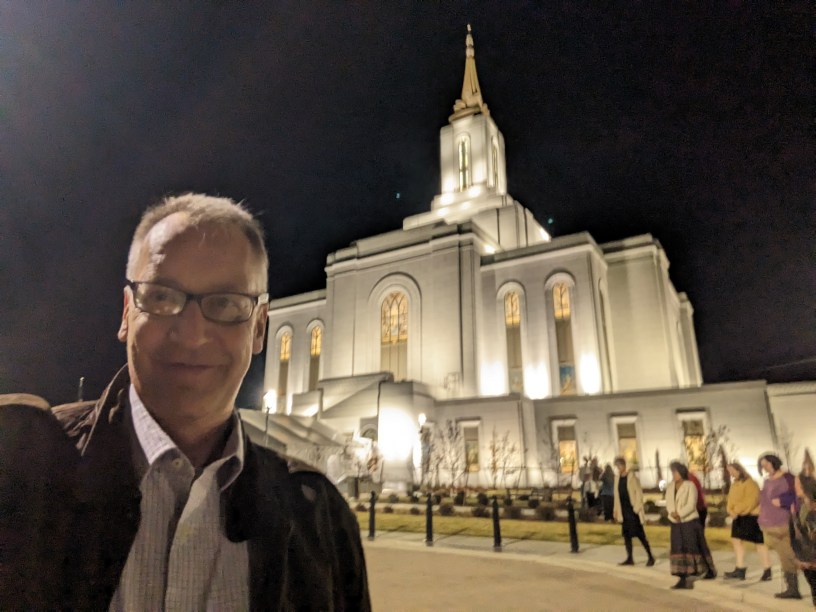
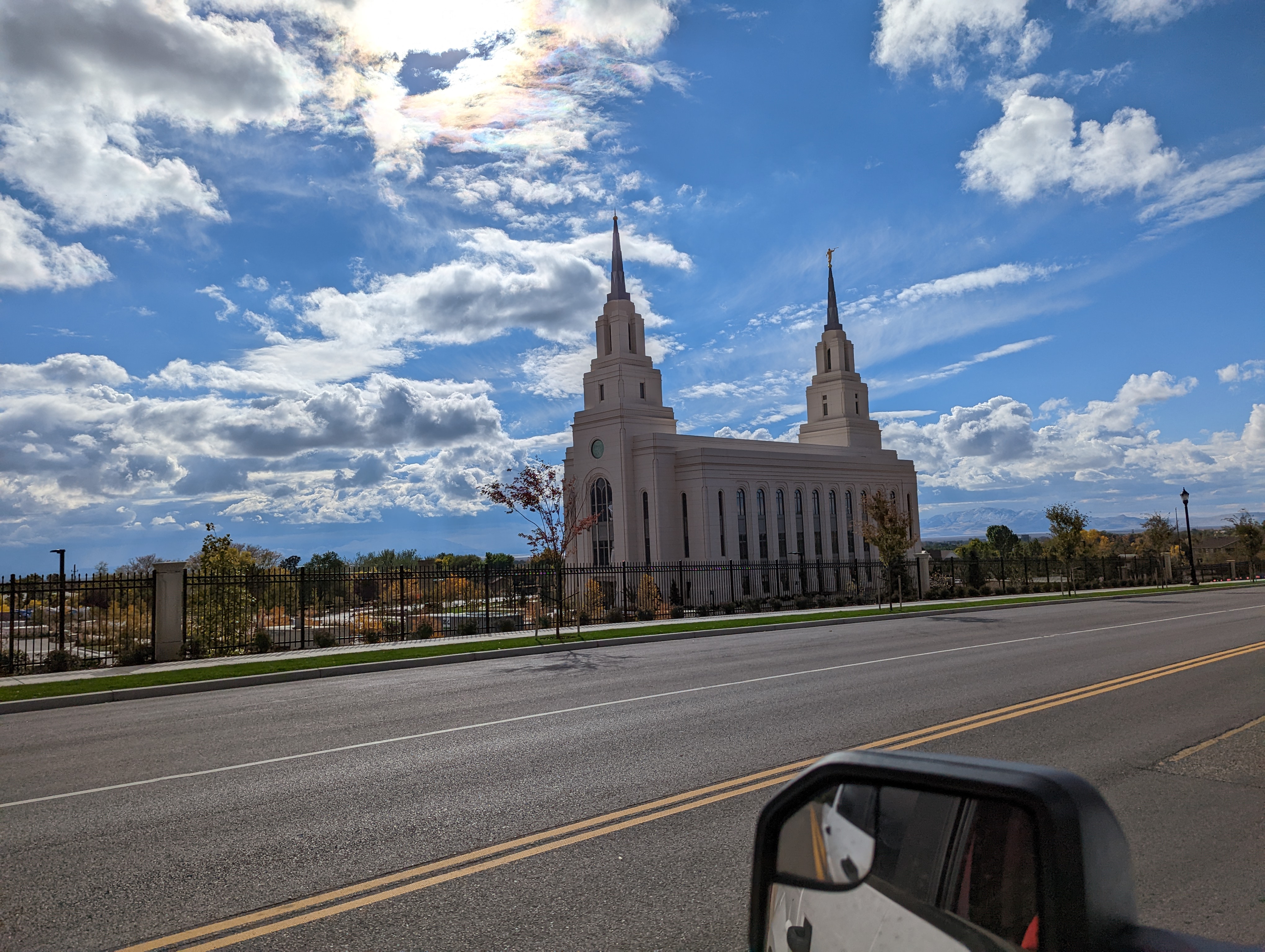
Fast forward to 2023 and with all the new temples in Utah, that seems like such a quaint idea. Back in August, I attended the Saratoga Springs, Utah dedication. I’ve probably attended a half dozen dedications, and several dozen open houses. Just this year, I’ve been able to attend open houses for the newly renovated St. George Temple, the brand new Orem Temple. When Orem opens, the Church will tear down the Provo Temple and rebuild it like they did with the Ogden Temple. Lindon should be done soon. The 2nd St George temple should be done soon. Rumor has it that Layton temple is done, but they are running out of apostles to dedicate it. Taylorsville should be done in 2024 as well. Within the last few years, I’ve attended the open houses and/or dedications of the Jordan River Temple, Provo City Center (not to be confused with the regular Provo Temple), Draper Temple, Oquirrh Mountain Temple, new Ogden Temple, and Brigham City Temple. Living in Utah County, there are probably a dozen temples within 40 minutes of me. I think we’re in the hotspot with the most temples within an hour in the church.
 Another striking thing has hit me, especially with the recent open houses in St George, Orem, and Saratoga Springs. It used to be that we were told there was great symbolism that the baptismal fonts were suppoed to be underground. In Bountiful, Mt Timp, the Old Ogden Temple, soon to be Old Provo Temple, Salt Lake Temple, you had to go to the basement to get to the baptistry. Not so more anymore. I remember being struck by the fact that St George, a pioneer temple had restored the old baptismal font, but it was on the ground floor. I know the Draper Temple and the Saratoga Springs Temple have beautiful stained glass windows to the outside on the main floor. I have attended the Monticello, Utah temple and was surprised the font was on the ground floor. Part of me accepted the fact that Pres Hinckley wanted to make many more, smaller temples, so perhaps that was a big reason for the baptismal font being on the ground floor instead of below ground. Is there a loss of symbolism in this?
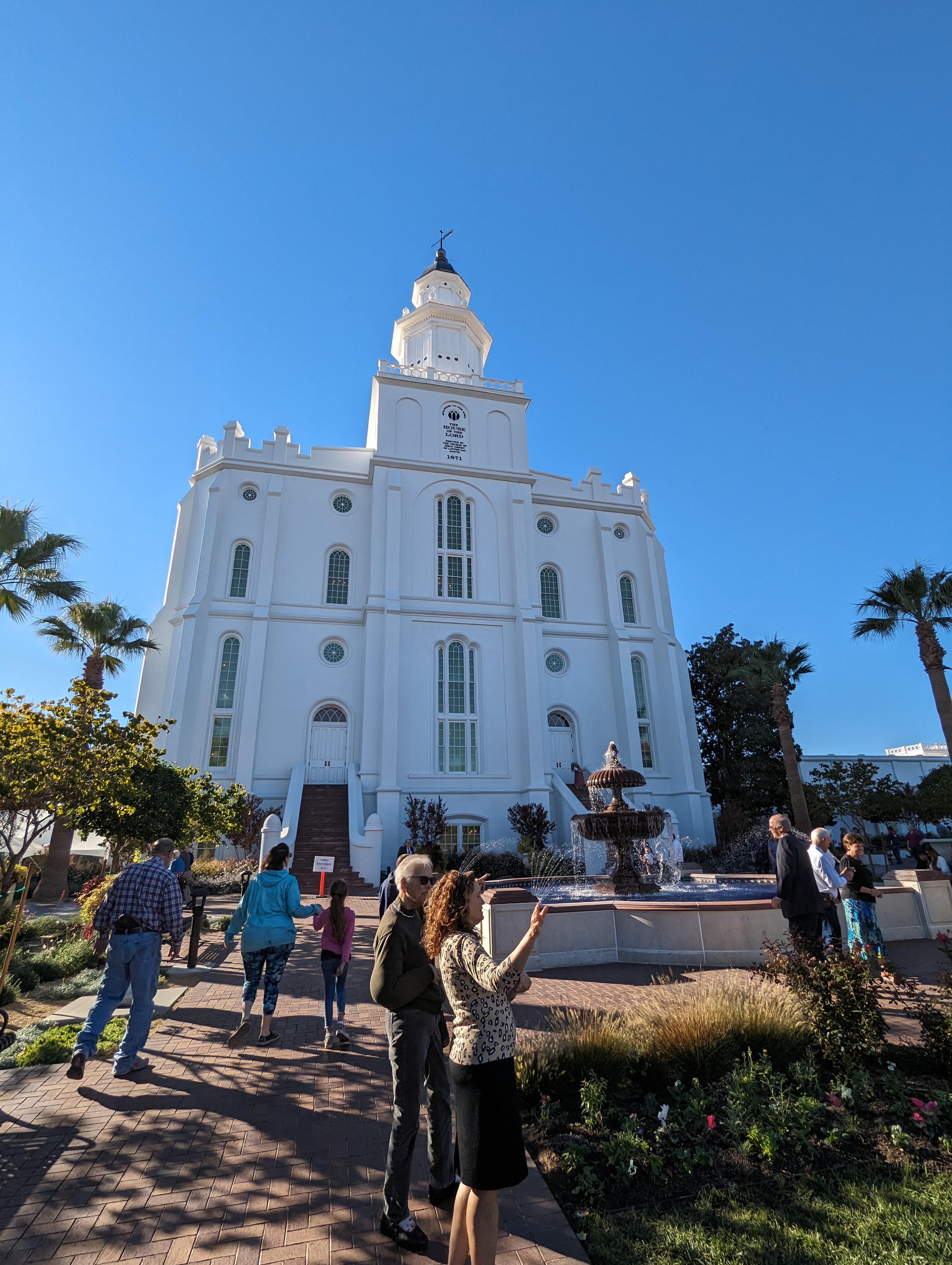 I was also struck that the St. George Temple was basically gutted inside. Things have been rearranged completely, including the baptismal font being on the ground floor. That really surprised me. While they did their best to create pioneer-era carpets and styles, the uber-smooth floors lacked the appeal of say the Kirtland Temple that still shows the pioneer-era workmanship. I must say I stood in awe to see the assembly room, and was shocked it was on the 4th floor! I guess it was always there, and according to the guides, was in such bad shape that they hadn’t used it in decades for fear that the floor wasn’t stable. It now had both air conditioning and heating which it never had before. The style was reminiscent of the Kirtland Temple, with modern upgrades of course. There were 5 pointed stars. I know the Salt Lake Temple had upside down stars, and I wondered if the right-side up stars were original or not. Nobody seemed to know. While it definitely looked updated, it was breathtaking to see the assembly room.
We were told the 3rd floor was for initiatory rooms and wasn’t available to be toured by the public. (It seems initiatory rooms are never open for public viewing in any temple. You have to know what you’re looking for to see them but they always seem to want to keep these from public view. I’m not sure the reason.) It was interesting that the endowment rooms were quite small in St. George. While the had a creation room, garden room, and wilderness room, patrons do not move from room to room as happened in the pioneer-era temples. I’m still sad about this. I also remember being struck by seeing the painting of a black family inside the St. George Temple. I’m sure Brigham Young would have never tolerated that, but that’s a change I support.
Rumor has it that when Salt Lake opens, it will have movies just like all the other temples. That’s sad to me. It is such a different feeling when one moves room to room. I feel old now knowing that none of my children will ever experience that. It’s also interesting to me to see the different sizes of the endowment rooms. If memory is right, Mt Timp holds about 95ish people, Saratoga about 75 people, Orem just 50 people, and I think St George was also in the 50s.
I know that in Greg Prince’s biography 0f David O. McKay, he said that the new (as in 1970 new) twin temples in Provo and Ogden were much more efficient than the older pioneer temples, and many more ordinances were completed. Prince remarked how surprised the brethren were at the efficiency of the new temples. While I am sure that was true, it is still sad to me that future generations will no longer experience the old-time endowments, where temple workers performed the dialogue instead of the films.
 I also wonder about the layout of the newer temples and how tradition doesn’t seem to matter anymore. Maybe because I lived there so long, it seems to me that Bountiful/Mt Timpanogos, Old Ogden/Provo, were extremely well laid out. It seems strange to go to the 2nd floor for locker rooms in Saratoga Springs (and if memory serves Orem is the same way.) I also remember the escalators in the old Ogden Temple where it appeared people were floating up the stairs. They took those out years ago, mostly because I think the escalators kept breaking down, but I always thought that was a super cool feature of the old Ogden Temple. But anyway, it seems they are moving baptistries above ground, moving sealing rooms all over the place. I remember a post discussing frustration about temple symbolism, but it seems some things we took for granted no longer apply. It definitely makes it harder to understand what the true symbols are and are not.
I’d be curious to hear other people’s thoughts, especially for those of you who have attended out of state temples, especially older temples like Hawaii, New Zealand, Swiss, or even Los Angeles, Oakland, Alberta, and Mesa. Do the old symbols no longer apply there either? I remember a quote from Ghandi. “There is more to life than increasing its speed.” Is our zeal for efficiency sacrificing symbolism? Are so many temples making things too routine?
 Wheat & Tares
The Mesa temple was closed and remodeled a few years ago. At the time I was a HPGL and the outgoing temple president (being released about 6 months before the closure) was in my ward. He told us one day in HP that he wasn’t supposed to give details of what the remodel would do, but said “let your imagination run wild with what could be done inside there, and you’ll still be short of what’s planned”.
When it was done and there was an open house, I went through it. Talk about underwhelming. The same wonky layout, with a green/purple/gold theme that seemed like Vegas and Mardi Gras joined forces to design it.
The gutting of the pioneer artwork in the SLC temple really infuriated me. We’re having massive youth retention and growth problems, and leadership’s brilliant decision is to not only build even more temples, but make the ones we already have less special, less soul-stirring, less inspirational, less interesting?! Talk about solving all the wrong problems!
Meanwhile, they’re about to close the Manhattan Temple for three years of pointless remodels, and have told the local membership to attend Philadelphia or Hartford, Connecticut for now—utterly eliding the fact that the vast majority of church members in NYC are low-income working class minorities for whom cars are a luxury, subways are essential, and telling people to simply drive to a neighboring state is a huge ask. What’s obviously going to happen is that a large swath of NYC membership simply won’t attend the Temple for three years—which defeats the whole purpose of over-building temples to make them more accessible in the first place.
A symbol is just that. It is changeable and points to something else. Whether you say agua or water, or use some other language it’s all symbolic and it all refers to the same thing. It doesn’t have inherent meaning.
I attended the temple recently. I enjoyed it. It’s peaceful and they have removed many things I have felt uncomfortable with in the past. I still see room for improvement. Heavenly Mother should be included. The word preside should be removed from the sealing ceremony. Our commitments should be to Jesus Christ rather than to an earthly church.
Although I felt the Spirit there and I support symbolically linking all the human family through ritual symbols, I see pros and cons to the building of these temples.
I feel strongly called to devote myself to improving the lives of people who are alive right now. As Jesus said, let the dead bury the dead and follow me. To me following Christ means caring for the poor, disabled, homeless, orphaned, widowed or otherwise marginalized.
Attending the temple in addition to biweekly church duties is asking for a lot of time from members. For many it’s hard enough to attend to their ward duties without also trying to fit the temple into their schedule. For people who care for the disabled, including adult children and disabled parents, our dedication to living people in need takes up all our time, money and energy (nearly 29 percent of people spend a significant amount of their time caring for disabled family and friends). I can feel the Spirit in my garden or on a walk as easily as I can in the temple.
It’s a plus to make the temple more easily available to those who want to attend. However I fear the pressure that can come to small local areas with few members, that could be pressured and guilted into staffing and attending the temple, when they actually need to be caring for family members at home.
Lastly, I wonder if the money spent on these temples might be better spent on finding sustainable ways to house, feed, educate and provide medical care to the poor and disabled. To me this seems a more pressing need than building beautiful buildings for the purpose of symbolically linking the dead.
Like I said, a symbol is just a symbol. There are living people who need our help right now. That’s where my energy is focused. I have a relative who works in the church’s PR office who says the church is working on several projects to help the homeless and poor. I look forward to seeing more of that from the church.
I love lsw39’s perspective!
I think you’re exactly right with your point about so many temples being built that it has become routine. I’m guessing the Church has lots of data on how people who hold recommends and attend the temple more are more committed to the Church and are more likely to stay active for more of their lives. But it seems likely that as more and more temples are built, particularly in areas where there are already tons of members and lots of temples, there comes a point of diminishing returns.
I bet in Utah, this point has already come. Anyone between Nephi and Logan in Utah probably has multiple temples to choose from if they want to go. Adding extra temples isn’t going to increase commitment in already-committed people, and it appears there’s already plenty of capacity where likely nobody is being turned away who wants to go. As the Church builds more temples in more areas, I’m suspecting they’ll reach this point of diminishing returns in more and more areas. Each temple will be less effective than the previous one, until eventually, there’s literally no more commitment to wring out of members by building the next temple. (Not that that will stop the Church from building them, though.)
For what it’s worth, when I see baptistries on the “ground floor” in newer temples, they still seem to be sunken slightly relative to the rest of the ground floor – particularly the oxen are wholly below ground. I think the symbolism is still there and the same, just a bit more muted.
I had nonmember friends who attended both the open houses of the remodeled St George and the new temple a few miles away in the city of Washington, which is just a superb of St George. It was interesting to hear them talk without considering (or maybe not knowing?) that I might be a member. They talked about the expensive, extravagant furnishings and interior, and how it was interesting that the ceremonies were explained. They said they would never dare ask a member about what goes on in the temple because it would become an effort to convert them. Funny that I was not asked any questions or am I so far out that they don’t even know that I am a lapsed Mormon. I kept quiet. But they talked like I was just as uninformed as they were. They wondered just how wealthy the church is to insist on the very best materials, even if they have to wait several years to get the very best. One comment that it was flaunting wealth. I did not dare answer about just how wealthy this church is.
JB, it seems the remodeling of the NYC temple is much like building a new lane on a freeway. For 2-3 years the traffic is slow past the construction site, and you lose hours of time during that period. Then the new lane opens, and you can go fast again, but the increase in speed never offsets the lost time of construction, so you end up a net loss. I imagine it will be the same for the NYC temple. Members will not attend for 3 years, and when the remodel is done, they will not ever make up for the 3 years lost to temple attendance.
Remember Apollo 13 (the movie)? At one point the friendly PR guy explained to Marilyn Lovell why the networks were not covering a broadcast from the command module as the astronauts headed towards the moon: “One of them said we made going to the moon as exciting as taking a trip to Pittsburgh.” Nothing exciting about the temple anymore.
Another not-so-exiting thing in the Church of 2023: Doing “home MTC” as a new missionary rather than attending one of the MTCs in person. I feel bad for young missionaries. Hey, the MTC isn’t great for everybody, but most missionaries enjoy the camaraderie and the MTC experience.
Even if you want to argue that the Church “needs” these temples (and that is VERY debatable), why do we spend so much money on them? I know the Church has the money, so that’s not the issue. It just seems obscene to me that we decorate these temples with such ornate materials, even in poor countries. Is that necessary? Does the Lord expect that?
I remember as a kid being told that the reason our meeting houses aren’t as fancy as the big Catholic and Protestant churches was because that was not practical nor was that the Lord expected. He wanted us to meet every week and worship him (or the Father but that’s a separate issue), not worship the golden calf of luxurious craftsmanship. But I think that’s what we are doing now. We are worshiping the temple as much as we are worshiping in the temple.
I personally believe that the temple building spree is RMN’s vanity project and to call attention to how wonderful he believes himself to be. Before his spree temples were usually much less ostentatious. That the poor and homeless who exist just outside his office window and camp in terrible and unsafe conditions just down the road from the church headquarters are not a priority for the leaders while the church flaunts its obscene wealth with building over the top temples is just a very bad look no matter how you try to view the situation. If Jesus were to suddenly show up in SLC He would be absolutely appalled and would probably do a 21st century version of the cleansing of the temple and castigation of the leaders who have substituted building costly temples for caring for the poor, the homeless, the disabled and mentally ill and the vulnerable as He has commanded us to do.
I don’t really have any personal interest in the temple, but I do think that we’ve lost something in this quest to eliminate the original artwork and the old style live endowments in the most historic temples, and I agree that temples popping up like mushrooms is Nelson’s chosen legacy. I am often surprised by how full the nearby temple parking lot is on weekdays. Don’t people have jobs? But if they like it, good for them.
As to the symbolism, I was reminded of a session years ago in which the stake had a temple expert addressing members in a chapel session in the temple to explain the symbolism and deeper meanings in the temple, and I remember feeling completely underwhelmed by this session. This guy didn’t really have anything new or interesting to say beyond the standard “the temple is the Lord’s university” pablum. I was very disappointed at the time. The idea that the temple has deep symbolism sounds great, but it feels like institutional knowledge that someone forgot to pass down over a hundred years ago, and everyone’s just been making it up since then. Often the explanations given are demonstrably false and contradict the actual history of temples. That feels on par for a lot of correlated Mormonism, though.
i wonder if the baptistry being in the basement and that having a great symbolism is a folk wisdom. I great up with the Alberta Temple (now the Cardston Temple as there are multiple in Alberta) and it is a pioneer era temple.
The Baptismal font is not in the basement. To get there, if memory serves, as youth we would come in the back door where there was a small chapel and library to hang out in. And then we would go up about five steps to the level where the confirmation rooms and the change rooms were. The baptismal font was on level with this. There was an open space around the font and the oxen the font rested on were a bit lower than the floor level but the font itself was not. I never heard any symbolism talk about baptism being done in the basement growing up.
A couple of notes on the temples:
1) They have little to nothing in common with religious temples in antiquity, which were used as gathering places between the religious and empowered classes, burials of elites, and places of storage and exchange.
2) The church’s strategy with the building of so many temples is to create the illusion of growth. They can no longer boast high baptism numbers, so they focus on temple construction.
3) The church wants to lock in membership communities throughout the world by requiring temple service. This gives the church an excuse to give those who have been in leadership prestigious-seeming callings. It puts the membership in a position to commit more to the church, and to a very ornate building.
4) Having more temples nearby makes tithing settlement and temple recommends more effective. Before, if you could only go to the temple once in your life, what was the purpose of maintaining a temple recommend. Now with temples more accessible, wards have an excuse to hammer down maintaining the recommend. Once you have a recommend, you don’t want to lose it, especially if there is an important family function at the temple coming up. One way to lose that recommend is to not pay enough tithing. Hence tithing settlement becomes more effective.
5) I have long failed to see what purposes the temples really serve other than the reasons I have mentioned. They do not serve as gathering places for masses of people, there are no sermons made in the temple, they do not provide food or shelter for the needy, and there is little to no interaction between people who attend (other than the rote rituals). I do not miss the temple one iota. I have zero desire to return there ever again.
I think this encroaching uniformity started back in the Hinckley days when they were trying to keep up with the demand for meetinghouses, so they sort of standardized the design and construction. I remember Hinckley speaking about this in GC sometime in the 2000s. This has now been supercharged by a pockets bursting with cash and RMN trying to make it his legacy.
Temple construction started to ramp up a bit in the Hinckley days too, but I don’t feel it was at the expense of beauty and symbolism in temples. I thought the small temples of this era were a smart experiment to expand temple coverage while keeping things small enough that they could be operated and maintained by a smaller LDS population.
Overall, I agree that there has been a loss of symbolism in the temple – both in the physical elements and just how the sheer volume of temples being constructed makes them seem much more mundane. Being from Utah, we always talked about how different temples served different purposes: A visit to the Salt Lake or Manti temple was a trip back in time – the pace was slower, with time to admire the art and pioneer craftsmanship as you moved from room to room. Whereas the Jordan River temple was built purely for efficiency – it was amazing at how quickly you could get in and out of there, even on a busy day.
I suspect that RMN is a person who finds beauty in the sterile uniformity and efficiency of an operating room, which is fine – people are different. But this aesthetic seems to reflect the current approach to temples in some ways.
I do wish they’d keep the live endowment in the temples that had it historically, especially since they’re likely building a second “modern” temple just up the street anyway. However, if they’re bent on moving strictly to videos, they should at least have a variety of versions that reflect the international diversity of church membership. How great would it be to see interpretations by members in Africa, South America, Polynesia, etc?
That said, I do like some of the temples that have been built recently. I think the design of the Taylorsville temple is refreshing and different. Same goes for the Paris temple (except for that stained glass window that looks like Billy Ray Cyrus instead of Jesus). The upcoming Stockholm temple looks interesting as well.
I think the Church is, unfortunately, going down the route of the McNamara fallacy (named after the Secretary of Defense who oversaw Vietnam). Under this fallacy, decisions are solely based on numbers, and anything that can’t be quantified must be discarded. With the Church exponentially increasing temple construction, abandoning progressive-style endowments, and removing murals, many more sessions become available for patrons. However, what is often forgotten is that you can’t quantify artistic expression and symbolism. Art instills meaning, comforts the weary, and inspires us to be better. I think the Church will be in for a rude awakening when they find out that replacing 130-year-old murals in the Salt Lake Temple (which were hand-painted by art missionaries sent to Paris) with blank walls won’t have the effect that they intended when attendance declines even more.
Temples used to be a pinnacle for the arts. It was a chance for us to flex our creative muscles in design. From the Castellated Gothic of Manti to the Prairie-style of Cardston, the sky was the limit regarding how we expressed our faith through architecture. The four endowment rooms varied in murals, color, trimmings, ceiling heights, light fixtures, and other details so that patrons could be fully immersed in the ceremony as they physically “progressed” to different worlds. Unfortunately, that was discontinued from the 1950s to the 1990s when stationary rooms were prioritized, but at least there were a few standouts (DC comes to mind). Then, in a surprise move, President Hinckley brought back murals and progression in temples after a 40-year hiatus (which Monson expanded on). Granted, it was only two rooms instead of four, but it was still innovative. That ended under President Nelson. Every temple that he’s announced has no progression or murals at all.
Sadly, I fear that this move has cemented stationary rooms as the norm in temples, and murals/progression are now a relic of a bygone era…
In the past I have attended live endowment sessions in Salt Lake and Manti, and I’ve been once through filmed sessions in the St. George and Logan temples. The latter cases felt like pioneer-era structures on the outside that had been remodeled to feel mostly like modern temples on the inside. I think we do lose something when opting for efficiency over leaving our monuments to the past closer to their original state.The apparent “efficiency” of Provo and Ogden can be seen in the data analysis I did last year when I attempted to estimate how much the temple construction program costs: https://qhspencer.github.io/lds-data-analysis/temples/. The last two plots show the progression of the transition to filmed endowment, which mostly occurred roughly between the mid 1950s and mid 1980s, and its correlation to a significant growth in the ratio of church membership to total square feet of temple space. That efficiency gain appears to have allowed the church to build about 2.5 times less temple space per member than they had done prior to the 1950s. It is amazing to me that leadership were surprised by this, but it’s clear that they embraced it. What is interesting now is that we appear to be headed for a new era of inefficiency, where the membership per square foot will look more like it did back before the construction of “efficient” temples. So either people will need to use them a lot more, or there will be a lot of sparse temple schedules, particularly in some of the more remote locations. I expect a lot of haranguing from the pulpit on this subject.
In the newly dedicated Okinawa temple the baptismal font rests on the back of 9 oxen. The reason I heard for this was that it’s due to the limited space of the building. I still wonder which three tribes didn’t make the cut.
Mormon buildings have never been the pinnacle of the arts. Are these buildings where architects go to commit suicide? Little aesthetic value. Buildings on the assembly line.
Vajra2,
What about the Coalville Tabernacle, Cedar City’s Rock Church, Bear Lake Stake Tabernacle, Douglas Street Chapel, Wilshire Ward Chapel, or temples before the 1950s? It’s true that LDS architecture has taken a nosedive in terms of quality and uniqueness for quite some time (with some sporadic exceptions), but to say that “Mormon buildings have never been the pinnacle of the arts” is a bit melodramatic………..and ignores the extensive history of times when we were artistically bold and innovative.
“Lastly, I wonder if the money spent on these temples might be better spent on finding sustainable ways to house, feed, educate and provide medical care to the poor and disabled. To me this seems a more pressing need than building beautiful buildings for the purpose of symbolically linking the dead.” (Iws329)
It seems that our chapels could probably be adapted for these endowments without the extravagant cost. But then, who would want to pay so much for admittance if there weren’t this special country club?
The question about loss of symbolism in LDS temples due to architectural or liturgical modifications, assumes that the original symbolism was correct. It was not. Currently, we are in a generational process of slowly burning the Masonic dross from the presentation of the Endowment, in order to restore more closely what Joseph Smith had intended with his conception for the temple. Brigham and others did the best they could, but evidently mucked it up to a point that requires us now to fix it. So get used to it: the temple is going to transform to such a degree, that it will be unrecognizable to the older generations.
Travis, I’m curious why you think Joseph did not intend to include Masonic elements in the endowment ceremony. Yes, I understand that Brigham was tasked with taking the elements of the endowment that Joseph created (or had revealed to him if you prefer) and turning them into a more cohesive ceremony, but I’m not aware of any scholarship suggesting that Brigham was the originator of the Masonic elements of the ceremony.
@Not a Cougar,
The presentation of the endowment liturgy was largely set up by Brigham Young and Wilford Woodruff (Development of Temple Doctrine, Jennifer Mackley, 2014). Joseph Smith and his entire family were anti-Masonic (Method Infinite, Bruno, Liturski, Swick, 2022). Joseph used Masonry as strategy to unify saints by the language of Hermeticism (Kabbalah, Rosicrucianism, and Freemasonry share symbols and types). Joseph was far more a Kabbalist or Rosicrucian, than he was a Freemason (strongest evidence is Joseph’s being tutored by Kabbalist Alexander Neibaur). Lastly, Joseph was keen on calendar—he performed ordinances and received revelations consistently during holy days of Judaism. One of the strongest evidences of Joseph’s anti-Masonic stance is that he became a Mason on the “Ides of March,” which, historically and according to occult themes, represents usurpation. In other words, Joseph’s initiation was a socio-political signal of overthrow, revolution, usurpation of Masonry. This is one reason Freemasons outside the Church (Carthage Greys) formed mobs to kill him.
Brigham Young did not know what to do with the endowment ceremony, he purposely spent decades building the Rocky Mountain temple to stall, and then handed the responsibility of the presentation of the endowment to Wilford Woodruff. The true endowment ceremony is an instruction of Creation, Embodiment, Death, and Resurrection—which is present in the subtext of the liturgy, but obfuscated by silly Masonic stuff. It’s more about recognizing our place in the Royal Family of Heaven, than it is about moving through a labyrinth with signs and tokens. In addition, the true covenants are Sabbath, Tithe, Fast, Chastity, and Consecration (this is easily argued when we understand the economic function of the ancient Israelite temple. Brigham employed “obedience,” “sacrifice,” and the “law of the gospel” (whatever that means), as pledges of loyalty—which was most important to Brigham at the time, having lost Joseph and Hyrum because of the disloyalty of some disaffected Latter-Day Saints at the time. Expect the presentation of the endowment to completely transform.
“Is our zeal for efficiency sacrificing symbolism?”
I guess I question the value of holding onto the frontier frat house initiation, good ‘ol boys club loyalty test symbolism that is still present in the temple today (particularly the endowment), despite recent efforts to soften the edges of this legacy and shoehorn Christ into it even more. I know many people find great value in said symbolism and that is wonderful for them, but to me it just creates a bunch of unnecessary fluff and acts as a befuddling barrier between me and the divine.
When it comes to the actual architecture and art of especially pioneer temples, I am 1000 percent in favor of carefully preservation. If the pioneer temples no longer serve the purposes of whatever the Church’s new vision for temple attendance is, I would prefer they decommission them, restore them and maybe open them to the public. That being said, I think they did a really good job on the Idaho Falls temple remodel. They were able to do all the necessary structural updates while preserving the gorgeous (and quirky) art deco aesthetics of the temple.
There is a lot of need, right here on earth. Much is visible, and there’s an iceberg more we cannot see. Time spent working in, and attending the temple feels like the priest who crossed the road, ignoring the Good Samaritan.
Think of how many people could be helped by combining:
Angela C’s observation:
“I am often surprised by how full the nearby temple parking lot is on weekdays. Don’t people have jobs? But if they like it, good for them.”
With
lws329’s thought provoking:
“Lastly, I wonder if the money spent on these temples might be better spent on finding sustainable ways to house, feed, educate and provide medical care to the poor and disabled. To me this seems a more pressing need than building beautiful buildings for the purpose of symbolically linking the dead.”
I don’t see Christ in our temple practices.
I live in Utah County, Utah. We used to be about 85 percent Mormon and Republican. With the hispanic influx, those numbers have been diluted some. But still we have a county full of Mormon chapels. There are 3 within easy walking of my home.
There used to be only one temple in the county, a modern affair that Pres. Nelson doesn’t like and is remodeling. Then they converted the fire ravaged Provo tabernacle into a temple. Now they are blanketing the county with temples. The closest is now within 10 minute driving time of my house.
But they recently announced a planned new temple in Lindon which I believe will be within walking distance. There are now at least 6 temples in the county with at least 2 more planned. For me, this seems like serious overkill.
As others have mentioned, why not invest the money in more Christlike activities like aiding those that need assistance, and putting some of those underused chapels into homeless shelters? The county has a plan for some religious structures to be used as homeless shelters on a nightly rotation. The LDS leadership declined to participate. But they did agree to throw some supplies and money at the problem. So the church with all the structures in the county isn’t participating. Not a good look.
I don’t really have fond memories of the Bountiful Temple open house, but I remember it was a big deal and that my wife and I drove up to Bountiful with my parents and some of my siblings to go to it. I remember waiting in line for a long time and it being cold and my dad having a bit of a hard time. And then a few days later my dad died of a heart attack and I couldn’t help but wonder if the long waiting in line hadn’t played a part.
Living in Salt Lake for many years as a young married couple, we did a lot of live endowment sessions in the Salt Lake temple. Quirky. Never knew what kind of performance you would get. I did spend a lot of time looking at the artwork. I thought some of it was not terribly great, but it definitely was interesting, especially the world room. I remember going to the Nauvoo Temple and thinking that I liked the artwork there more.
I think I last attended a temple session five years ago, before the movies got turned into slide shows. Don’t know if that was a temporary thing or not. I am a bit surprised about Rick B’s worry about the loss of symbolism in newer temple builds. For many years I spent a lot of time thinking about temple symbolism until I finally realized that any temple symbolism that had been taught was just somebody’s creative fancy, whether it was Joseph Smith liberal borrowing of Masonic ritual and symbols or some temple president’s riff on something that they had no real knowledge about or a local Divinity school professor trying desperately to invest certain actions in the ritual with meaning. Honestly, you can assign ritualistic meaning to any action you want. If that puts you into sacred space and time, that is great for you. But there are no deep and great mysteries hidden in the temple, no profound endowment of knowledge or power in its architecture, decorations, or rituals unless you bring them with you and invest what is there with meaning.
So it really doesn’t matter one whit if the baptistry is in the basement or the attic or if there are 12, 8, or 0 oxen. You can make up an interesting story for any of them and it will be just as true (or just as false) as anything that went before. What matters is if you chose to invest a space with meaning. I have to admit, nowadays it’s far easier for me to invest a place like Westminster Abbey or the Lincoln Monument or Double Arch or Virgin Falls with sacredness than a modern Mormon Temple, but I am partial to stain glass and stone and water as gateways to the divine.
I’ll start by saying that am 17 years old and not a member of the Church (nor do I ever intend to be), so it’s probably not in my place to be commenting. But I feel I have a few things to say:
I’m an architect and soon to be a published author. My novel, entitled The Life of Arti Usher has been in the works for several years. It features a lot of architectural symbolism, mostly inspired by Masonic and LDS traditions. I consider myself an “aspiring Freemason” – not yet old enough to Join the Brotherhood, but still deeply connected to its message and philosophy. I have many LDS friends, as there is a meetinghouse in my community, and I know a surprising amount about the faith, despite being relatively distanced from it.
I find myself fascinated with the Pioneer Temples, especially those in Logan, Manti, and SLC. I love the progressive room style and the clever architectural devices. I have always been deeply partial to symbolism of every kind, and I find that even when it’s not directly linked to my own beliefs, I see beauty in it. I think symbols are a wonderful way to learn about the Supreme Being – whatever that being may be. (I personally believe in a Masonic conception of God, the Great Architect.)
The Brazen Sea is probably one of my favorite architectural symbols. It makes more than a cameo in my novel. I love the oddity of the design and its inherent beauty. The geometrical/symbolic meaning of the Sea is probably my favorite thing about it, whether you see it as a baptismal font or simply an architectural feature.
The remodeling of the Logan, Manti, and Salt Lake Temples has given me a lot of pain – strangely, as I’ve never even seen them. I equate it to cultural violence. To paraphrase John Ruskin, “Old buildings are not ours. They belong to the people who struggled and sacrificed to build them, and to the many generations who will continue to enjoy them.” I am deeply saddened that an institution – one with a rich cultural and artistic heritage, no less – would stoop to the level of destroying that heritage. The Logan Temple was imperfect and yes, to a degree even inefficient, but it had charm and beauty that no current structure of the church can hold a candle to. The same thing goes for Manti, St. George, and Salt Lake. When I think of the atrocities the Church has committed against itself, I feel like crying.
So, that’s my long banter. I want all the LDS people here to know that I highly respect you – you’re some of the kindest, most generous people I’ve ever met. Although I must assert myself and tell you that I have no desire to join, (at least in this lifetime!) I will do anything and everything I can to defend your faith.
Thank you Marvin
Could you picture a reanimated Abraham Lincoln returning to DC and wanting to catch a show at Ford’s Theatre, followed by oysters in the 1/2 shell at the Memorial? I can’t. To me I see him wanting to bury his knee in the ground at Gettysburg Cemetery in heartfelt prayer or telling bandy jokes to old timers as they play chess over in Lafayette Park. Which brings me to The Savior. I just can’t picture him interested a wee bit in the gaudy ostentatious Temples dotting every subdivision in Utah, nor him getting a big thrill in watching me retie my Temple beanie a third time. Why has all this pageantry gotten so out of hand? Where is the simplicity and grace of the straight forward last supper, which was an ordinance that he instructed us in. And where were these Oxen when he had John the B reverently immerse Him in the River Jordon? There just seems that the Savior would want all that previously earned tithing money to be used in feeding the starving or healing the infirm. But, then, who am I to judge, I could be a better steward of my own blessings. Carry on, dear Saints.
Wow, 17 and a architect and a author, poet and philosopher. Not to mention having Temple Endowments already. Can I also speculate that you are married to Morgan Fairchild too?
“Is our zeal for efficiency sacrificing symbolism? Are so many temples making things too routine?”
Yes, we do run the risk of temple work perhaps becoming overly mechanical by increasing the number of temples. Even so, I’d say that the church’s temple building program is more about allowing the saints greater access to the sanctifying influence of the temple than it is about greater efficiency in our work for the dead. And, IMO, that’s worth everything that the church is putting into the program.
Nephi’s prophecy about the church in the Latter-days is beginning to be fulfilled–as per 1 Nephi 14. And the increase of the number of temples plays an important part of that fulfillment IMO:
12 And it came to pass that I beheld the church of the Lamb of God, and its numbers were few, because of the wickedness and abominations of the whore who sat upon many waters; nevertheless, I beheld that the church of the Lamb, who were the saints of God, were also upon all the face of the earth; and their dominions upon the face of the earth were small, because of the wickedness of the great whore whom I saw.
13 And it came to pass that I beheld that the great mother of abominations did gather together multitudes upon the face of all the earth, among all the nations of the Gentiles, to fight against the Lamb of God.
14 And it came to pass that I, Nephi, beheld the power of the Lamb of God, that it descended upon the saints of the church of the Lamb, and upon the covenant people of the Lord, who were scattered upon all the face of the earth; and they were armed with righteousness and with the power of God in great glory.