
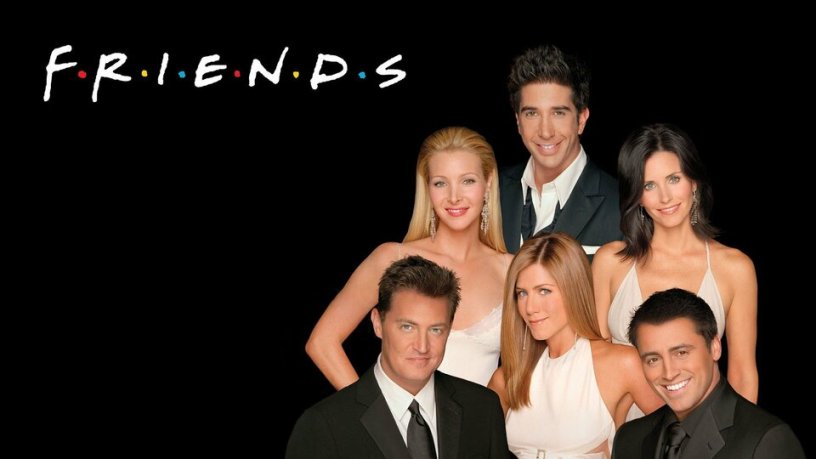
I’m sure you have all read the news that Matthew Perry, one of the six stars of the TV comedy Friends, died on Saturday at age 54 (here is the WaPo obituary). Despite fame and fortune, he struggled with addiction most of his adult life and attended rehab dozens of times. All the early evidence suggests his death at his home near Los Angeles was accidental. According to everything I’ve read, he was very talented, a good friend, and literally everyone seemed to like him. Here’s something I learned reading the linked obituary: as a teenager, he was a top-ranked junior tennis player in Canada. He died too early, which is always something of a tragedy.
Nietzsche famously said, “Many die too late and some die too early. Still the doctrine sounds strange: Die at the right time.” Just because there is a too early and a too late doesn’t mean there is necessarily a particular right time to die. There might be years, even decades, between too early and too late. When it comes to losing an older good friend or aging close relative, no matter when they pass might seem too early to you. From an individual perspective, I think maybe the right time to die is any time after both parents have passed away but before any of the children have. Theoden: “No parent should have to bury their child.”
But let’s move from the personal pain of such a loss (and my sympathies to any reader for whom this is a difficult topic) to the cases which have a public aspect. Again, Nietzsche thought that Jesus died too early. That if he had lived many more years, the character of his teachings would have changed, perhaps mellowed out a bit. You can probably think of some modern figures to nominate for dying too early. John F. Kennedy, Jr. Princess Diana. Kobe Bryant. John Lennon. Elvis. But let’s talk about some Mormon examples.
Joseph Smith died too early. The orthodox, correlated view is that Joseph Smith’s work was done and that he had passed all required priesthood and leadership “keys” to other LDS leaders before he died. Well of course that’s what they are going to say. But it’s pretty clear that if Joseph had lived to a ripe old age, he would certainly have continued to teach new doctrines and change or drop some existing teachings, he would have formed new quorums and councils, and he would have added new Mormon practices. In particular, he would at some point have had to acknowledge the secret LDS practice of plural marriage by himself and some of his close associates, and would probably have publicly renounced the doctrine and practice. Think how different subsequent LDS history would have been! (I suspect that quite a few active LDS do not know that Joseph never publicly acknowledged the practice of plural marriage before his death at age 38 — because the oh-so-delicate treatment of polygamy in the curriculum and correlated LDS sources rarely notes that it was a secret practice during Joseph’s lifetime, unknown even to most of the thousands of Mormons who lived in or near Nauvoo and entirely unknown to Mormons outside Nauvoo and to the wider public.)
There is a counter-argument to be made. It runs like this: Joseph’s personality and leadership style was never directed towards stability and calm. He was always stirring the pot and provoking conflict with the locals. He never let the Church as a body settle down and be about the business of building a life and quietly growing the Church. There was always another Zion to move to, leaving problems behind. If Joseph had lived another ten years, the Church would have blown up, either splintering into several smaller offshoots destined for eventual irrelevance or else just completely withering away. On this view, Joseph’s death and Brigham Young’s emergence as the new Mormon leader saved the Church. For the Church, Brigham was the right man at the right time.
President Benson died too late. All LDS presidents now die old because they are already old when they take office, but you can argue that Ezra Taft Benson died not just old but too late. He died in May 1994. After speaking at his 90th birthday celebration in 1989, he made very few public appearances. It is likely that the effects of advancing dementia meant that in those last five years he was not making many or even any of the decisions that an LDS president usually makes or leading the Church in any meaningful sense. But power abhors a vacuum. When the LDS president is incapacitated, power shifts to the counselors in the First Presidency (who act in his name), to the President of the Twelve (particularly if he rather than one of the counselors is going to succeed the ailing President), and also to individual apostles who might feel the freedom to act on their own without the usual oversight and direction of an active and fully functioning LDS president. You only get rogue apostles when the President is weak or incapacitated.
Which brings us to September 1993, during the last year of President Benson’s illness, and the September Six (discussed recently on the blog in a series of posts). The Church has never issued an official account of that episode, although there are certainly individuals within the leadership that knew the details and documents that provide a fuller story. The Church does its best to pretend it never happened, which is always easier than acknowledging a messy institutional event and then having to explain it. But piecing together facts that are available, it seems clear that one or two apostles acted on their own to contact local leaders of several LDS academics and authors to suggest that disciplinary action ought to be taken. And when an apostle says jump, a local leader doesn’t ask for an official memo — he asks, “How high?” Well, not all. There were apparently a few who slow walked the “suggested” action and never did take the suggested action.
But the damage was done, and here we are thirty years later still talking about the September Six. There is a good chance those events would not have happened had there been a fully capable LDS President exercising the usual powers of leadership and supervision over the other apostles — his counselors and the apostles in the quorum. A similar argument could be made about President McKay dying too late. In his later years, he was not incapacitated to the extent of some aging LDS presidents, but he did retreat from active leadership to an extent. As a result, the young and ambitious Ezra Taft Benson had more latitude to spread his wacky political ideas and preach them in General Conference. Other apostles objected privately, but President McKay never really reined him in. And, as with the September Six episode, the Church is still suffering the ill effects of Benson’s antics. That so many rank and file Mormons and some senior leaders are currently enamored with former President Trump — and with other extremist conservative political figures — is the unfortunate consequence of Benson’s unchecked words and actions, and ultimately the consequence of President McKay’s decline in his final years.
A clear conclusion is that the current LDS leadership structure and practice is broken and needs to be adjusted. It is simply a very bad institutional scenario to have the official leader of the Church unable to make the usual decisions and unable to exercise the powers of leadership. That the next LDS president is always the longest serving apostle, and therefore almost always the oldest apostle, guarantees that the kind of institutional mistakes recounted in previous paragraphs will happen regularly. I could add other examples. I’ve discussed this problem in a previous post, so I won’t rehash it in detail again. How about all apostles go emeritus at age 80? How about we pull a name out of a hat for the next President? Or maybe call the youngest apostle to be the next President instead of the oldest? That would shake things up.
In conclusion … oh, I don’t know. You can talk about the Mormon stuff. You can talk about the pain of losing too early a beloved public figure you admired. You can share your favorite episode of Friends. Live long and prosper.
 Wheat & Tares
One of the things I miss about being a believer is that I had an explanation for post-earth life that I no longer have. When someone in my life died, I had the hope that I might see them again in the next life. I no longer have that hope although I’d love to be pleasantly surprised.
Having said that, while it’s true that I no longer have a belief system that can offer comfort to my family that we will be together in the next life, I also don’t have a belief system that tells us why we won’t. My wife were still active TBMs when our adult children were leaving religion one by one. In fact, President Nelson’s “sad heaven” talk really hit us back in 2019 because we were still in the boat but the kids were out.
The other good news about all of this is that our family really tries to live in the present. We really try harder than ever before to make the most of life now rather than store away some illusive eternal blessings.
RIP to Lavina Fielding Anderson who died two days ago.
Joseph Smith dying too early…I honestly don’t know about this one. He was wading into hot water marrying 14-year-olds; I question how far he would have gone if he’d lived longer. You do make a good point about JS being too scattered to sit still and grow the church.
Regarding Pres. Benson, I think you highlighted a major problem with the LDS church’s gerontocratic approach. You’ll get an ailing president who is still technically in charge, but objectively too unhealthy and unfit to lead. When this happens, the powerful hardliners can effectively take the reins of leadership while hiding behind the ailing president. It gives them license to push boundaries and make changes that may otherwise be put in check.
Since there’s no mechanism for retirement, it allows other apostles with an agenda to hide behind an ailing, aging prophet. We saw this with the Sept. Six, as you mentioned; we saw this again with Pres. Monson and the PoX. We can all probably guess which apostles were driving the PoX – they were able to safely test their bad idea while hiding behind Pres. Monson’s obvious impairment. There was massive blowback on the church from it, and then Pres. Nelson could step in and suddenly be the hero for walking the policy back…plus he gets an easy out by saying that Monson’s failing health was really to blame for the “mistake.”
On a more general note, I think it’s very difficult to tell when it’s too early/late for a person to die. I agree with Peter Jackson via King Theoden that no parent should have to bury their child – I wish this was always the case.
My favorite episode of “Friends” is “The One Where Ross Got High”. It’s a Thanksgiving episode, perfect for this time of year. Rachel makes a disgusting mistake while making the trifle dessert, Ross and Joey want to hang out with Janelle and her dancer friends, Ross and Monica’s parents don’t know that Chandler and Monica are living together, they don’t like Chandler because they think Chandler got Ross high back in high school, and all kinds of secrets emerge by the end of the episode. Hilarious. Yes, Matthew Perry died too early. As I get older, when younger people than me die, it’s startling.
I didn’t know Matthew Perry IRL, but his is one of celebrity deaths that really saddened me. I felt the same way when Princess Diana died.
As far as church leadership goes, the current system isn’t working. That said, it’s hard to see the senior leadership changing it because they’ve been waiting decades for their turn to run the corporation. Why would they want to enact mandatory “retirement” and forfeit their opportunity? I can see the younger members supporting this, but the older? Not so much. Perhaps a compromise – mandatory competency testing. If you fail, you become emeritus and the baton is passed immediately. Sadly, these behind the scenes manipulations that are mentioned don’t even surprise me at this point.
A testament to how wealth and fame don’t inherently bring more happiness and stability or suggest that someone’s life is in order. Perry was a great actor who landed some great roles. It really is too bad to hear this. I am also appalled at all of the conspiracy theories circulating that Perry died because of the COVID vaccine.
Oh familywomen, I could write a whole post on what the “competency test” might look like!
1. When the Prophet Speaks, the thinking has _______
a. Just began
b. Been done
c. Gone out the window
d. Not even started
2. Tithing is
a. 10% of income
b. Our bread and butter
c. The gift that keeps on giving
d. Something others pay
3. The combination to the FP vault is
a. 66-66-66
b. 07-24-47
c. 06-27-44
d. date of Priesthood restoration (super secret)
@familywomen: What’s not to like? Custard, good. Jam, good. Beef, GOOD!
Personally, I have a hard time finding an emotional response to celebrity deaths. As much as I like Chandler Bing, Matthew Perry is a stranger to me, and I don’t understand feeling any more worked up over his death than other 150,000 people who die each day somewhere in the world. With many celebrity deaths, it seems like my social media is suddenly full of super fans who claim that their life will never be the same now that X has died . . . and then 3 weeks later they make the same statement about the next celebrity. But maybe my heart is just two sizes too small.
As for Mormons, I’ll agree that JS died too early. I recognize that he was always looking to the next thing, but I can’t help but wonder if he had made it into his 40s and 50s that he wouldn’t have calmed down a bit and smoothed out some rough edges in Mormonism. But because he was The Prophet, we had too many instances where BY (and others) didn’t feel like they could change what he set in place. (While he never seemed to have many issues with tearing down his old ideas himself.)
“the next LDS president is always the longest serving apostle, and therefore almost always the oldest apostle,” Actually, usually a newly called president is not the oldest apostle. This is the case for Young, Taylor, JF Smith, Grant, GA Smith, McKay, Lee, Kimball, Benson, Hunter, Hinckley, and Monson. The only times this has been true is with Woodruff, Snow, J Fielding Smith, and Nelson.
Young, Grant, McKay, Kimball, Benson, and Hinckley became the oldest apostle while serving as President, which means that Joseph Smith, Taylor, J F Smith, GA Smith, J Fielding Smith, Lee, Hunter and Monson were never at any point the oldest apostle. (8 out of 17, so about half.)
But the point that they’re all old these days still holds, and the prospect of ever having a president of the church less than 80 is low, and the chance of a president under 75 is almost zero.
The OP mentioned correctly that David O. McKay stepped back from active leadership in some respects, but it wasn’t only due to age, I proffer. He also knew who his successor would likely be (and was), Joseph Fielding Smith, and who Smith’s successor would likely be (and was), Harold B. Lee. To the extent that Pres. McKay may have been progressive, I think that most would agree that Press. Smith and Lee were regressive. They could undo anything that he did, and that may have been why he retreated. The next likely progressive president might be Dieter F. Uchtdorf. He will be old and perhaps weakening when he ascends to the office, but he will also know who his likely heir will be, who is eleven years his junior. That may give DFU pause: he may get relatively few appointments to the Q12, and most of the current members of that group are probably more regressive than progressive.
Regressive/progressive really isn’t scientific, and I am not saying that progressive equals changing policies on issues such as same-sex marriage or women holding the priesthood. I would be happy to see more emphasis (a) on living a good life and making right choices over strict or exact obedience, (b) on charity (as Paul used the term) over our rampant legalism, pharisaism, and dogmatism, and (c) on leaders leading by compassion, persuasion, and gentleness, with invitation, over leading by guilt. Example: a bishop or counselor telling someone that the Lord Himself is calling you the XYZ calling–that is coercive and it is leading by guilt, because to say no is to reject God Himself. How about an invitation to serve in XYZ calling, and if the person is reticent, then let the leader avoid any pressure or guilt, and instead try to persuade by kindness and meekness, and if the answer is still no, then the person walks out of the office with zero guilt or shame. We should find our burdens eased and our yoke’s lightened as we come to Christ, but in many respects members and leaders place heavy burdens on the members shoulders, grievous burdens to be borne. I think that this ought not to be so, but sometimes it appears that it is. What do we need to do to do the work of God? Believe in His Son that He has sent.
I think if JS lived longer, the Church would have splintered. He wasn’t stable and calm. If Joseph Smith lived today, claiming to have revelations and be a prophet would get you a mental health evaluation. Just before he died, he got into the really far-out doctrine in the King Follett sermon about becoming gods ourselves. I think if he’d lived longer, his doctrine would have gotten more and more unhinged and people would have … I dunno, either rejected the radical doctrines he was teaching, or completely embraced them. I don’t think he was mentally stable and I think he would have lost his grasp on reality as he aged.
Mozart and Chopin died too soon. Jane Austin too. I would love to hear or read more of their works.
This comes across as rather snarky but there is truth in it: When our Doberman Pinscher died suddenly last year my wife and kids (and me) *wept* and grieved deeply for a good week. He slept with us, snuggled with us, traveled with us, was super annoying sometimes, but he loved us unconditionally. He definitely died too soon. My father in law died at age 94 a few months later. We were all sad but his death didn’t tear our hearts out like our poor dobie. I don’t think my kids even cried when their grandpa died. The dog showed unconditional love. FIL was a bit ornery and seemed to love church more than family.
I don’t pay much attention to celebrity but I think one lesson to be learned is that love and kindness is what most people will remember and honor.
Rest In Peace Matthew Perry.
Georgis
Not sayin’ disagree with what ya wrote. Buttt, if I take your last two sentences out of context, ruminating like Betsy here. “What do we need to do to do the work of God? Believe in His Son that He has sent.” I do wonder if the Cathars would fit the criteria? Pope Innocent III does. I guess guess God knows his own. Caedite eos. Novit enim Dominus qui sunt eius
Never watched Friends, not even once. Wasn’t gruesome enough. Which is how I feel about the countless corpses of fledglings coating the cold ground. Ah, the needs of the one.
Suzanne, I too have never watched a single episode of Friends. It remains that Mr Perry died too young, but none of us know when we will exit mortality. I want to die before any of my children die.
I doubt that the papal legate who issued that dreadful order at Béziers was inspired by the Lord. I think the devil rejoiced when the order to kill everyone in the town was given. No doubt that the dead asked, usquequo non iudicas et vindicas sanguinem nostrum? (how long will you not judge and avenge our blood?)
My last two sentences that you mentioned did not reflect my own original idea, but were a paraphrase of John 6:28-29: “Then said they unto him, What shall we do, that we might work the works of God? Jesus answered and said unto them, This is the work of God, that ye believe on him whom he hath sent.” I hope that my paraphrase did not do injustice to the text!
I absolutely believe the counter-arguments concerning Joseph Smith. There is no more intriguing period of Mormonism than the Nauvoo era but, truthfully, it was a hot mess in so many ways. I really would have loved to have another 5-10 years of JS teachings following the King Follette sermon. Some say he was being influenced by the kabbalah through a Jewish convert named Alexander Neibaur, as well as several other new sources, but who knows. If you look at the D&C, very little of the teachings of the Nauvoo period made it in, so it may not have mattered.
As far as an emeritus status for the president of the Church, I’m kind of tossed-up. I’ve always thought it is curious that a church founded by 20-somethings in now led by 90-somethings. In the case of RMN, the status would have eliminated the magnificent “Peacemakers” address, but then we wouldn’t have found out that the Lord is disgusted with the poor, the overweight, and the 21st century pinball wizards, which I certainly could have done without.