
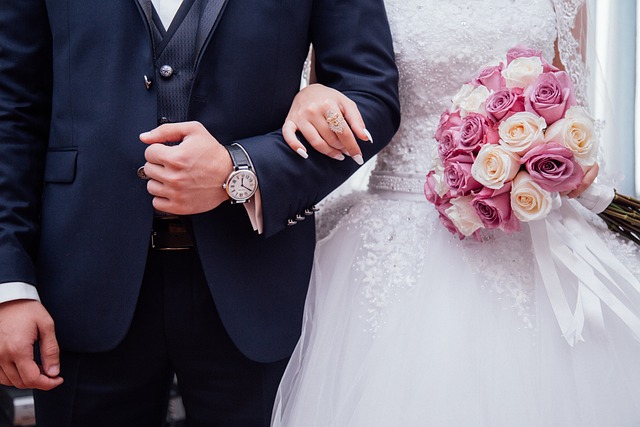
A couple of weeks ago I was in Utah for a wedding of a nephew. He is a returned missionary and they chose to have a civil marriage at an venue in American Fork. They will be getting sealed later on this year.
There was about 70 people in attendance. I did a quick scan of the crowd and estimated that over 60% of them would NOT have been allowed to attend a temple wedding/sealing. Those who couldn’t attend included the bride’s mother and brother, the groom’s brother and sister, and multiple children including four of my grandchildren, and yours truly.
It was a wonderful wedding, performed by the groom’s older brother. He told several inside family jokes that went over well. The bride was walked down the aisle by her brother to beautiful music that they selected. The bride wore a lovely dress that would not have been allowed in the temple, but was modest in every way.
44 years ago I was married/sealed in the Oakland Temple. My wife was the only member of her family, so none of her family was able to attend, nor any of my siblings (I was the oldest so none was endowed). The only family in attendance was my parents. I did not know the old man that sealed us. There was no jokes told. There was no laughter. My wife had just completed her own endowment 30 min prior.
At that time if we had chosen to get married civilly, we would have had to wait one year before we could have been sealed. That was strongly discouraged, and for a temple worthy couple, was not even a thought that crossed our minds. Only couples that screwed up (literally or figuratively) had to get married civilly.
In 2019 the First Presidency announced that they were discontinuing a policy requiring couples who marry civilly to wait one year before being married or sealed in the temple. In making the announcement, they said
Where a licensed marriage is not permitted in the temple, or when a temple marriage would cause parents or immediate family members to feel excluded, a civil marriage followed by a temple sealing is authorized.
We anticipate that this change will provide more opportunities for families to come together in love and unity during the special time of marriage and sealing of a man and woman
FP Letter, May 6 2019
In making the announcement, Church spokesperson Irene Caso, who married her husband in 2005 in her home country of Madrid, Spain said:
“We had a beautiful civil ceremony on the afternoon of December 15 at a city hall,” she recalled. “Later that day, in a more private setting, we were sealed in the Madrid Spain Temple. After going to the temple, we all celebrated with music and dance.
“Most of my immediate family and friends are not members of our faith, so it was especially meaningful for us to have them witness our civil union and help them feel included in the festivities of the day. These changes announced today will bring the same happy and memorable experience to many families throughout the Church.”
She makes it sound so fun! So the question I have for the First Presidency: Why wasn’t my wife’s family or my siblings allowed “to come together in love and unity during the special time of marriage”? Why couldn’t our extended family have a “happy and memorable experience” like the lady in Spain had? Was nobody concerned that excluding my wife’s mother from her oldest daughter’s wedding might “cause parents or immediate family members to feel excluded”? For what it is worth, none on my wife’s family ever joined the Church.
What do you think changed the Church’s mind with this? I’ve heard anecdotally that kids were getting married civilly anyway, and then with the year wait, just not getting sealed even when they could. Do you think a Church that puts so much emphasis on families was shamed into making this change, since it was obviously not doctrinal give the rules in other countries?
My personal opinion is I think the Church is preparing to get out of the temple marriage business altogether. Marriage in the future will only be done outside the temples, and only sealings will happen in the temple. This will make it easier to confront any same sex marriage laws that may come in the future. The church can claim they don’t do any marriages, only religious rites in the temples.
Questions for you:
For those of you married in the temple, who was excluded from your wedding?
Have you attended a civil ceremony of an LDS couple that were then getting sealed soon after? What was it like?
Are Temple marriages/sealings still the norm in Utah, or your area?
What are your thoughts?
 Wheat & Tares
Reading in other forums, it would appear that temple marriages are still going strong and still excluding family. I think your theory makes a lot of sense and is probably the actual motivation behind the change rather than the reason given, which is a good reason. If my understanding is correct, previous to the 2019 change, laws in certain areas of Europe didn’t recognize marriage within the temple so members had to marry civilly first.
Having been raised LDS and being the youngest of my siblings, I was not allowed to attend the marriage of my 5 siblings. It never occurred to me that this was odd. My oldest child got married and sealed in the Boise temple in 2006. My never-mo husband and I were not able to attend. Though I was angry and hurt that I was excluded from the first marriage in our family, it was at my husband, not the church. I have since transferred that anger to the proper party: the church.
Other than control and manipulation, there was no reason for the previous policy. It certainly was not doctrine. Got to get them committed (to the church and to the temple) while we can! Got to lock them in deeper! This will be a missionary moment! This will be an incentive to reactivate members! The rationale (that I can think of) had nothing to do with strengthening families, but everything to do with with keeping tithing paying members deeply enmeshed.
The policy change is decades overdue (and in reality should have never been a policy) and welcome. From my reading in other forums, I gather that the continuing temple marriages are virtue signaling that some (not all) find more important than family inclusion. IF the church truly wants to bring families together, then they should completely end temple marriages – no exceptions. As your theory posits, this will dovetail nicely with avoiding pesky problems with discrimination laws that will emerge.
I have not heard of anyone (at least in the US) doing a civil ceremony then getting sealed soon after.
Bishop Bill. This one hits home for me in a few ways.
First is for my marriage. My parents are converts and I am the oldest. So I had to travel to another town a few hours drive away to marry in the temple. None of my siblings were there, none of my cousins, my grandparents that I loved were not there, none of my friends were there, and looking back I realized it was my parents and my wife’s entire extended family (a wonderful pioneer family). I was close with my cousins as over the years we had several years where we would spend weeks with our cousins and I had quite a few. I got to know my aunts and uncles and loved them.
Looking back, my temple wedding was the time they started withdrawing from me. At the time I didn’t notice it as I was loving and figuring out marriage, finishing college, and getting a job. My cousins are still very close to each other, but not with me. I can’t help think this was one significant factor in that distance in our relationships.
And the one that hurt me even at the time was at the reception (in the gym of the church back at home) was my grandmother just sitting on the sidelines and not interacting. Normally she was a social butterfly and full of energy. I knew that this must have hurt her and I was the first of her grandkids to get married. It was not what she was imagining.
The other way this change in policy hits me is that it was the first time I think I saw how pressures external to the top leaders actually can lead to change. When I first found out that in most places in the world members can marry outside the temple then get sealed in a few days, it hurt me emotionally. I saw petitions lovingly pushing the first presidency to recognize just how much this drives wedges in families around what normally is something that brings entire families together. I realized at that point that it was possible that this policy was mainly a tool to keep control of members via the temple recommend and keep the money coming in.
And just this summer I have had one of my kids that has left the church get married at a really beautiful venue that brought more tears to my eyes than at my temple weddings of my other siblings. We were able to have almost 200 people there with parents able to share stories of the couple when they were young and how much the two of them were such a good couple. One of the parents was able to write and sing a song for them and a poem they had written. It was just SO wonderful and honestly kicked the butt on any of the temple weddings.
I did attend another civil wedding in Utah and was able to see the culture and family of who my relative was marrying into and it was a fantastic evening.
And this topic reminds me of another relative that had a child leave activity in the church and then marry civilly to a non-member. It was a wonderful and fun venue. But I noticed one of the parents of the couple crying and I thought it was tears of joy. But I found out later it was tears of sadness over their first child to marry outside the temple. What should have been the one of the happiest times was tainted by the teaching that this was a second class marriage.
Just so sad.
The greatest regret in my life was getting married in the temple, in Alberta, without my family present. This was in 1976. A civil marriage would have been strongly opposed by my husband’s family. I didn’t even know that option existed.
Putting church over family is incorrect. I’m glad the change was made.
My son and his wife married in Utah shortly after this change was made. It was a beautiful ceremony at a church venue where all family members were invited. No one felt left out and the event is remembered with joy. A couple of weeks later they were sealed in the temple. It was the best of all possibilities. I do agree that the church is distancing itself from the marriage business and that parental pressures came into play especially once people realized that the rules were different outside the US.
Thanks Bill for stimulating the conversation in this area.
I have been keeping a long list of examples from our church culture in which we see grass-roots influence and pushback eventually resulting in top-down changes. This policy change ranks high up there on my list primarily because my wife and I experienced the sadness and awkwardness when we were married and sealed in the temple in the early 80s while our parents waited outside. (A result of the realities of non-member and less active family members.) The one-year wait policy created a wedge within our immediate families that just wasn’t necessary.
The online petition that was calling for change to this policy kept the issue out in the “front and center” of our cultural thinking for a number of years prior to 2019 and it offers us a classic example of the spirit of “common consent” that I feel we need more of in our church. That is, wisdom might be better attained when we encourage both top-down and bottom-up thinking. It was very nice to see how this policy reversal (for example, notice how Mitt and Ann Romney in the 1960s were able to be married civilly in Michigan and then flown to SLC the very next day to be sealed in the temple) got us back on track to be consistent with LDS international policies that didn’t mandate the same one-year wait period like we were experiencing in the U.S. and Canada.
Many of us probably got to witness a year later (2020) during the pandemic, how this change became very pragmatic and timely for some couples wanting to get married during the period of temple closures. I have heard several members refer to this timing as a prophetic miracle, but in my mind to maintain some balance, I will also remember the online petition that first stimulated conversations well before the 2019 First Presidency letter.
So thanks again Bill for the post this weekend and your wonderful humorous jab at spelling conventions such as “antidotally” as opposed to “anecdotally” and “civility” as opposed to “civily.” Keep them coming!
This post has brought back several negative memories from my past. As a convert whose extended family has still not joined the Church since I joined in 1976, my attitudes and behaviors that I practiced and exhibited when I passed through this phase of my life is nothing short of cult like in retrospect. I was the oldest of the grandchildren on my mother’s side. And, yes my maternal grandparents didn’t see their first grandchild get married. Because of the Church’s teachings that I was indoctrinated with at the time, I never even contemplated inviting them nor any of my mom’s siblings. Same for my paternal relatives. How arrogant and smug I was back then! Now I am simply embarrass and ashamed of the whole moment. Fortunately I’m still married to my wonderful wife of 38 years but the whole moment is now but a nightmare.
But that was what the Church:General Authorities thought brought families together forever.
And then to come to the day in my Church experience when I first only the US and Canadian membership were not allowed to be married civilly and then a few days later, be sealed in the temple.
The cult like mindset of this Church practice really impacted me and was one of many that negatively affected my once strong testimony. I learned to practice a nuanced faith instead of a TBM.
I excluded my sister from my temple wedding. I didn’t even realize it until the day of my wedding when she said she would be watching all the nieces and nephews during the ceremony. Our family was so active in the church that I had no idea she didn’t have a temple recommend. I didn’t think to ask and no one who knew told me.
Before the policy changed, I attended a ring ceremony that preceded a temple wedding of a friend whose parents were non-members. Her father walked her down the aisle in her groom’s backyard. It was a very simple ceremony, and I’m glad she found a way to include her parents. At the time, I just remember thinking it was too bad her parents hadn’t joined the Church so they could be at the wedding. I was so convinced that the Church’s way was the One True Way.
I like the idea of separating out the civil and religious aspects of marriage. For years, the conservatives have been trying to paint marriage as a religious institution founded by God as a way to bring children into the world and raise them. And if you take a very narrow view of marriage, that works. However, marriage also comes packaged with a lot of civil rights that have nothing to do with religion and raising children. Extending health insurance to a spouse; visitation privileges in the hospital; inheritance rights; tax filing status. There are so many civil and financial benefits to marriage that they ought to be available as widely as possible.
I’ve mentioned before that I’m asexual and aromantic. I’m never going to marry because I’m so in love I just have to be with somebody. But I was thinking about a dear friend of mine — she was seriously and permanently injured by a drunk driver. I got to thinking about what might happen to her if her husband were to die, or to leave her. She needs good health insurance and someone to help care for her. She’ll never be independent again. I love her so much, and I thought to myself that if anything ever happened to her husband, I would offer to marry her. Then she could share my health insurance, and we could build on to my house to accommodate her wheelchair. We could raise our children together. There wouldn’t be anything sexual about our relationship (she’s straight). But why shouldn’t I be able to marry someone just because a partnership with them makes sense?
The legal protections and rights that come with civil marriage are important. I hope the trend towards marriage equality gets rid of the automatic assumption that marriage means you’re having sex and want babies. Two adults should be able to link their lives together for whatever reason seems good to them.
Limiting temple rites to the religious aspects of the ceremony sounds fine to me. I don’t believe that religious institutions will ever be forced to perform same-sex marriages anyway, but if that makes the believers feel better, then I think it’s a great way forward.
As far back as twenty years ago, I was having a very similar conversation with a woman who is now the wife of an apostle. I had and continue to have an incredibly high opinion of her. We were talking about temple weddings and all the hurt feelings and resentment among my extended family (both my mother and my husband are the only members in their large families).
She said, “Margie. There are people who are quietly working hard on changing this. For just these reasons. It will happen.”
It took the better part of fifteen years. But she was right.
The skeptical part of me thinks that it is Bishop Bill’s reasoning (“sealing isn’t marriage, so we don’t have to seal the gays”) that won the hardliners over.
I do also think that at least for some of the decision-makers, the decision was motivated by wanting families to be included and by not forcing a couple to have to begin their lives together under the pall of their family’s hurt.
My sister was excluded from my wedding. She had resigned her Church membership a few years earlier; this was well before the CES Letter, Gospel Topics Essays and the rise of podcasts, so in a sense she was ahead of her time as an ExMo. But despite her animosity toward the Church, she was very cordial on the day and waited patiently outside the temple.
My wife’s mother was also excluded; she was in the midst of a contentious divorce and could not afford to pay tithing while supporting her one remaining minor child. My wife’s father, however, was present inside the temple, despite weaseling out of his child support obligations, which I wasn’t fully aware of at the time but in hindsight find quite despicable, especially at the resulting double standard.
Like many Mormons, I grew up believing that excluding non-temple-worthy relatives from weddings was not only necessary, but also noble and righteous. It made me feel superior, which I now regret and feel somewhat ashamed about. I’ve since apologized to the excluded family members. I assured them that, in missing the sealing ceremony, they didn’t miss anything too special. Compared to all the other celebration we did that day, the temple ceremony was kind of a let-down (but that’s another topic entirely).
I was thrilled when the First Presidency made the announcement. I have since attended many weddings both traditional and civil with a later sealing. The weddings today are much more joyful than in the past. It is left up to the families to decide what best fits. It always should have been that way.
My close friend was excluded when her convert son married in the temple. She had always been very supportive of his conversion, but the church gained a bitter enemy that day.
I am still ticked off at the dude who officiated the civil ceremony for my nephew and his wife a year ago. I think the guy was his YSA bishop and they actually had a temple wedding in the morning (I had a convenient excuse of work obligations) and then a ceremony/reception in the evening. This clown made sure to remind us that the most important event of the day (temple sealing) had already happened.
I also grew up thinking that excluding people from the temple was both necessary and righteous. At the same time, I was mystified by people who were angry about being excluded, because they weren’t missing that much. However, when I assured my friend that the real fun was the reception anyway, her response was eye-opening. She was missing the very moment that her son was being married. She had been looking forward to this day for his whole life. And the church claimed to be a family church. Ha.
I realized she was right. Not only that, but if it was so special that only certain people could participate, why was I saying she hadn’t really missed much? And actually, what was she missing? I started questioning this wedding experience that she couldn’t be part of: The sealers didn’t know the bride and groom. They were old, bumbling, long-winded, making tacky jokes about the wedding night. The bride’s carefully chosen dress was either covered up or she couldn’t wear it at all. People were rushed out of the sealing room because the next group was waiting and told to hug the bride and groom quickly so as not to block traffic in the hallway. The last few temple weddings I attended eliminated the moment where the couple looks in the mirrors to see eternity because there was a time crunch.
I’m very glad the church finally made this change. My son and his wife had a civil wedding in order to include me, his siblings, and his wife’s entire family. A few weeks later, they were sealed in the temple. I have a hard time believing the change was made out of sympathy for non-temple goers–if that were the case, it could have been made long ago. I think it came mainly from fear of having to include LGBTQ members, and in an attempt to retain younger people. But whatever the motivation, it’s a good thing.
When I married there were few temples and we lived a long distance to the closest. We could have been married first and then travelled there within the week and not have to wait the year. Our parents couldn’t attend anyway, mine in a different country and my dad not a member, my MIL not medically able to at the time. We decided we wanted to be ‘righteous’ and have our wedding day in the temple. We had a few very close friends who lived close to the temple join us and we felt really good about it the time, but have since had reservations about the policy. I don’t think we gave thought about those who might have wanted to share that time with us. I think it hit later when children married and some family members couldn’t participate. I have to agree with other commenters that the weddings I’ve most enjoyed were non temple. Two of our children didn’t have temple weddings and they were great celebrations. When my nephew married his husband – now that was a party! More recently after the policy change a grandson and his wife were able to have a simple garden wedding with the wife’s family so that her father who has cancer and wouldn’t be able to travel for the sealing could be part of the celebration of their union. I think it made the temple sealing and celebration in Utah a few months later a lot more relaxed.
Great Comment! When my wife and I were married we decided to be sealed. Which, given that this was in the early 70s, was the only way to get married in the Church. A cultural norm that was wrong then and is still wrong. This policy and my acceptance of it meant that all my family was excluded because none of them were, or have become members. Even my wife’s father was unable to attend because he didn’t hold a current recommend.
In response to your question of an example of someone who got married then sealed my best friend from high school was married civilly then he and his wife were sealed latter that day on the way to their honeymoon. This was in my non-members days so a few of us spiked the punch.
When I compare these two experiences the latter is head and shoulders above the former.
The Church has its policy and it has its policies and culture. So much of it is the latter. Having to wait a year for temple sealing: was required now its not. Women being told they shouldn’t use birth control or work: was instructed now its not. Missionaries told they could only call family twice a year: was a rule now it’s not. All of this unnecessary control just for the sake of control.
correction: “has its doctrine”
Great post, Bishop Bill.
Our son recently married. Our daughter, not clergy, performed the beautiful ceremony. Close family and friends, LDS or not, attended. (They just preferred a small more private wedding ceremony.) It was followed by a big lovely reception open to All family and friends. I think everyone invited to the wedding were within their circle of people to love and appreciate the ceremony and not judge them for having chosen that path. Others who were invited and came to the reception showed real friendship and enjoyed the festivities.
My temple wedding in the 80s was a rather sad day. Being the oldest child and marrying a convert returned missionary, my parents, grandparents,
and some aunts were the only family in attendance. There were more waiting outside than in the room. My non-member in-laws were left in the temple foyer to watch my younger siblings (down to age 5) while their son got married. Wow. I don’t think they ever got over that. They never joined the church. Reception in the ward cultural hall. It was lovely, but my in-laws were country club people. I didn’t want them hosting a country club reception when they didn’t get to see their son get married.
Also, unbeknownst to me, my grandfather in the sealing room is a known child molester in the family, but lies and has a temple recommend, while victims are waiting outside in the foyer.
Like I said. It was kind of a sad day, for a lot of people.
My grandparents were engaged when Japan bombed Pearl Harbor. My grandfather then joined the military without talking to my grandmother first. She was furious.m, but not furious enough to break off the engagement. I understand that he went to boot camp / training on the other side of the country. When he got enough time off she traveled to meet him and they got civilly married before they drove back across the country to get seals in Utah. I understand this was fairly common during the war. The point being that the year long wait was not a policy at the time, or at least not enforced in that situation.
Most of my maternal side of the family was left out of my sealing due either to age or belief. I didn’t really even think about it at the time. When my mother was married neither of her parents could go in the temple, and she taught her kids that the most important thing was getting the eternal sealing, regardless of who could attend. That was all I cared about.
There are other significant events I have missed because of church policies. I missed my brothers wedding because I was on a mission and it is not allowed to return for such frivolity. I missed my grandfather’s funeral even though I was a two-hour drive away in the MTC. The message these policies send is clear: the church should be more important than your family.
We need not assume that because the church changes a policy or procedure they must’ve had it wrong to begin with. Short of altering eternal truth–the church has made and will continue to make changes on a regular basis to accommodate a changing world.
This is a raw subject for me. It’s still something I resent. I am a convert (age 16). My father passed away when I was a baby. Consequently, I was very close to my mom. I have siblings, but am not close to them. I was married 31 years ago in the temple. I was living clear across the country (US) when I got married, while still in college. My non-member mother was the only one who flew out to be there. My new husband’s family were all “temple worthy” members of the Church. Getting married in the temple was wonderful for them. Everyone got to be there. I’m still so angry that this Church made my mother sit in a waiting room of the temple while her daughter got married without her being there to witness it. She never said anything, but I know I hurt her deeply! How could I have done that to her?? I know at the time I felt like the sacrifice was worth it, and there is no way I would have gone against what was expected of me. She has long since passed away, so I have no way of telling her how very sorry I am. I also was so disappointed and hurt that I never got my childhood dream of a wedding in a big church with all my friends and family present. I have always felt cheated. So much pain, and for what??
I grew up assuming that the temple wedding exclusion policy (for lack of a better term) was a sort of sacrifice—to give up something good for something even better. Hence the exclusion of non-member friends and relatives was a necessary sacrifice, though undeniably sad, was a necessary sacrifice to preserve the sanctity of the temple or whatever.
Hence when I got married in 2016, I felt a pang of guilt that so many of my Dad’s side of the family (my Dad is a convert) couldn’t participate; but given how none of these same relatives were able to attend my parents’ wedding in 1975, I just kind of assumed my own wedding would follow the same trajectory.
Then the policy change occurred in 2019, and I kicked myself for my utter lack of imagination and familial compassion. Who cares if I’d had to wait till 2017 to get sealed?! I could’ve included my entire extended family! Like so many things in the church, that “sacrifice” I’d made by excluding them had been completely unnecessary.
And that’s where I am at the moment: most of the so-called “sacrifices” we’re called to make in this church are utterly unnecessary. My rule of thumb has become that if a sacrifice doesn’t increase my charity and compassion for others, then it is pointless.
Jack, you are dead wrong. It was wrong from the start.
I agree that it looks like the Church is (finally!) moving toward separating marriage rites from sealing rites in the temple. As attested by the many comments in this thread, so much needless heartache has resulted from long-standing policies. While I came of age in the 1960s, over 2000 miles from the nearest temple, I was bombarded with messages and quotes that I would be foolish, indeed, to get married civilly then get sealed afterwards. What if we were in a car accident on the way to the reception and one or both of us were killed?! (that was from a direct quote by one of the Church Presidents). We would end up eternally single. Don’t risk it! Another sad ramification of temple marriages (in addition to family stress of all who could not attend) is that you have hundreds of thousands of couples who never enjoyed having a wedding. A temple marriage is not a wedding. One of life’s major rites of passage skipped over without so much as a nod.
LCHA’s comments emphasize a reality that happened back then and is still happening today. Joseph Smith received a revelation that he experienced and taught as widening our opportunities to be with family and friends after death and increasing our possibilities for growth and eternal progression in the next life. Still, leaders choose to use this doctrine as a tool of fear and control, even as recently as our last conference. Leaders (RMN, Oaks, Godoy) have placed tight standards of conformity in place and stated that this life is the only time to make choices that will determine where we live, with whom we live and what type of body we have in the next life. Meanwhile, Joseph F. Smith’s canonized vision in D&C 138 is completely ignored and contradicted. D&C 138 clearly teaches that there will be opportunities for repentance in the next life and that spirits in differents situations will have opportunities to be with each other. For a leader to twist this glorious doctrine and use it to shame and attempt to instill fear in parents, feels like unrighteous dominion as laid out in D&C 121. I can only attempt to think the best of these leaders motivations for these actions. In my experience, talk like this estranges members and pushes them away. Inviting us with love, to follow Christ as disciples in this life, is much more effective, Christ like, and doctrinally accurate, than threatening eternal family separation in different kingdoms.
For me “Think Celestial” has the opposite effect of what was intended. I “Think Terrestrial”. If my kids are there that’s the best heaven for me. They can keep their sad heaven.
Keep growing, keep changing! God is working through your young church!
So many stories of heartbreak. It’s awful.
I’ve never forgotten the conversation I had 30 years ago with another student in my university class. She found out I was Mormon, mentioned that she had several LDS friends and liked a lot of what the church had to offer but would never join because of our temple weddings.
“I can think of nothing more awful than not having my parents at my wedding. There’s just no way I’d ever do that, and it’s disgusting that people do.”
We’ve heard the stories in GC about people that joined the church after waiting outside, but I think they’re the exception. From what others have shared here, I think this policy backfired in terms of missionary work.
And how many are there like that university student, who knew in advance what would be expected of them and because of it, wouldn’t even consider taking the discussions?
Jack, you’re right when you write that the Church “has made and will continue to make changes on a regular basis to accommodate a changing world,” and you’re right that we should not automatically “assume that because the church changes a policy or procedure they must’ve had it wrong to begin with.” But respectfully that isn’t the question here. For decades the Church taught in the United States that there was some ignominy if not outright sin in getting married civilly and then getting sealed in the temple. We penalized people who did this, making them wait a year before they could go to the temple. At the same time, however, across the pond and in much of the world, people were getting married civilly, and then were going to the temple a couple of days later to be sealed, often in a different country. When I was in the Army in Germany, a fellow solder married a German lady, and they were sealed in Frankfurt and then went to the temple in Switzerland a few days later. We couldn’t do that in America, because the doctrine of the Church (doctrine in its dictionary definition meaning what a church teaches to its people) disallowed this. Maybe it was only policy, OK, but we taught civil marriage before sealing as bad and wrong, when it fact it was neither bad nor wrong.
Here’s the underlying issue, as I see it. Church leaders no doubt felt that getting married/sealed at the same time in a temple is a good thing, at least in many Utah situations. So the counsel should have been, plan on a temple marriage. But what should have been counsel became policy, and people made up reasons (such as sex as sinning after a civil marriage but before a temple sealing, as LCHA mentioned–I remember hearing exactly that), and it became doctrine: it was our formal teaching that getting married civilly was bad, and we as a Church only tolerated it where the law required it. Counsel, and even good counsel in many instances, should not be imposed by force, coercion, or policy/doctrine. Peter teaches that the marriage bed is honorable, and that includes civil marriages. Why not teach that? There is no shame in a civil wedding, certainly not when the people will follow it with a sealing in a temple. We now know this in the last one or two years, but for years it was taught that a civil marriage for Church members was shameful.
Here, and in many cases, good counsel gets raised to the level of doctrine. But good counsel in some or many instances is not good counsel in other cases, and counsel should remain just that, counsel, to apply if/when it makes sense, but there should be no shame in not following the counsel if it doesn’t make sense in a particular instance. It is generally unwise to elevate counsel to commandment, and we like to do that in our Church. That’s what the Pharisees did–they took the commandments, added to them ways to keep those commandments, and made those ways commandments, and then judged and criticized people to didn’t follow what they called commandments but which were commandments made by men, not by God. We, as a people, are in many ways quite pharisaical, and think that we ought not be.
My folks were engaged when the policy dropped that you couldn’t have a civil ceremony within a year of a temple sealing. The non-LDS half of the family was irate, injured and heartbroken. My folks wrote to a friend who was a GA and asked for an exception- and were summarily denied. “Rules are rules” was the response. Interestingly- about the same time Mitt Romney received an exception for a temple sealing and civil ceremony for Ann’s non-LDS family. Our non-LDS family has never gotten over being excluded.
On the other side of all this pain- here’s a beautiful story. A young couple who had connections with President Hunter asked him to officiate at their wedding. He learned that her family was not LDS, and gently declined sealing them, asking instead if he could accompany her family during the ceremony. He ended up giving them a VIP tour, spent hours talking and becoming better acquainted, answering q’s and simply being a helper. He had his priorities right. Wish we did more of the time.
Jack,
So all changes are “accommodations” to a changing world? I don’t know if you realized it, but you just denied the efficacy of continuing revelation to improve LDS people. It is far easier and more defensible to view the church/people as imperfect and view at least some changes as further light and knowledge. Isn’t that the argument for having prophets in the first place? I doubt that if you got up and bore your testimony that prophets hung around to simply make accommodations to a changing world would be welcomed by most LDS ears.
There used to be a simple solution to this Temple marriage problem. Up until the time of Wilford Woodruff, when the authority to conduct Temple sealing ordinances was centralized by the church leaders so that those ordinances could be monetized, those sealing ordinances were free. The stake patriarchs had the authority to handle those sealings, and, as far as I can tell, there was no reason to do those ordinances inside the temple. Multiple different endowment houses were used for about the first 40 years that the church members were in Utah, at least until the Salt Lake Temple was completed. In other words, when a patriarch conducted a wedding ceremony, he could just as easily seal a couple for eternity as he could marry them for time only. That would make it so that there was no constraint on who the wedding guests might be. We have many priesthood ordinances which are conducted completely in public, such as dedicating graves, perhaps healing the sick, transferring the Melchizedek priesthood to men, etc.
Of course, several things were different then. There was no requirement to pay tithing to the central offices, since that constraint was not completely invented and imposed until about 1960. So there was no restriction that you had to pay tithing before you could use the Temple. So, up until about 1960, one could go to the Temple and receive sealing ordinances without having to pay tithing. So tithing was not an issue in those days. So there was no reason to keep anyone out of a wedding party and ceremony. If they were not members and did not pay tithing, that was no concern of anyone’s.
The problem today for the brethren is that their phony and totally-made-up requirement that people have to pay tithing before they can enter the Temple and have any Temple ordinances may be a little bit eroded, and they may lose some money, which is all that really matters to them.
If everyone just chooses to get married civilly, since that is now just fine with the church leaders, and may or may not ever go to the Temple for sealings, where they then have to be paying tithing, the church could lose a lot of money.
The change in policy was absolutely necessary, full stop.
The interesting thing that I do not think anyone has mentioned (if so, my apologies) is that outside of the United States, you could absolutely get married civilly and then get sealed immediately thereafter without the year-long wait; my college roommate took advantage of this so that his fiancee/wife could have a civil ceremony with her parents in attendance (they were serving a mission in Europe) and then get sealed a couple of days later in another European country (this was the early 1990s before the explosion of temple building). This strikes me as a case of not only grassroots-up pressure, but also standardizing policy with the rest of the Church’s global policy.
I know of several LDS couples who have gotten married civilly (one being my nephew and his wife–they were married by my wife, who got ordained online for the occasion) because they wanted to wait to get sealed in their “dream” temple (in this case, in Montreal when they are both finished with college), while others do so because of family reasons similar to those that have been discussed above.
Finally, I do believe that the same-sex marriage issue played into the timing of this decision for U.S.-based members. That sounds like typical advice from Kirton McConkie.
My friend and his fiancee were planning to get married in the summer of 2020, but then covid hit and the temples closed. They prayed and decided to schedule a civil ceremony, despite the strong opposition of their parents. Shortly thereafter the one-year waiting period was dropped and the temples were reopened for limited sealing ceremonies with covid precautions. They immediately scheduled their sealing for two weeks after their civil marriage. The sealing was two days before my recommend expired, so I was able to attend. I didn’t renew my recommend for several years afterwards.
It’s a small change in the grand scheme of things, but IMO the best thing the Nelson administration has ever done is drop the one-year waiting period for sealings after a civil marriage in the USA.
At a somewhat recent family wedding, the only reason one parent, two grandparents, and 3 siblings were able to witness the truly lovely couple’s wedding was because temple marriage reservation spots were severely restricted because of Covid restrictions.
Some teachings and traditions are hard to let go of.
Like so many policies, this one hurt converts and honest people disproportionately. And as Jack Hughes mentioned above, the sealing is frankly a let down as a “wedding” ceremony. The ones I’ve been to, including my own (which I barely remember if that), are more about the sealer’s rambling and often sexist comments and not about the couple at all. The ceremony is not only impersonal, but also the husband basically doesn’t even marry the wife. All his covenants are to god, not her. The ghost of polygamy mars what should be the first day for the new married couple, although most newlyweds are too busy / nervous about their big day to notice this disparity.
The couple is promised nothing less than the universe–for all intents and purposes. Let’s be grateful that the ordinance doesn’t look more like a standard civic wedding.
My biggest regret is that, as Angela notes, I was “too busy / nervous about the big day to notice.” Not about who wasn’t there but about what my wife was experiencing and that it wasn’t what she deserved or expected to have on her wedding day. There are so many parts of what happens between the endowment and sealing that told her that she was always going to be second and I didn’t notice. Between the veiling of faces, crossing through the veil, covenanting to the husband as he covenants to god and all the barely veiled references to polygamy it’s kind of a wonder she still said “yes.” Then standing and seeing an endless number of brides and grooms in the mirror just seems to be the worst possible ending to an event intended to unify a couple. I have fond memories of the day but I wish a had understood her perspective at the time. Certainly not the best way to start eternity.
Angela’s comment about rambling from the sealer brought up a memory. About 20 years ago, I attended a friend’s sealing. The sealer kept going on and on and on about “the sacred procreative process.” I swear he used that phrase at least two dozen times. It’s so special that the sacred procreative process allows us to bring children into this world and so fulfill God’s plan. Etc. Etc. Etc. The look on my friend’s face — I felt so bad that her wedding was subject to this weird little old man with some kind of sex obsession. Then, after endless repetitions of “the sacred procreative process,” he must have suddenly remembered that some couple struggle with infertility and he should be sensitive to that. So then he spent another five minutes talking about how adoption is just as good as the sacred procreative process for bringing children into a family.
Awkward, horrible experience. By the time he shut up and got down to business, I wanted to throw something at him. Honestly. It was just plain rude.
My father was excluded because he was excommunicated at the time. This was well before the policy change, and there was discouragement to accommodate the situation with a civil marriage. Fortunately for us, my father was very supportive. Frankly, the temple portion was a relatively short part of that day and it’s rarely the part we talk about when reminiscing about the wedding.
If I were to have a wedding today I would absolutely have a separate civil marriage to include people I love who couldn’t attend a temple ceremony.
I have. I really thought it was great – it was even held next right by the temple at the Joseph Smith Memorial Building. The ceremony was lovely, and everyone was thrilled to be there. Also, a family friend just had a civil marriage last week in Southern Utah – the couple is having a “destination sealing” in Europe where their grandparents are on a mission, which I thought was fun. I truly don’t think it should matter what the couple chooses.
Still the norm here in Utah, but it’s honestly changing very quickly. I know of quit a few people who were married outside the temple and sealed soon after.
I think it shouldn’t make any difference at all. I wish the policy was different when I was getting married, there was a definite stigma with waiting. There were comments earlier that some countries in Europe required a civil marriage – this is true, and the policy change is another reflection of the church needing to back away from practices that just aren’t practical outside of the US and Utah more specifically.
When I was sealed, the sealer made this comment about never going to bed if you have some kind of disagreement. My parents are both counselors so this was completely against the reality that I had been taught, that marital disagreement is common and okay because we are different people, but resolving problems is important and we should take as long as is needed and be patient about resolving difficulties.
We all just sat there and ignored him. It wasn’t as special a day as it could have been…
In the UK we were lucky enough to have a civil marriage first. This was typically performed as a church wedding in the chapel with the bishop conducting the service in the presence of an official registrar, who deals with all the paperwork. Generally there are one or two members per church building who have completed the necessaries to perform that role.
With the change in policy I was surprised to receive an invitation to my nephew’s wedding at a local Anglican parish church.. his wife is American and it seems the opening of the policy means any venue goes for the civil ceremony from a US perspective.. (they ended up marrying in a temple in the US because impending covid restrictions meant things were too risky for travel to and from the uk..), I wonder if that view will spread amongst British members..
A couple of years ago Gina Colvin interviewed a former church lawyer, who had dealings for the church with the UK and EU. It was mentioned that at one time the church wanted British law to change so that temple weddings would be legal. Hah! I do recall a time the church wanted members to petition parliament to change the law. I recall my father’s comments along the lines of: do they think we’re daft? Why would we want to do that? We have the best of both worlds..
I imagine the vast majority of members in Britain felt the same. The general church leadership didn’t get what they wanted.
@lws329
My granddaughter got married in a civil ceremony last year. Her husband was a fairly new convert with none of his family as members. The ceremony was performed by a church member, and although it was a civil ceremony, it felt very much like the temple ceremony, without the ordinance, right down to the “never go to bed if you are angry”. I wonder if this has become a semi official part of LDS marriage lexicon. On the way home, my daughter (aunt of the bride) said she really didn’t agree with that. I was glad to know that she was cognizant of the harm that statement can do. It is discouraging to me to see members of the church box themselves into thought patterns like this. Heaven forbid if we are allowed to have feelings!
One of my children was married in the temple prior to the policy change. Two of her siblings had to sit outside the temple during the marriage. One was too young and the other had recently left the church. Being left out of the wedding caused deep hurt and resentment for the sibling who had left the church. I was at the sealing and was feeling so much anguish and conflict because of the hurt that was inflicted on this child.
Contrast that with another child who was recently married and was able to have a civil ceremony that included all of our family and friends. We had beautiful music, singing and poetry. The bride and groom wrote their own meaningful vows. It was such a joyful day! We received messages from inactive members in the family telling us how much they enjoyed being able to attend. The event helped build family unity instead of creating distance and resentment.
The sealing took place the day after the civil ceremony. We did not know the sealer. He talked for a while prior to the sealing and it was dry and boring. He also spent a lot of time talking about the word preside and how the groom should preside in a loving way in the marriage. I was sitting there fuming! My thought was that since the church has removed some of the sexism from the endowment ceremony, they are now going out of their way to make sure young couples know patriarchy is still in full effect. I don’t know if this is the message that other couples are receiving, but it was presented loud and clear at this sealing.
I missed the weddings of all three of children, as did my brothers. We waited in the wings. All three had enjoyable receptions afterwards.
I missed the weddings of my 2 oldest grandchildren. But caught the receptions.
The whole temple thing is deeply disturbing to me. So missing out helped my sanity, and hopefully didn’t disappoint my children and grandchildren too much. They all hopefully know how much i love and appreciate them.
Old woman, the Church Handbook dictates what the Bishop is suppose to say in the ceremony. For the record, I officiated in 12 weddings while Bishop 20 years ago, and never once used the below. I always let the couple write their own vows, and helped them as needed.
From the handbook:
To perform a civil marriage, the Church officer addresses the couple and says, “Please take each other by the right hand.” He then says, “[Groom’s full name] and [bride’s full name], you have taken one another by the right hand in token of the vows you will now enter into in the presence of God and these witnesses.” (The couple may choose or nominate these witnesses ahead of time.)
The officer then addresses the groom and asks, “[Groom’s full name], do you receive [bride’s full name] as your lawfully wedded wife, and do you of your own free will and choice solemnly promise as her companion and lawfully wedded husband that you will cleave unto her and none else; that you will observe all the laws, responsibilities, and obligations pertaining to the holy state of matrimony; and that you will love, honor, and cherish her as long as you both shall live?”
The groom answers, “Yes” or “I do.”
The Church officer then addresses the bride and asks, “[Bride’s full name], do you receive [groom’s full name] as your lawfully wedded husband, and do you of your own free will and choice solemnly promise as his companion and lawfully wedded wife that you will cleave unto him and none else; that you will observe all the laws, responsibilities, and obligations pertaining to the holy state of matrimony; and that you will love, honor, and cherish him as long as you both shall live?”
The bride answers, “Yes” or “I do.”
The Church officer then addresses the couple and says, “By virtue of the legal authority vested in me as an elder of The Church of Jesus Christ of Latter-day Saints, I pronounce you, [groom’s name] and [bride’s name], husband and wife, legally and lawfully wedded for the period of your mortal lives.”
“May God bless your union with joy in your posterity and a long life of happiness together, and may He bless you to keep sacred the vows you have made. These blessings I invoke upon you in the name of the Lord Jesus Christ, amen.”
There was a horrible story shared in the latest podcast of At Last She Said It about consent. A woman’s mother died, and her father is remarrying. The second wife’s first sealing has to be cancelled for her to be sealed to him. At no point in this process is the consent of any of the women sought. Only the men, including unrelated men (bishop / stake president / used to be first presidency), have to consent to cancel the sealing, and of course, the woman sharing the story was upset that her mother would never have consented to being in a polygamous marriage, but she’s dead and doesn’t get a say (some women have done anti-polygamy pre-nups thanks to Mormon doctrine).
For women, the sealing process is completely dispiriting (and of course it’s a total joke to Oaks and his General Conference audience). When they changed the sealing wording to “address the sexism” a few years ago, they didn’t address it AT ALL. They deliberately kept in the word preside, and they had women covenanting (not to god like their husbands but) to the “new & everlasting covenant” which is polygamy as described in D&C 132. As the podcast pointed out, quoting an early LDS woman who disagreed with polygamy, Mormon women are either “devils or fools.” Sounds about right.
30 years ago as a convert I was married in the temple with not a single member of my family with me. My parents refused to come and wait outside the temple, although they did help with the reception at the chapel. My family of origin was so dysfunctional and unhappy that I actually didn’t mind that they weren’t there. Also, the fact that there was a bar for entry to the temple was meaningful to me at the time. I had a convert’s zeal to live up to those standards, to do better and I trusted that the gospel would help me achieve that. For a really long time, it did. There is a strong tendency to compare the negatives of LDS practice and doctrine (which are not inconsiderable) with the positives we see outside the church. For me and my children, the benefits of being part of a close-knit community, the structure and standards of expected behavior found inside the church provided a bulwark against a lot of the misery I experienced growing up outside of it.
I left off renewing my temple recommend about 10 years ago, so when my eldest, returned missionary son was married in the temple a few years ago I wasn’t inside. I did go wait for them outside though, along with my other children. I have determined that one way or another I am not going to let the church come between me and my family, and I’ve been fortunate that this son, the only family member still an active LDS, always meets me more than halfway. I know that I am lucky and that my experience might be the exception, but especially for my son’s sake I need to remember that there are always two sides to every situation.
How about doing away with those basketball court receptions? Our basketball court is rarely used now, but we keep it. We could remodel the “cultural” hall and make it more fit for real cultural events like weddings and receptions. Make the new couple feel like we take their commitment seriously and not as an afterthought to basketball.
I am the oldest in a very large family. Most of my younger siblings were not able to attend my marriage. It’s so normal in big Mormon families that we don’t think twice about it, at least I know I didn’t at the time. The moment the policy change was announced in 2019, my wife and I talked about the wedding we would have had under that policy and we agreed that it would have been very different.
I’ve got a lot of nieces and nephews at marriage age, so weddings in the extended family are coming up regularly. Every time people talk about wedding plans I mention that they could have a big public wedding and be sealed later, but I haven’t persuaded anyone to take the idea seriously yet. I think deep down there’s a sense that getting legally married and sealed at the same time is the “correct” way to do things. I don’t see that changing until alternatives become part of the public discourse in the church, or until the church officially gets out of the business of legal marriages in temples.
I do think the church may eventually stop doing legal marriages in temples, but only to have uniform policies worldwide. There’s no realistic risk of them being forced to perform marriages they don’t want to perform, just as nobody has ever forced a Catholic church in this country to marry someone who has been divorced. That just isn’t how it works. Civil servants refusing to do their jobs is a completely separate question.
Bill didn’t mention it, but another motivation for the change could be to weaken support for gay temple marriage. If the church can separate the temple sealing ceremony from the marriage ceremony, it takes some of the wind from the argument that the church and temple discriminates against gay marriage. Watch for the church to pivot and adopt the Europe model in the U. S., Canada, and possibly worldwide (where marriage always occurs outside the temple and only the sealing occurs inside the temple). The criticism that the church and temple won’t allow gay “sealing” (a foreign concept to most non-LDS) just doesn’t attract the same public outrage, is less headline-worthy, than a criticism that the church and temple discriminates against gay “marriage”.