
So I recently read Kwame Anthony Appiah’s book The Lies That Bind: Rethinking Identity (2018). Appiah is a British philosopher who presently teaches at NYU and writes very good books. The general thrust of the book is that the primary axes that we use to define our identity — which he glosses as creed, country, color, class, and culture — are really much more malleable than we assume. We generally think of the particular configuration of the 5C’s that define us as being fairly stable over time and linking us back through centuries and millennia, when in fact it may only go back a few decades.
Think about Christians, who identify with the Bible and the Early Church, meaning the first-century Christians who lived just a generation or two after Jesus died. But Pentecostals only emerged in the early 20th century. Evangelicals did not emerge as a modern category until roughly the 1970s, and fundamentalism (a precursor to Evangelicalism) only goes back to about 1920. You might think of Catholicism as having ancient roots but modern Catholicism is largely defined by Vatican II, held 1962-65. So every Christian wants to extend their particular version of Christianity (their Christian identity, if you will) back in time and link to the Early Church, the Bible, the apostles, and Jesus. But an objective look at the historical details invariably show their Christian identity is of much more recent vintage.
Mormon Identity
What about Mormonism? Plainly, Mormon identity didn’t even become a thing until 1830. The mainstream LDS narrative, like other Christian stories, tries to link Mormon identity back to the Early Church, but also to Old Testament figures (Melchizedek, Aaron, Moses, even Adam) and to various places and peoples real or fictional (Kolob, Zion, Zarahemla, Cumorah, the City of Enoch, Lamanites, and so forth). But contemporary Mormon identity circa 2019 arguably dates only to 1890 (the end of polygamy) or 1978 (the end of the priesthood and temple ban) or 2008 (when the Church took a very active hand in supporting the passage of Prop 8 in California).
But that is to focus simply on the big events or ideas that define us. Obviously, a lot of smaller events and ideas shift from year to year. The particulars we use to define our identities (whatever they may be) are shifting beneath our feet from year to year and even month to month without us even noticing. The pace of identity shift in Mormonism seems particularly rapid at the moment. Let me throw out a few examples, then invite readers to expand on those or add additional examples. Or even tell me how wrong I am and that your particular Mormon identity is no different from that of Brigham or Joseph.
Recent Examples
First, the name change. We’re not supposed to be calling ourselves “Mormons” anymore. Nothing subtle about this new initiative announced just last year in General Conference. Nothing speaks directly to one’s identity like what you call yourself or what others call you. Nothing shows an attempt to change that identity quite as forcefully as trying to change what you call yourselves or what others call you. The RLDS change a few years ago to “The Community of Christ” is another good example of an institution trying to distance itself from the Mormon label.
Second, Prop 8 in 2008 coupled with the Proclamation on the Family, proclaimed in 1995 but only becoming the defining document of the Church over the last decade or so. The Church fairly successfully shifted its identity from being the church of polygamous families (in the 19th century) to a more generic pro-family (in the standard sense) stance by the middle of the 20th century. But the more recent changes shifted that identity again, clarifying the Church is pro-heterosexual families but very anti-gay families, and on the whole very anti-gay anything. That’s a key component, perhaps the primary component, of current Mormon identity.
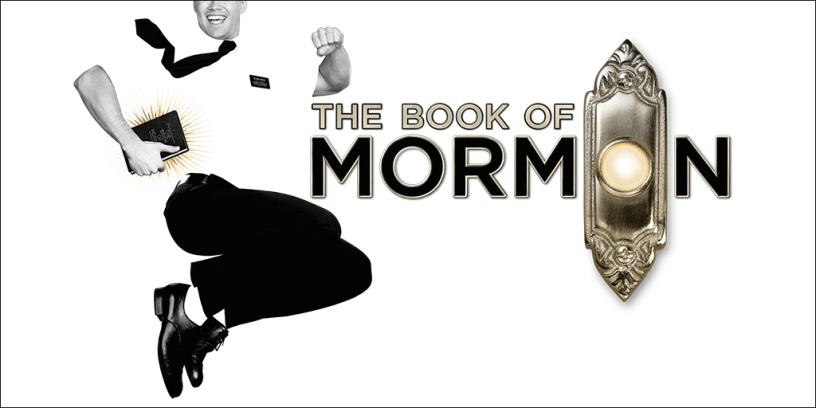
I’ll throw out one more: missionaries in white shirts and ties, riding bikes. This component of Mormon identity (particularly what non-LDS think of us) emerged only in mid-20th century I think, because in the 19th century it was not late teens who served missions but primarily older adult males. This item certainly got a boost in 2011 with the first staging of The Book of Mormon musical and the iconic image used to promote the show (the featured image of this post).
It’s anyone’s guess what else will change in the next five or ten years. President Nelson’s general approach seems to be: “I like that proposal. Make it so.” What exactly is Mormon identity at the moment? What else has changed in recent years? What else might change in the next few years? Or what hasn’t changed since the Joseph Smith era?
 Wheat & Tares
I’d throw in huge families.
Although there are still plenty of six- or seven- or eight-kid families there are also plenty with 2 or 3 now. Also a decent number with working or professional moms. Furthermore, that expectation seems to be a trend in the next generation. At least regarding women with career goals, and that supposes those fewer offspring families as well.
I think there’s probably a point or purpose in here somewhere. My identity is me. Everything else is just a hash.
Growing up in the 70’s, food storage was a HUGE deal. I slept on top of food storage. When I moved to the top bunk, I used wheat cans to build a stairway to my bed. I now focus on having a 72 hour kit and a few of the prepared meals in a sealed plastic box.
I now hear 10X more about “spiritual preparedness” than food storage.
I also think about some of the work that Janna Reiss’ book “the next mormons” found. The fact that temple recommend holders are drinking COFFEE and some even say “Iced coffee isn’t really coffee since it isn’t a hot drink.” WOW. That is a change.
I think one other change is the “nothing is going to stop the growth of the church” talk I always heard over and over. Now that talk has calmed way down and more of a “the end times are upon us and even the elite are being deceived.”
Some random reactions—
I grew up in a Church defined (in part) by racial tension. 1978 did not change that overnight, but now 40 years later the church has long since re-entered the cities, there is noticeable growth and attention in Africa, and an African American GA who’s entire adult life has been in a post-1978 church. It feels like a complete change-over in that part of the Mormon identity.
For my entire life the Mormon identity has been defined in part by the Heber J. Grant version Word of Wisdom. I think that still the case, however much pushback Jana Reiss reports.
Putting aside personal angst, in a sociological sense it is interesting to watch the “anti-gay” character noted in the OP. I suspect “anti-gay” is defining to the outside world, but I could argue that the internal “definition” is more about tensions and dissension over LGBTQ issues, rather than a settled anti-gay stance.
I sense that the Church is on the cusp of looking like a global church rather than an inter-mountain west U.S. church. I think that’s uneasy and not settled, but directionally correct.
Finally, (ht/Happy Hubby) I think the Church has been defined and has defined itself around growth. That may have peaked at the end of the 20th century, where I think missionary work had come to have an outsize role in the three-fold or four-fold “mission” of the Church. I think we are in the middle of a redefinition , a rebalancing where Perfecting the Saints and Redeeming the Dead take a larger role as defining characteristics, and Service is added..
My place of employment (a college) recently hired a new VP. I knew nothing about the guy. He presented the usual VP report at in-service before semester started. This was my first experience with him. I began picking up on a certain vibe…..surely this guy had to be Mormon! My co-worker, never a Mormon herself, but interested in Mormon culture insofar as her place in the community allowed her to befriend and interact with a lot of the local Mormons, leaned over to me and said, “He’s a Mormon.”
She confirmed what I suspected.
What was it that gave him away?
A certain emasculated self-deprecating goofiness.
Having been a Mormon all my life until I turned 37, at which point I began my departure
Walking back to our offices afterwards, the same co-worker (also the faculty sponsor for the college Gay Straight Alliance) said, “The VP acts in the way that many Mormon men act: goofy but harmless. It is strange….for a church that has its well-known position against LGBT issues, many of the Mormon men I have met are strangely effeminate.”
It is never a good idea to generalize, but the Mormon worldview and the culture that developed out of it has actually altered behavioral habits, such as verbal patterns and inflection of speech, body language, etc. I recognize these when I see them, even though I grew up far outside the Mormon Corridor, just about as far as one can be without leaving the borders of the USA. The Saints I grew up among did not carry these behaviors. We were a small minority. But in the late 80s Mormons from Utah flooded into our small ward, almost doubling its size. Then I began to see it.
My never-Mormon co-worker (she went to school in MA) has had enough interaction with Mormons to see it, too.
John – that is quite interesting. Even non-Mormons have “Mordar” (Mormon Radar – able to pick someone out as a Moromon). Or would that be TCOJCOLDSar? Nah – that doesn’t work.
I too have had such an experience at work (no where near Utah) and I had a vibe that said, “I think he is Mormon” and it turned out I was right.
Mordar: Lead, guide and direct us even unto multiplying many words. And it came to pass that Sonja Johnson, even the very feminist, called it “churchspeak”.
The earliest Mormon identity was wanting to have experiences with gifts of the spirit and accepting the idea of an open canon (New York, early Ohio). Then it shifted into being willing to follow Joseph and build communities (Kirtland/Nauvoo), then it shifted to being willing to follow Brigham and live plural marriage and the United Order economic system. We drank beer and whiskey, chewed tobacco and had long beards. With the end of polygamy, we lost the fight with the federal government with our marriage system, economic system and courts. We had to forge a new identity and tried to be as American/Protestant as we could, jumping on the prohibition band wagon with the WOW, looking respectable and adopting the capitalist views of our protestant counterparts. We also adopted the conservative sexual norms of the era. This started the modern Mormon identity. In the 70s and 80s, we joined political forces with evangelicals to fight for conservative social causes and against gay rights. We loved being the pro-family, clean living, families are forever Church and it worked with American culture.
We have come to another crossroads where we need to reinvent ourselves or die. We are living through that painful transition. We’ve done this successfully in the past and I am optimistic we will be able to do this in the future. As society has shifted dramatically and embraced secular values and broader acceptance, our pro-family stance now looks anti-gay, our views on sexuality look draconian and unhealthy and our hierarchy and dress look outdated and rigid. As people have gotten more education and started thinking more critically, they’ve started asking tough questions about things like the WOW and the old answers of obedience and faith are not cutting it.
We are living through a change and it will be interesting to see how we define ourselves going forward. I hope it’s more about community, service and the identity is less around living a set of rules. However, there need to still be clear tribal markers to have a cohesive group. I hope we pick different ones than garments and the WOW.
A couple more ways in which Mormon identity has shifted:
1) Other churches are not viewed as the “other” but allies in greater sociopolitical cause. Mormons are not so focused on repudiating the theologies and doctrines of other Christian Churches, but tend to see secularism and the ex-Mormon secular narrative as the greater threat.
2) Related to the first example, Mormons are more and more tending to see faith as an expression of uncertainty more than one of certainty. Instead of “I know x is true,” what I am hearing more often is reactions to secularist critique in the form of, “we don’t know that x is not true, we can’t be so sure, but we can choose to believe and have faith.”
Let me share what the process of changing the RLDS church name consisted of. Resolutions are presented for upcoming conferences by a district or stake. In 1990 the Saskatchewan Stake proposed that the General Authorities consider a name change for the church without one being specified. First, a general assembly is held. A member from the Stake explained why they had proposed it (identity confusion with the Mormon Church) and a church representative laid out the legal/historical precedents. Then conference delegates (me included) got to comment pro or con.
Most of the delegates were opposed, saying it wouldn’t solve the problem. One delegate said “call it the Mickey Mouse Church, and as soon as you discuss the beliefs people will say you sound like a mormon”. When the resolution was presented to the conference for a vote later in the week, it lost.
That should have ended it, but supporters of the name change simply waited to have enough pro-change delegates to get it passed, in 2001. BTW, there have been other issues, when re-visited, have been ruled out-of-order.
One last comment: in 1990 I commented that those tenets that associate the RLDS with Mormonism would also be later proposed for alteration/deletion. The Saskatchewan members denied that, but 30 years have proven it to be correct.
To me, it really does feel as though the things that were a big part of Mormon identity when I was growing up have shifted or are shifting. This was the case even then, but it is even more the case now with the shifting political landscape. Church used to feel more apolotical before the last 20 years, but so did the US in general. Now it feels as though everyone there belongs to some club that I find horrifying to contemplate, let alone join.
John: I once referred to that quality you’ve identified as “delicate sexism.” From what I’ve seen it’s very disconcerting because these are sweet, emotional, co-parenting dads, who are nevertheless completely sexist in how they talk to and about women.
Christiankimball: “the Church is on the cusp of looking like a global church rather than an inter-mountain west U.S. church” I think it’s been on that cusp my entire life, and I am continually surprised at just how inter-mountain west it still is. My first eye-opener was when I first went to BYU. I had no idea how Utah-centric church thinking was until then. When I read the David O. McKay biography, he talked about it, too, struggling to transition from inter-mountain west thinking to global (and that was before I was born!). But honestly, it seems to me that it’s still failing to conceptualize itself as a global church. Honestly, maybe even Catholicism still struggles with that, and it’s far far more global than we are. But having Cardinals from countries throughout the world is probably helpful in a way we lack.
If I could sum up all the smaller (micro) changes into a larger (macro) identity I would say this.
That for the majority of the time growing up, I felt that the church was presenting a positive message – families can be together, where have I come from, why and I here and where am I going and the plan of salvation.
I’m really the last 10 years this appears to have fundamentally shifted to a negative message. The church expressed political views and aligned itself with what are solely social issues (such as medical marijuana). The church has been significantly (including financially) associated with anti same sex marriage and anti gay policies. The church leadership are (behind closed doors) openly and almost exclusively republican. No problem being republican but as someone viewing this from outside Utah and outside the USA, such narrow political representation at the top leadership of the church appears really odd to me.
Long story short. I feel the church has shifted its message from one of inclusion and one where we all had a place to one of exclusion and one where a long list of people are called out by the church as having no place. This was not the message I shared on my mission.
I can’t help but wonder if the recent flurry of talks, articles, and face to face events focusing on doubts will somehow permeate into part of the mormon identity, but am having trouble conceptualizing what that would look like. Perhaps a more open approach where people are less inclined to say “I know,” which was a huge part of being mormon when I grew up – you had to “know” to be a real mormon, it seemed. Instead perhaps more “I choose to believe,” with a greater emphasis on the choice aspect as well as a larger tent where more varying viewpoints are accepted.
But, having just said that I think that is more of my wishful thinking of what I would like mormonism to become rather than a realistic identity. However, I still wonder what all the focus on doubting will do to mormon culture and identity overall.
“Related to the first example, Mormons are more and more tending to see faith as an expression of uncertainty…Instead of “I know x is true,” what I am hearing more often is reactions to secularist critique in the form of, “we don’t know that x is not true, we can’t be so sure, but we can choose to believe and have faith.”
Not so where I live. “I know x is true is deeply embedded, and if one dares express anything less than absolute surety they’ve let go of the “iron rod” and are getting “lost.”
I see the church in retreat throughout the developed world. This is borne out by consolidations of missions and stakes. I don’t know if it’s part of the world trend affecting other religions or if there are other unique things going on within the LDS culture. It seems to me the church may come to not be as wealthy as it is now as the balance of less well off members increase in proportion to the more well to do, potentially straining resources.
I haven’t seen mention of the internet yet but that has had a transformative effect on the church. It has forced a begrudging openness about church history we haven’t had before. More significantly, it has helped members, previously isolated from mainstream LDS thought, find like minded individuals and provide support outside the typical ward structure. It also contributes to a clout that’s making itself heard independent of the church’s established hierarchy – possibly demonstrated by the adoption of recent temple ceremony changes and short-lived LGBTQ policy/“revelation” that appear to be in response to the now more unified but previously marginalized members.
I also think the lack of women in authority/decision making positions will become more untenable and will change.
I went on my mission in 1968. When racism had been church doctrine for yonks, I was married 6 weeks after I returned home because there was a conference talk saying that was required. We had 3 children in the first 4 years and doctors told us my wife would die if she got pregnant too soon, but the church said we could not use birth control.
We had to start questioning church teachings, and chose to use birth control. None of these things that controlled our lives are now taught. We moved house 25 years ago and took a ton of wheat 1000k with us, we’ve since given it away.
Not sure what news you get, Pres Nelson met with Jacinda Adhern (PM of New Zealand) who is proving herself a world leader because of the respect she has garnered. Pres Nelson was very effusive of her leadership skills, and of her as a person. Not sure how many people he meets who have left the church because of the policy of discriminating against gays and women. Not sure he praises those people. Hopefully he gets the message that the church is loosing great people, because of these policies.
I hope other people he meets in the world are telling him these are problems, but I doubt it. I can’t imagine any of the leaders I know telling him.
I hope these policies of discrimination are removed in the next few years, and women and gays are treated just like people, while the leaders have some credibility left.
Geoff, considering the 1969 First Presidency Letter on birth control made explicit concern for women’s health, I wonder why you thought that. (Not criticizing, just curious if you were familiar with that letter that was I believe read in all wards)
Here’s the relevant portion on women’s health as it relates to birth control. The thrust seems to be not avoiding children, but also respecting the place of the woman in all of this. Most members took that to mean birth control was justified so long as you didn’t avoid kids over time and to take care of the mother’s health.
“However, we feel that men must be considerate of their wives who bear the greater responsibility not only of bearing children, but of caring for them through childhood. To this end the mother’s health and strength should be conserved and the husband’s consideration for his wife is his first duty, and self-control a dominant factor in all their relationships.”
Lester Bush’s Dialog article is worth reading here.
felixfabulous writes “We drank beer and whiskey, chewed tobacco and had long beards.”
You have aged remarkably well!
“We have come to another crossroads where we need to reinvent ourselves or die.”
Everyone dies eventually. Perhaps some causes are worth dying for; that is to say, not always changing because someone else wishes it. With thousands of churches to choose from and a vast array of non-church social organizations, you can easily find what you are looking for rather than trying to change something more to your liking.
Clark:
The 1969 letter (“Summer of Love” it was) is a great example of double speak. You can quote it today with a straight face and sincere heart as condoning birth control. Yet that part about “self-control a dominant factor”shouted to us at the time- that means keep it in your pants, boys! It also implies married women don’t really want sex very much, if at all. I remember teaching priesthood lessons in the 1970’s that discouraged birth control with few exceptions. When we got married in 1985, we had to go behind our ward leaders back to use it and keep our temple recommends. When we struggled for a few years with infertility in the late 1980’s, our ward leaders assumed they knew why we didn’t have any children and reprimanded us for using birth control- which had been true previously but was then not currently the case. At some point we told them essentially to mind their own business and we stopped keeping track of what nonsense they promoted, on a growing list of topics.
There is a vast ocean between what the church leaders seem to say, and what they really mean, and what the local church membership thinks they mean, and whether very many obey them. Sometimes people make stuff up and cite it as revelation from the top church leaders. The black folk in my ward have a term describing this: “Layin’ it on the prophet.”
Dave C:
It is going to take a long time for the skin-flint church leaders to burn through their 100 billion dollar war chest, if Michael Quinn is close to being right. Otherwise, I think you are spot on correct.
Mormon men do have certain “tells” about their personalities, and my take on it is that these men deal with two conflicting issues. First, in their community they very obviously outrank the females. Within their own group, this is an ego booster which allows them to harbor something of a superiority complex.. And the conflict, I believe, is that Mormon men understand that this position in the hierarchy is unearned, unfair, and unrecognized in the greater society. So, on top of a slight superiority complex, they also feel guilty about their unearned status. There is an air of “apology” about them. Mitt Romney was the quintessential Mormon man. Way too much smiling for the wider population. All his smiling made me cringe. And yet so much power. It’s the oddest combination of privilege and shame you’ll ever find anywhere.
Clark, That was not what was being taught in Australia. Talked to Bishop, couldn’t go against church teaching, same with SP. No internet so no other source of knowledge. Perhaps one of those things where we go a step more just to be sure.
The internet, and sites like this are a Godsend.
My two cents: Mormon identity has always been organized around duplicity–the “as if” in Helaman’s words. The pressure, even desire, among Mormons to play a part and shuffle toward homogenous practices (if not beliefs) gives Mormonism a strong whiff of theatricality. White shirts and ties, skirts down to here, polished and studied lines like “Hi, would you like to learn about Jesus Christ?”, and pre-scripted remarks in church meetings are just the start. Faithful Mormons are seemingly always pretending to be someone they are not. If Mormon temple rites are any indication, pretending to be another person is in fact what holds the eternal bonds of humanity together. After all, what is Christ’s atonement if not an enormous gift bestowed in the spirit of “I’m pretending to be you, so now you pretend to be me”?
I go into this much more in my book (https://www.press.uillinois.edu/books/catalog/35zqz6ys9780252042515.html) but this push toward theatricality doesn’t emerge over time nor will it fade over time. It is absolutely baked into Mormon theology. And Mormons continue to celebrate divine acts of imitation and duplicity all the time (think Nephi pretending to voice Laban, Brigham Young speaking with the voice of Joseph in Nauvoo, putting on the armor of Christ, Jesus deceiving his disciples at Emmaus, even Satan transforming himself into an angel of light–all examples of divinely-sanctioned, divinely-mandated acts of pretend). I think if Mormonism survives and evolves in the coming century, it will no matter what continue to operate out of a space of pretend. It is too foundational of a quality to be removed or subdued without the Church altogether ceasing to be what it once was.
The Other Mike writes “It also implies married women don’t really want sex very much, if at all.”
Many, maybe most, of my men friends discovered celibacy AFTER marriage with intervals between intercourse measured in years. Except in the Navy, where a buddy measured his intervals in hours.
Mike, while I agree the 1969 letter was somewhat ambiguous, it’s also the case that how most members took it simply isn’t what you and Geoff suggest. Again not saying there weren’t people with the interpretation you give – however as the article I linked to demonstrates by polls that wasn’t the main interpretation. The main interpretation by members was the using birth control was fine so long as you didn’t overly limit your family except for health reasons.
Calling that double speak seems deeply problematic, I’d add.
I should add that, since I’m at least somewhat old now, my experience on how people viewed it simply doesn’t match yours in the least.
1. In the 70’s and 80’s, there was a heavier folk-tale emphasis on miraculous events. Three Nephites showed up regularly in stories, delivering missing genealogy links, pushing missionaries out of the way of buses, and the like. Missionaries were driving cars away from angry mobs only to learn later that the mob had removed the engine out of the car. General authorities moved objects with arms to the square. That was the regular stuff of testimony meetings and kitchen table talk. It was a time of miracles behind every corner. The adversary’s minions got major billing back then too. Evil spirits showed up and impersonated the good guys only to be discovered through failed handshakes. They even worked their way into the grooves of our vinyl records. It was a time of spiritual terrorism.
2. The second coming was a lot closer. Any day. The food storage imperative was part of that urgency.
3. Face cards were so forbidden. You just couldn’t play with those things. At all. On account of the subliminal messages being sent by the suicide jacks and all.
4. On weeknights during MIA and other events, women could not enter the chapel if they weren’t in skirts or dresses.
5. Back then, we had real Anti-Mormons. Bob Jones University and others were churning out tracts, and then of course, there were the anti-movies. But today, Anti’s are just the people attending church with us or who used to attend church with us.
Sam, have such folk tales decreased? (Typically the majority of these are clear urban legends told in many places with the facts changed somewhat – BYU used to have a large collection of them) I suspect the nature of the tales has changed somewhat, but I’m not convinced you hear them less – but then I suspect none of us are in a good position to know.
I think the 2cd coming was viewed as near because of the cold war and the fear of nuclear war. My experience is that those who came of age after the 80’s honestly don’t understand how much that shaped American views and fears. There have been other triggers – I recall prior to the first Gulf War there were at least a few who saw it in terms of Gog and Magog and a few brought that up post-911 as well. That said, as events a few years ago in the Twin Falls region of Idaho demonstrated, many still have a strong millennialist perspective of a coming apocalypse. I suspect one difference today is that the brethren try to stomp out such things. Of course Utah has a food supply company clearly patterned onto apocalyptic fears. It’s apparently still successful. Given that I don’t think we should dismiss the social effect of apocalyptism in the Church – particularly in the mountain west.
I do remember the goofy face card bans, primarily due to McConkie’s Mormon Doctrine. Everyone played Uno instead.
I think real anti-Mormons are still among us in the sense of evangelical fervor. I remember those great Chick’s Tracks. Did a post on his death at T&S a while back.
However I’d say anyone who’s read the exmo forum on reddit sees that the anti-Mormon spirit is alive and well. If anything it’s metastasized into something worse only untethered from conservative protestantism.
I grew up on regular tales of the three nephites similar to what Sam wrote. I can’t remember that last time I heard them come up in conversation. I’ll have to ask my teenagers if they know who they are.
Marka blog
Roughrider fans are not to be trusted. 🙂
Jake writes:“Faithful Mormons are seemingly always pretending to be someone they are not.”
Always trust anything written by anyone in the theatrical arts (or maybe not).