
I criticized an LDS Living blog post on my facebook wall the other day, saying.
LDS Living has had some surprisingly progressive articles recently, but this is another awful one. Bob Millet is best known for being one of the early leaders in the LDS grace movement of the 1990’s along with Bruce Hafen, Stephen Robinson, and later Brad Wilcox. But his approach here is utterly Pharisaical. It shows a selfish and narrow-minded parenting perspective that’s just ugly. The parents in this article who are “mourning” their children for experiencing life and making decisions differently than they would (duh) need to look in the mirror or ask God to reveal to them what they’re doing to cause problems for their children not obsess about how their children are causing them to suffer.
One interesting reply praised the article for what was deemed as a loving approach to a wayward child. Here’s the anecdote from the article with my bolding for emphasis for the harmful parts.
A dear friend of mine shared the following experience. At a time when he and his wife were suffering over a wandering child, he prayed and prayed for the strength and the heart to love his errant son, no matter what. That was terribly difficult, for he desperately wanted this boy to become all that the father knew he could become. He wanted to be honest with his son, so he prepared and waited for a time when he felt his expressions could be heartfelt and genuine. On one occasion he waited up for his son until about two o’clock in the morning, when the son came in. The father said, “Come in, Bill. Let’s talk for a moment.” The young man back-peddled. “I know I’m late. I know I said I would be in earlier.” The father cut him off. “No, no, Bill. That’s not what I wanted to talk with you about. I just wanted to tell you that I’ve missed you. It’s been a long time since we sat down and spent a few moments together. Do you have some time right now?” Startled, the son said, “I guess so.”
Bill was touched by the honesty of his father and, more especially, by the rich outpouring of a love now devoid of rules and conditions. Through tears, my friend explained that that moment was a turning point in their relationship.
I strongly disagree this is a good approach. It’s not the worst approach to a “wayward” child. Worse approaches could include: shunning, manipulating by withdrawing resources either material or love and affection, going to their siblings to bad talk them and turn them against one another, etc. So, there’s worse ways to do it, and some of us have seen this. So, we may think this is a decent approach.
No, I still think it’s a terrible approach, and here’s why. The parent sends two harshly judgmental and bad messages (bolded above).
1. That what the child is doing is deeply hurting his mom and dad.
A child is never going to have the same perspective on life as the parents. And that’s a good thing. That doesn’t hurt the parents. If the parents decide to be hurt by what the child thinks or does, that’s the parents responsibility. It’s manipulative and judgemental for the parent to put that back on the child.
2. That the father wants more than anything for the child to be active and involved in the Church.
That’s a terrible thing for a father to rank as what he wants “more than anything” for a child. That they are happy, that they feel a purpose in life, that they feel loved, that they have a fulfilling religious and spiritual life. Those seem OK to rank as what wants “more than anything” for a child. But active in the Church. Come on. That’s so shallow. Take a step back. If we saw a movie clip of this experience but it was a Jehovah’s Witness or Catholic, and the parent was giving a heavy handed guilt trip of how bad the child was hurting his mother and father by leaving their religion and how they wanted more than anything for them to stay in their religion, any Mormon would see that as manipulative and shallow. “Just love your kid and let them make their own choices.” I can see even the most literal believing strongest testimony Mormons saying that.
Jordan Peterson says when you have a conversation with someone, you must believe there is something you could learn from them. Or else it’s not really a conversation.
Can we look at our adult children this way? Let’s isolate this on adult children, because I think there’s a big difference. We’re responsible for our minor aged children to help them grow and learn and progress into adults, and there’s a much more active process of teaching, shaping, and sometimes punishing. But our adult children, we don’t have that same relationship. Let’s isolate on that.
It’s natural for us to have an opinion of what our adult children should do. Who they should date. What they should study. What career. Where to live. For Mormons, how active they remain in the Mormon Church. What they believe. What they do.
At what threshold do we feel it’s important to sit our kid down to tell them “you’re hurting me deeply” and “I want you to do this more than anything”?
I’m breaking the commandments.
I’m going to marry Billy.
I’m becoming addicted to drugs and losing my family and job because of it.
I’m going to quit law school and start a band.
I’m going to stop wearing nylons under my dress at church.
I’m going to become a skinhead and join the KKK.
I lost my testimony and I’m leaving the Church.
I’m dressing in a style old people don’t like.
I’m going to become the biggest Anti-Mormon in the world and do everything I can to destroy the LDS Church.
Some are absurd. You’d be a jerk as a parent if you tried to manipulate things at this level. Your adult children are living their lives not yours, so butt out. Some might be difficult for certain types of parents and easier for others. A couple of those we might all agree is appropriate to take that interventionist “judgemental” type of approach.
Something I think is very important in this, is that you actually have to be humble enough to acknowledge that another person can do their life better than you can do it. As much as I think sometimes I could do my wife’s life way better than she could, and make smarter decisions, I actually know I couldn’t. It’s taken me a long time to learn this. But I really do believe it. I can do my life better than anyone else can. But I can’t do your life better than you. Only you know what’s best for you. Only you understand how what you’re doing will affect everything else in your left present and future and all the people you effect, such that you understand what you should do.
I think that’s the main thing missing from the anecdote above. I think that parent absolutely believes he knows what’s best for his child. And his child has no idea what’s best for himself. That’s a real crappy message. So if you’re a parent and you think that, I think you should spend some time working on that and fix it. Repeat after me: your child really does know better than you how to do his life.
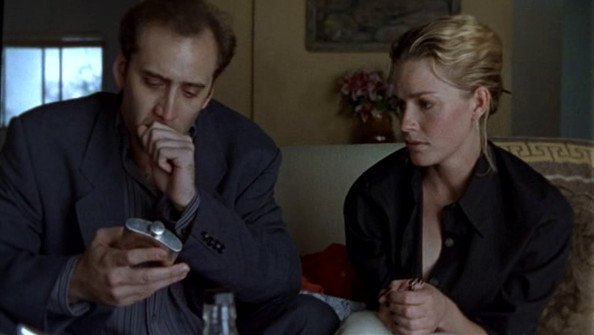
There’s a step even further than this. I’d like to throw out the idea that radical or extreme unconditional acceptance might be the right approach. The movie Leaving Las Vegas left a serious impression on me. In it, an alcoholic who is killing himself slowly and intentionally with alcohol consumption and a prostitute meet and have a very interesting relationship. At first she thinks should should try to fix him. But then accepts him. For his birthday, she gives him a flask. He is moved deeply. I don’t know if this is true, unconditional love. Or if it’s co-dependency. Or some other unhealthy approach to relationships. But something in it seems really true and really right. For a moment, I almost thought this feeling of unconditional love would be the one thing that would reach that place inside where he’s so hurt and damaged and maybe change his mind and decide to get clean and live better. Would have been a great story. Oh well. In the story, he is deeply moved. But still is undeterred from his goal to kill himself slowly, which he eventually does.
If my child comes to me and says he is no longer a BYU fan and is going to start cheering for the U. Could I accept it immediately and not just in a begrudging way but in a way that I actually think it’s a smart decision? If my child tells me he’s going to leave the Church and become an Anti-Mormon, what if my first reaction is “wow I didn’t see that coming, but I trust you completely, tell me why, maybe I should join you.”
Now imagine God with this view of his children. That’s a pretty interesting idea. Nothing you could do could change how I feel about you, because I have zero opinion on what you should do, only love and support for you for everything that you attempt. Not sure about it. But this is something I think about sometimes. If God isn’t like this, can he truly love us unconditionally? How can he love and support us if he’s obsessed about us doing what’s right all the time?
My head starts hurting if I think about this too much. I guess there probably is a point where you draw the line and say I just can’t condone what you’re doing. And there probably is a line we cross where God is displeased with our actions and prompts us to repent. But if that line does exist, I think it exists way, way further past “my child isn’t active in the Church.”
 Wheat & Tares
Firstly, I’m not God, and only He can judge my child. It is my place in relation to Deity to trust Him.
Secondly, I understand there was a war in heaven to maintain our agency. I understand from that, that agency is an over-riding principle.
‘We teach them correct principles and they govern themselves’is a radical framing that seems to have been lost to mormon culture of late.
We’ve had a bishop intervene in our family with a view to enforcement of regular interviews with one of our kids, under threat of withdrawal of our temple recommends should we not deliver our child to his office for those appointments. We learnt to challenge that, and then to let our hurt at being kept from the temple go.
We have also learnt to let go of our agenda for our children’s lives, and respect their right to determine their own lives. And then we learnt to support them, and love them for their choices, and to respect their choices, other than our own but constructive and useful for society. Our disrespect for their choices has only damaged our relationship.
Our beliefs need to bear good fruit in our lives and family, and make us more Christ-like. We have apologised to our kids, and hope they will continue to have forgiveness in their hearts as we live loving lives seeking peace and respect for our beliefs as we respect theirs.
Thanks HWC, good thoughts. But did I understand that right? You told your bishop you wouldn’t allow him to interview in private your teenage child, and from there he took away your temple recommend? Ouch.
I love your last paragraph. I couldn’t agree more. Why is that so hard for some people to get? That was a rhetorical question. I know at least some of the answer, but it is still frustrating to see so much unneeded pain.
Great post. I think the tension around this topic is a natural outcome of being very obedience-focused church and preaching a strong us vs. them mentality. That is not all bad, it creates a very strong and cohesive tribe and culture, part of what makes Mormonism incredible. But, it’s easy to see why so many parents are judgmental and say hurtful things when a child takes another path because we have been so conditioned to think that this is ruining an eternal family and that they will never be happy unless they are active in the Church. This is exactly the same tension that existed at the time of Jesus and I see much of his teaching as trying to take us to a higher place, offer unconditional love and radical acceptance. I do not know many families that do not have at least one or two kids who have decided to step away from the Church. This tension has created some terrible rifts in some families, but forced tremendous personal growth in some parents and has really been one of the best things to ever happen to them. I’m not sure about the flask example, that seems to be somewhere between radical acceptance and enabling. I wish the standard for successful parenting in our Mormon culture was whether adult children are well-adjusted, functioning, happy adults, not if they are active in the Church.
re: that LLV example and enabling. I think you’right. But when I try to think through the logic, I don’t find a logical difference between a parent who refuses to accept a child who goes inactive and a parent who refuses to accept a child who is a raging alcoholic destroying their life. The only difference is that in one case, that’s a behavior we universally deem to be unhealthy or wrong. So, if we acknowledge there is a line and at that point one should attempt to intervene, manipulate, or do whatever is necessary to break that behavior, how do we not acknowledge that to some busybody parents, they truly believe that line would include church activity or the decision to drop out of law school or a number of other things. Why are they wrong, and how can they be shown they are?
churchistrue, there is certainly a large nugget of truth to what you say, but you lose me when you say things like, “your child really does know better than you how to do his life.” Call me crazy, but if my child decides to start shooting heroin or starts having unprotected sex with his teenage girlfriend or let untreated depression drive her to suicide or become a deadbeat dad or start to commit crimes as an alternative to actually working, I’m gonna say, yes I know better than my child how he or she should live life. I do not have the right to dictate how my child lives but neither do I have to sanction behavior that is widely accepted as destructive. I don’t think enabling and unconditional love are synonymous. Maybe that’s not what you mean, but it’s what I’m picking up.
NAC, no that is what I mean. I don’t believe that, or at least I don’t act this way. If a loved one was acting in self-destructive way, I would intervene. But this is something I wonder about. Part of me wonders if radical-extreme acceptance, with no exception, might be a better way.
churchistrue, then the purest expression of radical-extreme acceptance is indifference? There are things that all of us care about deeply and when someone we love discards those things it bothers us. Your examples of children straying from their family faith don’t seem beyond the pale for many because the family faith is not something they currently care about deeply. But we just have to find the thing that does trigger that kind of response. What if your child became a white supremacist and started marching in rallies nationwide? They’re not committing crimes, no firebombings or beatings, just vocally expressing their odious opinions. Would that bother you enough for you to tell them their actions deeply hurt you? Would you be able to just casually write off that behavior?
I ask the children in my Primary class if their parents love them when they do bad things/make wrong choices. They usually say “no.” I also ask them if Heavenly Father loves “bad” people or loves us when we do “bad” things. Again, they say “no.” I then tell them that their parents and Heavenly Father love us even if we make bad choices, but that when we make bad choices it makes our parents and Heavenly Father feel sad inside.
I think it is so critically important children grow up feeling unconditionally loved—and lovable. I know the (lifelong) heartache that can happen when they don’t.
As I’ve said before—whether someone belongs to or is active in the church or not doesn’t necessarily reflect on how Christ/like someone is.
I can’t help but like Millet’s story, and I think it could go a long way to improve how parents react to their children leaving the church. I thought his friend’s speech to his son was loving and lovely.
Whether or not he should feel hurt by his son’s decisions, he does. Unless we love Elder Bednar’s victim-blaming “choose to be offended” philosophy, we kind of have to accept that people’s emotions come from a real place, even if we disagree with them. Mother’s Day is coming, and around the world sacrament meeting talks will glorify martyr moms who never complain, who sweep all their negative emotions under a hand-braided rug passed down from their polygamist great-great-grandmother. My reaction to hearing I would be manipulative, judgmental, and selfish to admit to a child his actions hurt me is the same one I have to those talks. I suppose I don’t know where I’d draw the line for when a parent can express hurt without it being manipulative, but I don’t think it would be fair to use only my approval of their hurt feelings as the determining criteria. Besides, a son coming home at 2 am is doing more than just going inactive. You can disbelieve at home after curfew. The hurt referred to might have stemmed from more than mere inactivity.
I completely agree with that wanting your child to stay in the church “more than anything in the world” is a questionable wish, but I can understand, if not agree with, the line of thought that takes some parents there.
The archetype of the prodigal son is universal and essential to the human condition. Robert Millet’s view is stuck in a particular stage of the archetypal prodigal story: the sorrow of the parent for the departure of the child, and the (unrealistic) hope that the child will one day return to the exact particularities of the parent’s worldview. That’s not what generally happens, and if it WAS what generally happened, there would be no progress in the world.
Jordan Peterson amplifies the parable by drawing on the story of Pinocchio. The father wants the child to grow up to be “real” as the father sees it. But it’s a path that doesn’t work for either the parent or child. The child experiments at Pleasure Island, and the father goes out and loses his own way trying to find his son. When the son tries to return, the home is abandoned. He must go out and resurrect his own father from the belly of the whale.
Pinocchio emphasises transformation as well as redemption. The son must return to the father, but he must also save the father, who has equally lost his way. The son does this by returning to SOME of the values of his father, but with other values he has gained on his particular journey of suffering and challenge. Thus the world achieves a balance of both the conservative and the progressive.
Mormonism is so damn paternalistic that its members sometimes completely overlook the fact that the prodigal journey may be as important for the father as for the son: that the son forces the father on a journey to his own transformation, or that the elder son is as lost as the prodigal. Redemption must come to all three: father, elder son and prodigal son. They must sooner or later recognise that they are all part of one single experience, and that within each one of them individually, dwell all the archetypes together. The Elder is the Prodigal, the Father is the Prodigal, the Prodigal is the Father, etc.
The church has sort of stumbled on this in their addiction recovery programs, where “victimised” family members are encouraged to go through their own 12-step programs to give up their own co-dependent behaviour.
KLC. “then the purest expression of radical-extreme acceptance is indifference?” First of all, this is very experimental. I believe very strongly in unconditional love/acceptance, but I don’t know how far I take this. The generally accepted idea is that there is a line and should be a line where one disapproves and intervenes with a loved one acting badly. Nearly everyone would agree that line would not include extreme micromanagement. And on the other end, nearly everyone would agree things like joining KKK or self destructive addiction would be on the other side of that line. And I probably do too. But this is what I’m wondering with my thought experiment. What if there is no line and the most pure love/acceptance would be complete trust that the loved ones knows what’s best for them, regardless of how awful I might normally perceive that behavior. It’s not indifference, it’s trust that their understanding of how to do their life is better than mine. What if it includes a temporary dip into very self destructive behaviors? Am I really sure I know that’s wrong for them? And if there is a line, then how do we make sure we’re not drawing it too far over, like the man in the OP acting dramatic over a son leaving the Church? My gut tells me I’m probably wrong about this and there should be a line, but that I should always make sure I’m trying to err on the trusting side not the judgemental side of it. But. This is something I wonder about…
Nate. That’s beautiful. Your idea that the father needs to learn something from the wayward/adventurous son reminds me of a verse from The Killers, Be Still.
Be still
One day you’ll leave
Fearlessness on your sleeve
When you’ve come back, tell me what did you see
What did you see (what did you see)
Was there something out there for me?
Me too Laurel, but I would observe that in retrospect my feelings were not useful to my kids, or my relationship with them or their father for that matter. I allowed my feelings about my kids choices to define me. I conflated their choices with my value as a mother, which was toxic. Thank God we can change. Things can get better.
And the prodigal son parable-the gift that keeps on giving. Marilynne Robinson does an amazing reworking of it in her novel ‘Home’.
Handlewithcare, I think you should write the next parenting article for LDS Living.
I think a Lightbearer presented a plan similar to this millions of years ago.