
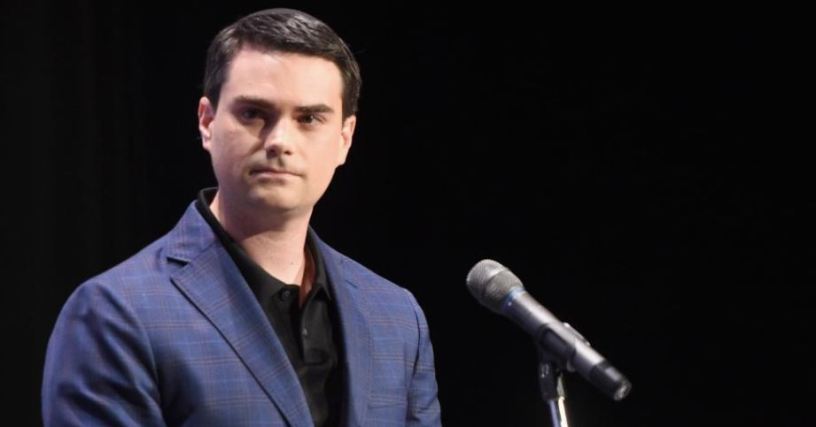
A recent article from Ben Shapiro on Daily Wire discussed youth suicide. The alarming statistic is that from 2006 to 2016 in the U.S., teen suicide increased 70%. Additionally, suicide across all ages in the most recent statistical year, 2016, was at a 30 year high.
In our community, we have discussed the alarming nature of Utah’s teen suicide rate. Especially in regards to the Mormon Church position on LGBT+ issues, and the pain and confusion that gay LDS youth are experiencing, attempting to reconcile their nature with their faith.
But, as this article suggests, the problem in America (and likely even in Utah), seems to be much larger than just this one issue. What’s going on? The article theorizes. At first we thought it was the economy, but then when the economy improved starting 2009, suicides continued to increase. Then we thought it was drugs, but the article cites a study that states drug use is at the lowest level in decades.
The conclusion of this article, is that the suicide problem could be related to secularization and decrease of religious engagement. A study in 2014 correlated “sense of purpose” with religion.
Shapiro suggests the left and the right are focused on their differences and fighting, believing they have the answer. But the real issue is that we have a problem of the soul. Ben Shapiro:
So, what’s to be done? First, we need to get off the weak sauce of “spirituality without religion.” Spirituality is an aimless search within for some sort of transcendental values that simply can’t be found within. Religion is about practice — it is about acting in moral and ethical ways because your Creator demands it. This doesn’t mean you have to join an organized religion. It does mean that human beings need individual meaning — a belief in their holiness and specialness as beings made in the image of God, rather than a cluster of meaningless cells wandering through a cold, empty universe. And it means that human beings need collective meaning as well: brotherhood in this journey. If we can’t supply those things to our children, it’s no wonder they’re in increasing levels of despair, no matter how many tennis lessons we buy them.
I don’t know how valid these studies are, or whether there are counter studies to offset them. I do make this general observation from what I see within Mormonism. I see people in “as little as 30 minutes, read the CES Letter, and dump the Mormon Church” (per John Dehlin in recent podcast). I interact with Exmormons online, and I don’t think that leaving the Mormon Church is always wrong. I believe deeply in the positive benefits of the Church, but I’m not going to get in your face to try to prove it. My logic from a proselyting standpoint is: if the lived experience is good but you’re stuck on intellectual issues, let me show you a paradigm that works. But if the lived experience doesn’t work for you, or you’ve spent some time trying to reconciling a more nuanced paradigm, and it’s just not working, it might be best to leave. But I think there are some very, very important benefits to religion, especially Mormonism.
- community to serve and be served
- provides meaning and purpose in life
- place to facilitate spiritual connection
- support to overcome vices, bad behavior, and become your best self
- provide structure for those in first half of life (see Richard Rohr), especially youth
Those are some pretty important benefits. Forgive the bluntness, but I don’t give a crap where Joseph Smith got the Book of Mormon or how many women he married (OK, I do, but I’m making a point here). We have something good here, that’s working for a lot of people. Humans have been using religion for thousands of years to provide these five bullet point benefits. I’m not saying you can’t satisfy these outside the Mormon Church, or even outside religion. But it’s easier said than done. And before you leave, please take some time to think how you and your children will satisfy these needs. There can be serious ramifications, and a society where suicide has increased, might be one of those.
Meaning
That second bullet point is a weakness in the Metaphorical Paradigm, at least what I had worked on up to about a year ago. The others are covered pretty well.
Meaning is something I’ve thought about a lot over the past 10+ years of my faith crisis and reconstruction. After breaking it all down, I began reconstructing it. And I ended up in a place I feel very satisfied with. I love the Mormon Church for what it is to me. It’s no longer an answer book for understanding everything about God and the heavens. But it’s a place where I can learn and grow and worship and serve.
But I have to admit, I still felt a hole in this area of “meaning”. As a missionary, I loved to answer the golden questions.
Why am I here?
Where am I going after this life?
The simple LDS answers to those questions gave me great meaning and purpose in life. The deconstruction of my LDS beliefs, came with a pain in not knowing any longer.
Finding Jordan Peterson about a year ago has greatly helped in reconstructing that area. It took me going outside the faith tradition and finding Marcus Borg, Peter Enns, etc, to understand the paradigm some of the Neo-Apologists were hinting at, and gave me new insight into scripture, prophets, and especially Joseph Smith. And, similarly, it took me going outside the LDS tradition to hear Jordan Peterson talk about meaning and Christian redemption and God’s plan, in order to understand what some Neo-Apologists were talking about, in regards to the purpose of life. Which upon more reflection brings me full circle back to understanding better what Joseph Smith was trying to do with building the Kingdom of God and creating Zion.
Jordan Peterson has been thrust onto the scene recently with some of the viewpoints he has that relate to the social justice wars: men vs women, white vs black, straight vs gay. He’s become an alt-right hero and an enemy to the left. That pains me so much, because I love some of what he teaches so much, but really don’t like that other part. Please ignore that and give attention to what he was originally know for, which is his Maps of Meaning, and commentary on Old Testament Bible stories and Christian doctrine.
Dr. Peterson’s insights have become very important to me, especially using them to reinterpret Mormon teachings. I want to do a deeper dive on this later, but here’s a teaser on this idea of “meaning” from this presentation https://www.youtube.com/watch?v=DtiRzQMgBDM.
We are in a state of constant unredeemed suffering and it’s a big problem… There is another inference in the New Testament and its hypothesis of a metastate and the inference is that: a life that is predicated on a constant death and renewal at every level of being, a life that’s predicated on the search for the truth and an attempt to act out the truth, and a life associated with the sacrifice of self to God produces a state of being that is so deeply meaningful that it justifies suffering. It doesn’t eliminate suffering. There is no elimination of suffering.
Nietzsche said, “He who has a why can bear any how.” And what he meant by that was “if what you are aiming at is of sufficient profundity, it’s worth an awful lot of misery to participate in the process of bringing it about.” Life has an unbearable amount of misery and as a consequence it needs an absurd positive aim. And the absurd positive aim is posited in the New Testament is participation in a process that transforms earth into heaven – the generation of the Kingdom of God on earth.
I believe that what is outlined in narrative form in the New Testament is psychologically correct. I believe that the idea that endless microdeath and renewal produces a state of proper adaptation to being. And that the prerequisites for that, that are laid out in the narrative structure that underlies the New Testament, are fundamentally correct. So to be redeemed is to aim at the highest value, to sacrifice what’s no longer useful and valid in yourself, and to tell the truth. The consequence of that is existence in a deep state of meaning that justifies the tragedy of being and the possibility of transforming your own life in the most beneficial positive direction while simultaneously doing that for the people around you. And that’s redemption.
I am trying to follow Jordan Peterson’s suggestion. Which is also the pattern required by Jesus Christ. And of the LDS prophets.
I’m going to think of the highest possible good I can think of, that I can realistically in my life on a daily, weekly, and lifetime basis accomplish.
I’m going to covenant with God to do that.
I’m going to make whatever sacrifices I need to in my life to do that.
The ultimate outcome if I succeed, and then rest of the LDS Body of Christ also succeeds, and then ultimately the entire human family joins together in that goal and succeeds. Then what we have as an outcome is Heaven on Earth. And that’s pretty damn meaningful.
 Wheat & Tares
In your approach, is faith in Jesus as Savior needed for redemption? It seems as though it isn’t, and I want to make sure I’m understanding.
ji I know I”m confusing. This is going to sound like a dodge. In this specific case of how I’m using the term redemption, I’m not using it in the traditional Mormon way. I am using it as something all who believe in Jesus Christ as the perfect example and the Mormon covenant to give all that they have for the building up of the Kingdom of God on Earth to join together to build Zion can participate in a deeply meaningful way. This is a different thing than belief in redemption as something that happens in the next world. That kind of redemption is something for this world. That’s not to say redemption from sin and death in the next world is not an important thing to have faith in Jesus Christ over, it’s just outside the scope of the testimony I give in this post.
Peterson seems like just another in a long line of people going “lo here” or “lo there”. His aggression toward people he disagrees with seems to be what attracts most to him, like many before him. The “intellectuals” and “freaks” getting the verbal beat down they deserve.
Glad you found something that inspires you.
Wow. Ben Shapiro and Jordan Peterson. I won’t waste my time there. Honestly your response to recent headlines make more sense to me now.
I don’t believe religious beliefs are required for good lives or to avoid suicides. I’ll go search for some studies but I doubt suicides are significantly higher for non religious people. The most charitable man I’ve met is an old hippy who dedicated himself to raising the dignity of lives of the poor and being environmentally conscious at the same time.
Kristine. I’ve always had a lot of respect for your opinion. On the “recent headlines”, I don’t remember exactly, I think we had an interaction where you misunderstood me, or maybe I was just wrong. It’s happened before. If you want to try again, I’m game. As for Shapiro and Peterson, they both have opinions which are polarizing, which I don’t share. I only support from them what I explicitly state that I support. Anyway. Thanks for the comment.
I’ve been thinking about the same questions. I agree with what you say about religious practice being a key component of spirituality. Something about being in a community and worshiping together, serving together and sharing meaningful experiences together brings us close in a way that is difficult to do on your own. I don’t know of any religious groups that do community better than we do.
On the redemption/meaning issue, I’m not sure I grasp what you are getting at, but think I might. In my view, there is an “enlightened” way to live life. Jesus showed us this way. By following his teachings we can live our best life and make the world a better place, through this we come to know God. This is how we are redeemed. I don’t know about the next life, but this can redeem us here and now. When left to our own device and baser desires, we live lives that can be filled with problems. I think of this as sin that has its own consequences. If I am a drug addict or an alcoholic, I will not be living my best life and will hurt people that I love. If I am sexually irresponsible, I can cause great harm to myself and those around me and estranges me from God. In my view, this kind of behavior does not necessarily require a punishment (with the exception of behavior that is illegal and should be punished accordingly, like sexual abuse), the natural consequences are punishment enough, but when one is ready to live a better way and approach God, he will change these behaviors and become closer to God and happier. When Jesus spoke with the woman at the well, he did not put her through a disciplinary council or formal probation. She was forgiven on the spot and changed her life that day.
I think the LDS way of living is a great way to get us on this enlightened path. I think avoid sex outside of marriage generally makes people happier and causes less harm. I’m not sure that an overzealous emphasis on abstinence and shame around masturbation will accomplish the same thing. Likewise, alcohol can ruin lives. Responsible consumption is probably harmless and may improve someone’s life. But, drawing the line between responsible consumption and abuse is a tricky business. I’m not sure any argument can be made for abstinence from tea and coffee, I don’t see any way this could ruin someone’s life or inhibit their spiritual progress. The most we could say is that it’s a cultural boundary marker.
I wish we put more emphasis on the here and now and were more comfortable being a little less certain about the next life. Last time I checked, the quest to achieve Zion focused on making an ideal society here and now and not just trying to make sure we get to heaven.
The biggest factor in suicide rates seems to be gender. The female rate seems to be about one third the male rate.
Could be rising because women are gaining more equality. Which would not suit my beliefs.
Or it could be testosterone, risk taking, or taking responsibility. Males are much more likely to die in car accidents, 5 times?
So if males are 5 times as likely to die on the road, and 3 times as likely to die of suicide, it seems that being male is the problem. Not sure what to do about that. It is only a small proportion of males though.
Females attempt suicide more often than males. But males use methods that have less chance of failing, like guns, while females use methods that can be caught and stopped, like pills. Men seem more aware of what is fatal. So, I don’t think it is a male problem, just that men have a better idea of what is fatal.
Mixing causes.
Suicide is rarely a spiritual or religious or a meaningfulness problem. Suicide is caused by depression which is an illness, an imbalance in brain chemistry. Suicide is caused by schizophrenia or other illnesses with delusional thinking. Sometimes suicide makes sense, as a way to preserve honor in a Japanese military society for one example or maybe a criminal who does not want to go back to prison and rolls the dice for the next life. Suicide can be from an impulsive act.
Drugs can help with brain chemistry sometimes almost in miraculous ways and some drugs can really foul it up.I seriously doubt a study that claims drug use is at its lowest in decades. The opiate epidemic is pushing death rates above traffic collisions as the top cause of death in people under about 50 years old in many states and shows no sign of decreasing. Thinking activities like good therapy and religions can change brain chemistry over time but are not as powerful in serious cases as medications. Long-term improvement is also reported to be better with measures that change thinking processes.Both medication and therapy may be appropriate in many cases.
We get our shorts in a wad when bishops use spiritual tools to address abuse problems which are criminal activities. And then we go off and do the same thing with mental illness.Suicide is the symptom of a life threatening illness like a stroke or cancer . Call a doctor or therapist not the bishop.
Amen and thank you Mike!
Mike’s spot on. Don’t go to your bishop, go to a councilor that can either get you the medications you need and or talk you through the issues you’re dealing with.
Talking to your bishop is a crap shoot because you never know their background and if they’re going to give you horrible advise and treat depression like a sin.
My wish is that they could be wonderfully sympathetic and get you to the right place while reminding them that no matter what, God loves you and nothing you can do will change that.
Hi Ji,
In my opinion, CIT’s blog and articles are not necessary posted for the new covert, prospective member or even the true believing faithful member. It’s more geared towards helping those who are losing their faith because the narrative is no longer working for them and they need some alternative ideas that they can cling to while they work things out.
I say that as someone who has used his postings in order to change my perspective and find what was truly important in terms of God and Religion. It helped keep me active instead of throwing it all away and his posts need to be allowed that perspective when being read.
Thanks, Andy, for the perspective.
Kristine A : Your comment got me thinking “I don’t believe religious beliefs are required for good lives or to avoid suicides” and I personal believe you are correct in that religious belief is not “required” to live a good life or to avoid suicide. But studies suggest that it does seem to be the case that atheist and nonreligious people do have a higher suicide rate than religious people or at least in Christian countries.
It was also interesting that, not surprisingly, people with mental illness had higher rates of suicides. And that religious people had higher rates of mental illness. So if religious people have higher rates of mental illness but lower rates of suicide, does religion provide a buffer for mentally ill people from committing suicide?
My God have mercy on your souls.
*May
“Does religion provide a buffer for mentally ill people from committing suicide?”
No. If it did my brother would still be alive. I can’t tell you how deeply offensive it is to me to be told that if we’d just forced more religious engagement onto my schizophrenic brother then he wouldn’t have killed himself. Attempting to participate in a ward setting made his illness way, way, way worse and we universally encouraged him to leave the church. What Ben Shapiro’s article shows (along with most of the blog posts linking to it) is that none of the people doing the writing actually have serious mental illness in their lives.
I agree with ReTx . Too many people with little actual experience with mental illnesses blather on about suicide and other related topics. One crutch is statistics. They are tricky with suicide and there is often confusion between association (easy to show with stats) and causation (difficult to prove). Also isolating and controlling variables so comparisons are valid is often impossible. Depression and schizophrenia are very different illnesses and both are fertile ground for suicide.
Do you know what would be really nice? If religion and mental health could recognize their relative strengths and their respective areas of inapplicability and work together as a team helping people with these burdens.
Jewelfox: I usually find your thoughts interesting. Aside from the fact that I need God’s mercy on my soul all the time, would you care to elaborate? I sense something valuable behind your “blessing”.
Andy, yes that is a fair comment. My target audience is those who have lost faith in the “dominant narrative”.
Everyone on here seems to have missed the point. Drastically. And saddenenly. It’s almost as if personal experiences have clouded the ability to see beyond those situations.
Meaning in life is the #2 tor 3 thing we look for when we do a suicide assessment.
#1 is access to means.
Meaning in life is an existential thing. The purpose you have to wake up. And while the constructs can be convoluted and measured differently, spiritual/existential/religious meaning to life is huge for the nuerotypical developmentally average human. It’s the proverbial spark plug in the motor.
We aren’t talking about schizophrenia. We aren’t talking about crap your bishops says.
We are talking about why it is personally important to you to be alive.
Youngsters often fail to have developed independent meaning in life outside of the groups that influence their caretaking (parents, friends, church, school). Which means that these kids are existentially unanchored and have nothing to cling to, or no lighthouse to navigate towards when the storm of life rages.
I have had high-risk clients who say their purpose is their cats.their cats need them.
To me that’s is the dumbest thing in the world. But existentially, that translates into caretaking.
Which is where Jordan Peterson comes into play.
Peterson builds on jungian symbolism to synthesize maps of mythology and collective human existential meanings.
I think it translates very well into LDS symbology.
If I have one criticism, I think it would be that most Mormons have cereal-box extitentialism. It’s prepackaged and ready to consume. That’s probably true for most well-organized denominations.
Developing a personal theology with existential markers to guide you through your personalized cosmological map is vastly important.
As one who has missed the point, thank you for explaining it to me. Finding meaningfulness seems much broader than religion. And relatives who had severe depression that responded well to medication did not experience any change in their finding meaning in their life. The medications just work, like antibiotics and infections or insulin and blood sugar elevations.
I had a friend who told me his purpose in life was to work. He was a human mule. He wasn’t too bright or attractive or athletic. He just worked . He was pretty funny when he later described himself as a disciple of the most lazy and passive-aggressive co worker. But that didn’t last long.
I guess that I am confused between our purpose driving our thoughts versus our thoughts driving our purpose. It seems sort of circular. I am also perplexed by the culture of Japan where Buddhism is practiced with its emphasis on finding meaningfulness in nothingness and the high suicide rate which is related to the high tolerance of it as a honorable way out of difficulty.
Really good questions Mike, answers are according to our own selection I think. Personally I think perhaps it’s both-sometimes our thoughts drive our purpose and sometimes our purpose drives our thoughts, but as a single assumption about life I find either limited. Can I get a grip or can’t I? Can I turn that frown upside down? The answer is , sometimes, and that has to do with the level of the stimulus, and my internal world, which may or may not be controlled entirely or in part by brain chemistry, which may be down to infection, diet, physical environment, early emotional conditioning etc,etc.
We do our best as humans,I’m glad I can believe in a God who looketh on the heart.