
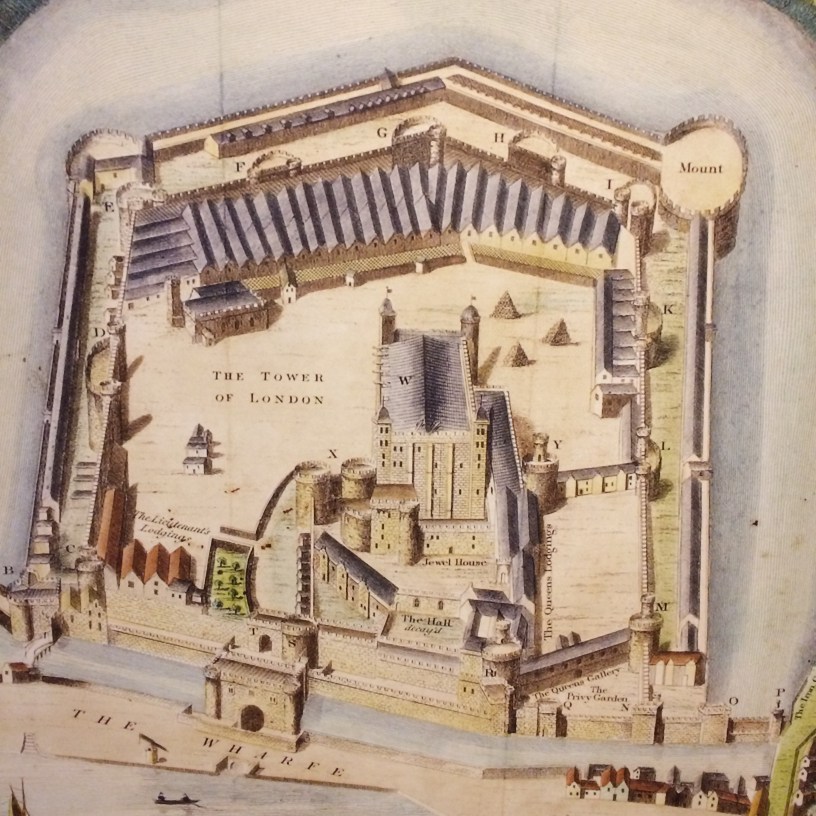
A particular discussion of forts and strategy prompted an interesting reexamination of what I thought I knew. Arthur Ferrill writes about the Late Roman Empire:
In a situation in which the enemy can almost certainly pierce the defensive perimeter, defense in depth and elastic defense are the two most likely military responses. The idea of elastic defense is simply to seek out the enemy’s attacking force and defeat it whenever possible. But defense in depth permits limited retention of frontier territory in forts manned by small forces…Defense in depth is based on the assumption that the frontiers cannot be made impenetrable (at least not at a reasonable cost), and that attackers will inevitably succeed in piercing the defensive perimeters. Such invasions can be thwarted, however, by maintaining relatively strong forts in a fairly deep band along the frontiers and a mobile army (or several scattered regionally) within the Empire. The forts must be strong enough to withstand attack and yet not so strongly defended as to become a drain on manpower weakening the mobile army. Since the barbarian invaders of the Roman period normally knew little about the techniques of siege warfare and could not place forts under blockade for fear of being caught by the mobile army, defense was in some respects theoretically realistic. During an invasion the forts served as pockets of resistance for storing food and fodder. Later, as the mobile army coordinated its efforts against the enemy with the small defending frontier forces, supplies could be denied to the invader while they were made available to the central reserve. When situated at strategic points such forts might also hold river crossings and passes thereby impeding the enemy’s movements.[1]
What interested me about this is that everything I’ve read tends to support the Nephite strategy of a defense in depth. For example, here is Nibley’s discussion of the practice:
Moroni’s defenses were based on a series of strong points, being a defense in depth, as modern defense-lines are; beside specially placed ‘small forts, or places of resort,’ towns and cities on the line were also converted into strong points (Alma 48:8). Such an arrangement can take the momentum out of any military steamroller and slow down or stop any attacking force, no matter how formidable, by forcing it to reduce one strong place after another or else bypass the fortifications and thereby leave dangerous enemy forces in its rear to disrupt communications and launch harassing counter-attacks on invading units.[2]
So far so good, Nibley provided a decent description of the chapter and compares nicely to Ferrill’s definition of defense in depth. But the only problem is that the verse that talks about a system of forts and resorts, is never really mentioned again. The strength of fortifications for some major cities such as Bountiful, and Nephihah, and Mulek are mentioned. Moroni wrote his angry letter to the government because he felt it was easier to keep those fortified cities than take them. He tried to entice Jacob out onto the plains, and needed some extracurricular climbing to secure Nephihah.

But the vast majority of the war chapters suggest something different. When the Lamanites invaded with their “wonderfully great” army in Alma 51:11, they quickly seized most of the new cities along the seashore: Moroni, Lehi, Morianton, Omner, Gid, Mulek, and in an apparent typo or a narrative that got ahead of itself, Nephihah is listed here as well (Alma 51:26, compare Alma 51:24; 59:7.) There is little strategic depth here as Teancum searched out and “met” the Lamanite army. The Nephites didn’t hold key river crossings, or have fortifications with “limited retention of territory” behind enemy lines and definitely didn’t have a “fairly deep band” of forts throughout their territory. They were relatively close to Lamanite territory, (they did call it the “narrow strip of wilderness” after all, Alma 22:27) and they had little strategic depth. In the vast majority of cases it was Nephite armies that advanced to meet an invading foe in battle. This suggests the elastic defense more than defense in depth.
There were several times that what could be described as mobile armies operated with fortresses to attack and kill armies. But the limited Nephite geography combined with lack of institutional difference between the mobile army and garrison forces (that became rather prominent in late Roman history) makes this less persuasive for the defense in depth theory.
Moreover, I’ve read that there are actually differences between refuges, strongholds (Alma 50:6), and strategic defense. What we have in Nephite society is the first two, but it’s very unlikely they had the third.[3] As David Jones wrote:
Refuges function as short-term defense and only work against an enemy without the means to linger in an area for long periods. Refuges simply have to deter an enemy from organizing an assault. A stronghold, on the other hand, must be able to withstand attackers who can maintain supply lines to the siege site. Strongholds must be large enough to protect and house a garrison when under attack. They typically possess walls, towers, and some sort of moat—wet or dry. In the “strategic systems” type of fortification, multiple strongholds connect, much like a wall, to deny enemies access over a wide offensive front…Refuges are most likely found in small-scale societies of the band or tribal type, whereas strongholds are a product of small or divided sovereignties; they proliferate when central authority has not been established or is struggling to secure itself or has broken down…Strategic defenses are the most expensive form of fortification to construct, to maintain and to garrison, and their existence is always a mark of the wealth and advanced political development of the people who build them.[4]
In short then, based on a variety of factors that include a broader examination of the war chapters, and proposed Nephite geography, and the level of society necessary to produce wide spread fortifications, the Nephites practiced something closer to what Ferrill called the elastic defense and what I called the offensive defensive. In Mormon Perspectives on War I wrote:
This strategy was used by the Confederacy during the American Civil War, permitting them to choose the locations where critical military confrontations should occur: “Then the confederacy might muster adequate numbers and resources at critical places despite overall inferiority of strength.”[5] I contend that the Nephites were successful when they adopted this strategy. They were numerically inferior and, for much of their history, “nearly surrounded” by the Lamanites (Alma 22:29). Strategically they would receive the Lamanite attack. Once the attack entered Nephite territory they would then move offensively to force a battle at the time and location of their choosing. These tactical advantages would offset their numerical deficiency and result in victory.
So What
This might seem like an insignificant detail to many people, many others might have their eyes glaze over by trying to see the difference between elastic defense and defense in depth, or the differences between a refuge and stronghold. But being precise is important. Too often people, church members, conservatives, liberals, critics, and defenders, use labels such as war monger, terrorist, and snowflake, and let those labels do the heavy lifting in the argument. Without beating up on Hugh Nibley too much, (though I do have a project that offers a much needed critique of his military arguments), he and many others used the wrong term in this case that has obscured the debate. Apologist arguments in many cases have accepted Nibley’s writings as gospel truth when those writings really needed to be critically assessed.
More importantly than being precise is how the fortifications can tell us about Nephite society. Armies don’t simply float down from the imagination of historians, but are raised, equipped, fed, and trained by the societies that field them. A stronghold defense, (the second kind of forts mentioned by Jones), correctly implies a small, struggling central authority trying to establish itself against external and internal threats.
In my next book, From Sinners to Saints: Reassessing the Book of Mormon, I often criticized Nephite leadership. One of the biggest critiques comes from the expense of maintaining fortifications and garrisons after the great war. In short, the fortifications were decisive in the war, but very few have looked at the unintended consequences of those forts. My chapter and the quote from Jones above suggest that cost of building and maintaining their strongholds led to a rapacious need for taxation and an abusive, self interested class of soldiers and government officials which fueled an insurgency and societal unrest. In plain language, the dysfunction in Nephite society seen in the Book of Helaman was caused by the reforms of Moroni during the war chapters. Jones’ analysis builds on that by providing a general rule which states that a society building extensive fortifications must be wealthy and politically complex.
This should add a great deal of poignancy and nuance to the prophetic denunciations about “getting gain” in the Book of Helaman. War is expensive, and preparing to defend against a Lamanite attack seemed to break Nephite society. (Recall the need to provide “defense at a reasonable cost” mentioned by Ferrill.) War seems like good business for some, Nephite society didn’t have ammunition supplies like World War I, but they likely had local elites that got rich off of the Nephite building programs and garrisons. The government needed more money to pay locals, or to use a modern phrase, pay their contractors. This required more taxes which could seem rapacious enough to fuel an insurgency. The soldiers benefited from the plunder associated with warfare. And the people suffered and there are many more effects. I have hundreds of pages in my book that discuss these items in further detail, but in short, the denunciations against “getting gain” likely refer to what was the ancient Nephite version of a military industrial complex.
- Thanks for reading. What do you think?
- Did the Nephites really contemplate long term strategy or was this a series of ad hoc decisions with little foresight?
- What kind of council or discussion among leaders was there? The war chapters mention a war council, there are several votes put “to the people”, but there is no policy discussion among leaders similar to those found in Thucydides. Could this discuss a fractured Nephite political leadership that Mormon tried to conceal, why or why not?
- I know the audience of W&T skews towards the non historical belief in the text, why might this matter in a purely fictional sense to help people follow Christ?
**********
[1] Arthur Ferrill, The Fall of the Roman Empire, The Military Explanation, (London: Thames and Hudson, 1986,) 31, 45.
[2] Hugh Nibley, Since Cumorah, (Salt Lake City: Deseret Books, 1986.) Chapter 11. Please note Nibley’s use of “as modern defenses lines go”, this is quite ironic as Ferrill says most scholars accept certain arguments about Roman defense because it has a modern ring to it.
[3] Though I write in my new book that the consequences of the war chapters were expensive forts and garrisons for them that had negative effects on Nephite society, so I feel some vindication based on this quote.
[4] David Jones, Native North American Arms and Armor, (UT Austin Press, 2004), viii-ix.
[5] Russel Weigley, The American Way of War, (Bloomington, Indiana University Press), 97. Found in, Morgan Deane, “Preemptive Warfare in the Book of Mormon,” in War and Peace in Our Times: Mormon Perspectives, (Draper, Greg Kofford Books, 2012,) chapter 2.
 Wheat & Tares
Enjoyed this.
BTW, what do you make of the lack of gates and siege weapons in the Book of Mormon?
Good questions. The lack of siege weapons is likely connected to not using the wheel. Two big assumptions I make is accepting the Sorenson geography, and that Mesoamericans had the wheel but didn’t use it because it wasn’t suited to the geography/ draft animals they had available. I don’t accept that they could make little ceremonial chariots but then somehow didn’t know how to make it slightly bigger. Anyways, I expect siege weapons had the same issues. They were too large and cumbersome to move across that terrain. Of course there are various issues that go into military technology including the cost benefit analysis.
Moving it across the terrain was one factor, but the strategic advantage it offered was another. Moroni’s fortifications were new, and there doesn’t appear to be this new and game changing use of them before or after, so perhaps this was such a short lived phenomen that it didn’t inspire changes or advancement in siege technology. Two items bear this out, first, as I discuss in my book, the biggest threat to the Nephites after the war chapters seemed to come from bandits living in mountains and remote areas. So it wasn’t impenetrable cities that caused the Nephites headaches (discounting the events of Helaman 4), but areas that were even less suited to siege warfare. The second point comes from the Ferrill book. He had cool pictures that showed the evolution of cities. And the early cities weren’t militarized, they were bases for soldiers but they had wide open doors, fairly small towers, and barracks that weren’t particularly fortified. All of this meant that they were used as bases for the soldiers to operate around the cities. The lack of gates you mentioned, and lack of siege equipment combined with the massive social and economic cost of building these forts likely made them short lived and hence they didn’t inspire changes like gates and siege equipment. Assuming they had the technology to do so, they were likely too cumbersome and didn’t offer enough advantage compared to simply charging with infantry. I haven’t thought too much about the lack of gates which might make a good post in the future. Thanks!
This is a really good article. It must have been serendipity, but I found it. I had an experience recently. Something that I found to be very special and remarkable when I visited a place called Fort Mountain State Park in northwest Georgia. Based upon what I saw and felt while I was there, I have no doubt whatsoever that this place and a number of other ones in the Appalachian Mountains and the Blue Ridge Mountains played a part in the final showdown of the book of Mormon. But any fights, in my opinion, may have built stacked or piled stone walls on mountain tops and ridges throughout these mountain ranges in eastern North America. This is my opinion, but I believe it is true. I would highly recommend anyone to take a trip to that place, or to do some research and find out which other mountains still retain long significant stone walls at the crest or just below the crest along the slopes of mountain tops or high hills in eastern North America. You will not be disappointed. Did geography, all of the descriptions in the book of Mormon, and, of course, the wonderful work of the wonderful Mr. Hugh Nibley will help to prepare your mind and of course I would always suggest a good prayer before walking these places to allow the spirit to teach you. What was there and what may have happened there. After seeing these places with my own eyes and walking them it bolstered my faith, in the truth of the book of Mormon, and all of the events that were recounted in the books of those prophets,seers , warriors and revelators. As for the siege weapons, Marone, I was a wise man. He was inspired. It would’ve done no good using such weapons in the area because a number of these pitched battles would have been fought in the valleys, foothills and mountains of central and eastern North America. If you have been to some of these places, you will know exactly what I am talking about. I know there are a lot of people who believe that the events of the BOM took place in what we call central, and South America. I believe some of them did. However, a great many of them could not have taken place there because of geography, geology, and Climate. Remember, climates change , and certain smaller features of geography can be changed within a few short years by nature. We have seen it happening in our own lifetime right now. I strongly recommend to anyone who is interested in these events that took place to visit any number of the monumental earthworks in the Northeastern and southeastern United States . In modern times we call these people the Moundbuilders. Moore anciently they were known in our tongue as the Hopewell and the Adena cultures. That is not what they would’ve called them selves and that is not their true name. Read the book of Mormon again and walk these places. We have to have eyes to see and ears to hear, and then we will know the stories and where they played out. God bless Nephi, and all his descendants, who fought in the name of the Lord.