

Is it fair to consider a church member apostate for disagreement over the church’s commercial ventures, including building projects? According to an article in City Weekly, Ra Puriri, a Mormon Maori, has experienced just this treatment after he vocally opposed the church’s plan to raze Temple View in Hamilton, NZ, in order to make way for new, more expensive, American-style retail and housing developments.
I traveled through Hamilton, NZ the week after Christmas 2012, and I was surprised (pleasantly) to see the 1950s style community near the temple. It was expansive, and something I had been unaware of before our trip. The buildings were modest and uniquely Mormon, looking different from most of the surrounding area. It felt like a time warp, but it also felt like home to me, like an extension of the BYU campus perhaps.
I didn’t see a lot of people. To me, it looked mostly deserted as if the Rapture had happened, leaving this intact Mormon community in place. I didn’t realize at the time that a controversy was brewing.
Shifting Objectives
Puriri’s concerns about the Hamilton re-development plans stem directly from the original mandate to build Temple View being couched as a religious imperative requiring great sacrifice from the Maori community, including his parents, efforts that are now being erased as buildings are literally razed to create a new American building style of housing that is too expensive for the current inhabitants of Temple View, housing their families originally built at the church’s behest.
Puriri’s parents, along with a slew of other Maoris and Pacific Islanders, both Mormon and not, dedicated years of their lives to constructing the school’s campus for nothing more than $1 a week, which would pay for a movie ticket or ice cream. “It was sacred and special not just to my family, but hundreds of families,” Puriri says. “Our parents collectively sacrificed so much to build it.” But, then, they had the church school’s now pathos-drenched motto to inspire them: “Build for Eternity.”
Given the level of personal sacrifice from locals to build the original community, lack of local input seems lacking in empathy at best. Locals had worked together to declare these building historically significant via the Temple View Historical Society. They particularly wanted to save the David O. McKay Building from the wrecking ball. There was also some question among local members about where the funding for the new project was coming from. Don White, a consultant for the church stated it was all from tithing funds, but E. Hamula clarified that only the stake center was from tithing funds, and that the rest of the development (homes and retail) was from non-tithing funds.
Buying for the Lord
At the root of Puriri’s struggle, former BYU professor and excommunicated Mormon historian D. Michael Quinn notes, is a Joseph Smith revelation where, he writes in an email, “God says, ‘all things to me are spiritual.'” That includes money. The LDS church’s involvement in finance and business from its early days meant various “devout Mormons have become disaffected from LDS leaders due to their involvement in commercialism.” This all comes to a painful head for Puriri, Quinn suggests, “because the LDS church’s commercialism is demolishing some of his tribal heritage of faith.”
As Quinn alludes, the church has a long history of losing members over commercial ventures, dating as far back as Joseph Smith. A prominent example is the Kirtland Safety Society that resulted in a lot of attrition in the church as members dealt with the fallout of the bank’s failure. Religion and money don’t mix. And yet we keep mixing them.
Quinn’s statement reminded me of a line from Jane Austen’s Emma in which Mr. Knightley is explaining to Emma that Mr. Elton (the clergyman who, like all clergymen in her writing, represents the Church of England) will act on his own interest:
“Elton may talk sentimentally, but he will act rationally.”
The church may talk sentimentally, but it will act rationally–like a business. The church has abandoned many other ventures that were created with the sweat and sacrifice of church members, once those ventures were deemed to be obsolete. Perhaps it’s naive to expect otherwise.
Puriri sees the new development plans as mostly commercial and contrary to the original mission of the area which was built on members’ sacrifice for spiritual aims and not commercial gain. They were told that they were building for eternity, and that their sacrifices would be for the gain of their posterity. When he resisted and organized a group to oppose the demolition of Temple View, he was cast in the worst light possible:
The area president, identified by Puriri and Macdonald as Elder David S. Baxter, asked them to desist, and made clear opposing the development was opposing God: “These are prophetic decisions and not merely some corporate physical facilities determination,” he stated. Letter recipients had to make a decision: “your will, or the prophet’s will. It is as simple as that.”
Puriri was finally granted a meeting with Bishop Dean Davies at church headquarters. He was assured by Davies in a follow up letter:
“Residential homes that are functionally obsolete will be renovated and made available to residents and families.”
Get Out & Shut Up
Unfortunately, according to the City Weekly article, only a few days later, 30 residents of Temple View received an eviction notice from the church dated a week before his meeting with Davies, effectively making Puriri and his father’s assurances to the community that their concerns were heard and understood, baseless claims; they felt not only lied to, but also that they had given false hope to their friends in the community who trusted them. Tenants were subsequently told that they could remain for a few extra months provided they agreed not to oppose or protest the church’s development plans.
Last month, Meshweyla Macdonald attended a hearing in Hamilton on the LDS church’s application to knock down the David O. McKay Building. She represented the Temple View Heritage Society, a group Puriri is part of, and presented a 47-page document to a committee tasked with deciding the fate of a building that once beat to the heart of a united community.
Macdonald outlined how local church leadership had used their ecclesiastical rank to push for support from members for the church’s plans. “The development that has happened and is proposed to happen has destroyed much of what was special about Temple View,” she writes in an email in response to questions from City Weekly. “It’s just another place now, that happens to have a temple in its proximity.”
After local news covered her presentation, she was criticized on social media for questioning the church’s will and for airing dirty laundry in public. “I think there is shock [by church members and leadership] that black-and-white evidence of church activity that has resulted in undue influence, breach of fiduciary relationship and thwarting of democracy, and free speech has been put up for public scrutiny,” Macdonald writes in her email. A decision on the building’s fate is expected mid-June.
This is just one example of the church’s commercial ventures. Other controversial ventures include City Creek Mall and the urban development / gentrification near the Philadelphia temple site and rebuilding the MTC that would block mountain and temple views for nearby residents. Members who oppose or disagree with these ventures have often been treated as if their dissent over what they see as a secular matter is evidence of apostasy, an effective strong-arm tactic used to quiet them. It’s unclear whether these tactics are local ones, instituted by individuals who simply believe that all disagreement with church leaders constitutes apostasy, or whether they are systematic and condoned by the organization to further commercial agendas. For an organization to make unilateral decisions without input from those impacted is not exactly a recipe for alignment and good will.
Privatization vs. Public Use
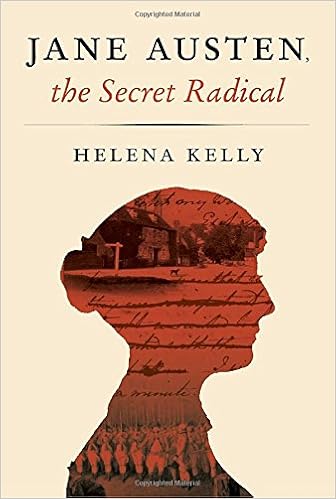 As I read through the analysis of the New Zealand development, I was reminded of an essay I recently read about Jane Austen’s subversive agenda in her novels. One of her social criticisms hidden in plain sight is found in her much-loved book Emma. While the novel is ostensibly about a wealthy match-making miss who ultimately falls in love with her wealthy neighbor, Mr. Knightley, what’s going on in the background, almost without comment, is the privatization of public lands. From Wikipedia:
Enclosure (sometimes inclosure) was the legal process in England during the 18th century of enclosing a number of small landholdings to create one larger farm. Once enclosed, use of the land became restricted to the owner, and it ceased to be common land for communal use. . . . Under enclosure, such land is fenced (enclosed) and deeded or entitled to one or more owners.
Enclosure could be accomplished by buying the ground rights and all common rights to accomplish exclusive rights of use, which increased the value of the land. The other method was by passing laws causing or forcing enclosure, such as Parliamentary enclosure. The latter process of enclosure was sometimes accompanied by force, resistance, and bloodshed, and remains among the most controversial areas of agricultural and economic history in England. Marxist and neo-Marxist historians argue that rich landowners used their control of state processes to appropriate public land for their private benefit.
Enclosers got richer and commoners had to go work in mills and factories, often suffering deplorable conditions. Mr. Knightley is building hedgerows which keep migrant groups like the gypsies from being able to live off the land as they had for hundreds of years prior. Suddenly, hunting became poaching, and land owners controlled their tenants’ building and production decisions by holding the lease to their parcel of land. In the novel, Emma’s friend Harriet is attacked by desperate gypsies behind a hedgerow, a byproduct of their ability to live off the land being curttailed. Land owners justified this as a way to beautify the land by making a wilderness into a garden (fences, turnstiles and hedges demarcating boundaries between tenants), but it had the added benefit of enriching them at the expense of the commoners who were forced to leave the land.
Enclosing put all the power in the hands of wealthy landowners who could make decisions without input from the locals who were impacted. By contrast, commoning puts decisions about land use into the hands of communities. In essence, this is a consolidation of power into the hands of the elites rather than the common folk.
In a similar manner, the City Creek project changed a public area of downtown Salt Lake into private property.
University of Utah associate professor in the College of Architecture and Planning, Stephen Goldsmith was Salt Lake City planning director under Mayor Rocky Anderson and took the initial concept for City Creek to the church. But the end result was far from what he had envisioned, particularly in terms of what he angrily bemoans “the privatization of the public way.” What were once public thoroughfares across from the neo-gothic lines of the iconic downtown LDS temple, became, as the signs on the entrances to the mall proclaim, private property, signaling that those who choose to enter leave their civil rights outside.
He says such historic patterns of development are far from unique to the LDS church. Those in financial control of “urban renewal” can create a landscape in their own image, Goldsmith says, “so it’s for people like them. That’s what controlling men like to do.” He perceives American colonialism stiffening the spines of those driving property development in Temple View.
Goldsmith finds it heartbreaking, he says, how Puriri has sought over the years to negotiate a bridge between the earthly, spiritual values of the Maoris in Temple View and the colonialism of his church. “It’s a typical, tragic example of the way colonialism undermines authenticity and the right to self-determination.”
The Temple View project connotes a shift in thinking from the original project to the contemporary one. The original project used a commoning mindset with local families sacrificing time and money to create a community for themselves and the church. Today’s approach is a complete philosophical shift: away from local input and without local participation and sacrifice. Instead, it’s simply forcing the will of distant decision-makers to remake the area in an image of their choosing, one that dispossesses locals.
Buying Righteousness
Speaking of the types of places the church wants to create, is a gentrified mall or an American-style housing and retail development really going to get the results church leaders are hoping? Are there spiritual gains to be had from beautifying urban areas, or are these just means to an end (such as getting permits for building a temple in Philadelphia)? Is the beautification designed to increase temple attendance by reducing pan-handlers? [2] If so, this approach is just one possible way to do it.
Urban renewal projects have become popular to revitalize areas by bringing wealthier people into unkempt downtown areas, investing in new buildings, parks, and public spaces. Privatizing the public spaces is a way to do this without actually changing the people, just by enforcing rules on them to gain compliance that improves appearance or increasing costs so that low-income individuals cannot gain access. Ezra Taft Benson famously said:
“The Lord works from the inside out. The world works from the outside in. The world would take people out of the slums. Christ would take the slums out of people.”
And gentrification would kick the people out of the slums by making the slums into housing they can no longer afford. But does privatization and control really change people or just create the appearance of change?
“The top 1 percent of Mormons shop at City Creek,” he says, ticking off such high-end stores as Tiffany & Co. and Porsche Design. “We could do more with that money than prop up a pretend shopping center that no one uses,” Puriri says.
Prop up because, he says, a senior church official told him and his brother in separate meetings that to keep Sundays holy, they paid retailers to stay shut. Several property sources familiar with downtown argue that, while the church wouldn’t pay the City Creek anchor-stores Nordstrom and Macy’s to stay closed on Sundays [1], the lease arrangements might well include a deduction to reflect some part of the estimated revenues lost from one of the biggest shopping days.
Is paying a store to stay closed on Sunday really the same thing as keeping the Sabbath day holy? On the one hand, it does mean that individuals won’t have to work on Sunday, a laudable aim, but on the other hand, it is bribing businesses to do what the church wants. These businesses aren’t making a religious sacrifice (which is what is normally entailed in keeping the Sabbath day holy); they are making a business decision that would normally be a loss but has had the sting taken out of it by a subsidy. That’s the appearance rather than the act of keeping the Sabbath day holy.
Conclusions
No building project is going to have 100% agreement on its merits. Someone is always going to oppose tearing down an eyesore in the name of history. But these types of disagreements don’t have to connote personal apostasy. If church leaders can make mistakes about race or polygamy or evolution, certainly in purely secular matters where politics, philosophies of men, and subcontractors are so obviously involved, decisions can be questioned and even opposed. Making agreement in purely secular decisions a condition for being treated as faithful is a self-fulfilling prophecy. If we are to sustain leaders, we need to have room to disagree with them on matters that are obviously not gospel-driven without fear of reprisal.
In business, we used to use a formula to determine how effective an idea was going to be. The formula was [idea’s merit] x [buy-in] = [effectiveness]. We don’t gain buy in by strong-arming locals to support decisions that affect them more than they affect the decision maker. It’s an idea that serves leaders well in determining whether their brilliant idea is really going to get the results they want. In Field of Dreams, “If you build it, they will come,” but in real life they will come if you work with them to build it.
While I suspect that Michael Quinn’s observation that “all things are spiritual” is a mantra still upheld by today’s church leaders, that doesn’t mean that we don’t all have different ideas how to achieve those spiritual aims through temporal projects. While a referendum to the church at large is impractical, involving locals more frequently and really listening to them rather than basing all decisions in a location halfway around the world and relying on non-decision making lackeys to defend those decisions to the death might improve results just a skosh.
Discuss.
[1] Too expensive?
[2] See also definition of irony.
 Wheat & Tares
Thank you for this. I had heard about this and it was great to get the full story. Quick question. I was under the impression the church did get buy in for the Philadelphia Temple/mall? Either way, The Temple view demolition sounds like a train wreck. I wish culturally discussing these issues wasn’t so taboo. Tough discussions make for better decisions.
So much for “Succor the needy.” Almost literally “grinding the faces of the poor.”
This sort of thing drives me crazy when secular governments do it in the US, often using eminent domain, zoning, and building regulations to force the redevelopment of low-income housing areas and the relocation of low-income families. Whereupon, of course, a great hue and cry is raised by these same people about the lack of affordable housing.
If one were Satan, and one were trying to design a plan to make the situation worse while pretending to work in everyone’s best interest, to paint society into a financially unsustainable corner and destabilize families and lives, and to lead to eventual upheaval and collapse, one could hardly come up with something better. Assuming one were willing to play the long game.
intriguing to note the mention of Elder Hamula in this piece
Ra:
“$1.5 million each for three condos with a view of the Auckland harbor is excessive. Area authorities could have lived in the church owned homes in Temple View.”
http://www.patheos.com/blogs/kiwimormon/2017/03/ugly-cost-making-temples-pretty/
If Ra had that right, even in New Zealand dollars (roughly 2/3 of a US dollar), it was indeed inappropriate in my view. This is quite bitter in view of the comment of one GA 70 (a former member of that Pacific Area Presidency) to me and a few others expressing disgust with senior missionaries who “only” go on missions so the Church will take care of their healthcare needs (which it doesn’t for US missionaries outside the US, except perhaps through the limited senior missionary healthcare insurance plan that requires them to pay monthly premiums in addition to their ongoing Medicare part B and supplement payments which provide useless coverage while they are out of the US). I suspect like others of us to varying degrees, GAs mostly have no concept at all of their sense of entitlement to lavish expenses outside of their “modest” salaries.
“As Quinn alludes, the church has a long history of losing members
over commercial ventures, dating as far back as Joseph Smith.”
____________________________________________________________
Yep…It’s called apostasy.
One must always weigh such acts before committing to them, then determine if it’s worth one’s eternal standing before God. In my view, it’s permissible to meet with Church leaders to discuss questions and concerns over Church investments. It’s _not_ worth it, though, to sacrifice one’s spiritual gifts and future on the altar of petty disagreement. Apostatizing from the Church is always a bad idea because, one, leaving the Church doesn’t harm Church leaders one iota (it harms those leaving the Church) and two, it rarely, if ever, changes the outcome. Even if one accomplishes one’s goal through apostasy, it’s hardly worth the price in the end. Nor is it worth risking one’s eternal life on a perceived moral dimension (that is, the Lord’s siding with you over His servants). It didn’t work for those in Kirtland, Ohio, neither did the Lord decide in Oliver Cowdery’s favor when Cowdery was convinced he was right. Instead, he lost nearly everything.
By discussing one’s concerns with church leaders, one can make a pitch and work toward resolution without jeopardizing one’s eternal life. But anyone who seeks to wears excommunication as a badge of honor is, in my opinion, a fool.
Thanks for this post. I had read that City Weekly article and was saddened by what is occurring. These kinds of projects (i.e., commercialization and real estate development), regardless of the motives, detract from the work of Jesus and leave pain in their wake. It’s folly yet we keep doing it over and over again. Surely we, as the covenant people of God, can do more with our resources than build high-end housing projects, upscale condominiums, and malls.
Regarding the MTC project, the residents who opposed the expansion were explicitly told it was a secular matter. Only when the Church’s plans seemed doomed did the stake president and local leadership read a letter from downtown SLC “inviting” the members to sustain the prophet. The issue was then explicitly deemed an ecclesiastical matter and folks fell in line. You can read about it here:
http://www.heraldextra.com/news/local/central/provo/neighborhood-chair-drops-mtc-fight-after-message-from-church/article_dba7b325-5c70-566f-b6af-96c523e1ff84.html
I have followed this story for a few years now and it is deeply disappointing to have it turn out this way. When the Temple was built in 1955 at the literal end of the earth, it was for the people of New Zealand, Australia and the Pacific Islands. The blood and sweat of the members in NZ is what made it happen and the community thrived because of it and the College.
Now, our businessmen-leaders come along and think they know better how the area should look and should “progress.”
When the people object, like in many other examples, they are told, “Follow the Prophet.” Even if the Prophet has nothing to do with the actual implementation of the “plan.”
I can understand the City Creek Mall to some extent. I don’t understand this situation at all.
Cody, thanks for that link. Wow. That is . . . something.
Every stake I have lived in in Australia has a family of Pururies. They were seen as strong members. Family is strong to the maori.