
Today is Memorial Day in the United States. It’s supposed to be a day we remember our war dead, although many use it as a time to remember the dead. This weekend, I visited my sister’s grave and my brother’s grave. I took the occasion to visit some friends I haven’t seen in years, and it was good catching up with them.
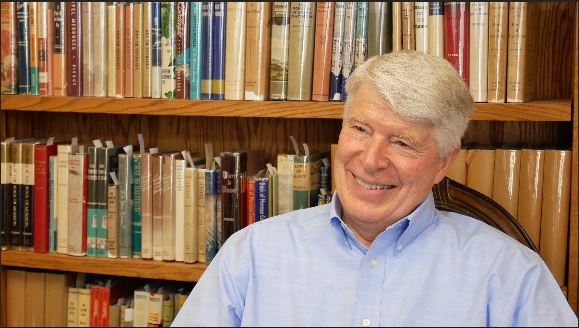
I’ve been interviewing Curt Bench. Back in 1985, he worked at Deseret Book in their Rare Books Department. (He is now the owner of Benchmark Books.) We’ve been reflecting on his memories of both Steve Christensen and Mark Hofmann. Steve was killed when he picked up a package loaded with a pipe bomb planted by Mark Hofmann. Curt had the unusual position of knowing both men.
I remember this story well, but I know it is a completely new story to many, and I learned a lot from Curt. Hofmann was a master forger. Bench tells about some of the items Hofmann was able to create. From part 1 of our interview,
Curt: Oh we purchased lots of things from him, and not all Mormon stuff too. I mean he presented us with things that were fascinating, but most of it was Utah or Mormon related. Sometimes we would take things on consignment. I remember we had a Martha Washington document. Some of the things, I mean I could recall some of the things that came through our hands. There was a promissory note that was “signed” by Orrin Porter Rockwell with his X, Elijah Abel the [early LDS] black [man] who held the priesthood, the document that had his X. Mark was good at doing X’s apparently. {chuckles}
We had a Daniel Boone document {early American frontiersman}. I’m just trying to think of some things that weren’t just in the Mormon field. Some things were books but quite often they were documents and so this was my big foray into that field. I was a relative novice when it came to Mormon manuscripts and documents and so I kind of let him guide me in a lot cases. When he would—he wasn’t dramatic at all and didn’t seem like he was trying to sell you. He wasn’t a used car salesman type at all. He was quiet and introspective but he made a big deal about things, but often he would say, “It’s a nice item.”
The Mormon document that was most explosive was known as the White Salamander Letter, and led to the bombings. From part 2,
Curt: Well the thing that was such a big deal about the Salamander Letter, or White Salamander Letter was that it was in the hand of Martin Harris, and there wasn’t anything previously known, and it gave a much different story about the [Golden] Plates and what happened at the Hill Cumorah. It was such a dramatic departure from the traditional story because Joseph is there to get the plates in the hill and there’s a white salamander in the hole and it’s transformed into a spirit and it had all these magical or folk magic kinds of connections and so on that nobody had ever heard before.
It was just such a different take on the traditional story as one could imagine, and so he [Mark Hofmann] had claimed to have gotten it back east, a letter that came into his hands through a compatriot of his when actually later we find out that Mark created the document. It kind of turned Mormon history on its head and then you have people squaring up on each side, the scholars that are trying to make sense of it and others saying there’s no way that could be true.
Steve [Christensen] was paying researchers, I mean this was over a period of time obviously, to look into it and we had some genuine scholars looking at why this all made sense in putting it into the historical context of folk magic, and the Smith family’s belief in folk magic and those kinds of things…
Curt remembered Steve Christensen, in part 3 of our discussion.
Curt: I would consider Steve a friend, although we didn’t ever become close friends where we talked all the time but he was a very good customer. I respected him greatly and really liked him. We had frequent conversations. He was just very open about everything. He would let you borrow whatever you wanted as far as research material. He was a very generous person. He gave away lots of books.
GT: Now is he related, I know there’s a big Utah clothing store, Mr. Mac, [owned by] Mac Christensen. Is he related?
Curt: Mac is his father. Steve worked for his dad for a long time, and then left that business, the clothing business and went into financial services.
GT: I believe Mac does something with the Tabernacle Choir? Or he used to. I’m not sure if …
Curt: Mac was president of the choir for a while, for several years.
GT: Ok. I know a lot of people, especially if you’re from Utah saw Mr. Mac commercials.
Curt: Oh yeah. You can’t miss them.
GT: I bought my suits from Mr. Mac.
Curt: Right. He’s a great guy, was a very generous man. He’s been a good friend as well.
I also asked about Kathy Sheets, the second victim of a Hofmann bomb.
Curt: Yeah. I didn’t ever know her. It was only later. She was the second victim on that fateful October 15, 1985. I didn’t ever have the pleasure of meeting her, but I have only heard really good things about her, a wonderful human being. She figured into the whole Hofmann scheme. As you know it was a very long, complicated story. It’s difficult to get to the heart of it. She was just a victim of his machinations, as he’s trying to buy time and to throw the authorities and whoever off the scent so to speak. It was a diversion which makes it all the more cold-blooded.
Steve was his first victim, that was that morning, and then she was early afternoon. Then, I don’t know how much background you want, but that day I talked to Mark on the phone, the day of the bombings.
GT: Oh really.
Curt: Several times, probably six or seven times. I called first to warn him about the bombings, well bombing at that point because there was already a lot on the news. I was actually driving to work that morning and they said there was a bomb that had gone off in the Judge Building. It was just a few blocks from where I worked. They even as I recall gave the office number and it said a young businessman had been killed. I only knew one person in the Judge Building and that was Steve Christensen, so as soon as I got to my office at work I looked up in my directory under his name and there was that office number at the Judge Building and I was just sick physically. I mean it was horrible. I felt that I needed to confirm. They didn’t give a name on the news.
It just so happened that Mac Christensen’s store, the main store was in the ZCMI Center where Deseret Book also was. I would see him and say hello down there. I ran down to his store and he was talking to two men. I don’t know who they were but there were tears streaming down his face.
GT: Mac Christensen’s face.
Curt: Mac’s. That’s when I knew that it was Steve. So I went back and called Mark Hofmann’s phone.
I was surprised to hear that Curt called Mark to warn Mark that there was a bomber out there! (I hope you check out these conversations.) Next week I’ll discuss the third bomb blast. Were you aware of this story? If so, what memories do you have?
 Wheat & Tares
Because this was before I went to BYU (in 1986), I wasn’t really aware of it. It wasn’t a big news story in Pennsylvania (and for you young folks out there, no 24 hour news, no internet, only 3 channels of TV)–all this added up to the story not being one I ever heard of until I was at BYU the next year, and even then, I found it very confusing. I didn’t know anything the forgeries. These controversies seemed very Utah-centric to me at the time. They are very significant for the church, though. It just wasn’t well known outside the west due to the lack of national interest.
I think I remember something about this. One memory is of spending the night on the floor of the drunk tank at the Salt Lake County jail, (it was right downtown in those days) squeezed under a bunk after having been arrested and detained on a material witness order by the BATF. This happened 3 days after the bombings. I was eventually indicted by the US district attorney for possession of an unregistered automatic firearm. Later the charge was dismissed. It was national news, though short lived. It was news in the intermountain west. Sometimes the weather and sports were severely curtailed to make more room for the news.
My wife and I moved back to Utah in 1985. I worked downtown in the federal building, and I would often catch lunch with friends in the food court at the mall and walk right past Mr. Mac’s and Deseret Book. This was big, big news and intrigue, at least in my world. As I recall, the wife and I would drive right down the same street almost as the one where the third bomb went off everyday back then commuting from Davis County .
Shannon, you’ll definitely want to check out our conversation (Part 4) next week. Curt talks about you! That was a crazy year, and crazy story!
I was growing up in Maryland when this happened, and had no memory of it unfolding, or of it being discussed by my parents. What I do remember was reading in the Ensign about Hofmann’s claimed discovery of the Joseph Smith III blessing, in which Joseph Smith Jr. effectively appointed his son successor (“Fraudulent Documents from Forger Mark Hofmann Noted,” on the Church’s website today). Then-Elder Gordon B Hinckley described the blessing, downplayed its significance, emphasizing it was a father’s blessing not official church revelation. This is from the May 1981 Conference Issue of the Ensign, well before the blessing transcript was revealed to be a forgery.
I first became aware of the bombings while shopping with my dad when I was a teenager. I noticed a copy of A Gathering of Saints by Robert Lindsey (1988). The back cover billed the book as a “real-life spy story.” In hindsight, I’m not sure that’s a reasonable representation of what happened. I turned to my dad and asked him if there were spies in the Church (as in infiltrating and spying on the Church). My dad said something to the effect of probably, or it wouldn’t be surprising. We didn’t discuss it further, neither did we buy the book. Not until I served a mission in the mid-90s did I hear the detailed story as recounted to me by a companion who grew up in Utah.
I well remember the times.
Why it was so big:
1. Hoffman almost pulled it off. His paranoia got the best of him. He couldn’t stop himself from escalating the risks.
He could have stopped short of the bombings and probably never been exposed.He is among the greatest forgerers to ever be caught (the really great ones have not been caught).
2. He almost succeeded creating documentation that would have changed bedrock perceptions of lds church history. I think that over time the Salamander letter and the additional similar “discoveries”, if they had never been shown to be a fraudulent, would have undermined Joseph Smith’s claims to prophethood beyond plausible belief for most people.. We would have been forced as a religion to distance ourselves from Joseph Smith, to survive. The evangelicals were telling us that the Mormon hoax was exposed. Here was proof positive that Joseph Smith was anything but a prophet, rather a magician, a pagan.and a complete fraud . They were dancing on the fresh grave of Mormonism.They expected a grand Mormon migration into their camp.
3. President Hinckley was running the church, the other three were in worse shape than President Monson is now. And President Hinckley was deeply involved with Hoffman on nearly a daily basis, negotiating and paying piles of money trying to buy up and keep hidden these damaging documents. He told the police, in the course of a murder investigation, a few ” stretchers.” in a misguided effort to protect the church since it was the initial suspect for the bombings. If Hoffman had not taken a plea bargain, citizen Hinckley would have been put on the witness stand and subjected to an embarrassing public cross- examination by Hoffman’s attorney that might have tarnished his reputation beyond repair. I found it odd that Hoffman didn’t get the death penalty, it is hard to imagine a better case for it on grounds of the social damage he nearly wrecked.
So you are the real Shannon Flynn? I thought you were a copy-cat all this time. Wow. For the record I an NOT the real Mike Hanson (one of Hoffman’s altered identities).
Mike, my interview with Curt Bench (part 5 I believe) will cover the court/sentencing issues you brought up. In short, Hofmann pleaded guilty to 2nd degree murder (why not 1st?) and got 5 to life if memory serves. It was a plea deal to avoid the death penalty and Hofmann agreed to spill the goods on his forgeries. When he came up for a parole hearing, the judge said he expected Hofmann never to be released from jail because Hofmann still had no remorse for what he had done. He’s a real piece of garbage, and quite a sociopath.
Shannon, I’ve been reading the book Salamander, and I didn’t realize how critical of a role you played, especially at the beginning of the book. Send me an email to rick at gospel tangents dot com if you are interested in doing an interview. It would be very interesting to hear your side of things. In part 4, Curt talked about you two checking your car for bombs. I can’t imagine being that close to a serial bomber!
Articles about the Joseph Smith 3rd “blessing” document were in TIME magazine and I believe NEWSWEEK. At their 1982 World Conference, the RLDS Church authorized the document to be included in the historical appendix of their D&C. After the case of fraud was proven, the 1st Presidency ordered its removal and the conference approved.
Forensic technologies in the mid-eighties, improved from 1981, was the only thing that settled the issue.
I need to correct a few things. One of the reasons Mark was so successful was that the content of the documents he forged could all pass the “within the realm of possibility test”. The Josiah Stoal money digging letter was content that was somewhat known at the time and has since been expanded and confirmed. The same is true of the Martin Harris letter . It was the catalyst , at least in large measure, for Mike Quinn’s book, Mormonism and the Magic Worldview. This information was new and shocking to the average member, but was well known to serious historians. President Hinckley only facilitated the purchase of a couple of pieces and didn’t pay that much money. In point of fact, the church passed on the Salamander letter because of the cost. Mark thought he could really take advantage of the church with the Salamander letter but ended up with significantly less money than he originally hoped for.
The plea bargain agreement was as good as Robert Stott could have gotten at the time. Two counts of Second Degree murder, two counts of Communication fraud. I will give more info in another comment .
BTW,Robert Stott was the lead prosecutor at the time. It was important at the time for the families of the victims that Mark admit in open court he had committed the murders so there was not any lingering doubt. The prosecutors knew that this would have been a difficult, expensive and very drawn out trial. The basics of the deal were worked out by Robert Stott and Ron Yengich at a party they had attended. One of the things Ron Yengich insisted on as far as Mark was concerned was that Mark confess to the crimes in front of his father before the plead deal was announced. I can’t imagine what the scene must have been for both Mark and his father. I have no sympathy for Mark in this scenario, but I do for his father. It is my belief that this whole episode was the proximate cause of his father essentially loosing his mind and premature death.
The Church was never a suspect in the bombings, and President Hinckley would have never had to appear on the stand. The issue was resolved during the preliminary hearing when a deal was made between the county attorney’s office, Ron Yengich and the church’s legal dept. that Pres. Hinkley’s testimony would be entered on stipulation and he would not have to appear. I would believe that would have been the case if it had gone to trial. Pres. Hinkley did not fabricate any testimony. He could have been guilty of perjury however since he did allow false information to entered as testimony by saying that the Church had no material that could be recognized as a part of a McClellan collection. That was in fact false, but I don’t believe he knowingly made a false assertion. By this time the Church’s historical dept had been decimated and it could be true that some employees either knowing mislead Pres. Hinckley or were too incompetent to know what material they had. I publicly brought this up at the time and as a result am still barred from any accesses to church departments behind security screening. I was not on a crusade, I was just responding to questions from Lynn Packer. ( I personally believe crusades against the church are foolish and childish.)