

That is a fun question.
What we know:
There are two different narratives about the book.
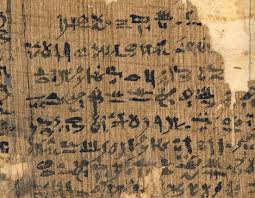
First, Joseph Smith was inspired by or translated a twelve foot scroll in black and red letters. From that he obtained The Book of Abraham.
Second, He then attempted to match up the Book of Abraham with a Book of Breathing, in something that looks like reverse order. But he clearly tried to tie the two of them together.
The Book of Abraham contains the initial text of our temple ritual and several Abraham stories that have been recovered since Joseph Smith’s time but that most agree Joseph Smith did not have access to.
Now it is clear that the Book of Breathing is not The Book of Abraham.
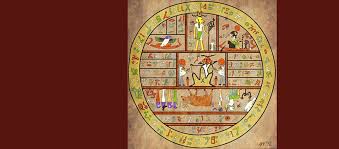
While it has been called a grimoire, a funerary text, and a number of other things, to quote from Wikipedia:
The Books of Breathing are several late ancient Egyptian funerary texts, intended to enable deceased people to continue to exist in the afterlife.
The simple answer is that a Book of Breathing(s) is a shortened Book of the Dead. The longer answer basically boils down to the shorter summary above. A Book of the Dead contained all the information, rituals and related material that someone who died needed in order to ascend back into heaven and be reunited with their souls to breath again.
To quote from Wikipedia again:
The Books of the Dead from the Saite period tend to organize the Chapters into four sections:

- Chapters 1–16 The deceased enters the tomb, descends to the underworld, and the body regains its powers of movement and speech.
- Chapters 17–63 Explanation of the mythic origin of the gods and places, the deceased are made to live again so that they may arise, reborn, with the morning sun.
- Chapters 64–129 The deceased travels across the sky in the sun ark as one of the blessed dead. In the evening, the deceased travels to the underworld to appear before Osiris.
- Chapters 130–189 Having been vindicated, the deceased assumes power in the universe as one of the gods. This section also includes assorted chapters on protective amulets, provision of food, and important places


It is more than fair to say that this is the Egyptian form of the temple ritual that explains the origins of life and how the deceased ascends with glory into the heavens.
We also know that originally Joseph Smith said that the record purported to be by or from Abraham. That has been shortened since by later editors (the “purported” was dropped out).
What we don’t know:
We don’t know how everything fits together. We don’t know where the 12′ scroll is (everyone assumes it was burned up in the fire). We don’t know why Joseph Smith then went back, and with the members of the School of the Prophets he tried to tie The Book of Abraham into the Book of Breathings he had — in an endeavor that was never finished.
Unfortunately the School of the Prophets didn’t keep notes on what they were doing with the Book of Abraham that tell us much and The Book of Abraham was not a finished translation process.
Which means?
It means that we do not have a complete story that comes together with a neat wrapped conclusion. We don’t even have a complete set of what everyone agrees are the facts.
We do have a strong temple text. We do have Abraham stories that are legitimate.
When we used to study the Book of Abraham in the late 70s we used to study it in connection with Hamlet’s Mill.

Just read the top 3-4 reviews at Amazon to get a good idea of whether or not you want to order the book from inter-library loan. The reviews provide an excellent context for the Book of Abraham as well.
Some people find The Book of Abraham a very strong support for their testimonies. Others have issues. The history and the facts lend themselves to every interpretation you might want depending on what you choose to focus on and the weight you want to give different records of what people thought the facts were.
Which is probably why you were not told more about The Book of Abraham.
 Wheat & Tares
My father-in-law, a former bishop, has said on several occasions that the Brigham Young never approved of the Book of Abraham as scripture, and it wasn’t canonized until after his death. Apparently Parley P. Pratt first published it in England. He wonders why Brigham was uneasy over the Book of Abraham.
Nicely done Stephen.
Hi Stephen,
Where are you getting the 12 foot scroll from? My understanding was that there was a lot of disagreement about how much papyrus is missing, with different estimates given.
“There are two different narratives about the book.”
Hate to be dense, but I’m not sure I understand what you mean by this. Isn’t another “narrative” that the book was simply made up?
“The Book of Abraham contains the initial text of our temple ritual…”
Can you elaborate on this?
“It is more than fair to say that this is the Egyptian form of the temple ritual….”
Why is that?
Joel: Quote: unrolled on the floor, [it] extended through two rooms of the Mansion House” (Dialogue, vol. 3, no. 2, 1968, p. 101)… Which gets into the estimate that it was 12′.
Brian: that is merely an attack that doesn’t engage. Much like the theory it was all an elaborate prank by the wandering Jew. That is humor that doesn’t engage the material.
It is interesting that he had more than one Book of Breathings/Book of the Dead and that they tried to link them all together.
Stephen–think what you will, I had three questions there. Ignore them or answer them, your ball game.
For some fun on style metrics as they relate:
http://www.exploringsainthood.org/explaining-book-of-mormon-styles/
Brian, I answered the first. Your post tells me you aren’t interested in answers so I’ll let the rest go.
This is another aspect of the gospel that confuses me. I feel that it is approaching impossibility to come to a firm logical conclusion about the BOA/POGP. The church essay on this gave me no clarity.
Brian,
“There are two different narratives about the book.”
You’re actually correct. The two basic narratives are (1) Joseph received some sort of divine revelation, or (2) he didn’t. Since people here are typically interested in Mormon thought, we’re gonna go on assumption #1 and play with the idea of how in the world Joseph got our text of the Book of Abraham from the papyri in his possession. The current theories:
(A) Catalyst – Merely receiving the papyri got Joseph thinking about Abraham and he received a revelation similar to the one from John in the D&C (didn’t have any source text in his possession).
(B) Missing Text – The parts currently existing aren’t the original portions of that Joseph got the Abraham stuff from. It was common in the old papyri to mash up a whole bunch of different writings, so maybe these were just parts in the “other” sections.
(C) Alternate Jewish Interpretation – this one still confuses me, so I apologize if it’s not clear. It was common for stories in one culture to be brought and adapted into other cultures. The OT book of Proverbs is commonly understood to be an adaptation of an earlier piece of Egyptian wisdom literature. The old Jewish tale of Abraham and Lazarus in the underworld was apparently adapted from an Egyptian tale about Osiris. Osiris was in other contexts identified with Abraham, so a Jewish understanding of the funerary texts regarding Osiris and his surrounding mythology very well could have been quite different from how Egyptologists believe ancient Egyptians understood them.
“The Book of Abraham contains the initial text of our temple ritual…”
He’s just referring to the text as contained in our Pearl of Great Price, not the papyri fragments themselves. LDS temple imagery and phrasing relies heavily on the English text of the Pearl of Great Price.
“It is more than fair to say that this is the Egyptian form of the temple ritual….”
Stephen’s kind of mashing up a few ideas, but the Book of Breathings (which both Mormon and Non-Mormon scholars agree is the text of the existing papyri pieces) was a funerary/initiation text. It’s of the same tradition as earlier “funerary” texts (the Book of the Dead was another text used hundreds of years earlier). The quotes around the word funerary are because we now know that these weren’t just meant for dead people, they often had significance and application to living individuals. Nibley figured that the living individuals who went through these initiation rights were probably only priests and kings, but the rites seem to have been applied more broadly when considering the afterlife. When we discuss Masonic or other influences on our current temple rituals, many faithful scholars (Nibley and others) like to point out that there are elements of initiation rituals common across many different cultures in the ancient world. The temple endowment is our version of an initiation ritual. Here’s a quote from the Encyclopedia of Mormonism:
Many sacred ceremonies existed in the ancient world. Modified over centuries, these rituals existed in some form among ancient Egyptians, Coptic Christians, Israelites, and Masons, and in the Catholic and Protestant liturgies. Common elements include the wearing of special clothing, ritualistic speech, the dramatization of archetypal themes, instruction, and the use of symbolic gestures. One theme common to many-found in the Egyptian Book of the Dead, the Egyptian pyramid texts, and Coptic prayer circles, for example-is man’s journey through life and his quest, following death, to successfully pass the sentinels guarding the entrance to eternal bliss with the gods. Though these ceremonies vary greatly, significant common points raise the possibility of a common remote source.
Hope that clears a few things up.
Just to clarify – it’s the Osiris/Abraham connection I don’t have any experience with. The Proverbs connection to Egyptian literature is something I’ve studied and believe to be valid. Lady Wisdom is definitely a Jewish understanding of the Egyptian deity/concept Maat.
JS didn’t have a clue what he was translating. He got it totally wrong, not even close. It’s made up plain and simple. This is the end of the story.
Fascinating comments Mary Ann. I was reminded of the following by Kevin Barney:
and:
http://publications.maxwellinstitute.byu.edu/fullscreen/?pub=1098&index=10
Had Joseph simply spoken the BoM who would have believed him? The plates were a prop (stone and face in a hat, plates out of sight) and so was the papyri. Later after being confirmed as a prophet he simply spoke the D&C and people DID believe him! Confirm the value of each scripture with the Spirit or don’t! It’s really that simple. But don’t get upset over the validity of the props they are a diversion and always have been!
#13 – Mormons & Non-Mormons agree that the text on the existing fragments is not even remotely close to what is in the POGP. The translation-is-off-so-Joseph-was-a-fraud thing seems convincing on the surface, but it doesn’t really address the details of the apologetic argument.
For those who are not inclined to believe Joseph was a fraud, the two theories I see members drawn to are catalyst (Howard’s prop theory – the object had nothing to do with the finished translation), or the missing text stuff. Incidentally, Joel is correct that there is some disagreement on the original length of the two scrolls. One scroll was longer than the other, and I saw one suggestion that the longer one may have been closer to 30 feet.
Howard – the prop theory works well with the BoA, but runs into snags with the BoM. The witness statements and Joseph’s interactions with Moroni strongly suggest the plates were the actual Nephite/Lamanite engravings. With the greater education about the seerstones, I can see us eventually moving in that direction. As of right now it’s a hard sell to most members (and probably to most GAs).
Hedgehog – thanks for the links. I hadn’t clued in that Kevin Barney was the source for the idea that Egyptian vignettes had the alternate Christian-Jewish interpretations. I need to get better acquainted with his line of reasoning.
Thanks, Mary Ann. I actually read the other day that Joseph made no connection between the BoA and the temple ceremony. That could have just been that author’s prejudices, hence my questions. I tried to find that source but couldn’t backtrack.
+1 for Hamlets Mill. Good book.
+1 for Hamlets Mill. Good book.
Brian, I’d definitely say that the temple ceremony is based much more heavily on the Book of Moses over the Book of Abraham. If you look at Joseph’s descriptions in Facsimile 2, though, he saw temple connections. He translated a little bit of the BoA in 1835, but (according to the gospel topics essay) the major part of translation happened in spring 1842. The first endowments that relate to our current ones happened in May 1842. I’d be surprised if the BoA had no influence over them.
Even in our gospel art and current temple videos, I doubt very the church would have been comfortable incorporating modern scientific imagery of the creation of the earth without Abraham’s emphasis on astronomy and the concepts of other inhabited planets/stars outside our solar system.
I have never read “Hamlet’s Mill”, but I have never let ignorance stop me from having an opinion.
While archaeoastronomy is a field of study, it is my understanding that Santillana and von Dechend are thought to be bonkers.
The Sampo among other things has been described as a mill.
If it wasn’t for Lönnrot, Kullervo would be forgotten(and there would be no Túrin Turambar.)
The Ural Mountains is the most likely origin of Proto-Uralic(which may be revised as more evidence comes in from population genetics)and borders an area, the steppes, where another language family probably originated. Yet I think the Kalevala and is best understood in the Finnish/Karelian landscape.
And Lönnrot use of a mill is best understood in a 19th century context. The 20th century came along and the world pillar replaced it. But the precession of the equinoxes diffusing from somewhere???
Humans have spent thousands of years looking up, seeing things move. And some things come down. The Kaali crater is way cool. A meteorite may have influenced Finnish mythology.
We all sit under a night sky. My meteorite my not be your meteorite. For us to say it is in actuality the same meteorite, we need empirical evidence.
This is a long way of giving my opinion, the Book of Abraham is best understood as a 19th century American creation. That Smith didn’t know what was on the papyri, but they served as the catalyst
to creating what is understood as revelation and canonized.
Hedge’s references to Kevin Barney’s BCC post and the Maxwell Institute item are helpful for anyone trying to understand this issue from a perspective deeper than “The texts match/don’t match.” I’d also point to Karl Sandberg’s article (Dialogue Winter 1989), “Knowing Brother Joseph Again, as well as the good questions raised in response by Milan D. Smith, Jr. in Dialogue the next year. If possible, one might almost say that Joseph produced a revealed document from the ancient manuscripts, while asserting that his work was closer to an actual “translation” in the modern, literal sense. These two articles may not be exactly enlightening, but they do add to our appreciation of the complexity of the situation.
Personally, the most likely scenario in my view is that Joseph produced an inspired, revelatory document (Sandberg’s view; similar to Howard’s “prop” idea) and then was trying to reverse-engineer parts of the Egyptian language from that.
Unmentioned in all of this was the fact that the translation of Egyptian was an infant science at this time. Champollion had only cracked the Rosetta Stone code a bare decade earlier, in the mid-1820s. The extent to which any deep understanding of his work would have diffused as far as Nauvoo, Illinois by 1842 is certainly debatable. (Parenthetically, this timeline is the best evidence, in my view, that Martin Harris flat-out lied about his 1828 encounter with Charles Anthon.) Whether Joseph was, or thought he was, conducting a direct Egyptian character-to-English word translation or not, he almost certainly could not have done it with what was known at the time. The information came from the Spirit, not the scholarship.
I wish I had known more about this 25 years ago. I would have loved to discuss it with Brother Sandberg, who lived in my in-laws’ ward in St Paul. He was a great and gentle man, but I had no idea what he could have taught me had I known to ask.
Harold Bloom believes that there is a reoccurring Gnostic impulse that Joseph Smith tapped into. As a result Joseph can be true without it having any meaning beyond general Gnostic pulses throughout the ages have meaning.
E.g. his latest: https://prelectur.stanford.edu/lecturers/bloom/excerpts/omens.html
And two thumbs up for Mary Ann who has much more grace and patience than I have.
Mary Ann,
What are “actual Nephite/Lamanite engravings”? Where can I find some? I’d love to look at them!
Glad you asked.
Anthon Transcript: https://en.wikipedia.org/wiki/Reformed_Egyptian#/media/File:Caractors_large.jpg
“Stick of Joseph” broadside published in 1844 (reproduced some of the characters of the Anthon Transcript):

Jimeny Christmas Mary Ann! Actual engravings!?! That’s amazing, does this mean you’ve actually demonstrated the actual historicity of the BoM? I guess it’s time I revised my testimony!
LOL! I got Howard to drink the kool-aid! 😉
Those characters are a snag, though. *Someone* went to effort of putting engravings on those plates. Whether you think it was Joseph or someone else, early Mormons clearly believed this was the source text for the BoM. While we can skirt around people thinking the BoA was a direct translation of the papyri, it’s a bit more difficult to say that people were woefully mistaken about the BoM being a direct translation of the plates. In Moroni’s visitation, he said that the record of his people were on the gold plates, and those gold plates were deposited in the hill with the Urim and Thummim. That is a very specific stament correlating the contents of the BoM with the plates. The 8 witnesses are just witnessing that the plates existed and had engravings – theoretically you could argue a correlation with the papyri (there *were* physical papyri and the *did* have ancient-looking text). The problem comes with the testimony of the three witnesses. An angel came down to present the plates. The witnesses testified the text was a translation of those engravings. You could maybe parse the sentences to say that perhaps the angel never *directly* said the plates were the source text, people just implied it. That is a pretty elaborate setup, though. Regardless of the use of the seerstones in the translation process, the obtaining of the plates and involvement of heavenly messengers lend weight to the idea that it was more than a prop. After the loss of the 116 pages, the plates and interpreters were taken away from Joseph, and Joseph could not continue the translation process without them. Separating the text of the Book of Mormon from the gold plates is much more problematic than separating the text of the BoA from the papyri.
It doesn’t mean it couldn’t be done, though. The seerstones were essentially training wheels till Joseph got the revelation thing down. Like you said before, Joseph clearly had the ability to receive revelation on ancient text without the use of “props.” Even in Elder Holland’s Oct 2009 testimony of the BoM, the physical gold plates aren’t mentioned as near as I can tell. The church definitely takes the view, like you, that the best testimony of the BoM (and BoA for that matter) comes from personal revelation rather than depending on witnesses of an ancient physical object. The plates might have been a tool to help people be drawn toward the BoM where they otherwise might not have been. But suggesting that the gold plates were not ancient, or that they did not contain Mormon’s record, is still blasphemy to many.
The plates are simply a parable, there’s something for every believer and nothing for everyone else.
I tend to believe that when one is seeing with spiritual eyes, despite source text on actual real paper, what one see’s are spiritual engravings on spiritual plates.
A vision may provide great meaning, but I question the tangible, physical reality of the vision in our conscious, concrete world.